Price on request
Exia
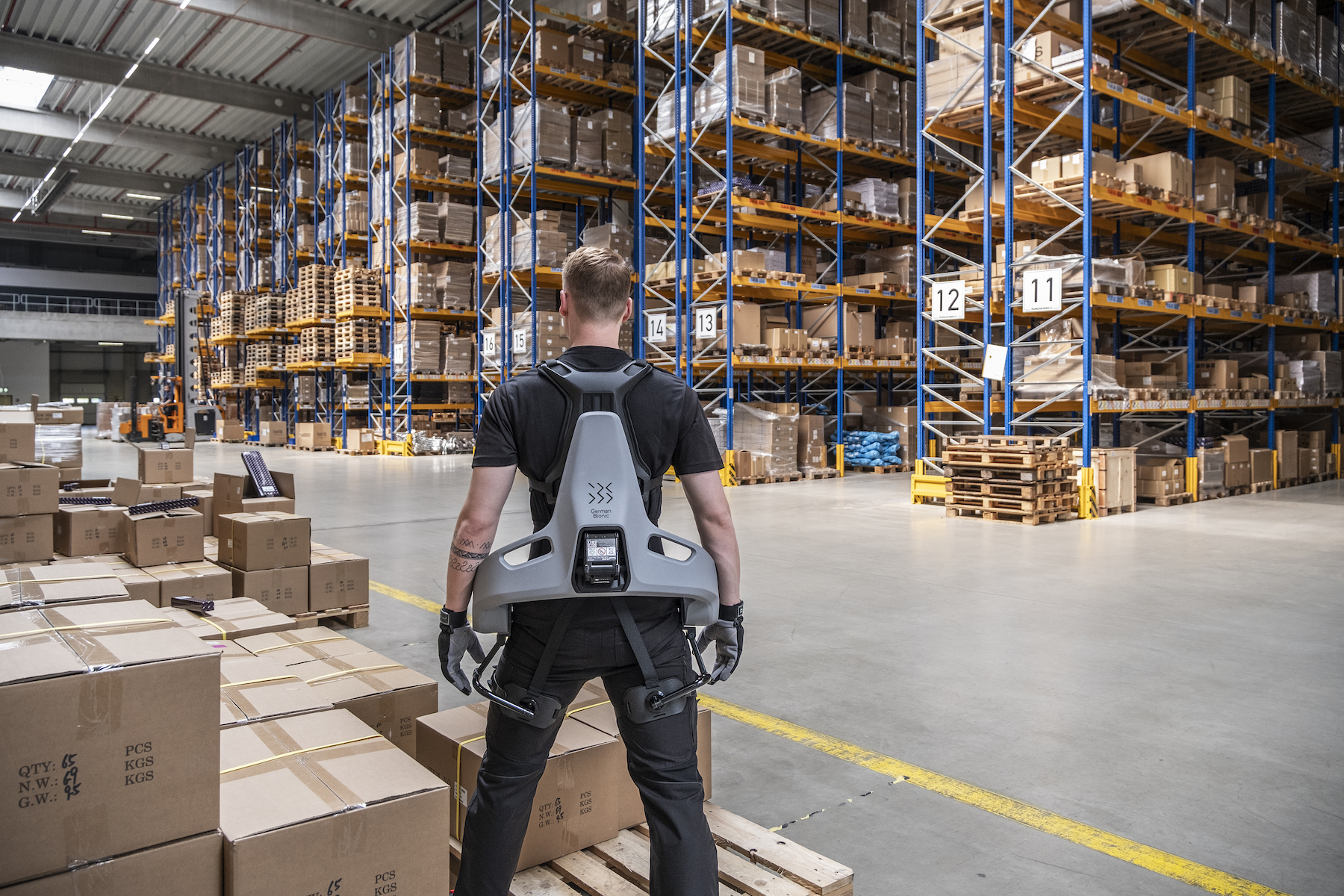
Powered back support. AI-driven powered exoskeleton that supports the lower back during lifting, carrying and bending at work.
Last updated: 5 October 2026 · Total: 4 products
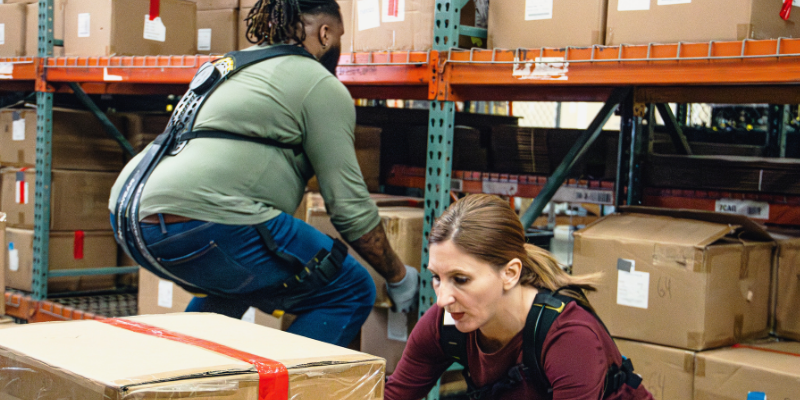
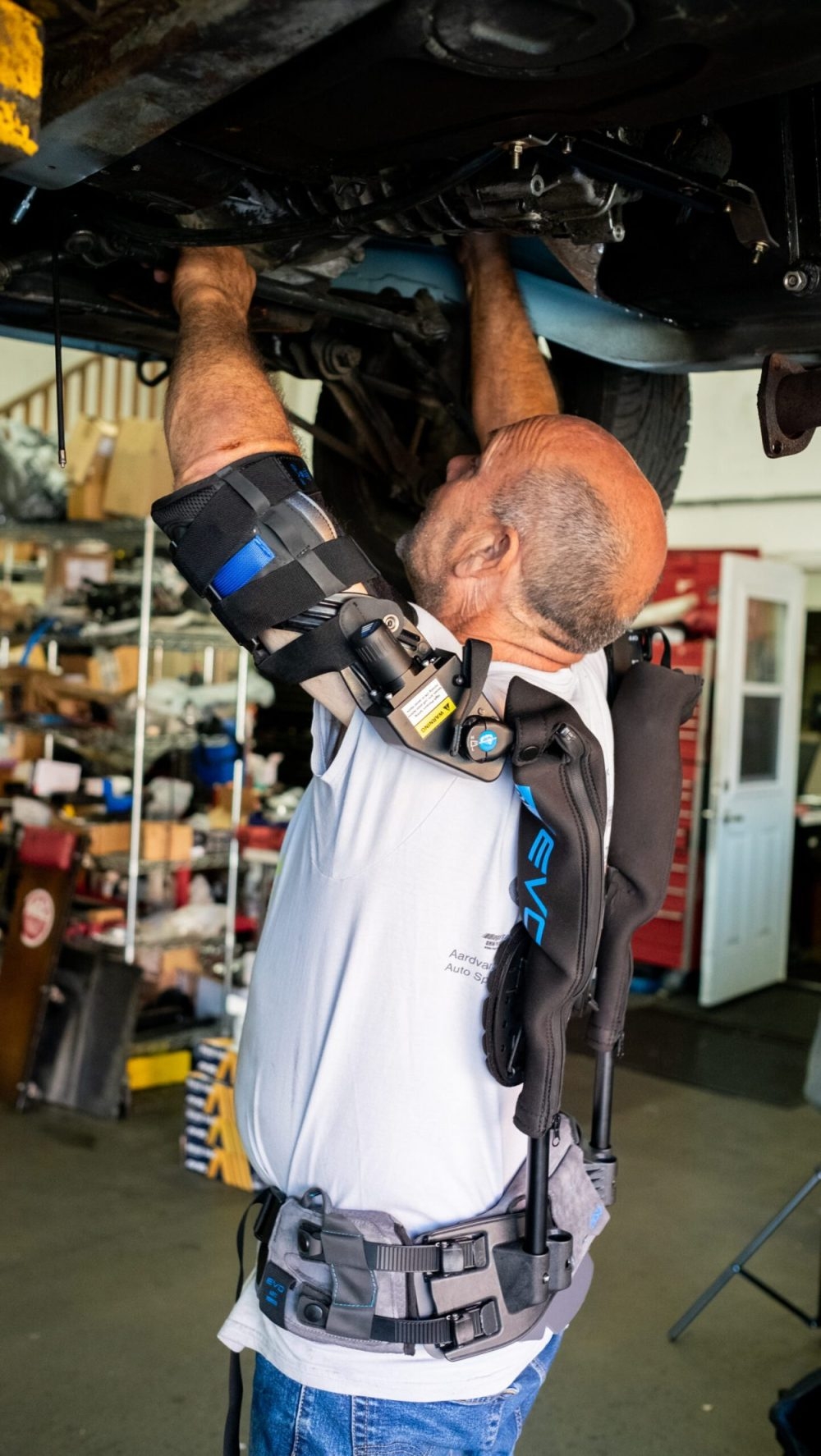
Industrial exoskeletons are made for workers without disabilities who lift, bend or hold tools overhead for hours. They are included here for context, because people often meet them when searching for medical devices. Powered back-support models such as the German Bionic Exia add motor force during lifting. Passive back supports like the HeroWear Apex 2 store energy in elastic bands as the wearer bends. Passive shoulder supports, including the SUITX by Ottobock IX SHOULDER AIR and Ekso EVO, take part of the arm weight during overhead work. They are not mobility aids and are not intended to treat a condition.
Price on request
Powered back support. AI-driven powered exoskeleton that supports the lower back during lifting, carrying and bending at work.
Price on request
Passive shoulder support. Passive shoulder exoskeleton for overhead work, successor to Ottobock Paexo Shoulder.
Price on request
Passive shoulder support. Spring-powered upper-body exoskeleton that supports the arms for chest-level and overhead work.
A passive exoskeleton has no motors or batteries. Springs, elastic bands or gas struts store energy in one part of a movement and give it back in another, which reduces the load on certain muscles.
No. They are work equipment intended to reduce physical strain in healthy workers. They are not designed, tested or approved to restore walking or treat a disability or injury.