Money & Funding · 8 min read
What a prosthetic leg really costs and who pays
A prosthetic leg is a fitted service, not a boxed product. Here is what the bill is made of and which funding routes to ask about first.
The short answer
There is no single price for a prosthetic leg, and in many countries you will not pay the full amount yourself. The cost depends on your amputation level, the parts your prosthetist chooses with you, and how many fitting visits you need. Who pays depends on where you live, what insurance or public scheme covers you, and sometimes on how the limb was lost.
So the useful questions are these. What is included in the quote? Which part of it will a public scheme or insurer cover? What will you still owe, now and in three years? This article walks through each one. Funding rules differ a lot between countries, so treat the examples below as a map of what to ask, and check the rules that apply to you.
Why most prosthetics have no list price
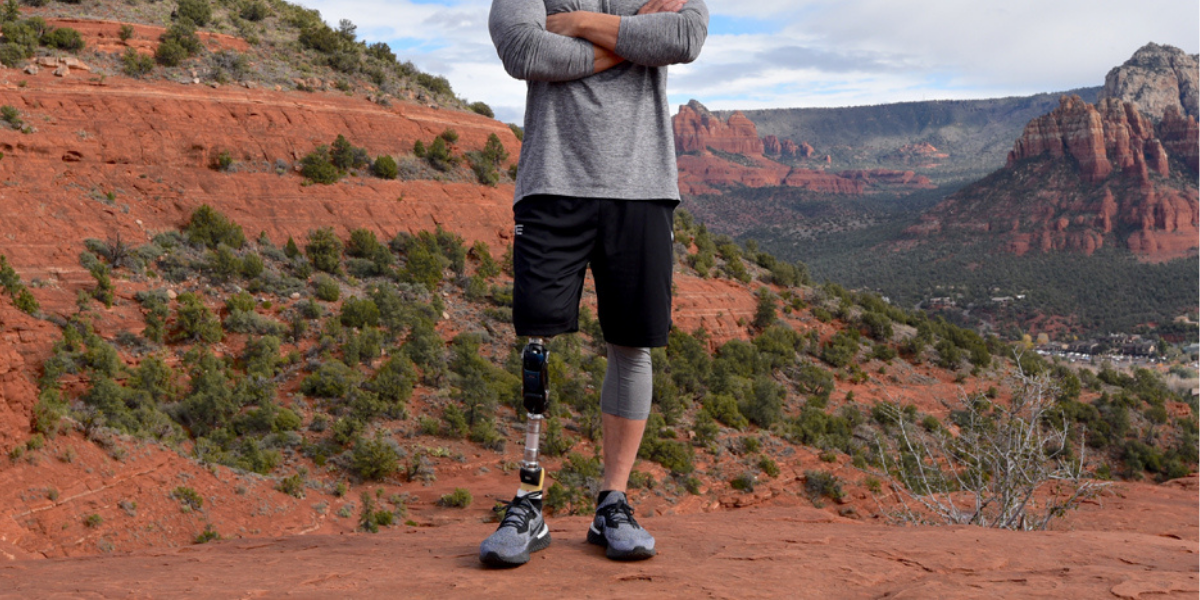
A wheelchair cushion can sit on a shelf with a price sticker. A prosthetic leg cannot. It is built around your residual limb by a prosthetist, and the socket, which is the part your limb sits in, is made for you alone. The rest is assembled from components that are picked to match your weight, your activity level and what you want to do.
That is why most makers do not publish prices for knees and feet. They sell to clinics, and the clinic bills a fitted leg to you, your insurer or a public scheme. In our catalog most prosthetic components have no price for this reason. A few makers do publish list prices, and those are useful as a reality check, as long as you remember they are for the part only.
The choice of components is a clinical decision. A prosthetist, often with a physician and a physiotherapist, decides what is suitable for you. The NHS says plainly that a prosthetic limb is not suitable for everyone who has had an amputation, because using one takes a lot of physiotherapy and rehabilitation. Its guidance lists the things that shape the choice: the type of amputation, muscle strength in the remaining limb, general health, the tasks you expect to do, and whether you care more about looks or function.
Component cost versus fitted cost
Think of the bill in two layers. The first layer is hardware. The second is the work of making it fit and keeping it working.
What the hardware layer looks like
Here are some part-only prices from our catalog. Each one is a maker's published list price for one component, and the Proteor shop itself notes that its prices may not be current. None of them is the price of a leg.
| Component | Type | Published price (part only) |
|---|---|---|
| LegWorks All-Terrain Knee | Mechanical knee | USD 1,035 |
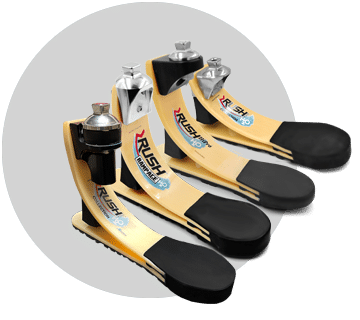
| Proteor RUSH H2O | Waterproof foot | USD 1,405 |
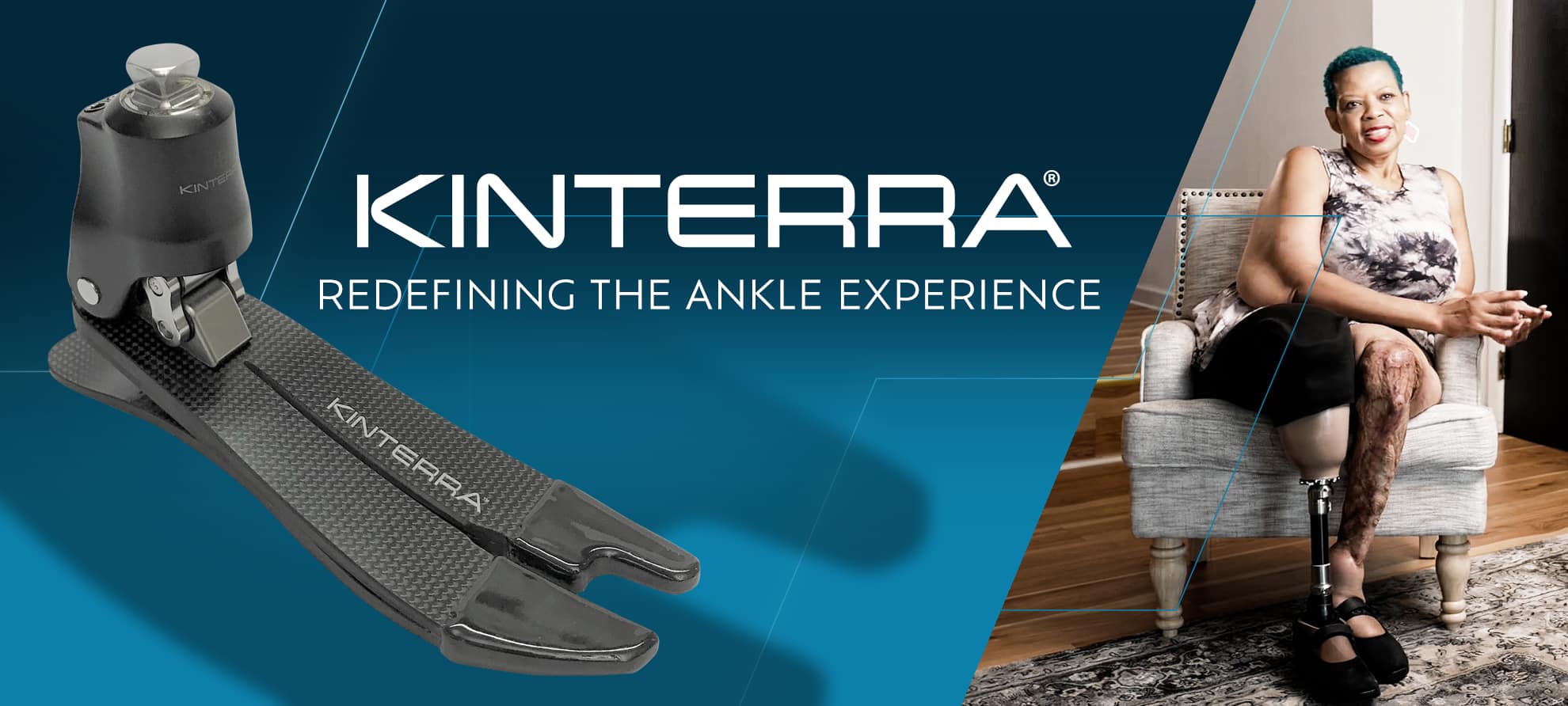
| Proteor Kinterra | Hydraulic ankle and foot | USD 3,506 |
| Proteor Symphony | Mechanical knee | USD 3,753 |
| Proteor Quattro 2 | Microprocessor knee | USD 20,502 |
The spread tells you something. A microprocessor knee can cost many times more than a mechanical knee before anyone has made a socket. An above-knee leg needs a knee and a foot. A below-knee leg needs only a foot, which is one reason it usually costs less.
What the fitted layer adds
- Assessment and casting or scanning of your residual limb.
- A test socket, then a definitive socket, often with more than one fitting visit.
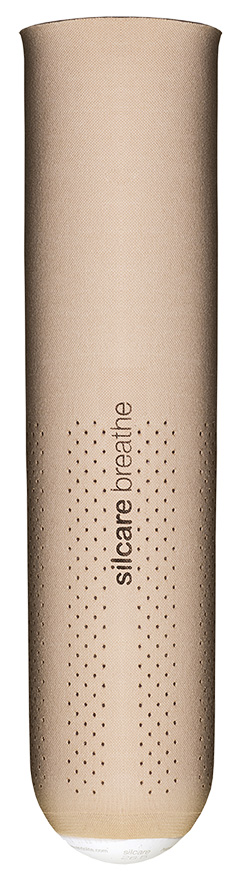
- Liners, sleeves, socks and the suspension that holds the leg on.
- Alignment, which is the fine adjustment of angles so you can walk safely.
- Gait training with a physiotherapist.
- Follow-up adjustments as your limb changes shape.
Ask the clinic which of these are inside the quoted price and which are billed separately. Two quotes with the same knee can differ because one includes a year of adjustments and the other does not.
Published ranges, and why to treat them with care
Wikipedia's article on prostheses, as we read it in October 2026, quotes several US figures without clear dates. It says a typical prosthetic limb costs between USD 15,000 and 90,000 depending on type. In another place it gives USD 6,000 to 8,000 for below-knee and below-elbow limbs and USD 10,000 to 15,000, sometimes up to 35,000, for above-knee and above-elbow limbs. These ranges do not agree with each other, which is the point: nobody can give you a reliable number until a prosthetist has seen you and written a quote. Use them only to understand the scale.
The same article says a prosthesis is usually replaced every three to four years because of wear, and that a socket may need replacing within months if the fit changes. So the real cost is a repeating one.
At the other end of the scale, charity programmes exist. The Jaipur Foot organisation BMVSS provides its limb free to recipients, and Wikipedia puts the cost of making a Jaipur Foot at about USD 40.
Funding routes to ask about
Below are four systems we could check on official pages, plus the charity route. They show how different the answers can be. Your own country, state or insurer may work in another way.
United States: Medicare and others
Medicare.gov says Part B covers prosthetic devices when a doctor or other provider orders them. After you meet the Part B deductible, you pay 20% of the Medicare-approved amount. Medicare only pays if the supplier participates in Medicare, so check that before you start. The page also notes that some states may require prior authorization for certain lower-limb prosthetics.
Twenty percent of an expensive leg is still a large sum. The Amputee Coalition lists other US routes: Medicaid, which covers medically necessary prosthetics but varies by state; the Department of Veterans Affairs, whose Prosthetic and Sensory Aids Service supplies artificial limbs to eligible veterans; TRICARE for military families; and state vocational rehabilitation programmes when the device is needed for work.
United Kingdom: the NHS
In the UK, the NHS pathway runs through a prosthetist, who advises you on the type and function of limb available. NHS England lists specialised prosthetics among the complex disability services it oversees. The NHS amputation page warns that, depending on where you live, it can be several weeks before your first appointment with a prosthetist. The pages we read describe the pathway and do not list prices, so ask your limb centre what is provided, what choices you have, and how repairs and replacements are handled.
Canada: Ontario as an example
Canada's rules are set by each province. Ontario's Assistive Devices Program page, updated in July 2025, says the programme pays 75% of its set price for a conventional limb prosthesis and you pay 25% to the vendor. People on certain provincial social assistance programmes can get up to 100%. Income is not considered for the basic 75%.
The limits matter as much as the percentage. Ontario does not cover spare or back-up limbs, cosmetic-only limbs, limbs for occasional use, or repairs caused by misuse. It also does not apply if a workplace insurer or Veterans Affairs Canada already supports the same device. You apply with a registered amputee team or clinic, the programme says it reviews applications within eight weeks, and it warns you to buy only after approval or you may owe the full cost.
Australia: several schemes
The peer organisation Limbs 4 Life lists the main Australian routes: state and territory artificial limb schemes, the National Disability Insurance Scheme, and My Aged Care for older people. Which one applies depends on your age, your state and your situation, and Limbs 4 Life offers help in working that out.
Charities and non-profits
If you have no cover, or a gap you cannot pay, ask about charities. The Amputee Coalition lists several US groups, such as Limbs for Life Foundation and Steps of Faith Foundation, each with its own rules. Before applying, it suggests you settle the device you need with your clinical team, get a prescription, and gather papers on your income, expenses and insurance.
Questions to ask before you agree to anything
- Can I have a written estimate that shows the scheme's share and my share?
- Which components are in the quote, by maker and model?
- Does the price include the test socket, the final socket, liners and all fitting visits?
- How many follow-up adjustments are included, and for how long?
- Does this supplier take part in my insurance or public scheme?
- Do I need approval before the leg is ordered, and how long does that take?
- What is the warranty on each component, and who pays for a loan part during repair?
- What will liners, sleeves and socks cost me each year?
- When would I be eligible for a replacement socket or a new leg?
- If I want a part the scheme does not fund, can I pay the difference?
Keep copies of every letter and estimate. If a claim is refused, ask for the reason in writing and ask your prosthetist whether an appeal with more clinical evidence makes sense.
How to use our catalog for this
The prosthetics section of Mobility Atlas lists feet, knees, liners and complete systems with the facts makers publish, such as weight limits and water ratings. Use it to learn the names and to prepare questions. Then send an enquiry or take your list to your prosthetist. The decision about what suits your limb, your health and your activity level belongs to that clinician, and so does the quote.
This article is general information, not medical advice. Devices of this kind are chosen and fitted with a clinician who knows you.
Common questions
Can I buy a prosthetic knee or foot online and fit it myself?
No. A leg has to be built, fitted and aligned by a prosthetist. A poor fit or alignment can cause skin damage and falls.
Why did two clinics give me different prices for the same knee?
A quote covers more than the part. Sockets, liners, visits and follow-up may be bundled differently, so ask each clinic for an itemised list.
Does Medicare pay for the whole leg?
Medicare.gov says you pay 20% of the Medicare-approved amount after the Part B deductible, and the supplier must participate in Medicare.
How often will I need a new prosthesis?
Wikipedia's prosthesis article says every three to four years is typical, with sockets sometimes replaced sooner. Your prosthetist will advise for your case.
Is there help if I have no insurance?
Often, yes. Charities and non-profits exist in many countries, and the Amputee Coalition lists several in the United States.
Sources
- Medicare.gov: Prosthetic devices coverage
- NHS: Amputation
- NHS England: Complex disability equipment and specialised prosthetics (Clinical Reference Group D01)
- Ontario: Breast prostheses and artificial limbs (Assistive Devices Program)
- Amputee Coalition: Financial assistance for prosthetic services
- US Department of Veterans Affairs: Prosthetic and Sensory Aids Service
- Limbs 4 Life: Funding
- Wikipedia: Prosthesis
Read on 5 October 2026. The wording of the article is our own.