Gear · 7 min read
How to choose your first active wheelchair
Your first active chair comes down to three things: frame type, five measurements, and the people who help you get them right.
Three decisions, in this order
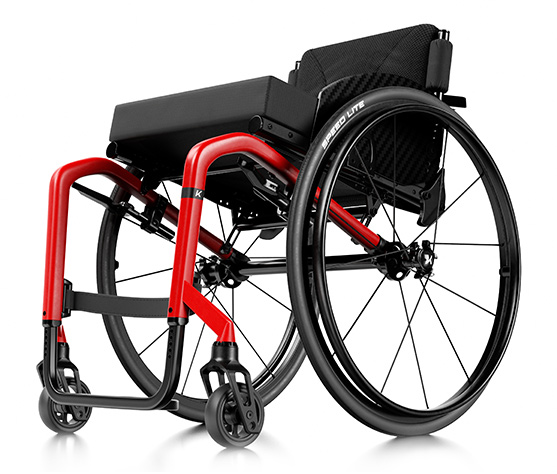
An active wheelchair is a light manual chair built around one person. You push it yourself, all day. Three decisions shape it: the frame type, the fit, and who helps you specify it. Colour, wheels and accessories come after that.
Get the first three right and most other choices can be changed later. Get them wrong and no accessory will fix the chair. The World Health Organization's wheelchair guidelines say the best results come from an individual process of assessment, fitting, training and follow-up by trained staff. So treat this guide as preparation for that process, not a replacement for it.
Rigid or folding: what changes day to day
A rigid chair has a welded frame that does not fold in the middle. A folding chair has a cross-brace under the seat, so the two sides come together. That one difference changes several things you will notice every day.
| Daily situation | Rigid frame | Folding frame |
|---|---|---|
| Pushing | Fewer moving parts and no flex points, so less of your push is lost | The cross-brace and joints can flex a little |
| Weight | Usually lighter for the same material | Usually heavier, because of the folding parts |
| Car | Rear wheels come off and the back folds down. You lift a frame and two wheels | Folds flat in one move. You lift one larger piece |
| Storage at home | Needs floor space about the size of the frame | Stands folded in a narrow gap |
| Upkeep | Fewer joints to work loose | More joints to check and tighten |
Catalog figures show the size of the gap. The Quickie Nitrum, a rigid aluminium chair, is listed at 18.3 lb with a transport weight of 10.8 lb. The Ki Mobility Catalyst 5, a folding aluminium chair, is listed at 23 lb with a transport weight of 12.8 lb. Küschall lists its rigid K-Series at about 7.5 kg and its folding Champion at about 8.8 kg.
A kilo or two sounds small. You lift the chair into a car several times a day and push it thousands of times a day, so the difference adds up. Still, a folding chair is the better choice if you often travel in other people's cars, use taxis, or have very little space at home. Pick the frame for the life you have now.
The five measurements that decide the fit
Makers build active chairs to order from a list of dimensions. Five of them decide whether the chair fits your body. Measure sitting upright on a firm surface, never lying down.
1. Seat width
Measure across the widest point of your hips or thighs. Clinical guides match seat width closely to this figure. A seat that is too narrow rubs the skin. A seat that is too wide makes pushing harder and makes doorways tighter, because your hands sit further from your body.
2. Seat depth
Measure from the back of your pelvis to the back of your knee, then take off 30 to 60 mm. You should be able to fit two or three fingers between the seat edge and your knee. Too short and your thighs lose support. Too long and the edge presses behind the knee and pulls you into a slouch.
3. Seat-to-floor height, front and rear
Active chairs have two seat heights. The front height sets room for your lower legs and footrest. The rear height is usually lower, which tips the seat back a little. More slope helps balance if your trunk control is limited, but it makes transfers harder. As a check for rear height, your elbow should bend to about 90 degrees when your hand rests on top of the handrim.
4. Back height
A low back frees your shoulders and makes pushing more efficient, but it needs good trunk control. Fitting guides suggest support up to the base of the ribcage for active users, and up to the bottom of the shoulder blades for people who tire or need more support. The back should not rise above the shoulder blades if you push yourself.
5. Footrest length
Measure from the back of your knee to the base of your heel, in the shoes you wear most days. The footplate should sit about 1 to 2 inches above the ground. If the footrest is too short, your knees rise and more weight goes onto your sit bones. If it is too long, you slide forward.
Two settings to keep adjustable
Your first set-up will not be your last. Skills, strength and confidence change quickly in the first year. Two settings matter most.
- Axle position, also called centre of gravity. Moving the rear axle forward makes the chair easier to push and lowers the load on your shoulders. It also makes the chair tip backward more easily. Start cautious, use anti-tippers, and move the axle forward as your balance improves.
- Camber, the inward tilt of the rear wheels. Everyday chairs usually run between 0 and 4 degrees. Camber adds stability on side slopes and protects your hands, but it makes the chair wider.
Shoulder care is the reason these settings matter. Research summaries report shoulder pain in 31 to 73 percent of manual wheelchair users. A chair that is set up well for pushing is one of the few things you control from day one.
A fully welded, made-to-measure frame such as the RGK Octane Sub4 has seat widths in 5 mm steps and a frame guaranteed under 4 kg without wheels and cushion. That precision is useful once you know your numbers. For a first chair, many people are better served by an adjustable frame.
Who should be in the room
A wheelchair assessment normally includes an interview about your life and goals, a physical check, and body measurements. The team can include an occupational therapist, a physiotherapist, a physician and an equipment supplier. You are encouraged to try different chairs and seating set-ups with a clinician or dealer before anything is ordered.
How you reach that team depends on your country. In England, for example, a GP, physiotherapist, occupational therapist or hospital team can refer you to the local wheelchair service, some areas accept self-referral, and a personal wheelchair budget may let you put public funding toward a different chair. Check the rules where you live before you pay privately.
Your cushion is part of the same decision. Cushion thickness changes seat height and back height, and the choice of cushion for skin protection belongs with a seating clinician.
What to ask before you request a quote
Take this list to the dealer or send it with your enquiry.
- Who will measure me, and are they trained in wheelchair assessment?
- Can I try a demo chair in a similar size, on a slope and over a kerb?
- Is the axle position adjustable? Over what range?
- What are the total weight and the transport weight in my size, and what is left off in the transport figure?
- What is the maximum user weight, and does it include what I carry?
- What is the total width of the chair in my seat width? Will it pass my narrowest door?
- Does the back fold down, and do the rear wheels have quick-release axles?
- Which cushion is this quote based on, and how thick is it?
- What does the price include: wheels, tyres, side guards, anti-tippers, cushion, delivery, fitting?
- How long is the build time, and what happens if the chair does not fit at handover?
- Who does follow-up adjustments and repairs, and what do they cost?
- What funding routes apply in my country, and which documents do they need?
Prices vary widely by country, options and funding. As one reference point, the catalog lists the Ki Mobility Rogue 2 rigid chair from about USD 2,011 at a US retailer's sale price, against a list price of USD 2,873. Always ask for a written quote in your own configuration.
After delivery
Fitting is a separate step from delivery. At handover, sit in the chair with your own cushion and check the five measurements again. Check that fingers fit between your thighs and the side guards without pinching, that the gap behind your knee is right, and that both thighs rest evenly on the cushion.
Ask for training in basic skills, transfers and maintenance. Book a follow-up visit. Small changes to axle position, back angle and footrest height in the first months often make more difference than any upgrade you could buy.
This article is general information. Rules and prices differ by country and change, so confirm them before you buy or travel.
Common questions
Is a rigid chair always better than a folding one?
No. Rigid frames are usually lighter and lose less of your push, but a folding frame is easier to fit into small cars and tight storage. Choose by how you travel and where you keep the chair.
How much gap should there be behind my knees?
Clinical fitting guides suggest about 30 to 60 mm, or two to three fingers, between the front of the seat and the back of the knee.
Should my first chair be made to measure?
Often an adjustable frame is a safer first choice, because your posture, skills and preferred axle position usually change in the first year. A fully welded made-to-measure frame suits people who already know their numbers.
Can I measure myself?
You can take the basic measurements at home with a helper and a firm tape to prepare for a conversation. The final specification should be checked by a trained person, ideally with you sitting in a demo chair.
Sources
- SCIRE Community: Manual Wheelchairs
- SCIRE Community: Wheelchair Provision
- Physiopedia: Wheelchair Assessment - Body Measurements
- Physiopedia: Wheelchair Fitting
- World Health Organization: Wheelchair provision guidelines
- NHS: Walking aids, wheelchairs and mobility scooters
- Wikipedia: Wheelchair
Read on 5 October 2026. The wording of the article is our own.