Photo could not be loaded
Fourier · Powered arm orthoses and exoskeletons · EX-040
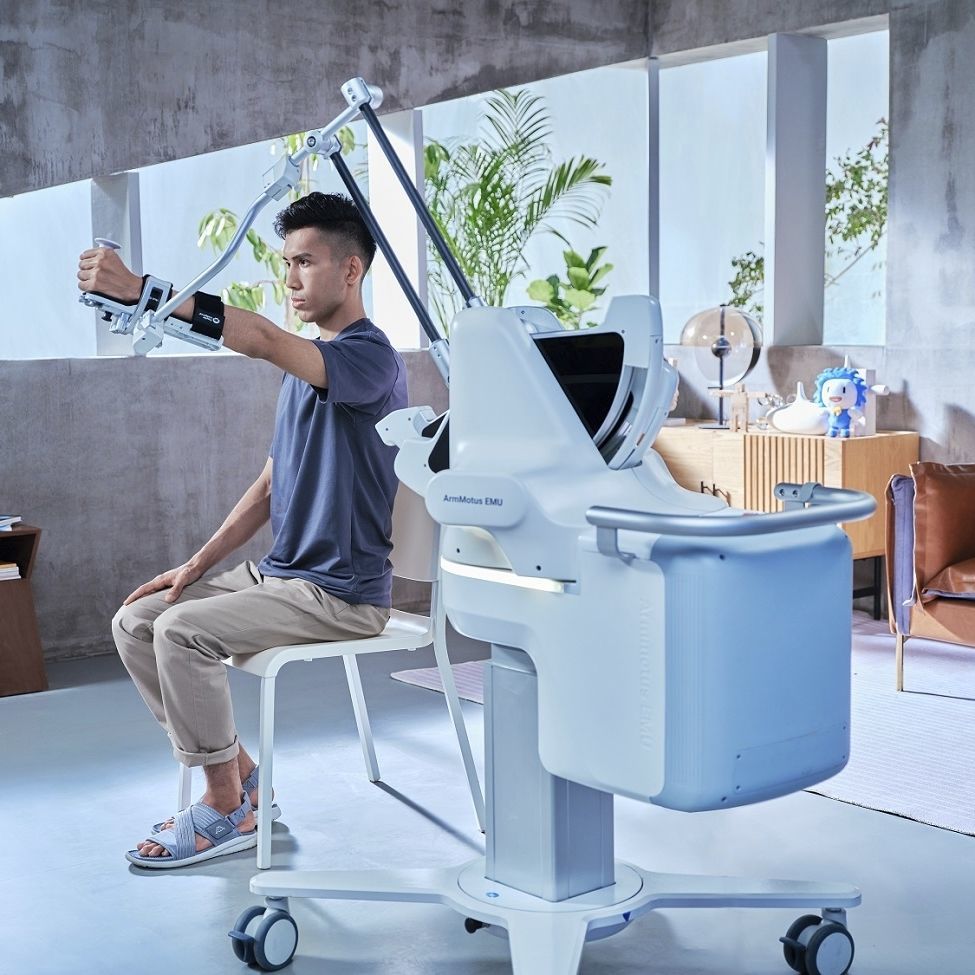
Fourier ArmMotus EMU 3D upper-limb rehabilitation robot
The Fourier ArmMotus EMU upper-limb rehabilitation robot moves the arm in three dimensions using a cable-driven mechanism and a parallel structure of light carbon-fibre rods, a layout chosen to cut friction and inertia. Force feedback lets it work in four modes, from fully passive movement to resisted exercise, matched to the patient's muscle strength grade. It measures movement trajectory, strength and range of motion and produces a report after training.
- Product type
- 3D upper-limb rehabilitation robot
- Drive
- Cable-driven
- Structure
- Parallel, lightweight carbon-fibre rods
- Modes
- Passive, assistive, active, resistive
Fourier ArmMotus EMU key features
- Cable-driven mechanism with carbon-fibre parallel structure
- 3D arm movement with force feedback
- Passive, assistive, active and resistive modes
- Shoulder and elbow range-of-motion and strength training
- Bilateral training and daily-living task simulation
- Measures trajectory, strength and range of motion; training reports
Who the Fourier ArmMotus EMU suits
ArmMotus EMU is a clinic device for patients with upper-limb disability from neurological or musculoskeletal disorders, at any strength level from no active movement to near-normal power. Therapists pick the mode and programme; selection is a clinical decision.
This kind of device is prescribed and fitted by a clinician. An enquiry starts that conversation. It is not a purchase.
Fourier ArmMotus EMU specifications
| Product type | 3D upper-limb rehabilitation robot |
|---|---|
| Drive | Cable-driven |
| Structure | Parallel, lightweight carbon-fibre rods |
| Modes | Passive, assistive, active, resistive |
| Mode guide (MMT score) | Passive 0; assistive 1-2; active 3; resistive 4-5 |
| Training | ROM, strength, ADL simulation, cognitive, bilateral |
| Reports | Generated after training |
| Use setting | Clinics |
| Maker country | China |
| Price | Quoted on request |
| Brand | Fourier |
| Category | Upper-limb and hand devices, Powered arm orthoses and exoskeletons |
| Catalog ID | EX-040 |
Compared with the source page on 5 October 2026. Details can change, so we confirm them in your quote. Open the source page.
Fourier ArmMotus EMU: common questions
What training modes does ArmMotus EMU offer?
Four: passive, assistive, active and resistive. The listing maps them to manual muscle test scores of 0, 1-2, 3 and 4-5.
Which joints does the ArmMotus EMU train?
The listing describes range-of-motion and strength training for the shoulder and elbow, plus daily-living task simulation and bilateral training.
Why is the EMU cable-driven?
The maker says the cable drive and carbon-fibre parallel structure reduce friction and inertia, which helps the robot respond to the patient's force.
How to get a quote for the Fourier ArmMotus EMU
Add it to your enquiry list
Press Add to enquiry. You can add other products and parts to the same list.
Tell us your country and needs
Send the list with your country, sizes and any options you want. No payment details are asked.
Get a personal reply
You receive availability, a price and delivery options by email, and decide after that.
Similar to the Fourier ArmMotus EMU
All Upper-limb and hand devicesPrice on request
Harmony SHR
Harmonic Bionics (Bioness Medical)
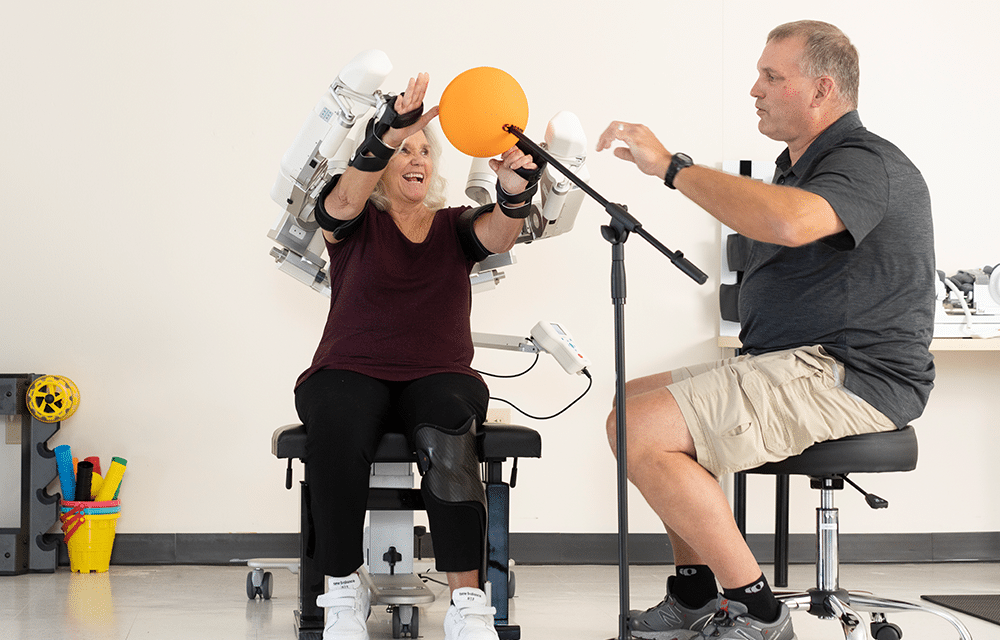
Powered arm orthoses and exoskeletons. Bilateral robotic exoskeleton for shoulder and arm therapy that follows scapulohumeral rhythm.
Price on request
ArmeoPower
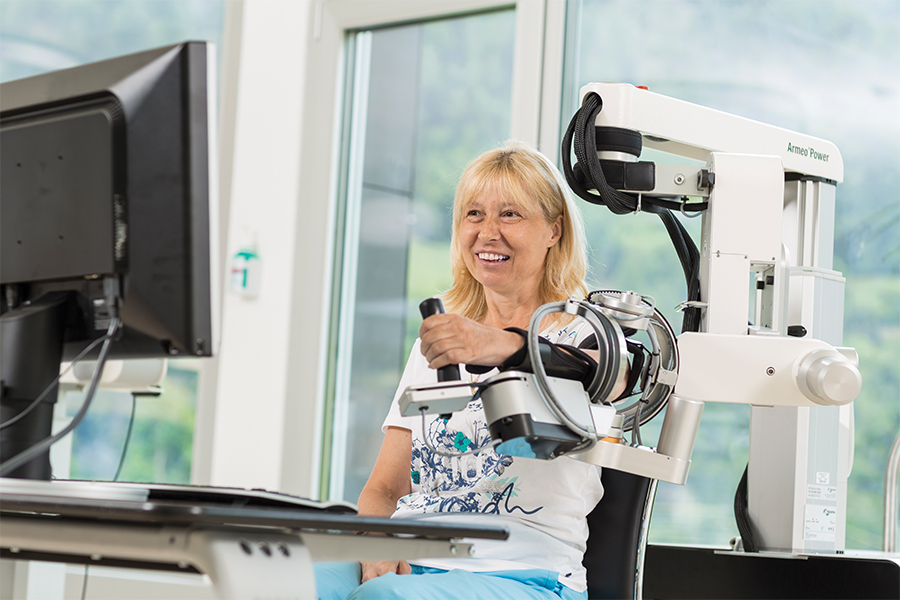
Powered arm orthoses and exoskeletons. Robotic arm exoskeleton for early-stage therapy of severely impaired arms with game-based exercises.
Price on request
ArmeoSpring
Powered arm orthoses and exoskeletons. Spring-based arm exoskeleton that supports arm weight for self-initiated movement therapy.
Price on request
Carbonhand
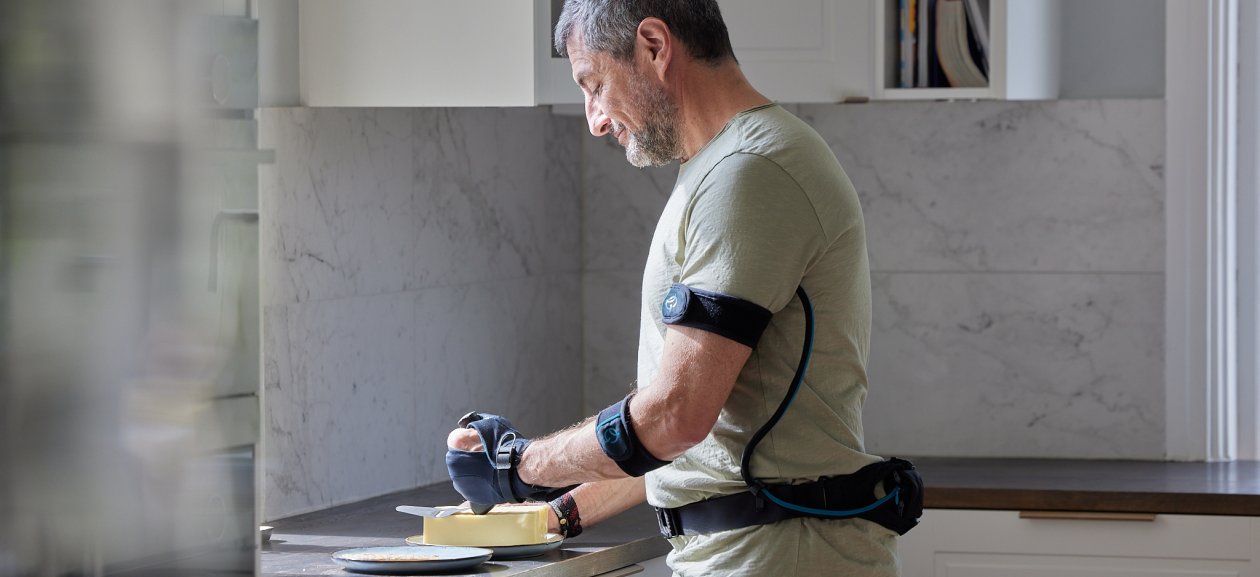
Robotic gloves and hand exoskeletons. Soft robotic glove that adds grip strength in proportion to the force the wearer applies.

Goes with this product
Guides for this kind of product
News & Tech · 8 min read
Personal exoskeletons: what you can take home today
A few powered exoskeletons are cleared for use at home, mostly for spinal cord injury, on prescription and with a trained companion. Most others stay in clinics.