News & Tech · 8 min read
Personal exoskeletons: what you can take home today
A few powered exoskeletons are cleared for use at home, mostly for spinal cord injury, on prescription and with a trained companion. Most others stay in clinics.
The short version
Yes, there are powered exoskeletons you can use at home, but the list is short and the conditions are strict. As of October 2026, the makers' own pages describe three devices with US clearance for personal use by people with spinal cord injury: the ReWalk 7 from Lifeward, the Ekso Indego Personal from Ekso Bionics, and Eve from Wandercraft. Each is a prescription medical device. Each has a stated range of users. And each maker requires a trained companion to be with you when you use it.
Everything else you see in videos falls into one of two other groups. Either it is a clinic device that a therapist operates during rehabilitation sessions, or it is a consumer gadget for hikers that makes no medical claim. This article helps you tell the three groups apart and shows what to ask. Regulatory status differs by country, so check what applies where you live.
One thing first. An exoskeleton is not a cure, and no maker or clinic can promise what you will be able to do in one. Whether it is suitable and safe for you is a decision for a physician and a trained physiotherapist.
Personal-use versus clinic-only devices
In the United States, the regulator has a specific category for these machines. The federal rule defines a powered lower extremity exoskeleton as a prescription device made of an external, powered, motorised orthosis that is placed over a person's paralysed or weakened limbs for medical purposes. It is a Class II device with special controls. One of those controls is a training programme, which must teach the clinician, the user and the companion to recognise safe places to use the device, to use all its safety features and to operate it in realistic settings.
Within that category, each device is cleared for particular users and particular settings. That is the line between personal and clinic-only.
| Device | Setting | What the maker or our catalog states |
|---|---|---|
| Lifeward ReWalk 7 | Home and community | US indication: spinal cord injury at levels T7 to L5, with supervision of a specially certified companion. T4 to T6 in rehabilitation institutions only. |
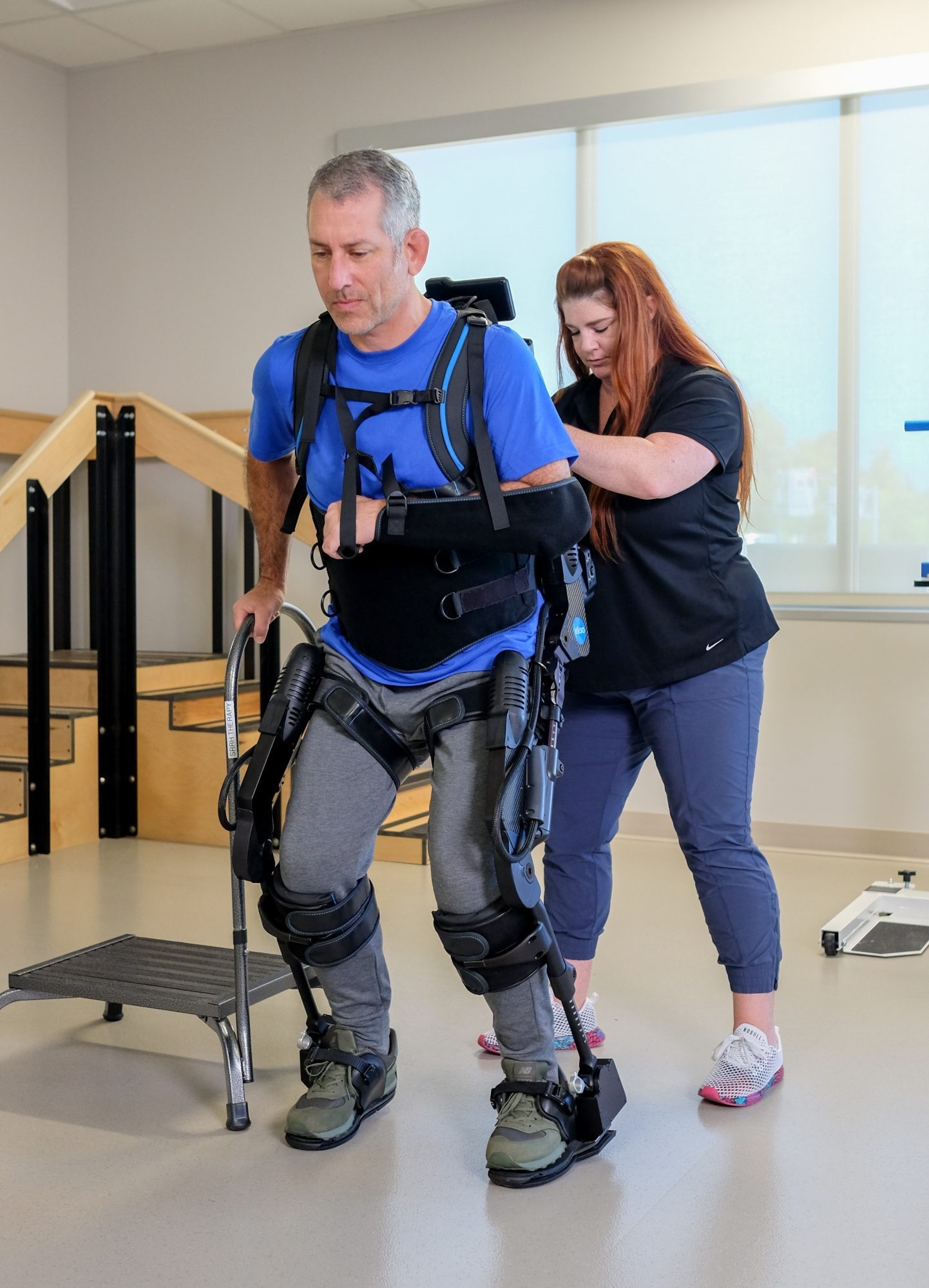
| Ekso Indego Personal | Home and community | FDA-cleared for spinal cord injury levels T3 to L5. Not intended for sports or stair climbing. Weighs 31 lb (14 kg). |
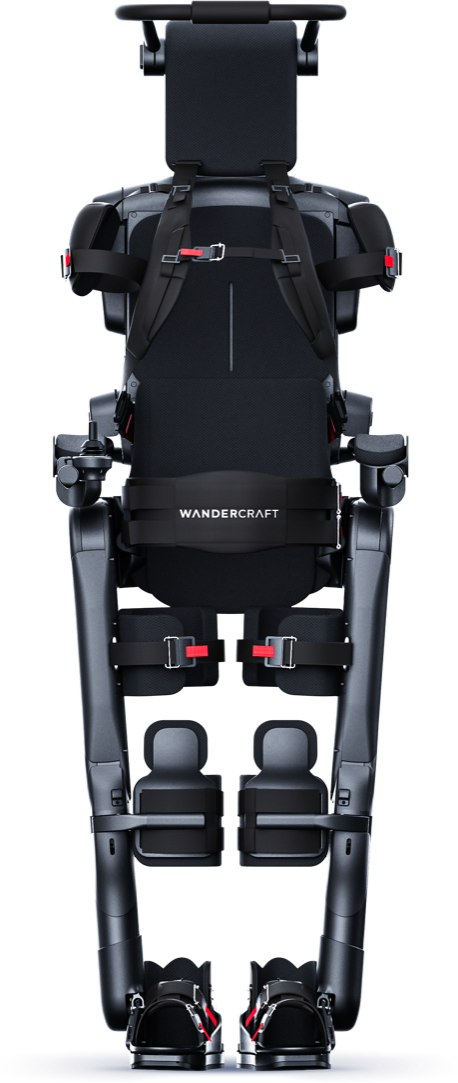
| Wandercraft Eve | Home | FDA-cleared (K260381) for adults with spinal cord injury at any neurological level. Self-balancing. Trained companion always present. US availability from 17 September 2026. |
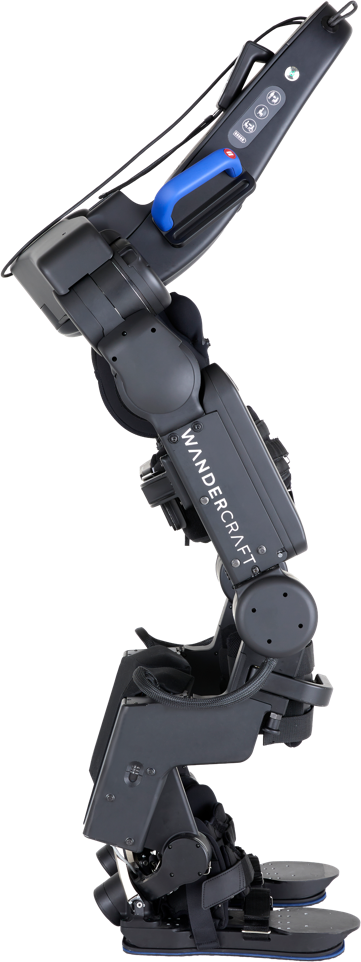
| Wandercraft Atalante X | Clinic only | Self-balancing device for gait training in rehabilitation centres. Not a home device. |
| Ekso Bionics EksoNR | Clinic only | FDA-cleared for stroke, acquired brain injury, multiple sclerosis and spinal cord injury, age 18 and over. |
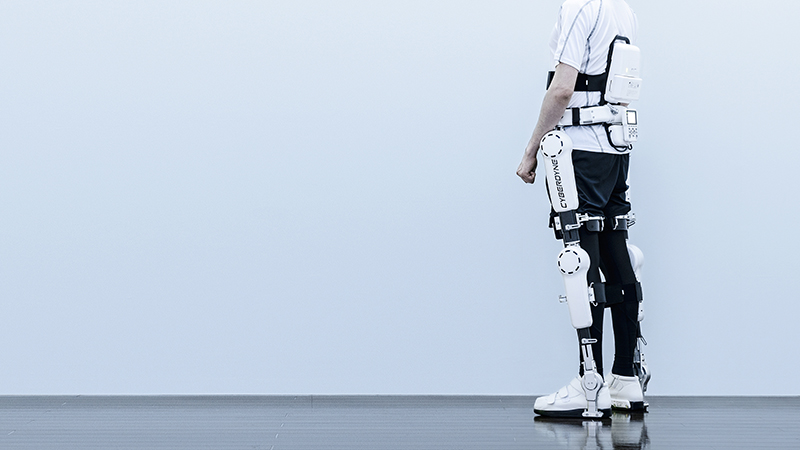
| CYBERDYNE Medical HAL | Facilities only | Cleared in the EU and the US, with indications that vary by country. The maker says it does not rent the product to individual users. |
Two points stand out. First, clinic devices often cover more conditions than personal ones. If you have had a stroke or have multiple sclerosis, the devices you can use today are mostly found in rehabilitation centres, used under a therapist's direction. Second, the letters and numbers matter. T7 to L5 describes where on the spine the injury is. If your injury is outside a device's stated range, that device is not indicated for you at home, whatever a video suggests.
Who the makers say they are for
Read the indication as the maker writes it. Here is what each one says.
ReWalk 7
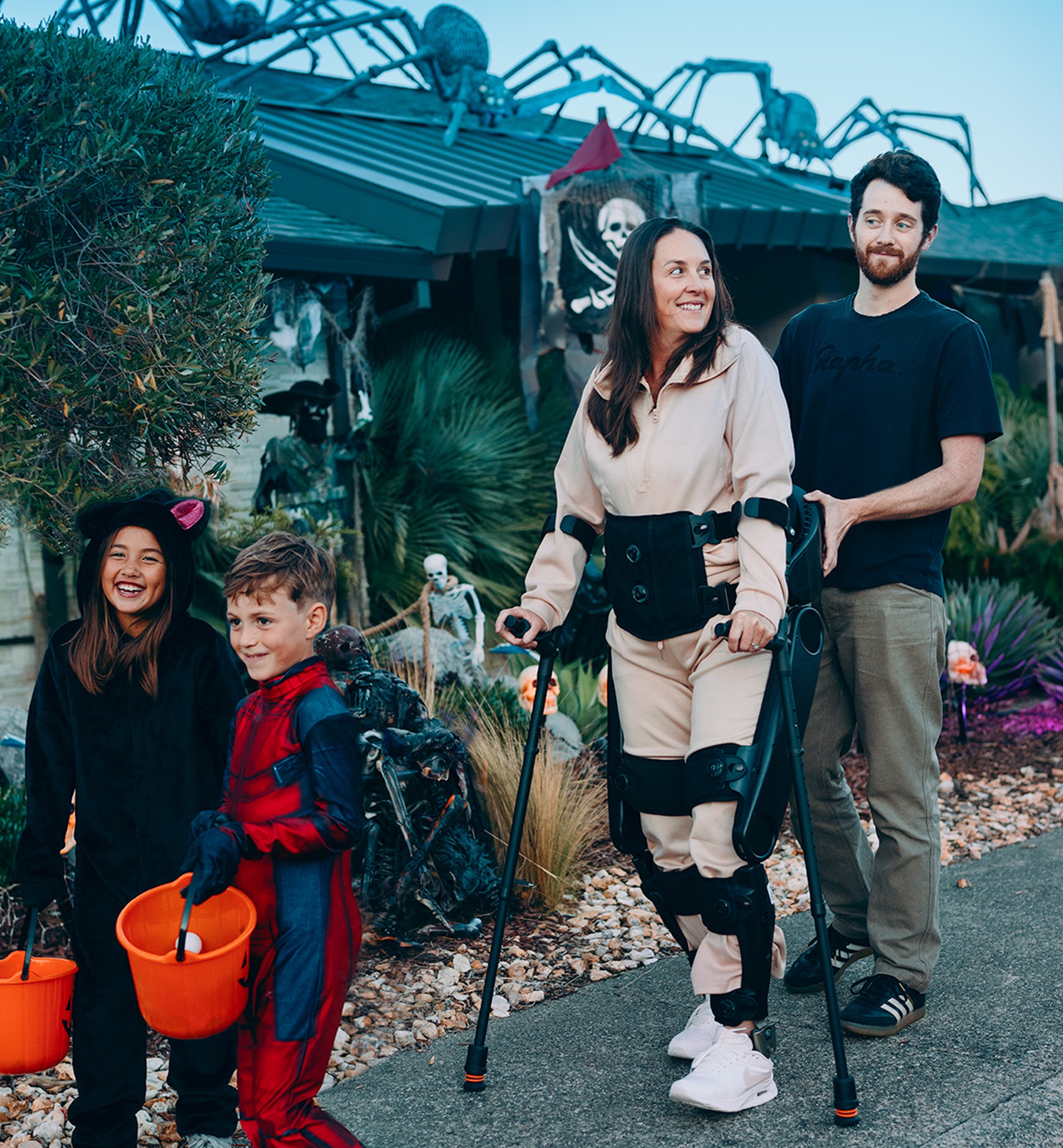
Lifeward states that in the United States the ReWalk is intended to let people with spinal cord injury at levels T7 to L5 perform ambulatory functions at home and in the community, supervised by a specially certified companion. It describes powered hip and knee motion for standing, walking on level surfaces and mild slopes, and going up and down stairs and curbs. Our catalog notes that the user controls it with crutches. The wording for Europe is different, and there the maker adds that the device is not intended for sports or aggressive use.
Ekso Indego Personal
Ekso Bionics says the Indego can be used with spinal cord injury levels T3 to L5 in community or home settings, and that it is not intended for sports or stair climbing. It requires a support person, who can be a friend, family member or colleague. That person goes through the training with you and is present when you use the device at home and outside.
Wandercraft Eve
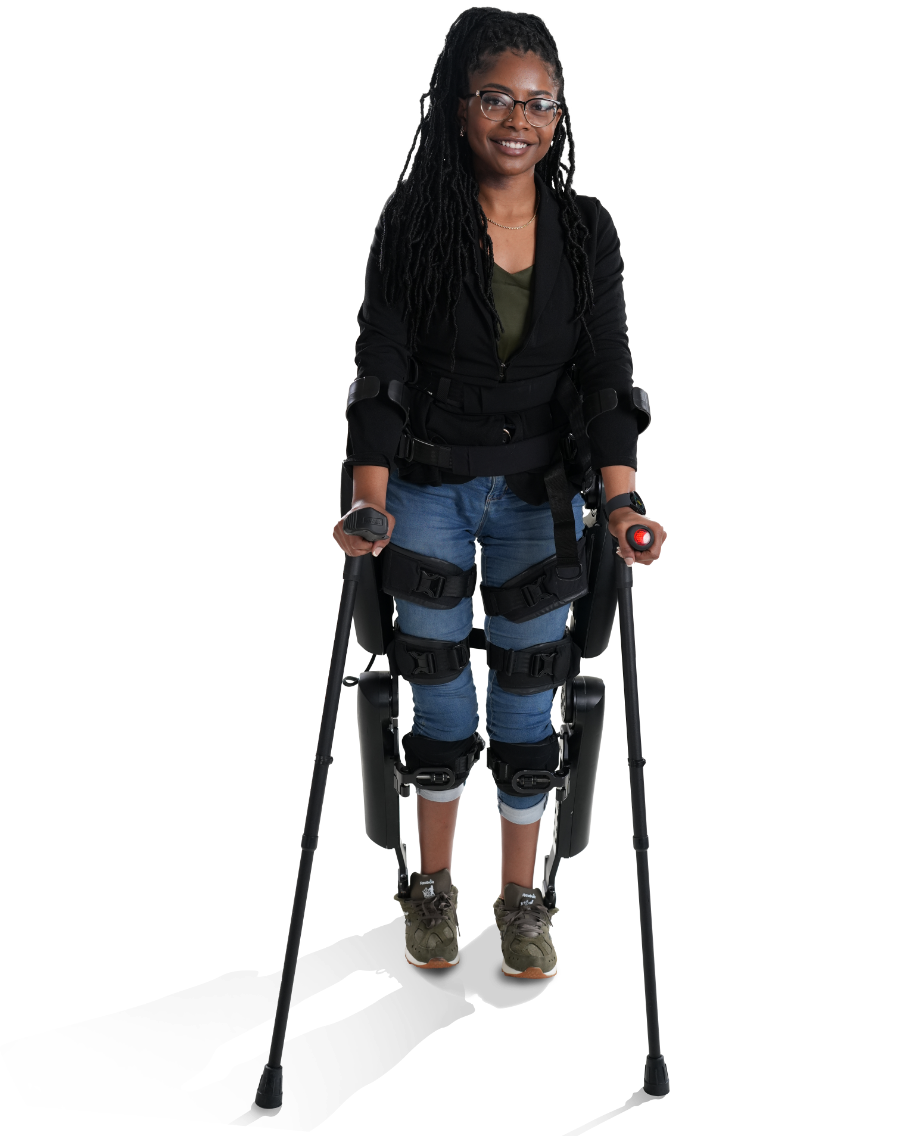
Eve is new. Wandercraft says it is cleared for adults aged 18 and over with spinal cord injury at any neurological level who can operate the controller and tolerate standing. It balances itself, so the user does not hold crutches or a walker. The limits the maker gives are a body weight up to 100 kg and a height up to 1.94 m, along with ranges for leg length, pelvis width and joint movement. The battery is stated to last four hours. A trained companion must always be present and within arm's reach.
What the indications leave out
An indication tells you who may be considered. It does not tell you that you qualify. Clinics screen each person, and they look at things the short indication does not list. Ask your physician what the screening covers for your situation.
Consumer hiking exoskeletons are a different thing
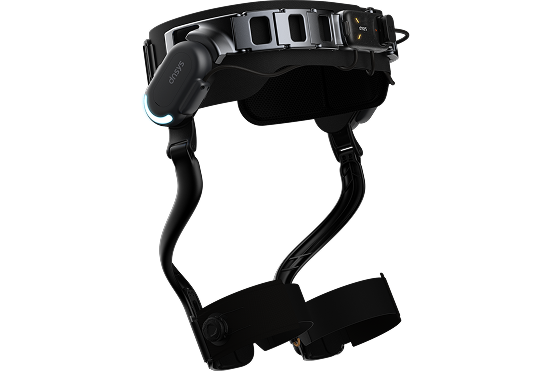
Search for exoskeletons and you will also find light devices worn at the hips or knees, sold online for a fraction of the cost of a medical device. The Hypershell X series is one example. The maker markets it for hiking, cycling, ski touring and similar activities, and sells it for USD 999 to 1,999. Our catalog lists it as a consumer product that is not presented as a medical device. The Dnsys X1, at USD 689, is another.
These products add some power to the stride of a person who already walks. They are not cleared to hold up a person with paralysed legs, and they are not sold on prescription.
If you walk but tire quickly, and you wonder whether a consumer device might help or harm, ask your doctor or physiotherapist before you buy. Do not treat a hiking product as a cheaper version of a medical exoskeleton.
Training, cost and what to ask
Training
You cannot unbox a medical exoskeleton and stand up. Training is part of the regulation and part of every maker's programme. Wandercraft describes five sessions of about two hours each for Eve, done within a week or spread over 30 days, covering transfers, the controller, safety steps and daily tasks. The companion is trained and certified alongside the user. Ekso says that if your local clinic is not yet trained on the Indego, the company will come and train its therapists.
Think about what the companion rule means for daily life. You need a person who is willing to train, is free when you want to use the device, and can stay close throughout.
Cost and funding
Makers of personal exoskeletons do not publish prices on the pages we read. The only figure we found is historical: Wikipedia reports that a ReWalk cost USD 69,500 to 85,000 in 2014. Treat that as background, not as a quote.
Funding has changed in the United States. A Medicare rule for 2024 wrote the definition of a brace into regulation and, as a result, classed certain exoskeleton-type devices as braces for Medicare payment. Lifeward says the ReWalk has been in the Medicare brace benefit category since 1 January 2024 and is covered where reasonable and necessary. Ekso says Medicare finalised a reimbursement rate for the Indego Personal as of 1 April 2024.
None of this means automatic approval, and none of it applies outside the US. In other countries, ask the maker's local distributor and your health insurer or public health service how such a device is assessed and funded, if at all.
Questions to ask the clinic and the maker
- Is this device cleared or approved in my country for home use, and for my diagnosis and injury level?
- What does your screening include, and who makes the final decision?
- What are the height, weight and joint movement limits?
- How many training sessions are needed, where do they take place, and who pays for them?
- Who can be my companion, and what must they learn?
- On which surfaces and in which places may I use it? Stairs, slopes, outdoors?
- How long does the battery last, and how heavy is the device to move and store?
- Can I get in and out of it from my own wheelchair without extra help?
- What is the full price, what does it include, and what do service and repairs cost each year?
- Is there a trial or rental period before purchase?
- What have other users with my level of injury been able to do, and what problems have they had?
- What happens if my health changes and I can no longer use it?
If no personal device fits you
Ask your rehabilitation centre whether it offers sessions in a clinic exoskeleton. Clinic devices cover more diagnoses, a therapist sets them up, and you can find out how your body responds before thinking about anything else.
This article is general information, not medical advice. Devices of this kind are chosen and fitted with a clinician who knows you.
Common questions
Can I buy a medical exoskeleton online?
No. In the US these are prescription devices, and the makers supply them through a clinical screening and training process.
Can I use a personal exoskeleton alone?
Not according to the makers. Lifeward, Ekso Bionics and Wandercraft each require a trained companion or support person to be present.
Does an exoskeleton replace a wheelchair?
No. The devices have limited battery time and set places of use, and you will still need your wheelchair for daily mobility.
Are there personal exoskeletons for stroke or multiple sclerosis?
The personal devices described here are indicated for spinal cord injury. Devices for other diagnoses are mostly used in clinics, so ask your rehabilitation team.
Is a hiking exoskeleton a cheaper alternative?
No. Consumer hiking devices assist people who already walk and are not medical devices. Ask a clinician before using one with a health condition.
Sources
- Lifeward: ReWalk Personal Exoskeleton
- Ekso Bionics: Ekso Indego Personal
- Wandercraft: Eve personal exoskeleton
- CYBERDYNE: Medical HAL Lower Limb Type
- eCFR: 21 CFR 890.3480 Powered lower extremity exoskeleton
- CMS: CY 2024 Home Health Prospective Payment System final rule fact sheet
- Hypershell: product site
- Wikipedia: ReWalk
Read on 5 October 2026. The wording of the article is our own.