Crutches in 2026: underarm vs forearm, fit, tips, prices, Medicare and what 609 FDA reports show
Underarm and forearm crutches: fit, tips, prices, Medicare, and what two AI coders found in 609 FDA reports on crutches.
Contents
- Stop and check before the next step
- The short answer
- Underarm, forearm and the other kinds
- Underarm or forearm: how the choice is made
- The parts of a crutch, named
- What crutches cost in 2026
- Does Medicare pay for crutches?
- Fitting underarm crutches: what MedlinePlus says
- Forearm crutches: fit belongs to the therapist
- Walking with crutches
- Sitting down and standing up
- Stairs on crutches
- Making the home safer on crutches
- Tips: the part that wears out first
- Wet floors, ice and snow
- Carrying things on crutches
- Children's and youth crutches
- Weight limits and heavy-duty crutches
- Crutches and a wheelchair
- Crutches with an exoskeleton
- Instead of crutches: knee crutches and knee walkers
- Travelling on crutches
- New crutches out of the box
- Used, borrowed and loaned crutches
- Daily and weekly crutch checks
- How Mobility Atlas read 609 FDA reports on crutches
- What these reports cannot tell you
- What the reports show: the big picture
- 356 reports do not say which kind of crutch
- Which is safer, underarm or forearm crutches?
- Underarm crutches in the reports
- Forearm crutches in the reports
- Tips and ferrules
- Height adjustment: buttons, pins and clips
- Shafts and legs that snap or bend
- Hand grips
- Underarm pads and tops
- Forearm cuffs
- Bolts, rivets and wing nuts
- Falls with nothing broken
- Injuries in the reports
- What the makers found
- When the reports arrived
- Who files these reports
- The recall file
- Mistakes the reports repeat
- When to report a crutch problem to the FDA
- Three composite scenarios
- Questions to ask before you buy or borrow
- Questions to ask the physical therapist
- Your plan: 10 minutes, today, this week
- Sources and documents
- Common questions
- Sources
Stop and check before the next step
Using crutches right now? Look at five things before you walk again. Choosing a pair? The short answer is in the next section.
- The rubber tips. Turn each crutch upside down. If the rubber is split, worn thin, or you can see or feel metal through the bottom, stop using that crutch until the tip is replaced. MedlinePlus says to check the tips "daily and replace them if they are worn."
- The height buttons. Every push button or pin must sit fully out through its hole, on both sides, at the same height on both crutches. A button that sits halfway in can slip under load.
- The hand grips. Hold each grip and try to twist it and slide it. It should not move. Check the bolt or clip that holds it.
- The top. On underarm crutches, press the pad and look under it for cracks in the plastic or wood top. On forearm crutches, check that the cuff is round, its screws or rivets are tight and it does not wobble on the tube.
- The floor. Loose rugs, cords and clutter can trip you on crutches that work perfectly. MedlinePlus says to keep floors "clean and dry."
These checks follow the parts named most often in the FDA reports and MedlinePlus's home advice. In the 609 crutch reports Mobility Atlas read, the parts named most often were tips, shafts, hand grips and height adjustment, though 100 of the tip reports are one maker's identical note. Shafts are on the weekly list below.
The short answer
Crutches take weight off a leg. Underarm crutches, also called axillary crutches, have a padded top that sits against the side of the chest, a hand grip and a single tip. Forearm crutches, also called elbow, Lofstrand or Canadian crutches, have a cuff that wraps around the forearm and a handle, and no underarm pad. Which kind you need, how high they are set and how much weight you may put on your leg are decisions for your physical therapist, physiotherapist or surgeon.
On one US medical retailer's page in October 2026, the Drive Medical Axillary Crutch (underarm) was listed from USD 49.75 and a steel forearm crutch at USD 122.50. Shaped and shock-absorbing pairs in the Mobility Atlas catalog (checked October 2026) are listed at around USD 160 to 219 a pair, with one regular price of USD 249. Medicare Part B covers crutches when a doctor or other provider orders them for use at home and the rule's criteria are met; after the deductible you pay 20 percent of the approved amount if the supplier accepts assignment.
The safety part comes from 609 FDA reports about crutches, received from June 1992 to 30 September 2026. The part named most often is the tip, though 100 of those reports are one maker's identical one-line note from 2013; then a shaft that snaps or bends, then hand grips and height buttons. 186 reports describe a fall and 167 an injury. One thing these reports cannot answer is which kind of crutch is safer: 356 of the 609 do not say whether the crutch was underarm or forearm.
Underarm, forearm and the other kinds
| Kind | What it is | Where you meet it |
|---|---|---|
| Underarm (axillary) | Two side rails joined at the top by a padded piece, a hand grip between the rails, one tip | After a leg injury or surgery, as MedlinePlus describes |
| Forearm (elbow, Lofstrand, Canadian) | One tube, a handle, and a cuff that wraps around the forearm | Short-term and long-term users; ask your physical therapist |
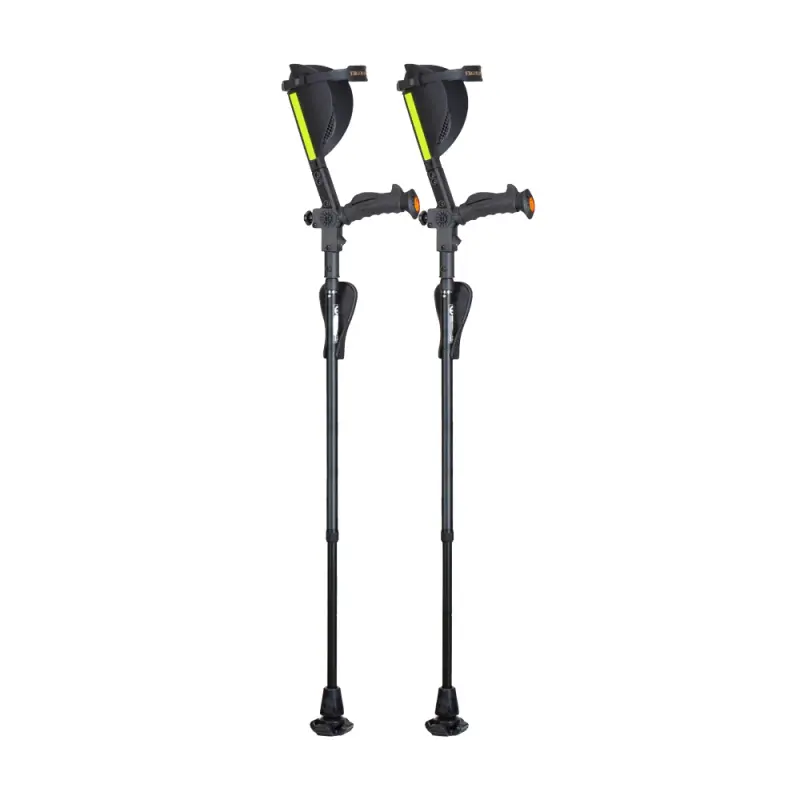
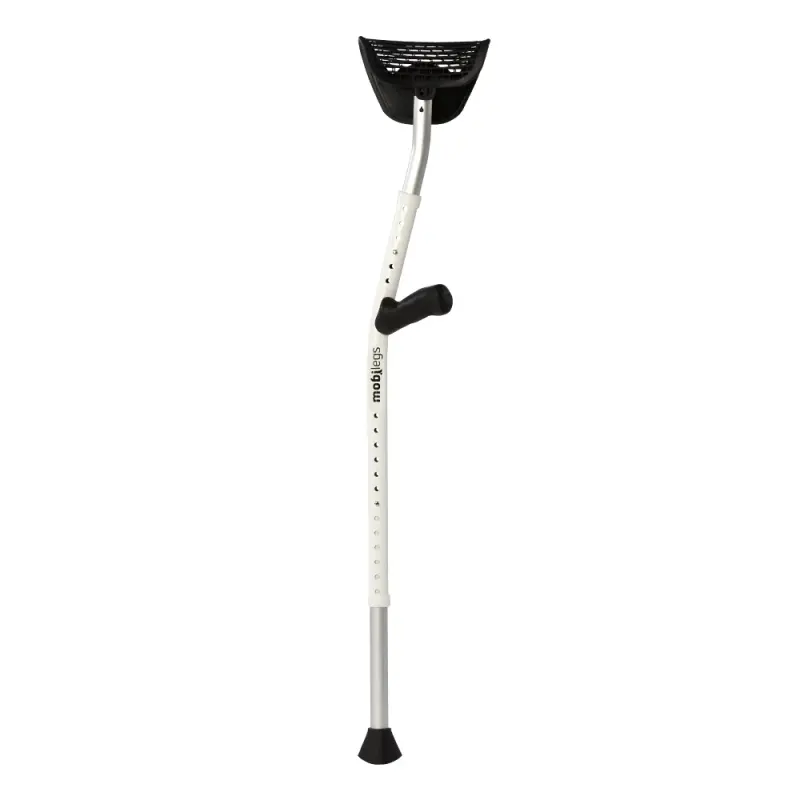
| Ergonomic or shaped underarm | Underarm crutches with a curved frame, a pivoting top or a rocker foot | Sold by makers; see the price table |
| Knee crutch | A frame strapped to the leg so the knee rests on a platform and the hands are free | Retail; a different device from the crutches in this guide |
| Crutches used with an exoskeleton | Crutches that a person uses with a powered exoskeleton | Rehabilitation centres and personal exoskeleton users |
The FDA files crutches under their own product code, IPR, and tips and pads for canes, crutches and walkers under another, INP. Canes have their own codes. The cane guide covers canes, and the walker and rollator guide covers walkers and knee walkers.
Underarm or forearm: how the choice is made
MedlinePlus says crutches may be a good choice after a leg injury or surgery "if you only need a little help with balance and stability," and says a walker "may be a better option for you than crutches" if you have a lot of pain, weakness or balance problems. It does not compare underarm and forearm crutches. That choice belongs to the physical therapist or physiotherapist who sees you walk, and it depends on your strength, balance, the injury and how long you will need them.
What you can do is understand what each kind asks of you, so you can ask good questions.
- Underarm crutches have a pad that sits under the arm, but MedlinePlus is clear that the pad is not for leaning on: "Let your hands carry your weight, not your armpits," it says.
- Forearm crutches have no underarm pad. The cuff keeps the crutch on the arm, so letting go of the handle does not have to mean dropping the crutch; a report about cuffs that were too large, later in this guide, describes the opposite.
- Both kinds have a single rubber tip. Tips are the part named most often across all the crutch reports, mostly in reports that do not say which kind of crutch it was.
- Each kind has parts the other lacks, and those parts appear often in its reports: the top and pad on underarm crutches, the cuff on forearm crutches. Part of this is how the reports were sorted, as the reports section below explains.
If you are offered a kind you find hard to use, say so. A crutch that hurts is a crutch you will lean on wrongly.
The parts of a crutch, named
| Part | Underarm crutch | Forearm crutch |
|---|---|---|
| Top | Padded underarm piece across the two rails | Cuff, open at the front or side, sometimes on a hinge |
| Hand grip | A bar between the rails, held by a bolt and wing nut or a clip | A handle fixed to the tube |
| Height adjustment | Push buttons or pins in the leg; on some models, bolts that set the grip height | Push button or pin in the lower tube; sometimes one for the cuff |
| Shaft or leg | Two rails above, one leg below | One tube |
| Tip or ferrule | Rubber tip over the end of the leg | Rubber tip over the end of the tube |
| Hardware | Bolts, wing nuts, rivets, clips | Rivets, screws, clips |
Knowing the names helps when you call the supplier. Saying that the hand grip slips gets a faster answer than saying the crutch feels wobbly. Use the part names on the label or in the instructions. In Medline's 2026 reports, a customer reported that the "red clips keep coming off"; Medline's own note on another report calls them "red c-clips for the hand grip."
What crutches cost in 2026
These are listed prices on maker and retailer pages read in October 2026, some through the Mobility Atlas catalog (checked October 2026). Prices change, and some are sale prices, so confirm with the seller before you buy.
| Crutch | Kind | Listed price |
|---|---|---|
| Drive Medical Axillary Crutch (AliMed) | Underarm | From USD 49.75 |
| Drive Medical Deluxe Steel Forearm Crutch (AliMed) | Forearm, steel | USD 122.50 |
| Mobilegs Ultra (maker's shop) | Shaped underarm, sold as a pair | From USD 159.99 to 199.99 a pair, by design |
| Ergoactives 7G Ergobaum (maker's shop) | Folding forearm with shock absorber, sold as a pair | Around USD 219 a pair on sale (regular USD 249) |
| iWALK3.0 Hands Free Knee Crutch (1800wheelchair) | Knee crutch | USD 196 |
The catalog rows give the makers' own figures. Mobilegs lists the Ultra at about 2 lb each, for users from 4 ft 9 in to 6 ft 4 in and up to 300 lb. Ergoactives lists a unit weight of 2.9 lb and a maximum user weight of 350 lb in its specification table, but 360 lb in its description; when a page disagrees with itself, ask the maker which figure applies before you rely on it.
Replacement tips are cheap. MedlinePlus says "You can get replacement tips at your medical supply store or local drugstore." Buy a spare pair when you get the crutches. Ask the supplier which tip size fits your crutch, or take the old tip with you.
Does Medicare pay for crutches?
Does Medicare pay for crutches? Mobility Atlas read the Medicare coverage rule for canes and crutches in October 2026, and the answer is yes when the rule's criteria are met. Local coverage determination L33733 says crutches are covered when the person has a mobility limitation that significantly impairs one or more "mobility-related activities of daily living (MRADL) in the home," such as toileting, feeding, dressing, grooming and bathing; when the person "is able to safely use the cane or crutch"; and when the problem "can be sufficiently resolved by use of a cane or crutch." The rule lists six crutch codes (E0110 to E0114 and E0116) as covered when those criteria are met. It denies one kind outright: an "underarm, articulating, spring assisted crutch" (E0117). A Standard Written Order must reach the supplier before the claim. Medicare's equipment page says that after the Part B deductible "you pay 20% of the Medicare-approved amount," if the supplier accepts assignment.
Use a supplier enrolled in Medicare: the equipment page says Medicare "will only pay for DME items if you get them from suppliers who are enrolled in Medicare." Medicare Advantage plans, Medicaid, workers' compensation and private insurers set their own rules; confirm with the plan before you buy. Outside the US, ask the hospital ward or the physiotherapy department how crutches are supplied, lent and returned where you live.
One more Medicare rule applies only to codes E1035 and E1036, two kinds of multi-positional patient transfer system, not to an ordinary patient lift. When one is covered, the patient lift rule says "payment will be discontinued for any other mobility assistive equipment," and it names crutches among them. If both are on your list, ask the supplier how they will be billed.
Fitting underarm crutches: what MedlinePlus says
Fitting is done by the physical therapist, nurse or supplier when you first get the crutches. MedlinePlus gives the checks you can repeat at home:
- Height: "The top should be 1 to 1 1/2 inches (2.5 to 4 centimeters) below your armpit," MedlinePlus says.
- Grips: "The handles should be at hip level," the page says.
- Elbows: "Your elbows should be slightly bent when you hold the handles," the page says.
- Tips: keep them "about 3 inches (7.5 centimeters) away from your feet so that you do not trip," the page says.
- Weight: the hands carry it, not the armpits.
If anything hurts, or the crutches feel too long or too short, ask the person who fitted them to check again rather than adjusting by guesswork. If they tell you to change the height, follow the maker's instructions, and check that every button is fully out through its hole on both crutches. The FDA reports show why that last check matters: 74 name the height adjustment as the part that failed first.
Forearm crutches: fit belongs to the therapist
MedlinePlus's crutch page describes underarm crutches. It gives no fitting rules for forearm crutches, and neither does the Medicare rule. The handle height, the cuff height and how tight the cuff should be are set by the physical therapist or physiotherapist who fits them, and the maker's instructions say how the adjustments work on that model.
What the reports add is a list of things to look at. Forearm crutch reports name cuffs that crack, rivets that snap, screws that fall out of the cuff, and cuffs that are the wrong size. One Medline report says "the forearm cuffs are too large" and that the crutch falls when the user stops. If a cuff is loose on your arm, or the crutch drops when you open your hand, tell the person who fitted it.
Walking with crutches
Your physical therapist or surgeon decides how much weight your injured leg may take. MedlinePlus lists four levels you may be told: non weight-bearing, touch-down or toe-touch weight-bearing, partial weight-bearing, and weight-bearing as tolerated. Ask which one applies to you, and for how long.
For walking with the weak leg off the ground, MedlinePlus describes these steps:
- Place the crutches about 1 foot (30 centimeters) in front of you, slightly wider apart than your body.
- Lean on the handles and move your body forward, using the crutches for support.
- Finish the step by swinging the strong leg forward and putting your weight on it.
- Turn by pivoting on the strong leg, not the weak one.
MedlinePlus also says to look forward, not at your feet, and to go slowly: "It may take a while to get used to this movement." Other patterns, such as walking with one crutch or with forearm crutches over a long time, should be taught by your therapist.
Sitting down and standing up
MedlinePlus describes the same method for a chair, a bed or a toilet, and suggests a chair with armrests.
To sit down
- Back up until the seat touches the back of your legs.
- Move the weak leg forward and balance on the strong leg.
- Hold both crutches in the hand on the same side as the weak leg.
- With the free hand, reach for the armrest or the seat, and sit down slowly.
To stand up
- Move to the front of the seat with the weak leg forward.
- Hold both crutches in the hand on the weak side.
- Push up from the seat with the free hand.
- Balance on the strong leg, then put a crutch in each hand.
MedlinePlus also says to rest crutches "upside down when you are not using them so that they do not fall down." A crutch that slides to the floor is one you have to bend for, and bending on one leg is a fall risk.
Stairs on crutches
MedlinePlus says to avoid stairs until you are ready, and that before you can manage them on your feet you can sit down and scoot up or down one step at a time. When you are ready, practise first with someone supporting you.
- Going up: "Step up with your strong leg first," MedlinePlus says, then bring the crutches up, then the weak leg.
- Going down: "Put your crutches on the step below first," the page says, then the weak leg, then the strong leg.
- With a handrail: hold the rail and carry both crutches in the other hand. MedlinePlus warns this "may feel awkward" and says to go slowly.
Stairs matter in the reports too. By a word search, 21 of the 609 crutch reports mention stairs, and 15 of those describe an injury. Some describe a crutch part said to have failed on the way down: one report says the adjustment section of a crutch broke on the second stair from the top, and the user fell down the stairs. In another, a user reported that a crutch bent "while descending carpeted stairs," but the maker's report says an independent laboratory found the crutch "could not have caused the accident as described." Check the buttons and the grip before you take on stairs, every time.
Making the home safer on crutches
MedlinePlus lists the basic changes:
- Secure loose rugs, rug corners that stick up, and cords, so the crutch tips cannot catch.
- Remove clutter, and keep floors clean and dry.
- Wear shoes or slippers with rubber or non-skid soles; MedlinePlus says "Do not wear shoes with heels or leather soles."
- Use a chair with armrests for sitting and standing.
Think about the routes you use most: bed to bathroom, kitchen to chair, the front door. Move furniture so there is room for the crutches on both sides of you. Put a light where you will need it at night. The FDA reports include falls with no part broken, such as one where a user's "pajama bottoms caught on the crutches"; the maker's note says they caught on the wing nut and calls the loose clothing "the most probable cause." Loose clothing can catch on a crutch.
Tips: the part that wears out first
The rubber tip is the part named most often in the FDA reports: 175 of the 609 crutch reports name a tip or ferrule as the part that failed first. That count needs care: 100 of the 175 are the same one-line dealer note, filed by one maker, Maxhealth, in 2013. Without that batch there are 75 tip reports, fewer than the 112 about shafts. Many of the others describe tips worn through to the metal. One report says a user was walking across a tile floor "without noticing that one of the rubber tips was worn-out," and that when "the exposed metal end of the crutch contacted the floor, the crutch slid forward." A Medline report from 2026 says the tips were "wearing out within two months of use." Another says they were "busting off within a week of use."
Checking and replacing a tip
- Turn the crutch upside down in good light.
- Look for splits, cracks and worn patches, and for metal showing through.
- Check the tips daily and replace them if they are worn, as MedlinePlus advises.
- Fit the new tip as the maker's instructions or the supplier show you, then lean on the crutch to check it sits firmly.
Ask the supplier which tip size fits your crutch, or take the old tip with you. One 2026 report describes a tip jammed on so tightly that the customer called it "impossible to remove"; the maker's note says Medline got it off "with force and tools." If yours will not come off, ask the supplier rather than cutting it.
Wet floors, ice and snow
MedlinePlus says to keep floors "clean and dry." Only a few crutch reports describe a wet floor. One report says a user came indoors "with wet crutches due to wet grass" and slipped on the floor inside; another user slipped on a kitchen floor flooded by a sprinkler. A third report, not about water, describes crutch ends that were "very slippery no matter what type of floor."
- Dry the tips on a mat or towel as you come indoors.
- Go slowly on wet tiles, polished floors and ramps; MedlinePlus says to go slowly while you get used to crutches.
- Outdoors in winter, ask the supplier about ice attachments; AliMed's canes and crutches page lists an item called Ice Grip at USD 20.75. Ask the seller whether it fits your crutch and how the maker says to use it.
- Ask your physical therapist whether you should go out on snow and ice at all.
Carrying things on crutches
On crutches your hands are busy. MedlinePlus says to use "a small backpack, fanny pack, or shoulder bag" for things you need, such as your phone. Do not hang a bag from the hand grip, where it can swing into the crutch leg.
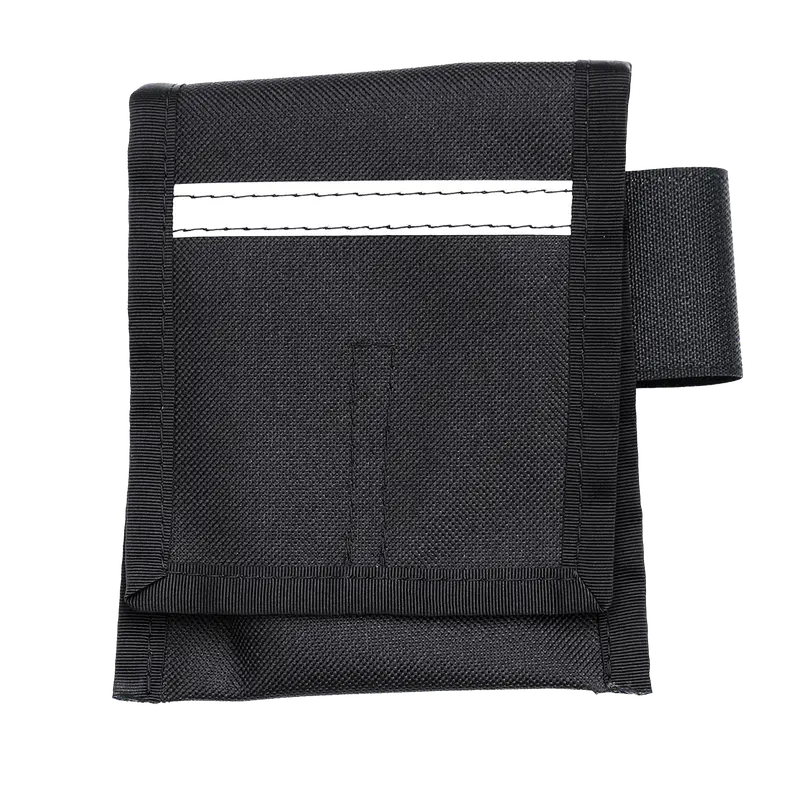
Clip-on holders can help. The Mobility Atlas catalog lists a Diestco phone pouch that straps to a vertical tube on a chair, walker or crutch (no price shown on the maker's page). Keep anything you attach light, and keep it away from the hand grip and the buttons.
Children's and youth crutches
Crutches come in child, youth, adult and tall adult sizes. The size range is printed on the crutch or the label; one recalled wooden crutch range, for example, ran from a Child size marked 28 to 36 inches up to Large Adult. A child between sizes can be hard to fit, and a few older reports describe youth crutches that were too short: one says the youth crutches did "not meet the requirements for a child 4 ft. 10 inches tall."
Children grow, so ask the person who fitted the crutches when to check them again. One more point from the reports: keep crutches out of reach of babies and toddlers when they are not in use: one report from a parent describes a young child who managed to "get his body stuck between the 2 long pipes" of underarm crutches, around the neck. The child was freed unhurt. Lay crutches flat or stand them upside down in a corner where little children cannot play with them.
Weight limits and heavy-duty crutches
Crutches carry a maximum user weight on the label or in the instructions. Some standard aluminium crutches in the report headers are labelled 250 lb or 300 lb, and heavy-duty or bariatric crutches are made for more. By a word search, 7 crutch reports state a weight, such as a rating or the user's weight. One report says the crutch maker rated the crutches at 250 lb, the facility at 300 lb, and the user weighed 270 lb.
The weight limit is a maximum, not a promise that a crutch will never fail below it. One report from a care facility says the plastic brace broke on two crutches during training and that "both patients were well below the crutches' weight limit." Check the label, tell the supplier your weight, and ask for a heavy-duty model if you are close to the limit.
Crutches and a wheelchair
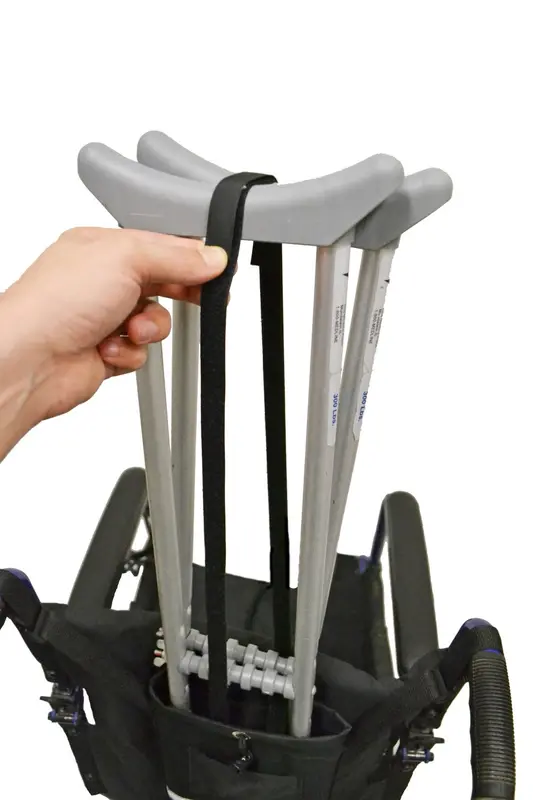
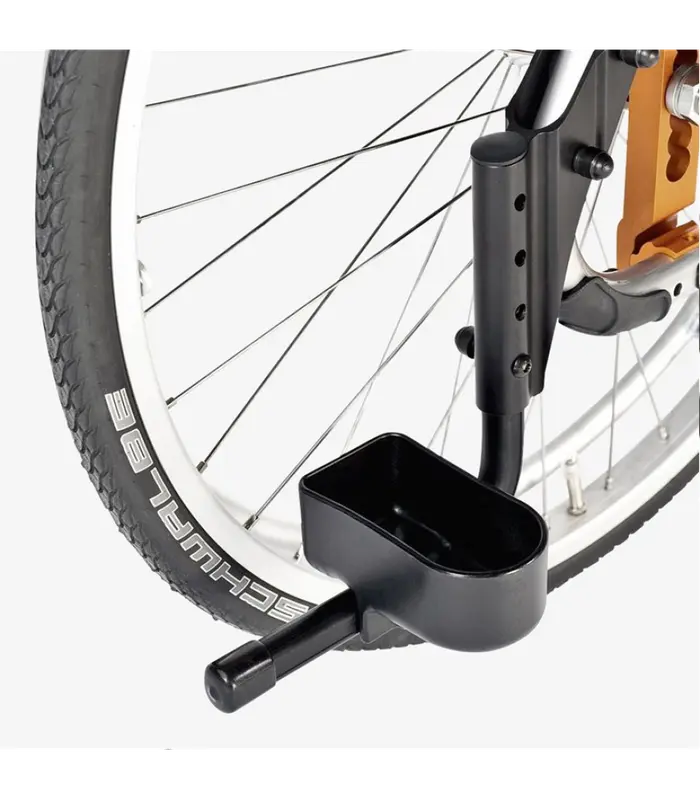
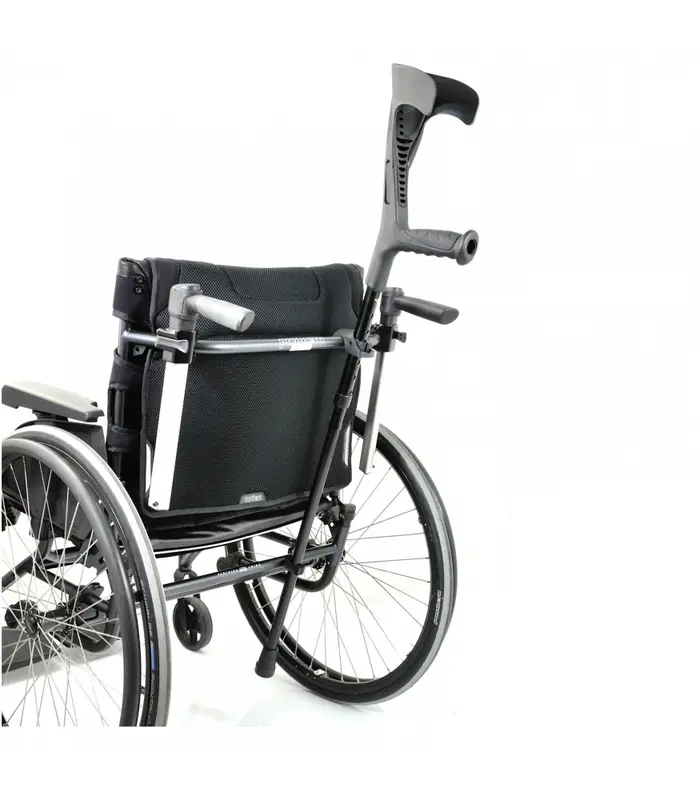
Some wheelchair users also walk short distances with crutches, and the Mobility Atlas catalog (checked October 2026) lists holders made for them.
| Holder | How it fits | Listed price |
|---|---|---|
| Diestco Crutch Holder for Wheelchairs | Polyester sleeve that hangs from the push handles; 8 in wide, 25 in tall | No price on the maker's page |
| Quickie Crutch Holder | Fits at the rear frame of listed Quickie chairs; needs a tip assist attachment | Around GBP 88.81 ex tax (EPC Wheelchairs, UK) |
| Panthera Crutch Holder (Permobil) | Clip on the backrest tube and magnet on the frame; 46 g per crutch | Around GBP 58 ex tax (EPC Wheelchairs, UK) |
The Panthera clip lists an upper clip for crutch tubes of 19 to 22 mm and a lower one for 16 to 19 mm, so measure your crutch tube before ordering. Carry crutches tip down and away from the wheels, and check they cannot slide into the spokes. The lightweight wheelchair guide covers chairs that fold small enough to take with you.
Crutches with an exoskeleton
Some powered exoskeletons are used with crutches. In the Mobility Atlas catalog, the ReWalk 7 is described as letting people with spinal cord injury stand, walk, turn and use stairs with crutches, and the FREE Walk as used with crutches by people who have enough arm strength for them. The crutches carry part of the balance work, so their tips, buttons and cuffs need the same checks as any other pair. Who can use an exoskeleton is decided by the rehabilitation team and the maker's indications; the ReWalk listing, for example, requires a certified companion. Ask the trainer which crutches the maker specifies.
Instead of crutches: knee crutches and knee walkers
If one lower leg must stay off the ground and your arms tire quickly on crutches, ask your physical therapist whether a knee crutch or a knee walker suits you. On one large retailer's site in October 2026, the iWALK3.0 Hands Free Knee Crutch was listed at USD 196 with a 275 lb weight capacity, and knee walkers and knee scooters from USD 160 to 470, with weight capacities from 250 to 400 lb. They suit only some injuries. A walker suits people who need more support than crutches give, as MedlinePlus notes; the walker and rollator guide covers both.
Travelling on crutches
In the United States, the airline rule at 14 CFR 382.123 says a passenger with a disability who preboards can stow "other assistive devices" in the priority cabin stowage area, ahead of other passengers' carry-on items (except wheelchairs), consistent with FAA, PHMSA and TSA rules on security, safety and hazardous materials for carry-on items. Ask the airline whether it treats your crutches as an assistive device. If you do not preboard, the rule says you can use the area "on a first-come, first-served basis." Rules differ by country and airline; confirm with the airline before you travel.
- Ask your physical therapist to show you how to get into and out of a car on crutches before you need to.
- Pack a spare pair of tips; long walks on airport floors wear them.
- Ask the airline what help it offers between the gate and the aircraft if the walk is long.
- Ask the crew where your crutches will be stowed and how to get them back during the flight.
New crutches out of the box
50 of the 609 crutch reports describe a problem found new, at first use or on delivery. Underarm pads and tops are the most common: 20 of the 37 reports about pads and tops were problems on arrival, such as one Medline report of a top "cracking/breaking new out of the packaging." Other reports describe a missing wing nut, a bad tip "out of the box," and adjustment holes on one pair said to "lack the proper finish and appropriate de-burring," which, the customer said, caused abrasions on their wrists.
- Unpack in good light, and check that you have two crutches of the same size and every bolt, wing nut and tip.
- Look over the top, the grips, the holes and the tips for cracks, sharp edges and burrs.
- Set the height as the person who fitted you showed, on both crutches, and check every button is fully out.
- Lean on each crutch at home, near a chair, before you walk on it outdoors.
- If anything is cracked, missing or sharp, do not use it; call the supplier the same day.
Used, borrowed and loaned crutches
Crutches are often lent by hospitals, passed between friends and returned to loan stores. A used pair may carry worn tips, cracked tops, stretched adjustment holes or a missing pin. A 2026 report explains the last problem in one line: "Over time the adjustment holes expand and the brass pin starts to wear," the customer said, and then the pins "pop out."
- Replace the tips on any borrowed pair before you use it.
- Look at every adjustment hole: it should be round, not oval, and not cracked at the edge.
- Check the label for the size range and weight limit, and look up recalls for the model.
- Ask the loan service how to return the crutches and what to do if one breaks.
Daily and weekly crutch checks
| When | Check | If it fails |
|---|---|---|
| Daily | Both tips: no splits, no metal showing | Replace the tips before walking |
| Daily | Every button or pin fully out, same hole on both | Reset; replace a button that will not lock |
| Weekly | Hand grips do not twist or slide; bolts and wing nuts tight | Tighten; replace a cracked grip |
| Weekly | Underarm top or forearm cuff: no cracks, rivets tight | Stop using a cracked top or cuff; call the supplier |
| Weekly | Legs and tubes: no bends, dents or cracks, especially at the holes | Stop using a bent or cracked crutch |
| After a fall or a drop | All of the above | Have the supplier check it |
A crutch that has bent, even slightly, should not be bent back and used. Some reports describe crutches that bent and then broke.
How Mobility Atlas read 609 FDA reports on crutches
The FDA collects reports about medical devices in a database called MAUDE. Makers, importers and user facilities such as hospitals are "mandatory reporters"; the openFDA page names "voluntary reporters such as health care professionals, patients, and consumers." Crutches are filed under product code IPR, and tips and pads for canes, crutches and walkers under INP. Canes have two codes of their own, IPS and KHY.
We read canes and crutches together. The pool was every report with text filed under IPS, KHY or IPR at any date, plus every INP tip-and-pad report whose text names a cane or a crutch: 1,214 reports, received from June 1992 to 30 September 2026, read in openFDA on 17 October 2026 (the data was last updated on 7 October 2026). 8 turned out to be about another device. The rest split into a cane group of 597 reports and a crutch group of 609, which this guide counts. The canes are counted in the cane guide.
Before reading a single report, we wrote a codebook and fingerprinted it with a time stamp, so any later change to it would show. For each report it records the kind of device (underarm crutch, forearm crutch, or crutch of a kind not stated), the part that the report says failed first (tip, height adjustment, shaft, hand grip, underarm pad or top, forearm cuff, hardware, another part, a problem with no part named, or nothing failed), how it failed (broke, bent or collapsed, came loose, wore out, slipped), and flags for injury, fall, a problem on arrival, and what the maker found.
Two independent coders then read every report separately, without seeing each other's answers. The coders were AI language models working separately; the method page says exactly how. Across all 1,214 cane and crutch reports, they agreed on the kind of device in 96.6 percent of reports (kappa 0.957) and on the part in 93.3 percent (kappa 0.923); kappa is a standard measure of agreement beyond chance, and these are very high. Agreement on the flags was higher still: injury 99.5 percent (kappa 0.989), fall 99.3 percent (kappa 0.986). We settled the 200 reports where they differed on any field (109 of them crutch reports) under written rules, then made a consistency pass that changed codes in 207 more (76 crutch reports), and counted the results by script. Where we give a count from a word search, it runs over the description of the event, not over the maker's later follow-up notes.
What these reports cannot tell you
The FDA says these reports are "not intended to be used either to evaluate rates of adverse events" or to compare devices, and that a report "does not necessarily demonstrate that the device caused or contributed" to the event. They are what people and companies chose to send, not a count of every broken crutch. The FDA itself lists "under-reporting of events" among the limits of these reports.
So the numbers here count reports, not crutches or users. They show which problems people report and in what words. They cannot show how often a crutch fails, whether one brand or kind is safer, or whether crutches have got better or worse. A single maker's filing habits can move a year's total more than any change in the products, as the section on dates shows.
Reports are also duplicated: the same event, or the same one-line note, can be filed many times. In the crutch group, 127 reports repeat the event text of another report word for word, including one maker's tip note filed 100 times in 2013 and six copies of one report of a forearm crutch hand grip that moved and caused a fall. We counted every report as filed, and we say where a count leans on copies.
What the reports show: the big picture
What goes wrong with crutches? Mobility Atlas had two independent AI coders read 609 FDA reports on crutches, received from June 1992 to 30 September 2026, and the answer is mostly ordinary wear and breakage. The part named most often is the rubber tip, in 175 reports, but 100 of those are one maker's identical one-line note filed in 2013. Without that batch there are 75 tip reports, and shafts and legs that snap or bend lead with 112 (102 once word-for-word copies are removed). Next come hand grips that come loose or break (77) and height buttons, pins and clips that fail to lock (74). Forearm cuffs appear in 49 reports and underarm pads and tops in 37. 186 reports describe a fall and 167 an injury, and 130 describe both. None was filed as a death. Some reports repeat others word for word, and all of them are reports, not rates: they show what to check, not how often crutches fail.
| Part that failed first | Reports | With injury | With a fall | Found on arrival |
|---|---|---|---|---|
| Tip or ferrule | 175 | 39 | 43 | 2 |
| Shaft, leg or tube | 112 | 40 | 52 | 5 |
| Hand grip | 77 | 22 | 25 | 4 |
| Height adjustment: button, pin, clip, holes | 74 | 20 | 22 | 8 |
| Forearm cuff | 49 | 9 | 9 | 2 |
| Problem alleged, no part named | 45 | 21 | 18 | 5 |
| Underarm pad or top | 37 | 3 | 3 | 20 |
| Hardware: bolt, screw, rivet, wing nut | 17 | 3 | 4 | 2 |
| Another named part | 13 | 3 | 2 | 2 |
| Nothing failed | 10 | 7 | 8 | 0 |
By how the part failed, 218 reports describe something that broke or cracked, 158 something worn out (100 of them the 2013 tip note), 94 something loose or detached, and 52 a crutch that bent or collapsed. Read the table with the next section in mind. 356 of the 609 reports do not say what kind of crutch it was, so the table mixes underarm and forearm crutches and cannot be split cleanly between them.
356 reports do not say which kind of crutch
This is the biggest gap in the data, and it matters for anyone choosing between underarm and forearm crutches. Of the 609 crutch reports, 140 were coded as underarm crutches (including plain "aluminium", "standard" or "wooden" crutches, as the codebook says) and 113 as forearm crutches. The other 356 say only "crutch" or "crutches," with no detail that tells the two apart. We coded them as kind not stated rather than guess.
Many of the 356 are very short. Some say only that "the crutch snapped in half during use," as one report does, or are a dealer's one-line note. 134 of the crutch reports were filed under the FDA's code for tips and pads, and tip reports rarely describe the crutch above the tip: of the 356 reports of unstated kind, 151 are about tips, and 100 of those 151 are the 2013 Maxhealth batch. So the unstated group is not a random mix, and the underarm and forearm counts below cannot be scaled up to all crutches.
Which is safer, underarm or forearm crutches?
Which is safer, underarm or forearm crutches? Mobility Atlas read 609 FDA reports on crutches in October 2026, and the honest answer is that the reports cannot tell you. 356 of them do not say which kind of crutch was involved, and the FDA says its reports cannot be used to compare devices or rates. Each kind has parts the other lacks, and those parts appear often in its reports. In the 140 underarm reports, the part named most often is the underarm pad or top (37), then the hand grip (26), the tip (21) and the shaft (20). In the 113 forearm reports, it is the cuff (49), then the shaft (20), the height adjustment (14) and the hand grip (11). Part of that is how the reports were sorted: a report that mentions a cuff was counted as a forearm crutch. Check the top or the cuff, and the tips and buttons. Your physical therapist decides which kind suits you.
Underarm crutches in the reports
The 140 underarm crutch reports include 53 with an injury and 57 with a fall. The top and pad lead: reports describe tops that cracked under the pad, a pair that a care facility's report says was found "broken at the top under the armpit padding" after training, and a 2026 report of a user who took the pad off and found "broken pieces all over." Many of these were found on arrival, before anyone was hurt, which is why unpacking and checking a new pair matters.
Hand grips come next. Underarm crutch grips are held by a bolt and wing nut or a clip between the two rails, and the reports describe grips that came loose or snapped. One report says a wing nut "came loose on the hand grip, came out," and the user fell after leaving the emergency room; a 2026 report says "the handle broke" and the wing nut and washer had not been found. One older report describes wooden youth crutches that cracked "when the handgrip is lowered to the third or fourth position."
Forearm crutches in the reports
The 113 forearm crutch reports include 40 with an injury and 42 with a fall, and six of them are copies of one report of a hand grip that moved. Cuffs lead with 49 reports, partly because a report that mentions a cuff was counted as a forearm crutch. They describe cuffs that broke, cracked or peeled, a cuff that "is no longer round," screws that "fell out of the cuff assemble (side opening cuff) after only two weeks of use," and one report in which "the rivet that connects the cuff to the cane snapped off" and the user fell inside her home. Another says the user fell when the cuff broke and tore ligaments in a knee.
Shafts and buttons follow. One forearm crutch report describes a crutch "broken at the upper most pre-drilled hole used for the push button adjustment," and an older one a brass pin "retracting into the adjustment hole" three times in ten days. The holes are where a tube is weakest, which is why a crack at a hole is a reason to stop using the crutch.
Tips and ferrules
175 reports name a tip or ferrule as the first part to fail, and 151 of them do not say which kind of crutch. 39 describe an injury and 43 a fall. One phrase repeats because one maker, Maxhealth, filed it 100 times in 2013: "the crutch tip is wearing down prematurely," a dealer reported, with no injury or fall. Without those copies there are 75 tip reports. The others say tips "wore through," or that they "disintegrated and came from underneath her while walking," as one 2026 report says. When the rubber is gone, the metal end of the leg meets the floor, and on tile it slides.
Some reports describe a tip that broke rather than wore. One user, who reported being 6 ft 2 in and 260 lb and said the crutches fitted perfectly, reported that a rubber tip broke during use and they fell, hitting their back, head and the ankle they had surgery on. Others describe tips that came off. The lesson in all of them is the same as MedlinePlus gives: check the tips daily and replace worn ones.
Height adjustment: buttons, pins and clips
74 reports name the height adjustment, and 20 of them describe an injury. By a word search, 18 crutch reports mention a button. The failures are of three kinds: a button that does not fully lock, so the leg slides; a button or pin that breaks or wears; and a tube that cracks at the hole. One report says "the adjustment section of the crutch broke" on stairs, and the user fell and went to hospital. A 2026 report says a pin "is sheared off," and the customer described how the brass pins "pop out exposing the spring tension wire."
After any height change, look at every button from both sides and push down hard on the crutch before you walk. If a button sits halfway, or the hole has become oval, stop using that crutch and ask for a replacement.
Shafts and legs that snap or bend
112 reports name the shaft, leg or tube (102 once word-for-word copies are removed), and these hold the most falls of any part: 52, with 40 injuries. Some are short, such as a 2026 report that "the bottom half of the leg fractured and broke while he was walking." Others describe a crutch that bent, including one stairs report where the maker's laboratory said the crutch could not have caused the fall. Some name no part at all: one report from a care facility says a crutch "suddenly collapsed" during training and the physical therapist had to help the patient keep their balance. One older report from a parent describes a forearm crutch that "collapsed into 3 pieces."
A bent crutch is a weakened crutch. If a leg is dented, bent or creased, even slightly, stop using it. Do not straighten it and carry on.
Hand grips
77 reports name the hand grip, with 22 injuries and 25 falls. Grips that work loose are the commonest story: "the rivets in hand grips keep on coming loose," a 2026 report says, and an older one that "the hand piece of the crutch popped right out while the patient was using it," for the second time that week. In one older report a hand grip "was loose and came off" and the user fell down a flight of stairs. Six reports, copies of one, say a hand grip "moved on her forearm crutch" and caused a fall.
Grip it, twist it, push it down. If it moves at all, tighten it or have it replaced before you walk.
Underarm pads and tops
37 reports name the underarm pad or the top of an underarm crutch, and 20 of those describe a problem found on arrival, more than for any other part. Only 3 describe an injury. A Medline report says the plastic top under the rubber armpit pad was "cracking/breaking new out of the packaging," and another, from 2026, that "once pressure was applied, part of the top of the crutch snapped off," on both crutches of two pairs from the same lot; Medline's note on that event says the "issue is most likely due to shipping damage." Lift the pad on a new pair and look at the plastic or wood underneath.
Forearm cuffs
49 reports name the cuff, all of them forearm crutches. 9 describe an injury and 9 a fall. 11 come from Medline's 2026 filings, and most describe slow problems: "the hardware on the cuffs are loose and stripped," one report says, and the maker's note on another says the cuff "has changed shape and is loose." A cuff that is cracked, out of shape or loose on its tube cannot hold the crutch steady. Check the cuff screws or rivets weekly, and replace a cracked cuff before it breaks.
Bolts, rivets and wing nuts
17 reports name a bolt, screw, rivet or wing nut without tying it to one part, and by a word search 23 crutch reports mention a rivet. They describe a wing nut missing "out of the box," a bolt that "fell out of crutch" while the user was walking down stairs, and a 2026 report that "a bolt on one of the crutches fell off." Wing nuts on underarm crutches can loosen with use. Check them weekly, by hand, and replace a missing one before you walk.
Falls with nothing broken
Not every report blames the crutch. 10 describe an event where nothing failed, and 7 of them an injury. They read like ordinary falls: wet crutch tips on an indoor floor, a slip on a kitchen floor flooded by a sprinkler, and pajama bottoms caught on a crutch. These are the falls that home changes and good shoes, as MedlinePlus lists them, are meant to prevent.
Injuries in the reports
167 reports describe an injury and 186 a fall. By a word search of the event descriptions, 29 use the word fracture, of a bone or of the crutch (21 of them in injury reports), 13 the head, 8 the hip and 7 the wrist. 19 mention surgery and 24 an emergency department or hospital. Some describe a new injury to the leg the person was already protecting: two reports, filed by two companies with almost the same text, describe a user with a broken leg who fell when a crutch broke, with "another fracture to the same limb."
Some of these reports describe people who were using crutches after an injury or surgery. Take stairs slowly, keep floors clear, and ask for help while you are still learning.
What the makers found
In 76 of the 609 reports the maker found or confirmed a fault, often after seeing the crutch or a photo. In 28 the maker found no fault or named an outside cause, such as wear, misuse, loose clothing or shipping damage; in one stairs report the maker said an independent laboratory found the crutch "could not have caused the accident as described." In 505 the report says nothing either way, often because the crutch was not returned. Medline's 2026 reports account for 62 of the 76 confirmed faults.
If a crutch breaks, keep it. A maker can only check what it can see, and a report that ends with "not returned" tells nobody anything.
When the reports arrived
Crutch reports arrived unevenly. 289 of the 609 came from 2011 to 2014, with 171 in 2013 alone. That spike is not a change in crutches: most of those reports came from a few makers' filings, with Maxhealth named in 102, Jan Mao in 44 and HealthPlus in 28. 100 of the 171 reports from 2013 are one Maxhealth tip note repeated, and many others are one-line dealer or provider notes such as "provider states the unit's arm pads are cracked." Then 112 reports arrived in 2026, every one of them from Medline, mostly short customer complaints with 8 injuries and 13 falls among them; 102 of them say they were filed as part of Medline's "retrospective review activities," which Medline says include "review of historical data." That is a filing batch from one maker, not a sudden change in products.
| Years | Crutch reports |
|---|---|
| 1992 to 1996 | 1992: 1, 1994: 3, 1995: 5, 1996: 7 |
| 1997 to 2001 | 1997: 27, 1998: 25, 1999: 5, 2000: 6, 2001: 13 |
| 2002 to 2010 | 2002: 1, 2003: 2, 2005: 2, 2006: 3, 2007: 6, 2008: 7, 2009: 13, 2010: 14 |
| 2011 to 2014 | 2011: 19, 2012: 35, 2013: 171, 2014: 64 |
| 2015 to 2025 | 2015: 18, 2016: 12, 2017: 4, 2018: 4, 2019: 4, 2020: 5, 2021: 2, 2022: 4, 2023: 8, 2024: 2, 2025: 5 |
| 2026 (to 30 September) | 112, all Medline |
The 497 reports before 2026 describe 159 injuries and 173 falls; the 112 from 2026 describe 8 and 13. The 2026 reports name height adjustment (25), hand grips (21) and underarm tops (20) most often.
Who files these reports
By the maker named on the report, Medline is linked to 190 crutch reports, Maxhealth to 102, Sunrise or Guardian labels to 62, Jan Mao to 48, HealthPlus to 30, Drive to 19 and Invacare to 15; 143 name another maker or none. The reports were filed as 186 malfunctions, 100 injuries and 79 "other," and 244 carry no event type. Report counts depend on how much each maker sells and how it files, and the reports show neither; the counts say nothing about which crutch is safer.
The recall file
We read all 19 FDA recall records for the four cane and crutch codes. 14 concern crutches or crutch parts. In 2016 Medical Depot recalled aluminium crutches in six records, each listing 123,125 pairs, for "Tip crutch failure involving the bottom of the metal portion which comes in contact with ground," the recall says. In 2004 Duro-Med recalled laminated wood crutches in five sizes, and underarm pads, tips and hand grips sold as accessories, because they "were labeled as latex free, but contain rubber in the hand grips, tips and underarm padding," as the recall record states. All are listed as terminated. The other 5 records concern canes.
If you use second-hand or long-stored crutches, read the label, and search the FDA recall database for the maker and model. For anyone with a latex allergy, the Duro-Med recall is a reminder to check what grips, tips and pads are made of.
Mistakes the reports repeat
- Walking on tips worn through to the metal, especially on tile.
- A push button or pin not fully through its hole after a height change.
- Carrying on with a bent, dented or cracked crutch.
- Not checking a new pair: cracked tops, missing wing nuts and sharp holes were found on arrival.
- Ignoring a grip or cuff that has started to move.
- Taking stairs before being taught, or in a hurry.
- Wearing loose clothing that can catch on a crutch.
When to report a crutch problem to the FDA
If a crutch broke, collapsed or slipped and you fell or nearly fell, report it. Tell the supplier and the maker: makers are "mandatory reporters" to the FDA. You can also report it yourself through MedWatch, online at https://www.accessdata.fda.gov/scripts/medwatch, or by phone on 800-332-1088 to ask for a form, as the FDA's MedWatch instructions say.
Keep the crutch and any broken pieces, photograph the label, the damage and the tip, and write down the brand, the model, the size, where you got it and what happened. Clear reports help: 356 reports in this study could not even say what kind of crutch was involved.
Three composite scenarios
These are composite scenarios, not individual customers. Each one combines facts and ranges already given in this guide to show how the decision plays out.
Scenario one: a man leaving hospital after ankle surgery is given underarm crutches. At home his partner checks the tips daily as MedlinePlus advises, and in the third week finds metal showing through one. They buy replacement tips at the drugstore and fit both the same day.
Scenario two: a woman who has used forearm crutches for years notices one cuff wobbling. She finds a loose screw and a hairline crack, stops using that crutch, and asks the supplier for a new cuff. Her doctor also orders a new pair; because the rule's criteria are met and the supplier accepts assignment, Medicare pays its share and she pays 20 percent of the approved amount after the deductible.
Scenario three: a wheelchair user who walks short distances on crutches is tired of balancing them across her lap. She measures her crutch tubes, finds they fit the 19 to 22 mm clip of a frame-mounted holder, and has it fitted to her chair.
Questions to ask before you buy or borrow
- Underarm or forearm: which kind do you recommend for me, and why?
- What size range and weight limit does this pair have?
- Are the tips new, and what tip size do I buy when they wear?
- Is this model under any recall?
- Will Medicare or my plan pay, and does the supplier accept assignment?
- Who do I call if a button, grip or cuff fails, and how fast can they replace it?
Can't find a particular crutch, cuff or holder? Ask us to find it through the enquiry form, and we will point you to the maker or a seller.
Questions to ask the physical therapist
- How much weight may I put on my leg, and for how long?
- Are my crutches set to the right height, with the shoes I wear most?
- Can you watch me on stairs before I try them alone?
- When can I move to one crutch, a cane or no aid?
- My hands, wrists or armpits hurt: is something set wrong?
- Would a walker or a knee walker be better for me?
Your physiotherapist, surgeon or other clinician knows your injury and your balance. Every decision about weight bearing, gait and when to stop using crutches belongs to them.
Your plan: 10 minutes, today, this week
In 10 minutes: turn both crutches upside down and check the tips, then check every button, grip and wing nut.
Today: clear the routes you use most, secure rugs and cords, and put your phone in a bag you can wear.
This week: check the top or the cuffs for cracks, buy a spare pair of tips, read the label for the size and weight limit, and look up the model in the FDA recall database.
Sources and documents
Reports: every FDA MAUDE device report with text under product codes IPS, KHY and IPR, and every INP tip and pad report whose text names a cane or crutch, received from June 1992 to 30 September 2026, downloaded through openFDA on 17 October 2026; this guide counts the 609 about crutches. Recalls: all 19 FDA recall records for those four codes, downloaded through openFDA. Use: MedlinePlus pages on using crutches and using a cane. Funding: the Medicare local coverage determination for canes and crutches, the patient lift rule, and Medicare's equipment page. Travel: 14 CFR 382.123. Prices: AliMed's canes and crutches page, 1800wheelchair's knee walker page, and the makers' and one UK retailer's (EPC Wheelchairs) pages in the Mobility Atlas catalog, checked October 2026. Every source is linked in the list at the end of this page.
Related guides on Mobility Atlas: Walking canes; Walkers and rollators; Lightweight and transport wheelchairs.
Method in brief: we coded the 1,214 cane and crutch reports in the pool using a codebook written and fingerprinted before coding, with two independent coders (agreement across all 1,214 reports on the kind of device 96.6 percent, kappa 0.957; on the part 93.3 percent, kappa 0.923), settled the 200 reports where they differed on any field (109 of them crutch reports) under written rules, changed 207 more in a consistency pass (76 crutch reports), and counted the results by script. The two coders were AI language models working separately, each without access to the other's answers. Quotes from reports are shown in sentence case; the FDA publishes many of them in upper case. 127 crutch reports repeat another's text word for word; all were counted as filed. The codebook, the method and the coded table are on the data and method page under CC BY 4.0.
Prices checked October 2026 on AliMed's and 1800wheelchair's pages, and on the makers' and EPC Wheelchairs' pages in our catalog (checked October 2026); prices change, so confirm them with the seller. Documents checked October 2026: FDA reports and recall records, the Medicare rules and pages, the MedlinePlus pages and the federal airline rule.
Have crutches let you down, or lasted for years? Send us a note through the enquiry form with the model and what happened; we use readers' notes when we update the guide.
This article is general information. Rules and prices differ by country and change, so confirm them before you buy or travel.
Common questions
How much do crutches cost?
On one US medical retailer's page in October 2026, the Drive Medical Axillary Crutch (underarm) was listed from USD 49.75 and a steel forearm crutch at USD 122.50. Shaped and shock-absorbing pairs in the Mobility Atlas catalog (checked October 2026) are listed at around USD 160 to 219 a pair, with one regular price of USD 249.
Does Medicare pay for crutches?
Yes, when a doctor or other provider orders them for use at home and the rule's three criteria are met: a mobility limitation that significantly impairs daily activities at home, the person can use them safely, and crutches resolve the problem. After the Part B deductible you pay 20 percent of the approved amount if the supplier accepts assignment.
How should underarm crutches fit?
MedlinePlus says the top should be 1 to 1 1/2 inches (2.5 to 4 centimeters) below your armpit, the handles at hip level, and your elbows slightly bent. Your hands, not your armpits, carry the weight. The person who fitted them should check them again if anything hurts.
How often should I replace crutch tips?
MedlinePlus says to check the tips daily and replace them if they are worn. Replace them at once if the rubber is split or you can see or feel metal. Tips are the part named most often in the FDA crutch reports, though 100 of those reports are one maker's identical note.
Are forearm crutches better than underarm crutches?
The FDA reports cannot compare them: 356 of 609 do not say which kind was involved. Your physical therapist chooses the kind that suits your injury, strength and balance.
What should I do if a crutch breaks?
Stop using it, keep it and any pieces, photograph the label and damage, and tell the supplier and maker. You can also report it to the FDA through MedWatch.
Sources
- FDA: About the MAUDE database and the limits of device reports
- openFDA: device adverse event endpoint (data used for this study)
- openFDA: device recall endpoint, product codes IPS, IPR, KHY and INP
- CMS: Local coverage determination L33733, Canes and crutches
- CMS: Local coverage determination L33799, Patient lifts
- Medicare: Durable medical equipment coverage
- MedlinePlus: Using crutches
- MedlinePlus: Using a cane
- eCFR: 14 CFR 382.123, priority cabin stowage for wheelchairs and other assistive devices
- FDA: SmartDrive recall notice, with how to report to MedWatch
- AliMed: canes and crutches (prices read October 2026)
- 1800wheelchair: knee walkers and knee scooters (prices read October 2026)
- Ergoactives: 7G Ergobaum forearm crutches (maker's page)
- Mobilegs: Ultra underarm crutches (maker's page)
- Diestco: crutch holder for wheelchairs (maker's page)
- EPC Wheelchairs: Quickie crutch holder (UK price read for the catalog, October 2026)
- EPC Wheelchairs: Permobil (Panthera) crutch holder (UK price read for the catalog, October 2026)
- Lifeward: ReWalk 7 Personal Exoskeleton (maker's page)
- Exoskeleton Report: FREE Walk listing
Read on 17 October 2026. The wording of the article is our own.
Data and method for this guide: the codebook, the coded reports and the list of documents, free to reuse under CC BY 4.0.