Walking canes in 2026: types, fit, prices, Medicare and what 597 FDA reports show
Single-point, offset, folding, quad and self-standing canes: fit, prices, Medicare, and what two AI coders found in 597 FDA reports.
Contents
- Stop and check before the next walk
- The short answer
- Single-point, offset, folding, quad and self-standing: which kind
- Handles and grips
- Tips, ferrules and ice grips
- What canes cost in 2026
- Does Medicare pay for a cane?
- Setting the height
- Which hand, and how to walk
- Steps, curbs and stairs
- Walking with a cane after surgery
- Helping someone who walks with a cane
- Weight limits and bariatric canes
- Standing up and sitting down
- Making the home safer
- Ice, rain and winter
- Folding canes, cars and travel
- Seat canes and self-standing canes
- A new cane out of the box
- Used, borrowed and handed-down canes
- When a cane is not enough
- Canes and wheelchair users
- How Mobility Atlas read 597 FDA reports on canes
- What these reports cannot tell you
- What the reports show: the big picture
- Kinds of cane in the reports
- The height adjustment: buttons, pins and holes
- Shafts that bend or snap
- Quad cane bases and welds
- Tips that wear, split or come off
- Handles and grips in the reports
- Folding canes in the reports
- Seat canes and self-standing canes in the reports
- Falls with nothing broken
- Head injuries, broken hips and other words in the reports
- Problems out of the box
- The death reports, read with care
- Who tells the FDA about a cane
- Inside the 2026 complaint reviews
- Wooden canes in the reports
- What the makers found
- When the reports arrived
- Who files these reports
- The recall file
- Mistakes the reports repeat
- A cane check
- Finding the model number and checking recalls
- Keeping a record when something goes wrong
- When to report a cane problem to the FDA
- Three composite scenarios
- Questions to ask before you buy
- Questions to ask the physical therapist
- Your plan: 10 minutes, today, this week
- Sources and documents
- Common questions
- Sources
Stop and check before the next walk
Already walking with a cane? Check these five things first. Choosing one? Start at the short answer below.
- The rubber tip is worn smooth, split, or worn through to the metal, or it comes off the shaft. MedlinePlus says to check the tip or tips of a cane daily and replace them if they are worn, and that you can get new tips at a medical supply store or drug store.
- The height button or pin does not stand fully out through its hole, or the cane shortens when you lean on it. Stop using it and call the seller.
- The shaft is bent, cracked or creased, especially around the adjustment holes. Do not use a cane that has bent; replace it.
- On a quad cane, the base rocks on a flat floor, a foot is bent, or a weld is cracked where the shaft meets the base.
- The handle turns, wobbles or has come loose from the shaft, or the foam grip is torn.
Each of these matches a part that FDA reports describe failing first. The data sections later in this guide show how often each part is named, and the cane check near the end puts them in one table.
The short answer
A cane takes some of your weight and helps your balance. MedlinePlus says a cane "may be a good choice if you only need a little help with balance and stability, or if your leg is only a little weak or painful." It names two main types: canes with a single tip, and canes with four prongs on the bottom. Folding canes, offset canes, seat canes and canes that stand up on their own are variations on those two.
On one medical retailer's first catalog page in October 2026, most canes were listed at USD 38 to 86: a wooden cane with a Fritz handle at USD 38.00, offset canes from USD 40.00, a stable-base quad cane at USD 53.50, and an adjustable offset cane at USD 85.50. Medicare Part B lists canes among the equipment it covers when a doctor orders one for use at home.
The right cane is the one your physical therapist or clinician chooses and fits with you. MedlinePlus says your surgeon or physical therapist "will help you choose the type of cane that is best for you," and that the type "will depend on how much support you need." The rest of this guide covers the things you can check yourself, and what 597 FDA reports say goes wrong.
Single-point, offset, folding, quad and self-standing: which kind
Canes look simple, but the kinds differ in how they carry weight and whether they stand up when you let go. The table describes each in plain words; it is not a prescription, and the choice belongs to your therapist.
| Kind | What it is | In the FDA data below, counted as |
|---|---|---|
| Single-point, straight or crook handle | One shaft, one rubber tip; wood or aluminium; the classic walking stick | Single-point |
| Offset cane | The shaft bends out near the top so the grip sits over the shaft | Single-point |
| Folding cane | The shaft comes apart into sections held by a cord inside | Folding, or special if it has a self-standing base |
| Quad cane (small or large base) | A shaft on a base with four short feet | Quad or multi-point |
| Three-point cane or hemi-walker | A base with three feet, or a wide frame used with one hand | Quad or multi-point |
| Self-standing cane | A single shaft with a wide or pivoting foot that lets it stand up | Seat, self-standing or other special |
| Seat cane | A cane that opens into a small seat | Seat, self-standing or other special |
MedlinePlus says to talk to your health care provider or therapist if you are having a lot of pain, weakness, or balance problems, because "crutches or a walker may be better options for you." The walker and rollator guide and the crutches guide cover those aids.
Handles and grips
The handle is where your weight goes in. MedlinePlus says simply: "Choose a cane with a comfortable handle." The main shapes are:
- Crook or tourist handle: the round hook of a classic walking stick, easy to hang on an arm or a chair back.
- Derby or Fritz handle: a short, curved handle.
- Offset or T-handle: a straight grip over the shaft, often with foam or rubber covers.
- Shaped or palm grips: moulded to the hand, made in left and right versions; check you have the right hand.
Which grip suits your hands is a question for your therapist. Whatever the shape, the grip should not turn on the shaft, the foam should not be torn, and there should be no gap where the handle meets the tube. A handle problem is a reason to stop and ask the seller, not to tape it up. The section on handles in the reports, further down, shows what users described.
Tips, ferrules and ice grips
The rubber tip at the bottom touches the ground with every step. MedlinePlus says to check the tip or tips daily and replace them if they are worn, and that "you can get new tips at your medical supply store or local drug store." A quad cane has four tips, so there are four to check.
- Buy the tip made for your cane's shaft size; ask the seller if you are unsure.
- Look at the underside. If the tread is smooth or you can see the metal, it is worn.
- One retailer listed an Ice Grip at USD 20.75 in October 2026; follow the maker's instructions for using one, and for taking it off indoors.
Some FDA reports about cane tips are filed under a separate product code, INP, which the FDA also uses for crutch tips, pads and grips. In the FDA reports, tips that wore through, split or came off came before falls; the data section on tips gives the count.
What canes cost in 2026
These are listed prices on the first catalog page of one US medical retailer, AliMed, read in October 2026. They are guide prices for the cane alone. Drug stores and online shops sell canes too; prices change, so check before you buy.
| Cane | Listed price (USD) |
|---|---|
| Fritz Handle Wood Cane | 38.00 |
| Drive Medical Offset Cane | from 40.00 |
| Lumex Bariatric Adjustable Offset Cane | 44.00 |
| Lumex Stable Base Quad Cane | 53.50 |
| Bariatric Adjustable Offset Cane | 55.83 |
| AliMed Adjustable Offset Cane | 85.50 |
| Ice Grip (ice tip) | 20.75 |
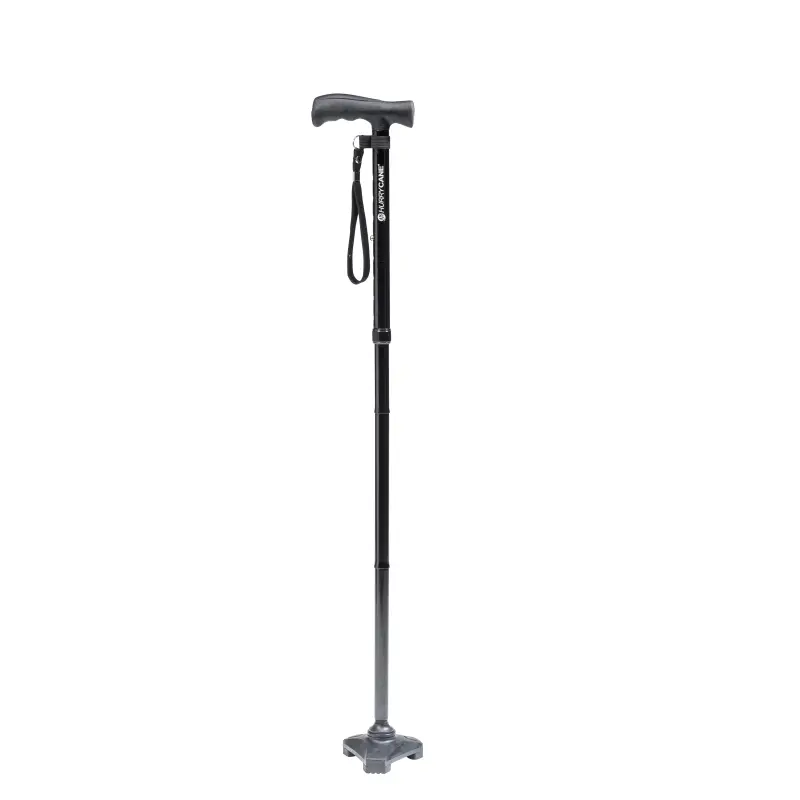
The Mobility Atlas catalog lists one cane, the HurryCane Freedom Edition folding cane with a pivoting base, at USD 39.95 to 39.99 on the maker's own shop (catalog checked October 2026); the catalog row says the shop describes it as tested to 350 lb and folding to about one third of its length. The same retailer lists a walking cane for blind users at USD 60.00. That is a different tool, and it is not covered in this guide.
Bariatric canes are sold for heavier users. Check the weight limit on the label or in the manual, and ask the seller if you cannot find it. If you want help finding a particular model, ask us through the enquiry form.
Does Medicare pay for a cane?
Does Medicare pay for a walking cane? Mobility Atlas read the Medicare coverage rule for canes and crutches, LCD L33733, and Medicare's equipment page in October 2026. Canes are on Medicare's list of durable medical equipment, and Part B covers them when a doctor or other provider orders one for use in your home. The rule says a cane is covered if all three conditions are met: you have a mobility limitation that significantly impairs your ability to do one or more mobility-related activities of daily living in the home, which the rule lists as toileting, feeding, dressing, grooming and bathing; you are able to use the cane safely; and the problem "can be sufficiently resolved by use of a cane or crutch." If any condition is not met, the claim is denied. After you meet the Part B deductible, you pay 20 percent of the Medicare-approved amount, if your supplier accepts assignment. The supplier must have a written order before it bills.
The rule says a mobility limitation is one that stops you doing the activity entirely, puts you at heightened risk when you try, or stops you finishing it in a reasonable time. It lists two cane codes, E0100 and E0105. Medicare's page says equipment must be durable, used for a medical reason, used in your home and "expected to last at least 3 years," and that for some items you may need to rent and for others to buy.
Medicare pays only for equipment from suppliers enrolled in Medicare, so ask the store before you pay whether it is enrolled and accepts assignment. Other plans, such as Medicare Advantage, Medicaid or the VA, may have their own rules; confirm with your plan before you buy. Outside the US, rules differ by country: confirm with your health service or insurer.
Setting the height
How should a walking cane be set, and how high should it be? Mobility Atlas read the MedlinePlus instructions on using a cane, written for people walking after leg surgery, alongside 597 FDA reports in October 2026. MedlinePlus gives two checks for height: "The handle should be at the level of your wrist," and "Your elbow should be slightly bent when you hold the handle." On an adjustable cane, the height is set by a spring button or pin that pops out through a row of holes, and the FDA reports name that mechanism often: 136 of the 597 cane reports name the height adjustment as the part that failed first, the most of any part, though before 2026 the shaft was named slightly more often. So after any change, look at the button from both sides to see it stands fully out through its hole, and lean on the cane gently before you walk. Your physical therapist can check the height and the way you walk.
MedlinePlus gives only those two checks. Ask your physical therapist or supplier to set the cane, or cut a wooden one to length, and to show you how to check it yourself.
Which hand, and how to walk
MedlinePlus says the most common question about using a cane is which hand to hold it in, and that the answer is "the hand opposite the leg that you had surgery on, or that is the weakest." The steps it gives are:
- Stand with a firm grip on your cane.
- Step forward with your weaker leg and, at the same time, swing the cane the same distance in front of you, so the tip and your forward foot are even.
- Take some of the pressure off your weaker leg by putting pressure on the cane.
- Step past the cane with your strong leg, then repeat.
MedlinePlus also says the tip, or all four prongs of a quad cane, "need to be on the ground before you put your weight on your cane," to look forward rather than down at your feet, and to turn by pivoting on your strong leg. It says to go slowly, because "it may take a while to get used to walking with a cane." A physical therapist can watch you walk and correct the pattern.
Steps, curbs and stairs
MedlinePlus sums up steps as "up with the good, down with the bad." To go up a step or curb, it says to step up with your stronger leg first, then bring the cane and the weaker leg up to meet it. To go down, set the cane down below the step, bring the weaker leg down, then the stronger leg.
On a staircase, MedlinePlus says to hold the handrail if there is one and use the cane in the other hand, to take the steps one at a time, and to stop for a moment at the top to regain your balance and strength. Going down, it says to "start with your cane, then your weaker leg, and then your strong leg."
Stairs appear in the FDA reports too: by a word search of the event descriptions, 14 of the 597 cane reports mention stairs or a stairway, and 8 of those describe an injury. Several describe a cane that broke, or a handle that came off, on the way down. If stairs at home are getting hard, the stairlift guide covers the options.
Walking with a cane after surgery
Many people get their first cane after an operation on a leg. MedlinePlus says "it is important to start walking soon after surgery for a leg injury," and that "you will need support while your leg is healing." Its cane instructions are written for that moment.
If you had surgery on both legs, MedlinePlus says to lead with your stronger leg going up stairs and your weaker leg going down. It also says to have someone close by to give you extra support while you are learning. Your surgeon or physical therapist decides which walking aid you use, how much weight the leg can take, and when to change.
Helping someone who walks with a cane
MedlinePlus says to have someone close by while a person is learning to use a cane. If you help a parent, partner or friend, ask their physical therapist where you should walk and how to give support. You can also check the tip and the button when you visit, clear the route of rugs, cords and clutter, as MedlinePlus advises, and, as MedlinePlus advises, use a chair with armrests when you can.
If you have concerns about how they use the cane, mention them to their physical therapist or doctor. A cane set for one person is not set for another: three FDA reports describe a fall with a cane that was borrowed or handed down.
Weight limits and bariatric canes
Where a cane has a weight limit, it is on the label or in the user manual, and some product names include it. In the FDA reports, a company's report on an adjustable cane, model 8916, says "the weight limit published on page 1 of the user manual is 250lbs," and quotes the manual: "always observe the weight limit on the labeling of your cane." A user wrote of a cane whose handle snapped off: "it is rated for 350 lbs." By a word search, 5 cane reports mention a weight in pounds.
Bariatric canes are sold for heavier users; one retailer listed two bariatric adjustable offset canes, at USD 44.00 and USD 55.83, in October 2026. Choose a cane whose stated limit is above your weight, and ask the seller or your therapist if the label does not show one.
Standing up and sitting down
MedlinePlus says to use a chair with armrests when you can, to make sitting and standing easier. Several FDA reports describe a cane that snapped while someone pushed up from a chair, a couch or a bed; the data section on shafts gives examples. Ask your physical therapist how to stand up and sit down with your cane, and whether to use the chair arms instead.
Making the home safer
MedlinePlus lists simple changes to prevent falls at home:
- Secure loose rugs, rug corners that stick up, and cords, so you do not trip or get tangled in them.
- Remove clutter and keep floors clean and dry.
- Wear shoes or slippers with rubber or other non-skid soles, and not shoes with heels or leather soles.
- Use a small backpack, fanny pack or shoulder bag for things like your phone, to keep your hands free.
A quad cane's base is wider than a single tip. One FDA report describes a user who tripped on a rug and bent two of the prongs. Keep rugs and cords out of the way of the base, and ask your therapist where to place it as you walk.
Ice, rain and winter
Wet ground and ice appear in only a handful of reports: by a word search, 7 of the 597 cane reports mention ice, snow or the word wet, including two pairs of duplicate reports, and 5 describe an injury, though not all of those injuries came from a wet surface. In one, a user with a second-hand quad cane with worn tips "slipped and fell on ice," the report says. Another describes a quad cane found bent after a user fell into the snow beside a sidewalk.
- Check the tip before winter, and replace it if it is worn, as MedlinePlus says.
- MedlinePlus says to keep floors clean and dry.
- On icy days, ask your therapist whether a different aid, or someone close by, would be safer.
Folding canes, cars and travel
Folding canes come apart into sections held by a cord inside, and fold small enough for a bag. That makes them handy for travel and for people who use a cane only some of the time. The joints are also extra places that can loosen: one FDA report says a folding cane "folds in and is not stable."
- Each time you unfold it, check every section is fully seated, with no gap at any joint.
- Lean on it gently before you step away from the car or seat.
- If any joint wobbles, or a section will not lock, stop using it and ask the seller.
Rules for carrying a cane on a plane, and for how it is screened, differ by airline and by country. Confirm with your airline before you travel.
Seat canes and self-standing canes
A seat cane opens into a small seat for resting. A self-standing cane has a wide or pivoting foot that lets it stand up on its own when you let go. Both add parts a plain cane does not have: a seat with seams and brackets, or a base that screws or clips onto the shaft. Check the base is fastened as the maker's instructions say, and ask your therapist whether a seat cane is right for your balance. The data section on these canes shows what the reports describe.
A new cane out of the box
Look the cane over before you walk on it. The data section on problems out of the box shows how many reports describe a fault found on arrival.
- Check the shaft is straight.
- Stand a quad cane on a flat floor and press down on the handle; it should not rock.
- Set the height and check the button stands fully out of its hole.
- Pull on the tip and the handle; neither should move.
- Keep the box, receipt and label until you are happy, and photograph the label with the model number.
Used, borrowed and handed-down canes
Canes are often passed on in families. Check a handed-down cane first: the tip, the shaft for bends, the holes for cracks, and the button, and have the height set for the new user. Do not use a cane that someone else has bent and straightened; if anything looks wrong, ask a supplier or replace it.
When a cane is not enough
A cane helps with balance and takes some weight off one leg. If you are leaning hard on it, holding furniture as well, or still falling, talk to your provider or therapist, as MedlinePlus advises for a lot of pain, weakness or balance problems. A physical therapist decides which aid is right; the walker and crutches guides linked above explain what each one involves.
Canes and wheelchair users
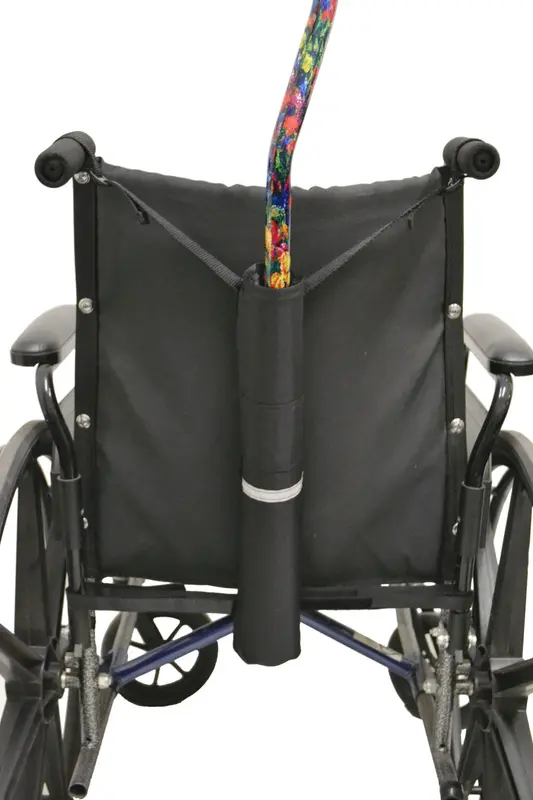
Some wheelchair users also walk with a cane. A cane holder keeps it with the chair. The Mobility Atlas catalog lists the Diestco cane holder, a weather-resistant polyester sleeve with adjustable straps that loop around the push handles, with an ID pocket and reflective tape.
How Mobility Atlas read 597 FDA reports on canes
The FDA collects reports about medical devices in a database called MAUDE. Makers, importers and user facilities are "mandatory reporters"; others can file voluntary reports. Canes are filed mainly under product codes IPS and KHY, crutches under IPR, and some reports about tips, pads and grips under INP. On 17 October 2026 we downloaded, through openFDA, every report with a description under IPS, KHY or IPR, and every INP report whose text names a cane or a crutch, at any date up to the openFDA update of 7 October 2026: 1,214 reports in all, the oldest from 1992. The newest cane report was received on 30 September 2026.
Before reading a single report, we wrote a codebook: the kind of device, the part the report says failed first (tip, base, height adjustment, shaft, handle, hardware, another part, part not named, or nothing failed), how it failed (broke, bent or collapsed, came loose, wore through, slipped), flags for injury, fall and a problem on arrival, and what the maker found. In the codebook, three-point canes and hemi-walkers count with quad canes, and canes that stand on their own because of a special tip count with seat canes as special canes. The codebook was fingerprinted with a time stamp before coding began.
Two independent coders then read every report separately, without seeing each other's answers. The coders were AI language models working separately; the method page says exactly how. Agreement was measured over the whole pool of 1,214 cane and crutch reports: they agreed on the kind of device in 96.6 percent of reports (kappa 0.957; kappa is a standard measure of agreement beyond chance), on the part in 93.3 percent (kappa 0.923), on how it failed in 94.4 percent (kappa 0.924), on injury in 99.5 percent and on a fall in 99.3 percent. Among the cane reports, we settled the 90 where the coders differed under written rules, and a consistency pass changed the codes of 131 more so that like reports were coded alike. Eight reports in the pool turned out to be about another device. The 597 reports about a cane are this guide's data: 296 single-point canes, 220 quad or multi-point canes, 63 seat, self-standing or other special canes, and 18 plain folding canes. The 609 crutch reports are in the crutches guide.
Where we give a count from a word search, it runs over the description of the event, not over the maker's later follow-up notes, so these counts are a floor: an injury described only in the follow-up is missed. Quotes from reports are shown in sentence case; the FDA publishes most of them in upper case.
What these reports cannot tell you
The reports are a record of what people and companies chose to tell the FDA, not a count of every broken cane. The FDA's own page says report data "is not intended to be used either to evaluate rates of adverse events" or to compare devices, and that a report "does not necessarily demonstrate that the device caused or contributed to" the event. It adds that the cause of an event "cannot be determined from this reporting system alone due to under-reporting of events, inaccuracies in reports," and other limits, and that "confirming whether a device caused a specific event can be difficult based solely on information provided in a given report." Most cane reports were never matched to a cane that someone examined.
So the counts here are counts of reports, not of canes or users, and nothing in this guide measures how often canes fail. Some events were filed more than once: 15 cane reports repeat the event text of another report word for word, and we counted every report as filed. A maker that sells many canes and files every complaint will appear more often than a small seller that files none. Where a report claims something, we write that it was reported, or that the report says so; most of these claims were never checked by anyone but the person who made them.
What the reports show: the big picture
What goes wrong with walking canes? Mobility Atlas had two independent AI coders read 597 FDA reports on canes, and 402 of them describe a part that broke, bent, collapsed or came loose. The height adjustment, the push button or pin and its row of holes, is named first in 136 reports and the shaft in 129; before the 2026 filing batch the shaft led. The base or feet of a quad cane follow with 102, the rubber tip with 43 and the handle with 35, while 96 reports allege a problem without naming a part. 252 reports describe a fall and 219 an injury, and 194 describe both. Six were filed as deaths, each a claim, not a finding, and none of these counts is a rate. The table gives the detail for each part.
| Part named first | Reports | With injury | With a fall | On arrival |
|---|---|---|---|---|
| Height adjustment: button, pin, holes | 136 | 27 | 27 | 11 |
| Shaft or tube, including fold joints | 129 | 56 | 70 | 7 |
| Base or feet of a quad cane | 102 | 15 | 23 | 19 |
| Problem alleged, part not named | 96 | 46 | 54 | 8 |
| Tip, ferrule or foot | 43 | 21 | 22 | 1 |
| Handle or hand grip | 35 | 14 | 15 | 3 |
| Nothing failed | 30 | 25 | 25 | 0 |
| Another part (seat, strap) | 22 | 13 | 14 | 1 |
| Screw, bolt or other hardware | 4 | 2 | 2 | 0 |
The shaft group has the most injury reports, 56, and the most fall reports, 70. The base group is large but has fewer injury reports, 15; many of its reports are short dealer notes from 2012 to 2014. Canes were reported to break or crack in 232 reports, bend or collapse in 101, and come loose or come off in 69.
Kinds of cane in the reports
| Kind of cane | Reports | With injury | With a fall | Parts named most often |
|---|---|---|---|---|
| Single-point, offset or adjustable | 296 | 91 | 107 | Height adjustment 98, part not named 64, shaft 59, tip 23 |
| Quad or multi-point | 220 | 74 | 96 | Base or feet 90, shaft 49, height adjustment 32, part not named 23 |
| Seat, self-standing or other special | 63 | 43 | 45 | Another part such as the seat 16, shaft 15, tip or foot 10, part not named 7 |
| Plain folding | 18 | 11 | 4 | Shaft or fold joint 6, handle 5, height adjustment 4, part not named 2 |
Each kind is reported to give way where it is different. In single-point cane reports the height adjustment is named most often; in quad cane reports, the base and the welds that hold the feet; in seat cane reports, the seat and its brackets; in folding cane reports, the joints and the handle. The special canes group has the highest share of injury reports, 43 of 63.
The kinds also differ in how many are sold, and the reports show nothing about that. Read the table as a map of where each kind of cane is reported to give way, not as a ranking of which kind is safer.
The height adjustment: buttons, pins and holes
136 reports name the height adjustment first, the most of any part, but that lead comes from the 2026 batch: 32 of the 2026 reports name it, and before 2026 the shaft was named slightly more often, 110 reports to 104. By a word search, 45 cane reports use the word "button." The reports describe a button that would not lock, that compressed under load, or that went missing; one says a cane "is missing little button that locks the cane on a certain height. If you lean on it, it collapses" and does not stay up. Others describe a cam lock that would not lock, a pin that sheared off, and a push pin stuck in its hole on a new cane.
Several reports describe canes that broke at an adjustment hole. A death report says the cane "was broken on the 4th adjustment hole from the bottom." Another describes a quad cane that "collapsed and bent then broke in half at the 8th extension adjustment hole from the bottom." A third says a cane broke "at the first adjustment hole" while a user got out of bed. A 2007 report says a quad cane was found "bent forward approx 120 degrees at the point of the second adjustment hole from the top" after a user fell beside a snowy sidewalk, and a 2026 report says simply that "the cane is bent where it adjusts."
- After every height change, look at the button from both sides: it should stand fully out of its hole.
- Lean on the cane, gently at first, before you walk.
- Look for cracks or bends around the holes, and stop using a cane that has them.
- If a button sticks, ask the seller to look at it or replace the cane.
An Invacare recall in 2012 covered 38,280 height-adjustable canes, after reports that the button "may suddenly and unexpectedly compress, causing the cane to collapse," the recall says. The recall file below has the details.
Shafts that bend or snap
129 reports name the shaft, and 70 of them describe a fall, the highest number of any part. The reports describe canes that bent when someone leaned on them, broke in half while walking, or snapped near the handle. One says a cane "just snapped in two, just under the curve of the handle." An older report says a cane "will bend with just a minimal amount of" weight, and that it snapped when physical therapy tested it.
Several reports describe a cane that broke while someone pushed up to stand. One report says a user "was getting up from the couch in home, when allegedly the cane broke on the lower half." Another says a patient was "attempting to get out of a chair and when leaning on the cane" the shaft cracked, and a third that a cane "snapped and broke" as a user rose from a seat. Do not use a cane that has bent; replace it.
Quad cane bases and welds
102 reports name the base or feet of a quad or multi-point cane, and by a word search 44 cane reports mention a weld. Many are short dealer notes from 2012 to 2014: a weld that broke at the base, a base plate that cracked, a cane that "broke at the center weld where the legs attach," as one report says. One dealer report says canes arrived "badly welded and very wobbly when you set them on the floor."
Base problems are also the commonest kind found on arrival: 19 of the 50 arrival reports name the base. A 2026 report says "the quad cane we ordered is not leveled," and another that a quad cane came out of the box "missing a leg and it was bent." Stand a new quad cane on a flat floor, press on the handle, and send it back if it rocks.
Tips that wear, split or come off
43 reports name the tip first, and 21 of them describe an injury. They describe tips that wore through, cracked, came off or shredded. One report says "the cane tip wore through and the end user fell"; another that "the rubber tip came off of the cane" and the user fell. A 2026 report says "the tip of the cane fell off a few times during use" before it was lost.
A report from 1998 says "the tip comes off if caught on the edge of stairway or curb." By a word search, 33 cane reports mention a tip or ferrule, and 12 of those describe an injury. MedlinePlus says to replace worn tips; if a tip has come off or feels loose, ask the seller for a new one.
Handles and grips in the reports
35 reports name the handle or hand grip first; 14 describe an injury and 15 a fall. Several describe a handle that broke off going down stairs or while carrying something. One report says "the handle separated from the shaft of the cane"; another, from 2025, that "the part that goes into the metal shaft is just plastic without any metal stiffening." A 2026 report describes a cane issued only weeks earlier that was "already tearing on the foam handle piece."
A dealer report from 2013 describes canes that were off-balance: "when you apply pressure, the handles shake." That is the check to make at home. Hold the handle, press down and twist gently; nothing should move.
Folding canes in the reports
18 reports are about plain folding canes; folding canes with a self-standing base, such as the HurryCane, are counted with the special canes. Of the 18, 11 describe an injury. One report says a cane "folded and collapsed, causing him to hit his head on the marble floor"; another describes a section that collapsed once weight was on it; others, handles that broke off or came apart, and an elastic band that snapped while a user tried to free a stuck button. One 2026 report says a folding cane "will not lock in place to use it," and another describes folding sections that were too loose from the start.
The joints need the same daily look as the button: each section fully seated, no gap, no wobble, before weight goes on.
Seat canes and self-standing canes in the reports
The 63 reports about seat, self-standing and other special canes are the group with the highest share of injury reports: 43 describe an injury and 45 a fall. Seat cane reports describe a seat that gave way underneath someone, a seat mounting bracket that broke, and a seam that "broke on one of the sides of the seat," one report says, so the user fell to the ground. One user reported it was the second seat cane to break in the same place.
Self-standing canes appear with their own failures. 26 reports are grouped under the HurryCane name, and a few more are grouped under Drive, because the report names Drive DeVilbiss Healthcare, its importer, in the maker or brand field. They describe a pivoting base that cracked or came off, a handle that broke, and a detent pin that failed so the cane fell "2 notches," one report says. Two near-identical 2025 reports name the HurryCane Freedom Edition, the model in our catalog, and say its base "will not stay screwed into frame of the cane." These counts depend on how many are sold and how the importer files, and say nothing about whether that model is safer or less safe than another.
Falls with nothing broken
In 30 reports nothing failed; 29 of them describe a fall or an injury, and one describes a cane that "became stuck due to magnetic pull" in an MRI room, a reminder to follow the MRI staff's instructions about anything metal. They include a user who fell going down stairs, a user who fell with a cane borrowed from a roommate, and cuts to the leg from the cane itself. 96 more reports allege a problem without naming any part.
A cane does not stop every fall. Footwear, rugs, clutter and the right walking aid all appear in MedlinePlus's advice, and a physical therapist can look at all of them.
Head injuries, broken hips and other words in the reports
By a word search of the event descriptions, 32 cane reports mention the head, and 28 of those describe an injury. 26 mention a fracture, 22 a hip, 17 a wrist, 13 surgery, and 36 an emergency room or hospital. These are word counts, and one report can mention several of them. Some hits are not injuries: four "fracture" hits are a cane or its handle that cracked, and two "head" hits are a screw head.
One report says a handle broke off "as he was descending the stairs," and the user broke a wrist. A 2007 report describes a quad cane that collapsed just after the user had come up the stairs.
Problems out of the box
50 cane reports describe a problem found on arrival or at first use. 19 are bases or feet, 11 the height adjustment, 7 the shaft, and 3 the handle. In 2026, reports describe a cane where the push pin was stuck so the height could not be set, quad cane tubing that "is bent and is not straight," and a multi-point cane bent at the base where "1 of the 3 feet of the cane is sticking up due to the box being crushed," the report says.
Some reports describe canes damaged in the box. Check the cane before the first walk, and send it back rather than trying to straighten it.
The death reports, read with care
Six cane reports were filed as deaths. In each, the report gives a claim, not a finding. Two, from 1997 and 2001, came from attorneys and allege that a quad cane snapped; one says a user was "using quad cane to help her rise from chair when the cane snapped." A 2012 report says a user fell going down stairs when a single-point cane broke, with a head injury; photos sent to the maker showed the break at the 4th adjustment hole, and "the actual cause of death was not reported," the report says.
A 2003 report describes a foot that "slipped under the base of the cane," a sprained ankle and a broken kneecap, and says the person later died of complications from health conditions "that were not related to the incident." Two reports concern self-standing HurryCane canes. In one, the user's wife guessed the cane had caught on a recliner, and the family alleged that "when he lifted it up it unfolded." In the other, a foot allegedly caught on the base of the cane, and the report says the wife "doesn't believe that the cane was broken."
Two of the six, the 2003 quad cane report and the 2017 HurryCane report, do not allege that the cane failed. The other four allege a cane that snapped, broke or unfolded, and point to the same checks as the rest of the file: the button and holes, the shaft and its joints, and how a cane is used on stairs and to rise from a chair.
Who tells the FDA about a cane
The reports reach the FDA by several routes, and the route shapes what they say. Many are short dealer notes, such as one that says only "dealer alleged that the push button is broke." Some begin with a lawyer: one says an importer "has rec'd a summons from claimant's attorney," and several importer reports say they were filed "in an over abundance of caution." Others are customer calls written up by the maker, and a few are users writing to the FDA themselves, in the first person: "I was using this cane when the flexible foot fell off," one says.
Each route leaves gaps. Dealer notes are often a single line; lawyers' letters give few details of the cane; customer calls often end without the cane being returned. That is why the counts in this guide describe what was reported, not what was proven.
Inside the 2026 complaint reviews
The 2026 reports show how a maker handles a cane complaint when the cane does not come back. One report on a folding cane that would not lock says that "without a sample received, it is difficult to determine a true root cause for the reported issue," and records the cause as "Sample required to determine cause." Others say a photo was provided and only a visual review was possible. When a cane, a photo or a video did come back, the company could check it. In the 124 cane reports received in 2026, a fault was found or confirmed in 29, and in 11 none was found or the cause was put down to use, misuse or shipping.
For you, the lesson is practical. If a cane fails, photograph it, keep it, and offer it to the seller or maker. A cane in the bin cannot be examined.
Wooden canes in the reports
Wooden canes appear in the reports too. One user wrote that a wooden cane's "black tip on the bottom marked up tile floors" and that "the wood splintered and chipped," and described a fall with a sprained wrist. An older report concerns a ladies' standard wooden cane. A wooden cane has no button or holes to fail, but its tip and handle still need the same checks, and MedlinePlus's advice on worn tips applies to it in the same way.
What the makers found
In 521 of the 597 cane reports, the maker did not report a finding: the cane was not returned, not evaluated, or nothing was stated. The maker found or confirmed a fault in 40 and found none or named an outside cause in 36. Outside causes named include wear, misuse and damage in shipping.
That is the most important limit of the file. Many cane reports are short notes from a dealer or a phone call, and often the cane was not returned. If your cane fails, keep it: a cane the maker can examine is the best way a report turns into a finding.
When the reports arrived
Cane reports did not arrive evenly. Before 2011 they ran at no more than 12 a year. Then 234 arrived from 2011 to 2014, 109 of them with no maker or a smaller maker named, 62 naming Pinghu Weifeng and 40 HL Corp, many of them short dealer notes about welds, buttons and bent canes. That spike may reflect how a few makers and dealers filed in those years; the reports cannot show a change in canes.
| Year | Cane reports |
|---|---|
| 2011 | 17 |
| 2012 | 55 |
| 2013 | 64 |
| 2014 | 98 |
| 2015 | 26 |
| 2016 | 24 |
| 2017 | 19 |
| 2018 | 14 |
| 2019 | 10 |
| 2020 | 4 |
| 2021 | 13 |
| 2022 | 11 |
| 2023 | 20 |
| 2024 | 5 |
| 2025 | 9 |
| 2026 (to 30 September) | 124 |
2026 is a filing batch. 121 of the 124 cane reports received in 2026 name Medline, and 89 of the 124 say they were "submitted as part of retrospective review activities, which include review of historical data," in the reports' words. One describes an event from February 2025. Only 11 describe an injury and 16 a fall; the parts are the familiar ones, led by the height adjustment (32), the base (27) and problems with no part named (26). What the companies found is in the complaint review section above. The batch shows one company reviewing and filing older complaints; the reports cannot show a change in the canes people use.
Who files these reports
| Maker or brand named | Cane reports |
|---|---|
| Not stated, or a maker not listed here | 192 |
| Medline | 166 |
| Pinghu Weifeng | 67 |
| HL Corp | 42 |
| Drive | 37 |
| Invacare | 33 |
| HurryCane | 26 |
| Compass Health or Carex | 13 |
| Sunrise or Guardian | 10 |
| Jan Mao | 7 |
The table shows the ten largest groups; four more reports name other makers, such as Roscoe. Report counts can depend on how much each maker sells and how it files, and the reports show neither; the counts say nothing about which cane is safer. A maker that files many complaints, as Medline did in its 2026 retrospective review, will appear far more often than one that files few.
The recall file
We read all 19 FDA recall records for the four product codes; five concern canes. In 2006, Access Point Medical recalled an offset cane and quad canes with small, medium and large bases because "the canes were made of unacceptable materials and could break," the recall says. In 2012, Invacare recalled 38,280 height-adjustable canes, models 8916, 8917 and 40918-6, because the height button "may suddenly and unexpectedly compress, causing the cane to collapse and cause possible injury to the user." All five are now terminated. The other records concern crutches and crutch parts.
Recalls matter for canes because they are long-lived and handed down. Look for the model number, and check it against the FDA recall database. If you cannot find it, ask the seller.
Mistakes the reports repeat
- Walking on a cane whose button is not fully out of its hole.
- Using a cane with a worn or missing tip.
- Pushing up from a chair, couch or bed with full weight on the cane.
- Keeping a cane that has bent, or that wobbles at the handle or the base.
- Using a folding cane before every section has locked.
- Using a borrowed or second-hand cane without checking it.
- Taking a metal cane into an MRI room without asking the staff.
A cane check
| When | Check | If it fails |
|---|---|---|
| Every day | Tip worn or loose (MedlinePlus: check daily) | Replace the tip |
| After any height change | Button fully out on both sides | Do not walk on it; ask the seller |
| Regularly | Shaft straight, no cracks at the holes | Stop using it; replace the cane |
| Regularly | Handle firm, grip not torn | Ask the seller; replace the cane |
| Regularly, quad cane | Base flat, feet straight, welds whole | Stop using it; replace the cane |
| Every time, folding cane | Each section seated, no gap or wobble | Do not walk on it until it locks |
| After any fall | Whole cane, especially button and shaft | Replace it if anything is bent |
Finding the model number and checking recalls
Many canes carry a label with the maker and the model number. The Invacare recall named its canes by model number, 8916, 8917 and 40918-6, and reports in the file name the same numbers, such as one that says a "cane 40918-6 tip is worn from walking on the sidewalk and dragging it." Labels can wear off: one report says the labels had worn off a cane the user took into the shower.
- Photograph the label the day you get the cane, and keep the receipt.
- Search the model number in the FDA recall database, and ask the seller if you are not sure.
- For a handed-down cane with no label, ask a supplier to identify it, or replace it.
Keeping a record when something goes wrong
A good record makes a complaint, a warranty claim or an FDA report useful. Write down the date, where you were, what you were doing, which part gave way, and whether you fell or were hurt. Photograph the break, the button and holes, the tip and the label. Keep the cane and any broken pieces, and do not try to repair it first. If you were hurt, keep your medical notes with the record.
When to report a cane problem to the FDA
The FDA's notices say problems "may be reported using one of the following options": online through MedWatch, or on a form you can download or ask for by phone at 800-332-1088. Report a cane that broke, bent, collapsed or came apart, especially if someone fell or was hurt. Tell the seller and the maker too; makers are "mandatory reporters" to the FDA.
Keep the cane and any broken parts, photograph the label and the break, and write down what happened while it is fresh. A report with the cane still available gives the maker something to examine.
Three composite scenarios
These are composite scenarios, not individual customers. Each one combines facts and ranges already given in this guide to show how the decisions play out.
Scenario one: after a knee operation, a person is given an adjustable offset cane. A physical therapist sets the handle at wrist height and teaches the stair rule that MedlinePlus says to remember, "up with the good, down with the bad." At home, the person finds the button half out after changing the height, and has it checked before the next walk.
Scenario two: a family buys a quad cane online for a parent. It arrives in a crushed box, and one foot does not touch the floor. They photograph it, send it back, and check the replacement on a flat floor before the first walk.
Scenario three: a person who uses a cane for short walks notices the tip is worn smooth before winter. They buy a new tip, look at an ice grip like the one a retailer lists at USD 20.75, and ask their therapist whether another aid would be better on icy days.
Questions to ask before you buy
- Which kind of cane do I need: single-point, offset, quad, or something else?
- What height should it be set to, and can you set it for me?
- What is its weight limit, and where is that written?
- How does the height button lock, and how do I know it has?
- Which tips fit it, and where do I buy replacements?
- Is this model under any recall?
- Will Medicare or my plan pay for it, and are you enrolled?
Questions to ask the physical therapist
- Is a cane enough, or would crutches or a walker be safer for me now?
- Which hand should I hold it in?
- How should I stand up from a chair and sit down?
- How should I use it on our stairs and the curb outside?
- What should I do differently on ice or wet ground?
- Where should someone helping me walk, and how should they help?
- When should we review whether I still need it?
Your plan: 10 minutes, today, this week
In 10 minutes: check the tip, the button and the handle, and stand a quad cane on a flat floor.
Today: check the height against your wrist, as MedlinePlus describes, and look along the shaft for bends and cracks at the holes.
This week: buy a spare tip, look up the model in the recall database, and if you are leaning hard on the cane, book a check with your physical therapist.
Sources and documents
Reports: every FDA MAUDE device report with a description under product codes IPS, KHY and IPR, and every INP report whose text names a cane or a crutch, at any date to the openFDA update of 7 October 2026, downloaded through openFDA on 17 October 2026; 597 of them concern canes, the newest received on 30 September 2026. Recalls: all 19 FDA recall records for those four codes, downloaded through openFDA. Funding: Medicare's coverage rule for canes and crutches, LCD L33733, and Medicare's equipment page. Using a cane: MedlinePlus, "Using a cane." Prices: AliMed's canes and crutches page, and the Mobility Atlas catalog. Every source is linked in the list at the end of this page.
Related guides on Mobility Atlas: Crutches; Walkers and rollators; Stairlifts.
Method in brief: we coded the 1,214 cane and crutch reports in the pool using a codebook written and fingerprinted before coding, with two independent coders (agreement on the part across the pool 93.3 percent, kappa 0.923), settled the 90 cane reports where they differed under written rules, changed 131 more in a consistency pass, and counted the results by script. The two coders were AI language models working separately, each without access to the other's answers. The codebook, the method and the coded table are on the data and method page under CC BY 4.0.
Prices checked October 2026 on AliMed's page; the HurryCane price is from the Mobility Atlas catalog, checked October 2026. Prices change, so confirm them with your supplier. Documents checked October 2026: FDA reports and recall records, the Medicare coverage rule and page, and MedlinePlus.
Has a cane let you down, or worked well for years? Send us a note through the enquiry form with the model and what happened; we use readers' notes when we update the guide.
This article is general information. Rules and prices differ by country and change, so confirm them before you buy or travel.
Common questions
How much does a walking cane cost?
On one medical retailer's page in October 2026, a wooden Fritz handle cane was listed at USD 38.00, offset canes from USD 40.00, a stable-base quad cane at USD 53.50 and an adjustable offset cane at USD 85.50. Tips and ice grips are extra.
Does Medicare cover a cane?
Yes, when a provider orders it for use at home, you have a mobility limitation that a cane can resolve, and you can use it safely. After the Part B deductible you usually pay 20 percent of the approved amount, from a supplier enrolled in Medicare, if the supplier accepts assignment.
How high should a cane be?
MedlinePlus says the handle should be at the level of your wrist, and your elbow should be slightly bent when you hold it. Ask your physical therapist or supplier to set it and to show you how to check it.
Which hand do you hold a cane in?
MedlinePlus says to hold it in the hand opposite the leg that had surgery or is weakest, and to move the cane forward at the same time as the weaker leg.
Is a quad cane safer than a single-point cane?
MedlinePlus names two main types, canes with a single tip and canes with 4 prongs, and says the type "will depend on how much support you need." Your surgeon or physical therapist decides which is right for you. FDA report counts do not show which kind is safer.
When should I replace a cane tip?
MedlinePlus says to check the tip or tips daily and replace them if they are worn. In the FDA reports, tips that wore through, split or came off came before falls.
Sources
- FDA: About the MAUDE database and the limits of device reports
- openFDA: device adverse event endpoint (data used for this study)
- openFDA: device recall records, product codes IPS, IPR, KHY and INP
- CMS: LCD L33733, Canes and Crutches
- Medicare: Durable medical equipment coverage
- MedlinePlus: Using a cane
- AliMed: Canes and crutches (prices read October 2026)
- FDA: recall notice giving MedWatch reporting details (online, form, phone)
- FDA MedWatch: report a problem with a medical device
Read on 17 October 2026. The wording of the article is our own.
Data and method for this guide: the codebook, the coded reports and the list of documents, free to reuse under CC BY 4.0.