Manual wheelchair repair in 2026: bearings, wheels, locks, parts prices and what 957 FDA reports show
Bearings, axles, casters, wheel locks and frames: what fails on manual wheelchairs, what parts cost, and what two AI coders found in 957 FDA reports.
Contents
- Stop and fix it before the next push
- The short answer
- The parts of a manual wheelchair, named
- What manual wheelchair parts cost in 2026
- Wheelchair parts: what you can order yourself
- Bearings: the part nobody checks
- Axles and quick-release wheels
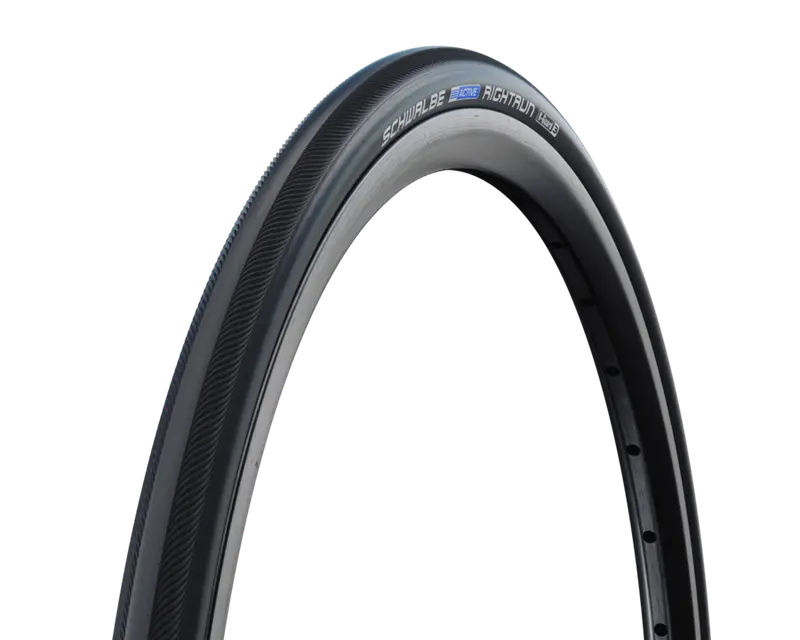
- Tyres and tubes
- Casters, forks and shimmy
- Wheel locks and brakes
- Spokes, rims and handrims
- Frames, folding and welds
- Backs, push handles, footrests and armrests
- Anti-tippers
- What you can fix yourself, and what needs the dealer
- How often should a manual wheelchair be serviced?
- Six situations, and which route is yours
- Tools worth keeping at home
- Who can repair your chair
- Transfers: where a loose lock hurts
- Ramps, kerbs and tipping
- Fingers, folding and pinch points
- Wheelchairs in vans and buses
- Checking a new or delivered chair
- When to replace rather than repair
- Reading tyre, tube and bearing sizes
- Rigid or folding: what wears
- Rain, salt, sand and showers
- Parts for older and discontinued chairs
- For the person who pushes
- Storing the chair and travelling with it
- Does Medicare pay for manual wheelchair repairs?
- Warranty, loan chairs and waiting
- How Mobility Atlas read 957 FDA reports
- What these reports cannot tell you
- What the reports show: the big picture
- Wheel locks: loose, not broken
- Casters and forks: the failure that throws you forward
- Frames, welds and folding
- Axles, wheels and wheels that come off
- Backs, push handles and anti-tippers
- Tyres, bearings and the faults nobody reports
- Upholstery, belts and sliding out
- Footrests, legrests and armrests
- What the makers found
- Mistakes the reports repeat
- Used, borrowed and loan-closet chairs
- Keeping a record when something goes wrong
- The death reports, read with care
- The 2026 Medline batch
- Arriving broken: faults found on delivery
- Who files these reports
- The recall file
- A monthly repair check, part by part
- When to report a wheelchair problem to the FDA
- Three composite scenarios
- Questions to ask before you pay for a repair
- Questions to ask the therapist after a repair
- Your plan: 10 minutes, today, this week
- Sources and documents
- Common questions
- Sources
Stop and fix it before the next push
Using a manual wheelchair today? Run through these first. Planning a repair? Start at the short answer below.
- A rear wheel moves sideways when you hold the tyre and wiggle it, or the quick-release button does not pop back out fully. The wheel can come off. Do not ride until the axle is seated and locked.
- A wheel lock does not stop the chair when you push it firmly with the lock on, or its bolt is loose. Do not transfer from the chair until it holds.
- A caster wobbles, shimmies, has play in the stem, or its fork or bolt is bent or loose. A caster that locks or drops at speed can throw you forward.
- You can see a crack at a weld, a bent frame tube, or a cross brace that does not open fully.
- An anti-tipper is missing, loose, or set so high it no longer touches the ground before you tip.
- A tyre is flat, cracked, bulging or coming off the rim. Low pressure also makes the wheel locks grip less.
Most other faults in this guide can wait for the next service. These six cannot, because they are behind most of the falls, and many of the injuries, in the reports we read.
The short answer
A manual wheelchair is a simple machine, and most of what goes wrong with it is wear: bearings full of hair and grit, tyres worn flat, bolts that loosen with every kerb, wheel locks that drift out of adjustment as the tyre wears. Most of those parts are cheap. In the Mobility Atlas catalog, an everyday pneumatic tyre costs from about USD 20, an inner tube about USD 8, a four-pack of wheelchair bearings about USD 20 to 30 at one specialist retailer, a quick-release axle about USD 28.50, and aftermarket wheel locks about USD 45 to 108.
The safety part comes from FDA reports read with a new question: not just what went wrong, but which part failed first, and whether the report itself names wear, age or missed maintenance. A rehabilitation guide from the US spinal cord injury model systems says 44 to 57 percent of wheelchair users reported at least one breakdown in six months. The reports show which breakdowns hurt people.
Medicare Part B pays for repairs to worn equipment that has not reached the end of its lifetime, up to the cost of replacement, when you use a Medicare-enrolled supplier; one that accepts assignment costs you least.
The parts of a manual wheelchair, named
Repair conversations go faster when you can name the part. A typical folding or rigid manual chair has:
| Part | What it does | What goes wrong |
|---|---|---|
| Rear wheel and hub | Carries most of your weight | Bent rim, broken spokes, cracked hub |
| Bearings | Let the wheel and caster spin freely | Grit, hair and water make them grind, seize or wobble |
| Axle and quick-release pin | Hold the rear wheel on the frame | Pin not fully locked, worn button, loose axle plate |
| Tyre and tube | Grip, comfort, and the surface the locks press on | Flat, worn, cracked; solid tyres coming off the rim |
| Handrim | Where you push | Loose mounting, sharp edges, worn coating |
| Caster, fork and stem | Front wheels that steer | Shimmy, play in the stem, bent fork, loose bolt |
| Wheel locks | Stop the chair rolling when parked | Loose bracket, drifting adjustment, broken lever |
| Frame, cross brace and welds | Hold everything together | Cracks at welds, bent tubes, folding that sticks |
| Back posts and push handles | Support your back; let someone push | Bent posts, loose hinges, handles that slip |
| Footrests, legrests and armrests | Support legs and arms | Latches that release, broken hangers |
| Upholstery | The seat and back sling | Sagging, tearing, loose screws |
| Anti-tippers | Stop the chair tipping backwards | Missing, loose, set too high |
What manual wheelchair parts cost in 2026
These are prices recorded in the Mobility Atlas catalog and on one specialist bearing retailer's site in October 2026. Parts must match your chair's sizes, so check the old part's markings or the chair's manual before you order.
| Part | Example | Price (USD) |
|---|---|---|
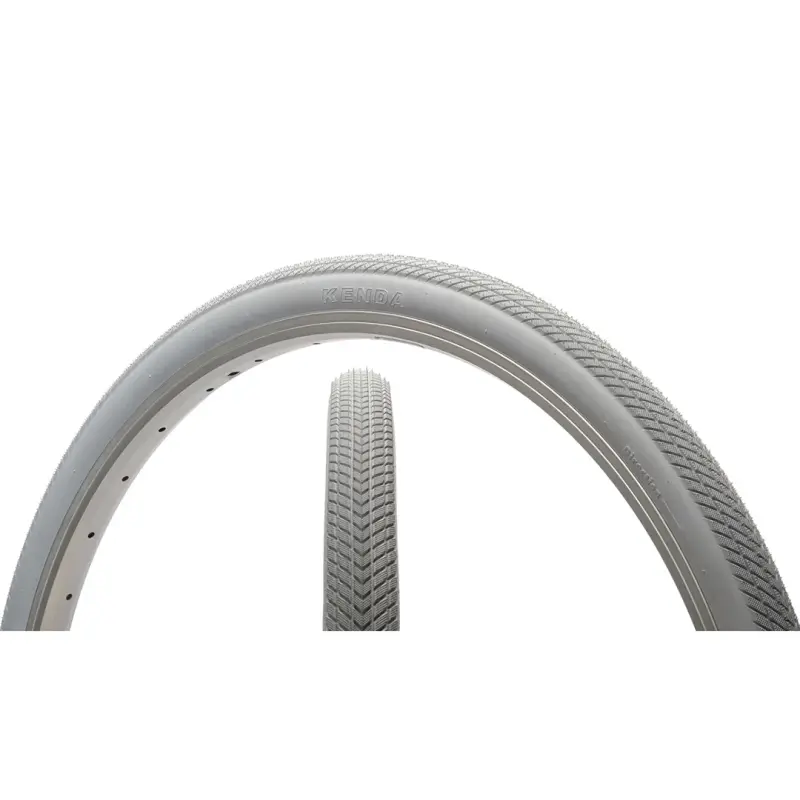
| Everyday pneumatic rear tyre | Kenda K1079P, each | 20.95 |
| Puncture-resistant rear tyre | Primo Sentinel, per pair | 65 to 66.50 |
| Solid rear tyre | Shox G2 Solid, per pair | 47.50 |
| Inner tube, 24 inch | Schwalbe 9A | 8.23 |
| Rear wheel bearings, four-pack | R8 half-inch | 24.99 |
| Caster bearings, four-pack | 608, 8 mm | 19.99 |
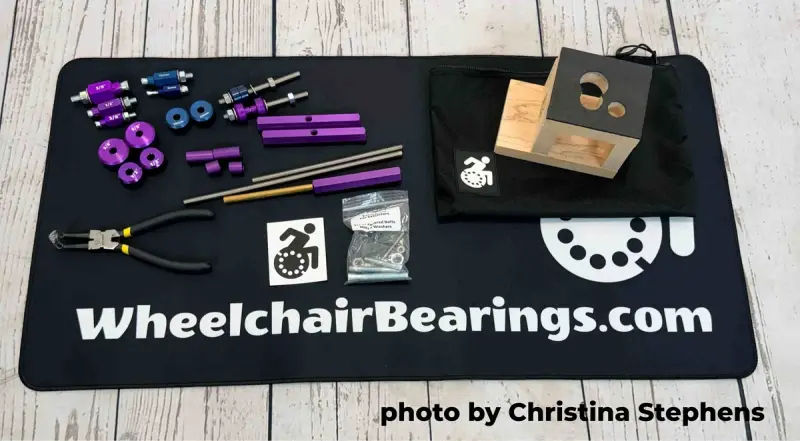
| Bearing removal and fitting tool | R8 tool kit | 49.99 |
| Quick-release axle | Half-inch, big button, each | 28.50 |
| Wheel locks | Out-Front composite, sale price | 45.45 |
| Wheel locks | Aluminium scissor lock | 107.75 |
| Caster tyre, 8 inch | Kenda K23B | from 11.83 |
| Rear wheels, steel spoked, pair | Spinergy Wire Wheel | 365 |
| Tyre lever | Rolko | 8.75 |
Labour is the other half of the bill, and it varies so much by dealer and funder that we do not quote it. Ask for a written estimate that separates parts from labour before agreeing to a repair.
Wheelchair parts: what you can order yourself
Many wheelchair parts that wear out are sold straight to users by makers and specialist shops, and in the Mobility Atlas catalog wheels, handrims and tyres are the largest group of parts and accessories. Bearings, tyres, casters, wheel locks and axles are sold by size, not by chair brand, so read the size on the old part before you order. Prices below are as listed in October 2026.
- Bearings come in four-packs by size code. WheelchairBearings.com listed R8 half-inch rear bearings at USD 24.99, R6 front caster bearings at USD 21.99 and 638 caster bearings at USD 29.99.
- Tyres and tubes are sold by the size on the sidewall. The catalog lists the Schwalbe Marathon Plus Wheelchair tyre at around USD 52 (EUR 47.90 RRP) and the Kenda Standard 25 tube at USD 8.95.
- Casters must match the old wheel's diameter and width. Frog Legs listed its EPIC aluminium caster pair at USD 159.98.
- Wheel locks: some are sold as fitting most standard chairs, others fit one maker's frame. The catalog lists a Quickie Compact EVO lock at around USD 95 (GBP 73.30 ex tax) and an aluminium scissor lock at USD 107.75.
- Quick-release axles are sold by pin diameter and length. Vigeo axle pins were listed at around USD 38 to 64 (GBP 29 to 49).
Order only what you can fit and check yourself. A bent fork, a frame part or an axle plate is a job for the dealer, and on a chair under warranty or paid for by an insurer or health service, ask the dealer or funder before you fit anything. If you cannot find a part for an older chair, ask us to find it.
Bearings: the part nobody checks
Every wheel on a manual chair turns on bearings: two in each rear hub and two in each caster. When they are clean they let the chair roll a long way from one push. When hair, carpet fibre, grit or water gets in, the chair becomes harder to push, the casters start to shimmy, and eventually a bearing seizes or falls apart.
The spinal cord injury model systems maintenance guide gives a simple monthly test for the rear bearings, and it says: "Lift one side of the wheelchair off the ground. Spin the wheel, and let it rotate to a stop." A wheel that stops suddenly, grinds or wobbles needs attention. For casters, the guide says to remove "dirt, lint, and hair from the axle bearings with scissors, tweezers, a toothbrush, or pliers."
- Hair wrapped round a caster axle is a common cause of a stiff caster. Cut it out monthly.
- Bearings are sold by size code, such as R8 or 608. Read the code on the old bearing's seal.
- Replacing a bearing needs the right tool to press it out and in evenly; a hammer can damage the hub.
- Check that your chair's maker allows shower use; some manuals forbid it. Chairs made for wet use often have stainless bearings; one shower four-pack is USD 24.99.
Axles and quick-release wheels
Most modern manual chairs have quick-release rear wheels: press the button in the centre of the hub, slide the wheel off. The pin locks with small balls that pop out at the far end. If the button sticks, the balls are dirty or worn, or the pin is the wrong length for the axle sleeve, the wheel may not lock fully and can come off when you push hard or take a kerb.
- Every time you put a wheel on, press the button, push the wheel fully home, release the button, and pull the wheel outwards hard. It must not come off.
- Monthly, hold the tyre and wiggle the wheel in all directions, as the maintenance guide says: "Hold the wheel away from the hub and wiggle it in all directions." Play means a worn bearing, a loose axle nut or a worn sleeve.
- Keep the pin clean and lightly oiled as your chair's manual says, and replace it if the button sticks.
- If a wheel has ever come off, have the axle plate, sleeve and pin checked before you use the chair again.
Tyres and tubes
Tyres decide how hard a chair is to push, how well it grips, and how well the wheel locks hold, because most wheel locks press directly on the tyre. The maintenance guide says to check tyre pressure weekly by pressing down firmly with your thumb, and to inspect the tyres monthly "for wear, cracks, bulges, looseness, damage, and flat spots."
| Tyre type | Good for | Trade-off |
|---|---|---|
| Pneumatic (air) with a tube | Comfort, light rolling, cheap tubes | Punctures; pressure must be checked weekly |
| Puncture-resistant pneumatic | Daily outdoor use | Heavier; more expensive |
| Solid or airless | No punctures, no pressure checks | Harder ride; can come off the rim if fitted badly |
After changing a tyre, readjust the wheel locks: a different tyre, or a tyre at a different pressure, changes the gap between the lock and the tyre. The Mobility Atlas guide to tyre and caster care covers the routine in more detail.
Casters, forks and shimmy
Casters are the small front wheels. They carry less weight than the rear wheels but take every bump first. Shimmy, a rapid side-to-side shake at speed, usually means a loose stem bearing, a worn caster, or a fork set at the wrong angle. A caster that stops dead on a crack or a threshold can tip the chair forward.
- Monthly: spin each caster, check the stem for play by rocking the fork, and look for cracks in the fork.
- Keep the caster stem bolt at the tightness the manual gives; too loose causes shimmy, too tight stops steering.
- Replace casters in pairs, the same size and type, so the chair tracks straight.
- If you change rear wheel size or axle position, the caster angle may need resetting by the dealer.
Wheel locks and brakes
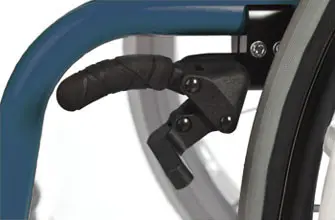
Wheel locks are the levers beside the seat that press on the rear tyres to stop the chair rolling. They are the most reported failure in the FDA reports we read, largely because of one maker's dealer series. They loosen with use, and they drift out of adjustment as tyres wear or lose pressure. The maintenance guide says to "Make sure the wheel locks are secured tightly to the frame."
- Put both locks on and push the chair firmly forwards and backwards. It should not move.
- If it moves, check tyre pressure first; it is the easiest cause to fix.
- Then check the lock's mounting bolts and its adjustment, as the manual shows, or ask the dealer.
- Never transfer in or out of the chair with a lock that does not hold.
Attendant brakes on transport chairs, and drum brakes on some chairs, have cables that stretch and pads that wear. Those are dealer jobs unless the manual shows how.
Spokes, rims and handrims
Spoked rear wheels are light and strong, but a broken or loose spoke puts more load on the others. The maintenance guide suggests gently squeezing pairs of spokes together all the way round the wheel to find loose ones, and checking that the handrim stays firm while you push. A wheel that is out of true rubs on the brake or frame and makes the chair pull to one side.
- A single loose spoke can often be retensioned by a bike or wheelchair mechanic.
- Several broken spokes, a dented rim or a cracked hub usually means a new wheel.
- Handrim screws loosen; tighten them evenly, and replace a handrim with sharp edges or worn coating.
Frames, folding and welds
Frames crack at welds and at holes drilled for brackets, usually after years of kerbs and car transfers. The maintenance guide says the monthly frame check is to "Inspect the frame, weld points, and all holes and bends to confirm that they're intact," and to move the cross brace on a folding chair to make sure it works correctly.
A cracked or bent frame is not a home repair. Stop using the chair if the crack is at a load-bearing point, and ask the dealer or maker. Do not have a frame welded without the maker's approval; it may void the warranty.
Backs, push handles, footrests and armrests
Back posts and push handles take a lot of force when someone tips the chair to climb a kerb, and folding backs have hinges and release pins that wear. Footrest and legrest hangers latch onto the frame and can release if the latch is worn or bent. Armrests that lift out can come loose.
- Check that folding back pins and levers lock fully every time you unfold the chair.
- Do not let anyone tip the chair back using push handles that are loose or that slide in their tubes.
- Check footrests are intact and tightened monthly, as the maintenance guide says.
- Replace upholstery that sags or tears; a sagging seat changes your posture and pressure.
Anti-tippers
Anti-tip tubes stop a chair tipping over backwards. Active users often remove or raise them, because they get in the way of wheelies and kerbs. That is a choice to make with a therapist, not by default. The maintenance guide says to inspect the anti-tip pins monthly "to make sure that they work and can be put on and off." In the FDA recall file for manual wheelchairs, three recalls concerned anti-tippers that could fail or break and let the chair tip backwards.
What you can fix yourself, and what needs the dealer
| Job | Usually DIY? | Notes |
|---|---|---|
| Check and pump tyres | Yes | Weekly |
| Clean hair out of casters | Yes | Monthly, with scissors or tweezers |
| Replace a tube or tyre | Often | Needs tyre levers and the right size |
| Clean and oil quick-release pins | Yes | As the manual says |
| Tighten a loose bolt | Only as the manual shows | Some bolts need thread-lock or a set torque |
| Adjust wheel locks | Often | Follow the manual; test before transferring |
| Replace bearings | With the right tool | Wrong technique damages the hub |
| Replace spokes, true a wheel | No | Wheel or bike mechanic |
| Frame cracks, welds, bent tubes | No | Dealer or maker |
| Caster angle, centre of gravity, axle position | No | Changes stability; therapist and dealer |
If you are not sure a repair is safe, stop and ask. A wheelchair that fails during a transfer is more dangerous than one that waits a day for the dealer.
How often should a manual wheelchair be serviced?
How often should a manual wheelchair be serviced? Mobility Atlas read the spinal cord injury model systems maintenance guide and 957 FDA reports in October 2026, and the answer is little and often. The guide says to check tyre pressure every week by pressing down firmly with your thumb, and to check the bearings, axles, spokes, wheel locks, casters, anti-tippers, footrests, upholstery and frame every month. Most of those checks take a minute each and need no tools. Our own advice is to book a dealer service when a check fails, after a fall or a hard knock, before a long trip, and at least once a year for an active user. The reports explain why the monthly checks matter: wheel locks loosen over time, caster bolts back out, and welds can crack. Many of those faults give a warning, such as a wobble, a creak or a lock that needs more force, before they hurt anyone.
Six situations, and which route is yours
| Situation | First step | Usually |
|---|---|---|
| Chair harder to push than it was | Check tyre pressure, then spin each wheel | Pump tyres; clean or replace bearings |
| Casters shimmy or drag | Cut hair from the axles; rock the fork | Clean, tighten, or new caster bearings |
| Chair rolls with the locks on | Check tyre pressure, then the lock bolts | Pump; adjust or tighten the lock |
| A wheel wobbles on its axle | Hold the wheel and wiggle it | Dealer: bearings, axle nut or sleeve |
| Creak or click from the frame | Look at the welds and cross brace | Stop and call the dealer if cracked |
| Something broke | Stop using the chair; keep the part | Dealer repair; report if anyone was hurt |
Start with the cheapest explanation. A surprising number of stiff, slow or rolling chairs are just soft tyres and hairy casters.
Tools worth keeping at home
- A pump with the right valve for your tubes, and a pressure gauge if your tyres are high pressure.
- Two tyre levers; one simple lever costs USD 8.75 in the Mobility Atlas catalog.
- The Allen keys and spanners that fit your chair's bolts; many makers list the sizes in the manual.
- Small scissors, tweezers and an old toothbrush for caster axles, as the maintenance guide suggests.
- A spare inner tube in the right size.
- A bearing tool, if you are confident: a simple R8 tool kit is listed at USD 49.99.
Keep the manual with the tools. If the manual is lost, many makers publish it on their website under the model name.
Who can repair your chair
Most manual chairs are serviced by the dealer who supplied them, especially when Medicare, an insurer or a health service paid. Dealers can order the maker's parts and keep warranty claims simple. Independent wheelchair mechanics, and some bicycle shops, can handle tubes, tyres and spokes; check they have your sizes. Frames, welds, axle plates and set-up changes belong with the dealer or maker.
Ask before you choose: does the shop know your model, will it use the maker's parts, and will its work affect your warranty? Keep receipts for every repair; they help with warranty and funding questions later.
Transfers: where a loose lock hurts
Many of the injuries in the reports happened in the few seconds of a transfer, into or out of the chair, to a bed, a car or a toilet. A chair that moves even a few centimetres at that moment can drop a person to the floor. Lock both wheels, check that they hold, turn the casters forward if your therapist taught you to, and keep the chair close and square to where you are moving.
If you transfer with help, the helper should never hold the chair by an armrest or footrest that lifts out or swings away; those parts are not built to take weight.
Ramps, kerbs and tipping
Ramps and kerbs appear again and again in the reports, often with no part failing at all. A chair that tips backwards on a ramp, or forward when a caster hits a kerb, can throw a person onto their head. Anti-tippers, the position of the rear axle and the user's skill all change how easily a chair tips.
- Go up steep ramps leaning forward, and come down slowly, backwards if your therapist advises it.
- Approach kerbs straight on; a caster that hits a kerb at an angle can swing and stop.
- If someone tips the chair to climb a kerb, they should use firm push handles and a tipping lever if fitted.
- Do not remove anti-tippers without talking it through with a therapist.
Fingers, folding and pinch points
Folding chairs have scissor-shaped cross braces and seat rails that can trap a finger as the chair opens or closes. Several reports describe cuts and severed fingertips this way. Open a folding chair by pressing down on the seat rails with flat palms, not by pulling the side frames apart. One maker's manual, quoted in an FDA report, says not to place hands or fingers on the underside of the seat frame rail when opening or closing, and Medline recalled bariatric chairs in 2008 over finger pinches. Keep fingers out of the gap between the seat rail and the armrest, and teach helpers to do the same.
Wheelchairs in vans and buses
Some of the most serious reports happened in vehicles: a chair that tipped on a van ramp, a wheel that broke while the chair was secured, a user who slid out on a bus without a lap belt. The newest FDA recall for manual chairs, in 2021, concerned transit tie-downs that might not be set up correctly for use as a seat in a vehicle.
Only use a chair as a seat in a moving vehicle if its maker says it is designed for that, with the tie-down points, belts and positioning the manual shows. Otherwise transfer to the vehicle seat.
Checking a new or delivered chair
A new chair can arrive damaged, mis-assembled or with parts missing. Before the delivery driver leaves, open the chair fully, spin every wheel, test both locks, pull each rear wheel outwards, and check the footrests latch. Look at the frame for dents and the tyres for damage. If anything is wrong, say so then; it is much easier to swap a chair on the doorstep than after weeks of use.
When to replace rather than repair
Repair makes sense when the frame is sound and the fault is in parts that wear: tyres, tubes, bearings, casters, locks, upholstery. Replacement makes sense when the frame or a weld is cracked, when repairs keep coming back, or when the chair no longer fits the person's body or needs. The Medicare Rights Center says Medicare pays for repairs up to the cost of replacement, and will only replace worn equipment you have had for its whole lifetime, which is never less than five years.
If you are close to that point, ask the dealer and your therapist together. A new chair is also a chance to review the set-up, cushion and back, which a repair is not.
Reading tyre, tube and bearing sizes
Ordering the wrong part is the commonest repair delay. Tyres are marked on the sidewall, usually in inches such as 24 x 1 3/8 or 25 x 1, and often also with a metric code. The two numbers are not interchangeable across rims, so copy the whole marking. Tubes are sold by tyre size and valve type. Bearings carry a code on their seal, such as R8, 608 or 6001, which gives their inner and outer diameter and width.
- Photograph the tyre sidewall and the bearing seal before you order.
- Order casters by diameter, width and axle size, and replace them in pairs.
- Quick-release axles come in lengths and diameters; measure the old pin or read the manual.
- If in doubt, give the dealer the chair's model and serial number.
Rigid or folding: what wears
Rigid chairs have fewer moving parts, so they rattle less and have fewer joints to loosen, but their single frame takes every shock and a crack means a new frame. Folding chairs have a cross brace, hinges and more bolts, so they need more tightening and more lubrication of the moving parts. The maintenance guide says to clean, dry and lubricate moving parts monthly with oil or a Teflon-based spray. Either kind lasts longer when it is kept dry and its bolts are checked regularly.
Rain, salt, sand and showers
Water and grit are the enemies of bearings and quick-release pins. After rain, snow or beach use, wipe the chair dry, spin the wheels to throw off water, and clean sand out of the casters. Road salt corrodes steel parts and fittings; rinse it off with fresh water and dry the chair. Use a chair in the shower only if its maker allows it, and do not store it wet.
Parts for older and discontinued chairs
Makers stop selling parts for older models, and a chair that has lasted ten years may be hard to repair. Generic tyres, tubes, bearings and many casters still fit, because they follow standard sizes. Frames, brackets, wheel locks and back hardware are model-specific. Ask the dealer early whether the parts you will need are still available; if not, that is a reason to plan a replacement before the chair fails.
For the person who pushes
Carers and family members put loads on a chair that the user never does: tipping it back over kerbs, lifting it into cars, pushing it over gravel and grass. Those loads fall on the push handles, back posts, anti-tippers and casters. Before pushing, check the handles are firm and do not slide, and that the user's feet are on the footplates and their hands inside the wheels.
- Tip the chair back with a foot on the tipping lever, if fitted, not by pulling hard on the handles.
- Never lift the chair by its armrests, footrests or wheels; lift by the frame, as the manual shows.
- Go down kerbs backwards and slowly, and up them with the casters lifted first.
- Tell the user, and the dealer, about any creak, wobble or loose part you notice; you often feel it first.
Storing the chair and travelling with it
Store the chair dry, with the tyres pumped, and out of direct sun, which hardens rubber and fades upholstery. When the chair travels in a car boot, protect the wheels and quick-release pins from knocks, and check every quick-release wheel after refitting it. On flights, take the manual or a card that shows how the chair folds and which parts come off, remove loose parts such as cushions and side guards to carry with you, and check the chair for damage before you leave the airport, so you can report it there.
Does Medicare pay for manual wheelchair repairs?
Does Medicare pay for manual wheelchair repairs? Mobility Atlas read Medicare's equipment pages and the Medicare Rights Center's guide in October 2026, and the answer is often yes, with conditions. Medicare Part B covers medically necessary durable medical equipment, and after the Part B deductible you usually pay 20 percent of the Medicare-approved amount. The Medicare Rights Center explains that Medicare covers repairs for worn equipment that has not reached the end of its lifetime, and pays for repairs up to the cost of replacement. It says Medicare will only replace worn equipment you have had for its whole lifetime, which is never less than five years, and that equipment lost, stolen, or damaged beyond repair in an accident or natural disaster can be replaced with proof. Use a supplier enrolled in Medicare who accepts assignment, and ask whether your doctor needs to write a new order.
Ask whether routine upkeep, such as pumping tyres or cleaning casters, is covered; the Medicare pages we read cover repairs, not routine care. Medicare Advantage plans and Medicaid have their own rules; ask before the work starts.
Warranty, loan chairs and waiting
Many new chairs have separate warranty terms for the frame, the cross brace and the parts that wear, such as tyres, casters, upholstery and handrims. Read them before something breaks. A repair done by someone else may affect the warranty on that part.
- Keep the warranty card, the delivery note and the serial number together.
- Ask at the first call whether a loan chair is available and how long parts take.
- If the chair is your only way to get out of bed or to work, say so; it can change priority.
- Keep a second set of tubes, a pump and the right tools at home if you can use them.
How Mobility Atlas read 957 FDA reports
The FDA collects reports about medical devices in a database called MAUDE. Makers must report deaths, serious injuries and some malfunctions; patients, families and clinicians can report voluntarily. Manual wheelchairs are filed under product code IOR ("Wheelchair, Mechanical").
Mobility Atlas has read these reports before, for its guide to lightweight wheelchairs, sorting them by what kind of problem they describe. This time we asked a repair question: which part failed first, how it failed, and whether the report itself names wear, age, missed maintenance or a part that needed tightening. In 2026 one maker, Medline, filed far more manual wheelchair reports than everyone else, most of them from a review of older complaints, so we built the pool in three parts: every report with a description received from January 2019 to December 2025 (633); every 2026 report with a description not filed by Medline (24); and a systematic sample of 300 of the 1,921 Medline reports with a description received in 2026, taken as 50 consecutive reports at six evenly spaced points in the FDA's list. That is 957 reports. We keep the Medline sample separate in the counts below.
Before reading a single report, we wrote a codebook: sixteen parts in a fixed order (bearing, axle, rear wheel, tyre, caster, handrim, wheel lock, frame, back, rests, upholstery, hardware, anti-tipper, other part, part unclear, no part failed), five ways of failing, and flags for injury, fall, upkeep, arrival and what the maker found. The codebook was fingerprinted with a time stamp before coding began, so any later change would show.
Two independent coders then read every report separately, without seeing each other's answers. The coders were AI language models working separately; the method page says exactly how. They agreed on the part in 94.9 percent of reports, a kappa of 0.937, which is very high agreement; kappa is a standard measure of agreement beyond chance. We settled the 115 reports where they differed on any field (49 of them on the part) under written rules drawn up after the disagreements were listed, and counted the results by script. Where we give a count from a word search, it runs over the description of the event, not over the maker's later follow-up notes. Two reports turned out not to describe a manual wheelchair event, which leaves 955.
What these reports cannot tell you
The reports are a record of what people and companies chose to tell the FDA, not a count of every breakdown. A rehabilitation guide from the spinal cord injury model systems says that 44 to 57 percent of wheelchair users report at least one breakdown in six months; almost none of those reach the FDA. Small faults that users fix themselves, such as a flat tyre or a stiff caster, are rarely reported at all, so they are badly undercounted here.
Who reports also shapes the counts. Of the 655 reports outside the Medline sample, 263 name one maker, Sunrise Medical, and 200 of those are about wheel locks, mostly reported by dealers, many asking for warranty parts. That series makes wheel locks the biggest group by far. It shows a real, repeated problem, but not that wheel locks are the most dangerous part.
What the reports show: the big picture
Which parts of a manual wheelchair fail, and which failures hurt people? Mobility Atlas had two independent AI coders read 957 FDA reports in October 2026, and the 655 outside one maker's 2026 batch give a clear answer. Wheel locks fail most often: 315 reports, mostly locks that worked loose, and in 207 of them the report itself names loosening over time or maintenance. But only 38 of those describe an injury. The failures that hurt people are rarer and more sudden: casters and forks that failed (47 reports, 38 with an injury), frames, welds and folding mechanisms that failed, including fingers caught in them (42, with 36 injuries), backs and push handles (25, 18 injuries), and anti-tippers missing, set wrong or broken (11, all with an injury). Bearings, the part nobody checks, appear in only 3 reports outside the sample. The table shows each group with its injuries and falls.
| Part that failed first | Reports (outside the Medline sample) | With injury | With a fall | Report names upkeep |
|---|---|---|---|---|
| Wheel lock or brake | 315 | 38 | 36 | 207 |
| Caster, fork or stem | 47 | 38 | 36 | 17 |
| Frame, weld, cross brace or folding | 42 | 36 | 24 | 7 |
| Footrest, legrest or armrest | 31 | 21 | 7 | 6 |
| Back post, back hinge or push handle | 25 | 18 | 15 | 1 |
| Upholstery or belt | 14 | 13 | 12 | 1 |
| Rear wheel, spokes, rim or hub | 12 | 9 | 4 | 1 |
| Axle or quick-release | 11 | 7 | 7 | 5 |
| Anti-tipper | 11 | 11 | 9 | 2 |
| Tyre or tube | 4 | 2 | 2 | 1 |
| Bearing | 3 | 2 | 2 | 2 |
| Other or loose hardware | 10 | 8 | 4 | 1 |
| Problem alleged, part unclear | 33 | 18 | 11 | 2 |
| No part failed | 97 | 93 | 57 | 5 |
Of the 655 reports, 314 describe an injury and 226 a fall. By a word search of the event descriptions, 59 mention a fracture, 51 the head, and 88 a hospital or emergency room. 97 describe an event in which, by the report's own account, no part of the chair failed: a tip on a ramp, a slide out of the seat, a fall during a transfer. Those are a reminder that set-up, belts, anti-tippers and technique matter as much as parts.
Wheel locks: loose, not broken
315 reports outside the Medline sample are about wheel locks or brakes. In 187 the lock or its hardware worked loose or came off; in 48 it stuck, would not engage, or would not hold; 13 describe a break. 200 of the 315 came from Sunrise Medical, mostly dealers reporting Quickie and Zippie chairs, in reports such as one where "the nut from the left-side wheel lock became loose after normal use." In 197 of those 200 the report names loosening over time or maintenance, and only 6 describe an injury.
The injuries come when a lock lets go at the wrong moment, above all during a transfer. One customer report says the chair was "difficult to lock," causing it to "roll away" from him as he transferred. By a word search, 21 of the wheel lock reports mention a transfer. Another 60 name Medline as the maker; 48 of them are notifications forwarded by another company, 37 about chairs with "reduced brake force."
- Check the lock's bolts at least monthly, as the maintenance guide says, or weekly if your chair's manual asks for it, and tighten only as the manual shows.
- Push the chair hard with both locks on before every transfer you are unsure of.
- Remember the lock presses on the tyre: low pressure or a worn tyre weakens it.
- If a dealer has tightened a lock and it keeps loosening, ask about a new lock or bracket under warranty.
Casters and forks: the failure that throws you forward
47 reports describe a caster, fork, stem or caster bolt that failed. 38 describe an injury and 36 a fall. These are among the most dangerous failures in the set, because a front wheel that drops or locks stops the chair dead and pitches the user forward. One report says "the bolt that holds the front wheel in place snapped and sent me falling to the asphalt." Another says a right front fork "split into 2 parts while driving," and the user fell with cracked ribs. A third describes a caster bolt that had backed half way out while the user reached forward, and a head injury that ended in hospital with a small bleed on the brain.
Many of these failures give some warning: a caster that shimmies, a stem with play, a bolt that sits proud of its nut. Monthly checks, and stopping at the first wobble, are the defence.
Frames, welds and folding
42 reports describe a frame, weld, cross brace, seat rail or folding mechanism that failed. 36 describe an injury and 24 a fall. By a word search, 8 mention a weld. One woman heard "a snap" going down a small hill in a park and fell out of the chair, needing stitches to her chin. Several are not breaks at all but fingers caught in the folding cross brace or seat bar, including two severed fingertips and one partial finger amputation (reported twice).
Keep fingers on the seat rails, not under them, when you open and fold a chair, and push down on the rails to open it, as makers' instructions quoted in the reports show. Look at the welds and the cross brace every month, and stop using the chair if you find a crack at a load-bearing point.
Axles, wheels and wheels that come off
11 reports name the axle or quick-release, and 12 the rear wheel itself. Seven of the axle reports describe a fall. One describes a quick-release pin that was "too short to catch wheel," after the wrong wheels were shipped; the user fell out of the chair. Another describes a wheel on a 20-year-old chair that fell off, and a resident who hit her head.
In 6 more reports a wheel came off or felt loose, but the report does not say which part let go, so we could not credit the axle, the pin or the wheel. Read together, they point to the same check: after fitting a quick-release wheel, pull it outwards hard before you sit.
Backs, push handles and anti-tippers
25 reports describe a back post, back hinge or push handle that failed, 18 of them with an injury. One user says "the back of it broke off right straight across both sides," and she fell backwards to the floor. Another describes a backrest hinge that failed and a fall with a head injury.
11 reports name an anti-tipper, and every one describes an injury; two were filed as deaths. In one, a report says a man using a chair "without anti-tippers" on a ramp tipped back, hit his head and died the same day; in another, a partner reports that the anti-tips "broke," and the user hit their head and died the next morning. One customer reports a chair delivered with the anti-tip wheels in the wrong position. Whether to use anti-tippers is a decision to make with a therapist, but a chair should not lose them by accident, and they should be set so they actually touch down before the chair tips over.
Tyres, bearings and the faults nobody reports
Only 4 reports outside the Medline sample name a tyre and 3 a bearing. That does not mean they rarely fail: it means people fix them themselves, or a dealer does, without anyone filing a report. One bearing report shows what can happen when a small fault is left: a caster bearing "came out" of a two-year-old chair, the chair would not roll, and the user leaned forward to free it and fell, breaking both femurs and a hip. Another tyre report describes a solid tyre that came off the rim on a downhill street, so the user could not slow the chair and had to throw themselves out of it.
Upholstery, belts and sliding out
14 reports name upholstery, a seat sling or a belt, and three of them were filed as deaths. Two, filed after the same attorney's letter, describe a woman who slid down in a chair until a lap belt from another maker tightened round her neck. Another describes a positioning belt that tore from the frame in a van crash. Several more describe back upholstery that ripped or pulled away from its screws and a user who fell backwards.
Belts and harnesses must be the right type and size, fitted as a therapist shows, and checked for wear. A sagging seat sling also lets a person slide forward; replace it before it tears.
Footrests, legrests and armrests
31 reports outside the Medline sample name a footrest, legrest, footplate or armrest, and 21 describe an injury, though only 7 a fall. Many are cuts and wounds rather than falls, such as an ankle hit on a footplate bar while foot-propelling that became an infected wound. In the Medline sample, rests are the second largest group (48 of 300), mostly legrests that would not lock and footplates or armrest clips that broke.
Swing-away footrests and lift-out armrests are convenient, and their latches are the weak point. Check that each latch clicks home every time, and never use a footrest or armrest as a handle to lift or push the chair.
What the makers found
In most reports the chair never went back to the maker. Outside the Medline sample, the maker found or confirmed a fault in only 25 of 655 reports. It said there was no fault, or named an outside cause such as wear, misuse or missing maintenance, in 288, and drew no conclusion in 342.
The wheel lock series explains much of that. In those reports Sunrise Medical repeats the same explanation, that the lock's hardware loosens over time, and the reports cite its owner manual, which says to "inspect wheel locks weekly per the maintenance chart." In the Medline sample the pattern is reversed: Medline confirmed a fault in 123 of 300, often from photos, and often blamed shipping.
Mistakes the reports repeat
- Using a wheel lock that has been loose for weeks, and transferring on it.
- Riding on a caster that shimmies or a fork bolt that has backed out.
- Putting a quick-release wheel on without pulling it to check it has locked.
- Taking anti-tippers off, or setting them so high they never touch down.
- Opening a folding chair by pulling the sides apart, with fingers in the cross brace.
- Using a chair as a vehicle seat without the maker's tie-downs and belts.
- Fitting a belt, cushion or wheel from another maker without checking it suits the chair.
Used, borrowed and loan-closet chairs
Second-hand chairs are a lifeline for many people, and they arrive with someone else's wear. Before using one, run the full monthly check, look hard at the welds and the cross brace, replace the tyres and tubes if they are cracked, and clean or replace the bearings. Ask for the model and serial number, look it up in the FDA recall database, and find the manual online. A chair that is the wrong size for you is a bigger problem than any worn part; ask a therapist to check the fit.
Keeping a record when something goes wrong
If a part fails, write down the date, what you were doing, what the chair did, and whether anyone was hurt. Photograph the part, the chair's label and serial number, and keep the broken part. Keep dealer job sheets and receipts. These details help with a warranty claim, a Medicare or insurance question, and any report to the maker or the FDA.
The death reports, read with care
13 reports outside the Medline sample were filed as deaths, and one in the sample. Seven describe an event with no failed part named: a slide out of a chair on a bus without the fitted lap belt, a chair that tipped on a van ramp, a fall found by a carer, a fire believed to be cigarette-related. Two involve anti-tippers, three belts or upholstery, and one a wheel that broke while the chair was secured in a van. The one in the sample is a short text about an assembly that was "loose and wobbly," with no death described.
Death reports are allegations, often filed after a letter from a family or a lawyer, and some are copies of the same event. What they share is a moment of instability: transport, ramps, transfers, and chairs set up without the parts that stop them tipping.
The 2026 Medline batch
Medline filed 1,921 manual wheelchair reports with a description in 2026. In our sample of 300, Medline's own follow-up notes call 246 of them a retrospective review, and the events date from 2023 to 2026, with one from 2022 and one undated: 93 in 2023, 74 in 2024, 59 in 2025 and 72 in 2026. Only 13 describe an injury and 12 a fall. 88 describe a problem found on delivery or first use, and in 42 Medline's notes conclude the fault was most likely shipping damage.
The parts named are different from the rest of the pool: rear wheels and spokes (65 of 300), footrests and legrests (48), frames (47), wheel locks (40), casters (29) and tyres coming off the rim (23). One says only "LT wheel broke on wheelchair"; another, "the rubber came off of the left rear wheel." These read like a catalogue of a mass-market chair's weak points on arrival, and they are a good reason to check a new chair before the delivery driver leaves.
Arriving broken: faults found on delivery
The Medline sample shows a different side of wheelchair repair: chairs that were damaged or faulty before anyone used them. 88 of the 300 sampled reports describe a problem found on delivery or first use, and Medline confirmed a fault in 123. Rear wheels with broken spokes or cracked rims, tyres coming off the rim, footrests that would not latch, frames that would not open fully and brakes that would not lock are all common. One customer "just started using" a chair when the rear wheel rubber came off the rim.
If you buy a chair online, plan for this: inspect it on arrival, keep the box for a few days, and report any fault to the seller at once. A chair that is faulty from the start should be replaced, not repaired by you.
Who files these reports
Outside the Medline sample, Sunrise Medical is named as maker in 263 reports, Medline in 89 (58 of them notifications forwarded by another company), Drive in 71, Permobil's TiLite in 55, Invacare in 42 and Ki Mobility in 26; 109 name another maker or none. The makers that report most are not the least safe; Sunrise's count reflects one long series of dealer warranty reports about wheel locks.
The maker found or confirmed a fault in 25 of the 655 reports, found none or named an outside cause in 288, and said nothing either way in 342. A report with no finding is not proof of a fault, and "no fault found" often means the chair was never returned.
The recall file
The FDA recall file for manual wheelchairs is short and old. We read every record for the IOR code. The newest began in September 2021, when Permobil's TiSport recalled TiLite Aero Z and ZRA chairs over transit tie-downs. Earlier recalls cover anti-tip tubes that could fail, a Quickie backrest bracket that could fracture, wrong-size screws on caster fork brackets and a transport chair whose wheel assembly could fail. The parts match the reports: anti-tippers, backs, caster hardware and wheels.
Because recalls are rare, a fault on your chair is far more likely to be wear than a recalled defect. Still, check your model in the FDA recall database when you buy a used chair, and ask the dealer whether any fix was done.
A monthly repair check, part by part
| Part | Check | If it fails |
|---|---|---|
| Tyres | Thumb-press pressure weekly; look for wear and cracks monthly | Pump, or replace tyre or tube |
| Rear wheels | Spin; squeeze spoke pairs; wiggle the wheel on its axle | Dealer for spokes, bearings or axle |
| Quick-release | Press, push home, release, pull hard outwards | Do not ride until it locks |
| Casters | Spin; rock the fork for play; cut out hair | Tighten or replace before the next ride |
| Wheel locks | Push the chair hard with both locks on; check bolts | Adjust or tighten as the manual shows |
| Frame | Look at welds, holes and bends; open and fold | Stop using it if cracked; call the dealer |
| Back and handles | Lock pins home; handles firm | Do not tip the chair on loose handles |
| Rests | Latches hold; footplates firm | Tighten or replace the latch |
| Anti-tippers | Present, pins working, set to touch down | Refit or reset with the therapist |
| Upholstery and belts | Sagging, tears, loose screws, belt wear | Replace before it fails |
The check takes about ten minutes once you know the chair. The weekly tyre check takes one.
When to report a wheelchair problem to the FDA
Anyone can report a problem with a medical device to the FDA through MedWatch, online or on a form. Report injuries and near misses: a wheel that came off, a caster or frame that broke, a lock that let the chair roll during a transfer. Tell the dealer and the maker too; makers must report deaths and serious injuries to the FDA.
Keep the broken part, photograph the chair and its label, and write down what happened while it is fresh. If a lawyer or insurer may be involved, do not let the chair be repaired before someone has looked at it.
Three composite scenarios
These are composite scenarios, not individual customers. Each one combines facts and ranges already given in this guide to show how the decision plays out.
Scenario one: a man notices his chair is harder to push and the casters shimmy. He cuts the hair out of the caster axles, finds one bearing gritty, and orders a four-pack of the right bearings and a fitting tool for well under USD 100.
Scenario two: a woman's wheel lock keeps loosening. The dealer tightens it twice; on the third visit she asks for a new lock under warranty, and checks it monthly after that.
Scenario three: a family receives a new folding chair. Before the driver leaves, they open it, spin every wheel, test both locks and pull each rear wheel outwards. One footrest latch is broken, and the dealer swaps it on the spot.
Questions to ask before you pay for a repair
- Is this repair covered by the warranty, Medicare or my plan?
- Can you give me a written estimate with parts and labour separate?
- Is the part the maker's, or one that fits my model exactly?
- Can I have a loan chair while mine is in the workshop?
- Is anything else on the chair close to failing that we should do at the same time?
- Which jobs can I safely do myself next time, and with what tools?
If a repair changes the chair's set-up, such as axle position, caster angle or anti-tippers, ask your physiotherapist or seating clinician to check it, because those settings change how stable the chair is.
Questions to ask the therapist after a repair
- Does the chair still sit at the same height and angle as before?
- Do the anti-tippers need resetting after this repair?
- Should my caster or axle position change now the wheels are new?
- Is my cushion still right, and is the seat sling holding its shape?
- Is there anything in how I transfer or push that is wearing the chair faster?
Your plan: 10 minutes, today, this week
In 10 minutes: pump the tyres, push the chair with both locks on, and pull each rear wheel outwards.
Today: cut the hair out of the casters and look along the frame for cracks.
This week: book the dealer for anything that failed the monthly check, and order the spare tube and tools you can use yourself.
Sources and documents
Reports: FDA MAUDE device reports under product code IOR with a description: all received from January 2019 to December 2025, all received in 2026 that were not filed by Medline, and a systematic sample of 300 of Medline's 2026 reports, downloaded through openFDA. Recalls: the FDA recall records for product code IOR, downloaded through openFDA. Maintenance: the Model Systems Knowledge Translation Center's maintenance guide for manual and power wheelchair users. Funding: Medicare's equipment page and the Medicare Rights Center's guide. Prices: the Mobility Atlas catalog and WheelchairBearings.com. Every source is linked in the list at the end of this page.
Related guides on Mobility Atlas: Tyre and caster care; Lightweight and transport wheelchairs; Power wheelchair repair.
Method in brief: we coded the 957 reports in the pool using a codebook written and fingerprinted before coding, with two independent coders (agreement on the part 94.9 percent, kappa 0.937), settled the 115 reports where they differed on any field (49 on the part) under written rules, and counted the results by script. The two coders were AI language models working separately, each without access to the other's answers. Quotes from reports are shown in sentence case; the FDA publishes most of them in upper case. The codebook, the method and the coded table are on the data and method page under CC BY 4.0.
Prices checked October 2026 in the Mobility Atlas catalog and on WheelchairBearings.com; prices change, so confirm them with your supplier. Documents checked October 2026: FDA reports and recall records, the maintenance guide and the Medicare pages.
Has a repair gone well or badly for you? Send us a note through the enquiry form with the chair, the part and what happened; we use readers' notes when we update the guide.
This article is general information. Rules and prices differ by country and change, so confirm them before you buy or travel.
Common questions
How much do wheelchair bearings cost?
At one specialist retailer in October 2026, a four-pack of common wheelchair bearings, such as R8 rear or 608 caster bearings, costs about USD 20 to 30. A simple removal and fitting tool is about USD 50.
How often should I service a manual wheelchair?
The spinal cord injury model systems maintenance guide suggests checking tyre pressure weekly and the bearings, axles, wheel locks, casters, frame and upholstery monthly. Book a dealer service when anything fails a check.
Why does my wheelchair wheel lock keep coming loose?
Locks loosen with use, and they grip less as the tyre wears or loses pressure. Check tyre pressure first, then the lock's bolts and adjustment as the manual shows. If it keeps loosening after tightening, ask the dealer about a warranty replacement.
Does Medicare pay for wheelchair repairs?
Medicare covers repairs to worn equipment that has not reached the end of its lifetime, up to the cost of replacement, after the Part B deductible, through a Medicare-enrolled supplier; one that takes assignment costs you least. Ask whether your doctor needs to write a new order.
Why do my wheelchair casters wobble?
Shimmy usually comes from a loose stem bearing, a worn caster, hair wrapped round the axle, or a fork at the wrong angle. Stop using the chair if a fork or bolt is bent or loose, and have it checked.
Can I replace wheelchair tyres myself?
Often, yes, with tyre levers and the right size tyre or tube. Readjust the wheel locks afterwards, because a new tyre changes the gap between the lock and the tyre.
Sources
- FDA: About the MAUDE database and the limits of device reports
- openFDA: device adverse event endpoint (data used for this study)
- openFDA: device recall endpoint, product code IOR
- eCFR: 21 CFR 890.3850 Mechanical wheelchair
- MSKTC: Maintenance guide for users of manual and power wheelchairs (PDF)
- FDA: SmartDrive recall notice, with how to report to MedWatch
- Medicare: Durable medical equipment coverage
- Medicare Rights Center: Durable medical equipment
- WheelchairBearings.com: wheelchair bearings (prices read October 2026)
- Kenda: K1079P wheelchair tyre (price read in the Mobility Atlas catalog)
- WheelchairParts.net: quick-release axle (price read in the Mobility Atlas catalog)
Read on 16 October 2026. The wording of the article is our own.
Data and method for this guide: the codebook, the coded reports and the list of documents, free to reuse under CC BY 4.0.