How-to & Maintenance · 8 min read
Tire and caster care in 15 minutes
Soft tires and hair-wrapped casters make every push harder. This short routine keeps both in order and tells you when parts need replacing.
The routine at a glance
Most of what makes a manual chair feel heavy is fixable at home: soft tires, and casters clogged with hair. Set aside fifteen minutes and work in this order.
- Pressure: check both rear tires with a gauge and pump them to the same pressure.
- Tires: turn each wheel slowly and look at the tread and both sidewalls.
- Casters: clear hair and lint from both axles, then spin and wobble-test each caster.
- Wheels: spin each rear wheel and pull on it to check the bearings and axle.
- Roll test: give the chair one push on a flat floor and see if it runs straight.
Guidance for wheelchair users suggests a quick pressure check every week and the fuller inspection every month. It also reports that people who do not maintain their chairs are over ten times more likely to have a wheelchair-related accident.
What you need
- A floor pump with a gauge that fits your valves. The catalog lists the Park Tool PFP-10, which fits Presta and Schrader valves and goes to 160 psi.
- A separate pressure gauge if your pump has none. The SKS Airchecker in the catalog is digital and reads up to 10 bar, or 144 psi.
- Small scissors, tweezers and an old toothbrush.
- A damp cloth.
- Tire levers and a spare tube in the right size, for the day you need them.
Check the pump before you buy. Guidance notes that wheelchair tires need a pump able to go above 50 psi, and many narrow tires need far more than that.
Pressure checks and what low pressure costs you
Find your number
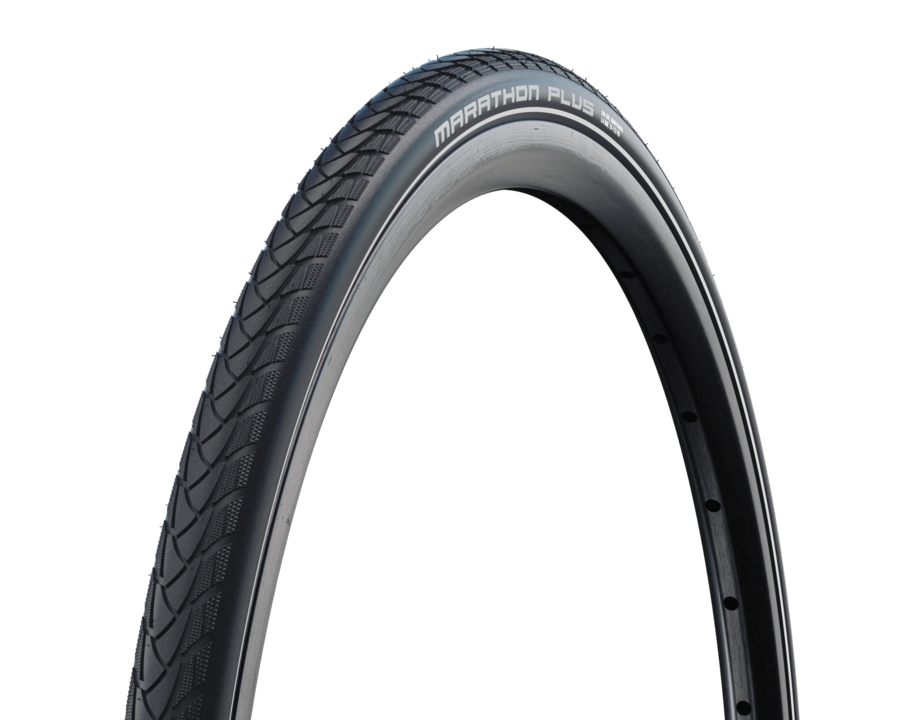
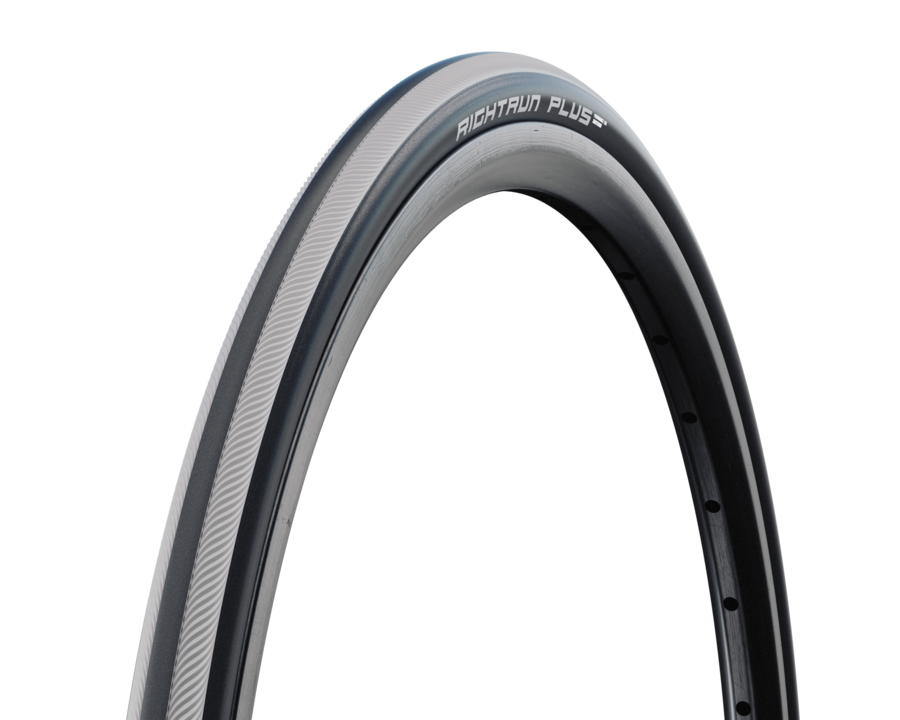
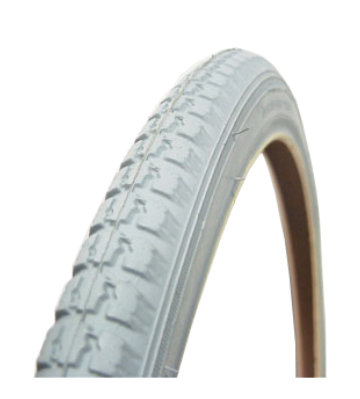
The permitted pressure range is printed on the tire sidewall. Stay inside it. Ranges differ a lot between tires. In the catalog, the Schwalbe Marathon Plus Wheelchair in 24 x 1 3/8 is listed at 3.5 to 6 bar. The narrower Schwalbe RightRun Plus in 24 x 1 is listed at 6 to 10 bar, which is 85 to 145 psi. The Primo Orion in 24 x 1 3/8 has a maximum of 65 psi. Never copy a pressure from someone else's chair.
Use a gauge
The thumb test is a rough guide at best. One clinical guide says a tire needs air if firm thumb pressure pushes it in more than 5 mm. But a high-pressure tire can feel hard while still well under its range. The tire maker Schwalbe advises using a gauge, not a thumb.
How often
Tubes lose air even without a puncture. Schwalbe describes a loss of about 1 bar per month as normal, and faster at high pressures. It advises checking at least once a month. Wheelchair guidance suggests weekly, which makes sense for narrow, high-pressure tires. Pick a fixed day.
What low pressure costs
- Effort. Research cited in wheelchair guidance found that tires deflated by more than 50 percent take significantly more energy to push.
- Punctures. Low pressure clearly raises puncture risk, including pinch flats, where the tube is squeezed against the rim.
- Tire life. Too little pressure is a leading cause of early wear. The sidewall flexes too much and develops fatigue cracks, and the edges of the tread wear instead of the centre.
- Brakes. Wheel locks press on the tire. If a lock stops gripping, the first fix to try is inflating the tire to its recommended pressure.
- Steering. Unequal pressure left and right makes the chair pull to one side.
There is one fair reason to run softer. Lower pressure absorbs bumps better and grips better, and softer tires work better on soft ground such as grass. Stay within the sidewall range, and pump back up for hard surfaces.
Valves
Wheelchair tubes come with Schrader valves, the car type, or Presta valves, the thin type with a small lock nut. Your pump head or gauge must match. The catalog lists tubes in both types and adapters that convert Presta to Schrader.
Cleaning hair out of caster bearings
Casters roll through everything on the floor. Hair, thread and lint wind around the axle between the wheel and the fork. The build-up adds rolling resistance and wears parts early. Hair wrapped around one caster is also a listed cause of a chair that veers to one side.
- Put the wheel locks on. If you can, tip the chair back safely or lay it on its side so the casters are off the floor.
- Look into the gap on each side of the caster wheel, where the axle bolt passes through.
- Cut across the wound hair with small scissors. Take care not to cut the tire or the bearing seal.
- Pull the pieces out with tweezers. Turn the wheel and repeat until the gap is clear on both sides.
- Brush out the remaining dirt with a toothbrush, then wipe with a damp cloth.
- Clean the fork stem area above the wheel in the same way.
Do not use a hose, a pressure washer or the shower to clean the chair. Water in the bearings causes rust.
If hair is packed deep behind the bearing covers and you cannot reach it, the wheel has to come off its axle bolt. That is a small job with the right tools, but the bolt must go back to the correct tightness. If you are not sure, ask your dealer to show you once. Many caster wheels use a bearing called 608, with an 8 mm bore, and the catalog lists a puller made for that size. Fitting new bearings needs a press tool, so many users leave it to a workshop.
Test each caster
- Spin the wheel. It should turn freely and quietly.
- Spin the whole fork around its stem. Grinding or a lot of play means worn stem bearings.
- Look from the front. Both casters must touch the floor, and each stem should be vertical.
- Roll forward at walking speed. Flutter, a fast side-to-side shimmy, means something is loose, worn or out of line.
- Check the tread for cracks, tears, bulges and flat spots.
A light oil on the caster pivots every three months is suggested in clinical maintenance guidance. Wipe off the excess. Solid caster treads cannot go flat. One caster maker describes its urethane tread in exactly those terms. They still wear and still need the checks above.
When to replace tires and tubes
Tires
Tread depth matters less than most people think. Schwalbe's rule is that a tire is worn out when the puncture protection layer or the fabric threads of the casing show through the tread. Often the sidewall fails first.
Replace a tire if you see any of these:
- A different-coloured layer or threads showing through the tread.
- Cracks in the sidewall.
- A bulge anywhere on the tire.
- A flat spot or uneven wear on one edge.
- Cuts with something lodged in them that keep causing punctures.
- A tire that sits loose on the rim.
Check for small sharp objects in the tread every time you inspect, and pick them out before they work through. If one tire is worn out, check the other just as carefully.
Tire life in distance varies with pressure, load, surface, temperature and how you ride. Unused tires also age. Schwalbe says its tires can be stored for up to five years in a cool, dry, dark place.
Tubes
A small hole in the middle of a tube can be patched. The steps are: find the hole, mark it, roughen the area with the sandpaper from the kit, apply a thin layer of glue, let it dry, press the patch on firmly. The other option is to fit a new tube and patch the old one later as a spare.
Before the tube goes back, run a cloth around the inside of the tire to find whatever caused the puncture. Check the rim tape too. It must cover every spoke hole, or the spoke ends will cut the new tube.
Buy by the size code. Tires and tubes carry an ISO size such as 25-540, meaning 25 mm wide on a 540 mm rim. Inch names such as 24 x 1 can be ambiguous. One tube covers a range of widths. The Sportaid 24 x 1 tube in the catalog fits 20, 23 and 25-540. Match the valve type as well.
Solid tires
Solid and foam-filled tires remove pressure checks and punctures. The trade-off is a harder, bumpier ride. Check them monthly for wear, cracks and flat spots.
Two last checks, and when to call the dealer
Spin each rear wheel. It should turn easily and not slow quickly. Listen for knocking or squeaking. Then hold the top of the wheel and try to rock it. A quick-release axle allows a little play, but it must lock every time. An axle that does not latch is an accident risk.
Call your dealer or repair service for grinding bearings, a wheel that wobbles sideways, a caster that keeps fluttering after cleaning, loose or broken spokes, or any crack in a fork or frame.
Home care does not replace a full service. Guidance for users recommends a complete service by a wheelchair maintenance expert once a year. Breakdowns are common: surveys cited in the same guidance found that 44 to 57 percent of users had at least one in the previous six months.
This article is general information. Rules and prices differ by country and change, so confirm them before you buy or travel.
Common questions
How often should I check wheelchair tire pressure?
Wheelchair guidance suggests weekly, and tire maker Schwalbe advises at least monthly with a gauge. Narrow high-pressure tires are worth checking weekly.
What pressure should my wheelchair tires be?
Use the range printed on the tire sidewall. It differs widely between tires, so do not copy another chair's figure.
How do I get hair out of caster wheels?
Cut across the wound hair with small scissors, pull it out with tweezers, then brush and wipe the axle area. Do not hose the chair, because water rusts the bearings.
When is a wheelchair tire worn out?
When the protection layer or casing threads show through the tread, or when the sidewall is cracked or bulging.
Sources
- SCIRE Community: Wheelchair Maintenance
- Physiopedia: Wheelchair Maintenance
- Schwalbe: Tire pressure
- Schwalbe: Tire wear
- Schwalbe: Puncture protection
- MSKTC: Maintenance Guide for Users of Manual and Power Wheelchairs
- Wikipedia: Bicycle tire
- Frog Legs: EPIC Aluminum Wide Softroll Caster
Read on 5 October 2026. The wording of the article is our own.