AFO braces in 2026: foot drop braces, carbon fiber AFOs, KAFOs and FES, who fits them, prices and Medicare
Which AFO or foot drop brace is which: off-the-shelf, custom-fitted or custom-made, carbon braces, KAFOs and FES, who fits them, prices, and what Medicare pays.
Contents
- The short answer
- How we compared
- Foot drop in plain words
- Off-the-shelf, custom-fitted or custom-fabricated
- The types side by side
- Rigid and solid-ankle AFOs
- Hinged AFOs
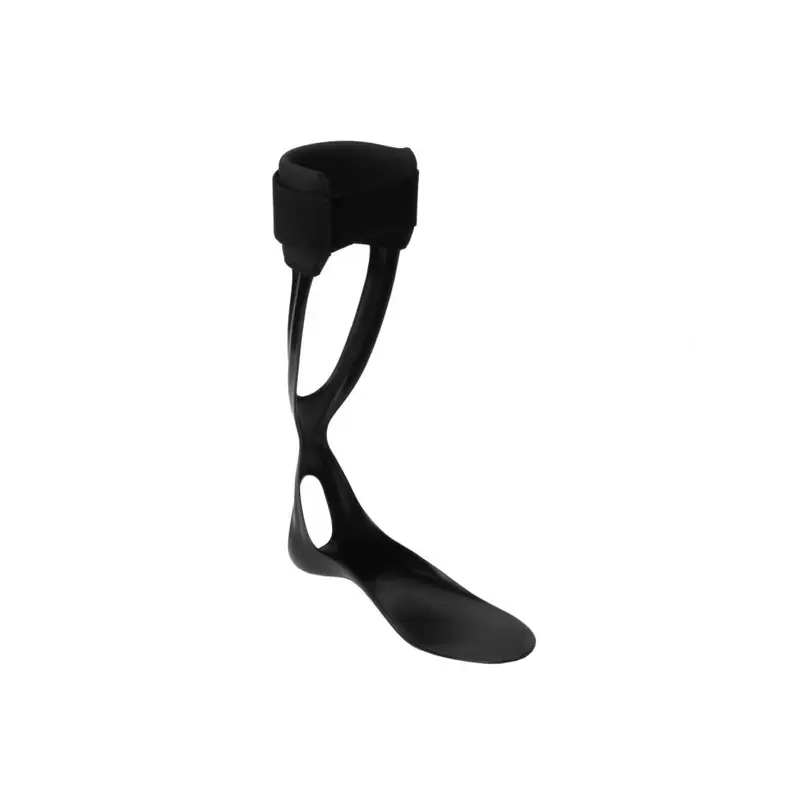
- Posterior leaf spring: thin plastic that flexes
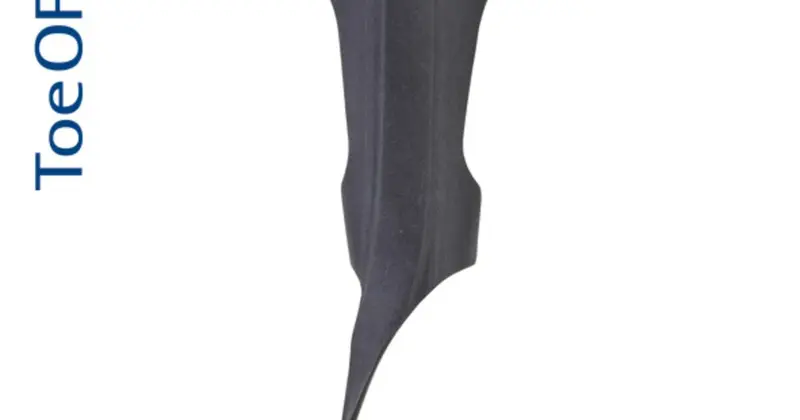
- Carbon dynamic AFOs: ToeOFF and BlueROCKER
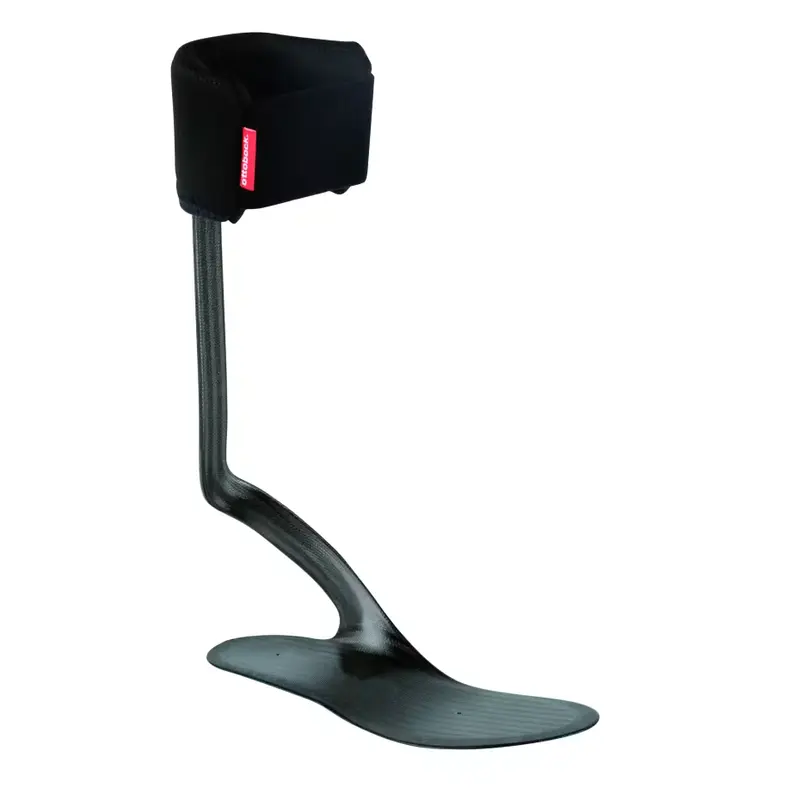
- Carbon dynamic AFOs: WalkOn Reaction and AFO Dynamic
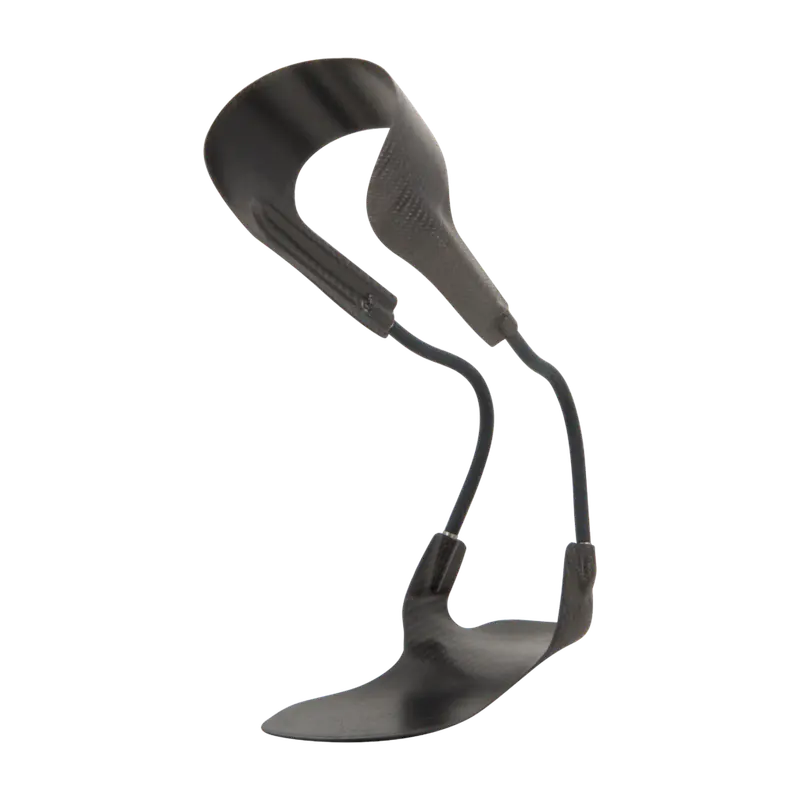
- Custom carbon AFOs: SpryStep Vector
- Dorsiflexion-assist straps: Rebound Foot-Up
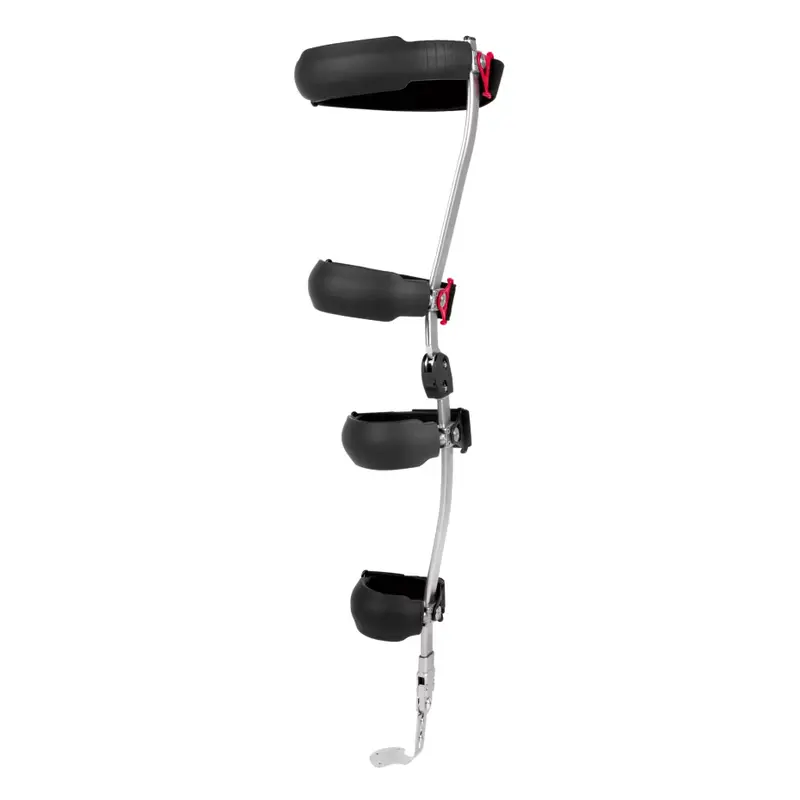
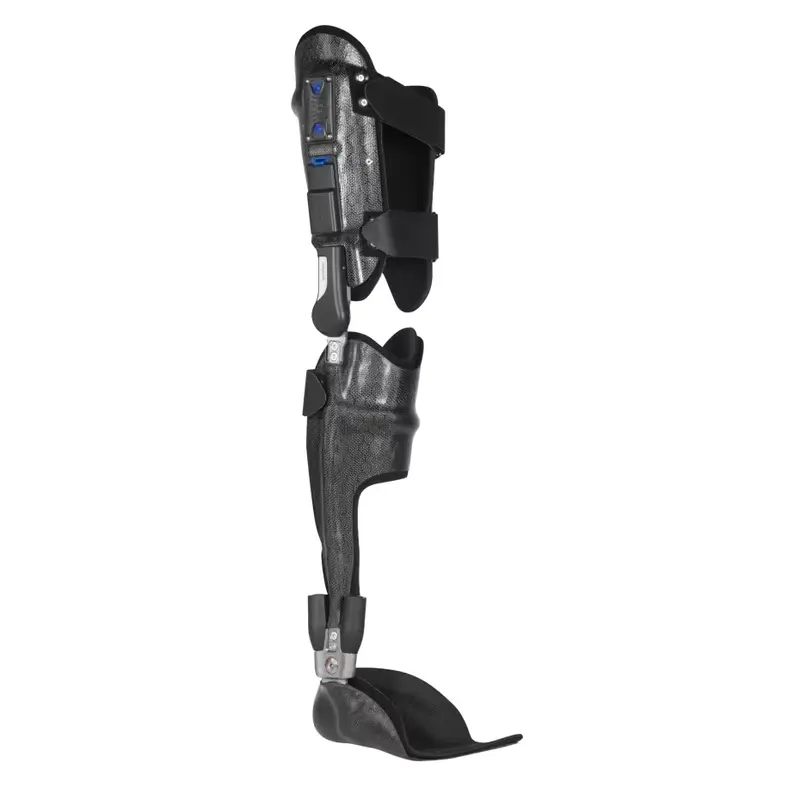
- KAFOs, briefly
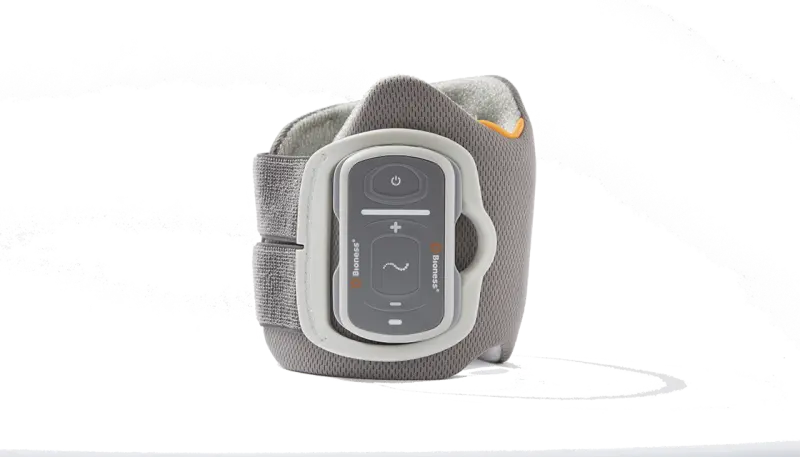
- FES as an alternative: Bioness L300 Go
- Who fits an AFO: orthotist or fitter
- Finding AFO braces near you
- Skin and fit: what the makers and StatPearls warn
- Getting used to a new brace
- Night splints and positioning AFOs
- Does Medicare cover an AFO?
- The October 2026 fee schedule, as printed
- What you pay under Medicare
- Medicaid and the VA
- Repairs, replacement and warranty
- What AFOs cost: prices listed on 25 October 2026
- How the FDA classifies AFOs
- Recalls
- What FDA reports mention
- What these reports cannot tell you
- Three traps
- Three composite scenarios
- What to ask the physician, therapist, orthotist and supplier
- Sources and documents
- Common questions
- Sources
The short answer
What kinds of AFO and foot drop brace are there, and what do they cost? Mobility Atlas read the makers' pages and instructions, the Medicare rules and two retailers' listings on 25 October 2026. An ankle-foot orthosis (AFO) runs from the foot to near the top of the calf and holds the foot up when the muscles that lift it are weak. Rigid or solid-ankle AFOs stop ankle movement; hinged AFOs let the ankle bend; a posterior leaf spring flexes behind the ankle; carbon dynamic AFOs such as ToeOFF, BlueROCKER, WalkOn and AFO Dynamic use a stiff carbon shell that bends and springs back; an elastic strap such as Össur's Rebound Foot-Up lifts the forefoot from an ankle cuff. Every AFO is either off the shelf, custom-fitted or custom-fabricated. At Vitality Medical (US), a simple foot drop brace listed at 31.14 dollars and WalkOn models at up to 840.58. Which brace suits you is for your physician, physical therapist and certified orthotist to decide.
| Type | What it does | Examples in this guide |
|---|---|---|
| Rigid or solid-ankle AFO | Holds the ankle still | Custom plastic (L1960) |
| Hinged AFO | Ankle joint lets it bend | Custom or prefab (L1970, L1971) |
| Posterior leaf spring | Thin plastic flexes behind ankle | Össur AFO Leaf Spring |
| Carbon dynamic AFO | Carbon shell bends and springs back | ToeOFF, BlueROCKER, WalkOn, AFO Dynamic |
| Custom carbon AFO | Made from a cast of your leg | Thuasne SpryStep Vector |
| Dorsiflexion-assist strap | Elastic strap lifts the forefoot | Össur Rebound Foot-Up |
| KAFO | Adds thigh section, knee control | Custom KAFOs, stance control |
| FES, not a brace | Electrical pulses lift the foot | Bioness L300 Go |
Mobility Atlas earns a fee or margin when you order through us; the comparison below uses only the makers' published documents, the retailers' published listings, our own catalog, and the CMS, FDA, VA and health agency documents named in each section. If you want us to find a brace, send an enquiry with your orthotist's or doctor's prescription, your shoe size, which side, and where you live, and ask us to find it.
How we compared
On 25 October 2026 we read 23 saved files, in full or in the sections stated. From government and health bodies: Medicare's coverage rule L33686 for ankle-foot and knee-ankle-foot orthoses and its policy article A52457, both revised with effect from 1 October 2026; the October 2026 DMEPOS fee schedule rows for AFO and KAFO codes; Medicare.gov's braces page; a CMS fact sheet on competitive bidding; the federal VA and Medicaid regulations; NINDS, StatPearls and MedlinePlus on foot drop; and the FDA's classification, recall and adverse event records, read through openFDA. From the profession: the ABC and BOC certification pages and two patient pages from AOPA, which says it represents over 1,500 orthotic and prosthetic facilities and suppliers or manufacturers. From makers: Allard, Ottobock, Össur, Thuasne and Bioness pages and instructions, and the Accelerated Care Plus page on WalkAide. Prices come from Vitality Medical and Rehabmart; we also used eleven rows of our own catalog, none with a price.
Limits: prices are one day's online listings at two US retailers; weight limits and contraindications are the makers' own words; Ottobock's WalkOn Reaction instructions could not be opened; and we did not try or fit any brace. This guide is written for the United States; elsewhere, ask your local orthotist or funder.
Foot drop in plain words
The NINDS page says people develop foot drop syndrome "when they are unable to raise the front part of their foot," because the muscles that lift it are weak or stop working. They may drag the foot, scrape their toes, or lift the knee higher on that side, a walking pattern doctors call a "steppage gait." MedlinePlus, on common peroneal nerve dysfunction, names a "Slapping" gait as one symptom. NINDS adds that "People with foot drop are more likely to fall because they cannot lift their foot fully when walking."
Doctors consider foot drop a sign of a separate health problem, the NINDS page says. Causes it lists include multiple sclerosis, stroke and cerebral palsy; motor nerve disorders such as ALS; spinal cord injury and spinal stenosis; inherited nerve disorders such as Charcot-Marie-Tooth disease; diabetes; muscular dystrophy; and pressure on the nerve near the knee, for example from crossing the legs for long periods. StatPearls says common fibular neuropathy, at the head of the fibula just below the knee, is the most frequent mononeuropathy of the leg.
It can be temporary or permanent. NINDS says people whose foot drop comes from trauma or nerve damage "often recover partially or completely," while people with progressive brain diseases are likely to have permanent foot drop. StatPearls says most people with neurapraxia, the type of nerve injury with the best outlook, recover fully within about 3 months, and that recovery with axonal loss may take up to 12 months. StatPearls says consulting an orthotist is essential "whether the patient requires a temporary brace while awaiting nerve regeneration or a permanent brace in the case of poor recovery." Which kind of brace that means for you is for your physician and orthotist to decide.
NINDS lists "External foot support, such as lightweight leg braces and shoe inserts (ankle-foot orthotics)" first among treatments. StatPearls says "Early placement of an ankle dorsiflexor brace enhances gait mechanics, reduces the likelihood of falls." None of these pages says which brace to use. They describe a team: the physician who finds the cause, the physical therapist who assesses gait and falls, and the orthotist who designs and fits the brace. Children's AFOs exist too, such as Allard's Kiddie models; a child's brace is a question for the child's clinicians.
Off-the-shelf, custom-fitted or custom-fabricated
Medicare's policy article A52457 sorts every AFO into one of three groups. Off-the-shelf (OTS) and custom-fitted braces are both prefabricated: made "in quantity without a specific beneficiary in mind," the article says. The difference is what happens at delivery. An OTS brace needs only "minimal self-adjustment," such as adjusting straps and closures or bending or trimming for comfort, which you, a caregiver or the supplier can do. A custom-fitted brace needs more: it must be "trimmed, bent, molded (with or without heat), or otherwise modified" by a certified orthotist or a person with specialized training.
The article says plainly that for the prefabricated codes it lists, "there is no physical difference between orthoses coded as custom fitted versus those coded as OTS." The same carbon brace can be billed either way, which is why codes come in pairs such as L1932 and L1933, or L1971 and L1972.
A custom-fabricated brace is different in kind. The article defines it as one that is "individually made for a specific patient. No other patient would be able to use this item." It is made from a cast, tracing, measurement or scan of your leg, with substantial work such as vacuum forming, cutting, molding and finishing. CAD/CAM or 3D printing alone does not make a brace custom-fabricated, the article says.
| Group | Made for | Fitting at delivery | Example code pair or code |
|---|---|---|---|
| Off-the-shelf (OTS) | Anyone in the size range | Minimal self-adjustment | L1933, L1972 |
| Custom-fitted | Anyone in the size range | Orthotist or trained person | L1932, L1971 |
| Custom-fabricated | You only, from a model | Made and fitted for you | L1940, L1960, L1970 |
The types side by side
| Brace | Type | Weight limit as printed | Shoes as printed | Heat | Maker's code or claim |
|---|---|---|---|---|---|
| Össur AFO Leaf Spring | Polypropylene leaf spring | None printed | Fits most shoes | Pro may reshape, minimal heat | No code on page |
| Allard ToeOFF 2.0 | Carbon composite, dynamic | None printed | Supportive; never without | Do not heat | No code on sheet |
| Allard BlueROCKER 2.0 | Carbon, more rigid | None printed | Supportive; never without | Do not heat | No code on sheet |
| Ottobock WalkOn Reaction (US) | Carbon, anterior shell | IFU not readable | Not on US page | Not on page | Suggests L1932 / L1933 |
| Össur AFO Dynamic | Carbon, medial strut | 120 kg (265 lbs) | Firm heel counter | Cannot be reshaped | Lists L1933 and L1932 |
| Thuasne SpryStep Vector | Custom composite spiral | Not over 160 kg | Stiff heel cup; trainers | Avoid extreme temperatures | PDAC Approved L1950 |
| Össur Rebound Foot-Up | Elastic strap, ankle cuff | None printed | Shoes, or foot wrap | Not stated | No code on page |
The table copies each page's own words. Where it says none printed, the pages and instructions we read give no user weight limit; ask the maker or orthotist before you rely on the brace. A code printed on a maker's page, even one marked "PDAC Approved," is the maker's statement about billing. It does not mean Medicare will pay for the brace for you; that depends on the coverage criteria and on how the supplier fits it.
Shoes matter. Allard's patient instructions say "Never wear your Allard AFO without shoes"; Össur's give the shoe heel height for AFO Dynamic as "approximately 1,7 cm"; Thuasne's say "Trainers or athletic shoes are the best type of shoes to use with the device." Ottobock's Canadian FAQ for a different model, the WalkOn Reaction lateral, recommends a 1 cm heel and says a second pair of shoes should have the same heel height.
Our catalog lists more AFOs for which we did not read full documents: the Allard ToeOFF 2½ (5 sizes), Ottobock's WalkOn (28U11), Ottobock's thermoformable AFO 28U90, and Fillauer's custom Dynamic Walk with a 6-month warranty. None has a price in our catalog, checked October 2026.
Rigid and solid-ankle AFOs
A solid-ankle AFO holds the foot and ankle still. Medicare's policy article says code L1960, a custom plastic "posterior solid ankle" AFO, is designed to provide "rigid immobilization of the ankle-foot complex" in all three planes, for people with musculoskeletal or neuromuscular dysfunction. A broader custom code, L1940, describes a custom AFO molded from plastic or other material, not necessarily solid-ankle, with a rigid foot plate joined by a strut to a calf cuff that ends "well above the ankle (usually to near the top of the calf)."
Both are custom-fabricated codes, so an orthotist makes these braces from a cast, scan or model of your leg. Medicare's rule allows a custom-fabricated AFO only when one of five extra criteria applies, among them a need to control the ankle "in more than one plane," which the Medicare section of this guide sets out.
Hinged AFOs
A hinged AFO has an ankle joint built into the brace. The policy article says code L1970 describes a custom-fabricated plastic AFO with "a hinge or joint mechanism," and L1971 and L1972 as the prefabricated version, custom-fitted and off-the-shelf respectively. L1972 was added to the coverage rule's list of walking AFOs in its latest revision, effective 1 October 2026.
Joints can carry extras. The article says code L2210 is a "dorsiflexion assist (plantar flexion resist)" ankle joint addition, whose range of motion "is adjustable post-delivery of the orthosis," with the first setting made by the supplier during fabrication. Do not change a joint setting yourself unless the orthotist has shown you how.
Posterior leaf spring: thin plastic that flexes
A posterior leaf spring is a thin plastic AFO with a flexible section behind the ankle. Össur's page says its AFO Leaf Spring is a prefabricated polypropylene AFO "designed to support flaccid drop foot." It has a "thin, flexible foot part" that the page says is easy to trim with scissors, and no heel section, which the page says gives a better fit in shoes.
It comes in two sizes. Össur's sheet gives a Small-Medium for US shoe sizes 7.5 to 10.5, 27 cm high with a 24 cm foot plate, and a Large for US 11 to 14, 30 cm high with a 28 cm foot plate, each for left or right. The instructions say it "must be fitted and adjusted by a healthcare professional," list loss of sensation, spasticity of the calf muscles and foot neuropathy as contraindications, and say "Potential side-effects are skin irritation and pain resulting from pressure points." They allow the professional to reshape pressure points with minimal heat.
Medicare's policy article describes a prefabricated plastic AFO under code L1930: a rigid calf cuff and rigid foot plate joined by a flexible posterior strut. Össur's page names no code for the Leaf Spring.
Carbon dynamic AFOs: ToeOFF and BlueROCKER
Allard's carbon composite AFOs are sold in the US by Allard USA; the family page lists 14 models, including KiddieROCKER and other children's models. The instructions say they are "intended to support a foot with impaired ability to actively dorsiflex" and to assist when push-off is reduced.
The ToeOFF 2.0 sheet recommends it for foot drop with "no spasticity to moderate spasticity," with limb proprioception deficit and mild proximal deficit. The same ToeOFF sheet, however, lists "moderate to severe spasticity" among its contraindications, while the professional instructions list "Severe spasticity"; ask the orthotist how this applies to you. The BlueROCKER 2.0 sheet says it is "identical in shape and design as ToeOFF but offers more rigid orthotic control," and recommends it for foot drop with "no spasticity to severe spasticity," weakness in several leg muscle groups, impaired balance and partial foot amputations. Allard's sizing table runs from XS, 360 mm (14 in) high with a 210 mm footplate, to XL 2.0, 450 mm (17 3/4 in) high with a 285 mm footplate.
Allard's professional instructions list these contraindications for ToeOFF and BlueROCKER: foot or leg ulcers, moderate to severe edema, moderate to severe foot deformities, severe proximal deficits and severe spasticity. They say the product "must be fitted by or under the supervision of a Certified Orthotist-Prosthetist, Certified Orthotist or equivalent medical professional." The patient instructions say "a prescription is required for Allard AFOs." No price is printed on Allard's pages or sheets, and no user weight limit appears in the sheets or either set of instructions.
Allard says BlueROCKER can also be used for partial foot amputations, with a socket and toe filler. If that is your situation, the prosthetic leg guide covers the prosthetic side.
Carbon dynamic AFOs: WalkOn Reaction and AFO Dynamic
Ottobock's US page describes the WalkOn Reaction (28U24) as made from "a prepreg advanced carbon composite," with an anterior shell and longer strut that use ground reaction forces "to help extend the users knee," which the page says suits "active patients who also have a slight knee extensor weakness." It comes in four sizes, Small to X-Large, left and right, from 13.8 in (35 cm) to 15.4 in (39 cm) high, sized by shoe. The page suggests the codes L1932 (custom fit) and L1933 (OTS), and shows no price ("Login or register to buy"). Its instructions for use, which we could not open when we checked, are where Ottobock's page points for details; ask your orthotist for the weight limit and contraindications. Ottobock's Canadian page is for a different model, the WalkOn Reaction lateral (28U34); it says the adult sizes "were tested for 2 million cycles."
Össur's AFO Dynamic uses what the page calls Flex-Foot technology and "the energy storing properties of carbon fiber," with a medial strut that the page says makes it less visible in the shoe. The page gives a "Weight limit: up to 120 kg (265 lbs)" and four sizes, XS to L, by calf height (30 to 40 cm) and shoe size. Indications are drop foot after a stroke or other neurological conditions, including multiple sclerosis, mild knee instability and Charcot-Marie-Tooth disease. The catalog sheet lists severe ankle-foot deformities, fluctuating edema and severe spasticity as contraindications, and the instructions add loss of sensation, calf spasticity and foot neuropathy.
Össur's AFO Dynamic instructions give two warnings worth asking your orthotist about for any carbon brace: "The device cannot be reshaped by heating," because heat causes delamination, and "Customization beyond that specified in this IFU is not recommended." Allard's professional instructions say of its carbon composite: "Do not heat."
Custom carbon AFOs: SpryStep Vector
Some carbon AFOs are made to measure. Thuasne's SpryStep Vector page describes "an elegant, durable, patient-friendly custom composite AFO" with a posterior lateral spiral strut and a molded inner boot, made from a fiberglass cast of the leg. The page says "PDAC Approved L1950." The instructions call it a "Custom-made device" made from a positive model of the limb, of carbon fibre, glass fibre, plastics and stainless steel.
The indications in the instructions are broad: weak dorsiflexors, footdrop and footslap, "Fatigueable footdrop," knee instability or hyperextension, quadriceps weakness, and partial foot amputation at Chopart level or more distal. The contraindications are specific: "Do not use for patients weighing > 160 kg," that is about 353 lb by our conversion, and not with open ulcers of the foot, ankle or lower leg or severe loss of sensation in the leg. A recall of SpryStep braces, initiated in 2023 by the firm the FDA records name as Townsend Design, is described in the recall section of this guide.
Dorsiflexion-assist straps: Rebound Foot-Up
Össur's page says Rebound Foot-Up works by supporting the foot during the swing phase of the step: "An elastic support strap runs from a comfortable ankle cuff to the top of the foot," fastened by an inlay under the shoelaces or to the eyelets. An optional foot wrap lets it be worn in sandals or barefoot. The page says it "Allows for voluntary plantar flexion," so the foot can still point down. It comes in two cuff sizes, 18 to 25 cm and 26 to 33 cm around the ankle.
The instructions say three things worth reading before you buy. "This device contains natural rubber latex which may cause allergic reactions." "The device is not intended for use by patients with spasticity." And people with poor circulation, such as from diabetes or peripheral vascular disease, are "advised to consult with a healthcare professional before using the device."
For Medicare, a strap is not automatically a brace: the policy article says items made mainly of elastic are coded A4467, which is "denied as noncovered (no Medicare benefit)." Össur's page names no code for Foot-Up.
KAFOs, briefly
A knee-ankle-foot orthosis (KAFO) adds a thigh section and a knee joint to an AFO. Medicare's rule covers a KAFO for walking for people who qualify for an AFO "and for whom additional knee stability is required." Most KAFO codes in the policy article are custom-fabricated codes, such as L2000, listed in the fee file as "Kafo sing fre stirr thi/calf" (a single-upright KAFO with a stirrup and thigh and calf bands), and L2036, listed in the fee file as "Kafo plas doub free knee mol" (a plastic double-upright KAFO with a free knee, molded). Their October 2026 fee schedule figures are in the Medicare section.
Some KAFOs lock the knee while you stand on the leg and free it to swing. Our catalog lists Ottobock's FreeWalk (170K1), a mechanical stance-control KAFO with a maximum user weight of 80 kg for the listed model; Fillauer's Swing Phase Lock 2, a gravity-driven knee joint; Ottobock's E-MAG Active, an electronically controlled knee joint with a maximum body weight of 220 lb and about 5,000 steps per charge; and Ottobock's C-Brace, a microprocessor-controlled KAFO. None has a price in our catalog, checked October 2026. Powered and microprocessor orthoses are covered in the exoskeleton guide.
FES as an alternative: Bioness L300 Go
Functional electrical stimulation (FES) does not hold the foot up. Bioness says the L300 Go electrically stimulates muscles in the leg so that they lift the foot, timed by what it calls 3D motion detection, with a cuff below the knee and, in some configurations, a thigh cuff. Its FAQ says FES "may replace the natural electrical signals from the brain" when a muscle and its nerve supply are healthy but the brain's signal cannot get through.
Its indications for use say it is "intended to provide ankle dorsiflexion in adult and pediatric individuals with foot drop" and to assist knee movement in adults. The page says it is for "foot drop and/or knee instability caused by an upper motor neuron disease or injury" and lists stroke, multiple sclerosis, cerebral palsy, traumatic brain injury and incomplete spinal cord injury. In our reading, foot drop from damage to the nerve itself, such as the common fibular nerve injuries MedlinePlus describes, is not among the conditions the page names. Ask your physician which kind of foot drop you have.
The page says the L300 Go "is contraindicated in patients with a demand-type cardiac pacemaker, defibrillator or any electrical implant," and must not be used on a leg where a metallic implant is directly under the electrodes or where a cancerous lesion is present or suspected, or on a leg with a disorder such as a fracture or dislocation that the stimulation could make worse, and it says to "Use caution in patients with diagnosed or suspected cardiac problems or epilepsy." The FAQ says "you must have a prescription for therapy and be evaluated by a Bioness-trained healthcare provider" for home use, and that your health plan "may cover some or all of the cost." Bioness prints no price, and we found none.
The maker's comparison table is marketing
Bioness's page carries a table headed "L300 Go vs. Ankle Foot Orthosis (AFO)" that answers "Yes" for the L300 Go and "No" for an AFO on six benefits, and claims such as a "40% improvement in walking speed," footnoted to its own reference list. That is the maker's marketing, not an independent comparison, and we have not checked the studies behind it. Whether FES suits you, alone or with a brace, is for your physician, physical therapist and certified orthotist to decide.
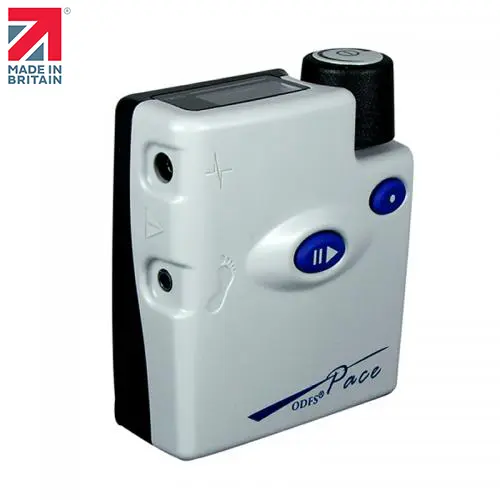
Our catalog lists two more foot drop FES systems, Cionic's Neural Sleeve 2 and Odstock Medical's ODFS Pace, both without a price, checked October 2026. On Rehabmart on 25 October 2026, a G4 Functional Electrical Stimulator foot drop system was listed "Starting at" 2,611.00 dollars; that is one listing's starting price, not a price for the L300 Go.
WalkAide: sales discontinued by ACP
Readers may also meet the name WalkAide. The walkaide.com address now forwards to the site of Accelerated Care Plus (ACP), whose page says ACP "has discontinued sales of the WalkAide device" and points to a supply company for supply needs. If you already use one, ask your clinician about parts, electrodes and alternatives.
Who fits an AFO: orthotist or fitter
Who fits an AFO, and how do you find one near you? Mobility Atlas read the two certification boards' pages, AOPA's patient pages and Medicare's coding rules on 25 October 2026. A certified orthotist, certified by ABC or BOC, evaluates you and designs, fabricates and fits orthoses, including custom-fabricated AFOs and KAFOs. A certified orthotic fitter fits prefabricated braces; ABC's scope for its fitters leaves out functional electrical stimulation orthoses. Medicare draws a similar line: an off-the-shelf brace needs only "minimal self-adjustment," while a custom-fitted one needs a certified orthotist or someone with specialized training. To find AFO braces near you, start with your physician, who can write the order, and ask them or your physical therapist to refer you to an orthotic clinic. Ask the clinic which board certified the person who will fit you, whether it is enrolled in Medicare, and who will see you for adjustments and follow-up. Allard, for one, says a prescription is required for its AFOs.
ABC's scope of practice says an ABC certified orthotist "is a health care professional who is specifically educated and trained to manage comprehensive orthotic and/or prosthetic patient care," and that the evaluation may cover skin integrity, sensation, circulation, gait and the "potential for use of Functional Electrical Stimulation and/or Neuroprosthetics." AOPA gives "Designing and fabricating an ankle-foot orthosis (AFO) for a patient recovering from a stroke" as an example of an orthotist's work, and says orthotists must complete a Master's degree in orthotics and prosthetics and a residency of typically 18 months.
ABC's fitter scope covers "Prefabricated orthoses for the upper and lower extremities," with exceptions that include "functional electrical stimulation orthoses." BOC says its Certified Orthotic Fitter (COF) "properly fits, dispenses and adjusts prefabricated orthotic devices," and that candidates need a minimum of 1,000 hours of supervised patient care. AOPA adds that "Licensure or licensed practitioners is a requirement in some states."
On 25 October 2026 BOC's certification menu linked no BOC orthotist page, though AOPA's page and Medicare's policy article both name BOC as one of the two certifying bodies; if someone says they are BOC certified, ask which credential they hold.
Finding AFO braces near you
- Ask your physician or physical therapist for a referral to an orthotist, and ask your physician for a written order if you will use Medicare or insurance. Medicare's rule says a "Standard Written Order (SWO) must be communicated to the supplier before a claim is submitted."
- Check the clinic's credentials: ABC or BOC certification for the person, and Medicare enrollment for the business if Medicare will pay.
- Ask whether the brace you are offered is off-the-shelf, custom-fitted or custom-fabricated, and why.
- Ask how long the fitting takes, how many follow-up visits are included, and who adjusts the brace after 90 days.
- Ask about the warranty and who registers it.
Medicare's policy article says evaluation, measuring or casting, and fitting and adjustment "are included in the allowance for the orthosis," with no separate payment. Ask what, if anything, you will be charged beyond your share.
Skin and fit: what the makers and StatPearls warn
The instructions we could read from Allard, Össur and Thuasne all warn about the skin. Thuasne's instructions say the device "can cause skin reactions (redness, itching, burns, blisters,etc.) or wounds of various degrees of severity." Össur's say "Potential side-effects are skin irritation and pain resulting from pressure points." StatPearls says "Poorly fitting braces can cause abrasions," that skin without feeling "may become a site for chronic soft tissue injuries, such as ulcers," and that for conditions such as renal failure and heart failure "different braces may be required to accommodate varying phases of edema and swelling."
- Check your skin every day. Allard's patient instructions say "Check the condition of your lower leg and foot daily," especially with loss of sensation, and to ask for help if your ability to check your own foot and leg is reduced.
- Stop at the first sign. Allard says that "In the case of skin irritation or discoloration, discontinue use immediately and contact your fitter/prescriber immediately." Össur says to stop and contact a professional "If any pain, skin irritation, or unusual reaction occurs."
- Always wear a layer between brace and skin. Allard's instructions say "Interface between the carbon and the skin is required," and suggest tall cotton socks; Thuasne recommends "The systematic use of a sock."
- Do not overtighten. Össur says "Care should be taken not to overtighten the device," and Thuasne says to tighten "without restricting blood circulation." MedlinePlus says to contact your provider if a cast, splint or other pressure on the lower leg "causes a tight feeling or numbness."
- Watch for swelling and color change. Thuasne says to remove the device and consult a professional in the event of "variation in limb volume, abnormal sensations or change in colour of the extremities," and lists a "Possible risk of venous thrombosis."
- Never wear a brace over an open wound; Össur's Foot-Up instructions say so plainly, and Allard and Thuasne list ulcers as contraindications.
Össur lists loss of sensation and foot neuropathy as contraindications for AFO Dynamic and the Leaf Spring, and Allard's professional instructions give separate do's and don'ts for a diabetic foot.
Getting used to a new brace
A new AFO takes time. Thuasne's instructions say "It may take several weeks to feel comfortable with the brace on your leg." Allard's say to follow "the fitter/prescriber's recommendations for gradually increasing wearing time." Ask for a written wearing schedule, and go back if the plan does not work.
- Stairs: Allard says to "Place ENTIRE foot on step" rather than the forefoot, and Thuasne says to "Always place the entire foot on any step or uneven surface."
- Squatting and kneeling: Allard's instructions warn that squatting increases the stress on the brace and the risk of damage; Thuasne says "Do not kneel or squat with the device" except in one configuration.
- Heat: Allard says not to leave the brace in a car trunk on summer days; Thuasne says not to expose it to extreme temperatures.
- Daily checks: Allard says "Inspect the brace daily."
A brace changes how you walk, and you may still use a cane or walker. Among complications, StatPearls lists the "improper use or overuse of gait aids and braces," and says "Gait aids, such as walkers and canes, can be detrimental, especially on uneven surfaces"; it advises referral to physical therapy for gait evaluation, fall prevention and brace management. Ask your physical therapist how to use an aid with your brace. If you use one, the guides to walking canes, crutches and walkers and rollators cover the aids themselves.
Night splints and positioning AFOs
Some AFOs are worn in bed or at rest, not for walking. Medicare's rule treats them separately and strictly. A static or dynamic positioning AFO (L4396 or L4397) is covered either for plantar fasciitis or for a plantar flexion contracture of the ankle that meets four criteria; the rule says the first is "dorsiflexion on passive range of motion testing of at least 10 degrees (i.e., a nonfixed contracture)," measured with a goniometer and written in the record, with an expectation that the contracture can be corrected, a contracture that interferes or is expected to interfere significantly with function, and a stretching program.
The rule says plainly about foot drop: "Codes L4396, L4397 and L4392 will be denied as not reasonable and necessary for a beneficiary with a foot drop but without an ankle flexion contracture." And "Medicare does not reimburse for a foot drop splint/recumbent positioning device (L4398)" or its replacement interface. The policy article adds that positioning AFOs and foot drop splints used solely for a heel or other pressure ulcer are not braces under the Medicare benefit.
Rehabmart's foot drop category page on 25 October 2026 listed positioning boots such as DeRoyal's Multi Podus boot "Starting at" 118.71 dollars. Walking boots for fractures and sprains are a different product; the knee scooter guide covers walking boots and offloading.
Does Medicare cover an AFO?
Does Medicare cover an AFO brace? Mobility Atlas read Medicare's coverage rule L33686, its policy article A52457 and Medicare.gov's braces page on 25 October 2026. Part B covers leg braces "when medically necessary and when a doctor or other health care provider orders them," the page says. For an AFO worn while walking, the rule covers ambulatory people "with weakness or deformity of the foot and ankle" who "Require stabilization for medical reasons" and "Have the potential to benefit functionally." A KAFO also requires a need for extra knee stability. A custom-fabricated AFO needs one of five further reasons, such as a condition expected to last more than 6 months. Night and positioning AFOs have their own stricter criteria. After the Part B deductible, you pay 20 percent of the Medicare-approved amount, the page says, and it lists "If your doctor accepts assignment" among the things that change what you owe, so ask the supplier whether they accept assignment.
The five reasons for a custom-fabricated AFO or KAFO
The rule covers a custom-fabricated AFO or KAFO for a walking person who meets the basic criteria and one of these, in the rule's words:
- The beneficiary could not be fit with a prefabricated AFO.
- The condition necessitating the orthosis is expected to be permanent or of longstanding duration (more than 6 months).
- There is a need to control the knee, ankle or foot in more than one plane.
- The beneficiary has a documented neurological, circulatory, or orthopedic status that requires custom fabricating to prevent tissue injury.
- The beneficiary has a healing fracture which lacks normal anatomical integrity or anthropometric proportions.
If the basic criteria are not met, the rule says the orthosis "will be denied as not reasonable and necessary." The policy article adds that the treating practitioner's records must support the custom brace rather than a prefabricated one, and that "documentation created by an orthotist or prosthetist shall be considered part of the individual's medical record" for this purpose.
The paperwork is the supplier's job: a Standard Written Order before the claim, and for some codes a face-to-face encounter and a written order before delivery. If the supplier expects a denial, the policy article refers to an Advance Beneficiary Notice (ABN); read any ABN you are asked to sign, and ask what it means for what you pay.
Some things are not covered as braces at all, the policy article says: elastic supports coded A4467, a foot pressure off-loading device (A9283), an inversion/eversion correction device (A9285), and socks used with orthoses. Shoes that are part of a brace fall under Medicare's separate orthopedic footwear policy.
The October 2026 fee schedule, as printed
The DMEPOS fee schedule is the table of amounts Medicare allows for each code, state by state. These are the lowest and highest non-rural amounts printed across the 48 contiguous states and Washington, DC, in the October 2026 file, DME26-D, with the ceiling and floor the file prints. For every row below, the rural columns in the file are 0.00. These are allowed amounts, not shop prices.
| Code | What it is (shortened) | Lowest to highest, non-rural (USD) | Ceiling / floor (USD) |
|---|---|---|---|
| L1930 | Prefab plastic AFO | 271.84 to 362.45 | 362.45 / 271.84 |
| L1932 | Carbon, anterior shell, custom fit | 1070.39 to 1108.65 | 1306.25 / 979.69 |
| L1933 | Carbon, anterior shell, OTS | 1070.39 to 1108.65 | 1306.25 / 979.69 |
| L1971 | Prefab with ankle joint, custom fit | 562.23 to 582.34 | 686.13 / 514.60 |
| L1972 | Prefab with ankle joint, OTS | 562.23 to 582.34 | 686.13 / 514.60 |
| L1940 | Custom molded plastic | 568.30 to 757.73 | 757.73 / 568.30 |
| L1960 | Custom solid ankle | 636.95 to 849.26 | 849.26 / 636.95 |
| L1970 | Custom with ankle joint | 817.68 to 1090.24 | 1090.24 / 817.68 |
| L2000 | KAFO, single upright, free knee | 1165.54 to 1554.06 | 1554.06 / 1165.54 |
| L2036 | KAFO, plastic, double free knee | 2131.99 to 2842.66 | 2842.66 / 2131.99 |
Three things stand out. The custom-fitted and off-the-shelf codes in each pair carry the same amounts in this file: L1932 and L1933 both run from 1070.39 to 1108.65 dollars. A carbon AFO billed under L1933 has a higher allowed amount than a custom-molded plastic AFO under L1940 (568.30 to 757.73). And L1972, added to the coverage rule's list in October 2026, from 562.23 to 582.34, matches its custom-fitted partner L1971. These are facts about the fee table, not about which brace suits you.
Alaska, Hawaii, Puerto Rico and the US Virgin Islands have separate amounts in the file; for L1930 they are 430.04, 459.82, 225.00 and 271.84.
What you pay under Medicare
Medicare.gov's braces page says: "After you meet the Part B deductible, you pay 20% of the Medicare-approved amount." It adds that the amount you could owe depends on other insurance, how much your doctor charges, the type of facility, where you get the item, and "If your doctor accepts assignment." So ask the supplier, before the fitting, whether they accept assignment and what your share will be.
As a rough guide, 20 percent of the printed non-rural range is 54.37 to 72.49 dollars for an L1930 plastic AFO, 112.45 to 116.47 for an L1972 hinged AFO, 214.08 to 221.73 for an L1933 carbon AFO, 113.66 to 151.55 for an L1940 custom plastic AFO, and 233.11 to 310.81 for an L2000 KAFO. These are our sums on the fee schedule, not quotes; the Medicare-approved amount for your claim, and the deductible, can differ, and the deductible amount is not in the files we read.
CMS's fact sheet of 28 November 2025 (updated 8 December 2025) on the next round of its competitive bidding program, with contracts to start no later than 1 January 2028 (target dates), lists off-the-shelf back braces, knee braces and upper extremity braces among the product categories; ankle-foot orthoses are not on that list.
Medicaid and the VA
Medicaid
In our reading, braces come under the federal Medicaid definition of prosthetic devices: 42 CFR 440.120(c) defines these as replacement, corrective, or supportive devices "prescribed by a physician or other licensed practitioner of the healing arts" to, among other purposes, "Support a weak or deformed portion of the body." This is a federal definition, not a promise of coverage. Ask your state Medicaid office or your Medicaid plan what it covers, which supplier you must use and whether prior approval is needed before you are fitted.
The VA
For veterans, the regulation 38 CFR 17.3230 says the VA will provide eligible veterans with "Orthotic devices." and other items when it decides they are needed and serve "as a direct and active component of the veteran's medical treatment and rehabilitation," and "do not solely support the comfort or convenience of the veteran." The same list includes repairs, replacement when items are damaged, lost or clinically indicated, and "Training with and fitting of prescribed items." Items become the veteran's property once they take possession, unless the VA decides a loan is better. Under 38 CFR 17.38, the VA's medical benefits package includes "Prosthetic and rehabilitative items and services as authorized under §§ 17.3200 through 17.3250."
Ask the Prosthetic and Sensory Aids Service (PSAS) at your VA medical center; the Lexington VA page describes PSAS as aiming to be "the premier source of Prosthetic and Orthotic services" for veterans.
Repairs, replacement and warranty
All braces wear. StatPearls says "all braces eventually require replacement or adjustments," and that the clinician should keep in touch with the orthotist between visits. Medicare's policy article says repairs to a covered orthosis "due to wear or to accidental damage are covered when they are necessary to make the orthosis functional," that the repair labor code L4205 may be billed for actual repairs or for adjustments "made more than 90 days after delivery," and that Medicare will not pay more for a repair than a new orthosis would cost.
| Maker | Warranty, life or test as printed | Where it says so |
|---|---|---|
| Allard | One year; registration by your orthotist | Patient instructions |
| Fillauer Dynamic Walk | 6 months | Our catalog row |
| Ottobock WalkOn Reaction lateral | Adult sizes tested for 2 million cycles | Canadian product page |
| Össur Rebound Foot-Up | Replace the connection strap at regular intervals | Instructions |
Össur's and Thuasne's instructions say to stop using a device that is damaged or has changed. If a carbon brace cracks, stop wearing it and call the orthotist.
What AFOs cost: prices listed on 25 October 2026
These are United States online prices in US dollars, as listed by two retailers on 25 October 2026. Many listings show a range across sizes, sides or options, and the low end of a range may be a pad or accessory rather than the full brace. A "Starting at" or "From" price is a listing's cheapest option.
| Product | Seller | Listed price (USD) |
|---|---|---|
| Super-Lite A.F.O. Foot Drop Brace | Vitality Medical | 31.14 |
| FootFlexor Ankle Foot Orthosis Foot Drop Brace | Vitality Medical | 42.28 |
| FootFlexor Ankle Foot Orthosis, size XS/S | Rehabmart | From 71.42 |
| Swedish-style foot splint, Alpha Medical, L/XL | Rehabmart | From 51.97 |
| Ankle Foot Orthosis / Foot Drop Splint, right, medium | Rehabmart | From 86.45 |
| Allard Stretch Up Foot Flexor | Rehabmart | Starting at 42.87 |
| Supra-Lite AFO | Rehabmart | From 101.22 |
| Carbon Supra-Lite AFO, small, left | Rehabmart | From 142.46 |
| Allard ToeUP textile AFO | Rehabmart | Starting at 88.68 |
| Allard NaviGAIT | Rehabmart | Starting at 134.64 |
| Ottobock WalkOn Trimable | Vitality Medical | 70.39 to 840.58 |
| Ottobock WalkOn Reaction | Vitality Medical | 91.56 to 762.04 |
| Ottobock WalkOn Lateral, left and right | Vitality Medical | 626.58 to 728.67 |
| Ottobock WalkOn Flex | Vitality Medical | 840.58 |
We found no full price for an Allard ToeOFF or BlueROCKER. Allard's product page prints no price, and Rehabmart listed only ToeOFF and BlueROCKER parts: accessories and replacement parts "Starting at" 26.94 dollars and a replacement ComfortKIT or straps "Starting at" 34.04. Össur and Thuasne print no prices either; custom braces are priced by the clinic. Vitality Medical marks its AFO listings "FSA & HSA Eligible"; whether your own account will pay is your plan's decision.
A retail price and a Medicare allowed amount are different things. For comparison only, the highest non-rural amount for code L1933, which Ottobock suggests for its WalkOn Reaction, is 1108.65 dollars, and Medicare's allowance includes evaluation, fitting and adjustment; a cash purchase online includes none of those. Prices differ by country, seller, tax and funding.
How the FDA classifies AFOs
In the United States, AFOs are medical devices. The AFO reports and recalls in this guide come from three FDA product codes, all under the same regulation; the FDA's openFDA classification records for them were last updated on 12 October 2026 (the adverse event data, a separate dataset, on 13 October).
| Product code | FDA device name | Class | Regulation |
|---|---|---|---|
| IQI | Orthosis, Limb Brace | 1 | 890.3475 |
| ITW | Joint, Ankle, External Brace | 1 | 890.3475 |
| OHI | Orthosis, Foot Drop | 1 | 890.3475 |
The OHI record defines a foot drop orthosis as an "Aid for drop foot or similar disorders which have a lack of ankle dorsiflexion." Regulation 21 CFR 890.3475, "Limb orthosis," says a limb orthosis is worn on the arms or legs "to support, to correct, or to prevent deformities or to align body structures for functional improvement." It is Class I, general controls, exempt from premarket notification within the limits the regulation names, and exempt from most good manufacturing practice rules except those on records and complaint files.
In our reading, this means an AFO usually reaches the market without FDA premarket review, so the letters "FDA" on a listing say little about a particular brace. The same codes also cover knee braces, ankle supports and walking boots, which is why 17 of the 20 recalls under them concern other braces, and the text of most reports under them does not mention an AFO, foot drop or a KAFO. The openFDA site adds its own caution: "Do not rely on openFDA to make decisions regarding medical care."
Recalls
On 25 October 2026 we read all 20 FDA recall records filed under the three codes, downloaded from openFDA that day. Three concern AFOs or KAFOs, all from the firm the records name as Townsend Design, covering SpryStep braces, which Thuasne's pages list as its products: the Custom SpryStep (Z-0670-2024, 248 units), the SpryStep Vector (Z-0671-2024, 898 units) and the SpryStep Vector KAFO (Z-0672-2024, 334 units), 1,480 units in all by our sum. The recall was initiated on 23 September 2023 and posted on 5 January 2024, and each record's status is "Completed." The reason, in the record's words: "Due to potential air pockets between layers of material," there was a potential for complete strut breakage.
The other 17 records concern other braces: latex labeling recalls of knee sleeves, ankle supports, ankle braces and a wrist brace, among them 3M's Futuro and ACE ankle braces; a 2016 Össur labeling recall of knee braces and walking boots; and DeRoyal tennis elbow straps with mold. None is an AFO.
A recall record shows that a firm acted on certain units; it is not a measure of how often braces fail. If you wear a Custom SpryStep, SpryStep Vector or SpryStep Vector KAFO, ask your orthotist whether your brace was among the recalled units and what was done.
What FDA reports mention
openFDA returned 535 reports under these codes on 25 October 2026 (data last updated 13 October 2026); 534 list IQI, ITW or OHI as the first device's code, 529 of them with text; a word search found 10 that mention an AFO, foot drop or a KAFO. The text of the other reports does not mention any of those. Seven of the ten were filed as injuries and three as malfunctions. They span 2002 to 2026. We describe each as reported; a report is one account, and the makers' replies are their own.
| Report | Year received | Device as named | What the report says |
|---|---|---|---|
| 375274 | 2002 | E-Z AFO boot | Pressure area at ankle from a crease at the closure |
| 597156 | 2005 | GII KAFO | Brace remade several times; found misaligned |
| 6593002 | 2017 | DAFO | Tight fit said to cause a foot stress fracture |
| 7820449 | 2018 | Rebound knee brace | Foot drop after wearing a knee brace |
| 10010778 | 2020 | KAFO | Legal notice alleges the brace broke |
| 10726112 | 2020 | FreeWalk KAFO | Knee joint pins fell out after a repair |
| 15967670 | 2022 | KAFO lamination bar | Bar broke; fall and broken thumb |
| 16378137 | 2023 | KAFO | Fall and broken leg while wearing it |
| 50732785 | 2026 | Ankle-foot orthosis (custom, per report) | Cracked twice near the footplate |
| 50732820 | 2026 | Ankle-foot orthosis (custom, per report) | Apparent duplicate of 50732785 |
Skin and fit
In 375274, a care team found a pressure area on the front of the ankle under a new AFO boot, "from a crease at the velcro closure part." In 6593002, a physical therapist reported "the doctor reports tight fit of AFO has caused left cuboid bone stress fracture"; the maker's reply quotes its instructions on red marks that last beyond "20 minutes" and notes osteopenia of the foot. In 597156, a custom brace was remade several times; two licensed orthotists later found it misaligned, the report says.
A knee brace and the nerve
Report 7820449 is not about an AFO. A person developed foot drop after wearing a Rebound Cartilage knee brace for about 4.5 hours; the maker says it was "likely caused by pressure from the cartilage protection strap on the common peroneal nerve," with the brace fitted lower and slightly rotated, and found no malfunction.
KAFO breakage and falls
Four other reports involve KAFOs. In 10010778, a legal notice to Breg alleges a "Knee Ankle Foot Orthosis Full" broke; no product was returned. In 10726112, a wearer writes that after an Ottobock FreeWalk KAFO came back from repair, two knee joint pins fell out because retaining clips were missing; they were not injured. In 15967670, a person fell when a KAFO's lamination bar broke; Ottobock's reply says the bar was overloaded and the part "has exceeded its lifetime of 3 years." In 16378137, a person fell and broke the leg above the knee while wearing a KAFO; the report says "No manufacturer response yet."
A custom AFO that cracked twice
Reports 50732785 and 50732820, received the same day in September 2026, carry nearly the same text, one saying it covers "ankle-foot orthosis #1" and the other "#2"; we treat them as apparent duplicates of one account. The wearer writes that a custom AFO cracked "near the area where the posterior/back portion connects to the footplate" after about three weeks, was remade through Thuasne with a stiffer laminate, and failed again in less than one week in essentially the same place. The report names no model and gives no maker finding.
What these reports cannot tell you
Ten reports over more than two decades are a handful of accounts, not a measure of risk. These ten were filed by makers, care staff, wearers and others, two of them are near copies, and a report exists only when someone chooses to file one. A word search finds only the reports whose text names an AFO, foot drop or a KAFO; a report that says "leg brace" and nothing more is missed, and one about a knee brace is found because it mentions foot drop. Six more reports name an AFO or KAFO only in the device-name field, which our search of the report text did not cover; we did not read them for this guide. We did not code the reports by cause, so this section gives no categories or counts beyond the ten.
If a brace hurts you or breaks, tell your orthotist and the maker, and you can report it to the FDA.
Three traps
Trap one: buying a carbon brace online because it looks light and modern. The carbon AFOs in this guide are meant to be fitted by a professional: Allard says its braces must be fitted by or under the supervision of a certified orthotist, and Össur says AFO Dynamic "must be fitted and adjusted by a healthcare professional." Several have contraindications, such as severe spasticity, ulcers, edema or loss of sensation, that only an assessment can rule out.
Trap two: assuming a code on a maker's page means Medicare will pay; it pays only if you meet the coverage criteria and the supplier documents them.
Trap three: ignoring a red mark, a new pain or a small crack. Cascade DAFO's instructions, quoted in an FDA report, say a red mark that lasts more than 20 minutes after removal may mean a fit problem; Allard and Thuasne say to stop at any skin change or damage. Allard says to check the leg and foot daily, especially if you have lost sensation.
Three composite scenarios
These are composite scenarios, not individual customers. Each one combines facts and ranges already given in this guide to show how the decision plays out.
Scenario one: a person with foot drop after a stroke, mild spasticity and good skin sensation is offered a carbon AFO by the orthotist. The orthotist explains that ToeOFF's sheet recommends it for no to moderate spasticity but also lists moderate to severe spasticity as a contraindication, and that BlueROCKER's covers no to severe spasticity with more rigid control. The person asks whether the clinic accepts Medicare assignment; for an L1933 brace, 20 percent of the printed non-rural range is 214.08 to 221.73 dollars by our sum, after the deductible.
Scenario two: a person develops foot drop after a knee injury, with numbness on the top of the foot. The physician expects the nerve may recover over months. The orthotist explains the options for a brace while the nerve may recover, and asks for a daily skin check because of the numbness. Asked about FES, the physician notes that the L300 Go's indications name upper motor neuron conditions.
Scenario three: a veteran with a long-term KAFO notices a creak at the knee joint after a repair. Remembering an FDA report of pins falling out after a repair, they stop using it, call the orthotist, and ask the VA's Prosthetic and Sensory Aids Service about a replacement, which the VA's rules allow when replacement is clinically indicated.
What to ask the physician, therapist, orthotist and supplier
Your physician
- What is causing my foot drop, and is it likely to recover or progress?
- Do I need a brace, FES, both, or something else, and will you write the order?
Your physical therapist
- Do I still need a cane, crutches or a walker with the brace?
- What exercises keep my ankle moving, and should I use a night splint?
The orthotist
- Which type do you recommend, off-the-shelf, custom-fitted or custom-fabricated, and why?
- What are the contraindications and weight limit of this brace, in writing?
- What shoes and heel height do I need, and what is the warranty?
The supplier or plan
- Are you enrolled in Medicare, and do you accept assignment?
- Which code will you bill, and what will my share be?
- For Medicaid, the VA or a private plan: is prior approval needed?
If you would like help finding a particular brace, or an orthotic clinic, send an enquiry with your prescription and where you live, and we will compare the options against the makers' published documents.
Sources and documents
Every source named in this guide is linked in the list at the end of this page.
Related guides on Mobility Atlas: Prosthetic legs; Exoskeletons and powered orthoses; Walking canes; Crutches; Walkers and rollators; Knee scooters and walking boots.
Method in brief: we read each saved page in full or in the sections named, copied every figure as printed, and computed only simple sums, percentages and one unit conversion, which are shown in the text and kept in a facts file. Fee-schedule ranges are the lowest and highest non-rural figures printed for each code in the October 2026 file. FDA reports were found by a word search of the report text and read in full; we did not code them, and counts are of reports, not of braces or people. Prices are one day's listings at the sellers named, on 25 October 2026. Catalog entries are from our own catalog, checked October 2026. We did not test any product, and nothing here replaces an assessment by a physician, physical therapist and certified orthotist.
Prices checked October 2026 at Vitality Medical, Rehabmart and the makers' pages; confirm them with the seller or clinic. Documents checked October 2026: every document listed below, read on 25 October 2026.
Do you wear an AFO, a carbon brace, a Foot-Up strap or an FES cuff? Send us a note through the enquiry form with what you use and how it works for you; we use readers' notes when we update the guide.
This article is general information, not medical advice. Devices of this kind are chosen and fitted with a clinician who knows you.
Common questions
How much does an AFO brace cost?
On 25 October 2026, simple prefabricated foot drop braces listed at 31.14 and 42.28 dollars at Vitality Medical, Rehabmart's foot drop brace listings showed starting prices from 42.87 to 142.46 dollars, and Ottobock WalkOn listings at Vitality Medical ran up to 840.58 dollars, several as ranges by size, side or option. Allard, Össur and Thuasne print no prices, and custom braces are priced by the clinic. Prices differ by country, seller, tax and funding, and Medicare's allowed amounts are a separate thing.
Does Medicare cover an AFO?
Yes, when the criteria in Medicare's rule L33686 are met: for a walking AFO, weakness or deformity of the foot and ankle, a medical need for stabilization and the potential to benefit, with a doctor's order. A custom-fabricated AFO needs one more reason, such as a condition expected to last more than 6 months. After the Part B deductible you pay 20 percent of the Medicare-approved amount; Medicare.gov lists whether your doctor accepts assignment among the things that change what you owe, so ask the supplier first.
What is the best brace for foot drop?
There is no single best brace; it depends on the cause, spasticity, skin sensation, swelling, knee control and activity. Makers' own documents differ: Allard's ToeOFF sheet recommends it for no to moderate spasticity yet lists moderate to severe spasticity as a contraindication, BlueROCKER's sheet goes up to severe spasticity, and Össur says Foot-Up is not for spasticity. Your physician, physical therapist and certified orthotist decide which suits you.
Is a carbon fiber AFO better than a plastic one?
Neither is better for everyone. Carbon AFOs such as AFO Dynamic and the WalkOn Reaction lateral are described by their makers as storing or returning energy, and Allard's instructions and Össur's AFO Dynamic instructions say not to heat them; Össur's instructions let a professional reshape its plastic Leaf Spring with minimal heat. Custom plastic AFOs are made from a model of your leg. Contraindications differ by model.
Can I use FES instead of an AFO?
It depends on the cause. Bioness says its L300 Go is for foot drop caused by an upper motor neuron disease or injury such as stroke, MS, cerebral palsy, brain injury and incomplete spinal cord injury, needs a prescription and, for home use, an evaluation by a Bioness-trained provider, and is contraindicated with a demand-type pacemaker, defibrillator or any electrical implant. Bioness's comparison with AFOs is its own marketing. Your physician, therapist and orthotist decide. Accelerated Care Plus says it has discontinued sales of WalkAide.
Who can fit an AFO?
A certified orthotist (ABC or BOC) evaluates you and designs, fabricates and fits orthoses, including custom-made AFOs and KAFOs. A certified orthotic fitter fits prefabricated braces; ABC's fitter scope excludes FES orthoses. Medicare says a custom-fitted brace needs a certified orthotist or someone with specialized training, while an off-the-shelf brace needs only minimal self-adjustment.
Sources
- CMS: LCD L33686, Ankle-Foot/Knee-Ankle-Foot Orthosis (read 25 October 2026)
- CMS: Policy article A52457, Ankle-Foot/Knee-Ankle-Foot Orthoses
- CMS: DMEPOS fee schedule, October 2026 (DME26-D)
- Medicare: Braces (arm, leg, back, and neck)
- CMS: DMEPOS Competitive Bidding Program, updates and important information (fact sheet)
- eCFR: 38 CFR 17.3230, Authorized items and services (VA)
- eCFR: 38 CFR 17.38, Medical benefits package (VA)
- VA Lexington Health Care: Prosthetic and Sensory Aids Service
- eCFR: 42 CFR 440.120, Medicaid definition of prosthetic devices
- NINDS: Foot drop syndrome
- StatPearls (NCBI Bookshelf): Foot Drop
- MedlinePlus: Common peroneal nerve dysfunction
- ABC: Scope of practice, certified orthotist and prosthetist
- ABC: Scope of practice, certified fitter-orthotics
- BOC: Orthotic Fitter (COF) certification
- AOPA: Who provides this care?
- AOPA: What is orthotics and prosthetics?
- Allard USA: ToeOFF 2.0 product page and sheet
- Allard USA: BlueROCKER 2.0 product sheet
- Allard USA: Allard AFO professional instructions (E110)
- Allard USA: Allard AFO patient instructions (E111)
- Ottobock US: WalkOn Reaction 28U24
- Ottobock Canada: WalkOn Reaction lateral 28U34
- Össur: Rebound Foot-Up
- Össur: AFO Dynamic
- Össur: AFO Leaf Spring
- Thuasne USA: SpryStep Vector AFO
- Thuasne: SpryStep Custom and SpryStep Vector instructions for use (2039701)
- Bioness: L300 Go
- Bioness: L300 Go patient FAQs
- Accelerated Care Plus: WalkAide (sales discontinued)
- Vitality Medical: ankle foot orthosis listings (prices read 25 October 2026)
- Vitality Medical: foot drop listings (prices read 25 October 2026)
- Rehabmart: foot drop AFO search (prices read 25 October 2026)
- Rehabmart: Foot drop braces and splints (prices read 25 October 2026)
- openFDA: device classification records, product codes IQI, ITW and OHI
- eCFR: 21 CFR 890.3475, Limb orthosis
- openFDA: device adverse event endpoint (reports read 25 October 2026)
- openFDA: device adverse event count by product code IQI, ITW and OHI (data last updated 13 October 2026, read 25 October 2026)
- openFDA: device recall endpoint, product codes IQI, ITW and OHI
Read on 25 October 2026. The wording of the article is our own.