Stairlifts and wheelchair platform lifts in 2026: prices, funding and what 230 FDA reports show
Prices, funding and safety for stairlifts and wheelchair platform lifts, and what two AI coders found in 230 FDA reports about stops, falls and seats.
Contents
- Stop and check before the next ride
- The short answer
- Stairlift, platform lift or home elevator: what each one is
- Straight, curved and outdoor stairlifts
- The parts of a stairlift, named
- What stairlifts and platform lifts cost in 2026
- Does Medicare pay for a stairlift?
- Measuring your stairs before a survey
- The top and bottom landings
- Features worth asking about
- Weight limits and heavy-duty lifts
- Who a stairlift suits, and who it does not
- How Mobility Atlas read 231 FDA reports
- What the reports show: the big picture
- When the lift stops on the stairs
- What to do if your stairlift stops
- Falls getting on and off
- Getting on and off, step by step
- The seatbelt and the swivel
- When the lift moves by itself or does not stop
- Seats, armrests and footrests that break
- Rails, drives and carriages
- Caught, pinched or crushed
- Fire, sparks and burning smells
- Stranded: when the lift leaves someone stuck
- Stairlift or platform lift for a wheelchair user
- Other ways round the stairs
- Platform lifts for wheelchairs
- The death reports, read with care
- Who files these reports, and when
- The recall file
- Batteries, charging and power cuts
- Noises, jerks and other early warnings
- Outdoor lifts, cold and damp
- Servicing: how often and what to check
- At handover: what the installer should show you
- Renters, landlords and shared stairs
- Used, reconditioned or rented
- When to report a stairlift problem to the FDA
- Keeping a record when something goes wrong
- Three composite scenarios
- Questions to ask before you buy
- Your plan: 10 minutes, today, this week
- Sources and documents
- Common questions
- Sources
Stop and check before the next ride
Using a stairlift today? Read this list first. Thinking of buying one? Start at the short answer below.
- The lift has stopped part way up or down the stairs, even once, and nobody knows why. Do not get off on the stairs. Stay seated with the belt on, and call for help or for service.
- The lift moved when you did not ask it to, crept down the rail, or did not stop at the end. Stop using it until a technician has checked it.
- The seat, the armrest or the footrest is cracked, loose, leans, or will not lock after swivelling.
- You smell burning, see sparks or smoke, or the circuit breaker keeps tripping.
- The lift beeps at the top or bottom, or will not move from the end of the rail. It may not be charging.
- The person who uses the lift has become weaker, more unsteady or more confused since it was installed.
Most other problems in this guide can wait for a booked service. These six cannot, because each is linked to falls or injuries in the reports, or makes them more likely.
The short answer
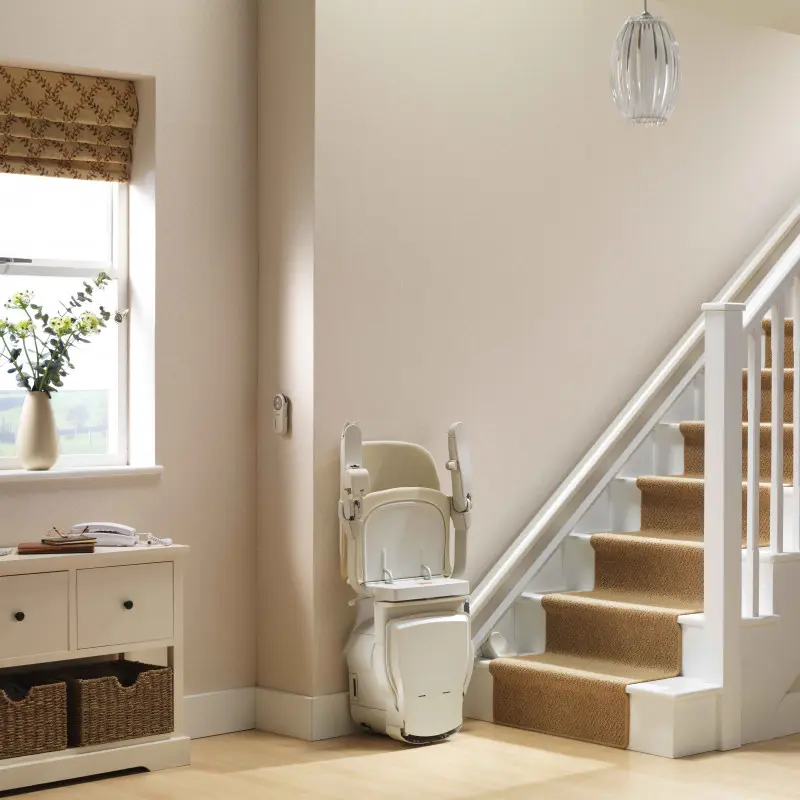
A stairlift is a seat that travels on a rail fixed to the stairs. A wheelchair platform lift is a platform that carries a person, often in their wheelchair, up a short vertical rise or along a stair. Both let someone reach another floor without climbing, and both are regulated by the FDA as medical devices.
Prices are lower for a straight stair than many people expect, and much higher for a curved one. One retailer, AmeriGlide, lists straight stairlifts starting at USD 1,499, curved stairlifts starting at USD 7,599 with installation included, and vertical platform lifts starting at USD 3,999 plus shipping. Medicare does not pay for stairlifts: its national equipment list puts stairway elevators under "Deny."
The safety part comes from something most buying guides never open: every FDA report ever filed under the two product codes for stairway chair lifts and permanently mounted wheelchair platform lifts, 234 reports from 2014 to September 2026, of which 231 carry a description. Each was read by two independent AI coders working separately. The single biggest pattern is not a fall from a moving lift. It is a lift that stopped on the stairs, and a person who then got off, or walked the stairs instead, and fell. Of 66 reports in which a lift stopped or would not move and someone fell, a word search finds 57 that mention someone getting off or out of the lift, or going up or down the stairs on foot. About half describe a lift that stopped with the person on it; the rest describe a lift that would not work, sometimes for days or weeks, and a person who used the stairs instead.
None of this means stairlifts are unsafe. It means the most dangerous moment is often after the lift stops, and that a plan for that moment is worth more than any feature on the brochure.
How to read the evidence: every quote below names the report, recall or document it comes from, and every count comes from the coded table or from word searches of the report texts, both published on the data and method page. Prices are list prices as read on a retailer's pages, never offers.
Stairlift, platform lift or home elevator: what each one is
| Device | What it is | Suits |
|---|---|---|
| Stairlift (stair chair lift) | A seat on a carriage that runs along a rail fixed to the stairs | People who can transfer onto a seat at both ends of the stairs |
| Inclined platform lift | A platform that runs along the stairs, carrying a wheelchair | Wheelchair users who cannot transfer, where the stair is wide enough |
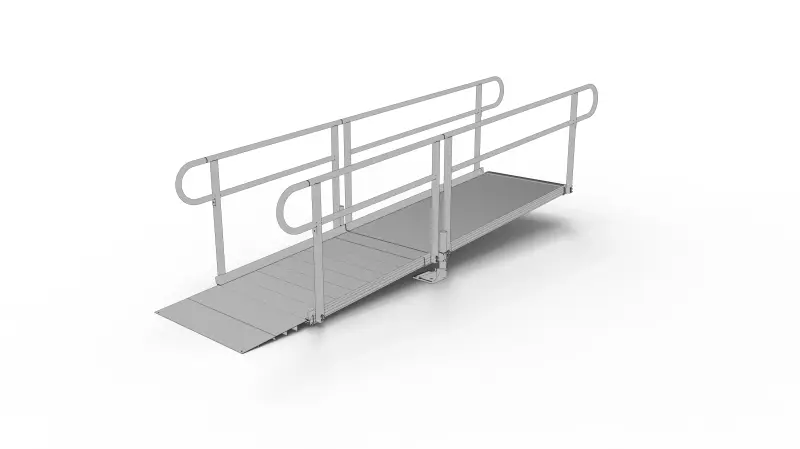
| Vertical platform lift (porch lift) | A platform that rises straight up, often a few feet; AmeriGlide lists models with up to 14 feet of travel | Steps at an entrance, a porch, a split level |
| Home elevator | A small lift car in a shaft | Whole-house access; a building project |
| Portable stair climber | A battery device that climbs stairs with a wheelchair or a seat, worked by an attendant | Occasional use, homes where nothing can be fixed |
The FDA's rule for stairlifts describes "a motorized lift equipped with a seat and permanently mounted in one location that is intended for use in mitigating mobility impairment caused by injury or other disease by moving a person up and down a stairway." Its rule for platform lifts describes "a motorized vertical or inclined platform lift device permanently installed in one location" that moves a person "from one level to another, with or without a wheelchair." Both are Class II devices.
Both rules exempt these lifts from premarket notification only on conditions, and the conditions say what the FDA cares about. For stairlifts they include safety controls "adequate to prevent a free fall of the chair in the event of a device failure," a seat and armrests that withstand the rated load, restraints to stop the user falling, electrical safety, and upholstery that resists ignition. They point to the industry safety standard, ASME A18.1, the "Safety Standard for Platform Lifts and Stairway Chair Lifts." Ask any seller whether the lift meets it.
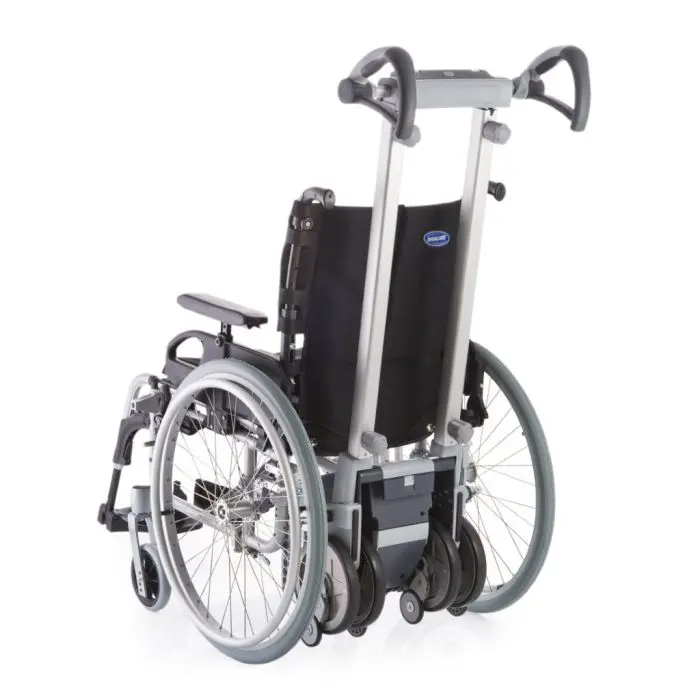
Attendant-operated stair climbers come under separate paragraphs of the same rules, without these conditions. The catalog lists one, the Alber scalamobil S35, which attaches to many manual wheelchairs and carries a person of up to 140 kg.
Straight, curved and outdoor stairlifts
Straight
A straight stairlift runs on a rail cut to length for one straight flight. The rail is usually fixed to the stair treads, not the wall, and many can be fitted in a day. AmeriGlide lists self-installation on most of its straight models and says that in many cases "customers are able to install their stair lift with guidance from our helpful installation guide," though it also offers professional installation. Several FDA reports trace burning, smoke or a leaning seat to wiring or fixings done by someone other than a trained installer, so we suggest professional fitting. A straight lift can often be moved or resold, because the rail is not custom-bent.
Curved
A curved stairlift runs on a rail bent to follow a stair that turns, has a landing, or both. The rail is made for that staircase, so it costs more, takes longer to make, and has little resale value. Several reports in our set describe a lift that stopped "at the mid landing" or at a bend, which is worth knowing when you plan how a user will be helped if that happens.
Outdoor
Outdoor stairlifts have weatherproof covers and seats for steps to a garden or a front door. Water, cold and dirt are hard on rails, switches and batteries, so outdoor lifts need closer attention to covers and servicing.
Hinged rails
Where the bottom of the rail would block a door or a hallway, a hinged section folds out of the way. One report describes a user who "tripped over the lowered hinge" of the rail while walking through a doorway. Another describes a lift left at the bottom of a hinged rail away from its charging station, which then would not run. If your lift has a hinge, decide where it should be left, and put the lift back on charge every time.
The parts of a stairlift, named
| Part | What it does | What goes wrong in the reports |
|---|---|---|
| Rail and gear rack | Carries the carriage and gives the drive something to grip | Ends or welds breaking, the carriage coming off |
| Carriage and drive | Holds the motor, gearbox, batteries and control board | Stopping, overrunning, burning smells |
| Seat and seat post | Carries the person | Cracks, broken welds, the seat leaning |
| Swivel | Turns the seat to face the landing at the top | Not locking, so the lift will not move; falls when getting off |
| Armrests and controls | Hold the user in and carry the joystick or toggle | Breaking under load |
| Footrest and safety edges | Carry the feet and stop the lift if they hit something | Stopping on an obstruction, catching feet or clothing |
| Seatbelt | Keeps the user in the seat | Not worn, or unfastened before the lift reached the landing |
| Key switch, remotes and charge points | Turn the lift on, call or send it, and charge it at the ends of the rail | Lift not charging, flat batteries, remote batteries flat |
Most modern stairlifts run on batteries that charge when the lift is parked on charge points, usually at the top and bottom of the rail. That is why a lift can keep running in a power cut, and why a lift left off its charge point slowly runs flat. Handicare's user manual for its Freecurve lift says that if the lift is not correctly parked at a charge point, it beeps for three minutes and an LED flashes.
What stairlifts and platform lifts cost in 2026
| Item | Listed price (AmeriGlide) | Notes |
|---|---|---|
| Straight stairlift | from USD 1,499 | Self-installation on most models |
| Outdoor stairlift | from USD 2,999 | Weather resistant |
| Reconditioned stairlift | from USD 1,999 | Call for availability |
| Curved stairlift | from USD 7,599 | Installation included; custom-made |
| Vertical platform lift, residential | USD 3,999 to USD 5,458 | Plus shipping; models listed by name |
| Vertical platform lift, enclosed | USD 15,999 to USD 17,999 | Plus shipping |
| Inclined platform lift | from USD 17,999 | Commercial and residential models |
How much does a stairlift cost? Mobility Atlas checked one large retailer's listed prices in October 2026, and the answer depends mostly on the shape of the stairs. On AmeriGlide's site, straight stairlifts start at USD 1,499, outdoor stairlifts at USD 2,999, and reconditioned lifts at USD 1,999. Curved stairlifts start at USD 7,599, because each rail is made for one staircase; installation is included at that price. For wheelchair users who cannot transfer, vertical platform lifts start at USD 3,999 plus shipping, enclosed ones run to USD 17,999, and inclined platform lifts that follow a stair start at USD 17,999. Add installation where it is not included, any electrical work, permits where your area needs them, and servicing. Medicare does not pay for stairlifts, so ask about other funding before you sign, and get at least two written quotes.
These are starting prices from one retailer and are examples, not a market survey. Dealers who survey the stairs and install the lift usually quote a single price for the job, which is often higher than an online starting price. Ask what the quote includes: the rail, fitting, the first service, the warranty and removal.
Does Medicare pay for a stairlift?
Does Medicare pay for a stairlift? Mobility Atlas read the national Medicare equipment list in October 2026, and the answer is no for original Medicare. The list, part of national coverage determination 280.1, puts "Stairway Elevators" under "Deny" and refers to its entry for elevators, which reads "Deny - convenience item; not primarily medical in nature." The list does not name platform lifts, but it denies both elevators and stairway elevators. The same list covers patient lifts and, under separate conditions, seat lifts, so a recliner that helps a person stand is a different question. Other routes may exist but vary: some Medicare Advantage plans, state Medicaid waiver programmes, veterans' programmes, local grants and charities may help with home access. The VA's home improvement grant, for example, lists stair glides among things it excludes, so a veteran would need to ask about other VA routes. Ask each funder in writing before you buy, because some will not pay for a lift already installed.
Veterans
The VA's Home Improvements and Structural Alterations benefit pays up to USD 6,800 for some veterans and USD 2,000 for others, over a lifetime, for changes such as permanent ramps and accessible bathrooms. Its page lists among the exclusions "removable equipment or appliances such as portable ramps; porch lifts, and stair glides." The same page points veterans to the Specially Adapted Housing and Special Housing Adaptation grants, which have their own rules. A veteran's prosthetics service is the place to ask.
Tax and other help
Some families can count part of the cost of a medically needed home lift as a medical expense for tax purposes, and some areas have home modification grants for older or disabled residents. These rules change by country, state and year, so ask a tax adviser or a local disability or ageing services office rather than relying on a general guide.
Measuring your stairs before a survey
A dealer will survey the stairs before quoting, but a few measurements of your own help you compare offers and spot a lift that will not fit. Take them with the person who will use the lift, and photograph the top and bottom of the stairs.
- The width of the stairs between the wall and the banister, at the narrowest point.
- Whether the flight is straight from bottom to top, or turns, has a landing, or has winding steps.
- How much space there is at the bottom for the lift to park without blocking a door or a hallway.
- Where the nearest power socket is at the top or bottom, and whether it is switched.
- What is at the top: a door, a radiator, a window sill, a narrow landing.
Ask each dealer which side of the stairs the rail will go on, how far the folded lift will stick out, and where the charge points will be. One report describes a second-hand lift fitted by a local builder rather than a trained installer; the seat-post bolts had not been tightened to specification, the seat leaned, and the user bumped his head "on the window sill." Ask who will fit the lift, and what sits beside the rail where a seat could lean.
The top and bottom landings
Many falls in the reports happen when getting on or off, at the top or bottom of the rail. At the top, the user has to swivel, stand and step onto the landing with the stairs behind. At the bottom, the rail end, a hinged section or the footrest can be a trip hazard for everyone else in the house.
- Light both landings well, with a switch the user can reach from the seat.
- Fit a grab rail at the top where the user stands up.
- Keep rugs, shoes and bags off both landings and the stairs.
- Fold the seat, arms and footrest up when the lift is parked, if it allows, so others can pass.
- If there is a door at the top of the stairs, make sure the user cannot step through it while still turning.
Ask the dealer to show the user how to get on and off at both ends, with the person watching who will help most often. A therapist can suggest where a rail or a perching stool would help.
Features worth asking about
| Feature | What it does | Who it helps |
|---|---|---|
| Manual swivel seat | Turns the seat to face the landing at the top | Most users; the standard choice |
| Powered swivel | Turns the seat at the press of a control | Users with weak hands or poor balance |
| Folding seat, arms and footrest | Keeps the stairs clear when the lift is parked | Households where others use the stairs |
| Key switch | Stops anyone else from running the lift | Homes with children or a user who needs supervision |
| Call-and-send remotes | Bring the lift to the user, or send it away | Almost everyone |
| Hinged or folding rail end | Moves the bottom of the rail out of a doorway | Short bottom landings |
| Display with fault codes | Shows why the lift stopped | Anyone calling the dealer |
The feature that matters most is the one that fits how the user gets on and off. Ask to try the seat, the swivel and the controls in a showroom or on a demonstration lift if you can.
Weight limits and heavy-duty lifts
Every stairlift has a maximum user weight. AmeriGlide says its lifts "typically range from 264 lbs to 350 lbs" and that heavy duty models can carry up to 600 lb, and that "Each stair lift is designed for use by one person at a time." The Mobility Atlas catalog lists the Stannah Siena One, a straight lift for users up to 300 lb.
The FDA's conditions for exempting stairlifts from premarket review include showing that the device, "including armrests," can withstand the rated load with a factor of safety. That is one reason never to carry a second person, heavy shopping or furniture on a stairlift, and never to sit on the armrest. If the user's weight has changed since the lift was fitted, tell the dealer.
Who a stairlift suits, and who it does not
A stairlift suits someone who can sit down on a seat at the bottom, ride with their feet on the footrest and the belt fastened, and get off safely at the top, usually after swivelling the seat to face the landing. It does not suit someone who cannot transfer, who cannot sit upright without support, or who may get off part way.
For a wheelchair user, a stairlift only helps if there is a second wheelchair upstairs and the user can transfer at both ends. A platform lift or a home elevator carries the wheelchair itself. An occupational therapist or a physiotherapist can assess the transfers, the stairs and the landings before you choose, and can tell you whether the person's condition is likely to change. A lift that suits someone today may not suit them in a year.
Memory and judgement
Several reports in our set describe a user who got off before the lift reached the end, stepped off to pick something up, or tried to fix the lift. One describes a woman who dropped her phone, "stopped the stairlift and step off" to get it, and broke her hip. For a person with memory problems or poor judgement, a stairlift may need a carer present for every ride, a key switch the carer controls, or a different solution.
How Mobility Atlas read 231 FDA reports
The FDA collects reports about medical devices in a database called MAUDE. Makers must report deaths, serious injuries and some malfunctions; users, families and health professionals can report too. We downloaded every report ever filed under the FDA product codes for powered stairway chair lifts (PCD) and permanently mounted wheelchair platform lifts (PCE): 234 reports from April 2014 to September 2026. Of these, 231 carry a description, and all 231 went into the study.
Before reading a single report, we wrote a codebook: nine categories for what went wrong, in a fixed order of precedence (fire, unexpected movement, entrapment, rail or drive, seat or safety part, stopped or would not move, fall with no failure, no device problem, unclear), plus flags for injury, fall and being left stranded, and what the maker found. The codebook was fingerprinted with a time stamp before coding began, so any later change to it would show.
Two independent coders then read every report separately, without seeing each other's answers. The coders were AI language models working separately; the method page says exactly how. They agreed on the main category in 94.8 percent of reports, a kappa of 0.936; kappa is a standard measure of agreement beyond chance, and this is very high agreement. We settled the 31 reports where they differed on any field under written rules, drawn up after the disagreements were listed and applied to all of them, and counted the results by script. A few events were reported more than once; we kept every report as filed, so counts are of reports, not events. One report was not about a stairlift or platform lift, which leaves 230.
The FDA warns that these reports cannot show how often a problem happens or prove that a device caused it. The FDA notes that device problems are under-reported, and few families know the database exists. These 230 reports show which kinds of events happen and how they unfold, not how common they are or which brand is safer.
What the reports show: the big picture
| What went wrong | Reports | With injury | With a fall |
|---|---|---|---|
| Stopped part way or would not move | 70 | 64 | 66 |
| Fall with no failure named | 47 | 44 | 47 |
| Moved unexpectedly or did not stop | 33 | 21 | 19 |
| Seat, swivel, armrest, footrest or belt failed | 31 | 13 | 15 |
| Rail, drive or carriage failed | 19 | 7 | 4 |
| Caught, pinched or crushed | 15 | 15 | 5 |
| Fire, smoke or overheating | 6 | 0 | 0 |
| Unclear | 5 | 3 | 4 |
| No device problem stated | 4 | 4 | 1 |
Why do people fall on stairlifts? Mobility Atlas sorted 230 FDA reports about stairlifts and platform lifts, and the answer is mostly what happens after the lift stops, not a lift that throws someone off. The largest group, 70 reports, describes a lift that stopped part way or would not move, and 66 of those describe a fall. By a word search, 57 of the 66 mention someone getting off or out of the lift, or going up or down the stairs on foot. The second group, 47 reports, describes a fall with no failure named: the person got on or off at the wrong place, did not swivel the seat, or lost balance. Lifts that moved unexpectedly account for 33 reports and broken seats or safety parts for 31. The lesson for anyone with a stairlift is to plan for a stop: stay seated, belted, and call someone.
In total, 171 reports describe an injury and 161 a fall. By a word search, at least 75 mention a fracture or a broken bone, and 58 a hospital, an emergency room or surgery. 219 reports are about stairlifts with a seat, 10 about wheelchair platform lifts (one of them a lift in a van), and 1 does not make clear which.
When the lift stops on the stairs
A stairlift that stops part way is often doing its job: a safety edge touched something, the batteries ran low, the seat or armrest was not locked, or a fault switched it off. The danger comes next. A person sitting high on a narrow stair, sometimes in the dark or in a hurry, tries to get off.
The reports tell this story again and again. One says the lift "stopped at the mid landing and as she tried to get off she fell and broke 3 ribs." Another says a user stopped "3/4 of the way up" and "attempted to walk back down the steps when he slipped." A third describes a lift whose footrest safety edge stopped it on the last step: the user "did not realize she was not at the bottom, stepped off the lift and fell breaking an arm and a leg."
Others never got on. One report says a lift would not move, so the user "decided to walk the stairs, unassisted, and fell backwards when he reached the top step." By a word search of the 70 reports in this group, 33 mention someone getting off or out of the lift and 33 mention going up or down the stairs on foot; a few mention both.
In about half of these falls, the lift would not work and the person used the stairs instead, in some cases while waiting days or weeks for a repair. If your lift is out of service, ask the dealer for an urgent visit and plan how the user will manage until then: sleeping downstairs for a few nights, or having someone with them on the stairs.
Help that turns into a fall
A family member's help can make it worse. One report describes a lift that stopped "27 inches off the ground." Her husband "attempted to help her off" and they both fell. Another says a husband "assisted in getting wife out of the chair and she lost her footing and fell, fracturing her wrist." Lifting a seated adult off a stairlift on a slope is hard even for a fit carer.
The four death reports in this group
Four of the 11 death reports in our set involve a lift that stopped or would not move, after which the person walked the stairs or got off on them. A man who could not get his lift to move walked up the stairs, slipped at the top and later died of his injuries; Acorn later found the lift working and said the most likely cause of it not working was user error. A Savaria report says the lift "stopped before reaching bottom of the stairs" and the user "attempted to exit lift and walk down stairs but fell." Two reports filed in September 2026 describe Otolift lifts that stopped mid-rail and showed a message. In one, the message was a designed safety stop because the user's weight had shifted too far, and no malfunction was found; the report says "The user exited the seat onto the staircase, lost footing, and fell." In the other, the user got off safely, walked down, and fell later on the stairs on foot.
What to do if your stairlift stops
- Stay seated with the belt fastened. The stairs are the danger. If the seat tilts or the lift starts to slide, call for help at once.
- Without unfastening the belt or leaning out of the seat, look and listen: is something touching the footrest or the carriage? Is there a light or a code on the display? Do not swivel the seat while you are on the stairs.
- Try the other direction. Many lifts stop when a safety edge touches something and will move away from it.
- If it still will not move, call someone in the house, or use a phone or alarm you carry on every ride.
- Call the dealer's emergency number. Do not get off on the stairs, and do not let someone lift you off: in the reports, help from a family member also led to falls. If you are hurt or unwell, or nobody can come soon, call 911 or your local emergency number.
Handicare's Freecurve manual lists the simple causes of a lift that will not move: an obstacle on the track, a stop button pressed, an armrest not fully down, the key switch off, the seat not locked after swivelling, and, if the remote does not work, flat remote batteries. It says the "entire track must be free of obstacles." It also says the emergency manual travel device "can only be used by a qualified technician," so do not try to wind the lift by hand; leave that to a technician. One report in our set describes a user who slipped and fell while hand-winding his lift down the stairs.
Carry a way to call for help
A phone in a pocket, a personal alarm or a call bell within reach of the seat costs little. Many of the falls we read were not witnessed, and two happened on a stair in complete darkness. Agree with your family who comes when you call, and keep the dealer's emergency number by the phone.
Falls getting on and off
47 reports describe a fall with no failure of the lift named. Almost all describe an injury. The user got on or off at the wrong place, did not swivel the seat before getting off, leaned out, or lost balance at the top. By a word search of these reports, 17 mention getting off or out, and 11 mention the seatbelt.
One report describes a man who "was not swiveling the seat as instructed and getting on/off at the first step below the landing" because he wanted the seat higher. Another describes a user with a new amputation who fell on the landing, after which his wife asked for the lift to be changed for him.
The top of the stairs is the riskiest place. The seat must be swivelled and locked to face the landing, the feet must find the floor, and there is a drop behind. A grab rail at the top landing, good light, and a clear floor help. If getting off at the top has become hard, ask the dealer about a powered swivel or a different seat, and ask a therapist to watch a ride.
Getting on and off, step by step
Every lift has its own instructions, and the dealer should show the user how to ride it at handover. The order below is the usual one for a seated stairlift with a manual swivel; use it to check against your manual, not instead of it.
- Call the lift to your end with the remote, and wait until it stops at the charge point.
- Unfold the seat, arms and footrest. Check that nothing is on the stairs or the rail.
- Sit down fully, back against the backrest, feet on the footrest. Fasten the belt until it clicks.
- Check that the seat is locked facing forward and the armrests are down.
- Ride with your hands on the control and the armrest. Keep your hands, feet and clothing inside the seat.
- At the top, wait until the lift stops by itself. Swivel the seat to face the landing until it locks.
- Unfasten the belt, put your feet flat on the landing floor, hold the grab rail if there is one, and stand up.
- Send the lift to its charge point, or leave it there, and fold it up if others use the stairs.
If any step has become hard, such as swivelling, standing at the top, or fastening the belt, tell the dealer and ask a therapist to watch a ride. Small changes, such as a powered swivel or a grab rail, can remove a risky moment.
The seatbelt and the swivel
Handicare's manual says "Always use the safety belt." Reports agree. By a word search, 31 reports mention a seatbelt and at least 20 say it was not worn or not fastened. In one, a lift tilted as it went round a bend and the user "wasn't wearing any seatbelt." The FDA's conditions for exempting stairlifts from premarket review include restraints "to prevent the user from falling from the device," but a belt only works if it is fastened.
The swivel matters at the ends. Most lifts will not move unless the seat is locked facing forward, which is why an unlocked swivel is a common cause of a lift that will not run. At the top, the seat turns to face the landing so the user stands up onto the floor, not towards the stairs. By a word search, 15 reports mention the swivel.
When the lift moves by itself or does not stop
33 reports describe a lift that moved when it should not have, slid down the rail, overran the end, or moved while the user was getting on or off. 21 of them describe an injury. One says "the chair lost its hold and slid down" when the user stopped part way. Another says a lift "started to move downward before she was seated." A third says the user was "attempting to sit on the unit and chair slide down the rail."
This is one of the patterns the FDA's rule is written to stop: its exemption conditions include controls that prevent "a free fall of the chair in the event of a device failure." Any unexpected movement is a reason to stop using the lift and call the dealer the same day. Write down what happened, the direction, and whether the seat was occupied.
Seats, armrests and footrests that break
31 reports describe a seat, a swivel, an armrest, a footrest or a belt that broke or failed. 15 describe a fall, and four of the death reports are in this group. One report describes a seat that cracked with "a popping sound" so that "the seat felt like it was leaning forward." A Handicare report says only that a user fell "from the stairlift" and "the stairlift arm was broken."
The Acorn seat recall
In 2016 Acorn Stairlifts began a recall of the seats on its 130, 180 and outdoor stairlifts, and the Brooks 130, because "the design of the seats did not consistently have the adequate strength required to support the customers weight with continued use." The recall covers 26,428 lifts and was listed as open in the FDA recall database in October 2026. An earlier 2016 recall covered rivets holding the seat base on Acorn 180 curved lifts, which "under prolonged customer use were seen to elongate and subsequently break." If you have an Acorn lift of those models, ask Acorn whether the seat on yours has been checked or replaced.
At home, check the seat for cracks, creaks, play or a lean every month, and stop using the lift if you find any. Never stand on the footrest or sit on an armrest.
Rails, drives and carriages
19 reports describe a rail, a gear rack, a carriage, a drive or a mounting that broke or came loose. In 13 of them the maker found a fault. One Handicare report says "the seat/footrest chassis of an 1100 detached from the powerpack, with the user on the lift." Another describes an end stop weld that broke so that "the pack came off the rail."
These failures are rarer than stops and falls but more serious when they happen. Signs to look for: new grinding or knocking noises, a jerky ride, a rail that has moved or a fixing that has loosened, and any change at the ends of the rail. A yearly service should include the rail fixings and end stops.
Caught, pinched or crushed
15 reports describe a body part, clothing or an object caught or crushed by the moving lift, and all 15 describe an injury. One report says a user's jacket "got caught in the carriage just as the stairlift made the first turn." On a platform lift, a falling cover panel came down on a user's hand on the grab rail and "severed his finger."
Keep loose clothing, scarves and blankets clear of the carriage, and keep hands on the armrests or controls, not on the rail. Keep children and pets away from the stairs while the lift runs. Handicare's manual says to keep limbs and loose clothing away from moving parts and to remove the key after use, so others cannot run the lift.
Fire, sparks and burning smells
6 reports describe smoke, sparks, a burning or chemical smell, or a breaker that kept tripping. None describes an injury. One says a user "reported chemical smell; upon inspection, found hole in carriage cover and PCB burnt." Another says a lift "has electrical sparks when used."
In 2017 Savaria recalled its SL-1000 stairlift because "the electrical controller, combined with motor, causes feedback, damaging a component on the control board, starting a fire." The recall covered 1,425 lifts in the United States and 734 in Canada and is now terminated, or closed. The FDA's exemption conditions include upholstery that resists ignition. If you see smoke or flames, get out of the house and call 911. If you only smell burning, ride to the nearest landing if the lift will still move, get off there, turn the lift off at the key and the power switch, and do not use it again until the dealer has checked it. Handicare's manual says not to use the stairlift in a fire or as a means of escape.
Stranded: when the lift leaves someone stuck
10 reports describe a user left stuck on the lift or the stairs, or needing someone to free or move them. Four followed a stop, four an entrapment, and two a lift that moved unexpectedly. In one, a man's knee was trapped at a handrail bracket and his leg pinned between the footrest and the handrail; the report says the lift "quit working and the user was stuck," and emergency services took the handrail down to free his leg.
Being stuck is frightening, and fear pushes people to climb off. The answer is preparation: a phone or alarm on every ride, someone who knows to come, the dealer's emergency number, and a talk with the dealer about how long a call-out takes in your area. If you live alone, ask whether a monitoring service or a neighbour can be your first call.
Stairlift or platform lift for a wheelchair user
| Question | Stairlift | Platform lift |
|---|---|---|
| Transfers | Needed at both ends | None; the user stays in the wheelchair |
| Second wheelchair | Needed upstairs | Not needed |
| Stairs | Most straight and curved stairs | Inclined lifts need a wide stair; vertical lifts need space beside or instead of steps |
| Building work | Usually little | Often more, with permits in many areas |
| Listed price on AmeriGlide | From USD 1,499 straight, USD 7,599 curved | From USD 3,999 vertical, USD 17,999 inclined |
For a wheelchair user, the cheapest lift is not always the cheapest answer. One report describes a wheelchair user who sat on a stairlift that would not work, stood up to get back to her wheelchair, lost her balance, fell and needed stitches. Two transfers on every trip take time and strength and add two chances to fall, and a second wheelchair costs money too. For a few steps at an entrance, a vertical platform lift or a ramp is often simpler. For a full flight, compare an inclined platform lift with a home elevator, and ask an occupational therapist to look at both. We found no listed prices for home elevators to quote; they are a building project priced by quote.
Other ways round the stairs
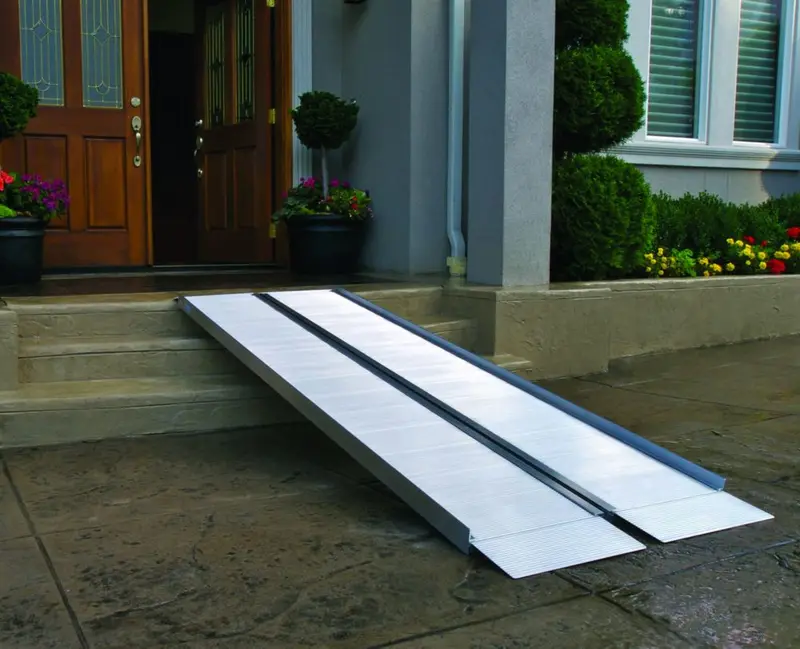
A lift is not the only answer. Some families move the bedroom and a bathroom downstairs. For steps at an entrance, a ramp may do: the catalog lists portable ramps such as the EZ-ACCESS Suitcase, at USD 187 to USD 631 by length from one retailer, and a modular ramp system rated for 1,000 lb. Attendant-operated stair climbers can carry a person and a wheelchair up stairs where nothing can be fixed, but they need a trained helper every time.
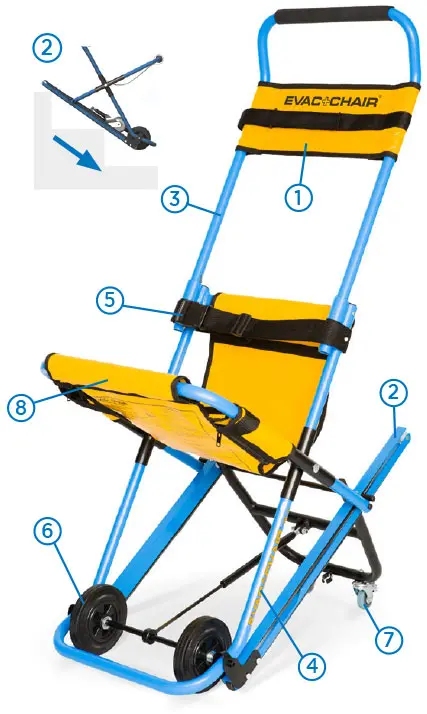
For getting out in an emergency, a lift is the wrong tool: Handicare's manual says not to use its stairlift in a fire or as a means of escape. Some households keep an evacuation chair, such as the Evac+Chair 300H in the catalog, which one trained operator can guide down stairs. Talk to your local fire service about a plan for getting out.
Platform lifts for wheelchairs
Only 10 reports in our set are about wheelchair platform lifts, one of them a lift in a van, too few to show patterns. They include a vertical platform lift that "dropped without notice, injuring his ankle," a platform that went past the upper landing, and the finger injury from a cover panel. One death report, a fourth-hand account, concerns an elderly woman with dementia who opened a landing door to a vertical platform lift while the platform was on another floor and fell; the maker's report says the installer's technician had bypassed the landing door's interlock.
The FDA's exemption conditions for permanently mounted platform lifts include enclosures that prevent "the user from falling from the device," and controls that prevent a free fall of the platform. For any platform lift, check that the gates or doors at each landing lock when the platform is not there, that the edges have guards, and that you know how to lower the platform if the power fails.
Platform lifts are building work. Many areas need a permit, an inspection and a licensed installer, especially outdoors or in shared buildings. Ask the installer what your area requires before you sign.
The death reports, read with care
11 reports are filed as deaths, over twelve years. Two of them, filed by Acorn in 2014, describe two separate fatal accidents reported to Acorn in 2013, each with an Acorn 120 straight stairlift whose seat-post weld was found, or appeared from photographs, to have failed. Acorn said there was no confirmed link on the causes and began a seat-post replacement programme as a precaution. Four, described above, involved a lift that stopped or would not move. Four were coded as seat or safety-part failures: the two Acorn 120 reports, a broken stairlift armrest, and the platform lift door. Two describe a fall getting off or near the lift. One describes a man who fell down the stairs and was found with his head trapped between the stair railing and the lift rail; the report says he rarely used the lift.
These are death reports, not proof of cause. Several were reported second or third hand, months later, and some describe people who were very frail. But the pattern points to the same advice as the rest of this guide: plan for a stop, keep the person seated and belted, and get help rather than leaving the lift on the stairs.
Who files these reports, and when
One maker is named in most of the reports: Acorn Stairlifts, in 162 of the 230. Handicare is named in 35, Savaria 14, Harmar 6, Bruno 5 and Otolift 2; 6 named another maker or none. Acorn's reports are detailed, and many start from a customer's call for service. A maker that files thoroughly appears more often in the data, which says nothing about whether its lifts are less safe.
The number of reports per year was between 9 and 24 from 2014 to 2025, and 36 in 2026 to the end of September. These numbers are far too small to show a trend in safety.
The recall file
The FDA's recall database holds only three recalls under the stairlift product code, and none under the platform lift code in our download.
| Recall | Started | What | Why | Status |
|---|---|---|---|---|
| Z-0681-2022 | 2016 | Acorn 130, Brooks 130, Acorn 180 and Acorn Outdoor stairlifts, 26,428 units | Seats not consistently strong enough with continued use | Open |
| Z-1530-2016 | 2016 | Acorn 180 curved stairlift, 1,290 in the US | Rivets holding the seat base could elongate and break | Terminated (closed) |
| Z-2060-2017 | 2017 | Savaria SL-1000 stairlift, 1,425 in the US | Controller and motor feedback could start a fire | Terminated (closed) |
To check your lift, search the FDA recall database for the maker and model, or ask the dealer. A recall can stay open for years, and lifts that are sold on or moved to another house may never get the fix.
Batteries, charging and power cuts
Most stairlifts run on batteries charged at the ends of the rail. AmeriGlide's page says its lifts need little maintenance and that "You might need to replace the batteries every 3-5 years," depending on use. Handicare's manual says the lift will not work if its batteries are flat, and that charge points sit at the top and bottom of the rail.
- Always park the lift at a charge point after use. On many lifts a beep at the end of the rail means it is not charging. A beep part way up does not mean you have arrived: wait until the lift stops at the landing.
- If the lift runs slower than usual or stops part way, tell the dealer: weak batteries are a common cause.
- Do not leave the lift part way up the stairs overnight.
- Keep the remote controls' batteries fresh, so someone at the other end can call the lift.
In a power cut, a battery lift can usually keep running for a while; ask the dealer how many trips yours can make. If the power has been off for a long time, the lift may run flat and stop where it is, so plan to use it less until the power returns.
Noises, jerks and other early warnings
Handicare's manual asks users to report unusual noises such as squeaking or creaking, and not to use the lift if a part is defective. Many of the failures in the reports were preceded by something a user noticed: a lift running slower than usual, stopping now and then, a seat that creaked or leaned, or a jerk at a bend. One report describes a customer who called because the lift was "running slower than normal" and fell before the booked service.
| What you notice | Possible cause | What to do |
|---|---|---|
| Slower than usual, or stops now and then | Weak batteries, a charging fault, a sensor | Call the dealer; check it parks on charge |
| Grinding, knocking or a new squeal | Drive, gear rack or rollers | Stop using it; book a technician |
| Seat creaks, leans or has play | Seat post, welds or fixings | Stop using it; check for recalls |
| A jerk or tilt at a bend | Levelling system or rail | Stop using it; book a technician |
| Beeping at the end of the rail | Not on the charge point | Move it onto the charge point |
Outdoor lifts, cold and damp
Outdoor stairlifts and porch lifts live with rain, frost, leaves and sun. Keep the cover on when the lift is not in use, keep the rail and steps clear of leaves, ice and snow, and do not use the lift on an icy step at either end. Batteries hold less charge in the cold, so a lift that works in summer may stop in winter. Ask the dealer whether the service plan includes a check before winter, and what to do about frost on the charge points.
Indoor lifts in damp or cold spaces, such as a basement stair or an unheated hallway, need the same thought. One platform lift report notes an unenclosed outdoor unit "in a coastal region setting," a reminder that coastal and outdoor sites need closer servicing.
Servicing: how often and what to check
Handicare's manual says its lift must be serviced at least once a year by a qualified person, and at least twice a year if it runs over more than two floors or has more than two users. Other makers set their own intervals; ask for yours and keep the record. Several reports in our set describe a fall while waiting for a booked service, or a customer who had no service plan.
| When | What to check |
|---|---|
| Every ride | Belt fastened; feet on the footrest; seat locked; the stairs clear |
| Weekly | The lift parks and charges at both ends; the remotes work; no new noises |
| Monthly | Seat, armrests and footrest for cracks, play or a lean |
| Yearly or as the maker says | A service by a trained technician, with a written record of what was checked |
At handover: what the installer should show you
- How to switch the lift on and off, and where the key and the power switch are.
- How to call, send and park the lift, and where the charge points are.
- What each light, sound or code on the display means.
- What to do if it stops part way, and the emergency number to call.
- How the safety edges work: ask the installer to show you, and follow your manual on whether you should test them yourself.
- How to fold the seat, arms, footrest and any hinged rail.
Ask for the user manual, the serial number, the warranty terms and the date of the first service in writing. Keep them together near the lift, with a short note of the emergency steps for anyone else who helps the user.
Renters, landlords and shared stairs
A stairlift is fixed to the stairs, so a tenant needs the landlord's agreement before one is fitted. Most straight lifts are fixed to the treads with a few bolts and can be removed later, which landlords often accept; ask the dealer to explain the fixing in writing. In a building with shared stairs, the other residents and the building's rules for fire escape routes matter too, and a stairlift may not be allowed.
If you move, ask the dealer whether the lift can move with you. A straight rail may be cut or replaced to fit the new stairs; a curved rail almost never can.
Used, reconditioned or rented
A straight stairlift can be moved to a new staircase if the rail can be cut or a new rail fitted, which is why reconditioned lifts are sold. AmeriGlide lists reconditioned stairlifts starting at USD 1,999. A curved rail is made for one staircase and can rarely be reused.
- Buy a used lift only from a dealer who will survey the stairs, fit it, and give a written warranty.
- Check the model and serial number against the recall database before buying.
- Ask for new batteries and a full service before first use.
- Ask what removal costs when the lift is no longer needed, and whether the dealer buys lifts back.
Some dealers rent stairlifts for short-term needs, such as recovery after surgery. Ask what the rental includes, including fitting and removal, and compare it with the cost of buying a reconditioned lift.
When to report a stairlift problem to the FDA
If a stairlift or platform lift caused or nearly caused an injury, or moved, stopped or broke in a way that could hurt someone, report it. Tell the dealer and the maker first: makers must investigate and, for serious events, report to the FDA. You can also report it yourself to the FDA through MedWatch, online at fda.gov/medwatch, which takes reports from patients, families and health professionals.
- Write down the maker, model and serial number, usually on a label on the carriage or the rail.
- Note where on the stairs it happened, what the display showed, and what happened next.
- Take photographs of the lift, the seat, the rail and anything broken.
- Keep any broken part until the dealer or maker has inspected it.
Keeping a record when something goes wrong
Keep one page for the lift: the date it was fitted, the model and serial number, every service and every fault, with what the display showed. When the lift stops or behaves oddly, add a line the same day. A record helps the technician find an intermittent fault, helps you if you need a repair under warranty, and helps the next person who cares for the user to know what has happened.
Three composite scenarios
These are composite scenarios, not individual customers. Each one combines facts and ranges already given in this guide to show how the decision plays out.
Scenario one: a woman with a straight staircase needs a lift after a hip operation. Medicare will not pay, so she asks her physiotherapist whether she can transfer safely at the top, and then asks dealers for fitted prices, knowing straight lifts are listed from USD 1,499 before fitting. She compares buying with renting for her recovery, and chooses a fitted lift with the first service included.
Scenario two: a man's lift stops halfway down one evening. He stays seated with his belt on, presses the direction button the other way, and the lift moves back up. He calls the dealer, who finds an obstruction sensor catching on a rug on the stairs.
Scenario three: a family checks their mother's Acorn 130 against the FDA recall database, finds the open seat recall, and asks Acorn to inspect the seat before she uses the lift again.
Questions to ask before you buy
- Will this lift fit our stairs, and where will it park at the top and bottom?
- Does it meet ASME A18.1, and who installs and services it?
- What happens if it stops part way: what does the user do, and how fast can you come?
- What is included in the price: fitting, the first service, the warranty, removal?
- What is the weight limit, and does it suit the user now and later?
- Is there a swivel seat, a powered swivel, a hinged rail, and a key switch?
A stairlift is part of a plan for living at home. Ask an occupational therapist, a physiotherapist or the person's physician whether a stairlift is safe for them, now and as their condition changes, and include the people who will help them in the decision.
Your plan: 10 minutes, today, this week
In 10 minutes: read the stop list at the top, and agree with the user and the family what to do if the lift stops part way.
Today: put the dealer's emergency number by the lift and in the user's phone, and check the lift parks and charges at both ends.
This week: search the FDA recall database for your lift, and book a service if the lift has not had one in the last year.
Sources and documents
Reports: every FDA MAUDE device report under product codes PCD and PCE in openFDA, read on 15 October 2026. Recalls: all three FDA recall records for those codes, downloaded through openFDA. Rules: 21 CFR 890.5150 and 890.3930. Operation and servicing: Handicare's Freecurve stairlift user manual. Funding: the Medicare national equipment reference list and the VA's HISA page. Prices: AmeriGlide's stairlift and platform lift pages. Every source is linked in the list at the end of this page.
Related guides on Mobility Atlas: Patient lifts and slings; Electric wheelchairs: types, prices and FDA reports; Mobility scooters: types, prices and FDA reports.
Method in brief: we coded the 231 reports in the pool using a codebook written and fingerprinted before coding, with two independent coders (agreement on the main category 94.8 percent, kappa 0.936), decided all 31 disagreements under written rules, and counted the results by script. The two coders were AI language models working separately, each without access to the other's answers. Quotes from reports are shown in sentence case; the FDA publishes most of them in upper case. The codebook, the method and the coded table are on the data and method page under CC BY 4.0.
Prices checked October 2026 on AmeriGlide's pages; prices change, so get written quotes. Documents checked October 2026: FDA reports and recall records, the federal rules, the Handicare manual, the Medicare list and the VA page.
Have you lived with a stairlift, or been told something different by a dealer or a maker? Send us a note through the enquiry form with the model and what happened; we use readers' notes when we update the guide.
This article is general information. Rules and prices differ by country and change, so confirm them before you buy or travel.
Common questions
How much does a stairlift cost?
On one large retailer's site in October 2026, straight stairlifts start at USD 1,499, outdoor ones at USD 2,999 and curved ones at USD 7,599 with installation. Vertical platform lifts start at USD 3,999 plus shipping. Dealer quotes for a fitted lift are often higher.
Does Medicare pay for a stairlift?
No. Medicare's national equipment list puts stairway elevators under Deny as a convenience item not primarily medical in nature. Some Medicaid waivers, Medicare Advantage plans, veterans' programmes and local grants may help; ask in writing before you buy.
What should I do if my stairlift stops halfway?
Stay seated with the belt on. Check for an obstruction, an unlocked seat or armrest, and try the other direction. If it still will not move, call for help and the dealer. Do not get off on the stairs: in our data, a stop followed by getting off or walking the stairs is the commonest path to a fall.
Why does my stairlift beep?
On many lifts, beeping means the lift is not parked on its charge point and is not charging. Handicare's manual says its lift beeps for three minutes when not correctly parked. Move it to the charge point; if it still beeps, call the dealer.
How often should a stairlift be serviced?
At least once a year, or as the maker says. Handicare's manual says once a year, and twice a year for lifts running over more than two floors or with more than two users. Keep a written record of each service.
Can a wheelchair user use a stairlift?
Only if they can transfer to the seat at both ends and have a second wheelchair upstairs. A platform lift or home elevator carries the wheelchair itself. Ask an occupational therapist to assess the transfers before choosing.
Sources
- FDA: About the MAUDE database and the limits of device reports
- openFDA: device adverse event endpoint (data used for this study)
- openFDA: device recall endpoint, product codes PCD and PCE
- eCFR: 21 CFR 890.5150 Powered patient transport (stairway chair lifts)
- eCFR: 21 CFR 890.3930 Wheelchair elevator (platform lifts)
- CMS: National coverage determination 280.1, durable medical equipment reference list
- VA Prosthetic and Sensory Aids Service: Home Improvements and Structural Alterations (HISA)
- Handicare: Freecurve stairlift user manual (PDF, via Westin Healthcare)
- AmeriGlide: stair lifts (prices read October 2026)
- AmeriGlide: vertical platform lifts (prices read October 2026)
- AmeriGlide: platform lifts (prices read October 2026)
Read on 16 October 2026. The wording of the article is our own.
Data and method for this guide: the codebook, the coded reports and the list of documents, free to reuse under CC BY 4.0.