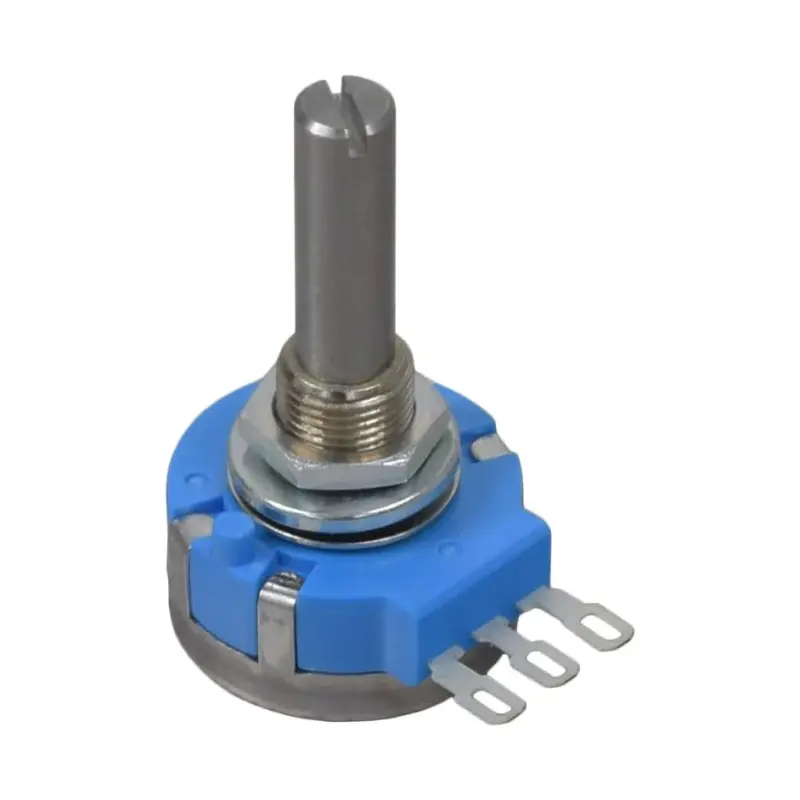
Mobility scooter parts in 2026: mobility scooter tires and batteries, chargers, throttles, freewheel levers, keys, seats, accessories, prices and warranty
Mobility scooter parts compared from Pride, Golden, Drive, Shoprider, EV Rider and Merits documents: tire sizes, batteries, levers, keys, accessories, who fits them, prices.
Contents
- The short answer
- How we compared, and our interest
- Mobility scooter parts at a glance
- First, find the model, the serial label and the maker's parts list
- Mobility scooter tires: reading the size printed on the sidewall
- Pneumatic, foam-filled and solid scooter tires: what the documents say
- Tire or whole wheel assembly?
- Pressure, wear checks and who changes a scooter tire
- What mobility scooter tires cost on two US sellers
- Mobility scooter batteries: size, Ah and voltage as printed
- AGM, gel and lithium: chemistry, pairs and date codes
- Who changes scooter batteries, by manual
- What mobility scooter batteries cost: 12 V singles, 24 V packs and lithium
- Chargers: match the label, then read the charger guide
- Tillers, throttle levers, keys and key switches
- Freewheel levers and brakes
- Seats, armrests, baskets and accessories
- Lights, controllers, wiring and fuses
- Which parts the manuals let owners replace, and which go to a dealer
- Warranty on scooter parts, document by document
- Recalls that name scooter parts
- Medicare and paying for scooter parts
- Ordering mobility scooter parts through Mobility Atlas
- Three traps
- Three composite scenarios
- Questions to ask before you order a scooter part
- Sources and documents
- Common questions
- Sources
The short answer
Mobility scooter parts fall into a handful of groups: tires and wheels, batteries and the battery box, the charger, the tiller with its throttle lever and key switch, the freewheel lever and brake, the seat, armrests and baskets, lights, and the controller with its wiring. Before you buy any of them, read the model and serial label and the owner's manual for your exact scooter, because the part is named there, not on a seller's tile. Two groups get the most attention here, because the warranty documents we read treat tires as wear items and the manuals we read print long battery sections: mobility scooter tires and mobility scooter batteries.
What decides whether a mobility scooter part fits? The information printed by the maker: the tire size on the sidewall or in the specifications, the battery size, amp-hours (Ah) and voltage on the label or in the manual, and the model number on the serial label. Mobility Atlas read owner's manuals from Pride, Golden, Drive and Shoprider and warranty documents from those four makers plus EV Rider and Merits, plus seller feeds and pages from Monster Scooter Parts and SpinLife, in November 2026. The manuals we read leave tire and battery work on several scooters to an authorized provider or qualified technician, and five of the six scooter warranty documents we read exclude tires outright; Drive's Scout warranty covers tires and tubes only if defective when unboxed, then excludes them. Seller prices for the same group run from a few dollars for a throttle lever to over a thousand dollars for a lithium pack, so the size, the chemistry and the model number come first.
On the seller pages we read on 13 November 2026, Monster Scooter Parts listed pneumatic mobility tires (the tire alone) from $9.95 to $170.49, foam-filled tires from $36.99 to $259.36, 12-volt scooter batteries from $31.49 to $324.49, 24-volt battery packs (as the titles name them) from $58.99 to $626.99, and lithium packs from $342.00 to $1,103.74. Those ranges cover power chair parts too, as product titles in each collection say; the counting rules are in the price sections.
This hub links to the deeper guides instead of repeating them: Go Go scooter parts for Pride's travel scooters, the power wheelchair charger guide for chargers, power wheelchair batteries for battery care and charging, the wheelchair parts guide for parts across chairs and scooters, the mobility scooter repair guide for beep codes and faults, and the used mobility scooter guide for buying second-hand. Golden owners can go straight to the Golden scooter parts guide.
How we compared, and our interest
Mobility Atlas earns a fee or margin when you order through us; the comparison below uses the makers' own manuals, specification pages and warranty documents, seller pages and feeds we saved with their dates, and the FDA's recall records. We do not rate sellers, and none of the prices below is a price we offer.
What we read for this guide: owner's manuals for the Pride Victory Series (Rev I, February 2012) and Travel Scooter Series (Rev R, January 2026), the Golden Buzzaround XL Series, the Drive Scout and the Shoprider Sprinter heavy duty scooters; Pride's specification and accessories pages, care guide and parts articles; Shoprider's Expedition XL4 order form and sales sheet; six warranty documents (Pride, Golden, Drive, Shoprider, EV Rider, Merits); and MK Battery's care guide. Each read date is in the method paragraph at the end.
Prices come from two US sellers, Monster Scooter Parts (its own product feeds, read 13 November 2026) and SpinLife (read 12 and 13 November 2026). Recall records come from openFDA's device recall endpoint for product code INI, which openFDA's classification record names "Vehicle, Motorized 3-Wheeled"
(read 13 November 2026). Medicare lines come from Medicare.gov and the Medicare equipment booklet (read 9 November 2026).
Each fact below belongs to the document named next to it. A rule printed in a Pride manual applies to the Pride models that manual covers, not to every scooter, and a seller's fit list is the seller's statement, not the maker's. Where we give advice we label it as our view, and where we interpret a document we label it as our reading.
Whether a scooter, a seat, a tire type or a battery size suits your body and your day is a question for your physician, physical therapist or occupational therapist and the dealer who set the scooter up. This guide explains the parts, what the documents say about them and what to ask, and stops there.
Mobility scooter parts at a glance
The table sums up each part group: what identifies it, what the manuals we read say about who replaces it, and the price range we counted on one seller's feed.
| Part group | How it is identified | Who replaces it (manuals) | Seller range (MSP) |
|---|---|---|---|
| Tires | Size on sidewall or spec page | Pride: provider or technician | $9.95 to $259.36 |
| Whole rear wheels | Model and part number | Pride Travel: entire wheel | $29.97 to $590.60 |
| 12 V batteries | Size, Ah, chemistry, date | Pride Travel: provider | $31.49 to $324.49 |
| 24 V packs | Same as single | MK: trained technician | $58.99 to $626.99 |
| Lithium packs | Maker part number | Pride: do not open box | $342.00 to $1,103.74 |
| Keys | Key style and model | Not stated (Pride article: keys sold online) | $1.86 to $129.99 |
| Throttle levers | Model and part number | Pride Travel: do not repair; see provider | $3.17 to $39.00 |
| Charger | Label: volts, amps, plug | See charger guide | See charger guide |
| Lights | Model and side | Not stated in manuals | 69 items, not ranged |
MSP stands for Monster Scooter Parts. The tire range runs from the lowest pneumatic tire-only price to the highest foam-filled price in its feeds; each collection also holds power chair parts. Where a cell says the manuals do not state who replaces a part, we found no line on it in the manuals we read, which is not permission to do it yourself.
First, find the model, the serial label and the maker's parts list
Every part search starts with two numbers: the model number and the serial number. The documents we read put the label in different places, so look where your maker says.
- Pride: its serial number article puts the label on the seat post, behind the battery, with 14 characters starting with S.
- Golden: the Buzzaround XL Series manual puts the serial number under the battery box.
- Shoprider: the Sprinter heavy duty manual labels a scooter serial number in its drawings of the rear section, next to the rear chassis cover, and leaves a blank for the model and serial number in its service record.
- Drive: the Scout manual leaves blanks for model and serial number next to the provider's details, and its parts page numbers the battery pack, charge port, circuit breaker and freewheel lever.
Our wheelchair parts guide explains why the serial number decides the part.
Next, find the maker's own list of parts and specifications for that model. Pride's article How to Order Wheelchair Parts (written for its power chairs) says "The manual has the information you need to replace a part like the diameter and material of a wheel as well as the battery specifications."
The specification tables in the Golden, Drive and Shoprider manuals we read print the tire size or type and the battery size or Ah; the Victory pages we saved print the Victory 9 battery, and the Travel manual points to a separate specifications insert. The warranty pages name the parts each period covers. The same article says "Pride Mobility does not sell directly to end users."
It sends owners to dealers, which can sell the part or do the repair, and to approved online retailers.
Model names alone can mislead. The Pride Victory 10 3-Wheel specification page we read on 9 November 2026 prints model number S610 with solid front and rear tires sized 3.5 by 10 inches, while the Victory Series manual from February 2012 (Rev I) covers the Victory 9, Victory 9 PS and Victory 10; the seller's titles and FDA's recall records give the Victory 10 as SC610 (3-wheel) and SC710 (4-wheel). In our reading, two generations can share a name, so the model number on your label is the one to match.
In our view, photograph the serial label, the tire sidewall and the battery label before you contact anyone; the photos also protect you if the part that arrives is not the one you described.
Mobility scooter tires: reading the size printed on the sidewall
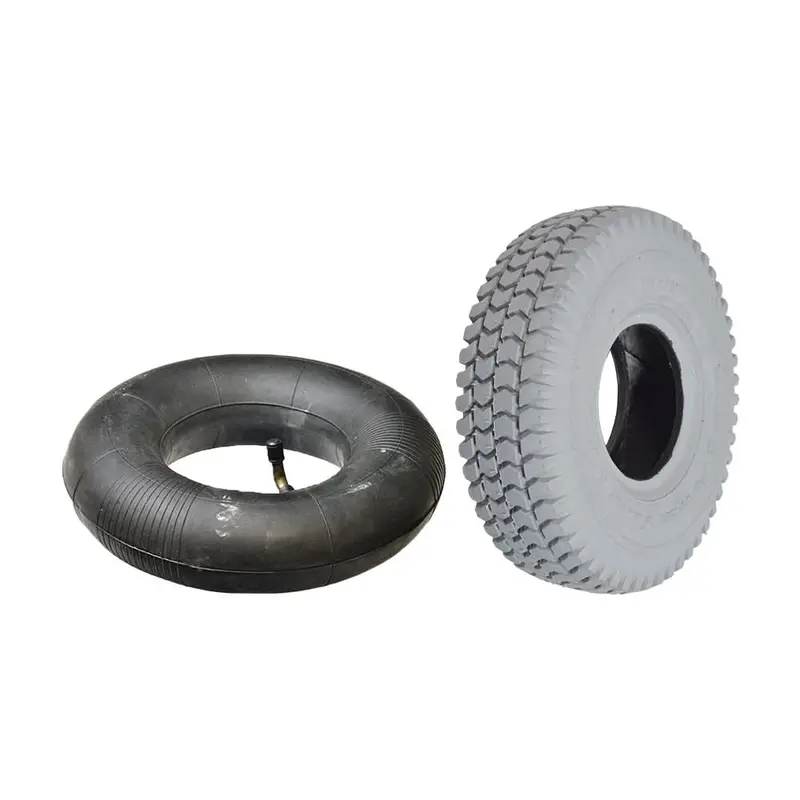
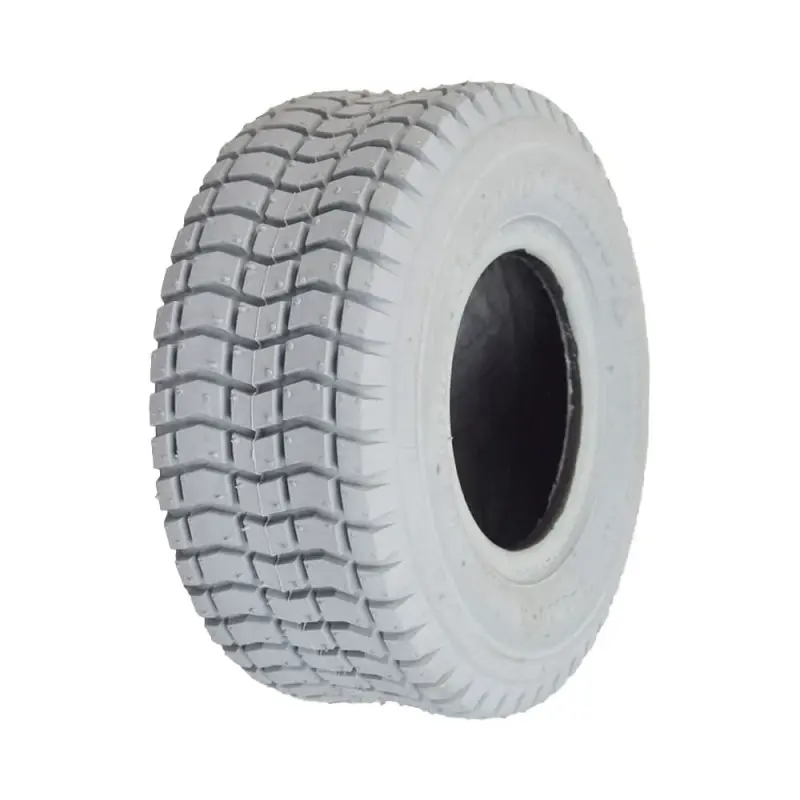
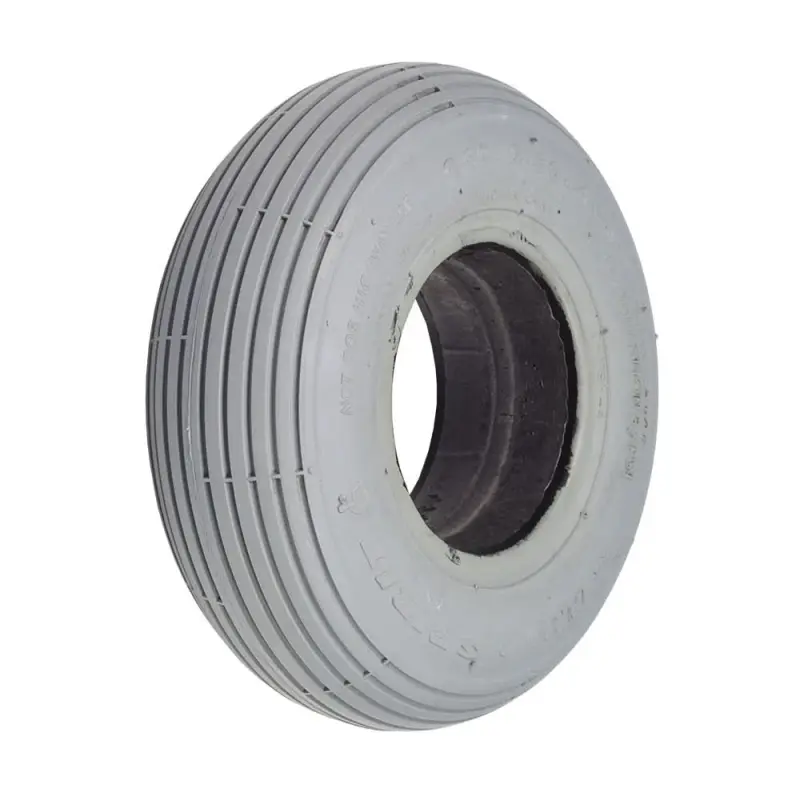
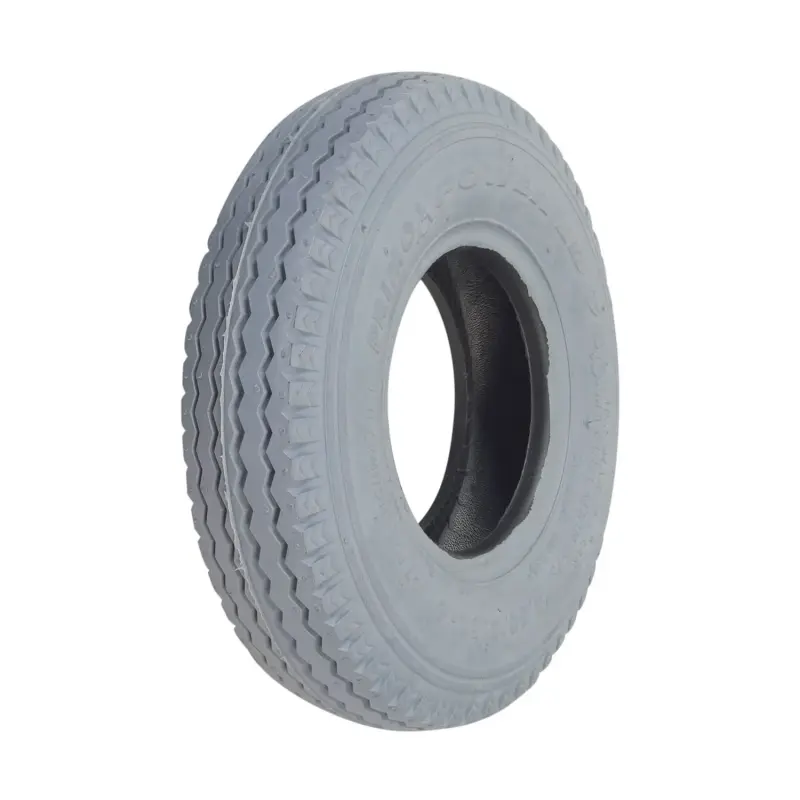
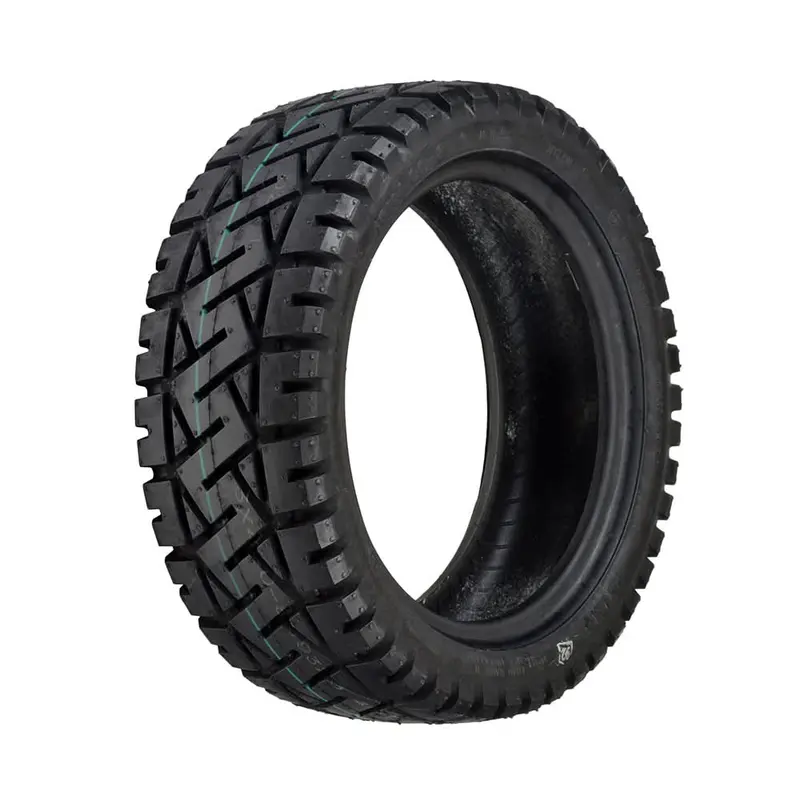
How do you read a mobility scooter tire size? Read it off the sidewall first and the specification page second, then match every part of it. Mobility Atlas read the seller feeds and maker documents for this guide, and they print one tire in several ways: a seller title for a Primo tire gives 10x3 in inches, 3.00-4 as a code and 260x85 as the metric size, all for the same tire. On a seller description for a 9x3.50-4 tire, the 4 is the rim: it mounts on a 4 inch rim. Another seller description says a 2.80/2.50-4 tire is often listed as 9x3 but measures 8-3/4 by 2-1/2 inches. Foam-filled tires add a bead width, such as 2-3/8 or 2-5/8 inches, which has to match the rim. Makers print sizes their own way: Pride prints 3.5x10 inches solid for the Victory 10, Drive prints 8 x 2 inches for the Scout, and Golden prints 8 inches, solid, low profile for the Buzzaround XL.
Common scooter size families on the Monster Scooter Parts feeds we read, with the ways the titles print them:
| Inch name in titles | Code in titles | Metric in titles |
|---|---|---|
| 8 x 2 | - | 200x50 |
| 9 x 3 | 2.80/2.50-4 | - |
| 10 x 3 | 3.00-4 | 260x85 |
| 13 x 4 | 4.00-5 | 330x100 |
| 14 x 3 | 3.00-8 | - |
| 12 x 4 | 4.10/3.50-5 | - |
| 14 x 4 | 100/55-10 | - |
Read the code from right to left. In the seller titles, the last number after the dash follows the rim: the seller's descriptions put 2.80/2.50-4 and 9x3.50-4 tires on 4 inch rims, a 3.00-8 tire on 8 inch rims and a 3.00-10 tire on 10 inch rims. The inch name is a nominal size, which is why the seller's descriptions say a 2.80/2.50-4 tire is "often listed as" 9 x 3 or 9 x 2-3/4.
Pride's Tire and Wheel Care Guide (posted October 26, 2026) says "Do not identify a tire by appearance alone."
It adds that two tires can look similar while using different compounds, inserts, rims, hubs or mounting hardware.
Pneumatic, foam-filled and solid scooter tires: what the documents say
Scooter tires come in three constructions, and the documents we read treat each one differently.
Pneumatic (air-filled)
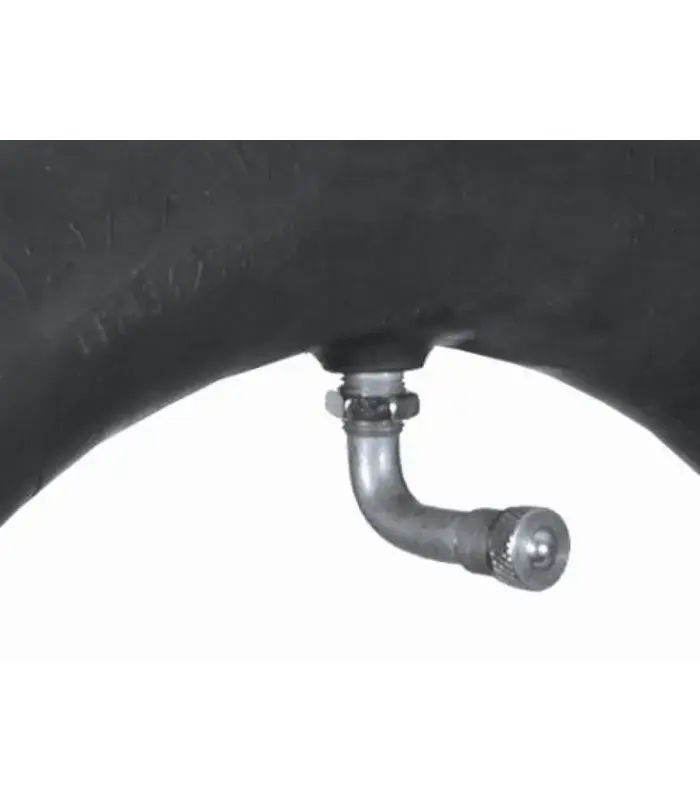
A pneumatic tire holds air in an inner tube or, on tubeless tires, in the tire itself. Pride's care guide says "A visible valve commonly indicates a pneumatic tire, but the manual should confirm the tire construction."
The Victory Series manual says "If equipped with pneumatic tires, always maintain the psi/bar/kPa air pressure rating indicated on each tire."
Shoprider's Sprinter manual prints its own figures: "Tire pressure is recommended to be kept at 30 psi on the rear tires, and 25 psi on the front."
SpinLife's record for a TAG 10x3 rear tire says "Requires 35 PSI." In our reading those three figures belong to three different documents and tires, and none of them is a number for your scooter unless your manual or sidewall prints it.
Foam-filled (flat-free)
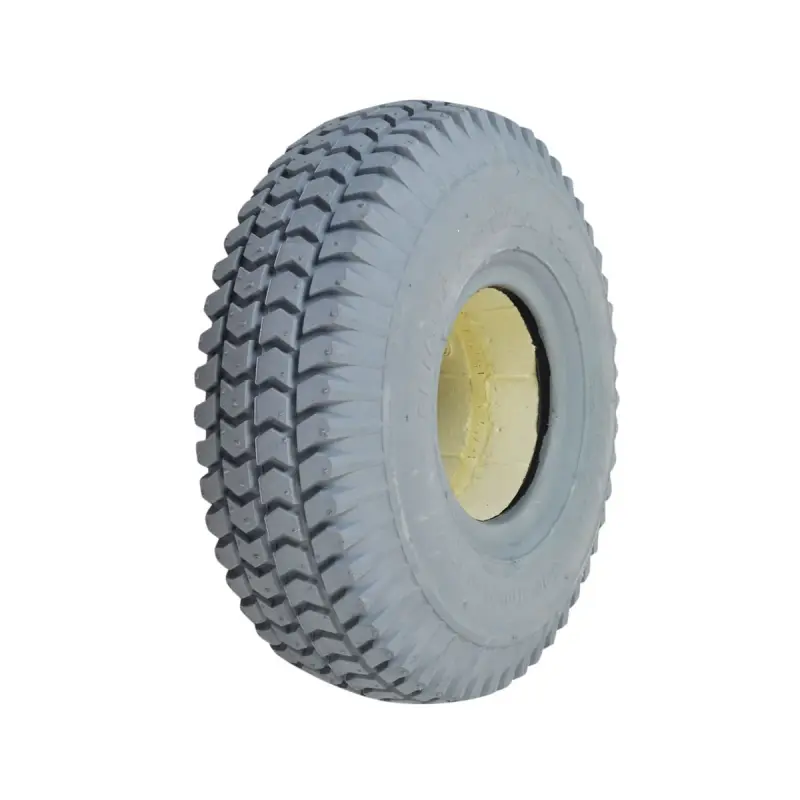
A foam-filled tire has a solid foam insert instead of air; the seller descriptions we read call these flat-free with no inner tube. Several are sold by bead width, and one 3.00-4 tire comes in a Standard and a Heavy Duty version, the Standard rated for riders up to 250 pounds in the seller's description. In our reading, a rider rating printed for a tire is one more figure to match against your scooter's weight capacity.
Solid (urethane or molded)
Solid tires and solid inserts need no air. The Victory 10 specification page prints solid tires, Golden's Buzzaround XL manual prints "Solid, low profile" tires, and Pride's Travel Scooter Series manual says "Your Travel Scooter is equipped with solid tire inserts."
Solid tires still wear and can deform: the Travel manual's checklist says "Check for flat spots on solid tires. Flat spots could adversely affect stability."
Drive's Scout manual says that if flat spots from storage remain after continued use, "replace the wheels on your scooter immediately."
Changing from one type to another
Pride's care guide says about switching: "Do not change from pneumatic to flat-free tires, or from one wheel size or tread design to another, unless the option is approved for the exact product."
Shoprider's Expedition XL4 order form (updated 10.10.2025) lists pneumatic black, solid gray and solid black tire options and prints two $392.00 MSRP figures in that block; its columns lost their positions in our extraction, so we do not say which option carries which price. In our view, ask the dealer whether your model has an approved alternative before you buy a different construction.
Tire or whole wheel assembly?
On some scooters you cannot buy a tire on its own and fit it; the maker expects a whole wheel. The documents we read draw this line by model.
- Pride Victory Series manual (2012):
"If your scooter is equipped with pneumatic tires and you have a flat tire, you can have the tube replaced. If your scooter is equipped with a solid tire insert, either the solid insert or the entire wheel must be replaced depending on the model."
- Pride Travel Scooter Series manual (January 2026):
"Your Travel Scooter is equipped with solid tire inserts. If you have a damaged or worn tire, the entire wheel must be replaced."
- Shoprider Sprinter manual (2004):
"The wheels of your scooter have split rims. This allows any punctures to be repaired easily."
It describes removing the center 13 mm bolt, deflating the inner tube and removing the four bolts that split the rim, and says"Ensure that when refitting the wheel the retaining bolt is fitted with a locking washer or the screw threads are treated with lock-tite or a similar adhesive."
- Pride care guide (2026): for solid tires and solid inserts it says
"Some models require the complete wheel assembly to be replaced."
Whole wheels cost more than tires. Monster Scooter Parts' feed for scooter rear wheel assemblies held 105 products on 13 November 2026, priced from $29.97 to $590.60 per listing; 79 of them had at least one option marked available. The low end was an Amigo wheel marked unavailable, and the high end was a right-side wheel with splines for the Drive Cobra GT4. The collection index on the same day printed 109 for the same collection, so the feed and the index differ by a few items; we count the 105 we saved.
A whole wheel can be the simpler buy, such as WHLASMB1784 at $128.94 (see our Pride Jazzy and Pride scooter parts guide). The Pride Go Go travel scooters work the same way; the Go Go parts guide lists their wheel part numbers, so we do not repeat them here.
In our view, when the manual says the entire wheel must be replaced, price the wheel assembly for your model number, not a loose tire of the same size, and ask whether the drive wheel carries a key or splines. The Travel manual's warning on refitting shows why that matters: "Ensure that the axle key is properly installed into the axle slot when mounting the wheel. If not installed securely, the braking system is disengaged which may cause personal injury and/or product damage may result."
Pressure, wear checks and who changes a scooter tire
The pressure rule in the Pride documents is the same in both: use the number printed for that tire. The Victory Series manual warns: "It is important that the psi/bar/kPa air pressure rating indicated on each tire be maintained in pneumatic tires at all times. Do not underinflate or overinflate your tires. Low pressure may result in loss of control, and overinflated tires may burst. Failure to maintain the psi/bar/kPa air pressure rating indicated on the tires at all times may result in tire and/or wheel failure."
Pride's care guide adds: "Never exceed the pressure printed on the tire, and do not use a high-pressure air hose."
It also says that if the tire marking and the owner's manual appear to conflict, keep the product out of use and ask an authorized Pride provider to confirm the specification.
Wear checks appear in three manuals. The Victory Series manual says "Regularly inspect your scooter's tires for signs of wear."
Drive's Scout schedule lists "Check for flat spots on tires"
and "Check for sufficient tread on the tires"
, and says to contact an authorized Drive provider for "Uneven wear on the tires" or "Bent or broken wheel assemblies"
. The Pride Travel manual's checklist says "Check for tire wear. See your authorized Provider for repair."
The Travel manual also warns against rubber or vinyl conditioner on the tread: "They will become dangerously slippery."
Pride's care guide says when to stop: "Stop using the product and contact an authorized Pride provider when you find:"
and its first item is "A tire that is cut, split, bulging, severely worn, losing pieces or repeatedly losing air."
In our view that list is the line between a part you order and a scooter you park.
Who does the work
The Pride documents put tire and wheel work with a provider or technician. The Victory Series manual says "Wheels on your scooter should only be serviced/replaced by an authorized Pride Provider or qualified technician."
The Travel manual says its wheels "should only be serviced/replaced by a qualified technician"
and prints the steps for a solid-tire wheel, starting with removing the key and making sure the scooter is not in freewheel mode. The care guide says "Tire replacement, wheel removal, caster adjustment, bearing work and any repair that affects steering or stability should be handled by an authorized Pride provider or qualified technician."
Shoprider's 2004 Sprinter manual describes changing a wheel and a tire in its maintenance section and does not, in the text we read, reserve the work for a dealer; it strongly recommends a quarterly inspection signed by a dealer. Drive's Scout manual says some maintenance can be done by the owner and some may need an authorized Drive provider. In our view, follow the manual for your model.
What mobility scooter tires cost on two US sellers
Counting rule for Monster Scooter Parts: we read the store's own product feed for three collections on 13 November 2026 and counted every tire-only option, meaning the option without a tube, the single option, or a color or bead-width option, whether marked available or not. Options sold with an inner tube are left out of the tire ranges. Each collection mixes scooter and power chair tires, and the pneumatic one includes tires for recreational-style scooters. The store's collection index printed 25 (24 V packs), 41 (foam-filled), 58 (Brakes) and 70 (Lights & Lenses) on the same day; we count the products in the feeds we saved.
| Collection (MSP feed) | Products | Tire-only options | Range, all options | Range, available options |
|---|---|---|---|---|
| Pneumatic | 63 | 67 | $9.95 to $170.49 | $17.99 to $170.49 |
| Foam-filled | 40 | 45 | $36.99 to $259.36 | $36.99 to $259.36 |
| Solid urethane | 12 | 13 | $24.15 to $154.99 | $27.95 to $101.99 |
By size, the 10 x 3 family (titles with 3.00-4 or 260x85) ran from $27.99 to $59.30 for 7 pneumatic products (the title rule also caught one 12x3.00-4 tire at $34.99, left out) and from $59.99 to $101.48 for 8 foam-filled ones. The 8 x 2 family (200x50) ran from $17.99 to $32.33 for 6 pneumatic products and from $36.99 to $48.00 for 4 foam-filled ones. For these two sizes the foam-filled tires cost more than the pneumatic ones, and a tube adds a few dollars: the Primo 10x3 C248 was $30.99 alone and $34.99 with an angled valve tube, $4.00 more.
The store's tire and tube sets collection held 15 sets from $23.98 to $52.17.
SpinLife's Scooter Tires page (read 13 November 2026) printed 4 Total Items, all TAG tires sold by size, priced from $8 to $33 as the tiles print them, each title marked "Each". Its record for the 10x3 rear tire prints a list price of 20.4 and a sale price of 20, a 6 Month Warranty from TAG, and "This item has a 20% Restocking Fee."
Its description says "Price shown is for an individual tire."
Prices differ by country, seller, shipping, tax and funding. In our view, a feed line without your model in its fit list is a size match at best, and a seller's fit list is the seller's claim.
Mobility scooter batteries: size, Ah and voltage as printed
Which battery does a mobility scooter take? The one its manual or specification page names, matched on four points: voltage, physical size, amp-hours (Ah) and chemistry. Mobility Atlas read six makers' documents and two sellers' battery pages for this guide, and the Pride Victory, Pride Travel and Shoprider Sprinter manuals print two 12-volt batteries, and the Golden and Drive manuals print a pair by Ah; MK Battery's care guide says "Wheelchairs and scooters typically require two batteries with 24-volt series connection."
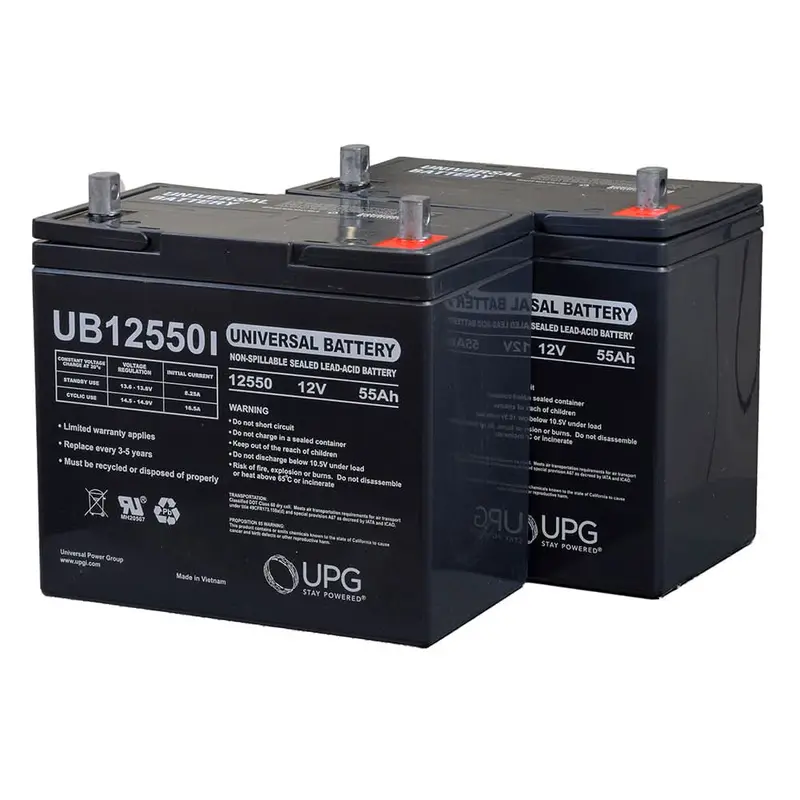
Pride's Victory Series manual prints "Size: U1 (31-36 Ah)" and a 3-amp off-board charger for the Victory 9; the current Victory 10 specification page prints two U1 batteries as standard and two 40AH batteries as an option. Drive's Scout manual prints "12AH or 20AH". Golden's Buzzaround XL manual prints two 12 AH batteries, and two 22 AH on the HD models. Shoprider's Sprinter manual prints a maximum of 40 Ah for the XL4 and 75 Ah for the larger models.
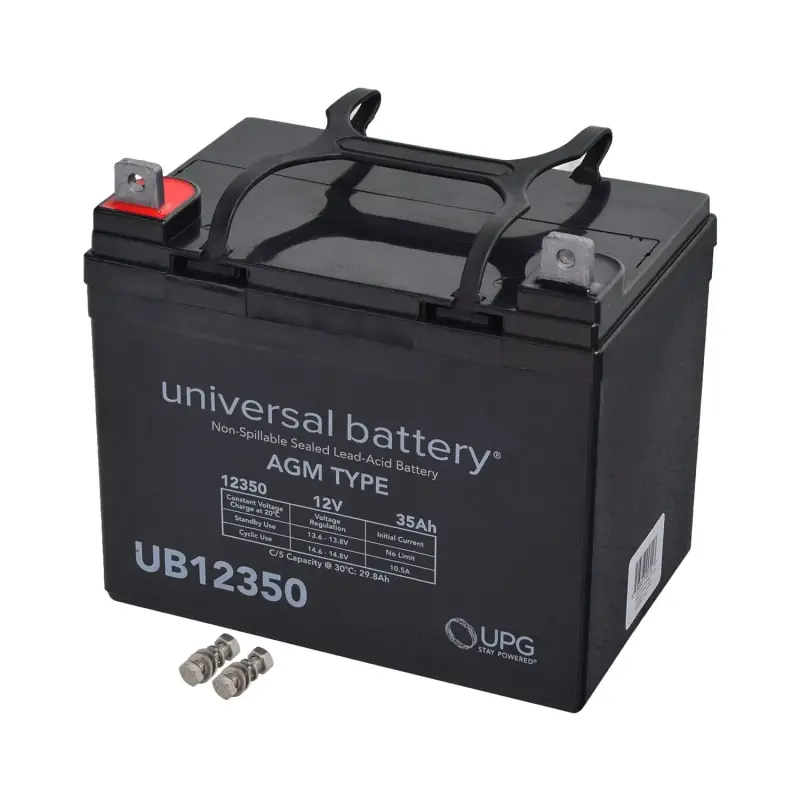
The size is the case: U1, half U1, 22NF, Group 24 and so on, as the battery label and the seller titles print it. The Ah figure is capacity. A seller title can print both, as in "U1 (35 Ah) 12 Volt UB12350 AGM"
or "22NF (55 Ah)", and a description can warn you off a mismatch: the 50 Ah pack's description in Monster Scooter Parts' feed says "This pack is not a replacement for 22NF 50 Ah batteries."
In our reading, the same Ah figure can come in two cases, so match the size first.
When two documents print different figures
Shoprider's Expedition XL4 is an example. The order form (updated 10.10.2025) lists the standard battery as "12V 26 Ah - 36 Ah (U1)" and an upgrade to "12V 50 Ah - 22 NF", with $120.00 on the upgrade line as we read the extracted columns. The sales sheet (version SR-OCT25-10.29.25-01) prints "12V 36A x 2 | 22NF" with battery weights of 22 lbs and 30 lbs each. Both are Shoprider documents from October 2025; one gives a range and one a single figure. In our view, plan on the battery your scooter actually holds, read from its label, and ask the dealer in writing which sizes the battery tray and charger accept.
| Scooter (document) | Batteries as printed | Tires as printed |
|---|---|---|
| Pride Victory 10 3W (spec page) | (2) U1; (2) 40AH optional | 3.5 x 10 in solid |
| Pride Victory 9 (2012 manual) | Two 12 V, U1 (31-36 Ah) | Not in pages copied |
| Drive Scout (manual) | 12AH or 20AH | 8 x 2 in front and rear |
| Golden Buzzaround XL (manual) | 2-12 AH; HD 2-22 AH | 8 in solid, low profile |
| Shoprider Sprinter XL4 (2004) | 12V40Ah x 2 (maximum) | 10 in front and rear |
| Shoprider Expedition XL4 (2025) | U1, or 22NF upgrade | 12.5 in pneumatic |
AGM, gel and lithium: chemistry, pairs and date codes
The manuals we read for lead-acid scooters ask for sealed batteries. Pride's Victory Series manual says "We recommend deep-cycle batteries that are sealed and maintenance free."
and warns "Use only AGM or Gel-Cell batteries to reduce the risk of leakage or explosive conditions."
It adds: "Do not use wet-cell batteries, which have removable caps."
Pride's Travel manual prints the same "Use only AGM or Gel-Cell batteries"
warning. Golden's Buzzaround XL manual marks this mandatory: "Use only AGM or GEL-cell SLA deep-cycle batteries for operating the Golden Buzzaround XL scooters."
Shoprider's Sprinter manual says its heavy duty scooters "require two maintenance free, sealed lead acid batteries or gel batteries."
Batteries are changed as a matched pair in the documents that address it. Pride's Travel Scooter Series manual marks this prohibited otherwise: "Always use two batteries of the exact same type, chemistry, and amp-hour (Ah) capacity."
and "Do not mix old and new batteries. Always replace both batteries at the same time."
MK Battery's care guide says "Never mix and match different battery manufacturers or technologies, or use batteries that do not have similar date codes. Never mix Gel batteries with AGM batteries."
The Travel manual also says: "ONLY USE batteries and a battery charger that have been supplied with your scooter, or that have been tested and approved by the scooter manufacturer for use in your specific model of scooter."
It warns that untested batteries or chargers "may cause malfunction, including but not limited to a thermal event, which can cause serious personal injury and/or property damage."
In our reading, a battery with the right size and Ah from another brand is a question for the dealer under that manual, not an automatic swap.
Lithium packs
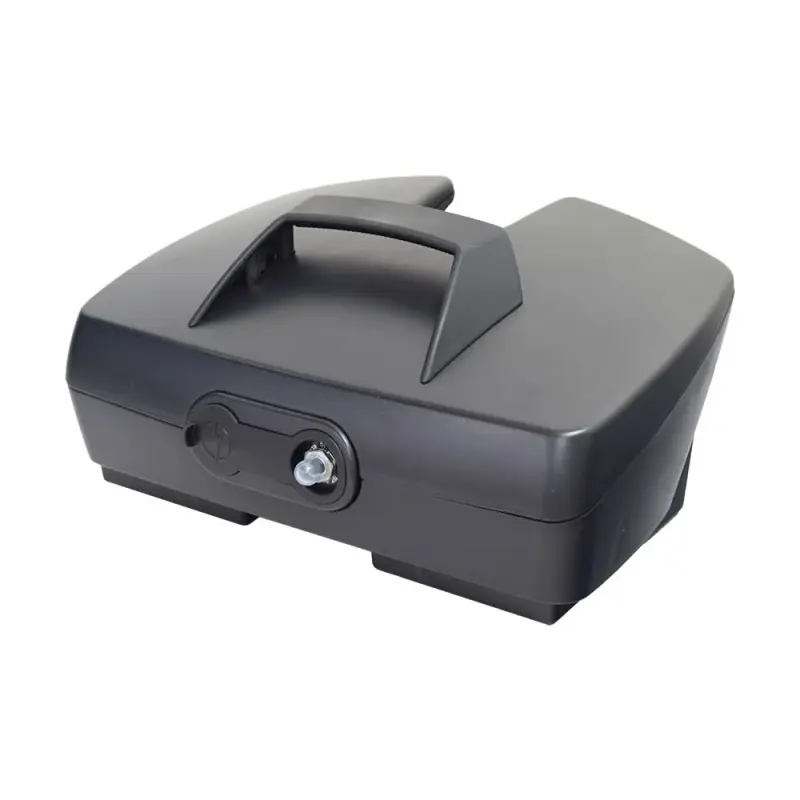
Lithium scooters use a maker's pack, and the Pride manual we read keeps owners out of it: "If your Travel Scooter is equipped with a lithium battery, do not open or attempt to disassemble the battery box or attempt to replace the lithium battery within the battery box."
It says to contact the authorized provider for a complete replacement battery box. The seller feed ties each lithium pack to named models by part number: for example, HW-77172666, a 25.2 volt 10.05 Ah pack listed for the EV Rider TranSport AF and related models, and BAT150066, a 24 volt 11.50 Ah battery box listed for the Go-Go Folding Scooter (S19). In our reading, lithium packs are bought by part number for the named model, not by size and Ah.
For flying with lithium packs, see our travel mobility scooter guide and check with the airline before you book.
Battery age matters as much as size. MK's guide asks for similar date codes, and Pride's battery article (dated July 29, 2026 on its FAQ list) says scooter batteries "naturally lose capacity over time"
. In our view, ask the seller for the date code or manufacture date of the batteries you are buying, and write down the date you install them.
Who changes scooter batteries, by manual
The documents we read differ on who should swap batteries, and the difference matters if something goes wrong.
- Pride Travel Scooter Series manual:
"The batteries on your Travel Scooter should only be serviced or replaced by an authorized Provider or a qualified technician."
It also prints the steps for two battery pack styles and warns"Do not replace the batteries while the Travel Scooter is occupied."
- MK Battery care guide, which says:
"Always have your batteries installed by a properly trained wheelchair or scooter technician."
- Pride's Victory manual lets owners load test the batteries themselves (see the repair guide).
- Golden Buzzaround XL manual: if the breaker problem continues,
"have your authorized Golden Technologies, Inc. dealer load test the batteries."
- Pride's battery ordering article (January 13, 2022) says providers
"can also show you how to change it."
Safety lines in the same documents explain the caution. The Victory Series manual warns: "Explosive gases may be generated while charging the batteries. Keep the scooter and battery charger away from sources of ignition such as flames or sparks and provide adequate ventilation when charging the batteries."
MK's guide says that dropping a tool or touching a watch or bracelet across the terminals "can result in an electrical shock, sparks, smoke, fire and even an explosion."
The Travel manual says "Keep tools and other metal objects away from battery terminals. Contact with tools can cause electrical shock."
and warns: "Do not lift beyond your physical capability. Ask for assistance when necessary while disassembling or assembling your scooter."
It also says to "Wear goggles and gloves when handling batteries and wash hands after handling."
What mobility scooter batteries cost: 12 V singles, 24 V packs and lithium
Counting rule: we read Monster Scooter Parts' own product feed for three battery collections on 13 November 2026 and counted every price option printed, whether marked available or not. The collections hold scooter and power chair batteries, as product titles in each collection say. The store's collection index printed 25 (24 V packs), 41 (foam-filled), 58 (Brakes) and 70 (Lights & Lenses) on the same day; we count the products in the feeds we saved. The 24 volt collection also holds two U1 listings sold as One or Two batteries; their options are in the range.
| Collection (MSP feed) | Products | Range, every option |
|---|---|---|
| 12 Volt Batteries (singles) | 23 | $31.49 to $324.49 |
| 24 Volt Battery Packs | 24 | $58.99 to $626.99 |
| Lithium Batteries | 14 | $342.00 to $1,103.74 |
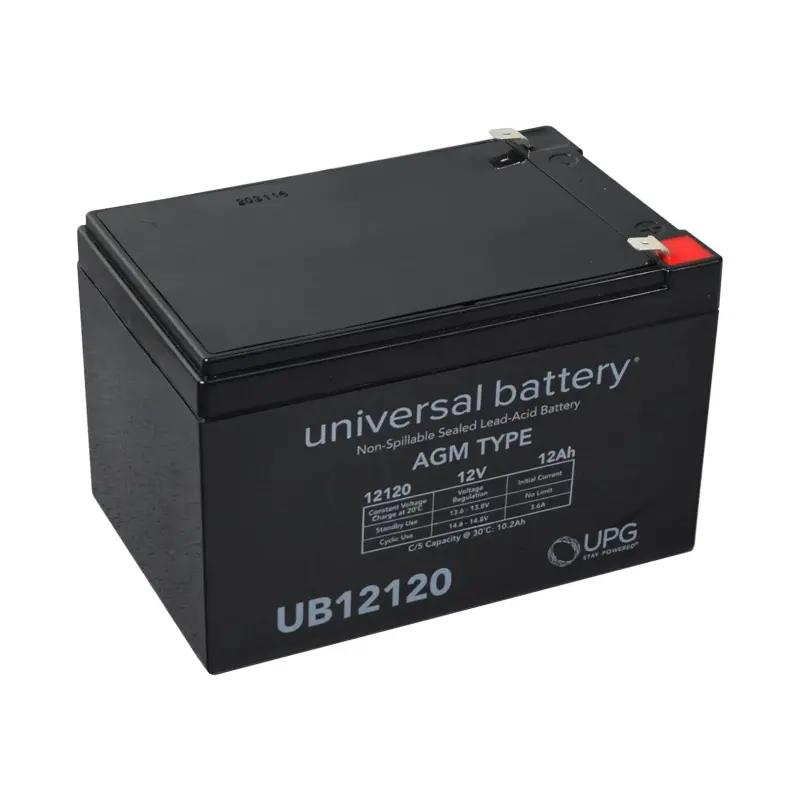
Within those, 4 single U1 listings in the 12 volt feed ran from $79.99 to $129.99, and the 7 pack options of 22 Ah or less (by the Ah in the title, lithium left out) ran from $58.99 to $174.98. A 12 Ah 12 volt UB12120 single was $44.99; two singles come to $89.98, the same as the 12 Ah 24 volt pack of two UB12120 batteries at $89.98. The same UB12350 U1 battery appears in two listings in the 24 volt collection, with the Two option at $164.98 in one and $159.98 in the other; in our view, compare listings before you order.
Lithium packs cost more and are model-specific: the feed's 14 lithium products ran from $342.00 (a Golden 6.5 Ah travel battery and bag for the Buzzaround CarryOn) to $1,103.74 (a 25.9 volt 10 Ah pack for the Drive ZooMe Auto-Flex), and 12 had an option marked available. The ZooMe pack's description says to check the serial number, because the pack fits Auto-Flex scooters with serial numbers after a stated point.
SpinLife's Batteries page (first page of three, 15 of the 31 items it counts, read 13 November 2026) showed 14 pairs among 15 tiles, priced from $145.00 to $974.00. The remaining tile was a single Drive 12V/21AH battery marked Each at $123. We did not load pages 2 and 3.
Chargers: match the label, then read the charger guide
A scooter charger is matched to the battery chemistry, voltage and Ah, and to the socket. The manuals we read say so in their own words. Shoprider's Sprinter manual says "All Shoprider® scooters require a Shoprider® automatic battery charger."
and prints a 24 volt 3 amp charger for the Sprinter XL4 and 8 amp chargers for the larger models. The Victory Series manual says "You must recharge your scooter's batteries with the supplied off-board charger. Do not use an automotive-type battery charger."
Drive's Scout manual prints a 2A charger; Golden's manual says "Use only the automatic off-board charger supplied for all routine charging."
and "Never use an automotive or wet type charger."
, and warns "Charger surface can become HOT."
The power wheelchair charger guide covers amp ratings, plugs, lights, part numbers and charger prices in depth, so we do not repeat it here. In our view, read the old charger's label before you shop, and if the scooter's batteries were upsized, check whether the maker prints a different charger for the larger battery: Pride's Victory 10 page prints 3A for U1 and 5A for its 40AH option.
Tillers, throttle levers, keys and key switches
The tiller holds the controls: the key switch, the throttle lever (one seller title calls it a "Wig-Wag"), the speed dial, the battery meter and the horn.
Throttle levers
Monster Scooter Parts' throttle lever collection held 14 products on 13 November 2026, from $3.17 to $39.00, each titled with the models or maker it is listed for (the collection also holds two lever grips and an end cap), such as FRMASMB9233 for the Go-Go Elite Traveller, Ultra X, Pride Revo and Travel Pro, 43600650 for named Merits Pioneer models, and HW-72011058 for the EV Rider Transport. Two Pride listings, FRMASMB11380 and a CTE lever FRMASMB14473, both name the Victory 9 and Victory 10; in our reading two levers for the same model can differ, so match the part number on the old lever or in the maker's list.
The manuals treat the throttle as something to check, not to adjust. Pride's Victory fault table lists "Throttle control lever not at center position at start up."
and says to return it to center and restart; it lists "Speed pot error." with "Call your authorized Pride Provider for assistance."
Drive's Scout table lists a throttle fault with "Check throttle connection, replace if necessary."
and its schedule says to inspect that "the throttle is not bent when in neutral or rest position"
. Pride's Travel manual's daily checks say to make sure the throttle "returns to the neutral position when you release it. Do not try to repair it. See your authorized provider if there is a problem."
openFDA records Z-0521-06 and Z-0522-06 (2005, terminated) cover two Invacare-distributed scooter models (throttle spring fracture; see the repair guide). In our view, a lever that does not spring back to center is a reason to stop and call the provider.
Keys and key switches
Pride's article How to Order Wheelchair Parts says "Our keys are not specific to the individual device"
and that some online retailers sell Pride keys. The key collection we read held 78 products from $1.86 to $129.99 (the top price is a security key titled for Pilot + joystick modules), 65 with an option marked available. Titles tie each key to makers and models, such as KEYSCO1007 for Go-Go and Pride scooters, SE06A621 for several Golden series, S3KEY for named Drive models and 206112-88103 for Shoprider scooters. Several are sold as a set of two, as their titles say. Pride's serial article gives a replacement key as one reason to have the serial number to hand.
Freewheel levers and brakes
The freewheel lever releases the brake so the scooter can be pushed. The manuals print strong warnings about it; read them before you buy or fit a lever.
The Pride Victory Series manual prints this as a warning: "When your scooter is in freewheel mode, the braking system is disengaged."
Pride's Travel manual says "Never put a Travel Scooter in freewheel mode on any incline."
Our mobility scooter repair guide compares the Pride and Drive freewheel rules (level ground, key out, never seated, back to drive).
Shoprider's 2004 Sprinter manual shows why to read your own model's text closely. Its freewheel section says to push the lever down to push the scooter (neutral) and lift it up for drive, and prints this as a warning: "For safety, always put the scooter into gear (lever up) after pushing or rolling scooter. Failure to do so may result in injury."
Its troubleshooting checklist says "Freewheeling device is in the drive position (lever down)."
The two lines point the lever in opposite directions for drive. In our view, if your manual is unclear, have the dealer show you the drive position before you ride, and test the brake on level ground.
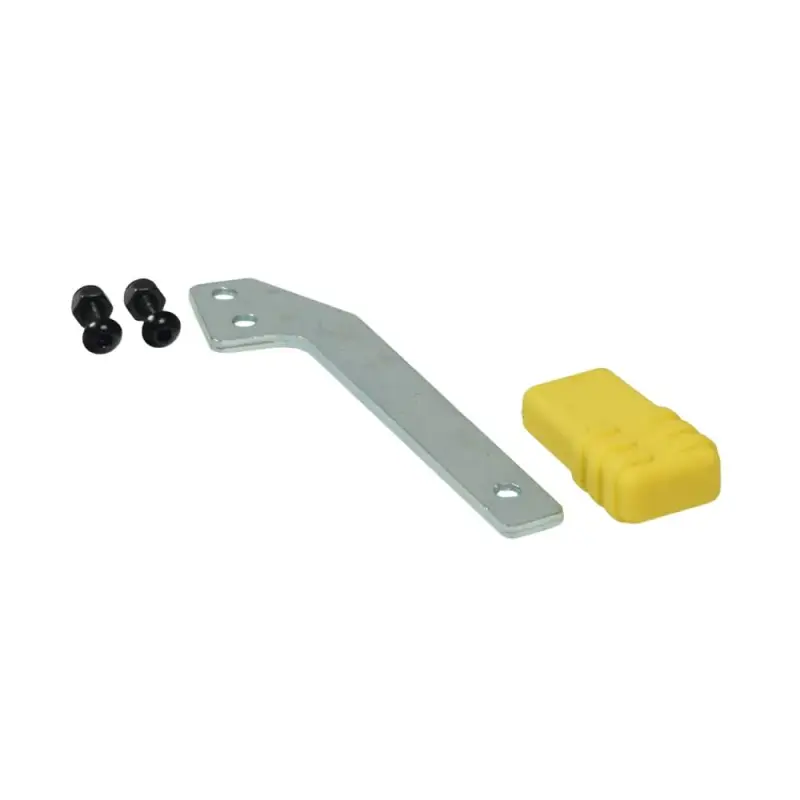
Levers break and caps go missing. The Brakes collection feed we read held 56 products (the store's index printed 58); filtering their titles for freewheel and similar words found 4, of which 3 were for scooters: FRMASMB9628 at $3.17 for the Go-Go Elite Traveller, Ultra X and Pride Travel Pro, FRMASMB9909 at $7.49 for the Go-Go Sport, and a Golden freewheel brake switch MBE-120A-BRKS at $20.67 for the Buzzaround CarryOn. The fourth was a lever cap for Quantum power chairs.
Pride's and Golden's warranties cover the motor brake's electrical function only, and the Pride, Golden, Drive and Merits documents exclude brake pads as wear items; Shoprider's page calls brake pads a wear item but says they "will be warranted for one year."
In our view, a scooter that will not stop as it should is one to stop using and take to the provider rather than repair with ordered parts.
Seats, armrests, baskets and accessories
Seats and armrests mount to a model's own seat post and brackets. The mobility scooter seat guide covers seat sizes, posts and swivels in depth. Here is what the maker pages say about accessories.
Pride's scooter accessories page (read 13 November 2026) lists items such as a front basket, rear basket, saddlebag, cup holder, cane and walker holders, oxygen tank holder, lap belt, weather cover, safety flag, rearview mirror and XLR USB-A and USB-C chargers, and adds: "Not all accessories are available for all products. Please speak with your Provider for details and availability."
The Victory 10 3-Wheel accessories page lists 22 accessories for that model, six of them patches. Neither page prints prices.
Shoprider's Expedition XL4 order form prints MSRP lines for accessories and seats, including a rear basket, cane and walker holders, a cup holder, an arm rest bag, oxygen tank holders, a headrest and lap belt, and several captain's seats by width and depth. Its columns lost their positions in our extraction, so we do not pair each accessory with a price.
SpinLife's Mobility Scooter Parts page (read 12 November 2026; first 15 of 62 items) listed Pride seat assemblies, covers and armrest pads, such as SET151005, whose tile says "Fits most Pride Travel Scooters"
; in our reading that is the seller's wording, so confirm the model.
Accessories can affect the warranty and the scooter's handling. Shoprider's manual says "Do not use parts or accessories that are not authorized by Shoprider® Mobility Products Inc."
Golden's warranty excludes damage caused by "Accessories other than those supplied or approved by Golden Technologies."
Drive's Scout manual says the maximum weight capacity "includes the user and any accessories."
In our view, weigh what you plan to carry in a basket against that capacity.
Seat safety has its own recall history: 7 of the 22 openFDA scooter recall records we read concern seats, seat bases, seat lifts or a backrest, including the one open record, a 2021 Merits record whose reason reads "Seat baseplate pin has broken in the field."
Positioning, cushions and seat changes that affect posture or skin are a matter for your therapist or seating clinician.
Lights, controllers, wiring and fuses
Lights are sold by model and side. Monster Scooter Parts' Lights and Lenses collection held 69 products on 13 November 2026 (the store's index printed 70), from headlight assemblies such as ELEASMB5676 for the Pride Victory 9 and Victory 10 to bulbs such as LGTBULB1004, which the feed titles list for Pride scooters and for a Golden Companion tail light. The collection also holds bike lights and grease, so we do not give a price range for it.
Controllers and wiring are where the manuals draw the firmest lines. Golden's Buzzaround XL manual prints this as a warning: "Do not attempt electrical repairs. Consult Golden Technologies, Inc. or your authorized Golden Technologies, Inc. dealer."
Pride's Victory Series manual says "Have your authorized Pride Provider repair or replace any damaged connector, connection, or insulation that you find before using your scooter again."
Drive's Scout manual lists frayed electrical harnesses and cracked or broken connections among the conditions that may indicate a serious problem, with the instruction to contact the authorized Drive provider.
In our reading, both Pride manuals print fuse-replacement steps, and both open with the same warning: the Victory manual says "An authorized Pride Provider or qualified technician must perform the initial setup of this scooter and must perform all of the procedures in this manual"
, and the Travel manual says "An authorized Provider or qualified technician must perform the initial setup of this scooter and must perform all of the procedures in this manual."
The Victory manual's three-step fuse replacement warns "The replacement fuse must exactly match the rating of the fuse being replaced."
Fuses can be the subject of a recall too: records Z-3211-2011 and Z-3212-2011 cover the Victory 10 3-Wheel (SC610) and 4-Wheel (SC710), for fuse specifications (see the repair guide).
Warranty treatment of controllers differs: Shoprider's warranty page says "This warranty does not cover controllers. Warranty is covered by the controller manufacturer."
, while its table lists Electronics at 12 months; ask the dealer which applies. Pride's insert covers electronic controllers for two years and Drive's Scout warranty covers the controller for 14 months. In our view, a controller is a provider purchase: the fault codes, programming and wiring all point back to the dealer.
Which parts the manuals let owners replace, and which go to a dealer
Can you fit mobility scooter parts yourself? It depends on the part and on the manual, and the manuals we read do not agree. Both Pride manuals open with the same line; the Victory Series manual's reads: "An authorized Pride Provider or qualified technician must perform the initial setup of this scooter and must perform all of the procedures in this manual."
Pride's article How to Order Wheelchair Parts, written for its power chairs, by contrast says owners can use a dealer for repairs "or purchase the parts to do your own work."
In our reading, the article describes where to buy, while the manual sets who should do the work on the models it covers.
| Part | Pride (Victory, Travel) | Golden (Buzzaround XL) | Drive (Scout) | Shoprider (Sprinter) |
|---|---|---|---|---|
| Tires, wheels | Provider or technician | Not in pages copied | Provider if uneven wear | Steps printed |
| Batteries | Travel: provider or tech | Dealer load test | Not in pages copied | Not stated |
| Lithium box | Do not open | - | - | - |
| Fuses | Steps printed; both manuals' opening warning applies | Not in pages copied | Not in pages copied | Check list item |
| Wiring | Provider | No electrical repairs | Provider | Not stated |
| Yearly service | Travel: yearly, provider | Not in pages copied | Once a year, provider | Quarterly, dealer |
A cell marked not in pages copied means the manual pages we saved do not cover that point; the full manual may. A cell marked not stated means the manual we read in full does not say. The Golden manual pages we saved say "Do not attempt electrical repairs."
Drive's Scout manual suggests taking the scooter to an authorized Drive provider "Once a year" for inspection and maintenance, and Shoprider's manual strongly recommends a quarterly inspection signed off by a dealer. Pride's Travel manual says "Take your Travel Scooter to your authorized Provider for yearly maintenance, especially if you use your Travel Scooter on a daily basis."
Warranty terms push in the same direction. Pride's insert excludes "Repairs and/or modifications made to any part unless specifically authorized by Pride"
, Golden's warranty excludes "ANY PARTS ALTERED OR REPAIRED BY UNAUTHORIZED PERSON"
, and Drive's excludes "Repairs and/or modifications made to any part without specific consent from Drive Medical."
In our view, while a scooter is under the maker's warranty, ask the dealer before you fit anything beyond a key, a basket or a bulb, and keep the receipt for any part you buy.
Whatever the manual allows, your own strength and reach matter; the Pride Travel manual warns "Do not lift beyond your physical capability. Ask for assistance when necessary while disassembling or assembling your scooter."
In our view, a provider visit is a reasonable choice.
Warranty on scooter parts, document by document
Each warranty below belongs to the document named, for the products it names. None of them is a general rule for scooters.
| Document | Batteries | Tires | Who may claim |
|---|---|---|---|
| Pride US insert, Rev H 2024 | 6 months, Pride batteries | Excluded (wear) | Original purchaser |
| Golden scooters, REV.0915 | 1 year, Golden-supplied | Excluded | INITIAL Consumer |
| Drive Scout manual | 6 months, battery maker | Defects at delivery | Original purchaser |
| Shoprider web page | Table 6 months; text excludes | Excluded (wear) | Original purchaser |
| EV Rider PDF (undated) | 1 year with unit, exceptions | Excluded (consumable) | Original purchaser |
| Merits form 9.2-F02 Rev 07 | Groups by Ah | Excluded (wear) | Transferable via dealer |
Pride's US insert says "Pride Batteries are covered by a six (6) month warranty from the initial date of consumer purchase or rental."
It also warns that "Any warranty claims for electronic assemblies may become void if damage results from the use of parts/accessories that are not Pride original parts and are not purchased through an authorized Pride provider"
, and lists "Tires and Tubes" among the wear-and-tear exclusions. Golden's warranty, printed in the Buzzaround XL manual, is "granted only to the INITIAL Consumer"
, needs a registration card on file, replaces Golden-supplied batteries for one year, and excludes "Tires and Tubes".
Drive's Scout manual says "Batteries are covered by a separate 6 month warranty provided by the battery manufacturer"
and lists tires and tubes among the items warranted only against defects found right after the scooter is unboxed; its exclusions list "Tires and tubes" again.
Shoprider's warranty page is a case of one document printing two things. Its table lists Batteries at 6 months for scooters and power chairs, while clause 12 says "This warranty does not cover batteries or damage caused by battery leakage. Warranty is covered by the battery manufacturer."
Clause 14 says the warranty does not cover "tires as these components are considered wear items"
, in a list with shrouding, upholstery and arm pads. Clause 9 says the warranty "shall be void if the Customer modifies the product in any respect including but not limited to the use of parts other than genuine Shoprider parts."
Its last line says "Parts warranty is 3-months or the remainder of the unit warranty, whichever is longer."
In our view, if you need battery cover from Shoprider, ask the dealer to confirm in writing which line applies to your scooter.
EV Rider's warranty says "All spare parts carry a six month limited warranty from the day of sale."
and that this includes replacement batteries and chargers sold separately. It excludes consumables including tires and tubes. The Merits policy we read lists "Tires & Tubes" among wear items and separates batteries of 31Ah or above from those below 31Ah; part of its text was missing in our extraction, so we do not state its battery periods. It also says warranties are administered through the selling dealer.
Seller terms add another layer: Monster Scooter Parts' warranty page gives new batteries and packs 1 year from receipt and "all other items not specifically identified"
30 days, and SpinLife's TAG tire record prints a 6 month TAG warranty. In our reading, ask which terms you are getting.
Recalls that name scooter parts
We read every openFDA device recall record under product code INI on 13 November 2026: 22 records (the meta total also printed 22), from 14 recall events, initiated between 2003-02-07 and 2021-04-01, data last updated 2026-11-12. 21 records are Terminated and 1 is Open, Classified. Recall records count recalled products and models, not faulty scooters, and in our reading, a terminated record means the recall action was closed.
The mobility scooter repair guide reads the Pride records in this file; this section keeps to a part-by-part grouping.
Grouping rule: we put each record in one group by the words of its reason for recall, and every record fell into exactly one group. By that rule:
- Seats, seat bases, seat lifts and a backrest: 7 records (Z-0174-2008, Z-0175-2008, Z-0415-2011, Z-0416-2011, Z-0417-2011, Z-0774-2012, Z-1505-2021).
- Tires: 2 records (Z-0909-03, Z-0910-03), Rascal and Chauffeur scooters, 2003, where the reason reads:
"The plastic tires may shatter if the tire is over-inflated and could cause serious injury."
- Battery cables: 2 records (Z-0036-2007, Z-0037-2007), Medline Strider Maxi 3 and 4, 2006, where the reason reads:
"Under conditions of heavy use, signs of overheating of the main battery cables have been observed."
- Throttle spring: 2 records (Z-0521-06, Z-0522-06), models HMV 220 and HMV 250, 2005.
- Electronic control unit: 2 records (Z-1522-06, Z-1523-06), Medline Strider Midi 3 and 4, 2006, where the reason reads:
"The P&G Solo 60A electronic control unit on the Midi Scooters may overheat."
- Fuses: 2 records (Z-3211-2011, Z-3212-2011), Pride Victory 10 SC610 and SC710, 2011.
- Harness connector: 1 record (Z-1941-2012), Pride Victory 9 with Power Seat, 2010.
- Intermittent operation: 2 records (Z-0380-05, Z-0381-05), Pride Victory SC1600 and SC1700, 2004.
- Front to rear lockup: 1 record (Z-1235-2014), Golden Buzzaround XL, 2014.
- Electrical contact wear: 1 record (Z-0115-2014), Afikim Breeze C, 2013.
A recall can name a part (a tire, a battery cable, a throttle spring, a fuse) that an owner might replace with a look-alike, and the tire record ties the hazard to over-inflation, which, in our reading, matches the manuals' rule to use the pressure printed on the tire. In our view, give the dealer your serial number and ask whether any recall or retrofit applies before you buy parts for an older scooter.
Medicare and paying for scooter parts
In the US, the Medicare equipment booklet (read 9 November 2026) says that for rented equipment "Any costs for repairs or replacement parts for the rented equipment are the supplier's responsibility"
, and that if you own it "Medicare may also cover repairs and replacement parts"
, though "the supplier who sold it to you isn't required to repair it"
; our repair guide covers the rest.
Medicare.gov's scooter page says that after you meet the Part B deductible you pay 20% of the Medicare-approved amount, if your supplier accepts assignment. We did not read Medicare Advantage, Medicaid or VA rules for scooter parts for this guide; ask the plan. Outside the US, ask your funder or insurer before you order, because a funder may have its own repair route.
Ordering mobility scooter parts through Mobility Atlas
Mobility Atlas can find and quote mobility scooter parts and accessories, including parts that are not listed on our site: tires and tubes, battery pairs and battery boxes, chargers, throttle levers, freewheel levers, keys, seats, baskets and lights. You can see what we list on the wheelchair parts and accessories page, which includes scooter tires, AGM and lithium batteries, throttle parts, freewheel levers and lights; for anything else, send a part request.
The process is an enquiry or a part request, then a written quote that includes delivery to your country. Nothing is charged before you accept the quote. With the request, send the scooter's maker and model, a photo of the serial label, and a photo of the old part showing any number on it: the sidewall size for a tire, the label for a battery, or the part number on a lever or key. Fit and part numbers come from the maker's or seller's page for your model, not from us.
Three traps
Trap one: buying the tire by its inch name. A 9 x 3 tire on one page is a 2.80/2.50-4 that measures 8-3/4 by 2-1/2 inches, and some foam-filled tires of one size come in two bead widths. Match the full code and, for foam-filled tires, the bead width; if the manual says the entire wheel must be replaced, buy the wheel for your model number.
Trap two: matching Ah but not size or chemistry. A 50 Ah battery can come in more than one case, as the seller's own warning on its 50 Ah pack shows, and four manuals we read (Pride Victory and Travel, Golden Buzzaround XL, Shoprider Sprinter) ask for sealed AGM or gel, while Pride's Travel manual asks for two of the same type, chemistry and Ah, never mixed old and new. Read the old label, replace both, and keep the charger matched to what you install.
Trap three: assuming the warranty covers the part. Five of the six scooter warranty documents we read exclude tires outright and Drive's covers them only if defective when unboxed, battery terms in the maker documents we could read run from none (one clause of Shoprider's page) to one year (Golden; EV Rider with the unit), and Pride's insert warns that electronic assembly claims may become void if damage results from parts that are not Pride original and not bought through an authorized provider. Ask the dealer before you fit a non-original part to a scooter under warranty.
Three composite scenarios
These are composite scenarios, not individual customers. Each uses only the documents for its own model.
Scenario one: a Pride Victory 10 3-Wheel with a worn rear tire. The owner reads the label (model S610 on the current page) and the specification page, which prints solid tires sized 3.5 by 10 inches. The Victory Series manual that Pride links for this model says a solid insert or the entire wheel must be replaced depending on the model, and that wheels "should only be serviced/replaced by an authorized Pride Provider or qualified technician."
Pride's care guide says "Stop using the product and contact an authorized Pride provider when you find:"
a tire that is cut, split, bulging or severely worn, so the owner parks the scooter, sends the label photo to the dealer, and asks for the correct wheel assembly and fitting. Pride's insert excludes tires and tubes, so the owner expects to pay for the part.
Scenario two: a Drive Scout whose range has dropped. The manual prints 12AH or 20AH batteries and a 2A charger. The owner reads the label on the old pair, finds 12 Ah, and prices a matched pair; on the seller feed a 12 Ah 24 volt pack of two UB12120 batteries was $89.98, and its listing names Drive Medical among the brands that use that size, not the Scout itself, so the owner asks the dealer to confirm size and terminals first. Drive's warranty says the batteries are covered by the battery maker for 6 months, so the owner keeps the receipt. Before ordering, they check the fault codes in the repair guide, because a low-voltage code and a charger fault call for different fixes.
Scenario three: a Shoprider Expedition XL4 owner who wants more range. The order form (updated 10.10.2025) lists "12V 26 Ah - 36 Ah (U1)" as standard and "12V 50 Ah - 22 NF" as an upgrade, while the sales sheet prints "12V 36A x 2 | 22NF", battery weights of 22 lbs and 30 lbs each and a 5A off-board charger. The owner asks the dealer in writing whether the tray, cables and charger take the 22NF size. Shoprider's warranty page prints batteries at 6 months in its table but excludes them in clause 12, so the owner asks which applies and keeps the battery maker's warranty card.
Questions to ask before you order a scooter part
- What is the exact model number and serial number, from the label, and which generation of the model is it?
- What size, code and construction is printed on the old tire, and does the manual say to replace the tire, the insert or the whole wheel?
- What size, Ah, voltage, chemistry and date code are printed on both old batteries, and does the manual or dealer approve the replacement?
- Is the part number on the old lever, key or light the one the seller lists for my model?
- Who should fit this part under my manual, and does fitting it myself affect my warranty?
- Is any recall or retrofit open for my serial number?
- Which warranty applies to this part: the scooter maker's, the part maker's or the seller's, and for how long?
- What are the return terms, restocking fee and shipping cost if it does not fit?
Sources and documents
How we checked (method): we saved each page, feed and manual as text with its read date, quoted only from those files, and computed every range and count by script from them, with the rule written next to each figure. Monster Scooter Parts collection feeds, the Shoprider manual, warranty page, order form and sales sheet, Pride's accessories pages and the openFDA recall records were read on 13 November 2026; SpinLife's scooter tire and battery pages and its TAG tire record on 13 November 2026 and its scooter parts page on 12 November 2026; the Golden Buzzaround XL manual, the Merits warranty policy and MK Battery's guide on 13 November 2026; Pride's Travel Scooter Series manual, care guide, serial number article and ordering articles and the Monster Scooter Parts warranty page on 12 November 2026; the Pride Victory Series manual, Victory 10 specification pages, Pride's US scooter warranty insert and battery article, the Drive Scout manual, the EV Rider warranty and the Medicare pages on 9 November 2026.
What we did not do: we did not inspect, fit or test any part or scooter, we did not contact any maker or seller, and we did not read Golden's or Merits' own parts lists, which were not in the pages we saved. Seller prices are asking prices on the day we read them. Recall records count recalled products, not faulty scooters.
Prices checked November 2026: Monster Scooter Parts on 13 November 2026, SpinLife on 12 and 13 November 2026, Shoprider's order form (updated 10.10.2025) on 13 November 2026. Documents checked November 2026: manuals, warranties, care guides, openFDA and Medicare pages on the dates above.
This article is general information. Rules and prices differ by country and change, so confirm them before you buy or travel.
Common questions
What parts on a mobility scooter wear out first?
In the documents we read, tires and batteries are the parts treated as wearing out: six scooter warranty documents leave tires out as wear items, consumables or an exclusion (Drive's after unboxing), and Pride's battery article says batteries naturally lose capacity over time. Brake pads, motor brushes, fuses and bulbs, upholstery and plastic shrouds are also named as wear items in several of those warranties. Check the tread, flat spots and battery range regularly, as the Pride and Drive manuals describe.
How do I know what size tire my mobility scooter has?
Read the sidewall and copy the whole size, such as 3.00-4 or 260x85, then check the specification table in your manual, which prints the tire size or type. On the seller pages we read, one tire can be named 10x3, 3.00-4 and 260x85; the last number of the code follows the rim size. For foam-filled tires, match the bead width too, and ask the dealer before changing tire type.
Can I replace mobility scooter batteries myself?
Check your manual. Pride's Travel Scooter Series manual says its batteries should only be serviced or replaced by an authorized provider or a qualified technician, and MK Battery's guide says to have batteries installed by a properly trained technician. Pride's battery article says providers can show you how to change them. Whoever does it, the same manual says to use two batteries of the exact same type, chemistry and Ah, replace both at once, never with the scooter occupied, and to "Wear goggles and gloves when handling batteries"
; and, if the Travel Scooter has a lithium battery, "do not open or attempt to disassemble the battery box"
.
Are flat-free scooter tires better than air tires?
They trade one problem for another. Foam-filled and solid tires cannot lose air, though the Travel and Scout manuals warn about flat spots, while pneumatic tires need the pressure printed on the tire. Pride's care guide says not to change from pneumatic to flat-free tires, or to another size or tread, unless the option is approved for the exact product, because ride height, traction and stability can change. Ask the dealer and, if comfort affects your health, your clinician.
Does the scooter warranty cover replacement parts?
Usually not tires, and battery terms differ. Five of the six warranty documents we read exclude tires outright; Drive's Scout warranty covers tires and tubes only if defective when unboxed, then excludes them. Pride's US insert covers Pride batteries for six months, Golden's covers Golden-supplied batteries for one year, Drive's Scout manual sends batteries to the battery maker for 6 months, and Shoprider's page prints a 6 month line but also says batteries are not covered. Pride warns electronic claims may become void if non-original parts cause damage. Prices and terms differ by country and seller, so get them in writing.
Can Mobility Atlas get scooter parts that are not listed on the site?
Yes. Mobility Atlas can find and quote mobility scooter parts, including tires, batteries, battery boxes, chargers, levers, keys and accessories that are not listed. Send an enquiry or part request with the scooter's maker, model and serial label photo and a photo of the old part; you receive a written quote with delivery to your country, and nothing is charged before you accept it.
Sources
- Pride Mobility: Victory Series owner's manual, Rev I, February 2012 (read 9 November 2026)
- Pride Mobility: Victory 10 3-Wheel specifications
- Pride Mobility: Victory 10 4-Wheel specifications
- Pride Mobility: Travel Scooter Series owner's manual, Rev R, January 2026
- Pride Mobility: Tire and Wheel Care Guide, posted October 26, 2026
- Pride Mobility: How to find the serial number on your Pride devices
- Pride Mobility: How to order wheelchair parts
- Pride Mobility: How do you order scooter and power wheelchair batteries?
- Pride Mobility: How long does a mobility scooter battery last?
- Pride Mobility: US scooter warranty insert, Rev H, July 2024 (PDF)
- Pride Mobility: Scooter accessories
- Pride Mobility: Victory 10 3-Wheel accessories
- Golden Technologies: Buzzaround XL Series owner's manual with scooter warranty REV.0915 (PDF hosted by a seller)
- Drive Medical: Scout owner's manual, REV5.9.1.15 (PDF)
- Shoprider: Heavy Duty Scooters user manual, Sprinter XL4, XL3 Deluxe, XL4 Deluxe, Jumbo XL (PDF, 2004)
- Shoprider: Warranty information
- Shoprider: Expedition XL4 product page
- Shoprider: Expedition XL4 order form, updated 10.10.2025 (PDF)
- Shoprider: Expedition XL4 sales sheet, October 2025 (PDF)
- EV Rider: Scooter warranty (PDF)
- Merits Health Products: Warranty policy, form 9.2-F02 Revision 07 (PDF)
- MK Battery: Battery Care and Maintenance Guide (PDF hosted by SpinLife)
- Monster Scooter Parts: Pneumatic mobility tires (read 13 November 2026)
- Monster Scooter Parts: Foam-filled mobility tires
- Monster Scooter Parts: Solid urethane tires
- Monster Scooter Parts: Tire and tube sets
- Monster Scooter Parts: Scooter rear wheel assemblies
- Monster Scooter Parts: 12 volt batteries
- Monster Scooter Parts: 24 volt battery packs
- Monster Scooter Parts: Lithium batteries
- Monster Scooter Parts: Throttle potentiometer levers
- Monster Scooter Parts: Keys
- Monster Scooter Parts: Lights and lenses
- Monster Scooter Parts: Brakes
- Monster Scooter Parts: Collection index
- Monster Scooter Parts: Warranty policy (read 12 November 2026)
- SpinLife: Scooter tires (read 13 November 2026)
- SpinLife: TAG pneumatic 10x3 rear scooter tire, TAG113100
- SpinLife: Batteries, first page
- SpinLife: Mobility scooter parts, first page (read 12 November 2026)
- openFDA: device recalls, product code INI, all records (read 13 November 2026)
- Medicare.gov: Wheelchairs and scooters coverage
- Medicare: Medicare Coverage of Durable Medical Equipment and Other Devices (PDF)
Read on . The wording of the article is our own.