Last updated: 20 November 2026 · Total: 35 products
Equipment used to practise walking and balance safely. Body-weight support systems such as the LiteGait range hold part of the user’s weight in a harness, over the floor or a treadmill. Parallel bars come in adult and children’s sizes, fixed or folding, and some include an overhead harness. Rehabilitation treadmills such as the h/p/cosmos mercury med start at very low speeds and have long handrails. Therapy stairs and balance platforms complete a gait room. Robotic gait trainers are not listed here.
Where to buy gait and balance training: you can order any of the 35 products on this page through Mobility Atlas with delivery to Australia, New Zealand, the United Arab Emirates, Saudi Arabia, Qatar, Kuwait, Bahrain, Oman, Singapore, Malaysia, Hong Kong, the Philippines, Israel, Mexico, Brazil, Colombia, Chile, Peru, Argentina and the United States. 7 of them have our price, from US$83 to US$12,760 before delivery; the rest are quoted on request. Brands here include LiteGait, Chinesport, h/p/cosmos, OG Wellness, Hausmann and Woodway. Send an enquiry with your country, and Anna replies within 24 hours with a written quote that adds delivery and any import duties. Delivery by country
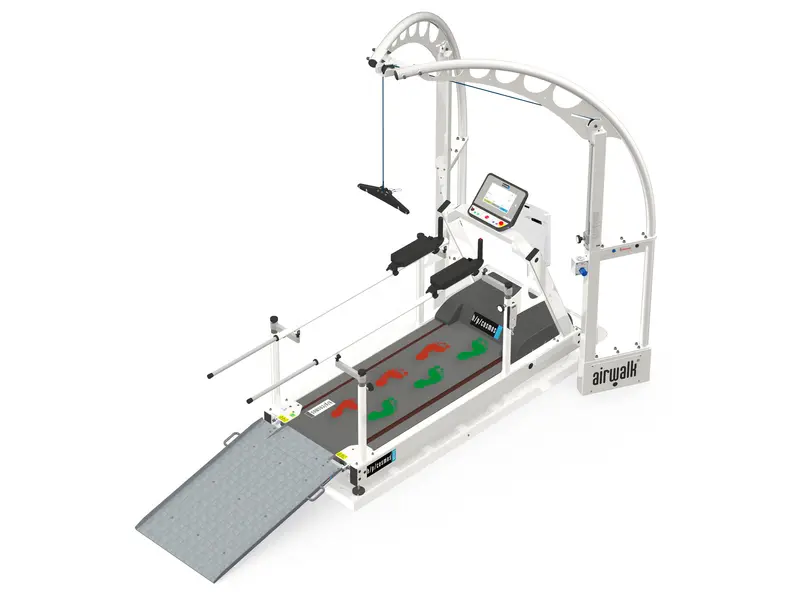
Body-weight support systems. Pneumatic body-weight support frame that stands over an h/p/cosmos treadmill and lifts the user through a vest and harness; the support follows the body up and down and lets the user turn a full 360 degrees.
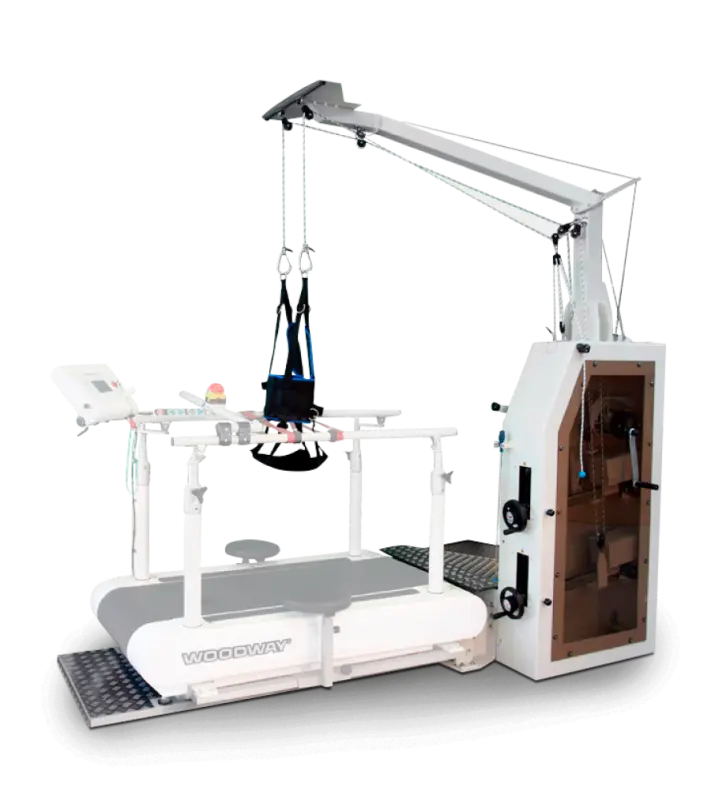
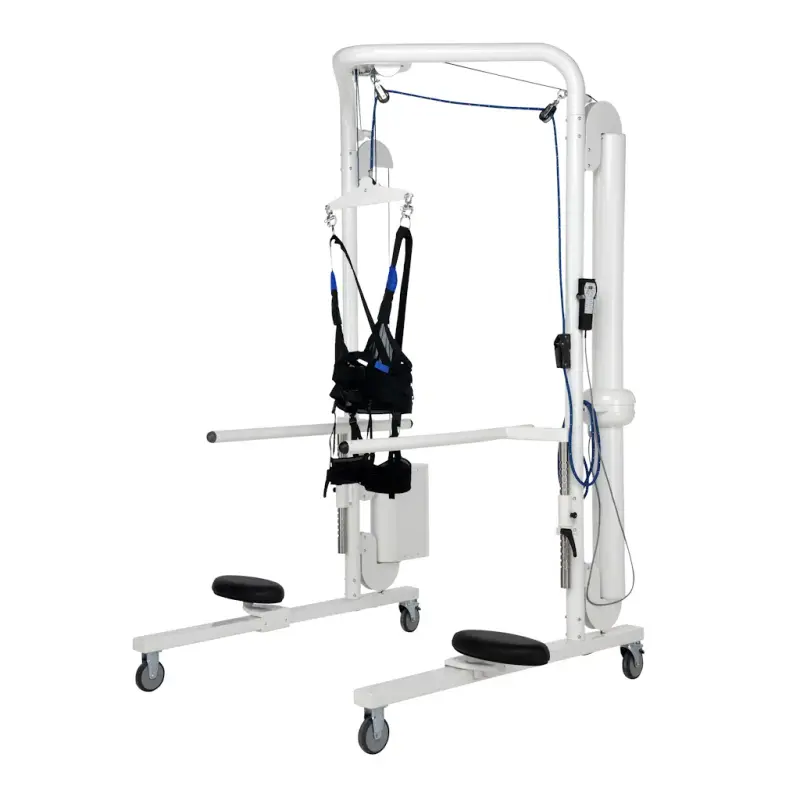
Body-weight support systems. Treadmill gait station with a gantry and rope off-loading system that can hold the patient with static or dynamic body-weight support, plus adjustable seats so therapists can place the patient's feet while sitting beside the belt.
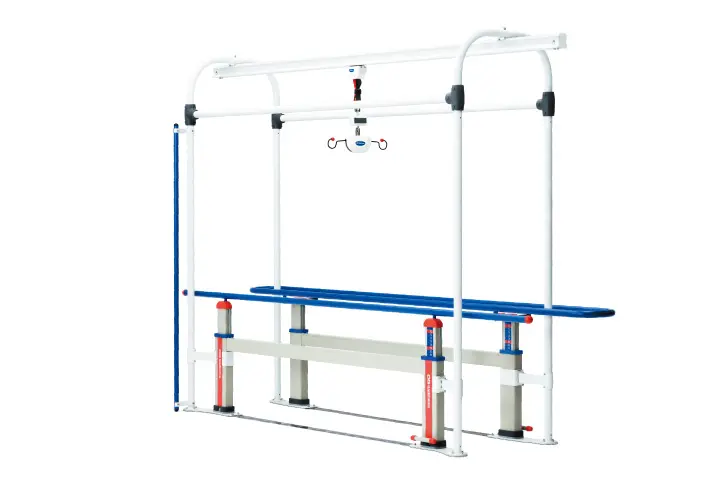
Body-weight support systems. Height-adjustable parallel bars combined with an overhead frame, a rail-mounted unweighting lift (manual or electric) and a harness, so a patient can practise standing up and walking between the bars while partly held from above.
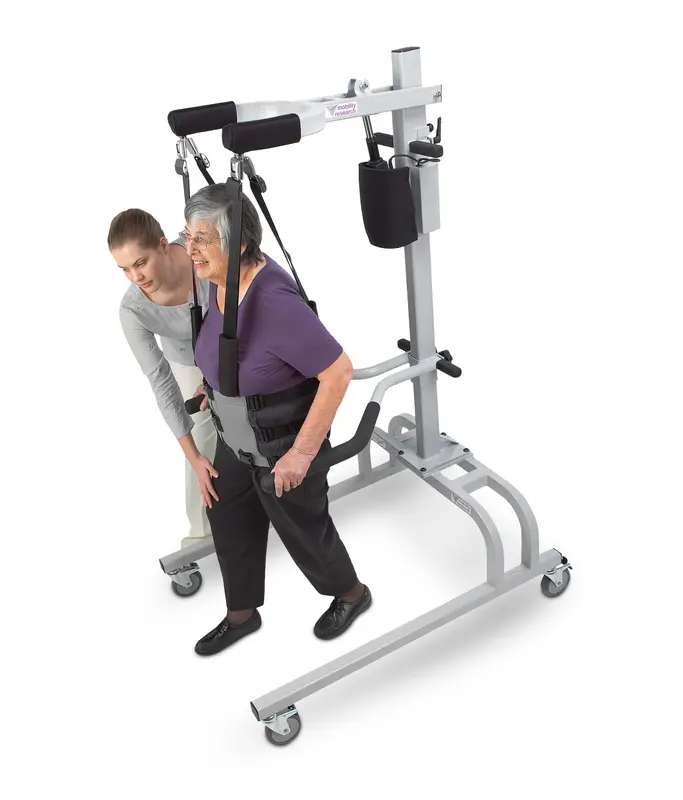
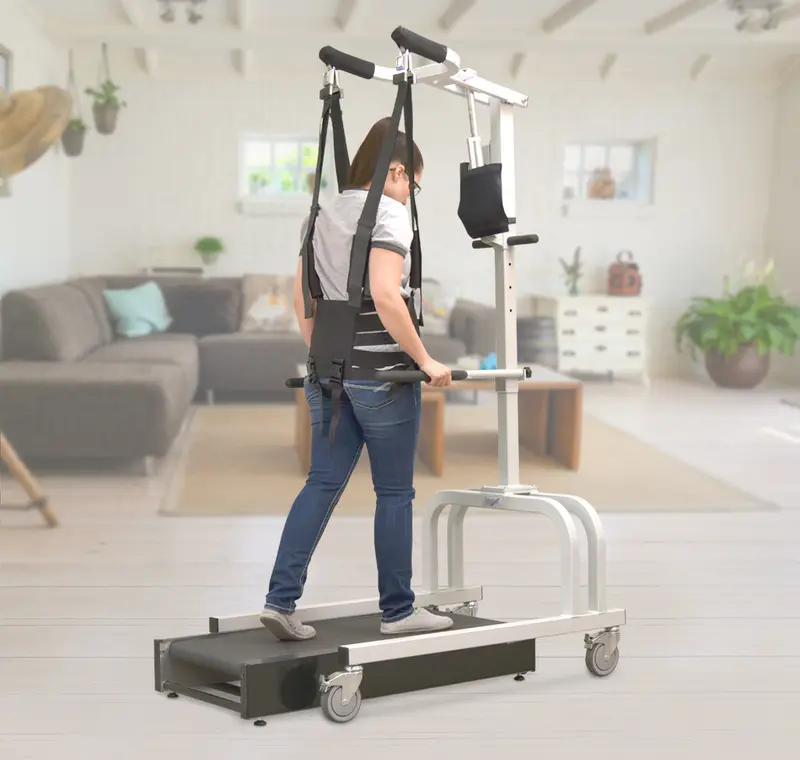
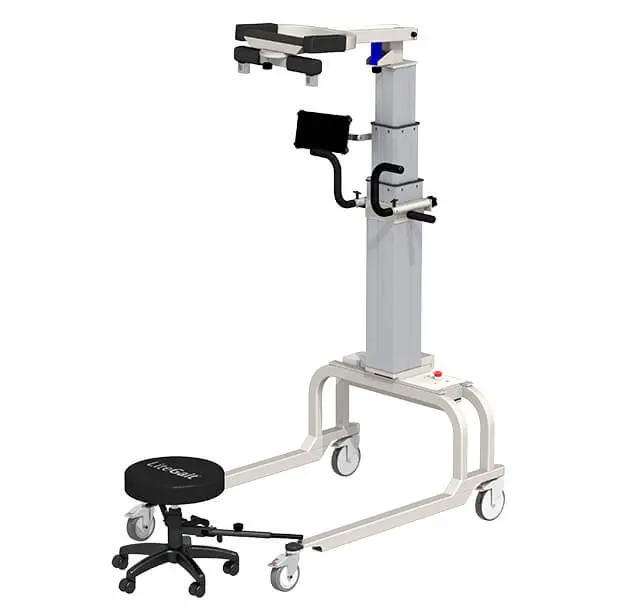
Body-weight support systems. Entry-level adult LiteGait: a wheeled frame with a battery-powered lift in the yoke and four adjustable overhead harness straps that control posture and how much body weight is supported, used over ground or over a treadmill.
Body-weight support systems. Home version of the LiteGait body-weight support frame, sized to one user, with the same yoke, overhead straps and harness as the clinic models; works over ground or over a small treadmill such as the GaitKeeper Mini.
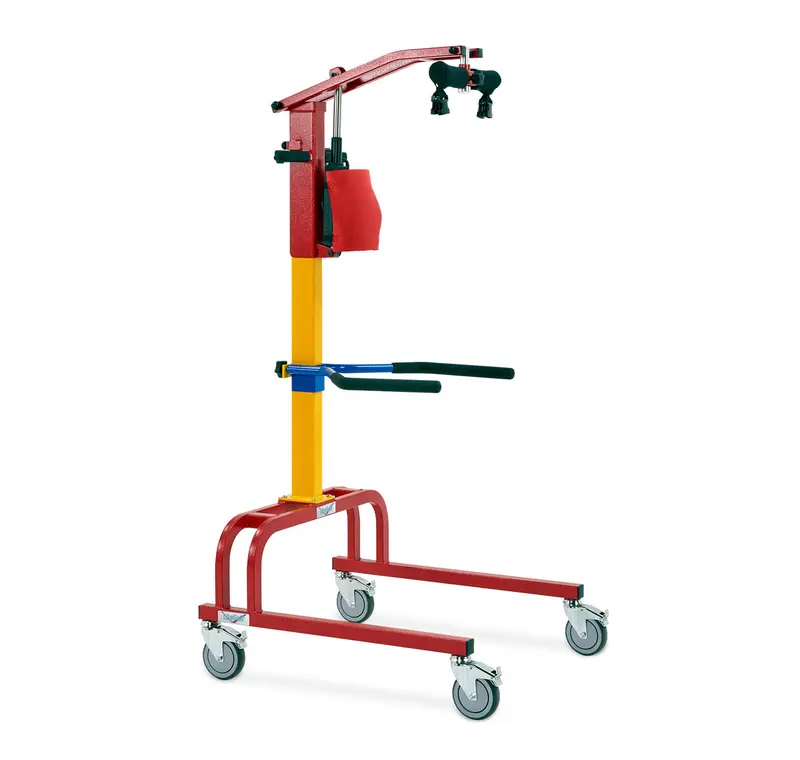
Body-weight support systems. Paediatric LiteGait with a built-in FreeDome yoke that lets the child turn 360 degrees, manual and powered yoke adjustment, and removable parallel-bar style handlebars, for supported walking over ground or on a treadmill.
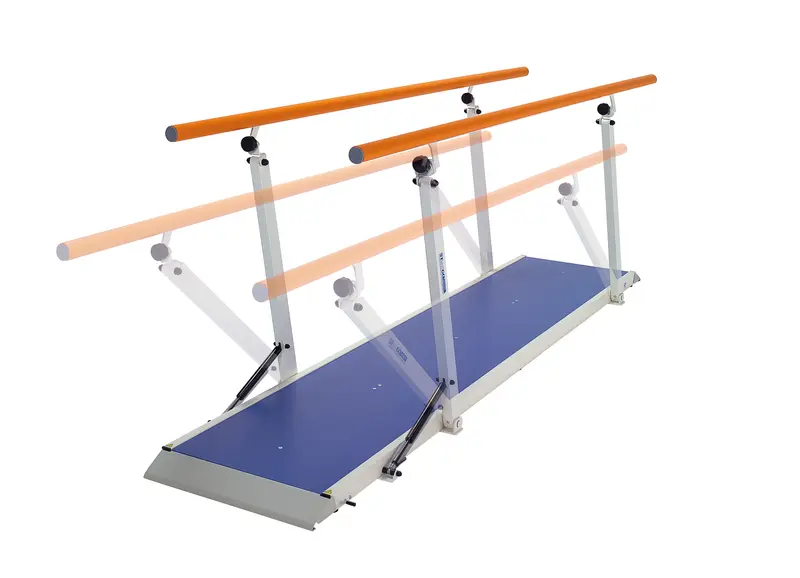
Parallel bars and walking rails. 3-metre platform parallel bars with a laminated wooden walkway and access ramps; gas-spring height adjustment (STandGOSystem) moves the handrails while the patient is in the bars, and modules join to make longer walkways.
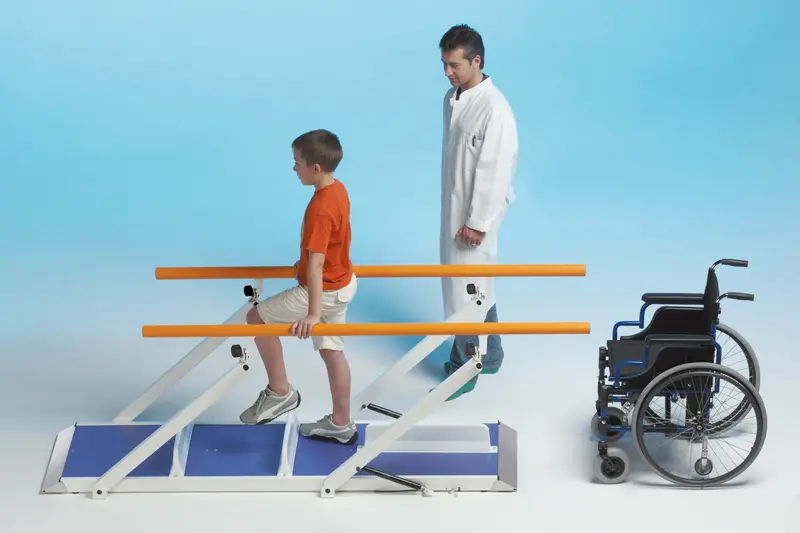
Parallel bars and walking rails. 2-metre children's version of the Plus parallel bars with a lower handrail range, laminated wooden walkway, access ramps and gas-spring height adjustment; joins with the 3 m children's module for a longer walkway.
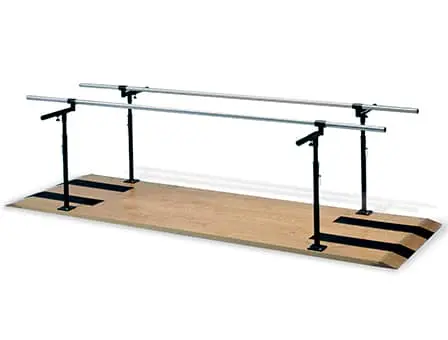
Parallel bars and walking rails. Platform-mounted parallel bars on a hardwood walkway with tapered ends for wheelchair access; each upright telescopes to ten heights and the rails adjust in width with knobs. Made in 7, 10 and 12 ft lengths.
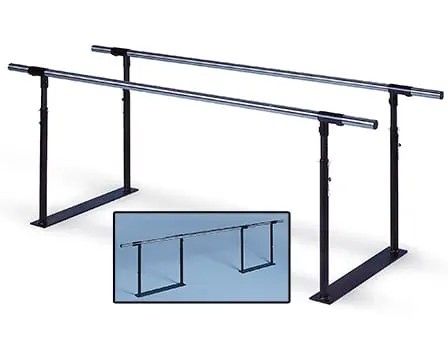
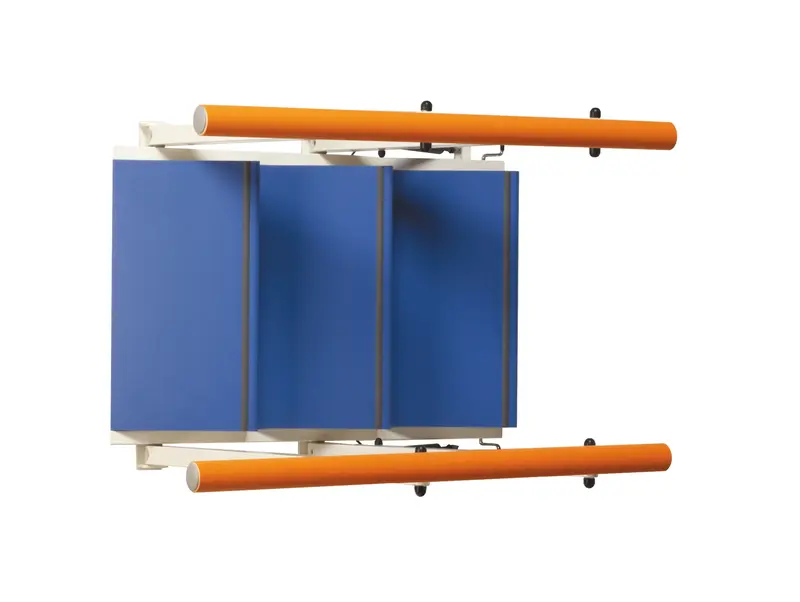
Parallel bars and walking rails. Space-saving parallel bars on steel base plates that fold to 10 in wide when not in use; uprights telescope to ten heights with a fixed 25 in width. Suits small therapy rooms and homes.
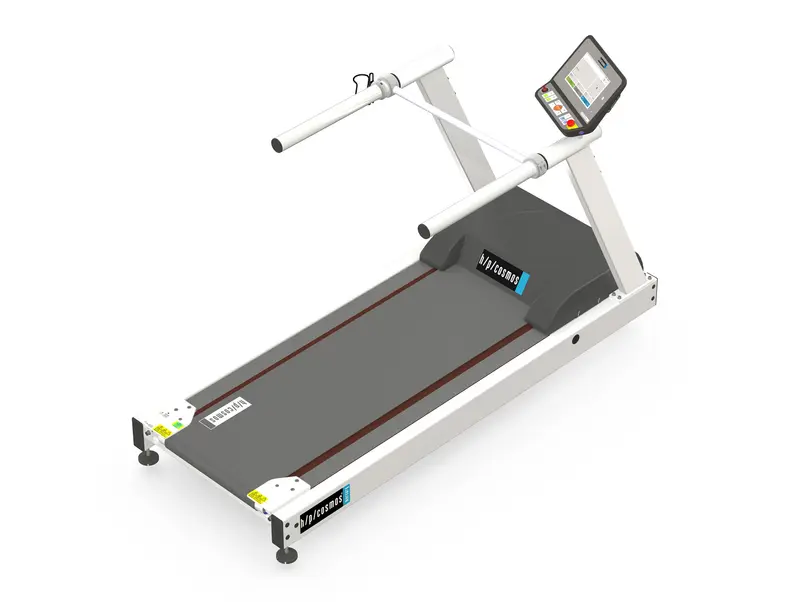
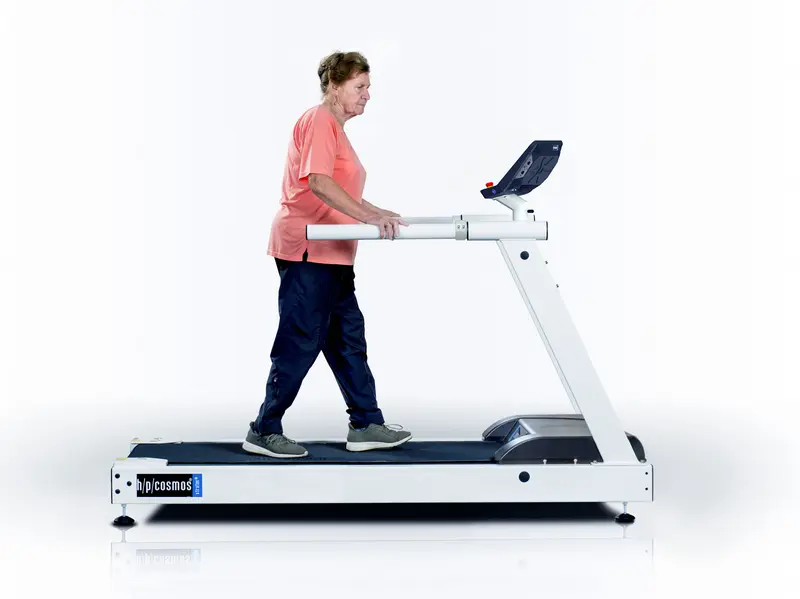
Rehabilitation treadmills. Medical treadmill with a 150 x 50 cm cushioned belt, speed from zero, motorised incline and a therapist-side touch terminal; it takes h/p/cosmos handrail, safety-arch and airwalk unweighting add-ons.
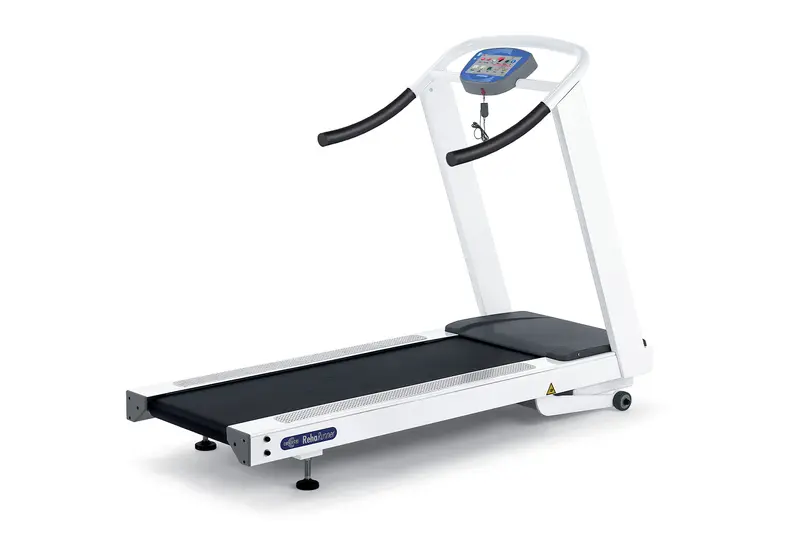
Rehabilitation treadmills. Rehabilitation treadmill with a 154.5 x 54 cm deck, reverse walking, incline to 25 %, a 10-inch touch console with preset tests and RS232 output for ECG systems; anti-fall system and access ramp are accessories.
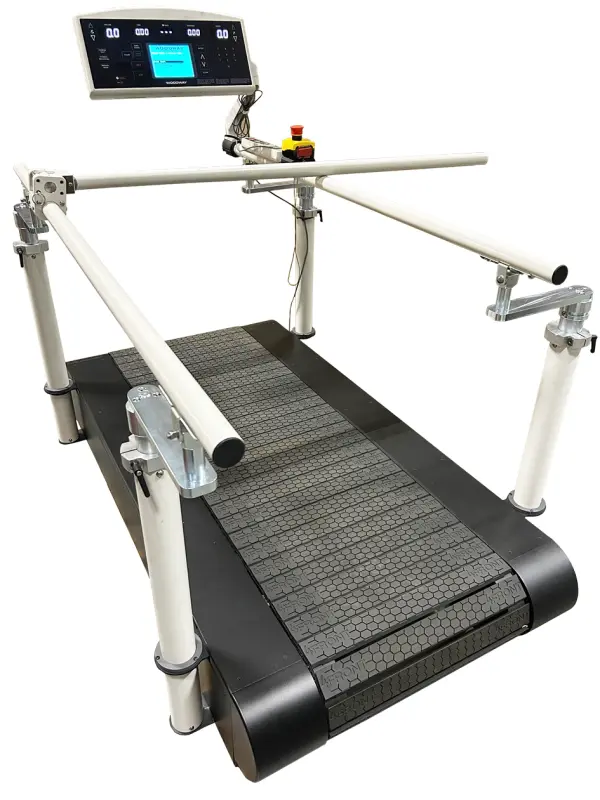
Rehabilitation treadmills. Clinical treadmill with Woodway's slat-belt walking surface, a true-zero start and 0.1 mph steps, with options for medical handrails, emergency stop, reverse and RS-232 data output.
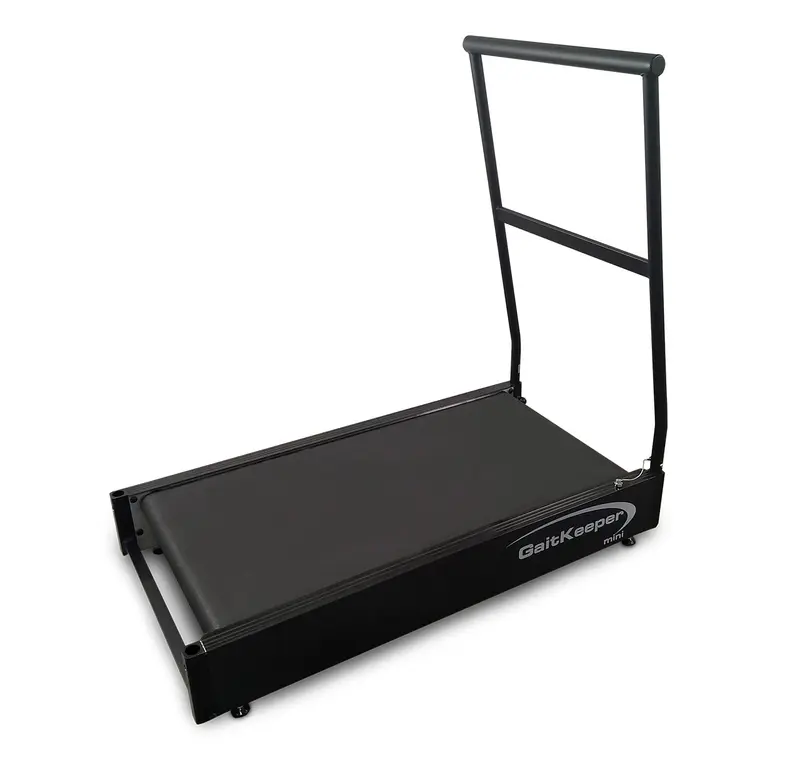
Rehabilitation treadmills. Small portable rehab treadmill, about 50 lb, with a true-zero start, 0.1 mph steps and a hand-held controller; made to sit under a LiteGait frame and roll to the bedside or stand upright for storage.
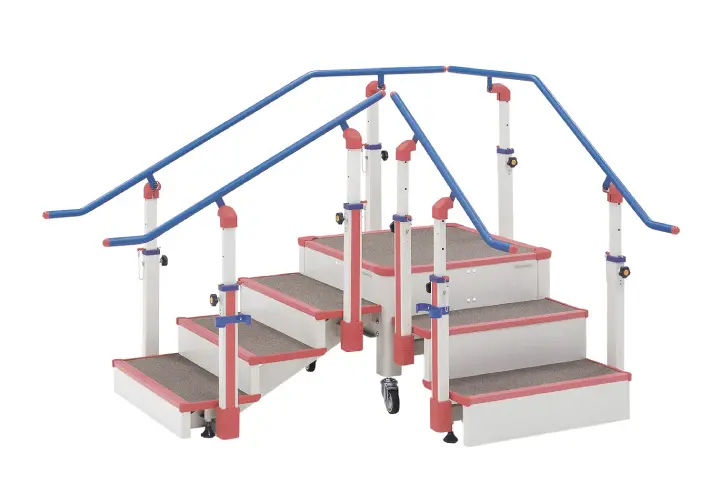
Therapy stairs and steps. Three-step modular training stair flight with pedal-operated handrail height adjustment on both sides; it is joined to a separate platform module to build a straight, corner or multi-flight staircase.
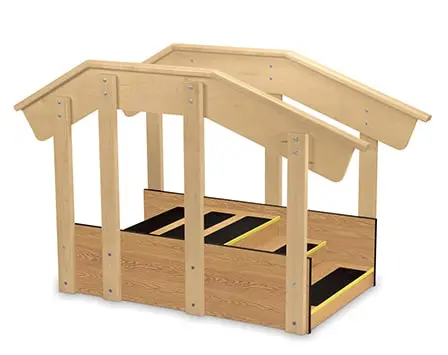
Therapy stairs and steps. Compact one-sided training staircase with two 6 in and three 4 in steps up to a 12 in platform, hardwood handrails and yellow high-visibility step edges; fits rooms with an 8 ft ceiling.
Therapy stairs and steps. Two-sided steel training staircase with a 200 mm flight on one side and a 150 mm flight on the other, a landing between them and handrails without posts on the treads; it sets up in a straight (I) or corner (L) layout.
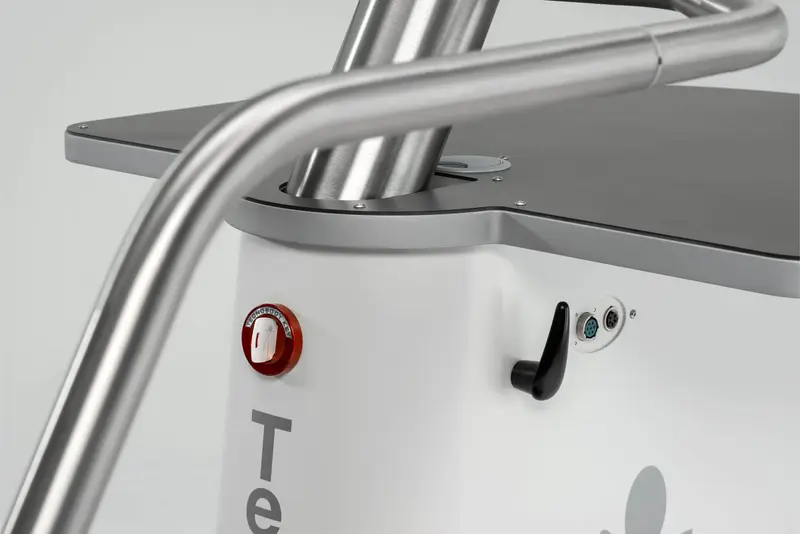
Balance trainers and platforms. Motorised standing platform that moves under the user in a constant or random pattern at 8 levels each, with handrails and a large emergency stop, for balance and reaction training while standing.
Balance trainers and platforms. Computerised balance platform whose instability is set electro-pneumatically on two axes, used for stabilometric tests and proprioceptive training on one or both legs, with a trunk sensor, a seated pelvic module and training games on a 21.5 in screen.
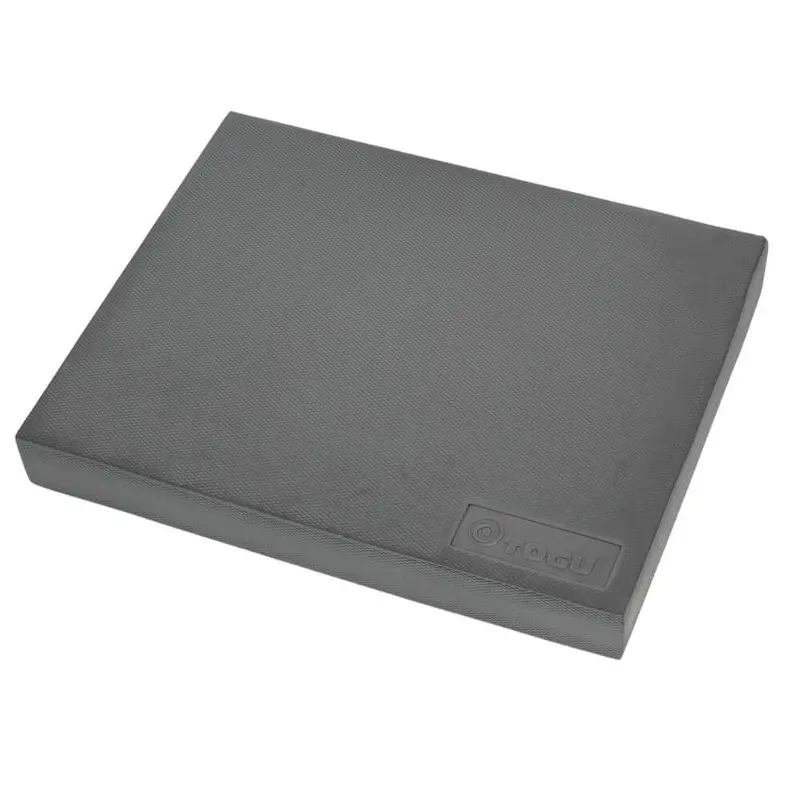
Balance trainers and platforms. Soft but firm foam pad, about 50 x 40 x 6 cm, that gives a slightly unstable surface for standing balance, coordination and proprioceptive exercises; light and easy to clean for home or clinic use.
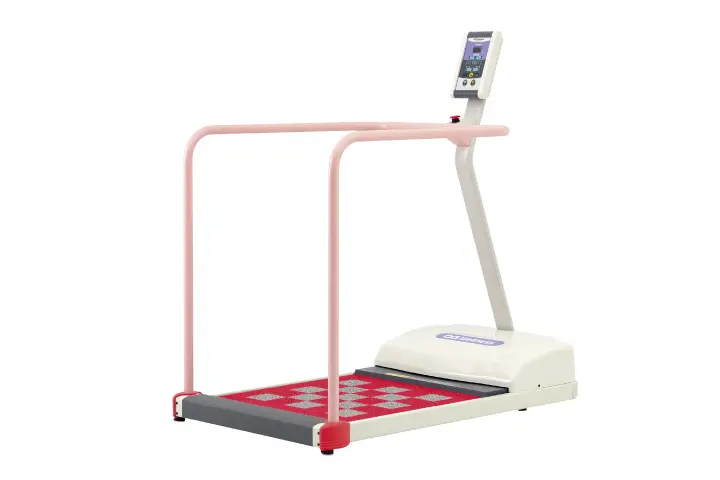
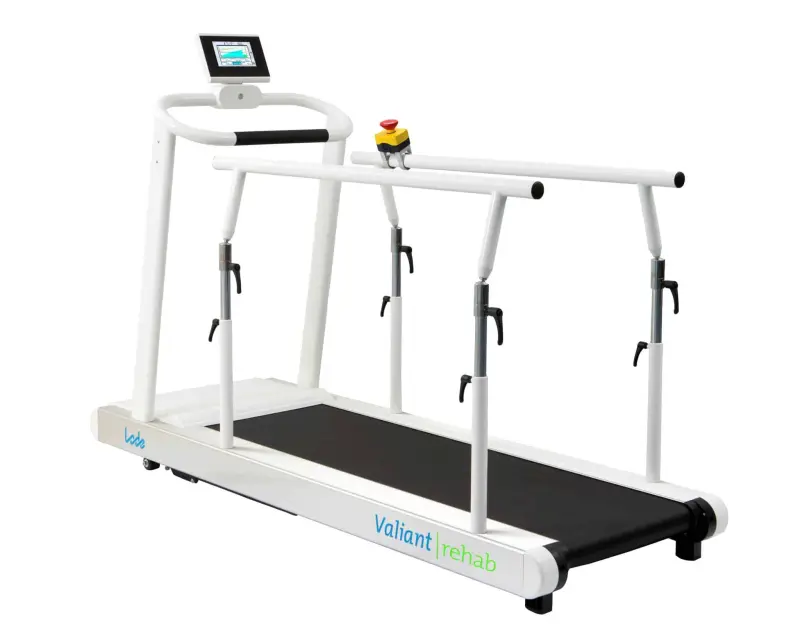
Rehabilitation treadmills. Low-speed rehabilitation treadmill from Lode in Groningen, starting at 0.1 km/h on a 150 x 50 cm belt with a 17 cm step-up. Handrails, reverse walking, negative elevation, autospeed and a safety belt with fall stop are add-ons chosen per clinic.
Body-weight support systems. Mobile frame that stands over a treadmill and holds the patient in a harness, unloading up to 80 kg of body weight with spring packs set from a remote control. The single-point suspension lets the centre of gravity move up and down and the patient rotate.
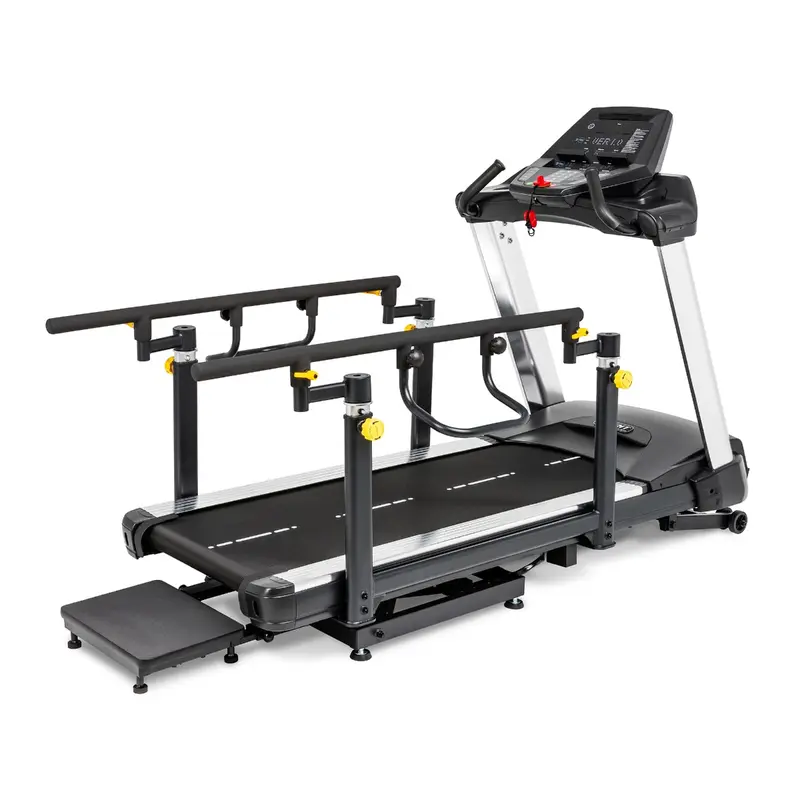
Rehabilitation treadmills. Medical treadmill with long adjustable handrails, a detachable step and a 5 HP AC servo motor; walks forward from 0.1 mph and in reverse up to 3 mph, with a -3 to 22% grade range. Built for cardiac and physical therapy clinics.
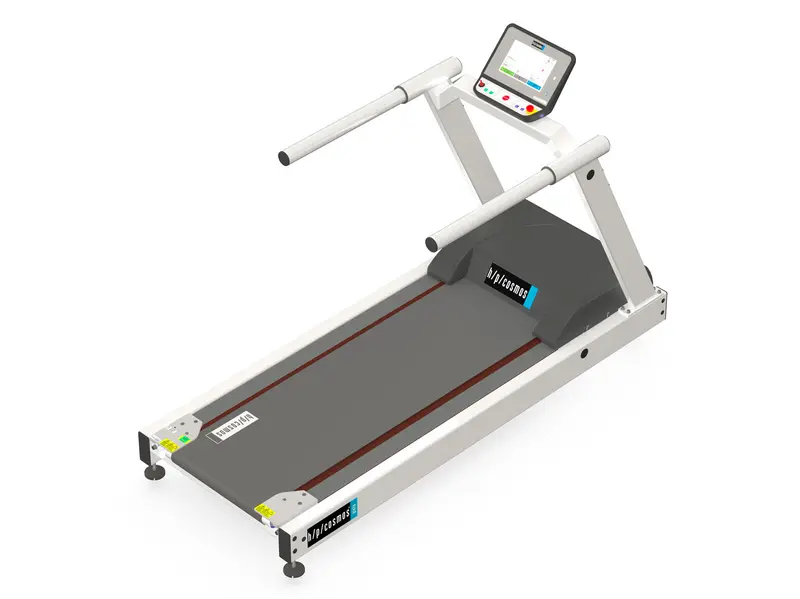
Rehabilitation treadmills. German entry-level medical treadmill (MDR class IIb) with a 150 x 50 cm belt, 23 cm access height, motorised incline 0 to +25% and a centered terminal usable from both sides. Reverse belt rotation, fall-stop safety arch and an unweighting system are extra-cost options.
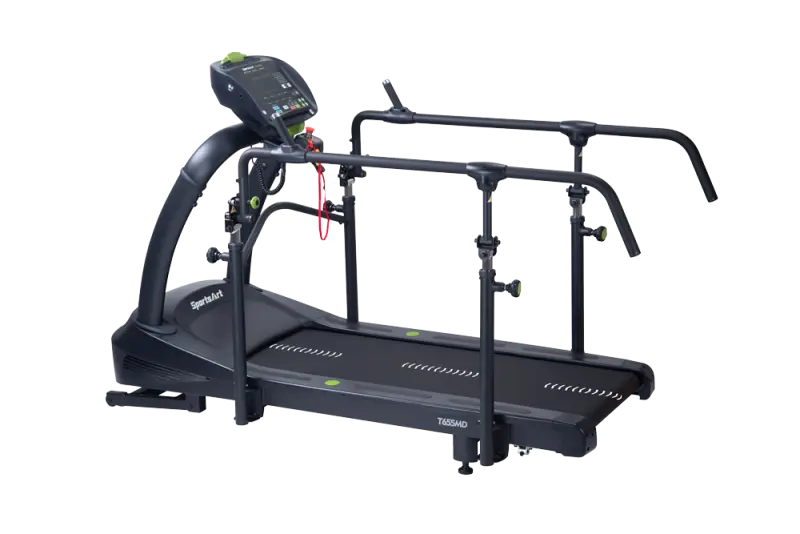
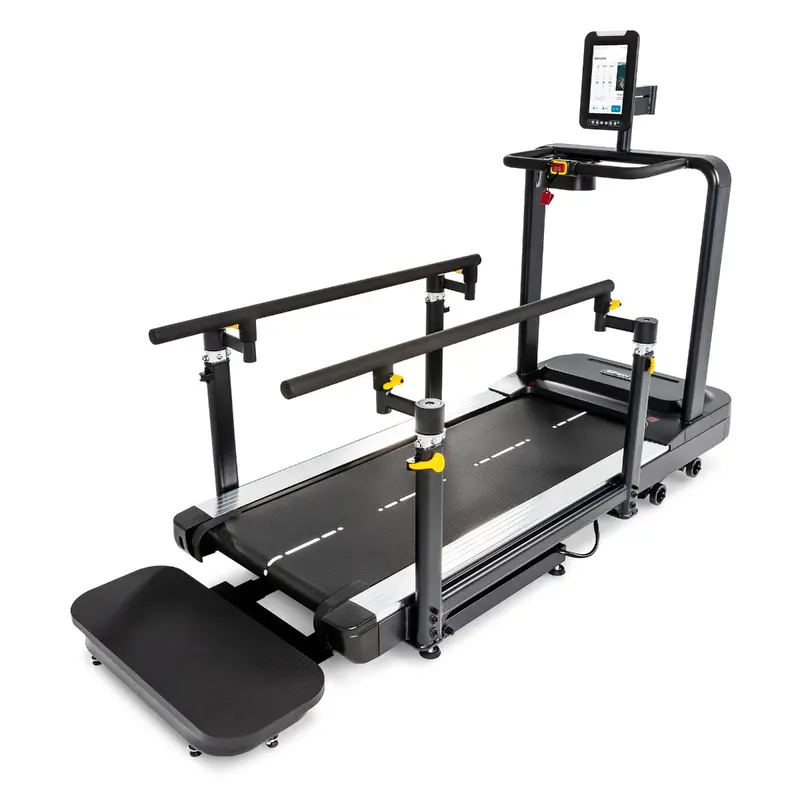
Rehabilitation treadmills. Neurological rehabilitation and cardiac stress-test treadmill with gas-assisted full-length parallel handrails, a deck lift and a bidirectional speed range of -5 to 13.6 mph. Its Safe Step program starts the belt from zero on each detected step, and a Symmetry program reports left and right step length.
Rehabilitation treadmills. Rehabilitation treadmill with full-length height-adjustable handrails, front and rear motors for -10% to 15% grade, and a bidirectional speed range of -3 to 10 mph.
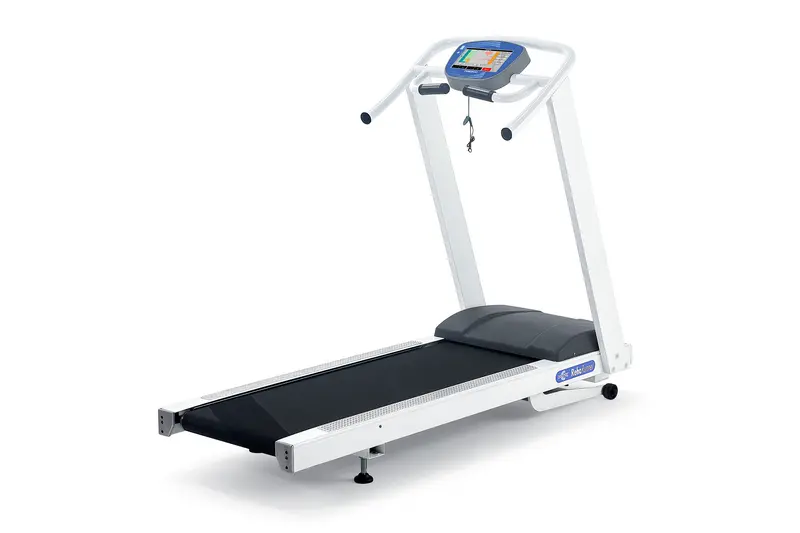
Rehabilitation treadmills. Compact rehabilitation treadmill from Chinesport (Udine) with a 140 x 48 cm deck, 10-inch touchscreen, reverse walking up to 5 km/h and up to 22% incline. Long fixed or height-adjustable handrails and an anti-fall harness system are ordered as accessories.
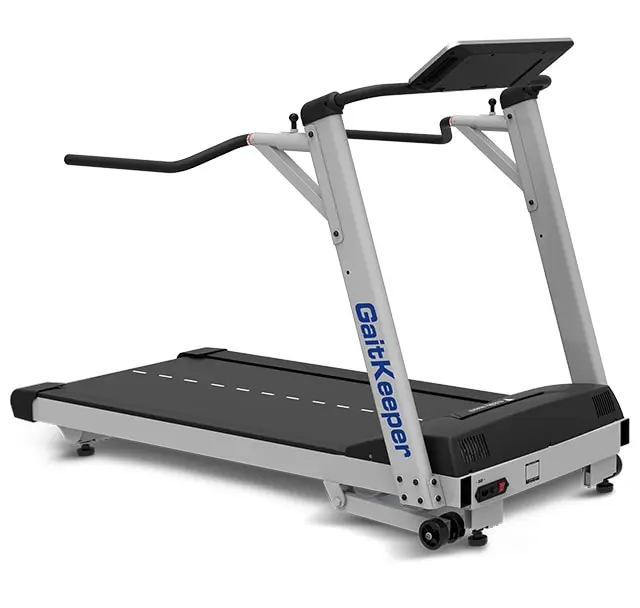
Rehabilitation treadmills. Full-size rehabilitation treadmill from the LiteGait maker, with a true zero start, reverse up to 3 mph, distance shown in feet, a removable console and 'Adjustabar' handlebars that change in height and width. Larger sibling of the GaitKeeper Mini; can be ordered with GaitSens gait analysis.
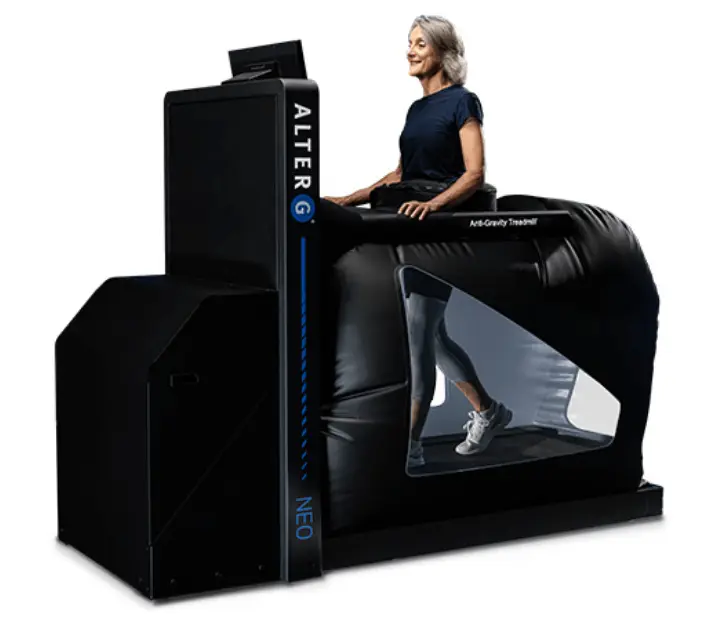
Anti-gravity and unweighting treadmills. Differential air pressure treadmill: the user zips into an air chamber with sealed shorts and is unweighted to as little as 20% of body weight in 1% steps. Lifeward offers NEO 'at a price-point that is right for you'; it has a 0.5 mph start speed for people with limited mobility, and NEO+ adds HD video monitoring.
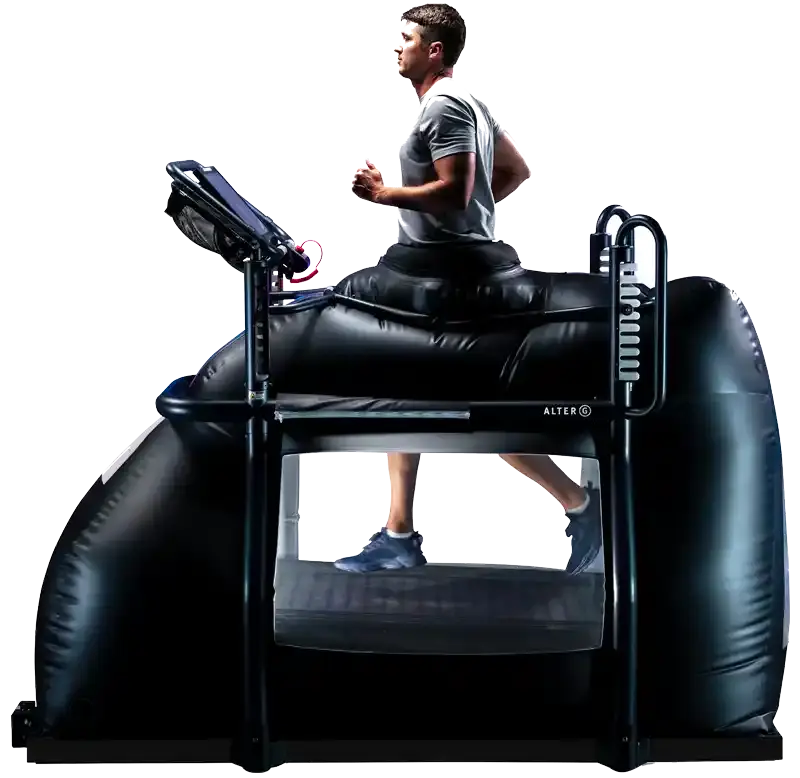
Anti-gravity and unweighting treadmills. AlterG's top performance model, described by the maker as 'the ultimate performance series': differential air pressure unweighting to 20% of body weight in 1% steps on a slat-belt treadmill, forward up to 18 mph and reverse up to 10 mph, 0-15% grade. Stride Smart gait analytics and live video monitoring are included.
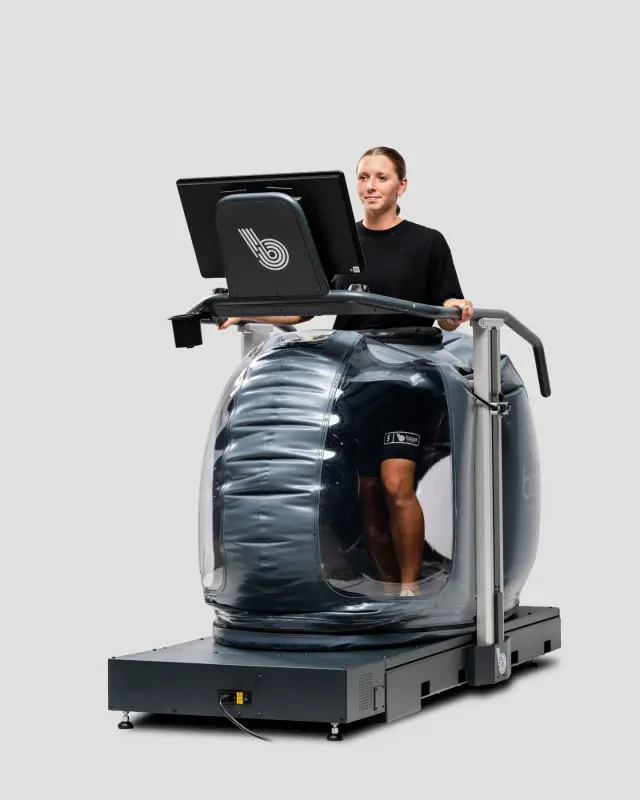
Anti-gravity and unweighting treadmills. Compact air-pressure ('microgravity') treadmill from the original AlterG founders, aimed at clinics and homes: body weight adjustable from 20 to 100% in 1% steps, automatic height setting and simple knob controls. Smaller and lighter than the Boost 2, with its own belt instead of a slat belt.
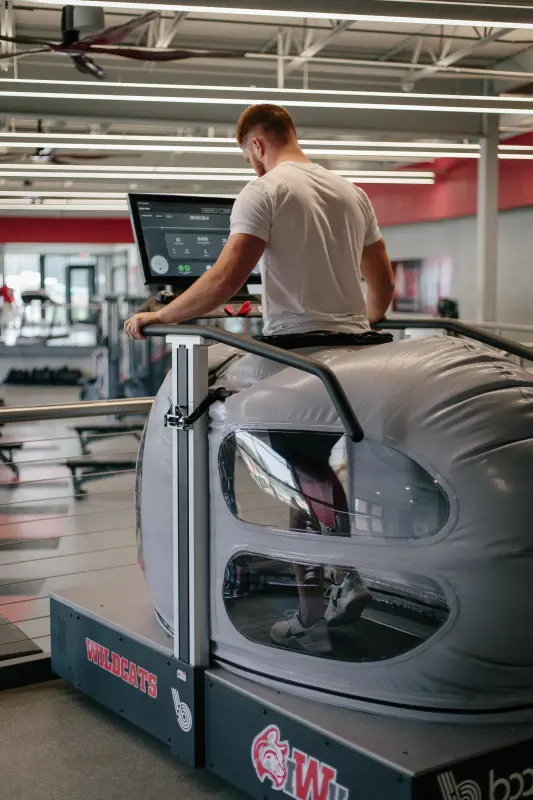
Anti-gravity and unweighting treadmills. Full-size air-pressure ('microgravity') treadmill built on the Woodway 4Front slat belt, unweighting up to 80% of body weight with a motorized height adjustment. Core runs on 120 V to 12 mph; Elite on 220 V to 18 mph, both with reverse to -10 mph.
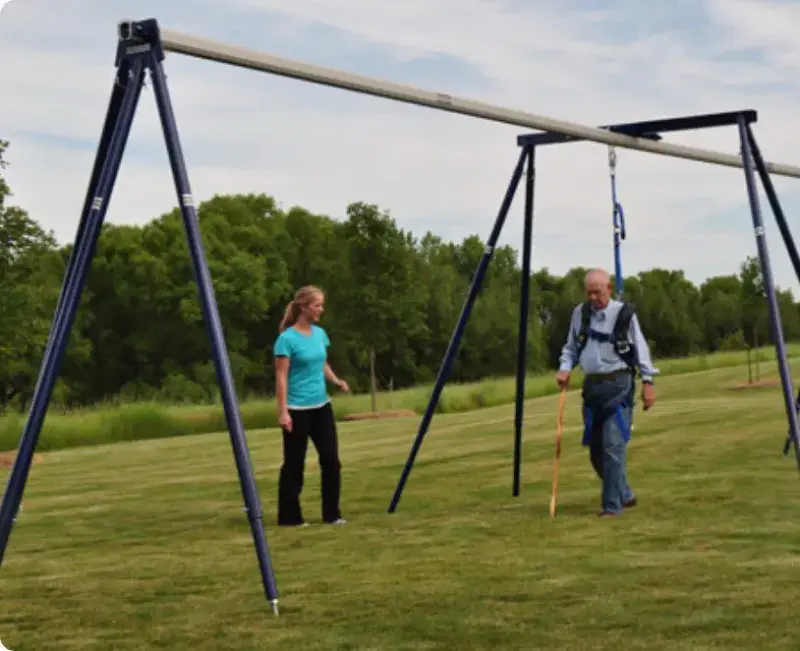
Body-weight support systems. Portable overhead track on tripod legs with a trolley, lanyard and harness, for fall-protected gait and balance training without ceiling installation. The maker states it gives partial unweighting support; height adjusts between 8 and 9.5 ft.
Body-weight support systems. Heavy-duty mobile body-weight support frame that lifts patients to standing with powered actuators (32-36 in stroke) and supports users up to 500 lb, over ground or over a treadmill. Deluxe models add an integrated FreeDome yoke for 360-degree turning; a wireless BiSym scale shows supported weight left and right.
Rehabilitation treadmills. German medical treadmill (MDR class IIb) with a 150 x 50 cm cushioned belt, 23 cm access height and a therapist terminal on the right side; flat deck with no elevation. Reverse belt rotation, safety arch with chest harness and an unweighting system are extra-cost options.
Price on request
Max user 300 kg
How to choose
Measure the room: length for bars and treadmills, ceiling height for overhead supports.
Check the user weight limit and the height range of the harness or bars.
For treadmills, check the lowest speed and whether a harness system can be added.
Ask about mains voltage for powered items.
Common questions
Do I need body-weight support or just parallel bars?
Bars help when the user can bear their own weight and needs something to hold. Body-weight support is used when part of the weight must be taken off the legs. A physiotherapist advises which is right.
Are there children’s versions?
Yes. Children’s parallel bars and paediatric body-weight support systems are listed in this category.