Lift chairs in 2026: power lift recliners explained, sizes, cost, Medicare and what 550 FDA reports show
Two-position, three-position and infinite lift chairs, sizes, prices, Medicare's strict seat lift rule, and what two AI coders found in 550 FDA reports.
Contents
- Stop and check today
- The short answer
- How a lift chair works
- Two-position, three-position and infinite position
- Choosing the size
- Weight capacity and heavy-duty chairs
- Room, wall space and power
- What lift chairs cost in 2026
- Does Medicare pay for a lift chair?
- Getting the Medicare paperwork right
- How to choose a lift chair, step by step
- Warranties: what is covered and for how long
- Battery backup and power cuts
- Pinch points: children, pets and feet
- Using the chair safely day to day
- Lift chair or something else?
- Delivery, set-up and assembly
- Heat, massage and extras
- Rented, second-hand and older chairs
- A weekly lift chair check
- What 391 FDA reports on home lift chairs show
- What these reports cannot tell you
- Fire, smoke and sparks: the hand control first
- House fires where a lift chair was present
- Electric shocks
- Stuck in the chair
- Chairs that kept rising or threw the user
- Backs that broke or came off
- Falls and tips with nothing broken
- Trapped, pinched and caught
- Burns, sores and skin
- The death reports, read with care
- Clinical chairs and other devices in the same code
- What the makers found
- When the reports arrived
- The recall file
- Mistakes the reports repeat
- When to report a lift chair problem to the FDA
- How Mobility Atlas read 550 FDA reports
- Three composite scenarios
- Questions to ask before you buy
- Your plan: 10 minutes, today, this week
- Sources and documents
- Common questions
- Sources
Stop and check today
Someone at home already uses a lift chair? Check these first. Choosing one, or asking whether Medicare will pay? Start at the short answer below.
- The hand control, its cord or the plug is hot, smells of burning, sparks, or has a cut or crushed cord. Unplug the chair and call the dealer.
- Nothing and no one is under the chair or the footrest. Pride's owner's manual says: "Do not place objects under chair. Make sure area is clear of obstructions, including pets and small children, during operation."
- The chair is plugged straight into a wall socket. The same manual says: "Do not use an extension cord." The transformer box should sit in the open, not under the chair or under a blanket.
- The user can get out if the power goes off. Find out whether the chair has a battery backup, what kind, and when the batteries were last changed. Pride's manual says its 9V backup is meant to return a reclined chair to sitting "one time during a power outage."
- A phone or a call pendant is within reach of the chair, every time.
- The back is firmly on its brackets and the footrest closes flush. A back that wobbles or clunks means stop and call the dealer.
None of these checks needs tools. The motor and wiring are jobs for the dealer, not a home repair.
The short answer
A lift chair, sold as a power lift recliner, is an armchair with an electric motor that tilts the whole seat forward and up, so the user can rise to their feet, or sit down, without pushing hard on their knees. Most also recline: two-position chairs part of the way, three-position chairs further with the back and footrest moving together, and infinite-position chairs with separate motors for back and footrest.
On 1800wheelchair.com, a large US retailer, in October 2026, powered lift chairs were listed from USD 911 to USD 3,217, and Pride lists suggested retail prices from USD 1,234 to USD 3,861 for its current models. Weight capacities run from 300 lb on La-Z-Boy's smallest PowerLift to 600 lb on the largest Pride and Golden chairs, and makers size the same chair to the user's height.
Medicare Part B covers only the seat lift mechanism, not the chair, and only when strict written criteria are met: severe arthritis of the hip or knee or a severe neuromuscular disease, the lift being part of the treating practitioner's course of treatment, being completely unable to stand up from any chair in the home, and being able to walk once standing. The details are below.
Mobility Atlas earns a fee or margin when you order through us; this guide uses only Medicare's coverage rules, the FDA's classification rule, the makers' own spec pages, manuals and warranty sheets, one retailer's listed prices, FDA and CPSC recall records, FDA reports and our own catalog, read in October 2026. Whether a lift chair is safe for a particular person, and how they should get in and out of it, belongs with their physician, physical therapist or occupational therapist. This guide explains the options and what to ask, and stops there.
How a lift chair works
A lift chair is a recliner built on a steel lift base. One or more electric motors, called actuators, push the seat frame up and forward on a scissor mechanism until the user is nearly standing, then lower it again. The same or a second motor tilts the back and raises the footrest. Pride's manual describes the electrics as "a low voltage DC electrical system" that turns household current into 24 or 39 volts DC through an external transformer, the box on the power cord.
The user drives the chair with a hand control on a cord, sometimes called a remote, pendant or wand. Pride's manual lists a maximum duty cycle of "2 min. ON/18 min. OFF", which means the motors are meant for short movements, not continuous running, and an operating range of 50°F to 104°F.
In the United States, the FDA classifies these chairs as electric positioning chairs under 21 CFR 890.3110, a Class II medical device, product code INO. The rule lets makers sell them without a premarket submission as long as testing shows, among other things, that "the safety controls are adequate to ensure safe use of the device and prevent user falls from the device in the event of a device failure," that the chair can carry its rated weight "with an appropriate factor of safety," and that its parts "are found to be non-flammable." Pride's and Golden's product pages both describe their lift chairs as FDA Class II medical devices.
Pride's manual also says: "Federal law restricts this device to sale by or on the order of a physician" or other licensed personnel. Ask your physician before you buy.
Two-position, three-position and infinite position
The number of positions describes how far a chair reclines and whether the back and footrest move together or separately. Makers and retailers use the words a little differently, so read each chair's own spec sheet.
| Kind | What the documents say | Motors |
|---|---|---|
| Two-position | 1800wheelchair says the recline is "limited to 45 degrees," with any position in between | Not stated |
| Three-position | Reclines further; 1800wheelchair says these chairs "don't offer a perfect horizontal recline" | Not stated |
| Infinite position | 1800wheelchair says they "can achieve a full 180 degree recline and beyond" | Two or more: back and footrest move separately |
| Zero-gravity | La-Z-Boy's sheet says it lets you recline "with your lower legs placed above heart level" | Found on some infinite-position chairs |
On a three-position chair, the back and the footrest move together, so the seat and back meet in a slight V when fully reclined. Pride calls its Genesis LC-150 and Evolution LC-435 "a 3-position, full recline, chaise lounger"; the retailer files both as three-position chairs. On an infinite-position chair, the back and footrest have their own motors. Pride says its Tranquil 2 lets the "backrest and footrest to move independently from one another so that a variety of positions can be reached," and the Tranquil 2 adds a power headrest and power lumbar support.
In October 2026 the retailer's two-position category held only one item, a manual rocking recliner rather than a power lift chair, so on this retailer's pages the power lift chairs were all three-position or infinite-position. Golden groups its chairs by "comfort zones" (2, 4 or 5) and its own names for positioning systems, such as MaxiComfort and Twilight; ask the dealer to show you what each zone moves before you choose.
More motors mean more positions, and more parts that can stop. Which positions suit a person's body is a question for their physician or therapist.
Choosing the size
Lift chairs are sized by the user's height and build. A chair that is too big leaves the feet off the floor; one that is too small leaves the user perched. Pride prints a height range for each size, Golden and La-Z-Boy give sizes or seat scales, and Pride's sheet says "Height ranges should be used as a guide only due to varying factors of each individual user."
| Chair and size | User height | Seat to floor | Seat width | Seat depth | Capacity |
|---|---|---|---|---|---|
| Pride Tranquil 2, small | 5 ft 3 in and below | 18 in | 20 in | 18.5 in | 400 lb |
| Pride Tranquil 2, medium | 5 ft 4 in to 5 ft 9 in | 19.5 in | 22 in | 20.5 in | 400 lb |
| Pride Tranquil 2, large/tall | 5 ft 10 in and above | 21.5 in | 23.5 in | 22.5 in | 400 lb |
| Pride Evolution LC-435, petite wide | 5 ft 3 in and under | 18 in | 24 in | 19 in | 400 lb |
| Pride Evolution LC-435, medium | 5 ft 4 in to 5 ft 9 in | 18 in | 20 in | 20 in | 400 lb |
| Pride Evolution LC-435XL | 5 ft 8 in to 6 ft 1 in | 20 in | 25.5 in | 22 in | 500 lb |
| Pride Evolution LC-435XXL | 5 ft 8 in to 6 ft 1 in | 20 in | 29 in | 22 in | 600 lb |
| Golden Cloud Classic PR510 | Not stated on the page | 19 in | 18.5 in | 19.5 in | 400 lb |
The retailer we read sorts chairs into small (for users below 5 ft 4 in), medium (5 ft 4 in to 5 ft 10 in), large (over 5 ft 10 in) and high weight capacity (500 lb and up). Use that as a first filter, then check four numbers on the spec sheet:
- Seat to floor: seated with the chair down, the user's feet should rest flat on the floor with the knees at a comfortable angle.
- Seat depth: the back of the knees should clear the front edge of the seat.
- Seat width: the user should fit between the arms without pressing against them, with room for clothing. Golden lists "Width Between Arms" on some chairs; ask for it if the sheet does not show it.
- Top of back to seat: the headrest should support the head, not the neck or the top of the back.
If you can, sit the user in the chair before you buy and run it through the full lift. An occupational therapist can measure the user and say which numbers matter most.
Weight capacity and heavy-duty chairs
Every lift chair has a maximum weight capacity, and it is the user's weight that counts. Pride's manual is blunt: "Stay within the specified weight capacity of your chair." Golden's warranty says no warranty applies "to any condition resulting from exceeding the weight capacity of the product."
| Chair (maker's sheet or retailer listing) | Weight capacity |
|---|---|
| La-Z-Boy PowerLift, Bronze series | 300 lb |
| Pride Genesis LC-150 (retailer listing) | 325 lb |
| La-Z-Boy PowerLift, Platinum series | 350 lb |
| Most Pride VivaLift and Golden models | 400 lb |
| La-Z-Boy PowerLift, Gold series | 500 lb |
| Pride Evolution LC-435XL | 500 lb |
| Pride Evolution LC-435XXL | 600 lb |
| Golden Cloud Classic, Comforter and Cloud+ (largest sizes) | Up to 600 lb |
Heavy-duty chairs are also wider and heavier. Pride's LC-435XXL is 46.5 in wide overall and weighs 196 lb, against 35 in and 148 lb for the medium LC-435. Measure the doorways the chair must pass through and the space it will sit in. Leave margin: a user near the limit of a 400 lb chair should look at the next size up, and ask the dealer which capacity the warranty is based on.
Room, wall space and power
A lift chair needs room behind it to recline, room in front for the footrest and for the user to stand, and a wall socket close by. Pride's manual says to place the back of the chair "30 in. (76 cm) from the nearest obstruction while the chair is in the seated position," and adds that the figure may vary by model. Spec sheets give their own distance from the wall: 13 in for the small Tranquil 2, 11 inches for La-Z-Boy's Platinum series. Golden's Cloud Classic lists 23 in from the wall when reclined and 43 in from the back of the seat to the end of the footrest.
- Plug the chair straight into a wall socket. Pride's manual says not to connect an extension cord, and allows only a UL Listed or UL Recognized single-outlet plug-in surge protector with at least 1000 joules of protection, itself plugged straight into the outlet.
- Keep the transformer box in the open. The manual says: "Do not cover or place the external transformer under the chair."
- Route the power and hand control cords where the lift and scissor mechanisms cannot catch them.
- Clear tables, lamps and rugs from the path of the footrest and from where the user stands up.
What lift chairs cost in 2026
Listed prices on 1800wheelchair.com in October 2026, with the capacity it printed. Prices change; confirm with your supplier.
| Chair | Kind | Listed price (USD) | Capacity |
|---|---|---|---|
| Golden Elara, medium | Three-position | 911 | 400 lb |
| Pride Genesis LC-150 | Three-position | 933 | 325 lb |
| Golden Comforter, medium wide | Three-position | 1,219 | 400 lb |
| Pride Evolution LC-435 | Three-position | 1,326 | 400 lb |
| Pride Metro 2 | Infinite position | 1,365 | 400 lb |
| Golden Dione, medium | Infinite position | 1,485 | 400 lb |
| Pride Radiance PLR-3955 | Infinite position | 1,838 | 400 lb |
| Golden Rhea, medium | Infinite position | 1,973 | 400 lb |
| Golden Cloud 4 Zone, medium/large | Three-position | 2,203 | 400 lb |
| Golden Comforter with MaxiComfort, medium/wide | Infinite position | 2,305 | 500 lb |
| Pride Evolution LC-435XL and XXL | Three-position | 2,349 | 500 or 600 lb |
| Pride Ultra PLR-4955 | Infinite position | 2,375 | 400 lb |
| Golden Comforter with MaxiComfort, large/wide | Infinite position | 2,445 | 600 lb |
| Golden Cloud with Twilight | Infinite position | 2,705 | 400 lb |
| Golden EZ Sleeper Slim with Twilight, medium | Infinite position | 2,964 | 400 lb |
| Pride VivaLift Premier | Infinite position | 3,217 | 400 lb |
Makers' suggested prices are higher than many listed prices. Pride's own pages list the LC-150 at USD 1,234 and the Premier at USD 3,861, against USD 933 and USD 3,217 on the retailer's pages. Golden's site shows no prices. Extras such as heat and massage, a power headrest and lumbar, a lithium battery backup or a USB port push a chair up the range; high weight capacity sizes cost more than the standard sizes of the same chair.
Mobility Atlas's own catalog, checked October 2026, lists no lift chairs, so we give no catalog price here. If you want us to find a particular model, or a chair in an unusual size, send an enquiry with the user's height, weight and the space available.
Does Medicare pay for a lift chair?
Does Medicare pay for a lift chair? Mobility Atlas read Medicare's national rule, local rule L33801 and its policy article in October 2026, and the answer is: only for the seat lift mechanism, and only when strict criteria are met. All must be true: the person has "severe arthritis of the hip or knee or have a severe neuromuscular disease"; the lift is part of the treating practitioner's course of treatment; the person is "completely incapable of standing up from a regular armchair or any chair in their home"; and, once standing, they can walk. The record must show that other treatments, such as medication and physical therapy, were tried and failed. Suppliers bill an electric mechanism under E0627 (a manual one under E0629) and may bill the chair under A9270; the national rule limits payment for a recliner unit to that for a plain seat lift. After the Part B deductible you pay 20 percent of the approved amount if the supplier accepts assignment.
The rule spells out what does not qualify. It says that having difficulty, or even being unable, to get up from a chair, "particularly a low chair, is not sufficient justification," because "Almost all beneficiaries who are capable of ambulating can get out of an ordinary chair if the seat height is appropriate and the chair has arms." It also excludes spring-release lifts that work "with a sudden, catapult-like motion," and Medicare's policy article says a seat lift placed over or on top of a toilet is non-covered.
Getting the Medicare paperwork right
- See the treating practitioner, or a consulting practitioner for the condition, and ask whether the four criteria are met and written in the record, including what was tried before.
- The practitioner sends the supplier a Standard Written Order. The rule says that if the supplier bills without first receiving it, "the claim shall be denied." Ask whether E0627 is on Medicare's face-to-face and written-order-before-delivery list.
- Choose a supplier enrolled in Medicare that accepts assignment. Medicare's DME page says it only pays for equipment from enrolled suppliers, and the 20 percent share applies when the supplier accepts assignment.
- Ask the supplier whether it will add the KX modifier, which it may only do when every criterion is met and the evidence is on file. If it expects a denial, ask whether it will give you an Advance Beneficiary Notice (ABN) to sign; Medicare's policy article lets suppliers bill either with or without one.
- Get a written quote showing what is billed to Medicare and what you will pay for the chair.
Since 1 January 2023 suppliers no longer send a Certificate of Medical Necessity with these claims. Pride prints the code E0627 on its spec sheets but adds that "HCPCS codes provided should not be considered as legal advice and do not guarantee reimbursement," and Golden says its products "may be qualified for partial reimbursement" depending on eligibility. Medicare Advantage plans, Medicaid and the VA set their own rules; confirm with the plan before you buy.
How to choose a lift chair, step by step
How do you choose the right lift chair? Mobility Atlas read the spec sheets, manuals and warranty terms of Pride, Golden and La-Z-Boy in October 2026, and five steps follow from them. First, match the size to the user's height: Pride prints height ranges, and its sizes run from petite to large and tall. Second, check the weight capacity against the user's weight with a margin; standard chairs carry 400 lb, the smallest La-Z-Boy 300 lb, and heavy-duty sizes 500 to 600 lb. Third, choose the positions: a three-position chair moves back and footrest together, an infinite-position chair moves them separately. Fourth, measure the room, the wall space and the doorways. Fifth, read the warranty: frames and lift mechanisms often carry a lifetime warranty for the first owner, while motor, hand control and transformer parts are covered for three or four years, then pro-rated, with labor extra or covered for less time. Ask a therapist whether a lift chair suits the user at all.
Warranties: what is covered and for how long
| Maker | Lift mechanism and frame | Motor, hand control, transformer | Labor and exclusions |
|---|---|---|---|
| Pride (LC-435XL/XXL insert) | Lifetime on lift and recline mechanisms and chair frame, original owner | Four years full, then 25, 15 and 5 percent off in years five to seven | Labor, service calls and shipping not covered; fabric not covered; lithium battery one year |
| Golden (Power Lift Recliner warranty) | Limited lifetime on lift and recline mechanisms and wooden frame, original owner | Three years, then 35, 25, 15 and 5 percent off in years four to seven | Mechanical labor subsidized three years, electrical labor one year; not transferable; no rental or commercial use |
| La-Z-Boy (PowerLift tear pad) | Three years on lift mechanism; limited lifetime on wood | Three years on motor | Full terms on La-Z-Boy's warranty page |
Read the small print before you buy. Golden's sheet says warranty claims "should always be filed with the retailer you purchased the product from" and that "Warranties are not transferable and require proof of purchase for all claims." Pride's insert says it "is not responsible or obligated to pay for labor, service calls, shipping," and asks owners to contact their provider for the cost of a service visit. Pride's excludes misuse and abuse, and Golden's any use the product was not designed for. Golden gives an example of its pro-rated terms: a USD 100 part replaced in year four costs USD 65.
Keep the receipt, the model and serial number, and the manual together.
Battery backup and power cuts
A lift chair that stops in the lifted or reclined position during a power cut can leave the user stranded. Many chairs have a battery backup in the transformer box, and the kind matters.
- 9V backup: two 9V alkaline batteries that do not recharge. Pride's manual says to replace them after every power failure, or "once every six (6) months" if they were not used, and that they give power "for only a short period of time." Its battery section says backup is meant to return a reclined chair to a seated position "one time during a power outage."
- Lithium backup: a rechargeable pack. Pride's manual says a chair with one may be run unplugged "for up to 48 hours," and Pride's Tranquil 2 page says its lithium backup gives "full operational control of your chair, including raising it to the standing position." Pride's warranty covers the lithium pack for one year.
- Golden's Cloud Classic sheet lists a 9 volt backup; La-Z-Boy's sheet lists one on the Bronze series. Ask about any chair that does not say.
Put a date on the battery compartment when you change the batteries. If the chair will be unplugged for more than an hour, Pride's manual says to take the batteries out, because the chair draws power from them even when not in use. In 2015 the CPSC announced a recall of about 2,500 Limoss lithium battery packs sold for power recliners and lift chairs because they "can overheat, posing a fire hazard," so check any add-on battery pack against the recall lists.
Pinch points: children, pets and feet
The lift and scissor mechanisms under a lift chair are powerful and close to the floor. Pride's manual labels them pinch and crush points and lists what to keep clear of them: appendages, small children, pets, wires, oxygen tubes and tanks, portable ventilators, loose clothing and blankets, and power cords. It warns: "Keep children and pets away from the chair when engaging. Entrapment may occur."
- Look under the chair and behind the footrest before every movement, especially before lowering.
- Lock the hand control, or use the quick-disconnect on Pride's standard control, when the chair is not in use, so a child or a pet cannot start it.
- Never put feet, hands or a walking aid between the footrest and the seat, or under the lifting seat.
Recliner entrapment of children is an old problem in furniture in general. In 1996 the CPSC and two furniture makers announced the recall of about 142,000 recliners, not lift chairs, because "Children can get their heads caught and possibly strangle in recliners if the space between the chair's seat and foot rest measures more than five inches wide." In 2023 an ASTM task group on recliner entrapment began work on a voluntary standard, and CPSC staff pointed to "entrapment in the foot support lift mechanisms beneath the recliner, which is compounded by motorized lift mechanism." Some chairs add guards: La-Z-Boy says its covered lift base "keeps mechanisms safely hidden," and its legrest safety feature "can sense if an object is obstructing the path of the legrest" and stops it closing automatically.
Using the chair safely day to day
- Raise the chair fully before getting in or out. Pride's manual recommends the full lift position "when getting in and out of the chair," to keep the motors in time; ask the therapist how the user should get in and out.
- Sit back into the seat as it lowers. Pride's manual warns against dropping into the chair "when sitting if it is in a partially raised or seated position."
- Do not sit or stand on the footrest.
- Keep the hand control in the side pocket when it is not in your hand, so it cannot slip between the seat and the arm or end up under your body.
- Leave the chair upright and closed when no one is using it, and clean the controls only when unplugged.
- Keep drinks away from the hand control; a spill on the electronics can make it misbehave.
Pride's manual also says the chair should not be used by someone whose cognitive abilities prevent safe use, and not by someone who cannot show safe use "in the presence of a trained attendant," or who "cannot transfer in/out of the chair without assistance." If that describes the person you are buying for, talk to their physician or therapist before you buy.
Lift chair or something else?
A lift chair helps a person who can stand and walk once up but struggles to rise from a seat. It is not the only answer, and Medicare's own rule notes that almost everyone who can walk can get out of an ordinary chair with arms at the right seat height. Before you spend USD 1,000 or more, ask an occupational therapist to look at the chairs the person already uses.
- A firm chair with arms at the right height, or raised with furniture risers the therapist approves.
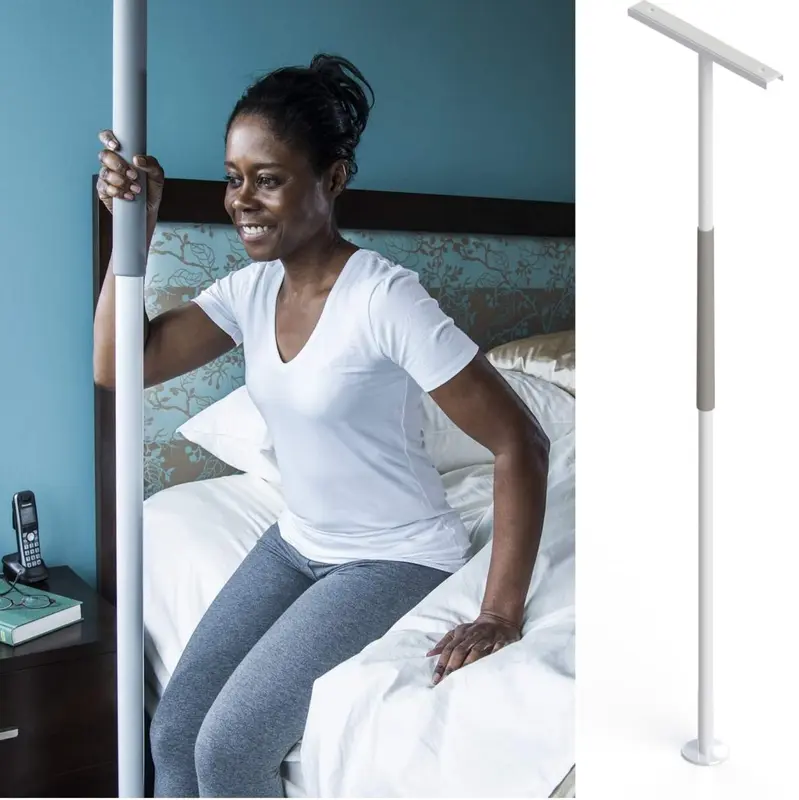
- A floor-to-ceiling transfer pole beside the chair. Our catalog lists the HealthCraft SuperPole, rated for 300 lb (450 lb bariatric).
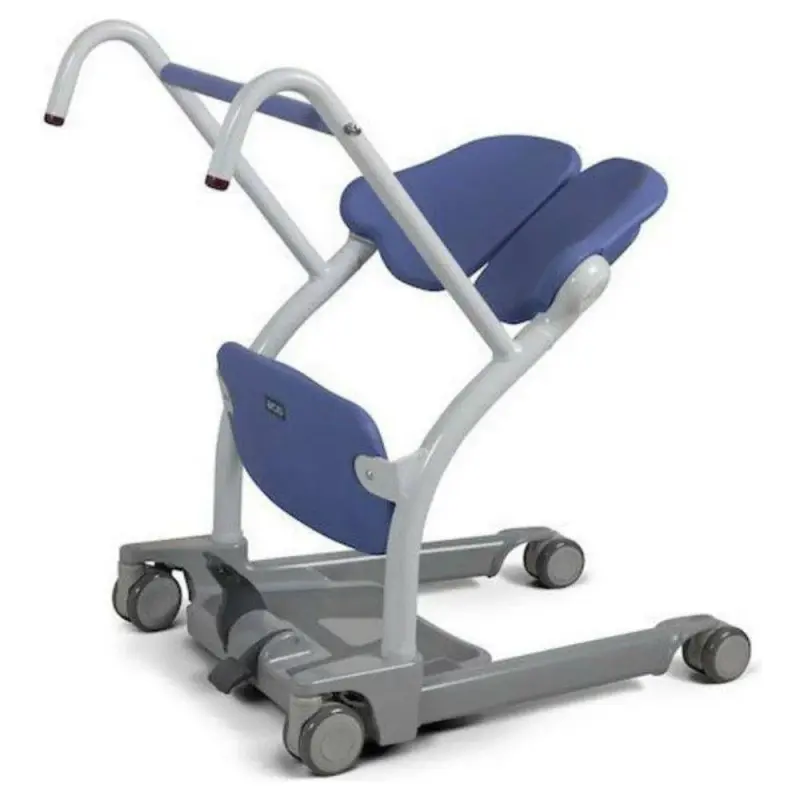
- A sit-to-stand aid used with a carer, such as the Arjo Sara Stedy in our catalog, with a safe working load of 400 lb.
- A patient lift for a person who cannot bear weight; see our patient lift guide.
- A home hospital bed for a person who sleeps sitting up; see our home hospital bed guide.
- For the toilet, a raised seat or commode with arms; see our bedside commode guide.
Wheelchair users who transfer into a lift chair for the evening should work out the transfer with a therapist, who can say where the chair should stand and at what height. Which transfer is safe is the therapist's call, not the chair maker's.
Delivery, set-up and assembly
The back of a lift chair is fitted to the base on brackets, and several FDA reports later in this guide describe backs that came off after they were not assembled properly. Ask the dealer to set the chair up, show you how the back locks, and run the chair through every position and the full lift with the user in it. 1800wheelchair says it offers white glove delivery options which include set-up.
- Check the back is fully down on both brackets and any locks or screws are in place.
- Plug into the wall, route the cords clear, and fit and date the backup batteries.
- Run the chair empty, listening for clicks, grinding or a back that shifts, then with the user.
Golden recalled 251 PR515 lift chairs in 2020 for a "Suspect poor weld on back KD bar," a bar in the back of the chair, and offered replacement parts and labor credit. Back failures come up again in the FDA reports below.
Heat, massage and extras
Heat pads, massage motors, USB ports, power headrests and lumbar supports are popular, and each adds wiring and another switch. Pride recalled 532 lift chairs in 13 models in 2004; the recall record says "The heating pad on these Lift Chairs may tear at the entry point causing a short and/or overheating." In 2013 Invacare recalled 285 Champion medical recliners, clinical chairs used after surgery, with heat and massage; that recall cites "a possibility of elevated temperatures in the seat pad."
Use heat only when the user can feel it and move away from it. If a heat pad or massage unit buzzes or smells hot, unplug the chair and call the dealer.
Rented, second-hand and older chairs
A used lift chair can look perfect and still have a worn hand control cord, a weak back bracket, an old 9V battery or a part under recall. It also usually has no warranty: Pride's lifetime cover is for the original owner, and Golden's sheet says its warranties are not transferable and do not apply to rental use.
Check the model and serial number against the FDA and CPSC recall lists, look along both cords for cuts or scorch marks, check the back brackets and scissor mechanism for cracks, replace the backup batteries and ask the maker for the manual.
A weekly lift chair check
| When | Check | If it fails |
|---|---|---|
| Before every movement | Nothing and no one under the chair or footrest | Clear it first |
| Daily | Hand control in its pocket, phone within reach | Move them |
| Weekly | Hand control, cords and plug for heat, cuts, crush marks, sparks | Unplug; call the dealer |
| Weekly | Back firmly on its brackets, footrest closes flush | Stop using; call the dealer |
| Every six months | Replace 9V backup batteries | Replace sooner after any power cut |
| After any fall or jolt | Run the chair empty through every position | Call the dealer before the user sits again |
What 391 FDA reports on home lift chairs show
What goes wrong with lift chairs, according to FDA reports? Mobility Atlas had two independent AI coders read 550 FDA reports filed under the FDA's code for electric positioning chairs, up to October 2026; 391 of them are about home lift chairs. Lift mechanism problems lead (114 reports), then electrical (113). Electrical reports are mostly a hand control, cord or transformer that sparked, smoked or caught fire. Lift mechanism reports most often describe a chair that stuck with the user in it, kept rising or moved by itself. Next come broken parts (53 reports), most often a back that broke or came off, and falls with nothing said to be broken (37). Across the 391, 135 describe a fall and 128 an injury. Entrapment is rare in the reports (13) but serious, and includes a child's head caught under a chair. Pride is named as the maker in 343 of them, so the counts show what was reported, not which chair is safer.
| What the report says went wrong first | Reports | With an injury | With a fall | Maker confirmed a fault |
|---|---|---|---|---|
| Electrical: hand control, cord, transformer, wiring; fire, smoke, sparks, shock | 113 | 22 | 14 | 29 |
| Lift mechanism or motor: stuck, kept moving, moved by itself, dropped | 114 | 28 | 56 | 24 |
| Structure: back, frame, weld, footrest or seat broke or came loose | 53 | 16 | 26 | 9 |
| Fall or tip with no fault named | 37 | 13 | 37 | 2 |
| Event with nothing failed, mostly house-fire notices | 29 | 12 | 0 | 0 |
| Burns from heat pads, sores, skin and comfort | 23 | 23 | 0 | 0 |
| Trapped, pinched or caught by the mechanism or under the chair | 13 | 10 | 2 | 1 |
| Problem alleged, kind not named | 9 | 4 | 0 | 1 |
| All home lift chair reports | 391 | 128 | 135 | 66 |
An injury is counted only when the report states harm or medical care: a fall, being thrown out of the chair or calling 911 to get out is not counted as an injury unless the report says the person was hurt. That is why only 42 of the 135 fall reports are also counted as injuries. By a word search of the event descriptions, 8 of the 391 mention a fracture and 9 the head.
What these reports cannot tell you
The reports are a record of what makers, users, families and facilities chose to tell the FDA, not a count of every lift chair problem. The FDA says its device reports are not intended "to evaluate rates of adverse events" or "to compare adverse event occurrence rates across devices," and that "The submission of an MDR itself does not necessarily demonstrate that the device caused or contributed to the adverse outcome or event."
Pride is named as the maker in 343 of the 391 home lift chair reports and 348 of all 550, and 7 more home reports name Pride only as the brand. That may reflect how many chairs Pride sells and how it files, but the reports show neither, and they do not show that its chairs are less safe. Many of its reports pass on a dealer's or provider's account in a line or two, and Pride also files reports on insurers' and attorneys' letters about house fires in which one of its chairs was present. Other makers file far fewer reports.
Fire, smoke and sparks: the hand control first
88 of the home lift chair reports are coded as a chair-related fire: the report says the chair or one of its parts burned, smoked, sparked, melted or charred, or that the chair may have caused a fire. 3 of the 88 (reports 1887070, 3746389 and 18901799) say only that the chair may have been involved in a fire. By a word search of the event descriptions of those 88, 43 mention the hand control, remote, pendant or wand, 15 a cord, cable or wire, 14 the transformer or a control box, 9 the motor and 3 a battery. 16 describe an injury, several of them burns to the hand. The maker confirmed a fault in 24, and 13 name an act of the user or someone else as a possible cause.
The hand control reports read alike. One report alleges flames "shot out of base of pendant, melting off the cord"; the maker later concluded customer misuse. Another, passed on by a provider from the user's daughter, alleges "sparks came out of the remote and it caught on fire" as a man pressed it to sit up from recline; the maker could not confirm the problem. A third report says the hand control "was sitting in the consumer's lap not in use" when it burned his hand. One consumer alleged "a small fire with the USB iPhone charger cord plugged into the remote"; the maker found no evidence of fire on the chair or the hand control. Others allege a transformer that caught fire and melted onto a hardwood floor, which the maker put down to liquid getting in, and a cable that "was smashed" as the chair lowered and allegedly burned a rug.
- Unplug the chair at once if the hand control, cord or transformer gets hot, smells of burning, sparks or smokes, and call the dealer before using it again.
- Check the hand control cord weekly where it enters the control and where it runs past the mechanism.
- Keep drinks away from the hand control; one report describes a fire after a soda was spilled on a control lying between a user's legs.
- Keep phone chargers, lamp cords and blankets away from the hand control, the mechanism and the transformer.
House fires where a lift chair was present
A separate group of reports are notices, often from an insurer, an attorney or a provider, of a fire in a home where a lift chair was present. Under the study's written rule, a report is coded as an electrical problem only when it alleges that the chair, its parts or its electrics caught fire, smoked, sparked or may have caused the fire. When the report says only that a chair was in the home, or the maker or a fire report puts the cause outside the chair, the problem is coded as nothing failed. 29 home lift chair reports describe an event with nothing said to have failed, and by a word search 26 of them mention a fire.
Some name an outside cause. In one, a fire department report cited by the maker says a witness reported that the user "fell asleep with a lit cigarette." Another provider report says a chair was plugged "into a power strip with other connections" and the strip caught fire. In one report with a death, the maker's later note says that after recovering all the chair's electrical parts, "Analysis revealed the lift chair had not caused the fire." Others say only that a fire happened "where a lift chair was located," with no cause given.
Electric shocks
By a word search, 6 home lift chair reports mention a shock. One provider report says a man's hand control "shocked him and the spark lit up the room," and he went to the emergency room, where nothing was found; the maker could not reproduce the sparking or the shock. Another describes a "little shock" before the chair moved on its own and the hand control smoked. Pride's manual describes its chairs as "Class II equipment/Type B protection against electric shock." A shock from any part of a chair is a reason to unplug it and stop using it until a technician has checked it.
Stuck in the chair
The lift mechanism reports have a clear pattern: a user stuck in a chair that stopped moving. By a word search, 36 of the 114 lift mechanism reports mention the chair or the user being stuck, or the user unable to get out, and 38 mention calling 911, paramedics, EMTs, the fire department or another emergency service, very often only to get the user out. Leaving aside fires and house-fire notices, 56 of the 391 home reports mention calling such help.
The reports are short and repetitive. One report says a user "got stuck in the chair in the middle of the night and had to call the paramedics." A son's report says his mother "was stuck in chair for 3 hours." In another, a provider alleged a wooden frame broke and the user was "stuck in chair for 5 hours" before the fire department was called. Others describe hand controls that stopped working with the chair fully reclined.
Power cuts come up too. By a word search, 4 reports mention a power cut or lost power. One user wrote that they had "been trapped in it several times, if the power to the house is off." In another, a provider report says a user could not get out during a power cut "because the battery backup failed."
- Keep a phone or a call pendant within reach of the chair every time the user sits in it.
- Know the battery backup in your chair, and replace 9V batteries every six months and after every power cut.
- If a chair has stopped once, call the dealer before it is used again, and do not let the user sit in it alone.
Chairs that kept rising or threw the user
The other half of the lift mechanism reports describe a chair that did not stop. By a broad word search, 39 of the 114 say the chair kept going after the button was released, moved on its own, or threw, dumped or catapulted the user. 56 of the lift mechanism reports describe a fall and 28 an injury. One report alleges that after the user released the up button, "the chair continued to raise, dumping customer onto the floor"; another alleges a chair "shot her out like a catapult" as it came out of recline, and a third that it "ascended to a height and angle that catapulted customer out of the chair." In all three the maker could not reproduce the problem or found the chair within its specifications.
When the report said the hand control itself stuck or froze, the study counted it as electrical; when it only described the chair moving wrongly, as a lift mechanism problem. Many reports of both kinds describe a chair that kept lifting after the user let go of the button. The FDA classification rule asks makers to show that the safety controls "prevent user falls from the device in the event of a device failure."
- If the user walks with a walker or cane, keep it within reach for when the chair reaches the top, and ask their therapist; see our walker and rollator guide.
- If the chair ever keeps moving after the button is released, unplug it and call the dealer.
- Ask whether the hand control can be locked, and keep it out from under the user's body.
Backs that broke or came off
53 reports describe a part that broke, bent, cracked or came loose. By a word search, 25 describe the back breaking, snapping, detaching or giving way, and 7 mention the footrest. 26 of the 53 describe a fall and 16 an injury. A provider report says the back allegedly "snapped off causing the consumer to fall to the floor"; the maker concluded likely customer abuse. In one report the back broke and the user lay with his "head towards the ground for quite a while before someone found him." Another says the delivery service "failed to put the screws on that hold the back together."
The maker confirmed a fault in 9 of the 53, and in three others its notes say the chair or its back was not assembled or installed properly. That is the part a family can check: the back sits on brackets, and it must be fully seated and locked. Golden's 2020 recall for a poor weld on a back bar is the one FDA recall for a home lift chair structure in the INO file.
Falls and tips with nothing broken
37 reports describe a fall or tip with no part said to have failed. All 37 describe a fall, 13 an injury, and the maker confirmed a fault in 2. The causes named are ordinary. A user "reached over the right side to grab a blanket when the back legs allegedly lifted off of the floor," one report says. Another says the fabric "is so slippery that he slides out of it," and a wife reported that the chair "is too small for her husband and he has fallen out of it three (3) times." Several describe users who slid out when the chair was fully raised, or tipped backwards in recline.
Some falls began with a control pressed by accident. One son's report says the hand control "got stuck between the seat and the arm" and the chair lifted his mother without her knowing. In another, a daughter said "the controller wedged under" her father while he slept. The study counted these as falls without a fault, because nothing in the chair was said to fail; Pride's manual says to keep the control locked or disconnected, and in its pocket, when the chair is not in use.
Trapped, pinched and caught
13 home lift chair reports describe a person, a limb or a pet caught by the moving mechanism or under the chair; 10 of them describe an injury. One user "got her left foot caught in the scissor mechanism" and needed the fire department to free it. One report says a child's "head was caught under her liftchair" and he was injured; the maker found the chair had operated as intended. Another alleges a dog was killed when the chair was lowered while it slept underneath; the maker put it down to operator error. In another, a man who slept in his chair was found "under unit with hand controller in seat."
A word search for trapped, pinned, pinched, crushed or caught finds 57 home lift chair reports, but 44 of them are electrical reports, almost all because the word is part of caught fire, so a word search overstates entrapment; the coders' count of 13 is the one to use. The checks are the ones in Pride's manual: look under the chair before every movement, keep children and pets away, and keep feet clear of the scissor mechanism and the footrest.
Burns, sores and skin
23 reports describe harm with no fault in the chair's mechanism or electrics: burns from heat pads, sores, rashes, allergic reactions and pain blamed on the seat. By a word search, 8 mention heat or burns and 10 sores, rashes, skin or a reaction. One user who was asleep "accidentally bumped the controller with his leg turning on the heat" and reported third-degree burns. A daughter's report says "there is no stuffing in the seat and you can feel the wood"; the maker found foam in the seat and could not substantiate the complaint.
People who spend long hours in one seat, or who have reduced feeling, need their skin checked whatever the chair. Ask the nurse or physician about pressure care, and see our pressure mattress guide if the person also spends long hours in bed. Do not use heat on someone who cannot feel it or move away from it.
The death reports, read with care
19 home lift chair reports were filed with the event type Death. They need careful reading. The FDA says a report should be classified as a death only when the reporter believes the device was or may have been a factor; in this set, makers also filed them after receiving a claim, a letter or a coroner's email, and some say plainly that the maker does not believe the chair was involved.
Reading all 19 in full, 11 concern a fire. In 8 of those the report says only that a lift chair was in a home where a fire happened, or the cause was found outside the chair or not found; in one of these a prosecutor later closed the case for lack of proof. In 2 the chair was alleged to have caught fire or may have been involved; in one the maker's notes say the source of ignition was not the motor and, in the other, after a coroner's inquest, that the chair was not the cause. One, about a lithium battery that allegedly caught fire, describes no death at all. 4 reports describe a fall, tip or slide, 2 a chair that would not lift or work, 1 a man found under his chair, and 1 a dog. In one, Pride wrote that it "does not believe the lift chair caused or contributed to the death."
None of these reports, as filed, shows that a lift chair caused a death; in several, the maker's or an investigator's later notes say the chair was not the cause.
Clinical chairs and other devices in the same code
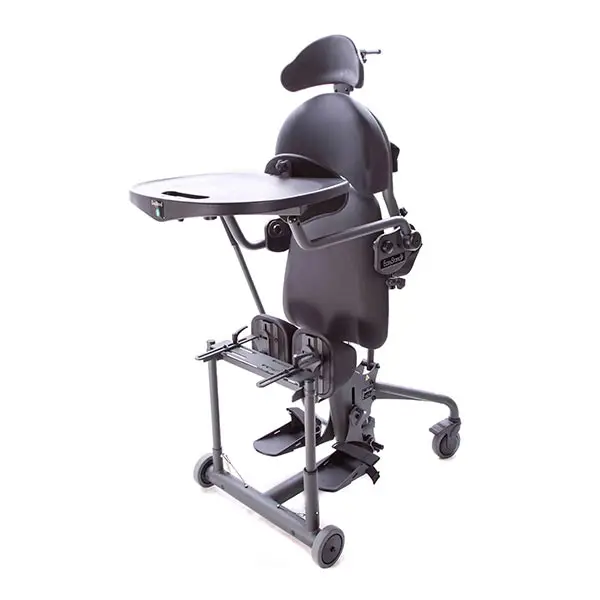
The FDA code also covers clinical positioning chairs used in hospitals, clinics and dialysis units, and some reports are about other devices. Of the 550 reports, 87 are about clinical chairs, 27 are electric positioning chairs where home or clinic cannot be told, and 45 are about other devices, mostly EasyStand standing frames from Altimate. Stryker is named in 65 of the clinical chair reports. Many are short summary reports about exit alarms that did not alert staff, brakes, or accessible electrical current; 39 are electrical, and the maker confirmed a fault in 38 of the 87.
These groups are not counted in this guide's home lift chair figures. One of them matters for families: in 2021 Stryker recalled a TruRize clinical chair that had been sold for home use; the recall says "If you are using the product in a home, Stryker recommends that you discontinue use of the product." A clinical chair is not a lift chair, even when it looks like one.
What the makers found
In the 391 home lift chair reports, the maker found or confirmed a fault, or replaced a faulty part, in 66; found no fault, could not repeat the problem, or named an outside cause in 198; and said nothing either way, or never received the chair, in 127. 65 reports name an act of the user or someone else as a cause or possible cause, such as a spilled drink, a power strip, a cigarette, a chair not assembled properly, or operating the chair against an obstruction.
Many reports end with the same line, which says the device "has not yet been made available for evaluation." If a chair fails, keep it and its parts, and tell the dealer you will make it available to the maker.
When the reports arrived
Home lift chair reports were few before 2011, rose to between 28 and 37 a year from 2016 to 2021, and fell after. The FDA says its reports are not intended to evaluate a change in event rates over time. Almost every report since 2016 names Pride, so the rise may reflect how one maker files rather than any change in the chairs; the reports cannot tell which. The newest report in the set was received on 15 July 2026.
| Years | Home lift chair reports |
|---|---|
| 1996 to 2010 | 51 |
| 2011 | 10 |
| 2012 | 10 |
| 2013 | 17 |
| 2014 | 13 |
| 2015 | 19 |
| 2016 | 33 |
| 2017 | 28 |
| 2018 | 29 |
| 2019 | 28 |
| 2020 | 30 |
| 2021 | 37 |
| 2022 | 23 |
| 2023 | 20 |
| 2024 | 14 |
| 2025 | 16 |
| 2026 (to July) | 13 |
The recall file
We read all 5 FDA recall records under the INO code. Two are home lift chairs: Pride's 2004 recall of 532 chairs in 13 models for heating pads that could short or overheat, and Golden's 2020 recall of 251 PR515 chairs for a "Suspect poor weld on back KD bar." The others are an EasyStand stander, a Champion medical recliner with heat and massage, and the Stryker clinical chair sold for home use.
The CPSC, which handles furniture and household products, lists 3 recalls with lift chair in the title, all for power parts. In 2017 La-Z-Boy recalled about 2,500 power supplies sold with lift chairs; the recall says the cover "can crack within the screw housing and break," exposing electrical parts. In 2015 it recalled about 4,000 control wands; that recall says they "can overheat, posing a burn hazard," and Limoss recalled about 2,500 battery packs. None of the three lists an injury.
Check the model and serial number of your chair, its power supply and any battery pack against both recall lists.
Mistakes the reports repeat
- Leaving the hand control loose in the lap, under the body or between the seat and the arm.
- Using a hand control or cord that is cut, crushed, hot or already sparked once.
- Plugging the chair into a power strip or extension cord, or covering the transformer.
- Lowering the chair without looking underneath for a pet, a child, a foot or a cord.
- Sitting in a chair whose back was not fully locked on after delivery or a move.
- Leaving a user alone in a chair without a phone, when it has already stopped once.
- Letting the backup batteries go flat, or not knowing whether the chair has any.
When to report a lift chair problem to the FDA
You can file a voluntary report with the FDA through MedWatch: online on the FDA's MedWatch page, or on a form requested by calling 800-332-1088 and returned by mail or by fax to 800-332-0178, as an FDA recall notice explains. Report fires, sparks, shocks, a chair that moved by itself or would not stop, a back that came off, entrapment, and any fall or injury. Tell the dealer and the maker too; makers are mandatory reporters to the FDA.
Keep the chair, the hand control and any burned or broken parts, photograph the labels, and write down what happened while it is fresh.
How Mobility Atlas read 550 FDA reports
The FDA collects reports about medical devices in a database called MAUDE. Makers, importers and user facilities are "mandatory reporters"; others can file voluntary reports. On 19 October 2026 we read, through openFDA, every report with a description filed under product code INO (electric positioning chair, 21 CFR 890.3110), at any date: 550 reports, the oldest received in 1993 and the newest on 15 July 2026.
Before reading a single report, we wrote a codebook: the kind of device (home lift chair, clinical positioning chair, other seat lift, positioning chair of unclear setting, another device), what the report says went wrong first (trapped, electrical, lift mechanism, structure, fall without a fault, use event, unnamed problem, nothing failed), flags for injury, a fall, fire and a user or outside cause, and what the maker found. The codebook was fingerprinted with a time stamp before coding began.
Two independent coders then read every report separately, without seeing each other's answers. The coders were AI language models working separately; the method page says exactly how. They agreed on the kind of device in 99.3 percent of reports (kappa 0.984; kappa is a standard measure of agreement beyond chance), on the problem in 94.5 percent (kappa 0.931), on injury in 95.3 percent (kappa 0.904), on fire in 100 percent and on the maker's finding in 96.2 percent (kappa 0.941). Because of a setup error in the coder prompts, the first pass of chunks 2 to 8 of the pool mixed the two coders' answers in one file; those files were discarded unread, and both coders recoded chunks 2 to 8 from scratch with corrected prompts before agreement was measured (chunk 1 was not affected). We settled all 84 reports where they differed on any field under eleven written rules, decided from the full report text, and a consistency pass then changed the codes of 85 more so that like reports were coded alike, for example house-fire notices in which the chair was only present.
Where we give a count from a word search, it runs over the description of the event, not over the maker's later follow-up notes. 8 report texts in the pool are exact copies of another report, none of them in the home lift chair group, and are counted as filed. Quotes from reports are shown in sentence case; the FDA publishes most of them in upper case.
Three composite scenarios
These are composite scenarios, not individual customers. Each one combines facts and ranges already given in this guide to show how the decision plays out.
Scenario one: a person with severe knee arthritis can walk with a walker once standing but cannot rise from any chair at home, after medication and physical therapy have been tried and failed. The practitioner records this and sends a written order; a Medicare-enrolled supplier bills the lift mechanism under E0627 and the chair under A9270, and gives the family a written quote for their share before delivery.
Scenario two: the hand control of a Pride Evolution LC-435XL in its fifth year gets warm and smells of burning. The family unplugs the chair, stops using it and calls the dealer, who replaces the hand control; in the fifth year Pride's LC-435XL/XXL warranty insert offers 25 percent off the suggested retail price of the part, and Pride does not pay for labor or service calls.
Scenario three: a user dozes in a reclined chair during a power cut. The 9V batteries have not been changed since the chair was delivered, and the chair will not move. A neighbour helps the user out; the family now changes the batteries every six months, keeps a phone in the chair pocket, and asks the dealer about a model with a lithium backup.
Questions to ask before you buy
- Which size fits the user's height, and what are the seat height, width and depth?
- What is the weight capacity, and how many motors and positions does it have?
- What battery backup does it have, and can the hand control be locked?
- What does the warranty cover, and who pays for labor and service calls?
- Will you deliver, assemble it, lock the back on and show us every function?
- Is this model, its power supply or battery pack under any recall?
- If I hope Medicare will pay, are you enrolled, do you accept assignment, and what will I pay?
Ask the physician, physical therapist or occupational therapist whether a lift chair suits the person at all, which size and positions, and how the person should get in and out. Ask your physician for a referral if no one has assessed how the person stands and transfers.
Your plan: 10 minutes, today, this week
In 10 minutes: unplug the chair and look at the hand control, its cord, the plug and the transformer; look under the chair; put a phone within reach.
Today: find out what battery backup the chair has and when it was last changed; check the back is locked on its brackets.
This week: find the model and serial number, look it up on the FDA and CPSC recall lists, and keep the manual and warranty with the receipt.
Sources and documents
Reports: every FDA MAUDE device report with a description under product code INO, at any date, read through openFDA on 19 October 2026. Recalls: all 5 FDA recall records for code INO, downloaded through openFDA, and the CPSC recall database. Rules: 21 CFR 890.3110, Medicare's national coverage determination 280.4, local coverage determination L33801 and policy article A52518, and Medicare's equipment page. Products: Pride's lift chair pages, owner's manual and warranty insert, Golden's lift recliner pages and warranty, La-Z-Boy's PowerLift tear pad, 1800wheelchair's lift chair pages, and the Mobility Atlas catalog. Every source is linked in the list at the end of this page.
Related guides on Mobility Atlas: Patient lifts; Home hospital beds; Walkers and rollators; Pressure mattresses; Bedside commodes.
Method in brief: we coded the 550 reports in the pool using a codebook written and fingerprinted before coding, with two independent coders (agreement on the kind of device 99.3 percent, kappa 0.984; on the problem 94.5 percent, kappa 0.931), settled the 84 reports where they differed under eleven written rules, changed 85 more in a consistency pass, and counted the results by script. The two coders were AI language models working separately, each without access to the other's answers. The codebook, the rules, the method and the coded table are on the data and method page under CC BY 4.0.
Prices checked October 2026 on 1800wheelchair's lift chair pages and Pride's model pages; prices change, so confirm them with your supplier. Documents checked October 2026: FDA reports and recall records, CPSC recalls, the FDA classification rule, the Medicare coverage rules and page, and the makers' pages, manual and warranties.
Has a lift chair let you down, or served you well for years? Send us a note through the enquiry form with the model and what happened; we use readers' notes when we update the guide. If you want us to find a chair in a particular size or capacity, ask us through the same form.
This article is general information. Rules and prices differ by country and change, so confirm them before you buy or travel.
Common questions
How much does a lift chair cost?
On 1800wheelchair.com, a large US retailer, in October 2026, powered lift chairs were listed from USD 911 (a Golden Elara, medium) to USD 3,217 (a Pride VivaLift Premier). Pride's own suggested retail prices run from USD 1,234 to USD 3,861. Infinite-position chairs, heat and massage, lithium battery backup and high weight capacity sizes cost more.
Does Medicare pay for lift chairs?
Only for the seat lift mechanism, not the chair, and only when all the criteria are met: severe arthritis of the hip or knee or a severe neuromuscular disease, the lift is part of the practitioner's treatment, the person cannot stand up from any chair at home, and they can walk once standing. After the Part B deductible you pay 20 percent of the Medicare-approved amount for the mechanism if the supplier accepts assignment.
What is the difference between a 3-position and an infinite position lift chair?
A three-position chair moves the back and footrest together, so it reclines far but not flat. An infinite-position chair has separate motors for the back and footrest, so they move independently; 1800wheelchair says these can reach a full 180 degree recline, and some offer a zero-gravity position.
What size lift chair do I need?
Match the size to the user's height first. One retailer sorts small chairs for users below 5 ft 4 in, medium for 5 ft 4 in to 5 ft 10 in and large for over 5 ft 10 in. Then check the seat height so the feet rest flat, the seat depth, the width between the arms and the weight capacity.
What happens to a lift chair in a power cut?
Without power it stops. A 9V battery backup is meant to return a reclined chair to sitting once, and Pride says to replace the batteries every six months or after each use. A lithium backup can run a chair unplugged for up to 48 hours, Pride's manual says.
Are lift chairs safe?
FDA reports cannot say how safe lift chairs are. In 391 reports on home lift chairs, the commonest were hand controls or cords that sparked or caught fire and chairs that stuck or kept rising. Some warning signs can be checked at home: plug the chair into the wall, check the hand control and cord, look under the chair before it moves, and keep a phone within reach.
Sources
- CMS: LCD L33801, Seat Lift Mechanisms
- CMS: Policy Article A52518, Seat Lift Mechanisms
- CMS: National Coverage Determination 280.4, Seat Lift
- Medicare: Durable medical equipment coverage
- eCFR: 21 CFR 890.3110, Electric positioning chair
- openFDA: device recall records, product code INO
- CPSC: recall database, lift chairs and recliners
- CPSC: La-Z-Boy recalls power supplies sold with lift chairs (2017)
- CPSC: Golden Chair (Houlka, Miss., not Golden Technologies) and Allen Manufacturing recliner recall, child entrapment (1996)
- CPSC: ASTM F15.42 task group on recliner entrapment, meeting log
- Pride Mobility: power lift recliner models, specifications and warranty
- Pride Mobility: Lift Chair Owner's Manual (Rev Y, June 2025)
- Golden Technologies: lift recliners, specifications and warranty
- La-Z-Boy: PowerLift recliners comparison sheet
- 1800wheelchair: lift chairs (prices read October 2026)
- FDA: About the MAUDE database and the limits of device reports
- openFDA: device adverse event endpoint (data used for this study)
- FDA: recall notice giving MedWatch reporting details (online, form, phone)
- FDA MedWatch: report a problem with a medical device
Read on 19 October 2026. The wording of the article is our own.
Data and method for this guide: the codebook, the coded reports and the list of documents, free to reuse under CC BY 4.0.