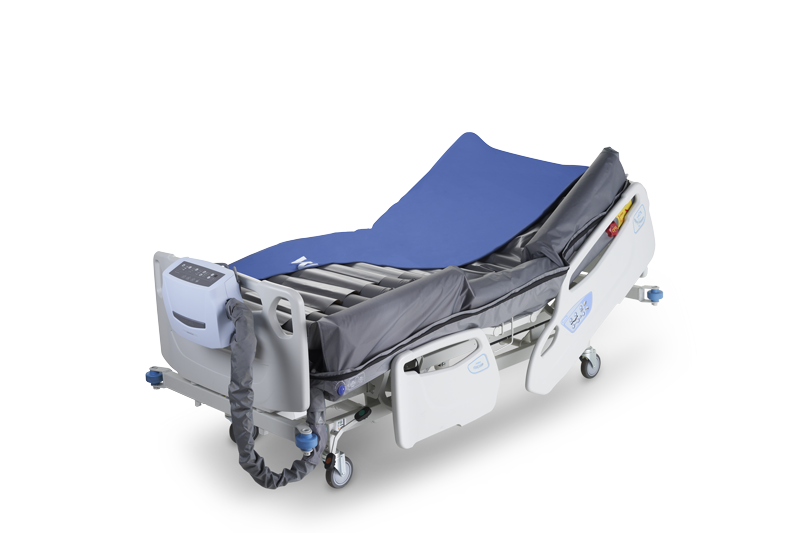
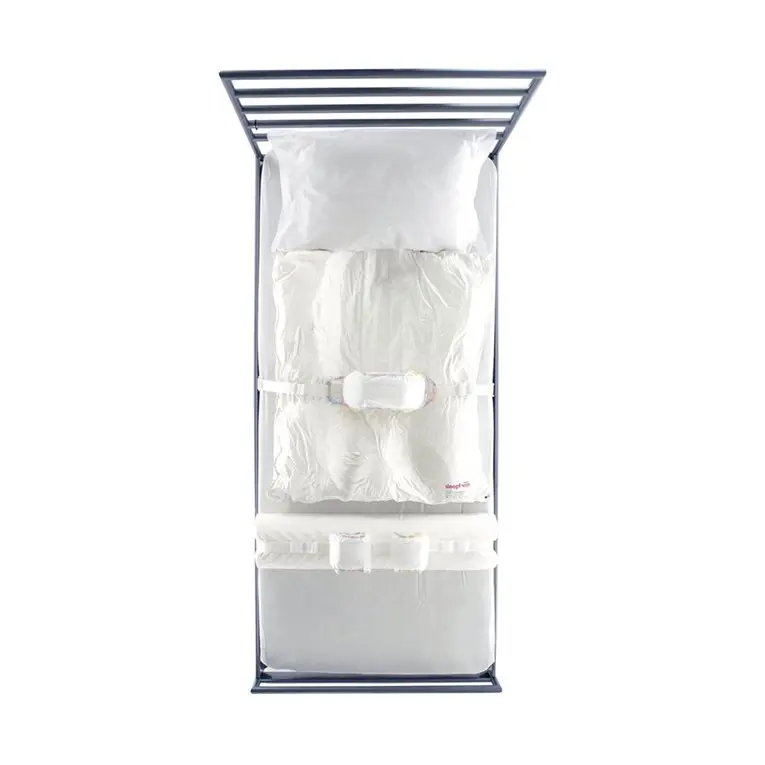
Home hospital beds and bed rails in 2026: types, prices, Medicare and what 693 FDA reports show
Types, prices and Medicare rules for home hospital beds, and what two AI coders found in 693 FDA reports about rails, entrapment, fire and controls.
Contents
- Stop and check tonight
- The short answer
- Home hospital bed, adjustable bed or bed rail: what is what
- What home hospital beds and rails cost in 2026
- Does Medicare pay for a hospital bed?
- Choosing the mattress
- Bed rails: help, harm, and the people most at risk
- The entrapment zones, in plain words
- The 2023 federal rule for portable bed rails
- Setting up a bed and rails safely
- The hand control and the power cord
- Getting in and out of bed
- A bed in the living room
- Delivery day: what to check before the supplier leaves
- Power cuts and backup
- Consumer adjustable bases are not hospital beds
- Bariatric beds
- End of life and hospice care at home
- If the bed is in a care home
- Cleaning and moving the bed
- Rented, borrowed and second-hand beds
- How Mobility Atlas read 693 FDA reports
- What these reports cannot tell you
- What the reports show: the big picture
- Entrapment: the pattern that kills
- Assist bars and bed handles
- Fire, smoke and the hand control
- Beds that move on their own
- Controls, motors, cords and alarms
- Brakes, casters and beds that roll
- Falls from bed
- Frames and welds
- The death reports, read with care
- The 2026 Medline batch
- Who files these reports
- The recall file
- A weekly bed and rail check
- Bed alarms, monitors and checking at night
- Skin, pressure and turning
- Keeping a record when something goes wrong
- When to report a bed problem to the FDA
- Three composite scenarios
- Questions to ask before you buy or rent
- Questions for the nurse or occupational therapist
- Your plan: 10 minutes, today, this week
- Sources and documents
- Common questions
- Sources
Stop and check tonight
Caring for someone in a home hospital bed or with a bed rail? Check these first. Choosing a bed? Start at the short answer below.
- There is a gap between the rail and the mattress, or between the mattress and the headboard or footboard, that a flat hand slides into. The FDA's test is that no gap should be wide enough to trap a head or body; a hand-sized gap is a warning sign. Close it before the next night: gaps like these are where most deaths in rails happen.
- The rail or bed handle was bought separately and does not belong to this bed, or its strap is loose or not fastened to the frame. The FDA says to make sure the retention strap is "permanently attached to the rail and secured to the bed frame."
- The hand control is hot, melted, cracked, has a damaged cord, or lives on the mattress. Hang it on the headboard or footboard. If it is hot or smoking, unplug the bed and call the supplier.
- The bed moves on its own, a section drops, or a motor stalls and hums. Unplug it and call for service.
- The person in bed is confused, restless or has dementia and uses a rail. Talk to the nurse or doctor about whether a rail is the right choice at all.
Most other problems in this guide can wait for a service visit. These five cannot, because they are the patterns behind the deaths and serious injuries in the reports and safety notices we read.
The short answer
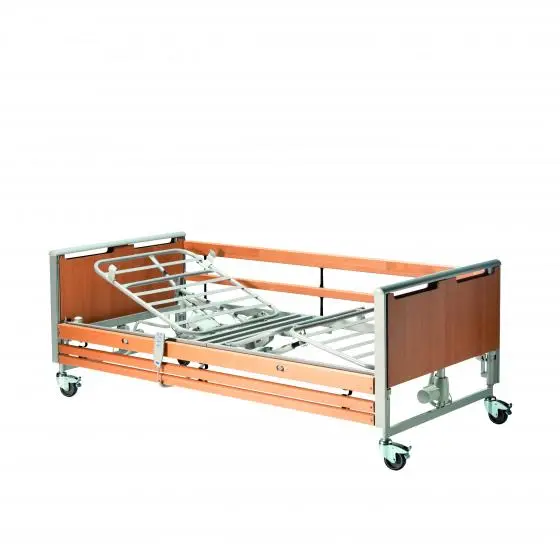
A home hospital bed is an adjustable bed that raises the head and knees, and on most models the whole bed, so a person can sit up, be repositioned and get in and out more safely, and a carer can work at a comfortable height. On one large retailer's site in October 2026, semi-electric home beds start at USD 412 and full-electric models run from about USD 800 to over USD 2,000, with bariatric and low beds higher. Medicare Part B covers a hospital bed at home when a doctor orders it for a medical need an ordinary bed cannot meet.
The harder part is the rail. Rails are meant to stop falls and help people move, but the U.S. Consumer Product Safety Commission counted 284 deaths from entrapment in adult portable bed rails between 2003 and 2021, most of them older people caught between the rail and the mattress. Since 21 August 2023, a federal rule requires new portable bed rails to meet a safety standard. Built-in hospital bed rails carry the same risk when the mattress, rail and frame do not fit together.
This guide covers choosing a bed and rails, paying for them, and setting them up safely, and then what two independent AI coders found when they read FDA reports filed about home beds and portable bed rails.
Home hospital bed, adjustable bed or bed rail: what is what
Three different things are often called a hospital bed at home, and the difference matters for safety, cost and Medicare.
| Type | What it does | Typical use |
|---|---|---|
| Home hospital bed (semi-electric) | Head and knee sections move by motor; height by hand crank | Head raised much of the time or frequent repositioning; the type Medicare covers when criteria are met |
| Home hospital bed (full-electric) | Head, knees and height all move by motor | When a carer works at the bed or the person stands from it |
| Low or floor-level bed | Lowers close to the floor | People at risk of falling out of bed |
| Bariatric bed | Wider frame, higher weight rating | Heavier users |
| Consumer adjustable bed base | Head and feet move; sits inside a normal bed frame | Comfort; not a medical bed |
| Portable bed rail or assist bar | Fixed to a home bed, usually under the mattress | Help to sit up and get in and out |
The FDA regulation that covers powered home beds describes one "with a built-in electric motor and remote controls that can be operated by the patient to adjust the height and surface contour of the bed," and says it "includes movable and latchable side rails." Portable bed rails sold for ordinary beds are a separate product, regulated both as medical devices and, since 2023, under a consumer product safety rule.
Which one to choose
- Needs the head raised much of the time, or regular repositioning: a semi-electric hospital bed.
- A carer helps with washing, dressing or turning, or the person needs the bed high to stand and low to sleep: a full-electric bed, even if Medicare treats the height motor as a convenience.
- Has fallen out of bed, or is at risk of it: ask about a low bed and a floor mat before rails.
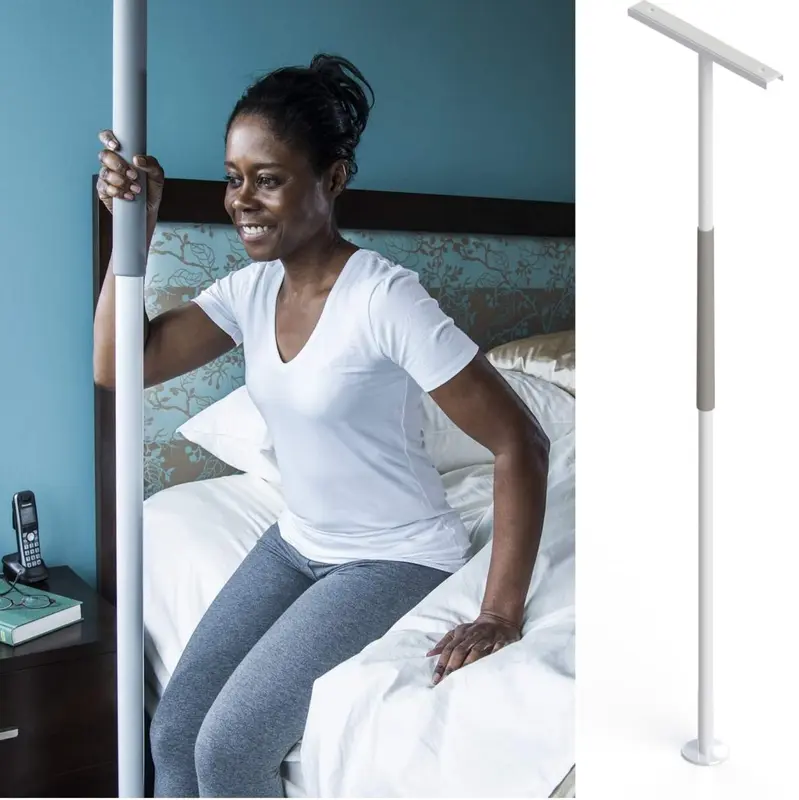
- Needs only a handle to sit up and get out of an ordinary bed: a bed assist bar that meets the 2023 rule, or a floor-standing pole, chosen with an occupational therapist.
What home hospital beds and rails cost in 2026
These are listed prices on one large US retailer's site in October 2026, for the bed frame unless stated. Mattresses, rails and delivery are often extra.
| Bed or accessory | Listed price (USD) | Weight rating |
|---|---|---|
| Medline Basic Bed, semi-electric | 412 | 450 lb |
| Medline MedLite bed | 530 | 450 lb |
| ProHeal full-electric bed, with foam mattress and half rails | 788.98 | 450 lb |
| Ultralight Plus semi-electric bed | 828 | 450 lb |
| Invacare semi-electric bed | 1,000 | 350 or 450 lb |
| Fully Electric Ultra Light Bed | 1,038 | 450 lb |
| Drive Delta Ultra Light full-electric low bed | 1,210 | 450 lb |
| MedaCure Super Low long-term care bed | 1,700 | 450 lb |
| Liberty Sleep to Stand fixed-height electric bed | 2,150 | 500 lb |
| Joerns EasyCare bed | 2,157 | 600 lb |
| StarSleep Arlo rotating care bed | 3,899 | 450 lb |
| AllCare floor-level low bariatric bed | 4,008 | 600 lb |
| Med-Mizer Comfort Wide bariatric low bed | 5,975 | 800 lb |
| Karman assist rail with padded grip | 60 | 300 lb |
| Invacare trapeze floor stand | 233 | |
| Invacare offset trapeze bar | 242 |
The CPSC found in 2021 that portable bed rails sold for between USD 38 and USD 275, with a mean of about USD 50, and estimated that about 180,000 were sold that year. A cheap rail is not a safe one by default; what matters is whether it meets the 2023 rule and fits the bed and mattress it is used with.
The Medline Basic and MedLite beds in this list are covered by the 2025-2026 hand pendant correction, which the FDA rates as its most serious type. Ask the seller whether the bed comes with the updated instructions, and see the recall section below.
Many families rent rather than buy, especially for a short illness or end-of-life care. Hospice programs and home health agencies often arrange the bed. Ask what is included: mattress, rails, delivery, set-up, service and collection.
Does Medicare pay for a hospital bed?
Does Medicare pay for a hospital bed at home? Mobility Atlas read the Medicare coverage rules in October 2026, and the answer is yes when there is a medical need an ordinary bed cannot meet. The local coverage determination covers a fixed-height bed when a condition "requires positioning of the body in ways not feasible with an ordinary bed," to relieve pain, when the head must be raised more than 30 degrees most of the time for heart failure, lung disease or aspiration, or for traction. A variable-height bed is covered when the person also needs a different height for transfers; a semi-electric bed when frequent or urgent position changes are needed. A total electric bed is not covered, because the rule calls height adjustment "a convenience feature." Medicare's page says that after the Part B deductible "you pay 20% of the Medicare-approved amount," when the supplier accepts assignment, and that some equipment is rented.
Rails, trapezes and heavy-duty beds
- Side rails are covered, the rule says, "when they are required by the beneficiary's condition" and are part of, or an accessory to, a covered hospital bed.
- A trapeze is covered when the person needs it to sit up because of a breathing problem, to change position, or to get in or out of bed.
- A heavy-duty extra-wide bed is covered for people weighing more than 350 pounds and up to 600; an extra heavy-duty bed above 600.
- Portable rails bought for an ordinary bed are generally not part of this benefit.
A doctor or other provider must send the supplier a written order. For rented equipment, Medicare says to make sure the supplier "is willing to accept assignment for all rental months." Medicare Advantage plans and Medicaid have their own rules and supplier lists; ask before the bed is delivered.
Choosing the mattress
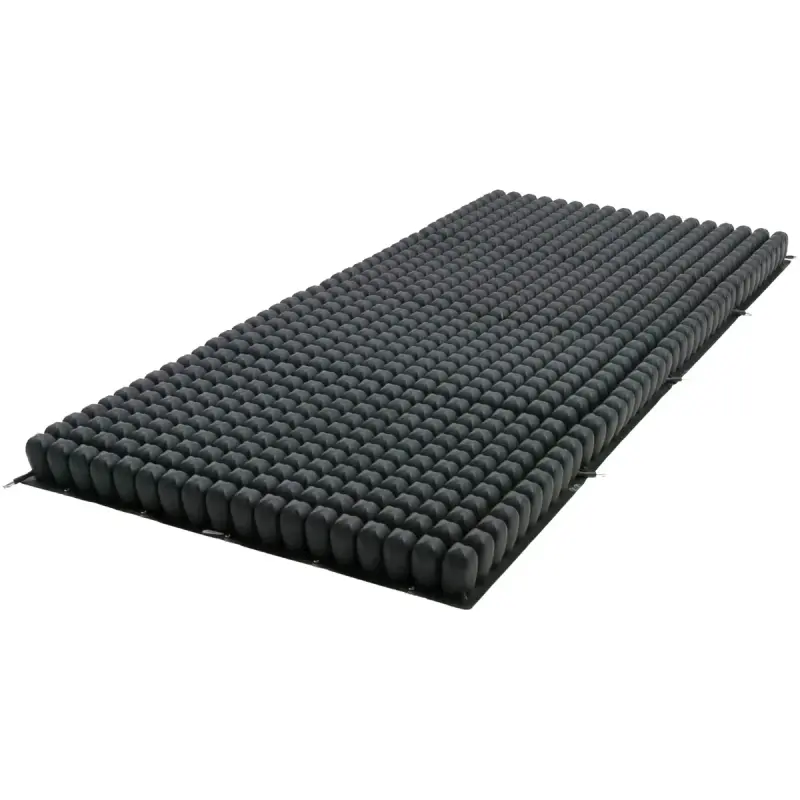
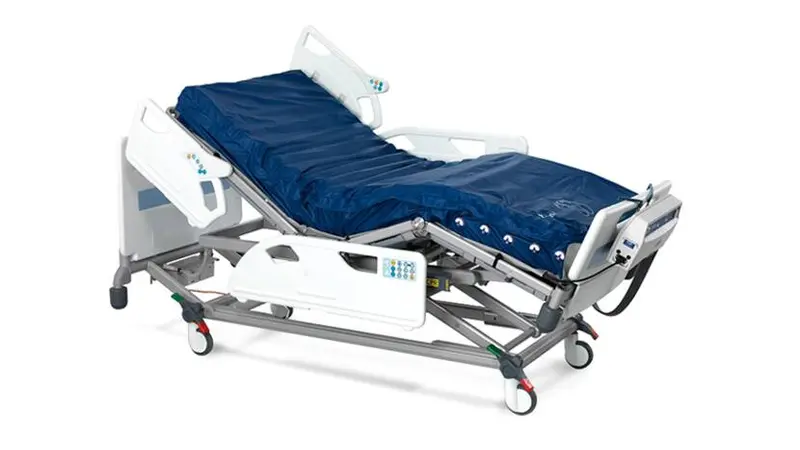
A hospital bed frame is usually sold without a mattress, or with a basic foam one. The mattress matters for comfort and pressure, and it also matters for entrapment: a mattress that is too narrow, too short or too soft leaves gaps at the rails and the head and foot ends.
- Use a mattress of the size the bed maker specifies, not one that is nearly right.
- Air and very soft mattresses compress at the edges. The FDA warns that gaps "can be created by movement or compression of the mattress," including with an air mattress or a mattress pad.
- After changing a mattress or adding a topper, check the gaps again.
- Pressure-relieving mattresses are a separate subject; ask the nurse or therapist which one is needed, and whether it raises the sleeping surface above the rails.
Bed rails: help, harm, and the people most at risk
Are bed rails safe for an older person at home? Mobility Atlas read the FDA and CPSC bed rail documents and 693 FDA reports on home beds and rails in October 2026, and the honest answer is that rails help some people and endanger others. They help alert, strong people turn, sit up and get out of bed. They endanger people who are confused, restless or weak, who may slide into a gap between the rail and the mattress or climb over the top. The FDA names as higher risk people who are confused, restless or lack muscle control, or whose thinking is impaired by medication or by dementia, Parkinson's disease, multiple sclerosis, a stroke, balance disorders or low blood pressure. The CPSC counted 284 deaths from entrapment in portable rails between 2003 and 2021, and in our own set entrapment produced most of the reports filed as deaths. Decide with a nurse or doctor, close every gap, and consider the alternatives.
The FDA's older guidance says entrapment is rare among bed users in general, but "not a rare event in the population most at risk," which it describes as people who are elderly, frail or confused. Of the 310 deaths in the CPSC's bed rail incident data, almost 80 percent were people aged 70 or older, and about 70 percent were women.
The FDA says rails "should not be used as a substitute for proper monitoring." If the person is in a care home, the FDA says a full assessment and care plan should be in place before rails are used. At home, that conversation is with the nurse, doctor or occupational therapist.
Alternatives to rails
- Lowering the bed as near the floor as possible, with a soft mat beside it.
- Roll guards, foam bumpers or a concave mattress that discourages rolling off the edge.
- A trapeze or a floor-standing pole to help with moving and getting out of bed.
- A bed alarm or monitor that warns a carer when the person tries to get up.
- Rails chosen and placed so the person is not tempted to climb over them, as the FDA advises.
The entrapment zones, in plain words
The FDA's 2006 guidance on hospital bed dimensions names seven places in a bed where a person can be trapped, and its guide for caregivers says zones 1 to 4 "account for the majority of entrapments and deaths." In plain words, following the guidance's own descriptions:
- Zone 1: any open space inside the rail itself, between its bars.
- Zone 2: the gap under the rail, between its bottom edge and a mattress pressed down by a person's head.
- Zone 3: the space between the inside of the rail and the side of the mattress.
- Zone 4: the gap under the end of the rail, where it meets the compressed mattress.
- Zones 5 to 7: between two half rails on the same side, between the end of a rail and the headboard or footboard, and between the headboard or footboard and the end of the mattress.
Of the 284 portable bed rail deaths the CPSC counted, 200 happened between the rail and the mattress, 8 within the rail itself, and 70 at a place that could not be determined. Gaps change through the night as the mattress compresses and the bed moves, so a gap that looks small in the morning can open wider with a person's weight on it.
The 2023 federal rule for portable bed rails
After petitions to the agency, the CPSC adopted a mandatory safety standard for adult portable bed rails, effective 21 August 2023. It found "an unreasonable risk of injury and death" from entrapment and adopted the existing voluntary standard, ASTM F3186-17, with changes. The rule covers rails made after that date and includes requirements for assembly, structural strength, the retention system that holds the rail to the bed, and entrapment and fall prevention.
What it means in practice: a portable rail bought new from a reputable seller today should meet the rule, and the FDA's advice is to check that a rail complies with ASTM F3186-17. A rail bought before the rule, borrowed, or bought second-hand may not. In 2024 Medline recalled certain bed assist bars that, as the recall notice says, "failed to meet all mandatory requirements" of the standard.
Setting up a bed and rails safely
- Have the supplier deliver, assemble and show you the bed. Keep the manual and the label details.
- Use the rails and accessories made for this bed. Medline's 2026 safety notice tells users of its home beds to use only Medline rails and accessories, and the FDA says not all rails, mattresses and frames are interchangeable.
- Fit a portable rail exactly as the instructions show, with its strap fastened to the bed frame.
- Check for gaps at both rails and both ends with the bed flat and with the head raised.
- Lock the casters, and keep the bed at its lowest height when the person is resting.
- Route the power cord where it cannot be pinched by the moving frame, and do not use an extension cord unless the maker allows it.
- Hang the hand control on the headboard or footboard, not on the mattress or under the pillow.
The FDA says to check rails regularly "as rails may shift or loosen over time." A weekly look, and a check after every mattress change, takes a couple of minutes.
The hand control and the power cord
The pendant, the hand control on a cord, is the part people touch most and think about least. Medline's 2025 and 2026 recall of hand pendants for its home beds followed reports of pendants "sparking, burning, melting, smoking, and catching on fire." The FDA's notice says Medline reported 12 injuries and one death linked to the problem, and recommended that affected beds be left unplugged from wall power unless the bed needs to be adjusted. The recall notice says overheating could happen when the bed was used above its weight limit, was blocked, or had a jammed motor.
- Never store the pendant on the mattress, even while asleep.
- Unplug the bed and call for service if the pendant is hot, the cord is damaged, or a motor stalls.
- Keep the cord clear of the moving frame and of the bed's scissor mechanism.
- If the person may press buttons by accident, ask whether the control can be locked out.
Getting in and out of bed
Most transfers from a hospital bed start the same way: the bed lowered so the person's feet are flat on the floor, the brakes locked, the head raised to help them sit up, and a rail or handle used to steady, not to pull hard. A physiotherapist or occupational therapist will teach the method that suits the person, and can show a carer how to help without lifting.
- Raise the bed to waist height for washing and dressing, and lower it again before stepping away.
- Never leave the bed raised with a person in it who may try to get out alone.
- If the person needs to be lifted, use a patient lift and a sling, not your back.
- If a transfer goes wrong, lower the person to the floor safely and get help rather than lifting alone.
A bed in the living room
Home beds often go in a living room or dining room, near the bathroom and the family. Leave room on both sides for carers and equipment, and space at the foot for a wheelchair or lift. Check the floor is level and the casters lock firmly; a bed on a rug can drift. Plug the bed directly into a wall socket that is not shared with a heater or other heavy appliance, and keep a light the person can reach.
Delivery day: what to check before the supplier leaves
Most home beds arrive with a delivery crew who assemble them in an hour or less. That hour is the best chance to catch problems, because the people who can fix them are standing in the room.
- Ask them to run every motor through its full range, with someone lying on the bed if possible.
- Check the mattress is the size the bed maker specifies, and that the rails fit it without gaps.
- Ask where the manual release or battery backup is, and how to lower the head if the power fails.
- Ask them to show you how to lock the casters, raise and latch the rails, and lock out the hand control.
- Look at the hand control and cords for damage, and ask whether any recall applies to this bed.
- Keep the delivery note, the service phone number and the label photo together.
Do not sign for a bed that is damaged, rattles, sits crooked or arrives with rails or a mattress from another model. A bed is much easier to swap on the day than after the person is in it.
Power cuts and backup
A powered bed stops where it is when the power goes. For most people that is a nuisance; for someone who must sit up to breathe or swallow, or who is stuck high in the air or with the foot raised, it matters. Many home beds have a battery backup in the control box or a manual crank or release for the head section. Some do not.
- Find out which your bed has on delivery day, and practise using it once.
- If the head must stay raised, keep firm pillows or a wedge nearby for a power cut.
- Tell the electricity company if someone in the home depends on powered medical equipment; many keep a priority list.
- After a power cut, check the bed moves normally before anyone uses the controls in the dark.
Consumer adjustable bases are not hospital beds
Adjustable bed bases sold for comfort raise the head and feet like a hospital bed, and some families buy one instead. They usually have no built-in rails, no height adjustment, a softer mattress, and a frame that sits inside or on top of an ordinary bed. In our set, reports about one such base describe people sliding off a soft mattress edge, beds that separated when two bases were joined, and a foot section that dropped when someone sat on it.
A comfort base can suit someone who is mobile and only wants to sit up in bed. It is not designed for a person who needs rails, transfers, repositioning by a carer or a firm edge to sit on, and Medicare does not treat it as a hospital bed.
Bariatric beds
Bariatric beds are wider and built for higher weights; in our price list they are rated for 600 to 800 lb. A wider bed changes more than the weight rating. It needs a matching wide mattress, longer or wider rails, more floor space, and often two carers to reposition the person. Medicare's rule covers a heavy-duty extra-wide bed for people over 350 pounds and an extra heavy-duty bed above 600, when they meet the other criteria.
The Medline recall notice lists operating a bed above its weight limit as one of the conditions in which the pendant can overheat. Check the rating on the label against the person's weight, including the mattress and any equipment on the bed.
End of life and hospice care at home
Many home hospital beds arrive for the last weeks or months of life, arranged by a hospice team. The bed makes turning, washing and mouth care easier and lets the person sit up to talk and eat. It can also arrive in a hurry, on the day someone comes home from hospital, set up in a room that was not planned for it.
Several reports in our set come from home hospice care, including entrapment deaths. Hospice nurses can advise on rails, low beds, mats and pressure care; ask them to look at the set-up on the first visit, and ask again if the person becomes more confused or restless, which is common near the end of life.
If the bed is in a care home
In a nursing home or assisted living facility, the bed and rails belong to the facility, and so does the decision to use rails. The FDA says a comprehensive assessment and care plan should be in place before rails are used. Families can ask to see that plan, ask why rails were chosen, and ask what alternatives were tried. In our set, many entrapment and fall reports came from care settings, often discovered by staff on a later check.
If you bring in a rail, a bar, a mattress topper or a pillow wedge from home, tell the staff: anything added to the bed can change the gaps and the way the bed moves.
Cleaning and moving the bed
Wipe the frame, rails and hand control with a damp cloth and a mild cleaner, and keep liquids away from the motor, control box and plugs. Unplug the bed before cleaning under it. When the bed has to be moved, unplug it, lower it fully, lift the cord clear of the casters, and unlock the casters only for the move. Lock them again before anyone gets in, and check the cord has not been pinched or stretched under the frame.
Rented, borrowed and second-hand beds
Second-hand beds and rails are common, from loan closets, charities and online sales. They can be good value, and they can carry problems: a rail from a different bed, a missing strap, a worn motor, a cracked weld or a recalled pendant.
- Find the label and the model number, and check them against recall notices before use.
- Make sure the rails, mattress and frame belong together.
- Run every motor up and down, listen for grinding, and check the cord and pendant for damage.
- Look at welds and the frame under the deck for cracks.
- A portable rail made before August 2023 may not meet the rule; replace it if in doubt.
How Mobility Atlas read 693 FDA reports
The FDA collects reports about medical devices in a database called MAUDE. Makers must report deaths, serious injuries and some malfunctions; patients, families and clinicians can report voluntarily. Home and hospital beds are filed under several product codes. We read four: LLI (powered home-use beds), FNJ (manual beds), FNK (hydraulic beds) and QTC (adult portable bed rails).
In 2026 one maker, Medline, filed thousands of bed reports, most of them from a review of older complaints, at the same time as its hand pendant recall. Reading all of them was not possible, so we built the pool in three parts: every report with a description received from January 2019 to December 2025 (423); every 2026 report with a description not filed by Medline itself (20, six of them about Medline beds); and a systematic sample of 250 of the 2,078 Medline reports with a description filed in 2026, taken as 50 consecutive reports at five evenly spaced points in the FDA's list. That is 693 reports. We keep the Medline sample separate in the counts below, because it is a sample of one maker's batch.
Before reading a single report, we wrote a codebook: ten categories for what went wrong, in a fixed order of precedence (entrapment, fire or heat, unexpected movement, rail, frame, controls or motor, brakes or casters, fall with no failure, no device problem, unclear), plus flags for injury and fall, the setting, and what the maker found. Entrapment comes first on purpose: if a person was caught in a rail that also broke, the report counts as entrapment. The codebook was fingerprinted with a time stamp before coding began, so any later change would show.
Two independent coders then read every report separately, without seeing each other's answers. The coders were AI language models working separately; the method page says exactly how. They agreed on the main category in 88.5 percent of reports, a kappa of 0.859, which is high agreement; kappa is a standard measure of agreement beyond chance. Agreement beyond chance was lower on the device (91.3 percent raw agreement, kappa 0.766), mostly on whether a rail belonged to the bed or was bought separately. We settled the 164 reports where they differed on any field (80 of them on the main category) under written rules drawn up after the disagreements were listed, and counted the results by script. Where we give a count from a word search, it runs over the description of the event, not over the maker's later follow-up notes. One rule matters for reading the results: damaged power cords and failed bed alarms count under controls, because the codebook lists cables and electronics there and the coders had agreed on that reading in similar reports. Three reports turned out not to describe an event with a bed, which leaves 690.
What these reports cannot tell you
The FDA warns that these reports cannot show how often a problem happens or prove that a device caused it. They show which kinds of events happen and how they unfold. Two features of this set make that warning sharper than usual.
First, who reports shapes what is counted. Of the 440 reports outside the Medline sample, 160 are short notes from one maker's technicians, written after service visits to hospitals and care homes: 69 about controls, 53 about beds moving on their own and 31 about brakes. They show what technicians find on service rounds, not what happens in homes. Second, one series can swamp a category: 74 reports describe end caps falling out of one maker's assist rails, filed in 2019 under the same wording. Some deaths and injuries were reported years after the event, from letters by lawyers or families, with no device examined.
What the reports do show well is the shape of an accident: what the person was doing, which part was involved, and what followed. Read that way, a few patterns stand out, and the deadliest of them is the one families can most often prevent.
What the reports show: the big picture
What goes wrong with home hospital beds and bed rails? Mobility Atlas had two independent AI coders read 693 FDA reports in October 2026, and the 440 outside one maker's 2026 batch point to three kinds of trouble. The deadliest is entrapment: a person caught between a rail or assist bar and the mattress, or in the rail itself, which accounts for 17 of the 25 reports filed as deaths. The second is electrical: hand controls and cords that smoke, spark, melt or catch fire, behind 52 reports and a large recall. The third, and the most common, is mechanical: rails that will not latch or come loose, controls and motors that stop, beds that move on their own, and brakes that do not hold. Most of those were found before anyone was hurt. The table shows how the 440 reports divide, with the number that describe an injury, a fall or a death.
| What went wrong | Reports (outside the Medline sample) | With injury | With a fall | Filed as a death |
|---|---|---|---|---|
| Entrapment in a rail, bar, gap or the bed | 40 | 32 | 8 | 17 |
| Rail broke, came loose or would not latch | 103 | 22 | 16 | 2 |
| Controls, motor, cord or alarm failed | 87 | 5 | 3 | 0 |
| Bed moved on its own or a section dropped | 63 | 2 | 2 | 0 |
| Fire, smoke, sparks or heat | 52 | 11 | 0 | 3 |
| Brakes or casters did not hold | 41 | 0 | 5 | 0 |
| Fall from bed with no failure named | 27 | 13 | 27 | 0 |
| Frame, weld, deck or leg broke | 11 | 5 | 2 | 1 |
| No device problem stated | 8 | 5 | 0 | 1 |
| Device problem, kind unclear | 8 | 4 | 0 | 1 |
Entrapment is a small group, 40 of 440 reports, but it holds 17 of the 25 reports filed as deaths and 32 reports with an injury. Rails, controls and unexpected movement are the largest groups by count, but most of those reports describe a fault found before anyone was hurt. Fire and heat sit in between: 52 reports, mostly smoke, sparks or a melted hand control, with 3 filed as deaths.
Of the 440 reports, 99 describe an injury and 63 a fall. The setting was a care home, hospital or hospice facility in 157, a private home in 66, and could not be told in 217.
Entrapment: the pattern that kills
40 reports describe a person caught in a rail, an assist bar, a gap or the bed itself. 17 were filed as deaths. In 22 of the 40 the device was a portable rail or assist bar, or a rail reported on its own with no bed named, with 11 of the deaths; in 15 it was the bed's own rail or the bed, with 5 deaths. By a word search, 18 of the 40 mention the mattress, and 5 mention asphyxia, strangulation or suffocation.
The stories are short and alike. One report says a user became entrapped, causing "the neck to be compressed between rail and mattress leading to asphyxiation." Another says a patient was found on the floor "with his head wedged between the mattress and railing." A third, from a home hospice case, says a woman "slid off a hospital bed mattress onto a bar supporting the rail of the bed" and died of positional asphyxia. Several describe a person found kneeling or on the floor beside the bed with the head or an arm still caught: half out of bed, which is exactly where a gap between a rail and a compressed mattress opens widest.
Not every entrapment is fatal. Several reports describe a leg or foot caught between rail bars during a transfer or a restless night, with fractures; one says a resident was found with "both legs through the side rails." One customer report says "she was trapped for 6 hours and the bed assist bar crushed her leg." And one death report describes a different kind of trap: a resident who rolled over so that "his chest triggered the remote control functions," raising the head and foot sections of the bed to their highest positions.
What prevents it
- No gap at the rail, the head end or the foot end wide enough to trap a head or body, checked with weight on the mattress; treat any gap a flat hand slides into as a warning.
- The right mattress for the bed: the right width and length, firm at the edges.
- Rails only after a decision with the nurse or doctor, and alternatives for people who are confused or restless.
- The hand control out of reach of accidental pressure, or locked, for someone who cannot use it safely.
- Regular checks overnight for someone at high risk, not a rail in place of them.
Assist bars and bed handles
Assist bars, bed handles and portable rails are cheap, easy to buy and often fitted at home without advice. In our set, 113 reports outside the Medline sample are about such a device, and 13 of them were filed as deaths. 22 describe entrapment, and most of the rest are the one series about end caps falling out.
Many of these reports came to the FDA years after the event, gathered by one maker from customer contacts. One says a family member "fell between the mattress and their bed assist bar." Another, from a care home, says only that a resident "hung her neck on the bar as she fell out of bed." Others describe a rail that moved away from the mattress, and a rail that slipped when a person leaned on it to stand: "the rail slipped caused a fall to the floor," that report says.
An assist bar is held in place by the weight of the mattress on its base and by a strap to the bed frame. If the strap is missing or loose, the bar can be pushed away from the mattress, and the gap it opens is the one the CPSC found in 200 of the deaths it counted. Check the strap every week, and push the bar sideways: it should not move away from the mattress.
Fire, smoke and the hand control
52 reports outside the Medline sample describe smoke, sparks, flames, melting, a burning smell or heat. 46 of them were filed by Medline, and 27 mention the pendant, remote or hand control. One says a user called to say "the hand control was smoking and had flames coming from it." Another says the head of a bed began rising on its own and "the bed remote caught on fire." A third describes a daughter who saw flames and smoke from a bed's power supply and unplugged it at once.
3 of these reports were filed as deaths, all after a fire, and in none is the cause settled. In one, a fire department blamed a short circuit in the bed, which the maker says is unproven; in another the fire began on the bed, which was plugged into an extension cord; the third gives no detail. Two other death reports, one outside the Medline sample and one in it, describe fires the reports attribute, at least possibly, to smoking, in one case with oxygen cylinders exploding; we coded those as no device problem. Fire and oxygen together are a known danger in home care, and a bed's motor and cords are one more ignition source near the bedding.
In the Medline sample, 8 reports describe heat or sparks. One describes a pendant cord set up "wrapped under the bed on the metal parts" that was cut when the head was raised, with sparks and a shock. Another describes an electrical arc with a bright blue flash when the bed was plugged back in after the recall letter.
- Hang the pendant on the headboard or footboard; never on the mattress or under the pillow.
- Route the pendant cord and the power cord clear of the frame's moving parts.
- If the pendant is hot, cracked, melted or sparks, unplug the bed and call the supplier.
- Keep oxygen equipment and its tubing away from the bed's motor and cords, and never smoke near oxygen.
Beds that move on their own
63 reports describe a bed that moved by itself, would not stop, or a section that dropped. 31 say in so many words that the bed or a section moved on its own or by itself, and 53 are technicians' notes from service visits. One says "the bed functions self-run when raising right siderail." Others describe the head of a bed rising by itself.
Unexpected movement matters because of where people's arms, legs and heads are: in a rail, under the bed, or against a wall. Movement is also how a bed creates an entrapment, as Medline's 2026 notice describes for beds used with other makers' accessories. If a bed moves without anyone pressing a button, unplug it and call for service before it is used again.
Controls, motors, cords and alarms
87 reports outside the Medline sample describe a control, motor, cord or alarm that failed. By a word search, 27 mention a cord or cable, often damaged with exposed wires, and 21 mention an alarm, such as a bed-exit alarm on a facility bed that did not sound. Most say no one was hurt. In the Medline sample, controls are by far the largest group: 186 of 250 reports, and 80 of those mention the pendant or remote.
A bed stuck in one position is more than an inconvenience. One report says a home user could not raise the head section because of a broken weld, and their breathing condition worsened until they went back to hospital by ambulance. If the head of the bed must be raised for breathing or feeding, ask the supplier what to do if the motor fails: many beds have a manual release or a battery backup, and you should know where it is before you need it.
Brakes, casters and beds that roll
41 reports describe brakes or casters that did not hold. 31 are technicians' notes that the brakes were not holding. The others are more vivid: one man says that when he pushed off the bed to reach his walker, "the motion forced the bed to back away from him," and he fell, although he said the casters were locked.
Lock all the casters whenever the bed is not being moved, and test them by pushing the bed firmly. A bed that sits on a rug or a sloping floor can drift. If the person uses the bed to push up from, the bed must not move at all.
Falls from bed
27 reports describe a fall from bed with no failure of the bed named. All 27 describe a fall and 13 an injury. 14 of them involve consumer adjustable bed bases, where people slid off a soft mattress edge or rolled off a raised bed. One says a woman "slid onto the floor on two separate occasions while sitting on the edge of the mattress." Another describes a mother found on the floor beside her bed in an assisted living facility, with bruising to her face.
Falls from bed are why rails are fitted, and why rails are risky: a person who climbs over a rail falls from higher up. A low bed, a mat beside it, a firm mattress edge, a night light and a way to call for help often do more than a rail. Ask an occupational therapist to look at the bed, the route to the bathroom and the person's transfers.
Frames and welds
Outside the Medline sample, 11 reports describe a broken frame, weld, deck, leg or caster. One says a weld broke while a patient reached for a blanket with the bed in a chair position, and the patient fell. In the Medline sample, frames are the second largest group, with 24 reports; one says "the crossbar at the end of head section is broken on the side of the bed at the weld." In 2024 Invacare recalled 8,117 bed components for a "potential weld defect."
Look under the bed when it is delivered and every few months after: along the frame, at the welds, and where the head and foot sections hinge. A crack, a bend, a missing bolt or a section that sits crooked means the bed should be serviced before it is used again.
The death reports, read with care
25 reports outside the Medline sample were filed as deaths. 17 describe entrapment, 3 a fire with no settled cause, 2 a rail or bar, 1 a frame, 1 a fire blamed on smoking near oxygen cylinders, and 1 an entanglement with severe cuts and no other detail. Two of the 17 entrapment death reports are identical copies of one event, so they describe 16 deaths. A few came from lawyers' letters, and one involved a special enclosed bed used for a child, not a home hospital bed.
Death reports in MAUDE are not verdicts. A medical examiner may give dementia or heart disease as the cause even when a person was found caught in a rail, as one report describes. But the circumstances repeat across years and makers: a person who is frail or confused, alone at night, half out of bed, with the head, neck or chest caught between a rail and the mattress. That is what the FDA and CPSC rules are written to stop, and what a family can check tonight.
The 2026 Medline batch
Medline filed 2,078 bed reports with a description in 2026, at the same time as its pendant recall. In our sample of 250, 183 call themselves a retrospective review, and the events they describe go back to 2023: 41 in 2023, 91 in 2024, 46 in 2025 and 70 in 2026. 186 describe a control failure, 24 a broken frame, 17 a rail and 8 heat or sparks. In 221 the maker states no finding.
Three reports in the sample were filed as deaths. Two appear to describe the same event: a woman found unresponsive with her arm caught between the bed and the rails. The third describes a fire that, according to the report, "was not caused by the bed." We keep the sample separate because it is a slice of one maker's catch-up filing, not a picture of all beds.
Who files these reports
Outside the Medline sample, the reports came mostly from four groups: Hillrom and its owner Baxter (111), Invacare (96), Medline (95), and makers not named or filing fewer than five reports each (95), plus a consumer adjustable bed maker (31) and Drive (12). Many Hillrom reports are technicians' service notes from facilities, many Invacare reports come from providers and dealers, and many Medline reports relay what a customer said years later.
The maker found or confirmed a fault in 165 of the 440 reports, found none or named an outside cause in 26, and said nothing either way in 249. A report with no finding is not proof of a fault, and a report with no fault found is not proof that nothing went wrong.
The recall file
We downloaded all 34 FDA recall records for these bed and rail product codes; 14 were still open in October 2026, and they run from 2003 to 2026. 16 name fire, sparks or the pendant in their reasons. The biggest is Medline's: a recall of hand pendants for its home beds started in November 2025 and widened in August 2026. The first notice's six records covered 598,889 units, 373,392 of them the semi-electric Basic Bed, and the notice said Medline had received 58 complaints of "pendant sparking, burning, melting, smoking or fire"; the expansion lists 771,127 in total.
- Medline, 2024: the recall notice says certain bed assist bars "failed to meet all mandatory requirements" of the 2023 rule; 2,895 devices in one record.
- Invacare, 2024: home bed components with a "potential weld defect", 8,117 units.
- Invacare, 2016: the recall notice says a bariatric bed junction box "may emit sparks and result in a fire."
- Lumex (GF Health), 2012: 3,095 pairs of bed ends with a pin that could move, so that the bed "could descend rapidly."
- Craftmatic: the recall notice says dual adjustable bases could "separate or slip away from one another."
Recalls of beds are usually corrections: a new part, a letter, a changed instruction. The Medline correction tells users to keep affected beds unplugged unless they need to adjust them, and to use only Medline rails and accessories. Find the model number on the bed's label and check it against the notices.
A weekly bed and rail check
| What to check | How | If it fails |
|---|---|---|
| Gaps | Slide a hand between rail and mattress, and at head and foot, with weight on the mattress | Close the gap before the next night |
| Rail or bar strap | Push the rail sideways; check the strap is fastened to the frame | Stop using the rail until the strap is refastened or replaced |
| Rail latch | Raise and lower each rail; it should lock with a click | Call for service |
| Hand control | Look and feel for heat, cracks, melting, damaged cord | Unplug the bed; call the supplier |
| Power cord | Look along the cord for cuts and pinching under the frame | Unplug; replace before use |
| Movement | Run each motor through its range; listen for grinding | Call for service |
| Casters | Lock them and push the bed firmly | Do not let the person push up from the bed |
| Frame | Look at the welds and hinges under the deck | Stop using it until checked |
Write the date of each check down. If something has gone wrong, a record helps the supplier, and helps anyone who later reports the problem.
Bed alarms, monitors and checking at night
Bed-exit alarms, pressure pads and baby-monitor style cameras let a carer know when a person tries to get up. The FDA's older guide lists bed alarms among the measures that can give "some of the benefits of bed rails" without their disadvantages, and its current advice says rails should not replace proper monitoring. In our set, 22 reports mention an alarm, mostly technicians' notes that a bed-exit or brake alarm on a facility bed did not sound.
An alarm is only as good as the person who hears it. Test it weekly, keep spare batteries, and put the receiver where the carer actually sleeps. For someone at high risk, an alarm adds to regular checks at night; it does not replace them.
Skin, pressure and turning
People who spend most of the day in bed are at risk of pressure injuries on the heels, hips, lower back and the back of the head. A hospital bed helps by making turning and sitting up easier, but the mattress does most of the work, and the right one depends on the person's skin, weight and how much they can move.
- Ask the nurse how often the person should be turned, and who will do it.
- Raise the head only as much and as long as needed; sliding down the bed drags the skin.
- Use the knee section, if the bed has one, to stop the person sliding down when the head is raised.
- After changing to a pressure-relieving mattress, check the gaps at the rails again: these mattresses are often softer at the edges and thicker than foam.
Keeping a record when something goes wrong
If a bed or rail fails, or someone is hurt, write down the date and time, what the person was doing, what the bed was doing, and what you saw. Photograph the gap, the broken part, the label and the hand control before anything is moved or repaired. Keep the delivery note and any service reports. These details are what a supplier, a maker, a doctor or the FDA will ask for, and they are hard to remember a week later.
When to report a bed problem to the FDA
Anyone can report a problem with a medical device to the FDA through MedWatch, online or on a form. Report injuries, entrapments, near misses, fire and smoke, and beds that move on their own. Tell the supplier and the maker too: makers must investigate complaints and report serious events. Portable rails are also consumer products regulated by the CPSC, which takes reports of unsafe products.
Keep the device, the label photo, the pendant and any broken parts, and write down what happened while it is fresh. Do not throw away a rail or bed involved in a serious incident until the supplier, the maker or the authorities have said they do not need it.
Three composite scenarios
These are composite scenarios, not individual customers. Each one combines facts and ranges already given in this guide to show how the decision plays out.
Scenario one: a man with heart failure needs his head raised most of the time and frequent changes of position. His doctor orders a semi-electric bed, which Medicare covers; after the deductible he pays 20 percent of the approved amount. The family asks the supplier what it would cost to upgrade to a full-electric model, which Medicare does not cover.
Scenario two: a daughter buys an assist bar online for her father, who has early dementia. The occupational therapist suggests a low bed, a floor mat and a bed alarm instead, and the bar goes back.
Scenario three: a family receives a recall letter about their bed's hand control. They unplug the bed between adjustments, hang the pendant on the headboard, and arrange the replacement part with the supplier.
Questions to ask before you buy or rent
- What does the doctor's order need to say for Medicare or my plan to cover it?
- Is this bed semi-electric or full-electric, and does Medicare cover the type I want?
- What is the weight rating, and is the mattress the right size for the frame and rails?
- Which rails or bars fit this bed, and do they meet the current rules?
- Does any recall apply to this model or its hand control?
- Who delivers, assembles and services the bed, and how fast do they come if it fails?
- Is there a manual release or battery backup if the power fails?
A home bed and any rails should be chosen with a physician, a nurse or an occupational therapist who knows the person, especially when there is confusion, dementia, a recent fall or a need to be turned.
Questions for the nurse or occupational therapist
- Does this person need rails at all, or would a low bed and a mat be safer?
- Which rail length and position suits them: full, half or head end only?
- How should they get in and out of bed, and how should a carer help?
- What mattress do they need for comfort and skin, and does it change the gaps?
- How often should someone check on them at night?
- What should we do if they fall, or are found caught in the rail?
Your plan: 10 minutes, today, this week
In 10 minutes: check the gaps at both rails and both ends, and move the hand control off the mattress.
Today: find the bed's label, photograph it, and look up the model and the hand control in the recall notices.
This week: ask the nurse or therapist whether the rails are still the right choice, and book a service visit for anything that failed the weekly check.
Sources and documents
Reports: FDA MAUDE device reports under product codes LLI, FNJ, FNK and QTC with a description: all received from January 2019 to December 2025, all received in 2026 from makers other than Medline, and a systematic sample of 250 of Medline's 2026 reports, downloaded through openFDA. Recalls: all 34 FDA recall records for those codes, downloaded through openFDA. Rules: 21 CFR 880.5100 and the CPSC's 2023 rule for adult portable bed rails. Safety advice: the FDA's pages on bed rails and hospital beds, its 2006 entrapment guide and its 2006 Hospital Bed System Dimensional and Assessment Guidance, and the FDA notice on Medline's homecare bed correction. Funding: the Medicare local coverage determination for hospital beds and Medicare's hospital bed page. Prices: 1800wheelchair's category pages. Every source is linked in the list at the end of this page.
Related guides on Mobility Atlas: Walkers and rollators; Patient lifts and slings; Stairlifts and wheelchair platform lifts.
Method in brief: we coded the 693 reports in the pool using a codebook written and fingerprinted before coding, with two independent coders (agreement on the main category 88.5 percent, kappa 0.859), settled the 164 reports where they differed on any field (80 on the main category) under written rules, and counted the results by script. The two coders were AI language models working separately, each without access to the other's answers. Quotes from reports are shown in sentence case; the FDA publishes most of them in upper case. The codebook, the method and the coded table are on the data and method page under CC BY 4.0.
Prices checked October 2026 on 1800wheelchair's pages; prices change, so confirm them with your supplier. Documents checked October 2026: FDA reports and recall records, the federal rules, the FDA and CPSC safety pages and the Medicare pages.
Has a home bed or bed rail let you down, or been fixed well? Send us a note through the enquiry form with the model and what happened; we use readers' notes when we update the guide.
This article is general information. Rules and prices differ by country and change, so confirm them before you buy or travel.
Common questions
How much does a home hospital bed cost?
On one large retailer's site in October 2026, semi-electric home beds start at USD 412, full-electric models run from about USD 800 to over USD 2,000, and bariatric low beds cost USD 4,000 or more. Many families rent instead.
Does Medicare pay for a hospital bed at home?
Medicare Part B covers a hospital bed when a doctor orders it for a medical need an ordinary bed cannot meet, such as positioning or raising the head more than 30 degrees. It does not cover total electric beds. You usually pay 20 percent of the approved amount after the Part B deductible.
Are bed rails safe for elderly people?
They help some people and endanger others. The CPSC counted 284 deaths from entrapment in portable bed rails between 2003 and 2021, most of them people aged 70 or older, according to the CPSC's incident data. People who are confused, restless or have dementia are at highest risk; ask a nurse or doctor first.
What is the 2023 bed rail rule?
Since 21 August 2023, adult portable bed rails made for sale in the US must meet a CPSC safety standard based on ASTM F3186-17, covering entrapment, retention straps and strength. Older or second-hand rails may not meet it.
What should I do about the Medline bed pendant recall?
The FDA notice says to keep affected beds unplugged unless you need to adjust them, hang the pendant on the headboard or footboard, never on the mattress, use only Medline rails and accessories, and unplug and call for service if the pendant gets hot.
What are alternatives to bed rails?
The FDA lists roll guards, foam bumpers, lowering the bed close to the floor, concave mattresses and a bed trapeze. Its older guide adds floor mats and bed alarms. An occupational therapist can help choose.
Sources
- FDA: About the MAUDE database and the limits of device reports
- openFDA: device adverse event endpoint (data used for this study)
- openFDA: device recall endpoint, product codes LLI, FNJ, FNK and QTC
- eCFR: 21 CFR 880.5100 AC-powered adjustable hospital bed
- Federal Register: CPSC Safety Standard for Adult Portable Bed Rails (2023)
- FDA: Recommendations for consumers and caregivers about adult portable bed rails
- FDA: Hospital beds
- FDA: A guide for modifying bed systems and using accessories to reduce the risk of entrapment (PDF)
- FDA: Hospital bed system dimensional and assessment guidance to reduce entrapment (2006, PDF)
- FDA: Electronic homecare bed correction, Medline updates use instructions
- CMS: Local coverage determination L33820, Hospital beds and accessories
- Medicare: Hospital beds
- 1800wheelchair: semi-electric bed frames (prices read October 2026)
- 1800wheelchair: fully-electric bed frames (prices read October 2026)
- 1800wheelchair: support rails and transfer aids (prices read October 2026)
Read on 16 October 2026. The wording of the article is our own.
Data and method for this guide: the codebook, the coded reports and the list of documents, free to reuse under CC BY 4.0.