Pressure-relief mattresses in 2026: foam, alternating air, Medicare groups and what 1,825 FDA reports show
Foam, gel, alternating air and low air loss mattresses: prices, Medicare groups, and what two AI coders found in 1,825 FDA reports.
Contents
- Stop and check tonight
- The short answer
- Foam, gel, alternating air, low air loss: what is what
- What pressure mattresses cost in 2026
- Does Medicare pay for a pressure mattress?
- The bottoming-out test
- Setting up an air mattress safely
- Power cuts, pumps and alarms
- Covers, fluids and cleaning
- Falls and transfers on air mattresses
- Skin checks and turning still matter
- Are air mattresses safe at home?
- Overlay or replacement mattress?
- Choosing by the person's risk
- Low air loss, moisture and heat
- Sitting up, sliding down and heels
- Bariatric surfaces
- Noise, sleep and comfort
- End of life and hospice care
- Cleaning and moving the mattress
- Pressure injury stages, in plain words
- What a good supplier does on delivery
- Other ways to pay
- Warning signs the surface is wrong
- Stepping up, stepping down
- Wheelchair users: bed and cushion together
- Questions for the nurse or wound care specialist
- Respite, travel and short stays
- A short glossary
- Using rails with an air mattress
- Pumps: what to know
- If something goes wrong: talking to the supplier
- When the person is alone at night
- Rented, borrowed and second-hand mattresses
- How Mobility Atlas read 1,825 FDA reports
- Two kinds of report: events and inspections
- What the reports show: the big picture
- What these reports cannot tell you
- Deflation: what lets the air out
- Overinflation and uneven firmness
- Surface types in the reports
- When the mattress goes flat
- Falls from air mattresses
- Entrapment: few reports, many of them deaths
- Fire, sparks and power cords
- The CPR release
- Pressure injuries on the mattress
- Covers, fluid and the 2024 inspections
- Pumps, alarms and handling
- Shocks and staff injuries
- Stretcher pads that slide
- What the home reports show
- What the makers found
- Mistakes the reports repeat
- The death reports, read with care
- When the reports arrived
- Who files these reports
- The recall file
- A daily and weekly mattress check
- When to report a mattress problem to the FDA
- Three composite scenarios
- Questions to ask before you rent or buy
- Your plan: 10 minutes, today, this week
- Sources and documents
- Common questions
- Sources
Stop and check tonight
Someone sleeping on an air or pressure mattress at home? Check these first. Choosing one? Start at the short answer below.
- The person can feel the bed frame through the mattress, or an outstretched hand slid under the mattress below their hip or tailbone can feel the bone. That is "bottoming out", and the mattress is not protecting them. Call the supplier today.
- The pump is off, unplugged, alarming, or the hose is kinked or disconnected. Without power, an air mattress may lose air; ask the supplier how long yours holds it, and check before leaving the room.
- There is a gap between a soft or air mattress and the bed rail, headboard or footboard. The FDA warns that gaps "can be created by movement or compression of the mattress." Close the gap or talk to the nurse about the rails.
- The pump, power cord or plug is hot, smells of burning, sparks, or the cord is damaged or pinched. Unplug it and call the supplier.
- You know where the CPR or emergency release is. On an air mattress it lets the mattress go flat fast if someone needs chest compressions.
Most other problems in this guide can wait for the supplier. These five cannot, because they match the kinds of problem behind more than half of the death reports we read.
The short answer
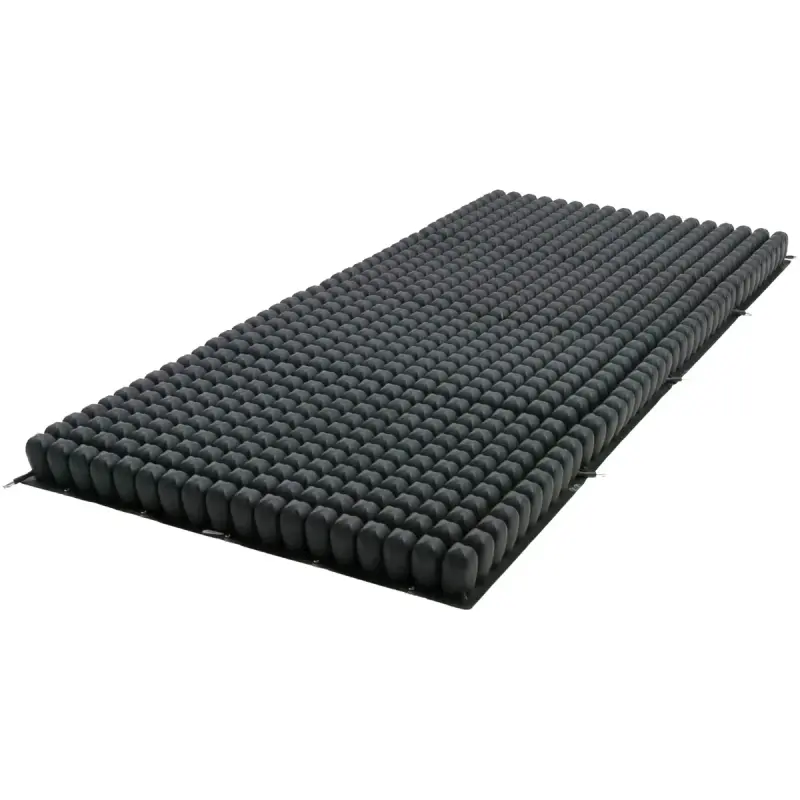
A pressure-relief mattress or overlay spreads a person's weight, or moves it around, so that no part of the skin carries too much pressure for too long. Makers describe these surfaces as tools against pressure injuries, and Medicare's rules treat them as one part of a care plan, along with turning, skin care, nutrition and continence care. On one large retailer's site in October 2026, a gel foam overlay is listed at USD 204, pressure-redistribution foam mattresses from USD 252, and powered alternating-pressure and low-air-loss systems from USD 530 to over USD 2,000.
Medicare groups these surfaces into three levels. Group 1 (overlays and most foam and basic air mattresses) is covered for people who cannot change position without help, or who have limited mobility or an existing pressure ulcer plus another risk factor. Group 2 (powered mattresses for people with significant ulcers) and Group 3 (air-fluidized beds) have stricter rules.
The safety part comes from FDA reports that most buying guides never open. Air mattresses are powered medical devices: they can deflate, overinflate, overheat, trap a person against a rail, or let fluids soak into the core. This guide covers each of those, and what you can check yourself.
Foam, gel, alternating air, low air loss: what is what
| Type | How it works | Medicare group |
|---|---|---|
| Foam or gel overlay | Sits on top of an existing mattress and spreads weight | Usually Group 1; ask the nurse |
| Pressure-redistribution foam mattress | Layers of shaped foam replace the mattress | Usually Group 1; ask the nurse |
| Non-powered air (static or self-adjusting) | Air cells that adjust without a pump | Ask the nurse which group applies |
| Alternating pressure | A pump inflates and deflates rows of cells in turn | Ask the nurse which group applies |
| Low air loss | Air flows through small holes to keep skin cool and dry | Ask the nurse which group applies |
| Air-fluidized bed | Warm air through fine beads makes the surface behave like fluid | Group 3 |
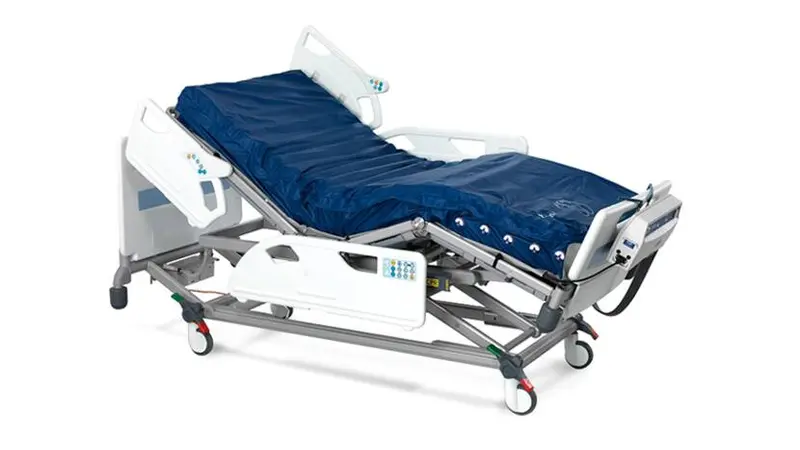
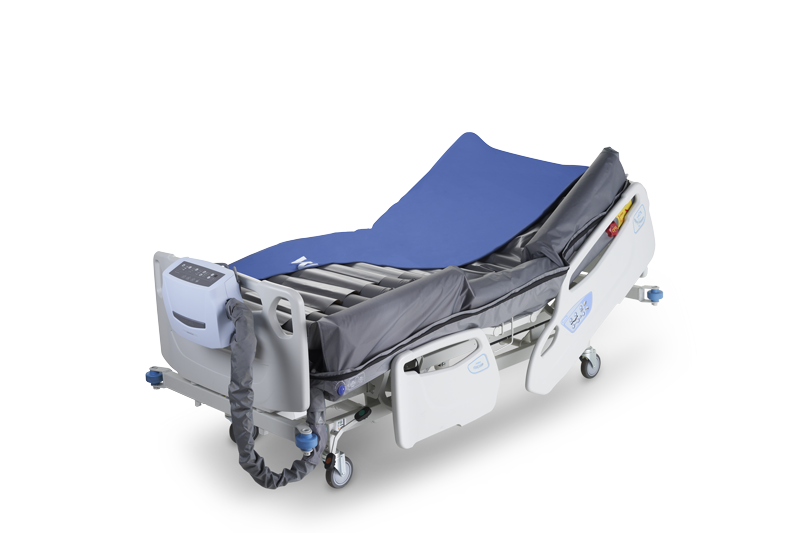
Many powered mattresses combine alternating pressure and low air loss. All of them change the height and firmness of the sleeping surface, which matters for transfers, for falls and for how the bed rails fit.
What pressure mattresses cost in 2026
These are listed prices on one large US retailer's site in October 2026. They are for the mattress or system, not the bed frame.
| Surface | Listed price (USD) | Weight rating |
|---|---|---|
| Drive Guard gel foam overlay | 204 | 500 lb |
| Protekt 100 pressure-redistribution foam mattress | 252 | 300 lb |
| Protekt 300 foam mattress | 283 | 350 lb |
| Drive Gravity 7 long-term care foam mattress | 339 | 300 lb |
| Protekt 500 gel-infused foam mattress | 341 | 450 lb |
| MedaCure Comfort Zone, alternating pressure and low air loss | 530 | 450 lb |
| Drive Med Aire low air loss with alternating pressure | 638 | 350 lb |
| MedaCure Bariatric Comfort Zone 650 | 835 | 650 lb |
| Drive Med-Aire Plus alternating pressure with low air loss | 1,405 | 450 lb |
| Drive Balanced Aire non-powered self-adjusting | 1,428 | 650 lb |
| Prevamatte Alleviate with Tempur material | 1,575 | 500 lb |
| Drive powered alternating pressure air and foam | 2,127 | 650 lb |
Medicare says for some equipment "You may need to rent the equipment." If you rent, ask what is included: the pump, the cover, delivery, set-up, a spare fuse, and a service number that answers at night.
Does Medicare pay for a pressure mattress?
Does Medicare pay for a pressure-relief mattress or overlay? Mobility Atlas read the three Medicare coverage rules for support surfaces in October 2026, and the answer depends on the group. A Group 1 overlay or mattress is covered if the person "is completely immobile," or has limited mobility or "any stage pressure ulcer on the trunk or pelvis" plus impaired nutrition, incontinence, altered sensation or compromised circulation. A Group 2 surface is covered for multiple stage 2 ulcers on the trunk or pelvis that have not improved over a month of full treatment, including a Group 1 surface; for large or multiple stage 3 or 4 ulcers there; or, with conditions, for up to 60 days after a flap or graft. A Group 3 air-fluidized bed must meet every listed criterion, including a stage 3 or 4 ulcer, being bedridden or chair bound, and a month of treatment without progress. After the Part B deductible you usually pay 20 percent of the approved amount.
A doctor or other provider must send the supplier a written order before the claim. Medicare Advantage plans, Medicaid, hospice programs and the VA set their own rules; confirm with the plan or hospice team before you buy.
The bottoming-out test
Medicare's rule gives a simple test that families can do too. Bottoming out is when "an outstretched hand, placed palm up between the undersurface of the mattress overlay or mattress and the beneficiary's bony prominence (coccyx or lateral trochanter), can readily palpate the bony prominence." The rule says to test it with the person lying flat on their back, with the head raised no more than 30 degrees, and lying on their side.
- Ask the person or carer before you do it, and wash or glove your hand.
- Slide your hand, palm up, under the mattress or overlay beneath the tailbone, then beneath the hip when the person is on their side.
- If you can easily feel the bone through the mattress, the surface is too soft, underinflated or the wrong type.
- Check the pump setting, the hoses and the person's weight setting, then call the supplier if it does not improve.
Setting up an air mattress safely
- Use the mattress on the bed frame and with the rails the maker says it fits. Check the height of the sleeping surface against the top of the rail.
- Fit the cover and straps as shown, so the mattress cannot slide on the frame.
- Set the pump for the person's weight and the mode the nurse recommends, and write the settings down.
- Route the hose and power cord where they cannot be pinched by the bed or trodden on.
- Find the CPR or rapid-deflation release and the transport or battery mode, and practise them once.
- Check the gaps at both rails and both ends, with the person on the mattress.
The FDA's advice on bed rails warns that gaps "can be created by movement or compression of the mattress," specifically including an air mattress, and that caution is needed "when using bed rails with a soft mattress."
Power cuts, pumps and alarms
An air mattress depends on its pump. When the power goes, or the plug is pulled to move the bed, many mattresses start to lose pressure, and the person may sink until they lie on the frame. Some pumps have a battery or a transport mode that holds air for a while; some mattresses have a foam base that limits how far a person sinks.
- Know how long your mattress holds air without power, and whether the pump has a battery.
- Keep the pump plugged straight into a wall socket, not an extension lead shared with heaters.
- Learn what each alarm means: power failure, low pressure, hose disconnected, service due.
- If the alarm sounds at night, check the person first, then the plug and the hose connection.
- Ask your electricity supplier whether it keeps a register of customers who depend on powered medical equipment; schemes differ by country and supplier.
Covers, fluids and cleaning
The cover is what keeps sweat, urine, blood and cleaning fluid out of the mattress core. The FDA says covers "can wear out and allow blood and body fluids to penetrate and get trapped inside mattresses," and that the fluids can leak out the next time the mattress is used. It recommends regular checks "for any visible signs of damage or wear such as cuts, tears, cracks, pinholes, snags, or stains," and taking the cover off to look at the inside.
- Unzip the cover regularly (we suggest monthly) and look at the inside and the core for wet spots and staining.
- Clean the cover only with the products the maker lists; in one batch of 97 inspection reports, a facility blamed bleach residue for damage to stretcher pad covers.
- Never put needles, pins or tape through the cover; the FDA warns against needles.
- Replace a cover with a tear, pinhole or stain; a rented mattress should arrive with a clean, intact cover.
Falls and transfers on air mattresses
A soft or air mattress makes the edge of the bed less stable. Sitting on the edge, the mattress can compress or slide, and a person can slide off. Many air mattresses raise the sleeping surface, so the effective height of the rails is lower.
- Use the firm or max-inflate mode for transfers and repositioning, if the pump has one, and switch back after.
- Lower the bed before transfers, and lock the casters.
- Use mattresses with raised side bolsters or a firm perimeter for people at risk of rolling off.
- Ask the nurse or occupational therapist about rails, bolsters, a low bed or a floor mat.
Skin checks and turning still matter
No mattress replaces turning and skin checks. Medicare's own rules for the more advanced surfaces require a full programme alongside them: regular assessment, turning and positioning, wound care, moisture and continence care, and nutrition. The Group 3 rule describes repositioning "usually every 2 hours" as part of conservative treatment.
- Check the skin over the tailbone, hips, heels and the back of the head every day.
- Report any area that stays red after pressure is taken off it.
- Keep heels off the mattress with a pillow under the calves if the nurse advises it.
- Avoid many layers of sheets and pads on top of an air mattress; they reduce its effect.
Are air mattresses safe at home?
Are air mattresses safe to use at home? Mobility Atlas read 1,825 FDA reports on pressure-relief mattresses in October 2026. Reports cannot show how often problems happen, but they show which problems people report, and most of those can be checked at home. The commonest problem in the reports is a mattress that loses air, and the harm that follows is usually a new or worse pressure injury, not a sudden accident. The rarer dangers are entrapment between an air mattress and a bed rail, falls from a raised or soft edge, power cords crushed by the bed frame, and a CPR release nobody knows how to use. All of those can be checked in a few minutes: the pump and hoses, the bottoming-out test, the gaps at the rails, the cord, and the CPR release. A supplier who answers at night matters as much as the model you choose.
Overlay or replacement mattress?
An overlay sits on top of the existing mattress; a replacement mattress takes its place on the bed frame. Overlays are cheaper and lighter, and suit people at lower risk. They also raise the sleeping surface, which brings the person closer to the top of any rails, and they can slide on the mattress underneath. Check with the makers that a replacement mattress is compatible with the frame and rails: the FDA says "not all bed rails, mattresses, and bed frames are interchangeable." Which surface suits a person at higher risk is for the nurse or doctor to decide.
If you use an overlay on a hospital bed with rails, check the height of the sleeping surface against the rails with the person lying on it, and fasten any straps. One death report in our set describes a woman who rolled over the rails of a bed with an overlay placed on top of the hospital mattress.
Choosing by the person's risk
The right surface depends on the person, and a nurse or doctor decides it. Medicare's Group 1 rule shows what they look at: whether the person can change position without help, and, if movement is limited or there is an ulcer on the trunk or pelvis, whether there is also poor nutrition, incontinence, reduced feeling or poor circulation. Group 2 covers multiple stage 2 ulcers on the trunk or pelvis that have not improved over a month of full treatment, or large or multiple stage 3 or 4 ulcers there.
Nurses use risk scores to decide, and they look at the whole picture: skin, moisture, nutrition, mobility, weight and pain. Ask for an assessment before choosing, and again if anything changes.
Low air loss, moisture and heat
Low air loss mattresses let a little air flow through the cover to keep the skin cool and dry, makers say; ask the nurse whether it suits the person. It does not replace continence care: a wet pad or many layers of sheets on top block the airflow. Use the thinnest layers the nurse recommends, change damp linen quickly, and keep the pump's air intake free of dust and blankets.
Sitting up, sliding down and heels
Raising the head of the bed puts more weight on the tailbone and makes the person slide down, dragging the skin. Ask the nurse how far and how long to raise it, whether to use the knee break, and how to reposition the person after sitting up. Ask the nurse about the heels, and whether to float them with a pillow under the calves. Some powered mattresses have a seat-inflate setting that firms the middle while the person sits up; use it if yours does.
Bariatric surfaces
Heavier people need surfaces rated for their weight and wide enough for the frame. On the same retailer's pages in October 2026, bariatric foam and air mattresses were listed for 600 to 1,000 lb, among them a Drive bariatric foam mattress rated for 600 lb in 42 to 54 inch widths and a Protekt 600 rated for 1,000 lb. A mattress that is too narrow for a wide frame leaves a gap at the sides; one family report in our set describes a 36-inch mattress on a 42-inch frame and a patient who rolled into the gap. Check the weight rating, the width and the straps.
Noise, sleep and comfort
Pumps hum, and alternating mattresses move under the body, which some people find hard to sleep on at first. Ask the supplier to show you a quieter setting or a static mode, if the nurse agrees it is safe, and place the pump where it is least disturbing but still easy to check. A mattress the person hates is one they will try to get off, so comfort matters for safety too.
End of life and hospice care
At the end of life, turning can become uncomfortable and skin fragile. Ask the hospice team how the mattress is supplied, and whether comfort changes the turning schedule. The same checks still matter: pump and hoses, gaps at the rails, the cord, the alarm and the CPR release, and what the family should do if the mattress alarms at night.
Cleaning and moving the mattress
Clean the cover with what the maker lists, rinse off any disinfectant that needs rinsing, and let it dry before use. Unplug the pump before cleaning around it. When the bed must be moved, use the transport or battery mode if the pump has one, lift the cord clear of the casters, and plug in again as soon as the bed is in place. Mattresses and pumps are heavy; lift with two people.
Pressure injury stages, in plain words
Nurses describe pressure injuries in stages, and the Medicare rules use them. Medicare's Group 3 rule says stage 3 means "full thickness tissue loss" and stage 4 "deep tissue destruction." Ask the nurse to explain the stage in plain words and what it means for the surface and the turning plan.
Any area that stays red after pressure is taken off it needs the nurse's attention the same day. The nurse decides what changes, whether that is turning, the mattress or the cushion.
What a good supplier does on delivery
- Checks the mattress fits the bed frame and rails, and fastens the straps.
- Sets the pump for the person's weight and the prescribed mode, and writes the settings down for you.
- Shows you the alarms, the CPR release, the transport or battery mode and the max-inflate setting.
- Checks the gaps at the rails with the person lying on the mattress.
- Routes the cord and hose safely and explains how to keep them clear of the bed frame.
- Leaves a phone number that answers at night, and says how fast they come if the mattress fails.
If the supplier does not do these things, ask. A pressure mattress that nobody understands is a mattress that goes flat at three in the morning without anyone knowing why.
Other ways to pay
Ask the nurse or social worker which route applies before you buy privately: Medicare, a Medicare Advantage plan, Medicaid, a hospice program or the VA. Each has its own rules and supplier list.
Warning signs the surface is wrong
- New redness that does not fade within a short time after turning.
- The person says the bed feels hard, or you can feel the frame through it.
- The person keeps sliding to the foot of the bed or toward one edge.
- The mattress looks domed, lumpy, or lower on one side.
- The pump alarms often, or runs constantly and gets hot.
- The person cannot sleep, or tries to get out of bed because of it.
Any of these is a reason to call the nurse or supplier. Do not wait for the next routine visit.
Stepping up, stepping down
Needs change, and the nurse should review the surface when they do. Medicare's Group 2 rule describes continuing coverage until the ulcer is healed, or while the care plan is being changed to promote healing.
Ask the nurse to review the surface at every change: after a hospital stay, after a fall, when an injury heals or worsens, and when the person's weight changes.
Wheelchair users: bed and cushion together
Many people who need a pressure mattress at night also sit in a wheelchair by day, and pressure injuries do not care which surface caused them. The cushion matters as much as the mattress, and the two should be chosen with the same assessment. Ask about both together, and look at the skin after sitting as well as after lying. The Mobility Atlas guide to wheelchair cushions covers the seating side.
Questions for the nurse or wound care specialist
- Which group of support surface does this person need, and why?
- How often should they be turned, and in which positions?
- Which settings should the pump use, and when should we change them?
- What should we look for on the skin each day, and when should we call you?
- Should the heels be floated, and how?
- Is the cushion in the chair right as well?
Respite, travel and short stays
A person who needs a pressure mattress at home needs one wherever they sleep. Before a respite stay, a hospital admission or a holiday, ask what surface will be there, and take the details of the home mattress and its settings. Portable overlays exist, but they are no substitute for the right mattress for a person at high risk.
A short glossary
| Term | Meaning |
|---|---|
| Alternating pressure | Rows of air cells inflate and deflate in turn, so no area carries weight for long |
| Low air loss | Air seeps through the cover to keep skin cool and dry |
| Overlay | A pad that sits on top of an existing mattress |
| Replacement mattress | A mattress that takes the place of the bed's own mattress |
| Bottoming out | Sinking until the bone is close to the frame; the surface is not working |
| Bolsters | Raised side cells or edges that help keep the person on the mattress |
| Max-inflate or firm mode | A setting that firms the mattress for transfers and care |
| CPR release | A valve, pull tag or lever that empties the mattress fast for resuscitation |
| Transport mode | A setting that holds air while the pump is unplugged for a move |
| Support surface | Medicare's term for pressure-reducing mattresses, overlays and beds |
Using rails with an air mattress
Rails and air mattresses need extra care together. Check the height of the sleeping surface against the top of the rail, because a thicker mattress leaves less rail above the person. The FDA's advice on bed rails names air mattresses among the surfaces that call for care with rails.
Ask the supplier whether the mattress is designed for your bed frame and rails, use mattresses with raised edges or bolsters for people at risk of rolling, and check the gaps with the person lying on the mattress. For someone who is confused or restless, ask the nurse whether rails are the right choice at all.
Pumps: what to know
- Hang the pump where the maker shows, usually on the footboard, not on the floor where it can be kicked or wet.
- Keep the air intake and filter clear; a blocked filter makes the pump work harder and run hot.
- Ask how often the pump needs a service and a filter change, and who does it.
- Write down the normal settings so you notice if someone changes them.
- Do not cover the pump with blankets or put it under the bed.
If something goes wrong: talking to the supplier
When a mattress goes soft, alarms without reason, smells of burning or leaves the person sliding toward the edge, call the supplier the same day and keep a note of what you saw, when, and what the pump display showed. Take a photo of the pump settings and of any damage to the cover or tubing. Ask for a replacement or a technician visit, not just advice over the phone, if the problem comes back.
If the person was hurt, or nearly hurt, tell the supplier in writing and ask them to pass the complaint to the maker. A written complaint that reaches the maker is harder to lose, and makers are among the "mandatory reporters" the FDA names for its adverse event database. You can also file your own report with the FDA, as the section on reporting explains.
When the person is alone at night
- Put the phone, call button or alarm pendant within reach on the side the person can use.
- Make sure the pump's alarm can be heard from where the carer sleeps, or use a baby monitor.
- Check that the CPR release and tubing cannot be pulled by a restless hand.
- Leave a low light on so a person who tries to get up can see the edge of the bed.
- Ask the nurse whether a lower bed or a floor mat makes sense for this person.
Night is when a slow leak, a pump that stops, or a person sliding toward the edge is most likely to go unnoticed for hours. If the person cannot call for help or shift their own weight, plan who checks on them overnight and how often, and write the plan down where every carer can see it. A quick press of the hand under the mattress at the pelvis during a night check tells you whether the person is still floating or has sunk toward the frame.
Rented, borrowed and second-hand mattresses
Air mattresses and pumps are often passed from family to family. They can carry worn covers, contaminated cores, cracked hoses, pumps past their service date, or a model under recall.
- Check the label and model number of the mattress and the pump, and look up recalls.
- Unzip the cover and inspect the core before the first use.
- Run the pump through its modes and alarms.
- Ask for the manual, or download it from the maker.
How Mobility Atlas read 1,825 FDA reports
The FDA collects reports about medical devices in a database called MAUDE. Makers, importers and user facilities such as hospitals and nursing homes are "mandatory reporters"; patients, families and clinicians can report voluntarily. Pressure-relief mattresses are filed under two product codes: FNM ("Mattress, Air Flotation, Alternating Pressure") and IKY ("Mattress, Flotation Therapy, Non-Powered"). We read every report with a description filed under either code from January 2019 to the latest openFDA update in October 2026: 1,825 reports.
Before reading a single report, we wrote a codebook: twelve kinds of problem in a fixed order of precedence (entrapment, fire or electrical, CPR release, deflation, overinflation, pump or alarm, cover or fluid, fall with no failure, skin, handling, no device problem, unclear), plus the type of surface, flags for injury, fall and inspection, the setting, and what the maker found. Entrapment comes first on purpose, then fire, then the CPR release, because those are the failures that can kill quickly. The codebook was fingerprinted with a time stamp before coding began.
Two independent coders then read every report separately, without seeing each other's answers. The coders were AI language models working separately; the method page says exactly how. They agreed on the main category in 95.3 percent of reports, a kappa of 0.943, which is very high agreement; kappa is a standard measure of agreement beyond chance. They agreed less on the type of surface (88.9 percent, kappa 0.824), because many reports name only a brand, and on what the maker found (88.8 percent, kappa 0.826). We settled the 550 reports where they differed on any field (86 of them on the main category) under written rules, and counted the results by script. One coder's first pass on one chunk used a script instead of reading; it was discarded and the chunk was coded again by hand. Where we give a count from a word search, it runs over the description of the event, not over the maker's later follow-up notes. Ten reports turned out not to describe a mattress event, which leaves 1,815.
Two kinds of report: events and inspections
The reports split into two very different groups. 553 are inspection findings, almost all filed in 2024 after a Veterans Health Administration safety alert on fluid getting inside mattresses: facilities checked their stretcher pads and mattresses and reported the ones whose covers, seams or cores were compromised. 463 of those describe a damaged cover or fluid inside. One reports a general increase in pressure injuries at a facility whose surfaces were likely past their service life, with no specific event described, and none describes a fall. They are a real problem, mostly in hospitals, and we come back to them below.
The other 1,262 describe events with a person or a specific mattress, and those are the ones this guide counts below. 974 involve a powered air surface, 120 a foam or gel surface and 62 a stretcher pad; in 106 the type could not be told. The setting was a hospital or care home in 488, a private home in 77, and unclear in 697.
What the reports show: the big picture
What goes wrong with pressure-relief mattresses? Mobility Atlas had two independent AI coders read 1,825 FDA reports in October 2026, and in the 1,262 that describe an event the biggest single problem is simple: the mattress loses air. 422 reports describe deflation, sinking or bottoming out, and 165 of them an injury, very often a new or worse pressure injury. Next come falls from the mattress with no failure named (267 reports, 226 of them falls), overinflation or uneven firmness (144), and fire, sparks, shock or a damaged power cord (135). Two small groups hold the highest share of death reports: entrapment between the mattress and a rail (21 reports, 8 filed as deaths) and a CPR release that failed or was not fully used (6 reports, 2 filed as deaths, copies of one event). Pressure injuries run through the whole set. The table shows each group, with the number that describe an injury, a fall or a death.
| What went wrong | Event reports | With injury | With a fall | Filed as a death |
|---|---|---|---|---|
| Deflation, sinking or bottoming out | 422 | 165 | 30 | 5 |
| Fall or slide with no failure named | 267 | 90 | 226 | 6 |
| Overinflation, too firm or uneven | 144 | 26 | 48 | 2 |
| Fire, heat, sparks, shock or power cord | 135 | 22 | 1 | 7 |
| Pressure injury with no failure named | 99 | 99 | 0 | 3 |
| Pump, control or alarm only | 48 | 14 | 1 | 0 |
| Problem alleged, kind unclear | 45 | 14 | 0 | 1 |
| Cover torn or fluid inside | 44 | 12 | 0 | 0 |
| Entrapment between mattress and rail or frame | 21 | 18 | 7 | 8 |
| No device problem stated | 18 | 12 | 0 | 0 |
| Handling: lifting, weight, a pump that fell | 13 | 9 | 0 | 0 |
| CPR release failed or not fully used | 6 | 3 | 1 | 2 |
Of the 1,262 event reports, 484 describe an injury and 314 a fall, and 34 were filed as deaths. By a word search of the event descriptions, 233 mention a pressure injury, ulcer or bed sore, and 70 a rail.
What these reports cannot tell you
The reports are a record of what people and companies chose to tell the FDA, not a count of every mattress problem. Most pressure injuries are never reported as a device problem at all, and most families who find a soft mattress call the supplier, not the FDA. The number of reports says nothing about which brand or type is safer: report counts can depend on how much each maker sells and how it files, and the reports show neither.
The count also moves with events. The 2024 inspection batch followed one safety alert. In 2026, 351 event reports arrived, 295 of them naming Medline and 233 of them about deflation, many short notes; one says only that the "mattress is not retaining air." Those reports show a real pattern of mattresses losing air, but they are one maker's filing, not a sudden change in all mattresses.
Deflation: what lets the air out
Reading the deflation reports, the same few causes come up. By a word search of the 422 deflation reports, 22 mention a hose, tube or connector, 7 mention CPR, 9 a power cord or plug, and 18 describe the person bottoming out or lying on the frame. Others name leaking cells, split seams, a pump too weak to keep up, or, in one report, a mattress that "will not fill up."
Most of those are quick to check without tools: listen for a hiss, feel along the hose and its connector, look at the CPR valve, and check the pump is set for the person's weight. Leaking cells and weak pumps are supplier jobs.
Overinflation and uneven firmness
144 reports describe a mattress that was too firm, overinflated, uneven or with bolsters set wrong. 48 describe a fall and 26 an injury. Some describe a mattress that inflated "like a balloon" or a large bump in the middle; others, bolsters that were not inflated on a person at risk of rolling out. Two reports describe the death of a paraplegic patient who fell from a mattress the reports say had a faulty sensor pad allowing overinflation; they are copies of one event.
If the mattress looks domed, feels hard, or the person seems to be sliding off, check the settings against the supplier's sheet, and call the supplier if it does not settle.
Surface types in the reports
| Surface | Event reports | Commonest problems |
|---|---|---|
| Powered air (alternating, low air loss) | 974 | Deflation 351, falls 214, fire or electrical 128, overinflation 107 |
| Foam, gel or non-powered | 120 | Overinflation or uneven 28, pressure injury 24, deflation 16 |
| Stretcher or procedure pad | 62 | Falls or slides 38, cover or fluid 12 |
| Type not stated | 106 | Deflation 51, pressure injury 12 |
Powered surfaces dominate the event reports because they are the ones with pumps, cords and cells to fail, and because hospitals use many of them. Non-powered foam and gel surfaces have no pump or cord, but they can still bottom out and leave gaps at the rails.
When the mattress goes flat
422 reports describe a mattress that lost air, would not inflate, sank in the middle, or let the person sink onto the frame. 165 describe an injury, and by a word search 95 of those injury reports mention a pressure injury, ulcer or bed sore. One says the mattress "remained completely deflated for approximately five days, causing the member to lay directly on the metal frame of the bed," and an existing ulcer got worse. Another, from a family, says a father "has not his mattress working for a month" and was getting bed sores.
The causes named are ordinary: a leaking cell or seam, a pump that cannot keep up, a hose that came off, a power cable pulled out. One death report says a mattress "became deflated when the power cable into the pump was dislodged." 34 of the 77 event reports from private homes are about deflation, more than any other kind.
- Check the pump is on, the plug is in and the hoses are connected every time you leave the room.
- Do the bottoming-out test daily, and whenever the person says the bed feels hard.
- If the alarm sounds or the mattress softens, check the person first, then the hose and the plug.
- If a home mattress keeps losing air, ask the supplier for a replacement the same day; in one report a mattress stayed flat for about five days and an existing ulcer got worse.
Falls from air mattresses
267 reports describe a fall or slide from the mattress with no failure of the mattress named, and 226 of them a fall to the floor. By a word search, 36 mention a rail, 19 a bolster and 32 use the word "head". Many are short: a patient "slid and slid until she fell." One death report says a woman "rolled out of the bed and hit her head," with "the mattress was still inflated." Another is the overlay death described earlier in this guide.
Air mattresses raise the sleeping surface and soften the edge. Bolsters, raised side cells or a firm perimeter help; so do a low bed, a floor mat and the max-inflate setting for transfers. Overinflation can do the same: 144 reports describe a mattress too firm or uneven, 48 of them with a fall, and one says the mattress "overinflated and the patient fell from the mattress."
Entrapment: few reports, many of them deaths
21 reports describe a person caught between the mattress and a rail, headboard or frame, and 8 were filed as deaths, two of them copies of one event. A death report says a resident was found "with bottom half of body on floor and head/neck wedged between mattress and bedrail." Another describes a patient with Parkinson's disease found trapped between the side rail of one maker's bed and another maker's air mattress, who died of asphyxiation. A family report describes a mattress narrower than the frame, leaving a gap the patient rolled into.
Several of these involved a mattress and a bed from different makers, or a mattress narrower than the frame. When an air mattress replaces a hospital mattress, check the width against the frame, fasten the straps, and test the gaps with the person lying on it. The Mobility Atlas guide to home hospital beds and bed rails covers the entrapment zones in detail.
Fire, sparks and power cords
135 reports describe fire, heat, sparks, shock or a damaged power cord. By a word search, 94 mention the cord, cable or plug, and 17 an electric shock. Many are cords crushed by a moving bed frame: one says a power cable "was damaged when a staff was operating the patient's bed" and "sparks were observed." A nurse in another "suffered an electric shock after she touched the power cord," and one mattress "started smoking while in use on a patient."
7 of these reports were filed as deaths, and they need care. Four, two pairs of copies, describe fires the reports say were suspected to start with a patient smoking in bed, with no allegation of a mattress fault. In another, an insurance claims letter alleges a home fire started from an electrical issue with a pump. Another describes a fire around a bed fitted with one maker's overlay and another maker's pump. The seventh says only that a fire started in or on the bed.
- Route the pump cord where the bed frame cannot trap it when the bed moves; use the cable management the maker provides.
- Never run the bed up or down without looking at where the cord is.
- Unplug and replace any cord or plug that is cut, crushed, hot or scorched.
- Never smoke in or near the bed, and keep oxygen away from the pump.
The CPR release
Many air mattresses have a CPR release that empties them fast for resuscitation. Six reports describe one that failed or was used incompletely. Two, copies of one event, were filed as deaths: the reports say staff pulled the CPR lever on the bed frame but "did not disconnect the CPR tubing" from the pump, so the mattress did not fully deflate, and one copy says the cause of death is unknown. Two more describe CPR valves that leaked or would not hold. An FDA recall warned that a hard-to-remove CPR connector could cause "a delay in resuscitation efforts."
At home, learn where the CPR release is on delivery day and practise it once. If you ever need to start CPR, the safest course is the one emergency services will tell you on the phone, which may be to move the person to the floor.
Pressure injuries on the mattress
99 reports describe a pressure injury on the mattress with no failure of the mattress named; all 99 describe an injury and 3 were filed as deaths. Many are reports from a facility or a clinical survey describing a patient whose injuries developed or worsened despite the surface. One home report says a patient's pressure injuries developed while the maker's representative said the mattress "was working well (as intended)."
These reports are a reminder of what the Medicare rules say in their own way: a support surface is one part of a programme. Turning, skin checks, nutrition, continence care and wound care matter as much as the mattress. If a pressure injury appears or gets worse, call the nurse or doctor the same day, and ask whether the surface is still the right one.
Covers, fluid and the 2024 inspections
The 553 inspection reports tell a story about hospitals more than homes. In 2024 the Veterans Health Administration issued a safety alert, AL24-01, on fluid getting into mattresses, and facilities inspected their surfaces. By a word search of the full reports, 383 cite a safety alert, and 180 of them name the VHA alert AL24-01 or the VHA directly. 97 name bleach residue as a likely cause of cover damage, all from one facility's check of 97 Stryker stretchers. Many describe stretcher pads and hospital mattresses with microholes, tears, stains or fluid inside.
The same failure can happen at home. A cover that cracks after months of strong cleaning, or a zip that splits, lets urine or sweat into the core, where it cannot be cleaned out. The FDA's advice on covers applies to any mattress: inspect, unzip and look inside, clean with what the maker allows, and replace a damaged cover or mattress.
Pumps, alarms and handling
48 reports describe a pump, control or alarm that failed without the mattress losing air, such as one report of a mattress that was "no longer alternating pressure." 13 describe handling problems, 9 of them with an injury: one report says a pump "fell on a caregiver's foot," and others describe a cleaner hurt by the weight of a mattress. Pumps are heavy; hang them on the bed rail or footboard where the maker shows, and lift mattresses with two people.
Shocks and staff injuries
Not every injury in the reports is to the person in bed. By a word search of the event descriptions, 17 of the fire and electrical reports mention an electric shock, often to a nurse or carer who touched a damaged cord. Handling reports describe staff hurt lifting heavy mattresses or by a pump that fell. Carers at home face the same risks: a damaged cord is dangerous to touch, and a mattress is heavier than it looks.
Stretcher pads that slide
Stretcher and procedure-table pads appear in 62 event reports. Most describe a pad that "slipped off the litter," one report says, sometimes with a patient on it; one describes a patient stuck between a stretcher and an operating table when the pad slid during a transfer. These are hospital problems, but the lesson carries home: a mattress that is not strapped to its frame can move when someone sits on the edge or is transferred.
What the home reports show
77 event reports name a private home, a family member or a home carer. 34 of them are about deflation, more than any other group, followed by falls (9), entrapment (7), overinflation (5), pressure injuries (5) and fire or electrical problems (4). Families describe mattresses that would not stay inflated, a father getting bed sores while a mattress was not working, a daughter who found her mother face down by the bed, and a mattress delivered too narrow for the frame.
At home there is no night shift walking past. An alarm someone can hear, a supplier who answers at night, and a daily check of the mattress do the work a ward round does in hospital.
What the makers found
In the event reports the maker found or confirmed a fault in 254, found none or named an outside cause in 329, and said nothing either way in 679. Outside causes named include cords crushed by the bed or run over, hoses disconnected by staff, cleaning chemicals, the wrong bed frame, smoking, and surfaces used beyond their service life.
Mistakes the reports repeat
- Leaving a pump unplugged or a hose disconnected after moving the bed.
- Running a bed up or down over the pump's power cord.
- Using a mattress narrower than the frame, or without its straps.
- Adding an overlay or extra layers that lift the person above the rails.
- Not knowing how the CPR release works, or leaving the tubing connected.
- Treating the mattress as the whole answer to a pressure injury.
The death reports, read with care
34 event reports were filed as deaths. 8 describe entrapment, 7 a fire (four of them suspected to start with smoking), 6 a fall, 5 deflation, 3 a pressure injury, 2 overinflation, 2 a CPR release, and 1 an unclear fault. Several are copies of the same event filed twice. Some deaths followed long illnesses, and the report does not claim the mattress caused them.
Read together, the most serious reports point to a few checks that a family can make: no gaps at the rails, a cord nobody can crush, an alarm someone can hear, a mattress that is not flat, and a CPR release everyone knows.
When the reports arrived
Event reports arrived steadily from 2019 to 2025, between 58 and 217 a year, then jumped to 351 in 2026: 295 of them name Medline, and two in three are reports of a mattress losing air. The inspection reports cluster in 2024, the year of the Veterans Health Administration alert. Neither jump shows that mattresses got worse in those years; each shows a change in who was looking and who was filing.
| Year | Event reports | Inspection reports |
|---|---|---|
| 2019 | 145 | 0 |
| 2020 | 73 | 0 |
| 2021 | 58 | 1 |
| 2022 | 116 | 1 |
| 2023 | 217 | 1 |
| 2024 | 161 | 524 |
| 2025 | 141 | 26 |
| 2026 (to October) | 351 | 0 |
Read the table as a record of reporting, not of risk. A single maker that starts forwarding every complaint, or a single hospital system that checks every mattress it owns, can move a year's total more than any change in the products themselves.
Who files these reports
Among the 1,262 event reports, Arjo filed or is named in 421, Medline in 315, Stryker in 142 and Joerns in 141, with Moxi, Drive, Hillrom and others filing fewer. Among the inspection reports, Stryker is named in 315, mostly stretcher pads. Report counts can depend on how much each maker sells and how it files, and the reports show neither; the counts say nothing about which mattress is safer.
The recall file
We read all 24 FDA recall records for the two codes. The newest, from January 2026, concerns Agiliti's own Adapt pump, which "does not re-engage the Microclimate Management function" after its 10-minute Autofirm timer runs out. A Stryker recall from late 2025 covers MV3 beds and Arise 1000EX mattresses both Stryker products, that had been sold close together but "have not been tested for compatibility," the recall says. Joerns recalled connectors in 2018 that lacked the "internal shutoff valves" meant to stop air escaping. Others cover TurnCare software that did not show low-battery alerts, power cords that could melt or crack, battery gas ignition in a control unit, mattresses that could overinflate, and a CPR connector that could be hard to remove. Three 2021 Stryker recall records concerned devices meant for healthcare facilities that had been sold to people at home.
Check the model of your mattress and pump against the recall database, and ask the supplier whether any correction was done.
A daily and weekly mattress check
| When | Check | If it fails |
|---|---|---|
| Every time you leave the room | Pump on, plug in, hoses connected, no alarm | Fix the connection; call the supplier if it recurs |
| Daily | Bottoming-out test under the tailbone and hip | Check settings; call the supplier |
| Daily | Skin over tailbone, hips, heels | Call the nurse about any lasting redness |
| Weekly | Cord and plug for cuts, crush marks, heat | Unplug; replace the cord |
| Weekly | Gaps at rails and ends with the person lying down | Close the gap; review the rails |
| Monthly | Unzip the cover and look inside | Replace a damaged cover or mattress |
| On delivery and after any move | CPR release, transport mode, alarm test | Ask the supplier to show you |
When to report a mattress problem to the FDA
Anyone can report a problem with a medical device to the FDA through MedWatch, online or on a form. Report injuries, entrapments, fires, sparks and shocks, deflation that hurt someone, and a CPR release that failed. Tell the supplier and the maker too; makers are "mandatory reporters" to the FDA.
Keep the mattress, pump, cord and any damaged parts, photograph the labels, and write down what happened while it is fresh.
Three composite scenarios
These are composite scenarios, not individual customers. Each one combines facts and ranges already given in this guide to show how the decision plays out.
Scenario one: a person with limited mobility and incontinence qualifies for a Group 1 overlay under Medicare's rule. Their partner does the bottoming-out test and can feel the tailbone, checks the pump setting and hoses, and calls the supplier and the nurse, who review the surface.
Scenario two: a family's rented air mattress keeps softening at night. They find the hose half off, refit it, check it every time they leave the room, and ask the supplier to check the connector.
Scenario three: a hospice nurse notices a 36-inch air mattress on a 42-inch frame. The supplier swaps it for the right width before the first night.
Questions to ask before you rent or buy
- Which Medicare group is this surface, and do I meet the criteria?
- Does it fit this bed frame exactly, and come with straps?
- What happens to the air if the power goes off, and is there a battery?
- Where is the CPR release, and how do I use it?
- What do the alarms mean, and who answers the phone at night?
- How often should the pump be serviced, and who does it?
- Is this model or its pump under any recall?
Choose a surface with the nurse, doctor or wound care specialist who knows the person's skin, weight and mobility. Ask your physician for a referral if no one has assessed the risk of pressure injuries.
Your plan: 10 minutes, today, this week
In 10 minutes: check the pump, plug and hoses, and do the bottoming-out test.
Today: find the CPR release and look along the power cord for crush marks.
This week: check the gaps at the rails, unzip the cover and look inside, and look up the model in the recall database.
Sources and documents
Reports: every FDA MAUDE device report with a description under product codes FNM and IKY from January 2019 to the latest openFDA update in October 2026, downloaded through openFDA. Recalls: all 24 FDA recall records for those codes, downloaded through openFDA. Funding: the three Medicare local coverage determinations for support surfaces and Medicare's equipment page. Safety advice: the FDA's pages on mattress covers and bed rails. Prices: 1800wheelchair's category pages. Every source is linked in the list at the end of this page.
Related guides on Mobility Atlas: Home hospital beds and bed rails; Wheelchair cushions; Pressure cushions.
Method in brief: we coded the 1,825 reports in the pool using a codebook written and fingerprinted before coding, with two independent coders (agreement on the main category 95.3 percent, kappa 0.943), settled the 550 reports where they differed on any field (86 on the main category) under written rules, and counted the results by script. The two coders were AI language models working separately, each without access to the other's answers. Quotes from reports are shown in sentence case; the FDA publishes most of them in upper case. The codebook, the method and the coded table are on the data and method page under CC BY 4.0.
Prices checked October 2026 on 1800wheelchair's pages; prices change, so confirm them with your supplier. Documents checked October 2026: FDA reports and recall records, the Medicare coverage rules and pages, and the FDA safety pages.
Has an air or foam mattress let you down, or worked well? Send us a note through the enquiry form with the model and what happened; we use readers' notes when we update the guide.
This article is general information. Rules and prices differ by country and change, so confirm them before you buy or travel.
Common questions
How much does an alternating pressure mattress cost?
On one large retailer's site in October 2026, alternating pressure and low air loss mattresses ran from USD 530 to over USD 2,000; foam pressure-redistribution mattresses from USD 252, and a gel foam overlay was listed at USD 204. Many families rent.
Does Medicare pay for an air mattress?
Medicare covers Group 1 overlays and mattresses for people who are completely immobile, or have limited mobility or a pressure ulcer plus another risk factor. Group 2 powered surfaces need significant ulcers. You usually pay 20 percent after the Part B deductible.
What is bottoming out?
Medicare's rule describes it as being able to feel the bony prominence with an outstretched hand placed palm up under the mattress, below the tailbone or hip. If you can, the surface is not protecting the person.
What should I do if an air mattress loses power?
Check the person first, then the plug, the pump and the hoses. Know how long your mattress holds air without power and whether the pump has a battery, and keep the supplier's night number handy.
Are air mattresses safe with bed rails?
They can leave gaps. The FDA warns that gaps can be created by compression of the mattress, and names air mattresses. Check gaps with the person lying down, and fit straps and the right width.
How do I use the CPR release on an air mattress?
It depends on the model; most have a valve, pull tag or lever, and some also need the pump tubing disconnected. Learn yours on delivery day. Two FDA death reports, copies of one event, describe a mattress that did not fully deflate because the tubing was left connected.
Sources
- FDA: About the MAUDE database and the limits of device reports
- openFDA: device adverse event endpoint (data used for this study)
- openFDA: device recall endpoint, product codes FNM and IKY
- CMS: LCD L33830, Pressure reducing support surfaces, Group 1
- CMS: LCD L33642, Pressure reducing support surfaces, Group 2
- CMS: LCD L33692, Pressure reducing support surfaces, Group 3
- Medicare: Durable medical equipment coverage
- FDA: Covers for hospital bed mattresses
- FDA: Recommendations for consumers and caregivers about adult portable bed rails
- FDA: SmartDrive recall notice, with how to report to MedWatch
- 1800wheelchair: air mattress systems (prices read October 2026)
- 1800wheelchair: foam mattresses (prices read October 2026)
- 1800wheelchair: mattress overlays (prices read October 2026)
Read on 16 October 2026. The wording of the article is our own.
Data and method for this guide: the codebook, the coded reports and the list of documents, free to reuse under CC BY 4.0.