Wheelchair cushions in 2026: types, prices and what 308 FDA reports show
Four kinds of wheelchair cushion, their listed prices, and what two AI coders found in every FDA wheelchair and flotation cushion report with text.
Contents
- Stop and get help today if
- The short answer
- Four kinds of cushion, and what each asks of you
- What a wheelchair cushion costs in 2026
- Five routes, from the cheapest fix to a new cushion
- Six situations, and which route is yours
- How Mobility Atlas read 308 FDA reports
- What the reports show: the big picture
- Air cushions that go flat
- Foam and gel that wear out
- Back cushions and their hardware
- Pressure injuries with no failed part
- Slipping off and falls
- Covers, skin reactions and heat
- The recall file: two cushion recalls
- Can you keep using a cushion with a problem?
- What a good seating review covers
- What a dealer can check that you cannot
- What the FDA data cannot tell you
- How fast a flat cushion can hurt
- When the maker says the cushion was fine
- Height, weight and what a cushion changes on your chair
- Cushions in care homes and hospitals
- Custom-moulded and contoured cushions
- Covers: mesh, incontinence and replacement
- A five-minute routine for carers
- Travelling with a cushion
- Children and larger bodies
- If you already have a pressure injury
- Air or gel: what the reports add to the choice
- Keeping a record when something goes wrong
- Choosing a cushion, step by step
- Setting it up and keeping it right
- Three traps that cost people the most
- Three composite scenarios
- Questions to ask before you pay
- Questions to take to your clinician
- Your plan: 10 minutes, today, this week
- Sources and documents
- Common questions
- Sources
Stop and get help today if
Already sitting on a cushion and worried? Check these first. Choosing one? Start at the short answer below.
- You find a red or dark patch of skin over your sit bones, tailbone or hips or any broken skin. Get off the cushion. ROHO's manual, as quoted in its FDA reports, says to stop use at any discoloration and to consult a health professional if it has not gone within 30 minutes; the Jay manual says to stop using the cushion at redness and see your doctor or therapist.
- Your air cushion is soft, flat or lower in one section, or you can feel the seat base through it. Do not keep sitting on it; use a spare or another surface until it is fixed.
- The cushion slides on the seat, hangs over an edge or moves when you transfer.
- A back cushion, its brackets, hooks or clamps are cracked, loose or bent.
- Gel or fluid is leaking from the cushion, onto you or onto the floor.
- Your skin reacts to the cover with a rash, hives or soreness where it touches you.
Most other things in this guide can wait for your next seating review. These six cannot, because they are the patterns behind the most serious reports we read.
The short answer
A wheelchair cushion does two jobs at once: it spreads your weight so that no small area of skin carries too much of it, and it holds you in a stable position. There are four main kinds, made of foam, gel or fluid over foam, air, or a flexible honeycomb, and many cushions combine them. Which one is right depends on your skin, your posture and how you live, and a clinician or seating specialist should help you choose. Our guide to choosing a pressure-relief cushion covers that clinical side.
Prices vary more than most people expect. On one US retailer's pages read in October 2026, a basic foam cushion was listed from USD 52.50, gel and fluid cushions at around USD 221 to USD 402.75, and air cushions from USD 85 for a single-compartment seat to USD 417 and up for the best-known ROHO models, with bariatric honeycomb cushions from USD 548.25.
The safety part comes from something most cushion guides never open: every report about wheelchair cushions and flotation cushions that the US Food and Drug Administration (FDA) holds under the product codes for wheelchair and flotation cushions, 308 reports with text, each read by two independent AI coders working separately. 248 of them concern a cushion used on a wheelchair or a seat. A pattern stands out. 138 describe a pressure injury or other skin damage. The most common route to it is an air cushion that went flat, sometimes in one section (13 reports) and sometimes without the user noticing (7 say so).
None of this means cushions are unsafe. It means a cushion only works when it is the right one, set up the right way, and checked often. The sections below show how.
How to read the evidence: every quote below names the report, recall or document it comes from, and every count comes from the coded table published on the data and method page. Prices are the prices shown on makers', dealers' and retailers' pages, never offers.
Four kinds of cushion, and what each asks of you
| Type | How it works | Listed price range seen | What it asks of you |
|---|---|---|---|
| Foam | Shaped or layered foam compresses to your shape | USD 52.50 to about USD 350 | Replace when the foam flattens |
| Gel or fluid over foam | A pad of gel or fluid flows around bony points on a foam base | About USD 221 to USD 402.75 | Knead or check the pad; watch for leaks and bubbles |
| Air | Many air cells share air and adjust as you move | USD 85 to USD 477 | Check the inflation often, by hand |
| Honeycomb | Flexible open cells flex under load and let air through | USD 174.50 to USD 765.50 | Little upkeep; limited shaping |
The price ranges are from Sportaid's cushion pages as read on 11 October 2026; prices for the same cushion differ between retailers and countries, and many people get cushions through a supplier and their funding rather than retail.
Foam
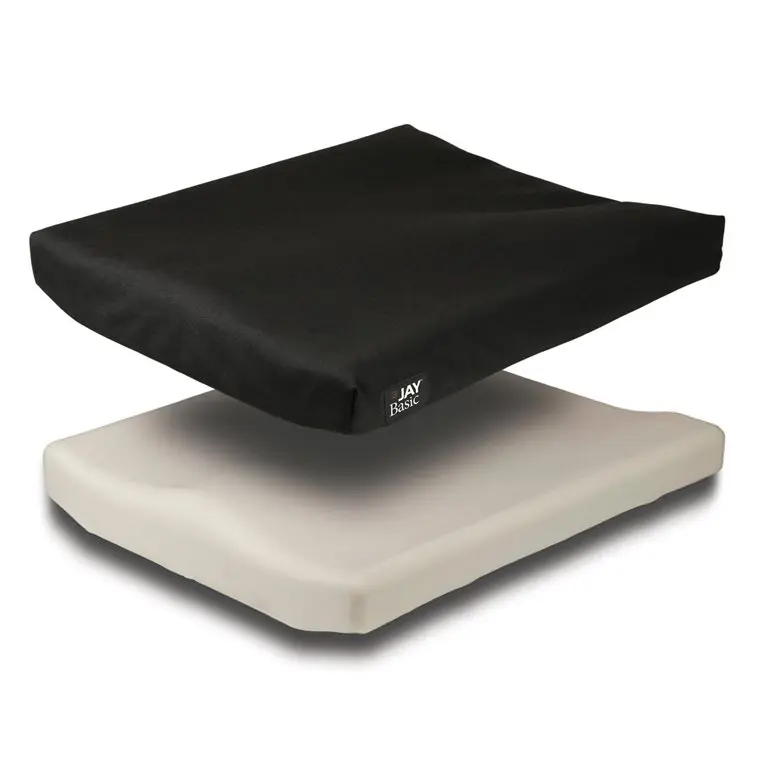
Foam cushions range from a flat block to contoured shapes with a well for the pelvis. They are light and simple. The Jay Basic is listed at USD 81.75; contoured foam cushions such as the Matrx PS at USD 241.50. Foam slowly loses its spring under daily load, and the reports below show that this happens to good cushions too.
Gel or fluid over foam
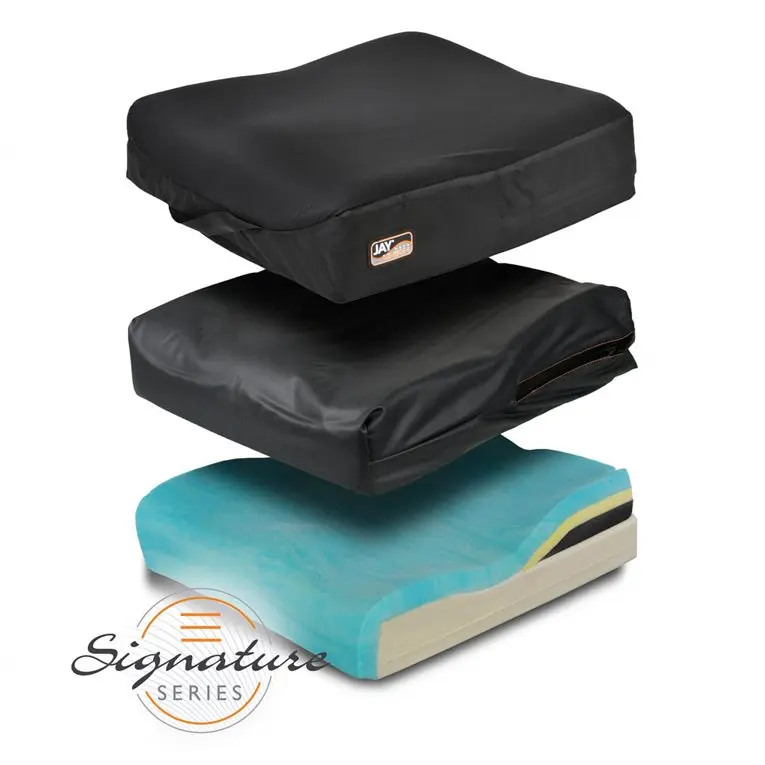
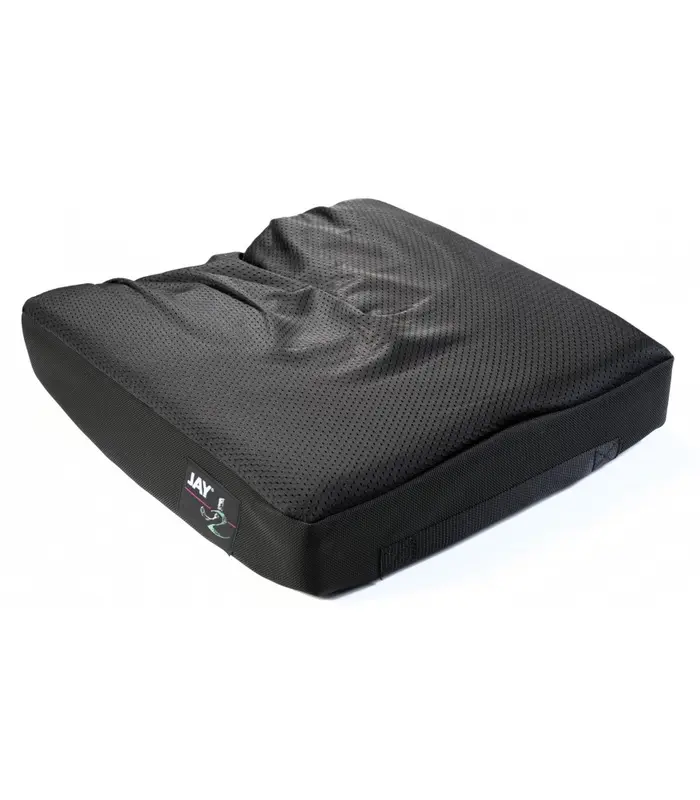
These cushions put a pad of gel or thick fluid over a contoured foam base. The fluid moves away from the highest pressure. The Jay J2 is listed at USD 393.00, the Jay Union at USD 390.00 and the Jay Fusion, which can take an air insert, at USD 386.00. The pad must be kept in place and checked; a burst or leaking pad stops working.
Air
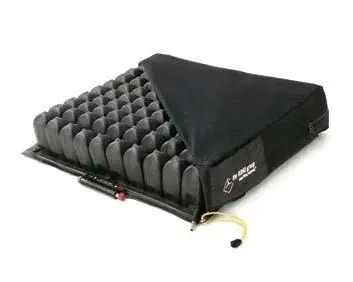
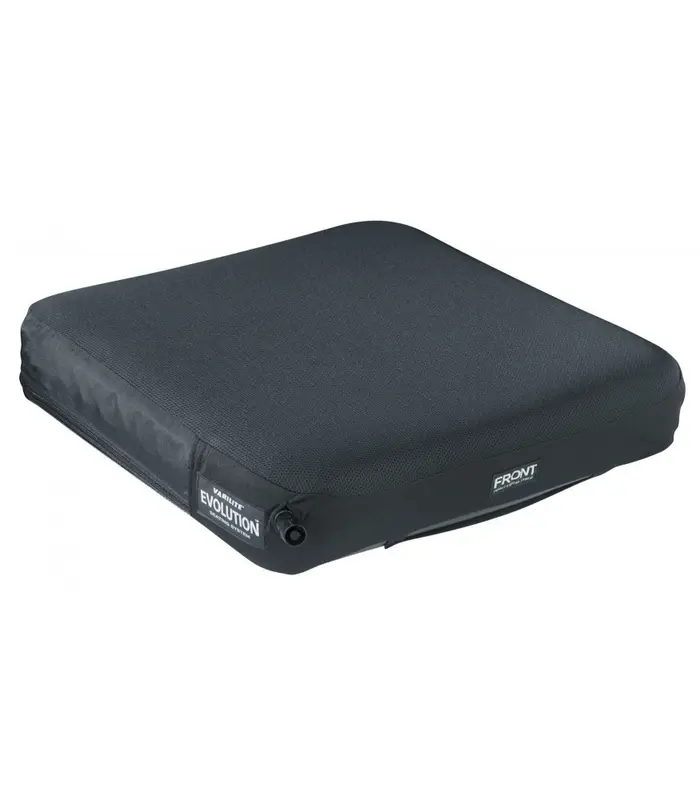
Air cushions are made of many small, linked air cells. They spread pressure very well and are often chosen for people at the highest risk of pressure injury. The ROHO Quadtro Select High Profile is listed at USD 417.00, the ROHO Hybrid Elite (air over a foam base) from USD 431.00, and the ROHO Mosaic, a simpler air cushion, from USD 121.00. Air cushions ask the most of you: the inflation has to be right, and it has to be checked by hand.
Honeycomb
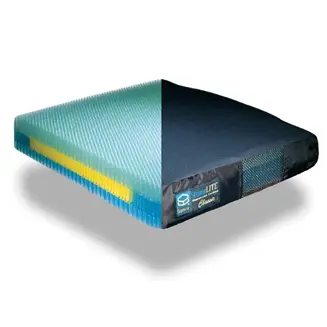
Honeycomb cushions such as the Supracor Stimulite are made of flexible open cells that cannot puncture and let air move through. They are listed from USD 174.50 for the Stimulite Silver to USD 765.50 for the largest bariatric version. They need little upkeep but shape less to the body than air or gel.
What a wheelchair cushion costs in 2026
| Cushion | Type | Listed price (Sportaid, October 2026) |
|---|---|---|
| Jay Basic | Foam | USD 81.75 |
| Comfort Company Elements Low Profile | Foam | USD 88.00 |
| ROHO Mosaic | Air | USD 121.00 to USD 144.00 |
| Jay GO | Foam | USD 180.00 |
| ROHO AirLITE | Foam | USD 183.00 |
| Matrx PS | Foam | USD 241.50 |
| Jay Fusion | Gel and foam, air insert available | USD 386.00 |
| Jay Union | Fluid and foam | USD 390.00 |
| Jay J2 | Fluid and foam | USD 393.00 |
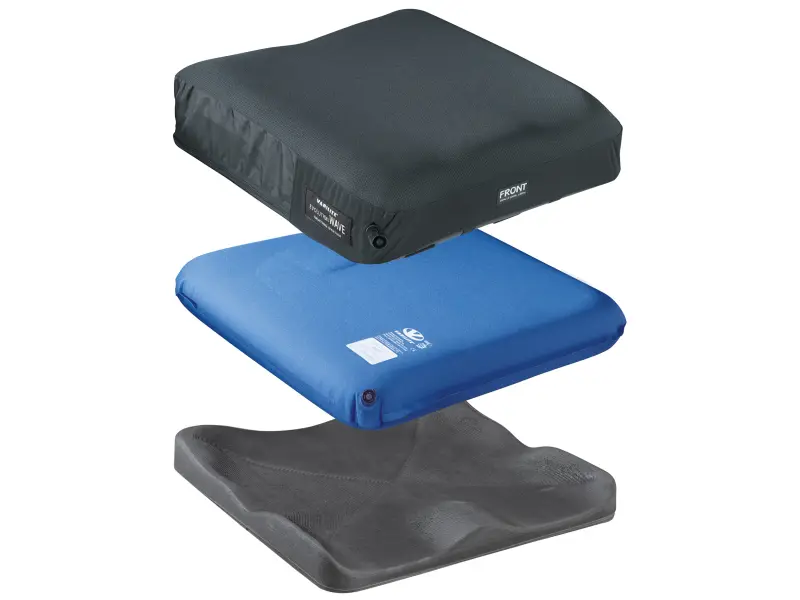
| Varilite Evolution Wave | Air and foam | USD 405.75 |
| ROHO Quadtro Select High Profile | Air | USD 417.00 |
| ROHO Hybrid Elite SR | Air over foam | USD 431.00 to USD 477.00 |
| Supracor Stimulite Bariatric | Honeycomb | USD 548.25 to USD 765.50 |
How much does a wheelchair cushion cost? Mobility Atlas read the listed prices on a US retailer's cushion pages in October 2026, and the answer runs from under USD 100 to well over USD 500. A basic foam cushion such as the Jay Basic was listed at USD 81.75. Contoured foam cushions sat between about USD 180 and USD 250. Gel and fluid cushions such as the Jay J2 and Jay Union were listed at about USD 390, and air cushions such as the ROHO Quadtro Select High Profile at USD 417.00. Bariatric honeycomb cushions reached USD 765.50. Replacement covers cost extra: a Jay 2 cover is listed at GBP 95 to GBP 115 before tax at one UK retailer. If your cushion is prescribed, ask your supplier what your funding covers before you buy, and whether it is funded with the wheelchair or separately.
Medicare, the US federal health plan, covers durable medical equipment under Part B when a doctor orders it; after the deductible, Medicare's page says, "you pay 20% of the Medicare-approved amount". Whether a particular cushion qualifies depends on your needs and paperwork, so ask the supplier before you order.
Five routes, from the cheapest fix to a new cushion
Route 1: set-up and position (free)
Many problems in the reports come from how a cushion sits: the wrong way round, upside down in its cover, the wrong size for the seat, or a cover put on wrongly. Check the labels that show the front and the top, and that the cushion fills the seat without hanging over.
Route 2: inflation, valves and leaks
For an air cushion, set the inflation with a hand check (below), then look for a leak if it keeps going soft. ROHO cushions come with a pump and a repair kit, and several reports describe users patching a leak themselves. If a valve will not close or keeps reopening, it is a part for the dealer or maker.
Route 3: a replacement part
Many cushions are built from parts: a foam base, a fluid pad or air insert, and a cover. A worn cover, a leaking pad or a flattened base can often be replaced on its own. Ask the dealer for the part number.
Route 4: a seating review
If you have a skin mark, if your body or chair has changed, or if a cushion that used to work no longer does, the answer is a review with your clinician or seating specialist, not a guess at a new product.
Route 5: a new cushion
When the cushion has worn out or no longer suits you, replace it. Sunrise Medical's reports state that "the expected lifetime of a wheelchair cushion is 2 years", and a ROHO report says "the expected life of a ROHO cushion is three years"; use these as prompts to check, not as fixed dates.
Six situations, and which route is yours
- My skin is red or broken where I sit. Stop sitting on the cushion, contact your clinician today (route 4), and read the section on pressure injuries.
- My air cushion keeps going soft or flat. Read the section on air cushions. Route 2: find the leak or the valve fault, and have a spare ready.
- My foam or gel cushion feels thinner, lumpy or uneven. Read the section on foam and gel. Route 3: a replacement part or cushion.
- The cushion slides, or I slide off it. Read the section on slipping. Route 1: check the cover, the base and the way the cushion sits on the chair.
- The back cushion or its hardware is loose or cracked. Read the section on backs. Route 2 at the dealer, before you lean on it again.
- I am choosing a new cushion. Read the step-by-step section and take the questions to your seating review.
How Mobility Atlas read 308 FDA reports
The FDA collects reports about problems with medical devices in a public database called MAUDE. Wheelchair cushions have their own product code, IMP ("Cushion, Wheelchair"), and so do flotation cushions, KIC ("Cushion, Flotation"), which include many air and gel wheelchair cushions. Makers must file reports about some events, and users, families and health workers can file them voluntarily.
We downloaded every report under both codes in openFDA on 11 October 2026: 313 reports, of which 308 carry text, received from 1993 to 2026. Some are about other things filed under the cushion codes, such as bed overlays, bath chairs or leg rests. We kept the 248 that concern a cushion used on a wheelchair or on a seat; 42 more concern beds, tables or other surfaces, and the rest describe no cushion event at all.
Before reading any report, we wrote a codebook: a list of categories and rules for what counts as each, with the order in which they apply, and fingerprinted it so that any later change would show. Two coders then read every report separately, without seeing each other's answers: what kind of cushion it was, what went wrong, and whether the report states an injury, skin damage or a fall, and what the maker found. The coders were AI models working separately; the method page says so in full.
| What the coders recorded | Agreement | Cohen's kappa |
|---|---|---|
| Main category | 96.4 percent | 0.952 |
| Skin damage stated | 99.7 percent | 0.993 |
| Injury stated | 99.4 percent | 0.987 |
| Fall | 99.7 percent | 0.968 |
| What the maker found | 97.7 percent | 0.956 |
| Kind of cushion | 86.4 percent | 0.775 |
A kappa of 1 means perfect agreement and 0 means no better than chance. Most disagreements on the kind of cushion were about brand-name cushions that the report never placed on a wheelchair. Each of the 56 reports where the coders differed was decided under a written rule, and a final consistency pass changed 25 more codes. The rules, the codebook and the coded table are on the data and method page.
One limit matters above all. The FDA's MAUDE page says "MDR data is not intended to be used either to evaluate rates of adverse events" and that "The submission of an MDR itself does not necessarily demonstrate that the device caused or contributed to the adverse outcome or event." Every count below counts reports, not cushions, and not people.
What the reports show: the big picture
| What the report says went wrong | Reports | With skin damage | With an injury stated |
|---|---|---|---|
| Material or structure: foam, gel, fluid, cover, back hardware | 107 | 29 | 35 |
| Air: leak, valve, deflation, inflation | 79 | 65 | 69 |
| Pressure injury with no failed part named | 33 | 33 | 33 |
| Slipping, position, fit or size | 18 | 8 | 12 |
| Skin reaction to the material | 4 | 1 | 3 |
| Event with no cushion problem | 4 | 0 | 4 |
| Problem alleged, cannot tell what | 2 | 1 | 1 |
| Fire or heat | 1 | 1 | 1 |
Skin is the thread through the whole set: 138 of the 248 reports describe a pressure injury or other skin damage, and 158 state an injury of some kind. Falls are rarer, 15 reports. The air problems stand out. 65 of the 79 air reports describe skin damage, a higher share than any other group with more than a few reports, apart from the pressure-injury group itself, because a flat cushion leaves the body on a hard seat.
| Manufacturer in the FDA record | Reports |
|---|---|
| ROHO (Permobil) | 82 |
| Sunrise Medical (Jay) | 66 |
| Invacare (Matrx) | 42 |
| EHOB | 7 |
| Motion Concepts (Matrx) | 4 |
| Medline | 3 |
| Stryker | 2 |
| Others or not stated | 42 |
Use this table to know whose service team and manual to ask about, not to rank brands. ROHO makes the most widely used air cushions, and air cushions generate inflation reports; a maker that files carefully will look worse in a count like this. The number of reports rose from 2011 and peaked at 35 in 2023.
Who files cushion reports, and when
Of the 248 reports, 138 are classed by the reporter as injuries, 99 as malfunctions, 2 as deaths (the same event, reported twice), and the rest as other or not stated. They are split almost evenly between the two product codes: 123 under the wheelchair cushion code and 125 under the flotation cushion code, which holds most air and many gel cushions.
Most were filed by makers after a dealer, a user or a family member called them. Some arrived through other countries' regulators, such as Sweden, Canada and the Czech Republic, and a few were filed directly by users. Very few reports came in before 2011; since then there have been between 4 and 35 a year. More reports in a year do not mean more cushion problems; they often follow a maker's change in how it files.
Air cushions that go flat
79 reports describe an air problem: a leak, a hole, a valve that would not close, a cushion that went flat, or one inflated too much or too little. 69 state an injury and 65 skin damage. 23 mention surgery or a hospital.
The pattern repeats. A user "did not notice the cushion had gone flat until the end of the day" because he has no feeling in the lower part of his body, one report says. Another user "could only tell the cushion was losing air because it looked like she was sitting in a hole". A third did not realise the cushion was going down "because he doesn't routinely perform hand checks", as the report puts it. 7 air reports say in so many words that the user did not notice or could not feel the loss of air.
Often only part of the cushion fails. 13 air reports name one quadrant, compartment or section. In one, "the compartment nearest to the valve was inflated, but the other three sections were deflated", and it is alleged that a pressure injury was seen the next morning; the maker linked the damage to over-inflation. In another, a carer who is a nurse found that her husband had developed a pressure sore "from sitting on the flat quadrant" while she was at work.
11 air reports name the valve or its stem. One user wrote that the valve, when screwed tight, "will actually screw to a point where it reopens". Others describe a valve that popped out or a piece of valve stuck in the pump. Where makers examined returned cushions, they found causes on both sides: "a tear was found between two cells which was producing a slow leak" in one, usual wear and tear in another, and in a third a laceration the maker attributed to excessive external force.
Too much air is a risk too. In a few reports the maker blamed over-inflation rather than a leak: in the three-section report above, the user, whose cushion arrived already inflated by the dealer, said that "they sat right on top of the cells vs. being immersed into them", and the maker found damage on top of a cell consistent with that. The ROHO recall record below says that sitting on an "over inflated or under inflated" cushion may reduce its benefits. The hand check guards against both.
Many of these reports stay unresolved. In 29 of the 79, the maker writes that it has not seen medical records to confirm the injury, and in 44 no evaluation result is reported. The point for a reader is not who was at fault. It is that an air cushion protects only while it holds the right amount of air, and that nobody can feel that from the inside if they have no sensation.
How do I know if my air cushion is inflated correctly? Mobility Atlas compared the reports with the maker's own instructions, and the answer is a hand check, not a feeling. Permobil, which makes ROHO cushions, says the cushion is most effective with "1/2 inch (1.5 cm) to 1 inch (2.5 cm) of air between the user's bottom and the seating surface". To check, slide your hand flat under the person's pelvis, find the lowest bony point, and let air out until you can just move your fingertips; then close the valve. A ROHO leaflet adds that after set-up you should confirm there is no contact between the person and the base, and if there is, add air. Do the hand check every day and after any change: a new chair, travel, a change in weight or posture. The reports show why: a cushion can lose air in one section in a single day, and people without sensation do not feel it.
- Do a hand check every day, and teach every carer to do it. ROHO's manual, as quoted in its FDA reports, says to "check inflation frequently, at least once a day".
- Keep the pump and repair kit with the chair, and a spare cushion if you depend on air.
- If one section keeps going soft, have the cushion checked; do not keep topping it up for weeks.
- Never sit on a cushion that you know is flat. Use the spare or another surface until it is fixed.
- If you lock the sections of a multi-compartment cushion, check each section by hand.
Foam and gel that wear out
107 reports describe the material or structure: foam that flattened, gel or fluid that leaked or moved, a cover that tore, a base that cracked, or back hardware that broke. Leaving the back hardware aside, 29 of the other 77 describe skin damage.
Foam wears out. 29 material reports describe foam that flattened, compressed or "bottomed out". A whole run of Sunrise Medical reports filed on one day in 2023 describe Jay foam bases that had become compressed or were "breaking down". The maker's own manual text, quoted in those reports, tells owners to "check the foam base to ensure foam consistency", and to stop using a cushion that no longer supports them.
Gel and fluid pads leak or move. 27 material reports mention gel or fluid. Pads split at a seam or burst; in one report gel "leaked out onto the floor causing the user to fall" when getting out of the chair. Others describe gel that migrated to the back of the cushion, gel that moved to one side, or air bubbles that appeared in a fluid pad after a few days. A fluid pad works by flowing around the sit bones; if it has moved or thinned, it no longer does.
Covers matter too. In one report, "the metal frame on the wheelchair had caused the cover of the cushion to rip", and the user stopped using the cushion because of skin breakdown. A cover that rubs, bunches or slides changes how the cushion works.
- Once a week, take the cover off and look at the foam and the pad. Press the pad: it should feel even.
- Knead a gel or fluid pad back into place if the maker says to, and check it for bubbles, splits and leaks.
- If the foam stays compressed or you can feel the seat through it, ask for a new base.
- Check that the chair's frame or clamps are not rubbing the cover.
Signs a cushion is near the end
- The foam stays flat or dented after you get up, or you can feel the seat through it.
- You sit lower or lean to one side more than before.
- A gel or fluid pad feels thin, lumpy, hard or has moved, or has bubbles.
- An air cushion needs air more often, or one section always runs low.
- The cover is thin, torn, stained through or has lost its non-slip base.
- Red marks appear where they did not before.
Any of these is a reason to call your dealer or clinician. Sunrise Medical's reports give two years as the expected lifetime of a wheelchair cushion; your cushion may need replacing sooner or may last longer.
Back cushions and their hardware
A back cushion supports the trunk and, for many users, holds the posture that keeps weight off the sit bones. It is fixed to the chair's back posts by clamps, hooks or brackets, and those small parts carry a lot of force every time the user leans back, transfers or is pushed over a kerb.
Cushions are not only for the seat. At least 30 of the material reports concern a back cushion or its hardware: cracked back shells, broken clamps, hooks, pins and mounting brackets, and backs that would not stay locked to the chair. Most of these were filed by Invacare for Matrx backs, and most name no injury.
When a back fails, it can fail suddenly. In one report a patient's daughter was transferring the patient from the shower to the chair "when back came loose", and the patient fell and broke a hip; the maker found an installation error. In another, the hardware on a Jay J3 back snapped and the user went to the emergency room with a sprained shoulder and a chest wall injury.
- Check the back's clamps, hooks and pins whenever you check the cushion.
- Do not lean or pull on a back that moves or clicks; have it checked first.
- Have back hardware fitted by the dealer, and ask them to check the fit after any repair to the chair.
Pressure injuries with no failed part
33 reports describe a pressure injury or skin damage blamed on the cushion where the report names no failed part. Many are short dealer notes: one report says a user "developed stage 2 pressure sores on thighs", another a stage 4 sore that, the dealer said, had begun on a bad mattress. Others, here and in the slipping and fit group, describe a fit problem: one dealer reported contours that "are rubbing on the patient's leg", another custom moulds that "keep coming in different", a well that was too aggressive, a cushion that was too small.
Makers' replies in these reports repeat a warning from the manuals. The Jay manual text quoted in Sunrise's reports says that any new cushion "should be tried for a few hours at a time while a clinician inspects your skin", and that "the clinical indicator for tissue breakdown is skin redness". In other words, a cushion that works for one person can harm another, and the first days on a new cushion are when to look.
Set-up and assembly errors appear here and in the slipping and fit group. In one nursing home, a gel cushion's bladder had been put in the wrong way round, so the resident sat on the valve; the maker revised its manufacturing instructions. Cushions were put in backwards. A cover went on upside down. A user put an 18 by 18 inch cushion on an 18 by 20 inch seat. Each is easy to check and easy to miss.
- Ask for a skin check after the first hours and days on any new cushion.
- Look for the front and top labels every time the cushion goes back on the chair.
- If you change the cushion size, the chair or your weight, ask for a seating review.
Slipping off and falls
18 reports describe slipping, position or fit, and 6 of them a fall. A cushion "slid off" as a woman was being put in her chair, and she fell. Another user said his cushion "falls off his seat" and he hits his leg on the frame. Someone who bought a gel-and-memory-foam seat cushion online for their parents wrote that it "tends to slide and poses a safety hazard".
Two reports, filed by a care home and by the maker, describe the same death of a resident who slid off the side of a power wheelchair between the flip-up armrest and the seat, with the cushion pushed over the edge of the chair. The medical examiner considered the death likely natural, and the maker wrote that it did not find evidence that the cushion caused or contributed to the death. The maker's manual, quoted in its report, tells users to make sure "the non-skid bottom of the cushion cover faces away from the individual" and to use the labels to orient the cushion.
- Make sure the non-slip side of the cover is down and the cushion is fixed with its hook-and-loop strips if it has them.
- If the cushion moves when you transfer, ask whether a different cover, base or fixing would hold it.
- Use the positioning belt if one was prescribed.
Covers, skin reactions and heat
4 reports describe a reaction to the material. A rubber-backed cover was linked to "redness, hives, and irritation" that needed emergency care; a rubber logo on a cover was blamed for scraping a user's thighs; two reports describe a chemical smell from custom-shaped cushions. 1 report describes heat: a user smoking a cigarette on a balcony noticed "the seat upholstery began to burn", and suffered burns to both thighs; the maker named the lit cigarette and user error as the most probable cause. The maker states the cushion is flame retardant, and its manual says to avoid "exposure to excessive heat or open flame".
One more report concerns heat of a different kind: a user's wife felt that an air cushion "retains heat" and made his sores worse. Heat and moisture both matter for skin, and covers are the main way to manage them, which is why makers sell mesh and incontinence covers separately.
The recall file: two cushion recalls
We read every FDA recall record for both cushion codes. There are only two, and both have ended.
| Recall | Product | Problem, as the record states it | Started |
|---|---|---|---|
| Z-1921-2017 | ROHO High and Mid Profile Sensor Ready | Smart Check set-up tool may give an improper set-up | 20 Mar 2017 |
| Z-1266-2014 | Otto Bock Aerial and Aerial Active | Small risk of flammability after washing at high temperatures | 31 Jan 2014 |
The ROHO record explains why set-up matters: "Sitting on an over inflated or under inflated Sensor Ready Cushion may reduce or eliminate the benefits provided by the cushion, increasing the risk to skin or to other soft tissue." A recall does not always mean you must stop using a product; the FDA says a recall "sometimes means that the medical device needs to be checked, adjusted, or fixed." The Otto Bock record said affected cushions should be returned or destroyed; if you still have one, stop using it and contact the supplier. If you own the ROHO model, ask the supplier whether the set-up tool was dealt with.
Can you keep using a cushion with a problem?
It depends on the problem. A worn cover, a cushion that slides a little, or foam that is starting to feel thinner may wait for a planned fix if your skin stays clear and your clinician agrees; if you have had a pressure injury, ask before waiting at all. An air cushion that will not hold air, a leaking gel pad, a flat section, broken back hardware or any skin mark cannot. Stop, use a spare or another surface, and get help.
If you depend on a cushion for skin protection, ask your supplier now what happens if it fails: how fast a replacement comes, and whether you can have a spare. At least one report describes a sore that developed while a replacement was on its way, and others describe sores that came before a replacement was asked for.
Waiting for a replacement
A cushion that fails under warranty is usually replaced, but the wait is a risk. One report says a user developed a pressure wound "due to delay in receiving replacement cushion" after the first one went flat. In another, a mother calling for a warranty replacement said it was the third cushion with a leak in the same quadrant. Others describe cushions patched again and again while a replacement was arranged.
- Ask, before you need it, how a warranty claim works and how long a replacement takes.
- If you depend on an air cushion, ask whether a second one can be prescribed as a spare.
- If the same section fails again, ask the dealer to check the fit, the chair and the way the cushion is used, not only to swap it.
What a good seating review covers
- Your skin: any marks, and how your skin did since the last review.
- A pressure map or hand check on your cushion, in your chair, in your usual position.
- The cushion's condition: foam, pad or air cells, valves, cover and base.
- Fit: cushion size against seat size, the front and top orientation, and how it is fixed.
- The back cushion and its hardware.
- Changes in your weight, posture, chair or daily routine.
- A written note of what was checked, changed or ordered.
What a dealer can check that you cannot
Some checks need tools or parts. A dealer or seating technician can test an air cushion under water or with a gauge to find a slow leak, replace a valve or an insert, check that a gel pad is the right fill, and compare a foam base with a new one. They can also look at the chair: a sagging seat, a bent seat frame or a loose back changes how any cushion works.
In the reports, dealers often found the problem: a valve that was not tight, a cover on the wrong way, a back fitted wrongly, a cushion too small for the seat. They also often could not find it: a cushion that held air while the dealer was there lost it again later. If that happens, ask the dealer to see the cushion in your chair, with you sitting on it, at the time of day it goes wrong.
- Bring the cushion, the cover, the pump and the manual to the appointment.
- Describe exactly when and where the problem happens.
- Ask what they tested, what they found, and what they replaced, in writing.
What the FDA data cannot tell you
The reports cannot tell you how often cushions fail or which cushion is safest, because nobody knows how many cushions are in use, and most problems are never reported. They cannot settle causes: many reports are short claims, many say the maker has not seen medical records or the cushion, and a pressure injury usually has several causes at once. A few reports describe the same event more than once.
So this guide uses the reports to show where things go wrong, and makers' instructions for what to do about them. The data also cannot weigh the protection cushions give: the people whose cushions worked well do not file reports.
How fast a flat cushion can hurt
The air reports give a rough sense of time, in the words of the people who filed them. One user wrote that the cushion deflated and "I was sitting 3 hours" before going to bed, which the user says caused a very deep tissue injury. Another sat on the cushion for 12 hours and the next morning found three of four sections flat and, it is alleged, a pressure injury; the maker linked the damage to over-inflation. Three reports describe a new cushion that lost air on the first day of use, with redness or a sore by the end of that day or within two. Others describe 2 to 3 days, 5 days, 8 to 10 days, or weeks on a flat cushion.
These are single reports, not a measured timeline, and many causes play a part in a pressure injury. But they point the same way as the makers' instructions: check inflation every day, and treat a soft cushion as urgent rather than as something to fix at the weekend. One family, travelling when a cushion went flat, cut up a pillow and put the pieces under the user until they could get help; a spare cushion would have been better.
When the maker says the cushion was fine
Reports often end with what the maker found. Of the 248 cushion reports, 41 say a defect was found or confirmed, 55 say the maker found no defect, could not duplicate the problem, or blamed set-up or misuse, and 152 say nothing was evaluated or give no finding, often because the cushion was not returned.
Both kinds of finding are useful to a reader. Confirmed defects in the reports include tears and holes between air cells, seams that split, pads that leaked, and foam that had broken down within its expected life. Findings of no defect often point at set-up: a cushion on backwards, the wrong size, a valve left open, or a cushion used flat for days. Either way, the lesson is the same: a cushion has to be checked, and the person checking it has to know what right looks like.
Height, weight and what a cushion changes on your chair
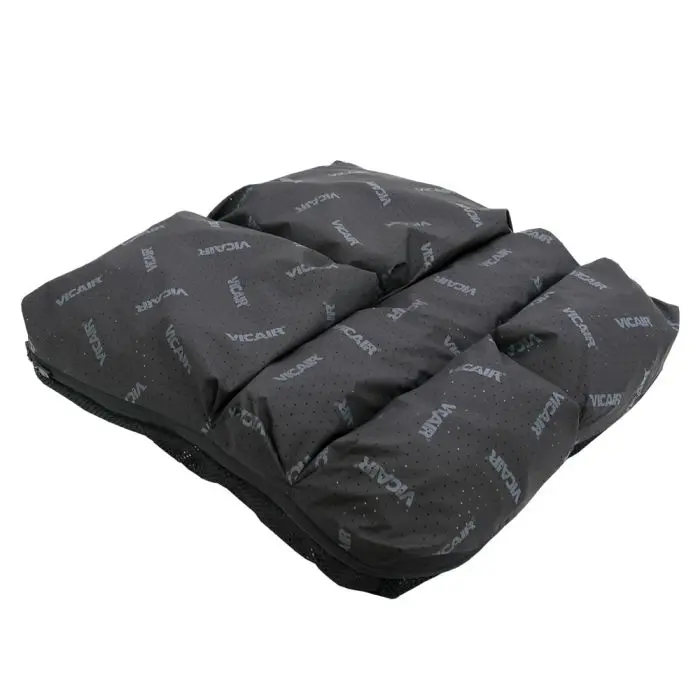
A cushion is part of the chair's geometry. The Mobility Atlas catalog lists cushions from 1 inch thick, the Action Products Pilot, to 4.25 inches for the high-profile ROHO Quadtro Select, which also comes in 3.25 and 2.25 inch versions. The Jay Union is listed at 4.5 or 3.5 inches and the Jay Basic at 2 inches; the Vicair Adjuster O2 at 10 or 6 cm; the Supracor Stimulite Classic at 2.75 inches.
A thicker cushion raises you. That changes how high you transfer from, how your feet sit on the footplates, where the armrests and the back reach your body, and, on a manual chair, how you reach the wheels. Weight differs too: the catalog lists the Jay Basic at 1.7 lb and the Jay Union at 5.25 lb for common sizes, and the Stimulite Classic at 3 lb. If you lift your cushion in and out of a car every day, that matters.
Weight limits are listed as well: the Jay Basic and Jay Union are listed for 330 lb, with 500 lb on the widest Jay Union sizes, and the Vicair Adjuster O2 for 550 lb. One nursing home report notes a waffle cushion meant "to accommodate up to 300 lbs" used under a resident who weighed 275 lb; it was found deflated twelve days later.
Cushions in care homes and hospitals
Not every report comes from a person at home. 8 of the 248 concern air waffle cushions used in skilled nursing facilities and hospitals, several found deflated days after they were put in place. In another report, nursing staff said a resident had sat on a cushion with a flat quadrant for weeks before a near stage 4 pressure ulcer was found; the caller said staff had not monitored the resident's skin as they should.
One care facility reported that residents slipped and fell out of their chairs on three different occasions with the same chair cushions in use, and returned them all. Another report, already described, concerns a resident who slid from a power wheelchair.
- If a relative uses a cushion in a care home, ask who checks the inflation and the skin, and how often.
- Ask that the cushion's set-up instructions go with the resident, and that every shift knows them.
- Label the cushion with its front, top and the resident's name, so that it is not swapped or turned round.
Custom-moulded and contoured cushions
Some cushions are shaped to one body: moulded from a scan or a cast, or built up from adjustable contours. They can give support that an off-the-shelf cushion cannot, but they depend on the mould being right and on the person sitting in the same place every time.
The reports include custom cushions moulded incorrectly five times, according to one family; two moulds made from the same file that "keep coming in different"; contours that rubbed a leg; and a custom seating system that was too tight on one side and caused a sore on the back. Makers of custom cushions often answer that the cushion was made to specification, which may be true and still leave the fit wrong for the person today.
- Ask how the shape was captured, and what happens if the fit is wrong on delivery.
- Check your skin closely in the first days, including the back and the sides of the legs.
- Ask for a review after weight change, surgery or a change in posture, because a custom shape cannot follow you.
Covers: mesh, incontinence and replacement
The cover is part of the cushion. Mesh or air-exchange covers let heat and moisture escape; incontinence covers keep fluid out of the foam or cells. Most have a non-slip base. The Mobility Atlas catalog lists replacement covers such as the Jay 2 cover at GBP 95 to GBP 115 before tax and the Varilite Evolution cover at GBP 160.90 before tax at one UK retailer.
Covers appear in the reports in three ways: a cover torn by the chair frame, a cover put on upside down, and covers whose material caused a skin reaction. The Otto Bock recall in the table above concerned flammability after washing at high temperatures, a reminder to follow the washing label exactly.
- Wash covers as the label says, not hotter, and let them dry fully before fitting.
- Keep a second cover so that the cushion is never used without one.
- Replace a cover that is torn, thin or has lost its non-slip base.
A five-minute routine for carers
Many of the reports were filed by family members, carers and nurses, often after they found a problem the user could not feel. A short routine catches most of what the reports describe.
- Before the person sits: cushion the right way round, cover on correctly, non-slip side down.
- For an air cushion: once seated, hand check under the lowest bony point.
- During the day: look for the cushion sliding or the person leaning.
- At the end of the day: check the skin where the person sat, in good light.
- Once a week: cover off, look at the foam, pad, cells and valves, and the back hardware.
Write the routine down and keep it with the chair, so that a new carer, a respite worker or hospital staff can follow it.
Travelling with a cushion
Travel is when cushions get moved, folded, swapped and set up in a hurry. At least three of the air reports began while travelling. Take the pump, the repair kit and the set-up instructions with you, and do a hand check after every journey and every change of chair, including an airline's or a hotel's.
If you fly, keep the cushion with you if the airline allows it, rather than checking it with the chair. Ask the airline in advance, and see our guide to flying with a power wheelchair for the rest of the chair.
Children and larger bodies
Children grow out of cushions and chairs, so fit has to be checked more often. Cushions made for children are listed too, such as the Jay Zip at USD 356.25 and the Stimulite Contoured Pediatric at USD 232.25 on the same retailer's pages. Ask how often the cushion will be reviewed as the child grows.
For larger bodies, check the weight limit as well as the width. Bariatric cushions are listed at higher prices, such as the Supracor Stimulite Bariatric at USD 548.25 to USD 765.50, and the reports include a care home cushion used close to its weight limit that went flat.
If you already have a pressure injury
Several reports describe an existing pressure injury that got worse: a sore that grew while a new cushion was being tried, an injury that worsened while an air cushion lost air, or a user who was given a cushion right after surgery for an old sore. People with a healing or past pressure injury are the most sensitive to a cushion that is not quite right.
- Do not change cushion type without your clinician, even to a more expensive one.
- After any change, check the skin often in the first days, as the makers' manuals advise.
- Report any change in the wound to your clinician at once, and say what changed in your seating.
Air or gel: what the reports add to the choice
Air and gel or fluid cushions are the two types most often chosen for people at high risk of pressure injury, and the reports show that each fails in its own way.
Air cushions fail by losing air. In the reports this is usually gradual or partial, a slow leak or one quadrant going soft, and the danger is that the user does not notice. The protection against it is a habit: a daily hand check, a pump and repair kit within reach, and a spare. For someone who cannot do a hand check and has no one to do it every day, that habit is the real price of an air cushion.
Gel and fluid cushions fail by the pad moving, thinning, leaking or getting air bubbles, and by the foam base wearing out. The danger is again slow: the user sinks a little lower, or the fluid no longer sits under the sit bones. The protection is a weekly look under the cover and kneading the pad back into place when the maker says to.
Neither type is safer in the abstract. A cushion that suits your body but that you cannot check is not a good choice; neither is one you can check but that does not protect your skin. That is the conversation to have at your seating assessment, with the routine in mind as much as the product.
Keeping a record when something goes wrong
Many reports in the set are hard to use because the details were lost: no model, no size, no date, no cushion returned. If something goes wrong with your cushion, a few notes help you, your clinician and the maker.
- Write down the cushion's make, model, size and serial number, and keep the label.
- Note the date, what you noticed, and how long you sat on it.
- Take photos of the cushion, the valve, the cover and any damage.
- Keep the cushion if the maker asks to examine it, and ask for the result in writing.
- Ask your clinician to record any skin damage and its likely cause.
Anyone can also report a problem to the FDA directly. In the MAUDE database, voluntary reports are the ones whose number begins with "MW". A few reports in this set were filed by makers after voluntary MW reports.
Choosing a cushion, step by step
What is the best wheelchair cushion for pressure sores? Mobility Atlas read every FDA cushion report and the makers' instructions, and the honest answer is that there is no single best one: the right cushion is the one a seating assessment matches to your body, and that you can look after. Air cushions spread pressure very well but need a daily hand check; 65 of the 79 air reports we read describe skin damage, many after a cushion went flat. Gel and fluid cushions give a stable base but the pad must be kept in place and checked for leaks. Foam is simple and cheap but flattens with use. Ask for a trial in your own chair, a skin check in the first hours and days, and written instructions for set-up and checks. If you have no sensation where you sit, choose the cushion you are sure you and your carers can check every day.
- Book a seating assessment with a clinician or seating specialist.
- Describe your day: hours in the chair, transfers, heat, moisture, travel and who helps you.
- Try more than one type, in your own chair, for long enough to check your skin.
- Match the cushion size to the seat, and check the height it adds for transfers and footrests.
- Ask how the cushion is set up, checked and cleaned, and get it in writing.
- Ask about a spare, repair parts and how fast a replacement comes.
- After delivery, check your skin after the first hours and days.
Setting it up and keeping it right
Most cushions are marked with a front and a top, and covers have a non-slip side. A gel bladder has a right way round; so does an air cushion with a valve. In the reports, cushions fitted backwards, upside down or the wrong size led to sores. Check every time the cushion comes off for cleaning or travel.
- Front to the front, top up, non-slip side of the cover down.
- For an air cushion, set the inflation by hand check with the person seated in their usual position.
- For a gel or fluid cushion, check that the pad sits flat and evenly before sitting down.
- Fix the cushion with its hook-and-loop strips if it has them.
- Do not stack a second cushion or a folded towel on top unless your clinician says so.
Every day
- Check your skin, or have it checked, where you sit and lean.
- For an air cushion, do a hand check.
- Make sure the cushion is the right way round and not sliding.
Every week
- Take the cover off and look at the foam, pad or cells for wear, splits, leaks and bubbles.
- Check the valves close properly and do not leak.
- Look at the cover for tears, worn patches and a broken zip.
- Check the back cushion's clamps and hardware.
- Clean the cushion and cover as the maker says, and let them dry fully.
Three traps that cost people the most
Trap one is trusting the feel. People without sensation cannot feel a flat air cushion; several reports describe a whole day, or days, on a cushion that had gone flat. Only a hand check tells you.
Trap two is a cushion that does not match the seat: the wrong size, the wrong way round, or set up from memory. These are cheap to check and the reports show how much they can cost.
Trap three is waiting for a replacement with no plan. Ask for a spare or a loan cushion before you need it.
Three composite scenarios
These are composite scenarios, not individual customers. Each one combines facts and ranges already given in this guide to show how the decision plays out.
Scenario one: a man with a spinal cord injury uses an air cushion. His carer learns the hand check, does it every morning and after every car journey, and keeps the pump and repair kit on the chair. When one quadrant keeps going soft, she calls the dealer instead of topping it up for weeks.
Scenario two: a woman's gel cushion starts to feel uneven. She takes the cover off and finds the gel has moved to one side. She kneads it back as the manual shows, checks it weekly, and asks the dealer for a new pad when it keeps moving.
Scenario three: a family moves a cushion from an old chair to a new, wider one. At the seating review they learn the cushion is too small for the new seat, order the right size, and check the user's skin daily for the first week.
Questions to ask before you pay
- What type of cushion is it, and why this one for me?
- What size is it, and does it match my seat exactly?
- How do I set it up and check it, and can you show my carers?
- What parts can be replaced on their own, and what do they cost?
- Is there a spare or a loan cushion if it fails?
- Does my funding cover it, and how often can it be replaced?
Questions to take to your clinician
A cushion is part of your skin care, so the choice belongs with your clinician, seating specialist or nurse, not with a price list. Questions worth asking:
- What is my risk of pressure injury, and what is it based on?
- Which cushion types suit me, and which should I avoid?
- How often should my skin be checked, and by whom?
- How often should I shift my weight, and how?
- What should I do the same day if I see a red mark?
Your plan: 10 minutes, today, this week
In 10 minutes: run the stop list at the top, check your cushion is the right way round, and do a hand check if it is an air cushion.
Today: take the cover off, look at the foam, pad or cells and the valves, and check the back hardware.
This week: book a seating review if anything has changed, and ask your supplier about a spare.
Sources and documents
Reports: every FDA MAUDE device report under product codes IMP and KIC in openFDA, downloaded on 11 October 2026. Recalls: all FDA recall records for both codes, downloaded the same day. Set-up: Permobil's ROHO inflation guide and a ROHO set-up leaflet. Funding: Medicare's durable medical equipment page. Prices: Sportaid's cushion pages and the Mobility Atlas catalog. Every source is linked in the list at the end of this page.
Related guides on Mobility Atlas: Choosing a pressure-relief cushion; Electric wheelchairs: types, prices and FDA reports; Lightweight, transport and travel wheelchairs; How to measure yourself for a wheelchair.
Method in brief: we coded the 308 reports with text using a codebook written and fingerprinted before coding, with two independent coders (agreement on the main category 96.4 percent, kappa 0.952), decided all 56 disagreements under written rules, changed 25 more codes in a consistency pass, and counted the results by script. The two coders were AI language models working separately, each without access to the other's answers. Quotes from reports are shown in sentence case; the FDA publishes most of them in upper case. The codebook, the method and the coded table are on the data and method page under CC BY 4.0.
Prices checked October 2026 on retailers' pages listed below and in the Mobility Atlas catalog; prices change, so confirm them in your country. Documents checked October 2026: FDA reports, FDA recall records, Permobil and ROHO set-up instructions and Medicare's page.
Had a cushion problem from this guide fixed, or been told something different by a dealer or maker? Send us a note through the enquiry form with the cushion and what happened; we use readers' notes when we update the guide.
This article is general information. Rules and prices differ by country and change, so confirm them before you buy or travel.
Common questions
What is the best wheelchair cushion for pressure sores?
There is no single best one. Air cushions spread pressure very well but need a daily hand check; gel and fluid cushions give a stable base; foam is simple but flattens. A seating assessment and a skin check in the first days decide which suits you.
How much does a wheelchair cushion cost?
On one US retailer's pages in October 2026, a basic foam cushion was listed from USD 52.50, gel and fluid cushions at about USD 221 to USD 402.75, and air cushions such as the ROHO Quadtro Select High Profile at USD 417.00. Bariatric honeycomb cushions reached USD 765.50.
How do I check if my ROHO cushion is inflated correctly?
Do a hand check: with the person seated, slide your hand under the lowest bony point and let air out until you can just move your fingertips, then close the valve. Permobil says there should be 1/2 to 1 inch of air between the body and the seat.
How long does a wheelchair cushion last?
Sunrise Medical's reports state that the expected lifetime of a wheelchair cushion is 2 years, and a ROHO report gives three years for its cushions, but use and care matter more than age. Replace it when the foam stays flat, a pad leaks or moves, or it no longer supports you.
Why does my air cushion keep going flat?
Usually a slow leak, a hole between cells or a valve that does not close fully. Find the leak with the repair kit or under water, check the valve, and have the cushion checked by the dealer if one section keeps losing air.
Can a wheelchair cushion cause pressure sores?
A cushion that has gone flat, worn out, slipped or does not fit can let pressure build up, and the FDA reports describe all of these. A cushion that fits and is checked reduces pressure; skin checks and weight shifts remain essential.
Sources
- EPC Wheelchairs: JAY 2 replacement cushion cover (UK prices)
- EPC Wheelchairs: Varilite Evolution/PSV cushion cover (UK prices)
- FDA: About the MAUDE database and the limits of device reports
- openFDA: device adverse event endpoint (data used for this study)
- openFDA: device recall endpoint, product codes IMP and KIC
- FDA: What is a medical device recall?
- Permobil: ROHO inflation, set up and check in five easy steps
- ROHO: Atmospheric adjustment for ROHO Dry Floatation cushions (leaflet)
- Medicare: Durable medical equipment (DME) coverage
- Sportaid: wheelchair cushions (prices read October 2026)
- FDA recall database (search by product or product code)
Read on 12 October 2026. The wording of the article is our own.
Data and method for this guide: the codebook, the coded reports and the list of documents, free to reuse under CC BY 4.0.