How-to & Maintenance · 8 min read
Choosing a pressure-relief cushion
No cushion type is best for everyone. Learn how air, gel, foam and honeycomb work, then choose with your clinician and look after what you pick.
The decision in one paragraph
There is no single best pressure-relief cushion. Each type spreads your weight in a different way and asks something from you in return, such as regular checks or extra weight to carry. Which one protects your skin depends on your body, your sensation, your posture, how you transfer and how long you sit. That is a clinical judgement. Make the choice with a seating specialist or therapist, and with your physician if you have had skin problems before.
What you can do yourself is understand how the types work, arrive with good questions, and look after the cushion once you have it. This guide covers those three things only.
Why the cushion matters
A pressure injury is damage to skin and the tissue under it. Pressure is the main cause: too much of it stops blood reaching an area. Guidance for people with spinal cord injury says skin breakdown can begin within 30 to 60 minutes on a hard surface without a change of position.
Pressure is not the only factor. Shear, where skin is pulled one way while the body moves another, strains tissue near the bone. Moisture makes skin easier to injure. Heat plays a part too. When you sit, the areas at most risk include the sit bones and the tailbone.
The UK health service lists people at higher risk as those who have difficulty moving, cannot feel pain, have had a pressure ulcer before, are underweight, or have fragile, swollen or broken skin, among others.
A cushion does not replace moving. The same spinal cord injury guidance describes weight shifts every 15 to 30 minutes, held for at least 1 to 2 minutes, and skin checks once or twice a day. Your own routine should come from your clinician.
Air, gel, foam and honeycomb: how each works
Cushions protect skin in three ways. Offloading takes load away from bony points and puts it on areas that tolerate it better. Immersion lets the body sink in, so more skin shares the weight. Envelopment means the material also wraps around your shape. Different materials do these to different degrees.
Foam
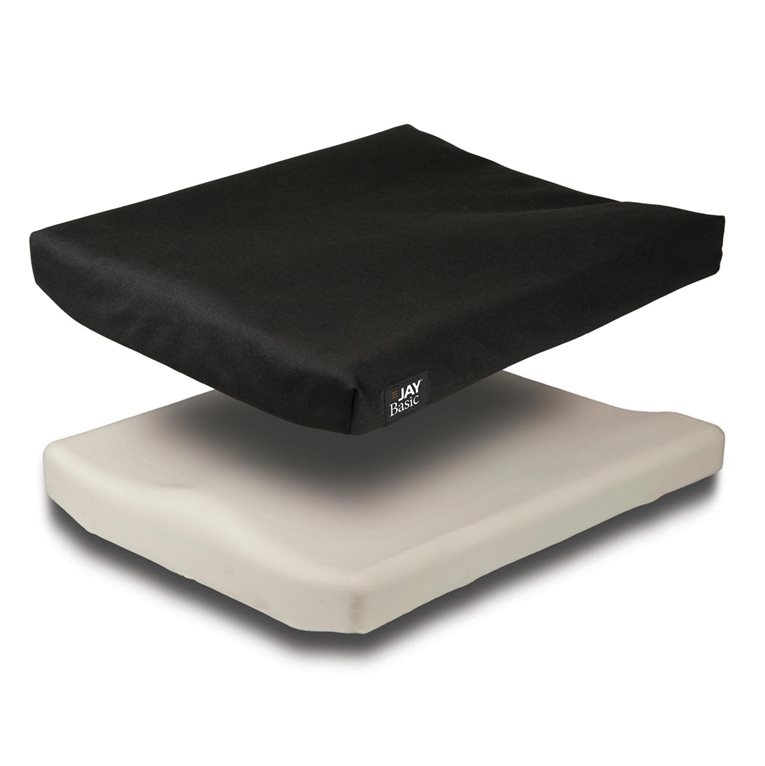
Foam compresses under you and takes your shape. It comes in many densities. It is affordable, light and needs little attention. The limits are that it breaks down faster than other materials, gives limited pressure relief compared with them, and must be kept dry. A catalog example is the JAY Basic Cushion, a 2 in contoured foam cushion with a moisture-resistant cover.
Gel and fluid
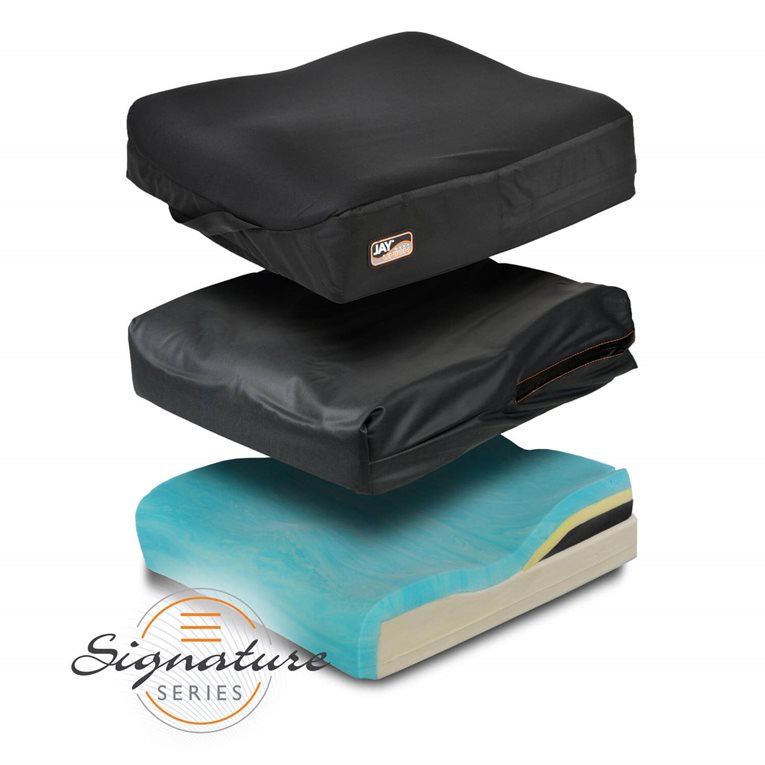
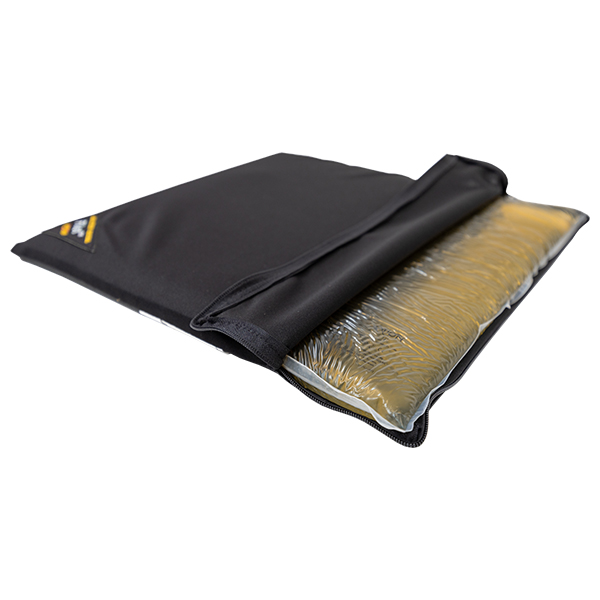
These cushions put a pad of gel or thick fluid over a foam base. The fluid moves away from high points and fills in around them, so load spreads over a larger area. The base gives a stable surface for posture. Gel can also help with heat. The costs are weight, poor shock absorption, possible leaks, and the gel moving away from where it is needed, which lets you bottom out until it is kneaded back. A catalog example is the JAY Union, which layers a fluid pad over contoured foam and weighs 5.25 lb in the 16 x 18 size.
Air
Air cushions are made of many small cells. Air moves between them as you shift, so the surface keeps adjusting to you. They are waterproof and spread pressure very well. In return they need the most attention: the inflation level must be checked often, and a puncture ends the protection until it is patched. A plain air cushion also gives less stability and postural support.
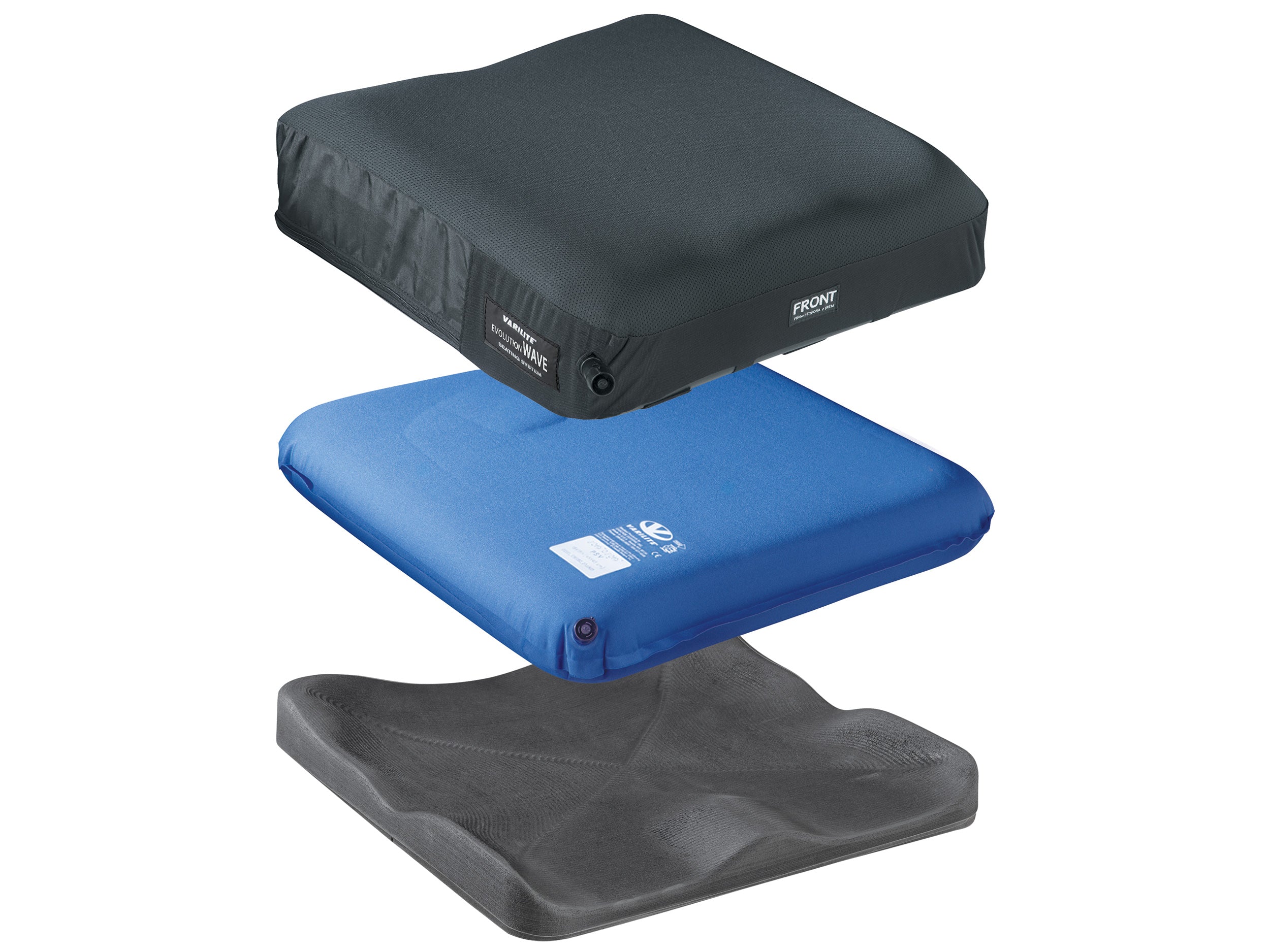
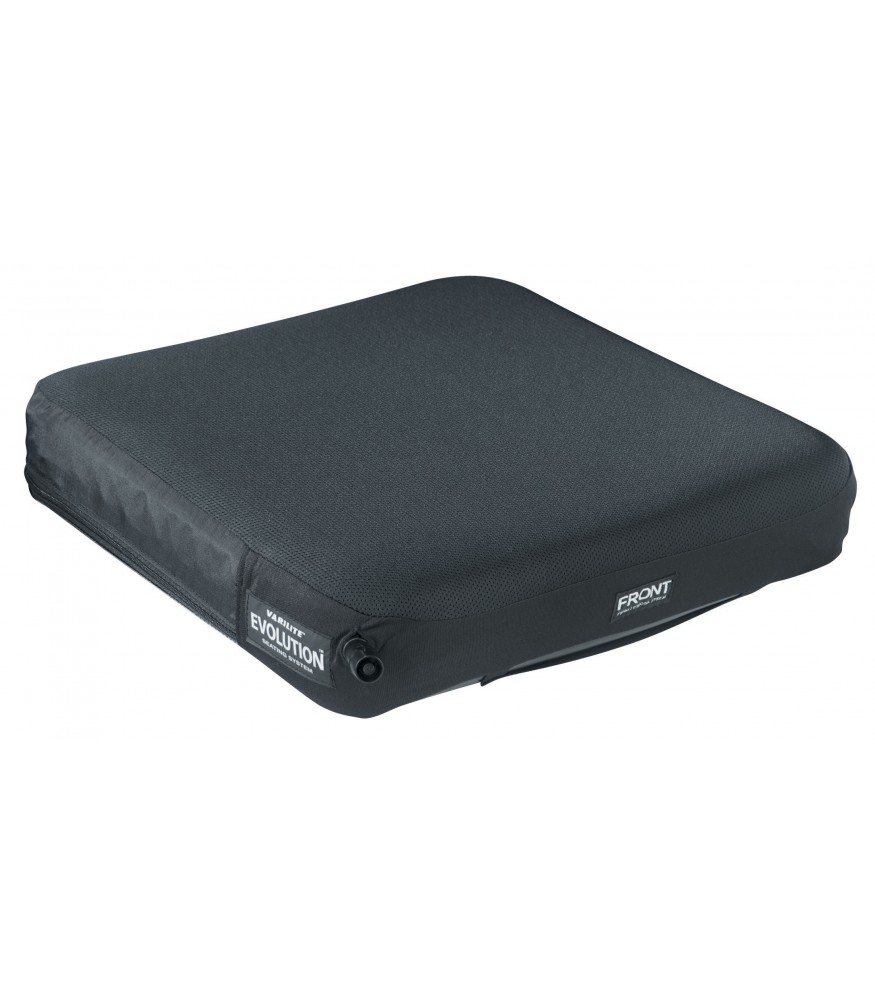
Makers address stability in different ways. The ROHO Quadtro Select in the catalog has four compartments that can be locked off while you are seated to hold a position. The Vicair Adjuster O2 is filled with small sealed air cells in five adjustable compartments and is fully machine washable. The VARILITE Evolution Wave combines air and foam on a solid base.
Honeycomb
Honeycomb cushions are made of a flexible, rubber-like urethane formed into open cells. The cells flex under load and let air pass through. They are light, durable and cannot be punctured, and they absorb shock. Their limits are moderate positioning ability and a shape that cannot be modified. A catalog example is the Supracor Stimulite Classic, which is 2.75 in thick, weighs 3 lb and can be machine washed and dried.
Side by side
| Type | How it spreads load | Strong points | What it asks of you |
|---|---|---|---|
| Foam | Compresses to your shape | Low cost, light, simple | Keep dry, replace when it breaks down |
| Gel or fluid | Fluid flows around bony points | Stable base, helps with heat | Heavier, knead gel back into place, watch for leaks |
| Air | Air shifts between cells | Very good pressure distribution, waterproof | Frequent inflation checks, patch punctures |
| Honeycomb | Cells flex and ventilate | Light, durable, washable | Shape cannot be changed |
Other designs
Custom contoured cushions are moulded to one person's shape. They work in one sitting position only, so transfers must land you in the right place. Alternating pressure cushions use a battery and pump to inflate and deflate sections every few minutes. They are aimed at people who cannot shift their own weight.
Matching a cushion to your skin risk with your clinician
A seating assessment looks at your posture, how you fit the chair, your skin history and your daily life. Expect to try more than one cushion. Be ready to describe your day: hours in the chair, how you transfer, and whether you get wet or hot.
What pressure mapping can and cannot do
Many clinics use pressure mapping. You sit on a thin mat of sensors, and a screen shows a colour picture of where pressure is high and low. It helps compare cushions on your body and shows whether your weight shifts work.
It has limits. It measures pressure only. It cannot see friction, moisture or how long you sit. Results change with position and timing. There is little research showing that mapping alone reduces pressure injuries. A map is one input to the decision, not proof that a cushion is safe for you.
Questions to ask
- What is my level of skin risk, and what is it based on?
- Which cushion types do you recommend for me, and why not the others?
- Can I trial the cushion in my own chair for some days before deciding?
- How does this cushion change my seat height, footrest setting and back support?
- Does it work on my seat sling, or do I need a solid seat base?
- What do I check each day and each week, and how do I know it has failed?
- What should I do, and who do I call, if I see a mark on my skin?
- When should we review the cushion?
Fit with the chair
A cushion changes the chair's geometry. Catalog heights run from 1 in for the Action Products Pilot to 4.25 in for the high-profile ROHO Quadtro Select. A thicker cushion raises you, which affects transfers and how you reach the wheels. Some cushions are made for a flat base and some for a sling seat. The Stimulite Classic is offered with a flat or a sling bottom.
Warning signs
Health services describe early signs as a patch of skin that is discoloured and does not change colour when pressed, or skin that feels warm, spongy or hard. If you see this, contact your health provider straight away. Do not wait to see if a new cushion fixes it.
Covers, care and replacement
Covers
The cover is part of the cushion. It manages moisture, heat and friction. Two kinds are common. Mesh or air-exchange covers let air and moisture through. Incontinence covers keep fluid out of the cushion. The catalog lists replacement covers of both kinds for JAY and VARILITE cushions. Ask your clinician which kind suits you.
Weekly check
- Cover: look for holes, worn or flaking areas and a broken zip.
- Air: check the inflation the way the maker shows you. If it keeps going soft, look for a leak. Putting the cushion under water shows bubbles at the hole, and patch kits are available.
- Gel: knead the gel from the outside toward the middle, and check it sits under your sit bones.
- Foam: look for crumbling, tears or a hollow that does not spring back.
Monthly clean
Wipe the cushion with a damp cloth and soap. Machine wash the cover if the label allows, and hang it to dry so it does not shrink. A dirty cushion can contribute to skin breakdown as well as smell. Follow the maker's instructions, because they differ. Some honeycomb and air-cell cushions can go in the washing machine whole. Foam must stay dry.
When to replace
There is no fixed age. Research summarised for wheelchair users found that how a cushion is used predicts wear better than how old it is. Transfer technique, dropping off kerbs, vibration, moisture, weather and extreme temperatures all play a part.
Warranty terms give a rough idea of what makers expect. One air cushion maker gives 36 months on the cushion and 6 months on the cover. The catalog lists a lifetime warranty on the air cells of the Vicair Adjuster O2 and a 5-year warranty on the Action Products Pilot.
Ask for a review if the cushion no longer holds its shape, if you feel the seat base through it, if your posture has changed, if your weight has changed, or if any skin mark appears.
This article is general information, not medical advice. Devices of this kind are chosen and fitted with a clinician who knows you.
Common questions
Which cushion type is best for preventing pressure injuries?
No type is best for everyone. The right choice depends on your skin risk, posture and daily life, and should be made with a seating clinician.
Do air cushions need a lot of maintenance?
They need the most regular attention of the main types. Inflation has to be checked often, and punctures must be found and patched.
Can pressure mapping tell me a cushion is safe?
No. It shows where pressure is high and low at one moment. It cannot measure shear, moisture or time spent sitting.
How long does a wheelchair cushion last?
It varies. Research suggests the way a cushion is used affects wear more than its age, so check it weekly and ask for a review when it changes or you do.
Can I wash my cushion?
Most covers can be machine washed and hung to dry. Some cushions are fully washable and others, such as foam, must stay dry, so follow the maker's instructions.
Sources
- SCIRE Community: Wheelchair Seating
- SCIRE Community: Pressure Injuries
- SCIRE Community: Pressure Mapping
- SCIRE Community: Wheelchair Maintenance
- NHS: Pressure ulcers (pressure sores)
- Permobil: ROHO Quadtro Select Cushion
- Supracor: Stimulite Classic Cushion
- Sunrise Medical: JAY Union Cushion
Read on 5 October 2026. The wording of the article is our own.