Tilt-in-space and reclining wheelchairs in 2026: tilt vs recline, Medicare criteria, prices and what 488 FDA reports show
Tilt vs recline, manual and power: RESNA's uses, Medicare's criteria, listed prices, and what two AI coders found in 488 FDA reports.
Contents
- The short answer: tilt, recline, manual and power
- Check today if someone uses a tilt or recline chair
- Tilt, recline and both: what is what
- Manual tilt or power tilt
- What the RESNA paper says tilt and recline are for
- The angles in the RESNA paper, and where to stop
- When tilt or recline needs extra care
- Recline, sliding and shear reduction
- Anterior tilt, seat lift and standing
- Does Medicare pay for tilt or recline?
- Which power base Medicare expects under power seating
- Manual tilt and recline under Medicare
- What tilt and recline chairs cost in 2026
- What power tilt and recline cost: one maker's order form
- Models with published specs
- Riding in a vehicle, ramps and anti-tippers
- Care of the tilt and recline parts
- If the seat stops while tilted or reclined
- Questions for the seating team and the supplier
- How Mobility Atlas read 488 FDA reports
- What these reports cannot tell you
- What the reports show: the big picture
- Power chairs and manual chairs
- Three periods, three kinds of filing
- Backs and seats that dropped or flipped back
- Actuators, motors and gas springs
- Stuck tilted or reclined, sometimes for hours
- Smoke, sparks and seating electrics
- Tips and falls while tilted or reclined
- Pinched and caught
- Cracked seat and back frames
- The death reports, read with care
- What the makers found
- The recall file
- When the reports arrived
- Three composite scenarios
- Your plan: 10 minutes, today, this week
- Sources and documents
- Common questions
- Sources
The short answer: tilt, recline, manual and power
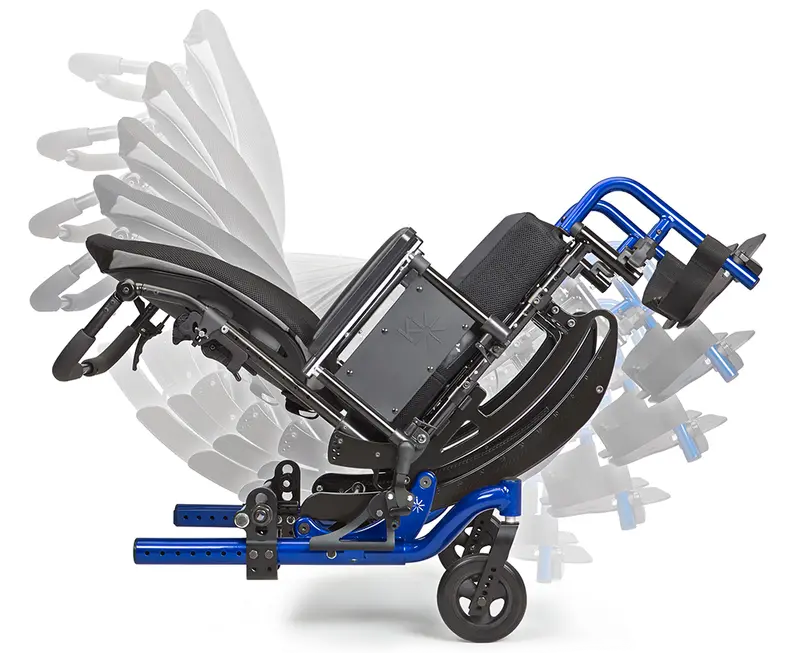
What is the difference between a tilt-in-space and a reclining wheelchair? Mobility Atlas read the 2024 public-comment draft of RESNA's position paper on tilt and recline and Medicare's wheelchair rules in October 2026, and the difference is what moves. Tilt turns the whole seat backward as one piece: in the paper's words it changes the seat's angle "while maintaining the seat-to-back and seat-to-legrest angles." Recline opens only the backrest; the paper says it moves "only the backrest" while the seat keeps the same angle to the ground. Manual versions are tilted or reclined by a carer with a lever, a cable or a gas spring; power versions use a motor, called an actuator, and a switch the user can work alone. Medicare counts a manual chair as tilt-in-space only if it tilts at least 20 degrees, and a power recline system must reach 150 degrees from horizontal. Which one, and at which angles, is for the seating team.
The difference matters. Tilt keeps the body's shape and moves weight off the sitting bones onto the back; recline lies the person down and can make them slide on the seat. And power seating lets the user change position without waiting for someone, which a manual tilt chair usually does not.
Mobility Atlas earns a fee or margin when you order through us; this guide uses only RESNA's published draft, Medicare's coverage rules, the makers' own pages and order forms, two retailers' listed prices, FDA reports and recall records, and our own catalog, read in October 2026. Choosing the chair, the tilt and recline angles, how often to use them and the cushion belongs to the seating team: a physical or occupational therapist and a RESNA-certified Assistive Technology Professional (ATP). This guide explains the options and what to ask, and stops there.
Check today if someone uses a tilt or recline chair
These checks match the problems the FDA reports in this guide describe most often.
- The person can bring the seat back upright on their own, or someone who can is always within call. Several reports describe a user stuck tilted or reclined, one for about three days.
- You know whether your power seat has any manual way back to upright if it stops while tilted. Ask the supplier today if you do not know.
- On a manual recliner, the back locks firmly when the handle is released and does not creep. A back that feels spongy or will not hold is a gas spring or release cable problem; stop using the recline until it is checked.
- Look at the back canes, back hinge and the brackets where the actuator meets the seat. The reports of a back that gave way usually name one of these parts; a crack, a bent tube or a loose bolt there is a reason to stop and call the supplier.
- The anti-tippers are fitted, down and locked, especially before a ramp, a van lift or a kerb. Two of the death reports describe a tilt or recline chair that tipped on a lift or a van ramp.
- A seating switch, actuator or wiring that smells hot, smokes or makes a popping sound: switch the chair off and call the supplier.
Tilt, recline and both: what is what
| Function | What moves | What stays the same | Medicare code and minimum |
|---|---|---|---|
| Manual tilt-in-space chair | The whole seat and back rotate back together, moved by a carer | Hip and knee angles | E1161 base: tilt of 20 degrees or more from horizontal |
| Power tilt | The whole seat and back, by an actuator | Hip and knee angles | E1002: tilt of 20 degrees or more, back at least 20 inches, 250 lb |
| Manual reclining back | The backrest only, by a handle and gas spring or cable | Seat angle to the floor | E1225: more than 15 and less than 80 degrees; E1226: 80 degrees or more |
| Power recline | The backrest only, by an actuator | Seat angle to the floor | E1003 to E1005: 150 degrees or more from horizontal |
| Power tilt and recline | Both, with two motors | Nothing fixed: both angles change | E1006 to E1008: both minimums |
| Anterior (forward) tilt | The seat tips forward | Feet on the floor or footplate | No code of its own in the rules we read; Quantum's order form prints K0108 for its 20 and 30 degree options |
Medicare's articles define the codes. A power tilt system that cannot reach 20 degrees "is considered to be the same as the standard seat included in the base wheelchair," the options article says, and Medicare's manual wheelchair article says chairs with less than 20 degrees of tilt "must not be coded as E1161 or K0108." Only the fully reclining manual back, E1226, has its own coverage criteria in the rules we saved.
Manual tilt or power tilt
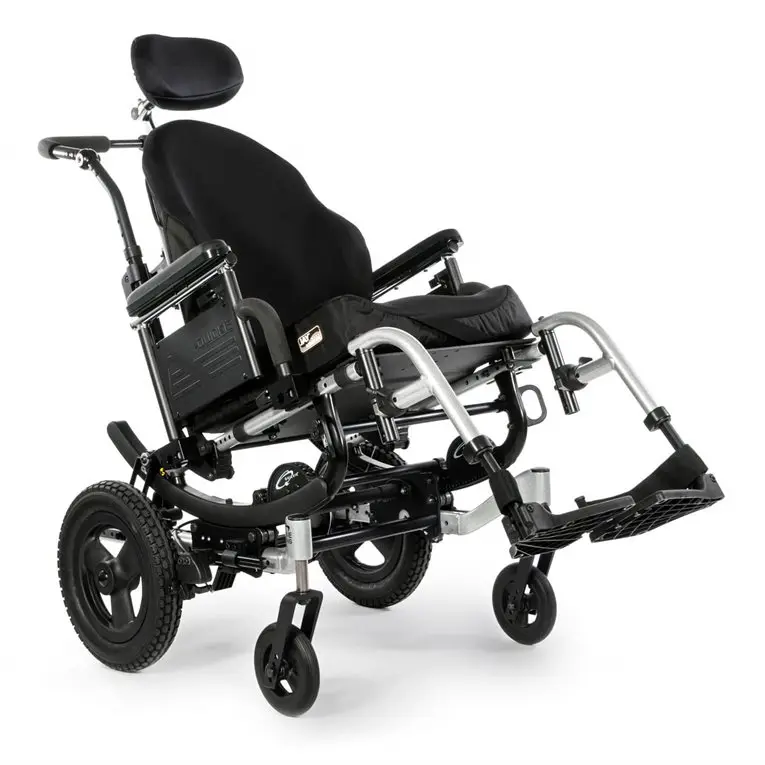
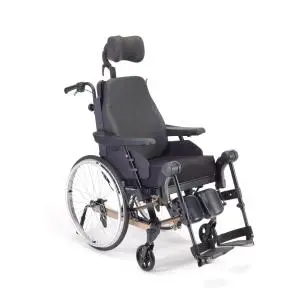
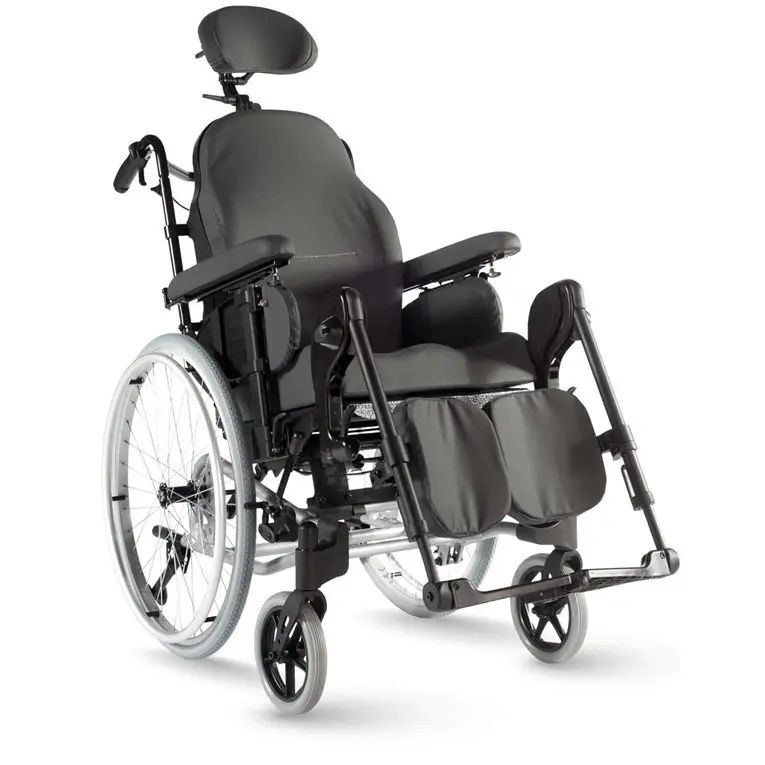
A manual tilt-in-space chair is usually pushed by a carer, who squeezes a handle or presses a foot lever to tilt the seat. Sunrise Medical says the Quickie IRIS seat "rotates around the rider's center of gravity," which it says gives "a smooth tilting motion that is easy to control" and a short wheelbase. Ki Mobility offers single, dual and foot-operated tilt on the Focus CR.
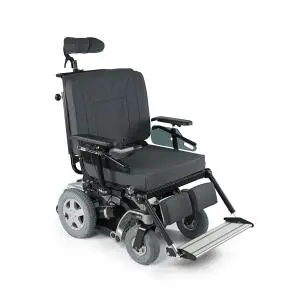
Some manual tilt chairs can be fitted with a power tilt: Sunrise describes a toggle switch "conveniently located on the armrest" on the IRIS, and Ki Mobility lists one for the Focus CR. A power wheelchair with power seating runs tilt, recline and leg rests from the joystick or a separate switch.
The RESNA draft summarizes one study of long-term care residents, families and staff that compared the two. Its findings, the paper says, "suggest that wheelchair users with power tilt may experience increased control, improved comfort and more freedom and independence to mobilize," while with manual tilt "the availability and attentiveness of staff" seemed to affect residents' ability to start a change of position. That is the practical question for a family: who will actually tilt the chair, and how often.
| Question | Manual tilt | Power tilt or recline |
|---|---|---|
| Who changes position | A carer, unless the user can reach and work the lever | The user, with a switch, or a carer with an attendant control |
| Self-propelling | Usually attendant-propelled; Sunrise offers a reverse IRIS set-up for self-propelling | Driven with the joystick |
| Weight | IRIS 38 lb; Focus CR 33 lb transport weight, as the makers print them | Quantum says the TB4 seating alone is about 211 lb |
| What can fail | Gas springs, release cables, handles, back hardware | Actuators, seating modules, wiring, back hardware |
| Medicare route | E1161 base under the manual wheelchair rule | Power seating codes under the wheelchair options rule, on a qualifying power base |
What the RESNA paper says tilt and recline are for
RESNA, the Rehabilitation Engineering and Assistive Technology Society of North America, publishes a position paper on tilt, recline and elevating leg rests. Its current version, a literature update dated February 2025 in RESNA's list, can only be downloaded with a RESNA account, and we did not read it. What we read is the public-comment draft RESNA posted openly in 2024, dated 16 April 2024. Its wording may differ from the final, so treat what follows as the draft's.
The draft says RESNA "asserts that these functions are medically necessary for disease management, safety, and overall functions." Its list of purposes runs from safer transfers and posture to pressure redistribution, pain management and comfort, "decreased fatigue," sitting tolerance and quality of life.
On pressure, the draft cites a study that found standard wheelchair push-ups inadequate: to work, a push-up would have to be held for 2 minutes. On fatigue and comfort, it says "most wheelchair users utilize seat functions for comfort," and that power wheelchair users "may sit in their chairs for up to sixteen hours a day." It also describes seat functions helping people manage drops in blood pressure.
The draft is also honest about the evidence. Its own limitations section says "the current literature lacks randomized, controlled trials and other high level scientific studies evaluating outcomes from the use of these technologies."
The angles in the RESNA paper, and where to stop
The draft gathers studies that measured pressure under the sitting bones at different angles. We report them as the paper's figures, not as a prescription. Across the studies it summarizes, small amounts of tilt did little: the paper reports that "15° of tilt or less did not produce significant effects, regardless of the recline angle," and that "tilt less than 20° was not effective to reduce peak pressure index" at the sitting bones or sacrum in one study. Larger tilt, often combined with recline, reduced pressure more. One table entry reports that "tilt of 30° with recline at 100° significantly reduced peak IT pressure by 20%," and 40 degrees of tilt with 100 degrees of recline by 40 percent.
The draft says there is a trade-off: "smaller angles of tilt and recline distribute greater pressure to the coccygeal area, but larger combinations of tilt and recline redistribute pressure to lumbar and thoracic areas."
That is where this guide stops. The right angles, how often and for how long depend on the person's skin, tone, breathing, blood pressure, bladder and the cushion, and the paper itself says the combinations "must be clinically directed" by licensed clinicians and "programmed by the ATP." Ask the physical or occupational therapist to write the plan down, and to check it with a pressure map if they use one. The Mobility Atlas guide to wheelchair cushions covers the cushion side.
When tilt or recline needs extra care
The RESNA draft lists clinical contraindications, cases where a function may harm rather than help. They are for the seating team to weigh, but families should know they exist:
- Urine flowing back with an indwelling catheter, which the draft says "can happen when using tilt, or tilt and recline."
- Shear and hip strain from recline alone, which the draft says includes "tissue shearing and stress on the hip joints when using recline only to change the seat-to-back angle."
- Custom molded seating: "manual and power recline is not advised," the draft says, because it pulls the body out of the mold and causes friction and shear.
- Spasticity, reflexes and pain triggered by some angles of recline or leg rest elevation.
- Raising elevating leg rests without recline, which the draft warns about for people with tight hamstrings.
One more line in the draft speaks directly to the FDA reports later in this guide. For people using tilt and recline together, it says clinicians should "assess whether the individual can operate the seat functions against gravity" so that controls are within reach "for returning to a neutral upright position." A switch the user cannot reach when tilted back is a switch that cannot bring them up.
Recline, sliding and shear reduction
When a backrest reclines, it pivots at a different point from the person's hip. The body slides on the back cushion as it goes down and up, and the pelvis can slip forward on the seat. That sliding is shear, and it is one reason RESNA warns about recline alone. Medicare's codes recognize two fixes. A mechanical shear reduction feature (E1004, E1007) "consists of two separate back panels" linked so that the user's back stays "in contact with the anterior panel without sliding along that panel," the policy article says; a power shear reduction feature (E1005, E1008) does the same with its own motor.
Leg rests can be linked too. Medicare's article says a "mechanically linked leg elevation feature (E1009)" works so that "when the back reclines, the legrest elevates," while power leg elevation (E1010, E1012) moves the leg rests on their own motors. Medicare covers elevating leg rests when, among other reasons, the person "meets the criteria for and has a reclining back on the wheelchair." Whether shear reduction or linked leg rests suit a person is a question for the therapist.
Anterior tilt, seat lift and standing
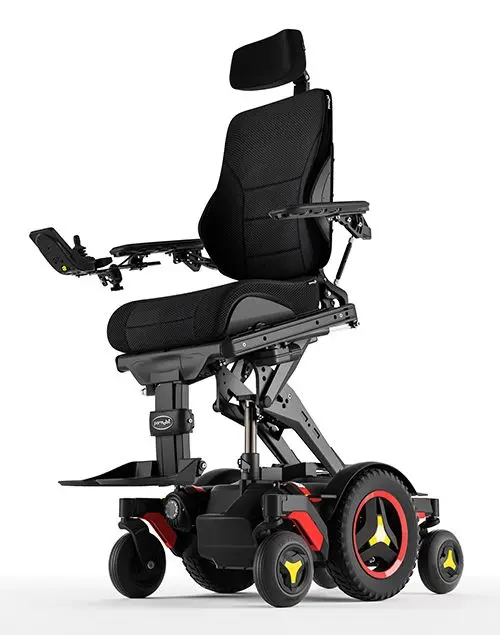
Some power seating now tips forward as well as back. Quantum's TRU Balance 4 offers "a choice of 10, 20, or 30 degrees of power anterior tilt," and a 12-inch power lift. Its sell sheet prints a posterior tilt range of 0 to 49 degrees, while the August 2026 order form lists the power tilt as 50 degrees; we print both as given. The same sell sheet limits drive speed with forward tilt: up to 10 degrees, "2 mph"; from 10 to 20 degrees, 0.5 mph with up to 6 inches of lift and "drive lockout" above that; and over 20 degrees, "drive lockout."
Quantum's own FAQ says a medical professional "should make the judgement call as to whether anterior tilt is appropriate," and warns that anterior tilt "could potentially cause a drop in blood pressure which can cause an individual to pass out."
Seat elevation has its own Medicare rule, NCD 280.16. A power standing feature (E2301) is non-covered: Medicare's article says it is "not primarily medical in nature." Standing chairs have their own Mobility Atlas guide to standing wheelchairs; this one stays with tilt and recline.
Does Medicare pay for tilt or recline?
Does Medicare pay for a tilt-in-space or reclining wheelchair? Mobility Atlas read Medicare's wheelchair coverage rules in October 2026, and the answer depends on the type. Power tilt, power recline or both are covered when the person meets every criterion for a power wheelchair, has had a specialty evaluation by a physical or occupational therapist or similar practitioner with no financial tie to the supplier, and gets the chair from a supplier that employs a RESNA-certified ATP, and when one of three needs applies: a high risk of pressure ulcers with no ability to shift weight, intermittent catheterization without independent transfer to bed, or the need to manage increased tone or spasticity. A manual tilt-in-space chair, E1161, needs the general manual wheelchair criteria, the same kind of specialty evaluation and an ATP supplier. A manual fully reclining back, E1226, is covered for the first two of those needs. Rules differ for other payers, so confirm with your plan before ordering.
The power seating rule says the system "will be covered if criteria 1, 2, and 3 are met and if criterion 4, 5, or 6 is met." If they are not met, "the power seating component(s) will be denied as not reasonable and necessary."
This guide describes traditional Medicare's rules as published by CMS. Medicare Advantage plans, Medicaid programs and the VA can set their own; confirm with the plan, and ask the supplier which rule they are billing under, before you sign.
Which power base Medicare expects under power seating
Power tilt and recline only work on a base built to carry them, and Medicare's power mobility rules group the bases by what they can accept. A Group 2 chair with no power options is "incapable of accommodating a power tilt, recline, standing system." A single power option chair can take a power tilt or a power recline, "but not a combination power tilt and recline seating system." A multiple power options chair takes the combination; on Group 3 and 4 bases the article says it "Accommodates a ventilator."
Group 2 and Group 3 power chairs with power options are covered only when the power tilt or recline criteria (or, for some bases, a non-joystick control or a mounted ventilator) are met, the power mobility rule says; Group 4 is denied for home use.
A single power option chair provided only "to accommodate a power seat elevation feature, a power standing feature, or power elevating legrests" will be denied, the rule says. Choosing the base itself is covered in the Mobility Atlas guide to electric wheelchairs.
Manual tilt and recline under Medicare
A manual tilt-in-space chair is billed as a base of its own. Medicare's manual wheelchair article defines E1161 as the "ability to tilt the frame of the wheelchair greater than or equal to 20 degrees from horizontal while maintaining the same back to seat angle," with a lifetime warranty on side frames and crossbraces. The manual wheelchair rule covers it if the person meets the general manual wheelchair criteria and has the specialty evaluation and ATP supplier the rule requires.
The general criteria are about the home, and include either enough arm function to self-propel or, the rule says, "a caregiver who is available, willing, and able to provide assistance with the wheelchair." For a tilt chair that a carer pushes, that is the criterion that applies.
A manual fully reclining back (E1226) is an option added to a manual base, covered for the first two needs listed in the Medicare section above: a high pressure ulcer risk without a weight shift, or intermittent catheterization without independent transfer to bed; otherwise, the rule says, "the manual reclining back will be denied as not reasonable and necessary." The rules we saved print no criteria for the partly reclining back, E1225. Sunrise prints HCPCS "E1161 / E1233" for the IRIS; Drive prints "K0004, E1226-1" for the Viper Plus recliner. A maker's code is the maker's suggestion: the Quantum order form itself says its codes "should not be considered as legal advice and do not guarantee reimbursement."
What tilt and recline chairs cost in 2026
These are listed prices on two large US retailers' category pages, read on 22 October 2026, for the lowest configuration shown. Options, cushions, headrests and leg rests usually cost more. They are not what Medicare or an insurer pays.
Manual reclining wheelchairs
| Chair | Listed price (USD) | As printed on the listing |
|---|---|---|
| ProBasics Reclining Manual Wheelchair (sold out) | 328 | 300 or 400 lb; 51 to 60 lb chair |
| Excel Reclining Wheelchair | 340 | 300 or 350 lb; 52 lb |
| ProHeal Reclining Wheelchair with Elevating Legrests | 389.99 | Reclines 90 to 180 degrees; 300 lb; 58 lb |
| Silver Sport Reclining (SpinLife) | 437 | Starting price |
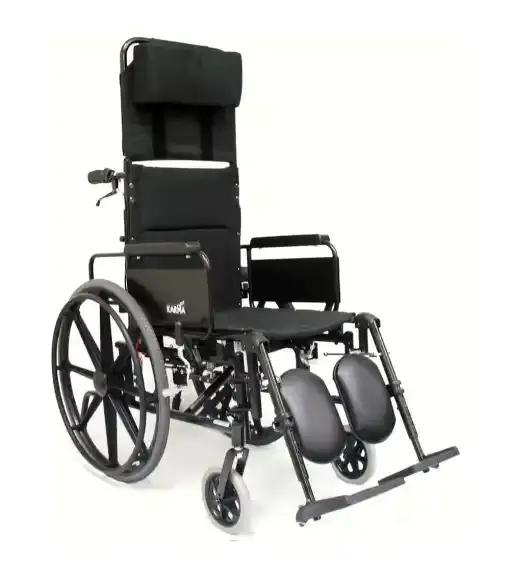
| Karman Reclining Back Wheelchair | 656 | 250 or 300 lb; 50 or 52 lb |
| Silver Sport Full Reclining Wheelchair (1800wheelchair) | 660 | Hydraulic recline; 300 or 350 lb |
| Invacare Tracer SX5 Recliner (SpinLife) | 699 | Starting price |
| Invacare 9000XT Recliner | 772 | 250 lb; 50.5 lb |
| Drive Viper Plus Reclining (SpinLife / 1800wheelchair) | 945 / 954 | 300 lb; 47 to 51 lb |
| Karman Ultralight Reclining Wheelchair | 1,340 | Aluminum; reclines 90 to 163 degrees; 36 or 38 lb |
| Karman Ergonomic MVP Reclining Wheelchair | 2,060 | Reclines 93 to 160 degrees; 250 lb; 36 lb |
Manual tilt-in-space wheelchairs
| Chair | Listed price (USD) | As printed on the listing |
|---|---|---|
| Karman Tilt-In-Space Wheelchair (sold out) | 1,835 | Transport chair; 0 to 35 degree tilt; 250 lb; 34 lb |
| Spring HW1 Manual Wheelchair | 1,895 | Manual tilt and recline; 300 lb; 84 lb |
| Karman Lightweight Tilt-in-Space VIP-515 (SpinLife) | 1,999 | Starting price |
| Zippie Iris SE (SpinLife) | 2,321 | Starting price |
| Karman Tilt-In-Space and Recliner Wheelchair | 2,440 | Tilt and recline; 0 to 35 degree tilt; 255 lb; 43 lb |
| Quickie IRIS SE (SpinLife) | 2,452 | Starting price |
| Ki Mobility Focus CR (SpinLife) | 2,465 | Starting price |
| Iris SE Wheelchair (1800wheelchair) | 2,928.77 | 40 or 55 degrees; 300 or 400 lb; 39 lb |
| Med-Mizer FlexTilt Chair | 3,054 | Tilt-in-space chair for all-day sitting; 350 lb; 85 lb |
Neither Sunrise, Ki Mobility nor Drive prints a public price on the product pages we read: Sunrise shows a dealer login, Drive says "SIGN IN TO VIEW PRICE."
What power tilt and recline cost: one maker's order form
Power seating is sold through rehab suppliers, and prices are rarely public. Quantum Rehab publishes an order form for the Q6 Edge 3 Stretto with TRU Balance 4 seating that lists MSRP, the maker's suggested price. The form, dated August 2026, says "All prices are MSRP" and that prices "are only available when configured as a complete power chair." A supplier or insurer may pay a different amount.
| Item on the Quantum order form | HCPCS printed | MSRP (USD) |
|---|---|---|
| Q6 Edge 3 base, single power option | K0856 | 8,730 |
| Q6 Edge 3 base, multiple actuator power option | K0861 | 8,540 |
| TRU Balance 4 power tilt only (50 degree tilt) | E1002 | 8,767 |
| TRU Balance 4 power tilt and recline (50 degrees tilt, 165 degrees recline) | E1007 | 13,046 |
| TRU Balance 4 12-inch power lift | E2298/E2300 | 3,725 |
| 20 degree anterior tilt | K0108 | 2,035 |
| 30 degree anterior tilt | K0108 | 2,647 |
| Dual actuator power articulating foot platform | E1012+K0040 | 3,595 |
By our sum, the multiple-power base with tilt and recline comes to USD 21,586 in MSRP. Quantum's product page says TRU Balance 4 also requires power seat height, anterior tilt and a power foot platform; with the USD 3,725 lift, the USD 3,595 foot platform and the 10 degree anterior tilt that the form lists at no charge, our sum is USD 28,906, before a cushion, a headrest or any other option. Quantum's FAQ says "the cost to the consumer would be at the discretion of the provider." Ask the supplier for a written quote that lists each code and what you will owe.
Models with published specs
| Model | Type | Tilt or recline as printed | Capacity | Chair weight as printed |
|---|---|---|---|---|
| Quickie IRIS (Sunrise Medical) | Manual tilt-in-space, power tilt option | 40 or 55 degree ranges, up to 45 or 60 degrees posterior; 30 degrees of mechanical recline available | 300 lb; 400 lb heavy duty | 38 lb |
| Ki Mobility Focus CR | Manual tilt-in-space, power tilt option | Tilt -5 to 50 degrees | 300 lb; 400 lb HD | 33 lb transport weight |
| Drive Viper Plus GT | Manual full recliner | Hydraulic recline up to 180 degrees | 300 lb | 47 to 51 lb |
| Quantum TRU Balance 4 | Power tilt, recline, lift, anterior tilt | Posterior 0 to 49 degrees (sell sheet) or 50 (order form); recline 85 to 165 degrees; anterior up to 30 | On a 300 lb Q6 Edge 3 base | Seating system about 211 lb |
| Karman Tilt-In-Space and Recliner | Manual tilt and recline | 0 to 35 degree tilt | 255 lb | 43 lb |
Our catalog also lists European tilt chairs such as the Invacare Rea Azalea and the Breezy RelaX2; ask us to find a model a local supplier can fit and service.
Two warnings from the makers' own documents belong next to the specs. Sunrise says "not all features and options offered are compatible with all configurations of the wheelchair." Drive's Viper Plus manual says the chair "has not been approved as a seat that can be used within vehicles of any kind."
Riding in a vehicle, ramps and anti-tippers
Tilt and recline change where the weight sits, and that matters most on slopes and lifts. Drive's recliner manual says assistance is recommended on inclines greater than 10 degrees and, "because of backward angle of the chair, sudden abrupt movement could cause instability." It also warns: "Do not lean over or apply weight to the top of wheelchair back. This can cause wheelchair to tip over."
Ki Mobility's Focus CR has flip-up, spring-loaded anti-tips worked with the foot, and the Focus CR and IRIS are listed as transit-approved by their makers. Quantum's FAQ says the TB4 system "has been tested and verified as WC19 occupied transit compliant for all units it is available on." Check the manual for your configuration; the Mobility Atlas guide to wheelchair vans covers tie-downs and ramps.
- Lock the anti-tippers down before a ramp or a lift, and check after anyone has adjusted them.
- Ask the seating team which tilt position is safe for going up and down a ramp, and for riding in the van.
- Ask the seating team and the lift maker which seat position to use on a van lift, and use every lock or pin the lift has.
- Keep the wheel locks on during transfers and keep the casters pointing forward when reaching.
Care of the tilt and recline parts
Most of the FDA reports later in this guide do not say whether anything was noticed before a part failed; one says the user had seen for days that the back would not come fully upright. The makers' manuals give service intervals; these are checks a family can do between services.
| Part | What to look and listen for | What to do |
|---|---|---|
| Gas spring or cylinder (manual recline or tilt) | Back or seat creeps, feels spongy, will not hold or lock | Stop using the function; ask the supplier to replace it |
| Release handle and cable | Stiff, frayed, slack, or the handle moves without releasing | Do not adjust the cable yourself unless the manual shows how |
| Back canes, back hinge, push handles | Cracks, bends, loose or missing bolts | Stop reclining or tilting; have the frame checked |
| Actuator and its brackets | Grinding, clicking, slow travel, a bracket that moves | Ask for a service visit before it stops in a tilted position |
| Seating switch, module and wiring | Heat, smell, smoke, popping, a pinched or cut wire | Switch off, unplug the charger, call the supplier |
| Anti-tippers | Raised, loose, or not locked | Set and lock them as the manual shows |
Finding a technician is covered in the Mobility Atlas guides to power wheelchair repair and manual wheelchair repair.
If the seat stops while tilted or reclined
A power seat that stops tilted back leaves the person unable to get out of the chair without help. One user's MedWatch report (see below) says there was "no mechanism to bring the chair manually to the upright sitting position." Quantum's FAQ, asked what happens if an actuator fails, says: "If the person is stuck in posterior tilt and the actuator will not move, please refer to the TB4 troubleshooting guide."
- Before it happens, ask the supplier whether your seating has any manual release or override, and get the troubleshooting steps in writing.
- Keep a phone, call button or alarm the person can reach while tilted or reclined.
- Check the battery charge and any error shown on the controller; in that MedWatch report, the user writes that the chair "had a faulty regulator which ruined the battery."
- If the seat will not move and the person is in distress, call emergency services; do not force the seat.
- Afterwards, report it to the supplier and the maker in writing, and stop using the function until it is checked.
For a person who cannot call for help, plan who checks on them while they are tilted or reclined, and how often.
Questions for the seating team and the supplier
- Should this person have tilt, recline or both, and why?
- Which angles, how often and for how long? Please write it down.
- Can the person reach and work the switch when fully tilted back?
- Is there a manual override if the power seat stops, and how does it work?
- Is the chair approved as a seat in a vehicle in this configuration?
- Which Medicare code is this, and which criterion does the person meet?
- Who services the actuators and gas springs, and how fast can they come?
- Is this model or any part of it under a recall?
Make sure the plan is written, that everyone who moves the chair knows it, and that someone answers the phone when the seat will not come back up.
How Mobility Atlas read 488 FDA reports
The FDA collects device reports in a database called MAUDE. Makers, importers and user facilities are mandatory reporters; patients, families and clinicians can report voluntarily. Wheelchairs are filed under two product codes, IOR for mechanical (manual) wheelchairs and ITI for powered wheelchairs. There is no separate code for tilt or recline, so we searched the text. On 22 October 2026 we took, through openFDA, every IOR or ITI report whose text names tilt-in-space, power tilt, a tilt system, function, actuator, module or mechanism, space tilt, recline, reclining or power recline. The search matched these exact words in the event description; reports that say only "reclined" or "recliner", or name tilt only in the product name, were not taken. Our copy of the FDA data holds at least 21 such reports from 2016 on, one of them filed as a death, and others that say only "tilted", so the counts here are not every tilt or recline report.
That search finds far more reports from 2011 to 2015 than from any other period: 1,118. We read every matching report received before 2011 (45) and from 2016 on (243), and a systematic sample of 200 of the 1,118: 50 consecutive reports starting at each of four evenly spaced positions in the openFDA list sorted by date received, positions 0, 279, 559 and 838. Because the four runs fell between 2011 and 2014, no report received in 2015 is in the sample. The date-sorted list of all 1,118, with each report's position, is saved as frame_2011_2015.csv on the method page, so the sample can be checked. In total we read 488 reports, received from November 1997 to September 2026.
Before reading a single report, we wrote a codebook and fingerprinted it with a time stamp. It records the device, whether the seating system is involved, the first thing that went wrong (from a fixed list in order of precedence), injury, fall, a cause traced to the user, and what the maker found.
Two independent coders then read every report separately, without seeing each other's answers. The coders were AI language models working separately. They agreed on what went wrong in 95.7 percent of reports, a kappa of 0.929, which is very high agreement; kappa is a standard measure of agreement beyond chance. They agreed on the device in 99.6 percent (kappa 0.991) and on the maker's finding in 98.4 percent (kappa 0.970). We settled the 40 reports where they differed under twelve written rules, T1 to T12, and a consistency pass under the same rules changed 36 more; the other 412 kept the codes both coders gave. The counts were made by script.
Two rules shape the counts. Rule T1 puts every back or seat that dropped, gave way or flipped back under the mechanism heading, whatever part broke; a cracked part with no drop stays under structure. Rule T8 counts a maker's photo-only review that ends "Not Confirmed" because a sample was required as no inspection, not as no fault found. Word-search counts in this guide run over the description of the event, not over the maker's later follow-up notes. A few reports appear twice, filed by different parties or weeks apart; we counted each report as filed.
What these reports cannot tell you
The reports are what people and companies chose to tell the FDA, not a count of every tilt or recline chair that failed. The FDA says that "MDR data is not intended to be used either to evaluate rates of adverse events," and that a report "does not necessarily demonstrate that the device caused or contributed to the adverse outcome or event." Nobody in these files says how many tilt or recline chairs are in use, so no count here is a rate, and none says which brand or design is safer.
The sample adds a second limit. Counts from 2011 to 2015 are counts within the 200 sampled reports, not within all 1,118, and they cannot be added to the other periods as if we had read everything. Totals in this guide are counts in the 488 reports we read. The mix also depends on who files, as the next sections show.
What the reports show: the big picture
What goes wrong with tilt-in-space and reclining wheelchairs? Mobility Atlas had two independent AI coders read 488 FDA reports about tilt and recline chairs, received from 1997 to September 2026, and the mechanism itself dominates: 290 reports describe an actuator, gas spring, cable or lock that failed, a seat stuck tilted or reclined, or a back or seat that dropped or flipped back. 64 describe a cracked or broken seat or back frame, 36 a seating switch, module or wiring fault, often with smoke, and 29 a person trapped or pinched, 16 of them users held tilted, reclined, raised or standing. 86 reports describe an injury, 63 a fall and 5 were filed as deaths. These are reports, not rates: many are short notes from one maker in one period, and counts from 2011 to 2015 come from a sample. The table shows each group.
| What the report says went wrong first | Reports | With injury | With a fall | Maker confirmed a fault | Filed as a death |
|---|---|---|---|---|---|
| Tilt, recline or elevate mechanism (incl. backs that dropped) | 290 | 47 | 38 | 94 | 2 |
| Seat or back structure cracked, bent or loose | 64 | 3 | 1 | 29 | 0 |
| Another part of the chair | 47 | 10 | 8 | 17 | 0 |
| Seating switch, module or wiring; smoke or fire | 36 | 1 | 2 | 11 | 0 |
| User trapped in a position, or a body part pinched | 29 | 14 | 1 | 7 | 1 |
| Tip or fall with no fault named | 12 | 9 | 12 | 1 | 2 |
| Problem alleged, part not named | 9 | 2 | 1 | 1 | 0 |
| Nothing failed | 1 | 0 | 0 | 0 | 0 |
420 of the 488 reports involve the tilt, recline or seat elevation system itself; the other 68 mention it but describe a problem elsewhere, such as brakes, casters or leg rests. Four reports turned out to be about another device, such as a hydrobath or a treatment recliner, which leaves 484 about a wheelchair: 309 power chairs and 175 manual chairs.
Power chairs and manual chairs
| Power chairs | Manual chairs | |
|---|---|---|
| Reports | 309 | 175 |
| Mechanism (incl. backs that dropped) | 196 | 94 |
| Seat or back structure | 24 | 40 |
| Seating electrics | 36 | 0 |
| Trapped or pinched | 22 | 7 |
| Another part of the chair | 22 | 25 |
| Tip or fall, no fault named | 7 | 5 |
| With injury | 61 | 24 |
| With a fall | 51 | 11 |
| Filed as a death | 3 | 2 |
The two kinds fail differently. In power chairs the actuator is the centre of the story: by a word search, 98 of the 196 power chair mechanism reports mention an actuator, and all 36 seating electrical reports are power chairs. Far more of the fall reports involve power chairs, 51 against 11, many of them when a powered back gave way. In manual chairs the story is the gas spring and the hardware: by a word search, 23 of the 94 manual mechanism reports name a gas spring, cylinder or piston, and manual chairs account for 40 of the 64 structure reports, many of them reclining back hardware that bent, stripped or loosened.
Three periods, three kinds of filing
The reports fall into three periods that look nothing alike, because of who filed and how.
| Before 2011 (all read) | 2011 to 2015 (200 sampled of 1,118) | 2016 on (all read) | |
|---|---|---|---|
| Reports read | 45 | 200 | 243 |
| Power / manual / other | 35 / 10 / 0 | 156 / 41 / 3 | 118 / 124 / 1 |
| Mechanism reports | 12 | 135 | 143 |
| With injury | 24 | 6 | 56 |
| With a fall | 13 | 3 | 47 |
| Maker confirmed a fault | 4 | 21 | 135 |
| Nothing inspected or stated | 37 | 174 | 83 |
| Median length of the event description (words) | 40 | 20 | 32 |
| Filed as a death | 1 | 0 | 4 |
Before 2011 the reports are few and often serious: 24 of the 45 describe an injury. They come from many makers.
In our sample, which runs from January 2011 to September 2014, the 2011 to 2015 peak is almost entirely one maker's filing. By the maker counts in our study file, Invacare is named in 191 of the 200 sampled reports, and 194 carry only a generic product name such as "POWERED WHEELCHAIR". The event descriptions are short, 20 words at the median, typically a dealer's note that a tilt actuator, recline cylinder or seating module needed replacing; one ends simply: "found the recline pot is bad." In 174 of the 200 the report states no inspection result. Only 6 describe an injury. This is a filing pattern: a maker reporting many routine service complaints as malfunctions. It is not a verdict on Invacare's chairs, and it says nothing about how they compare with anyone else's.
From 2016 on, the reports change again. 90 of the 243 are Medline reports filed in 2026 about manual reclining wheelchairs, and 85 of those say they are "submitted as part of retrospective review activities, which include review of historical data," as the reports put it. They describe recline mechanisms that will not lock, pistons, levers, frames and footrests, mostly without harm: 5 describe an injury and 3 a fall. The other 153 include Invacare's 46 reports from 2016 (15 of them say they come from a retrospective complaint review, and only 1 describes an injury), most of the Permobil and Pride reports, and reports on Quickie chairs from Sunrise Medical. Together these 153 carry most of the harm among the reports we read: 51 describe an injury and 44 a fall.
Backs and seats that dropped or flipped back
The most dramatic pattern in the reports is a backrest or seat that suddenly gave way. By a word search of the 290 mechanism reports, 40 describe a back or seat that gave way, dropped, collapsed, lost support or fell back or off; 39 of them are power chairs. 21 of those 40 describe a fall and 12 an injury. Two of the 40, filed by Permobil weeks apart in 2020 with identical text, appear to describe the same event.
The descriptions repeat. One report says that while a user sat at a table at home, "suddenly the backrest gave way allowing the back and user to fall backwards to a flat position." Another says a recline actuator "made a loud snapping sound and the backrest dropped from roughly 110 degrees to 180 degrees." Several describe back canes that broke during a tilt, one "causing the end-user to lose balance and fall out of the seating," the report says, with the user hitting their head on the floor. In one, a transfer by ceiling lift ended with the back giving way and the user sliding to the floor.
Where the maker investigated, the cause was usually a hinge, bracket, bolt or back cane. One maker's follow-up says "this failure mode is a known problem and the suspect component has been redesigned with stronger material"; another traces a bracket that fell off the seat to "a production error." One report says the user had noticed something first: the back "would not return to full upright as it had prior" for days before it gave way.
- A back that creaks, clicks, will not come fully upright or moves when you push on it is a reason to stop using recline and call the supplier.
- Do not lean on or hang bags from the top of the back unless the manual allows it.
Actuators, motors and gas springs
Most of the 290 mechanism reports are plainer than a falling back: a tilt or recline that stopped, ran slowly, leaked, jammed or would not lock. By a word search, 101 mechanism reports name an actuator, 98 of them on power chairs. A user wrote that "in almost any situation where my wheelchair is exposed to rain, an actuator went out shortly after," the report says, and that the actuators had failed 6 or 7 times in 28 months.
On manual recliners the weak points are the gas spring, the release cable and the handle. By a word search, 34 mechanism reports describe a back or seat that would not stay locked, hold or resist, 24 of them manual chairs. A Medline report says "the back handle for the recliner is not staying locked in place," and that the backrest "is not supporting weight when applied." A dealer note from the 2011 to 2015 sample says the recline cylinders "does not have any resistance." An FDA recall in 2011 covered gas cylinders in Gunnell chairs whose backs users described as "spongy," the recall says.
By two word searches and a read of the matches, at least 13 reports describe a seat that tilted or reclined by itself or without a command; two of them, both filed as deaths, appear to describe the same event. Two 2010 reports describe users at restaurant tables whose tilt began on its own and pinned a foot or legs against the table; one says the tilt activated "without touching any part of the controller." Uncommanded movement is a reason to switch the chair off and stop using the seating until a technician has checked it.
Stuck tilted or reclined, sometimes for hours
16 reports describe a user held in a tilted, reclined, raised or standing position who could not get back to upright or out of the chair. Some give the time: about 2 hours, over 30 minutes, an hour, and in one report "approximately three days," with no injury reported. In others the way out is the story: the fire department "had to respond and lift me out of the chair," the user wrote in one; EMTs were called in another; a user "was required to be transferred to another chair" when a tilt actuator stopped at 40 degrees.
Two of the fire department reports appear to describe the same event: a user's own MedWatch report about a Quantum Q6 Edge locked in recline after an error message, and Pride's report with the same details, which cites the MedWatch number. The user's report says the chair had "no default" that would let it "manually be lowered or revert to the sitting position," and that a person who could not call for help could be in "a life threatening situation" with "their head below their feet."
One report of this kind was filed as a death. It alleges that a user, tilted or reclined, "began coughing and was unable to tilt or recline back up," and that "an hour went by before he was discovered"; he was placed on a ventilator and died the next day, the report says. The maker's later note says the returned chair was evaluated and "the tilt and all other profiles were fully functional," and that the complaint "could not be attributed to the device." Both statements are in the report; neither settles what happened.
Smoke, sparks and seating electrics
36 reports describe a fault in the seating electrics: a switch, a tilt or recline module, a control box or the wiring. By a word search, 21 of them mention smoke, fire, melting, burning or sparks. All 36 are power chairs, and most of those we read are from before 2016. One says a tilt recline actuator "started smoking and the chair would not stop reclining"; another that "the fire department was called to get the user out of the chair" after a tilt actuator caught fire.
An Invacare recall in 2015 covered power recline seating where, if wire slack was not routed correctly, a headrest knob or clamp bracket could pinch the wire, and "smoking, sparking, burning or fire may occur if a wire is repetitively pinched at the same place," the recall says. If a seating function smells hot, smokes or pops, switch the chair off, move the person away from it if you can, and call the supplier.
Tips and falls while tilted or reclined
12 reports describe a tip or fall with no fault in the chair named, and all 12 describe a fall; 9 describe an injury and 2 were filed as deaths. Two say the chair tipped while the seat was reclined: a power chair that "tipped backwards" in a recline position, the user bruising their head, one report says; another where the chair "fell backwards" with the user landing on their head. One maker's note explains that its power chairs are "designed to safely ascend and descend 10% slopes," and that a steeper slope "can cause tipover."
By a word search and a read of the matches, 15 reports involve a van, a vehicle lift or a ramp, and 7 of those describe an injury. Two more describe a back that gave way while the user rode in a vehicle. Tilt and recline move the person's weight backward, which changes how a chair behaves on a ramp, a lift platform or a kerb.
Pinched and caught
13 reports describe a body part pinched, caught or crushed by a moving seat, back, leg rest or seat lift, and 10 of them an injury. A facility describes a bruise from tissue "pinched or squeezed" in the gap a reclining back left; an agency reports fingers "pinched between the triggers, and the end of the rail arc" while tilting a manual chair; a report from 2002 describes a leg jammed when a tilt actuator failed, and a fractured femur. Others describe feet caught between the chair and a table, a drawer, a rail or a door as the seat rose or tilted.
Recall records tell the same story. Invacare recalled a power tilt in 2005 because, fully tilted back, "a potential pinch point is created between the seat and the seat frame," the recall says. Before you tilt, recline or raise the seat, check hands, feet and clothing, and what is under and behind the chair.
Cracked seat and back frames
64 reports describe a seat or back structure that cracked, broke, bent, stripped or loosened without the back dropping: 40 manual chairs and 24 power chairs. The maker confirmed a fault in 29. Many are reclining back hardware: stripped holes in back canes, a bolt that came out, a bent bracket, a recline mechanism "loose and wobbly on both sides," one Medline report says. One customer told Medline it had "six additional reclining wheelchairs experiencing the same frame issue," the report says (the same sentence opens four Medline reports filed within eight days). On power chairs the reports name seat frames that fractured where an actuator attaches.
The death reports, read with care
5 of the 488 reports were filed as deaths. Two reports that appear to describe the same event, a wife's report through MedWatch and Pride's report in 2026, allege that a joystick "executed an uncomanded 90 to 0 degree recline" that caused a fatal lumbar injury; the wife's report says her husband became immobile, had organ failure and died within 60 days. Pride's report says the device "has not yet been made available for evaluation."
In a 2001 report, the facility transporting a user home from school put them on the lift "without reclining the chair or putting the pin in place," the report says, and the chair tipped forward; the user hit their head and died 5 days later. In a 2020 report, a Quickie IRIS tilt-in-space chair being unloaded from a van on a ramp tipped over backwards, and the user died of his injuries; the anti-tippers were found in the raised position after the incident, and the maker says "there were no allegations of malfunction or defect made against the wheelchair." The fifth is the 2017 report of a user who could not tilt or recline back up, described above.
Read together, they point to the same few things as the rest of the set: a seat that moves when it should not, a person who cannot bring it back, and a chair on a lift or ramp. They are reports, not findings.
What the makers found
In the 488 reports we read, the maker found or confirmed a fault in 160, found none or named an outside cause in 34, and stated no inspection result in 294. The share with no inspection is highest in the 2011 to 2015 sample (174 of 200), where most reports are brief dealer notes. From 2016 on, makers confirmed a fault in 135 of 243, including 56 of the 90 Medline reports, where Medline reviewed photos or video in many: 65 of the 90 mention a photo or video.
53 reports say the user or someone else caused the event, by misuse, a modification, a wrong part or continued use of a chair known to need repair. Our rule T8 counts a photo review that ends "Not Confirmed; sample required to determine cause," a phrase several Medline reports use, as no inspection rather than no fault found.
The recall file
We read the FDA recall records for manual and powered wheelchairs that mention tilt, recline or an actuator: 19 records, of which three match only because of a word in a product name or concern another kind of actuator. The other 16, from 2003 to 2016, are about tilt or recline:
- Invacare 3G Storm power tilt, 2005: a pinch point between the seat and the seat frame when fully tilted back.
- Quickie Freestyle C.G. Tilt power chairs, 2005: beyond a specified angle of recline the chair "can travel at an unsafe speed," the recall says.
- Invacare Storm TDX, 2007: a "software error may permit the chair to recline too far," the recall says.
- Gunnell manual chairs with dynamic recline, 2011: five records for gas cylinders that "would not hold a firm position," the recall says.
- Quickie and Zippie IRIS with the MONO Dynamic Backrest, 2015: two records; the backrest "may break over time resulting in a fall or injury to occupant," the recall says.
- Pride TRU-Balance 3 Gen 1, 2016: "the interface between the TB3 back and tilt base can separate when tilted beyond the specified angle," the recall says, for 12,343 chairs.
- Also: Invacare TDX SP actuator wiring (2012), Invacare power recline wiring (2015, three records, quoted in the section on electrics) and an Otto Bock pediatric tilt stroller (2003).
All 16 are marked terminated in the file. Check your chair's model and serial number with the supplier, and ask whether any recall work was done on it.
When the reports arrived
| Received | Reports read | Note |
|---|---|---|
| 1997 to 2010 | 45 | All matching reports |
| 2011 | 34 | Sample |
| 2012 | 16 | Sample |
| 2013 | 100 | Sample |
| 2014 | 50 | Sample |
| 2015 | 0 | Not reached by the sample |
| 2016 | 55 | All |
| 2017 | 15 | All |
| 2018 | 27 | All |
| 2019 | 9 | All |
| 2020 | 16 | All |
| 2021 | 13 | All |
| 2022 to 2025 | 13 | All |
| 2026 (to September) | 95 | All; 90 are Medline |
The 2026 jump is one maker's review of older complaints.
Three composite scenarios
These are composite scenarios, not individual customers. Each one combines facts and ranges already given in this guide to show how the decisions play out.
Scenario one: a care home resident cannot shift their own weight. The therapist recommends a manual tilt-in-space chair; the family sees listed prices from about USD 1,895 to USD 3,054 for chairs not marked sold out, confirms the chair tilts at least 20 degrees so it can be billed as E1161, and asks the home who will tilt it, and how often.
Scenario two: a power chair user with power tilt and recline notices the back clicks and will not come fully upright. Remembering the reports of backs that gave way, one after days of a back that would not come fully upright, they stop using recline and book a service visit; the technician finds a cracked hinge bracket.
Scenario three: a family's power chair stops while tilted back. They find no manual release and call for help; afterwards they ask the supplier for written troubleshooting steps and put a phone within reach whenever the seat is tilted.
Your plan: 10 minutes, today, this week
In 10 minutes, start with the checks at the top of this guide. This week, ask the supplier about a manual override and the troubleshooting steps, and get the tilt and recline plan in writing from the therapist.
Sources and documents
Reports: FDA MAUDE reports under codes IOR and ITI whose text names tilt or recline, read through openFDA on 22 October 2026. Recalls: FDA recall records for those codes. Clinical background: the 2024 public-comment draft of RESNA's position paper; the final February 2025 version needs a RESNA account and was not read. Funding: Medicare's coverage rules and articles. Products and prices: the makers' pages and order forms and two retailers' category pages. Every source is linked in the list at the end of this page.
Related guides on Mobility Atlas: Electric wheelchairs; Power wheelchair repair; Wheelchair cushions; Standing wheelchairs; Wheelchair vans; Manual wheelchair repair.
Quotes from reports are shown in sentence case; the FDA publishes most of them in upper case. The codebook, the sample, the method and the coded table are on the data and method page under CC BY 4.0.
Prices checked October 2026 on 1800wheelchair's and SpinLife's category pages and Quantum's August 2026 order form; prices change, so confirm them with your supplier. Documents checked October 2026: FDA reports and recall records, the Medicare coverage rules and articles, the RESNA draft, and the makers' pages.
Looking for a particular tilt or recline chair, or a supplier who can service one? Send an enquiry and ask us to find it. If a tilt or recline chair has let you down, or worked well, tell us the model and what happened; we use readers' notes when we update the guide.
This article is general information. Rules and prices differ by country and change, so confirm them before you buy or travel.
Common questions
What is the difference between tilt-in-space and recline?
Tilt rotates the seat and back together, so hip and knee angles stay the same; RESNA's draft says it keeps the seat-to-back and seat-to-legrest angles. Recline opens only the backrest while the seat keeps the same angle to the ground. Many chairs combine both.
Does Medicare cover a manual tilt-in-space wheelchair?
Yes, as base code E1161, if the person meets the general manual wheelchair criteria, has a specialty evaluation by a licensed or certified professional such as a PT or OT, and gets the chair from a supplier employing a RESNA-certified ATP. The chair must tilt at least 20 degrees.
What are Medicare's power tilt criteria?
The person must meet the power wheelchair criteria, have a specialty evaluation, use an ATP supplier, and have one of three needs: high pressure ulcer risk without a functional weight shift, intermittent catheterization without independent transfer to bed, or increased tone or spasticity.
How much does a reclining or tilt wheelchair cost?
On two retailers' pages in October 2026, manual recliners were listed from USD 328 (sold out; USD 340 for the cheapest not marked sold out) to 2,060 and manual tilt-in-space chairs from USD 1,835 (sold out; USD 1,895 for the cheapest not marked sold out) to 3,054. On Quantum's August 2026 order form, a power base with TRU Balance 4 tilt and recline, plus the lift and foot platform Quantum says the system requires, comes to USD 28,906 in MSRP by our sum, before a cushion or headrest.
What should I do if a power tilt chair gets stuck tilted back?
Check the battery and controller, keep a phone within reach, and call for help if the person is in distress; do not force the seat. Ask the supplier beforehand whether there is a manual override. 16 FDA reports we read describe users held tilted, reclined, raised or standing.
Which tilt angle should I use?
That is for the seating team, a physical or occupational therapist and an ATP. RESNA's draft summarizes studies in which 15 degrees of tilt or less had no significant effect on pressure, and larger tilt with recline reduced it, but it says the combinations must be clinically directed.
Sources
- FDA: About the MAUDE database and the limits of device reports
- openFDA: device adverse event endpoint (data used for this study)
- openFDA: device recall endpoint, product codes IOR and ITI
- RESNA: Position on the Application of Tilt, Recline, and Elevating Leg Rests for Wheelchairs, Literature Update 2024, public-comment draft of 16 April 2024
- RESNA: Position papers and service provision guidelines (final February 2025 version listed; account required)
- CMS: LCD L33792, Wheelchair Options/Accessories (power tilt and recline criteria)
- CMS: Policy Article A52504, Wheelchair Options/Accessories (E1002 to E1012 definitions)
- CMS: LCD L33789, Power Mobility Devices
- CMS: Policy Article A52498, Power Mobility Devices
- CMS: LCD L33788, Manual Wheelchair Bases (E1161)
- CMS: Policy Article A52497, Manual Wheelchair Bases
- CMS: NCD 280.16, Seat Elevation Equipment (Power Operated) on Power Wheelchairs
- Sunrise Medical: Quickie IRIS manual tilt wheelchair
- Ki Mobility: Focus CR
- Drive Medical: Viper Plus Reclining Wheelchair, product page and owner's manual
- Quantum Rehab: TRU Balance 4 Power Positioning Systems (product page, sell sheet, FAQ)
- Quantum Rehab: Q6 Edge 3 Stretto order form with TRU Balance 4 (MSRP, AUG2026)
- 1800wheelchair: reclining back wheelchairs (prices read October 2026)
- SpinLife: recliner and tilt manual wheelchairs (prices read October 2026)
- FDA: MedWatch, report a problem with a medical device
Read on 23 October 2026. The wording of the article is our own.
Data and method for this guide: the codebook, the coded reports and the list of documents, free to reuse under CC BY 4.0.