Used electric wheelchair guide 2026: used power wheelchairs for sale at 49 dealer stores, certified pre-owned, checks, batteries, warranty and recalls
What a used power wheelchair costs at US dealers, what to check from the makers' manuals, what batteries cost, whether the warranty transfers, and how to look up recalls.
Contents
- The short answer
- How we checked
- Three places used power chairs are listed
- Used power wheelchair for sale at dealers: 49 stores on one day
- What the dealer listings print, and what they leave out
- The models that turn up most, and their used prices
- Certified pre-owned: a brand reselling its own chairs
- Private sellers and marketplaces
- Safety of buying privately: money, meeting and records
- Before you look: the serial number and the paperwork
- Check one: the batteries and their age
- Check two: the charger
- Check three: motors, brakes and freewheel
- Check four: the joystick, the controller and the error codes
- Check five: tires, casters and the way it drives
- Check six: the seat, the frame, water and storage
- A test drive plan for the viewing
- Battery replacement cost, by seller prices
- Warranty transfer, as printed
- Recall lookup by model
- Medicare and used power chairs
- Three traps
- Three composite scenarios
- What to ask the seller, and the therapist
- Sources and documents
- Common questions
- Sources
The short answer
Where can you buy a used electric wheelchair, and what does one cost? Mobility Atlas read the first used-equipment page of all 49 stores in the Mobility Plus dealer network on 12 November 2026, plus two certified pre-owned pages of one brand, Journey. 24 stores printed "No products found." The rest listed 116 used items, and 39 were power wheelchairs, at 18 stores, priced from $700 to $6,900, median $1,525. Journey listed its pre-owned Air Elite at $2,395, with a new battery, and says "All Certified Pre-Owned sales are final."
Private sellers and marketplaces are the third route, with no dealer check at all. Whichever route you take, get the serial number, ask the battery age, try the chair, look up the model in the FDA recall data, and ask who will service it. Fit, seating and cushions are decisions for a physical or occupational therapist or a seating specialist.
A used power chair can be a sound buy, and the price gap can be real: on Journey's pages, its pre-owned units were priced 20 and 33 percent below its own new figures. What a used chair does not come with is just as real. On the pages we read, the maker warranties are written for the original purchaser, the batteries may be years old, the controller software may be behind a recall, and nobody has checked that the seat suits the next person who sits in it.
Mobility Atlas earns a fee or margin when you order through us; the guide below uses only the sellers' and makers' own pages and manuals, FDA and Medicare records and the FTC's shopping page, each read on the date we give.
Mobility Atlas can find and quote a power wheelchair for you, new or used where a seller offers one, including batteries, chargers and parts that are not listed on our pages. The process: you send an enquiry or a part request, we reply with a written quote that includes delivery to your country, and nothing is charged before you accept it. New chairs are on our power wheelchairs page.
This guide is for power wheelchairs (the chairs with a joystick). Our used wheelchair guide covers used manual and power chairs and scooters in general, reuse programs and the Medicare fee schedule; this guide goes deeper on power chairs, and links to it instead of repeating it.
How we checked
On 12 November 2026 we read the Locations page of Mobility Plus, a US dealer network, and fetched the used page of each of the 49 stores it lists, then the 45 item pages that the stores file under power chairs. The same day we read two Journey Health & Lifestyle certified pre-owned (CPO) pages, the Air Elite and the Zoomer. On 13 November 2026 we ran openFDA recall searches for the models those dealers list, and read the Jazzy Elite ES owner's manual, a battery page at Monster Scooter Parts and the FTC's page on online shopping.
We also used documents read earlier for neighboring guides: on 12 November 2026, Pride's articles on buying secondhand and on finding the serial number, the care and maintenance pages of the Jazzy EVO 614 owner's manual and a Monster Scooter Parts battery pack page; on 9 November 2026, two Pride warranty inserts, Pride's Jazzy 614 troubleshooting sheet, the Jazzy Elite ES product tabs, the Permobil one-year warranty, Pride's Jazzy EVO 613 Li specifications and travel scooter models list, SpinLife's battery page, Medicare.gov's wheelchairs and scooters page and the Medicare booklet on durable medical equipment.
Our method for prices: every range and count is computed by script over every price printed on the pages we name, and where we leave items out we say which and why. A price is the seller's, on the date read, in US dollars, with its label as printed ("Sale price:" on Mobility Plus cards, "Price:" on its item pages, a "New:" figure printed before the CPO price on Journey). The pages we read do not say whether tax is included, except Monster Scooter Parts, whose pages print "Tax Free"; shipping and fitting are extra. We did not see, drive or test any chair, we did not contact any seller, and we did not sign in anywhere. We quote no private classified ads. Advice of our own starts with the words In our view, and our reading of a rule or a record starts with the words In our reading.
Three places used power chairs are listed
Used power wheelchairs reach buyers in three ways, and each one hands you a different set of risks.
| Route | What we saw | Prices as printed | What comes with it |
|---|---|---|---|
| Dealer used stock | 39 chairs at 18 Mobility Plus stores | $700 to $6,900 | Store's own terms; few printed |
| Brand certified pre-owned | Journey Air Elite; Zoomer (not a wheelchair, Journey says) | $2,395; Zoomer $1,695 (out of stock) | New battery; final sale |
| Private sale or marketplace | Not quoted in this guide | None quoted | Whatever you check yourself |
The dealer route is the one with a shop window you can read: a store, a phone number, a price and usually a description. The certified pre-owned route is a brand reselling its own chairs after inspection, with terms printed on the page. The private route covers classified ads, marketplace listings, garage sales and a friend who no longer needs a chair. Pride names exactly those cases in its article on buying secondhand: a person who no longer needs their chair, a power chair at a garage sale, and units found while "surfing eBay or other resale sites"
.
In our view, the route matters less than the checks you do before paying, and the checks are the same for all three. The sections below take each route in turn, then the checks, then the costs that tend to follow a used purchase: batteries, warranty gaps and recall fixes.
Used power wheelchair for sale at dealers: 49 stores on one day
How much does a used power wheelchair cost at a dealer? Mobility Atlas read the used page of each of the 49 Mobility Plus stores on 12 November 2026 and counted every card on the first page each store served. Of 116 used items, the stores filed 45 under power chairs and 50 under scooters. We left out 6 of the 45: two whose pages call them scooters, a Go Go Elite Traveller (a model on Pride's travel scooter list), the Journey Zoomer, which Journey says is not a wheelchair, and two Baja Bandit pages that do not say what kind of unit they are. The 39 chairs left were priced from $700 (a Shoprider Streamer in Troy, Michigan) to $6,900 (a 2023 Quantum Q6 Edge 2.0 in Gulfport, Mississippi), median $1,525. 8 were under $1,000 and 8 were $3,000 or more. These are asking prices at one dealer network on one day, not a national price.
| Price band, as printed | Chairs | Examples from the cards |
|---|---|---|
| Under $1,000 | 8 | Jazzy Elite ES $950; Go Chair $999 |
| $1,000 to $1,999 | 16 | LiteRider Envy $1,000 to $1,600 |
| $2,000 to $2,999 | 7 | Jazzy EVO 614 $2,500 and $2,800 |
| $3,000 and over | 8 | Quantum Edge 2.0 $3,500 to $6,900 |
The stock is uneven. Two stores held a third of the chairs: Clearwater, Florida had 7 and Troy, Michigan had 6. A dealer near you may have nothing used today and three chairs next month, so in our view the useful habit is to ask, not to wait for a page to change.
Read the prices with care. Several stores list the same model at very different prices: the Jazzy Elite ES appears at $950, $1,250, $1,299.99, $2,000 and $2,900, at four stores. The pages do not explain the gaps, but they print details that may: a year, new batteries, a seat size, an extra feature. Nothing on the cards tells you which price is fair; the checks below are how you find out.
Mobility Plus is one network, chosen because every store publishes its used stock in the same format, which lets a script count it. Other dealers, independent home medical equipment stores and rehab suppliers also sell used, demo and trade-in chairs, and some may not post them online. In our view, call two or three dealers near you and ask what used or demo power chairs they have before you look at private ads.
What the dealer listings print, and what they leave out
We read the item page of each of the 39 chairs and counted what each one states. The pages are short. By our count:
- 13 of 39 print a serial number.
- 9 print a model year or a year in the description, from 2015 to 2025.
- 5 mention new, newer or like-new batteries; the other 34 say nothing about battery age.
- 1 mentions a warranty: the Buford, Georgia LiteRider Envy page says
"It still comes with Life Time Warranty on the frame and 6 months of in-store warranty on others."
- 1 (a Golden LiteRider Envy in Greenwood, Indiana) prints a name, a model number and a price, and no description at all.
- 3 pages, all in Troy, say the store will deliver.
None of the pages we read gives controller hours, the controller software version, the charger model or a service record. In our reading, that does not mean the stores lack the information; it means you have to ask for it.
Some pages are candid in a way that helps. The Troy page for a Jazzy 614HD says "Unit has a few scratches and wear. Newer batteries, comes with charger."
The Boise, Idaho LiteRider Envy page says "Brand new 22ah Interstate batteries installed."
A seller who names the faults and the battery state gives you something to check; a page that names neither gives you questions to ask.
Some pages copy specifications from the maker, and a used chair may no longer match them. The Clearwater Jazzy EVO 614 page lists "Up to 13 miles per charge at 450lbs, up to 21.5 miles per charge at 200lbs."
In our view, a figure like that describes a new chair with new batteries; ask the store how far this chair goes now on a full charge.
The "floor model" label on three Clearwater pages, and "Used like new" on another, describe condition in the store's words. In our reading, a floor or demo model is still a used chair for warranty purposes unless the store or the maker says otherwise in writing.
The models that turn up most, and their used prices
Six model families make up 25 of the 39 dealer listings we counted. The table groups the cards by the model words in their names; "other" covers the remaining 14 listings, such as the Merits Vision Super, Quickie Q500 and Jazzy Carbon.
| Model family (card names) | Listings | Price range as printed |
|---|---|---|
| Jazzy Elite ES | 5 | $950 to $2,900 |
| Quantum Edge (2.0, 3 Stretto) | 6 | $2,400 to $6,900 |
| LiteRider Envy (Golden, per two pages) | 4 | $1,000 to $1,600 |
| Jazzy EVO 613 and 613 Li | 4 | $1,100 to $3,000 |
| Jazzy EVO 614 | 3 | $2,500 to $2,800 |
| Go Chair, Go Chair MED | 3 | $950 to $1,400 |
| Other models | 14 | $700 to $3,500 |
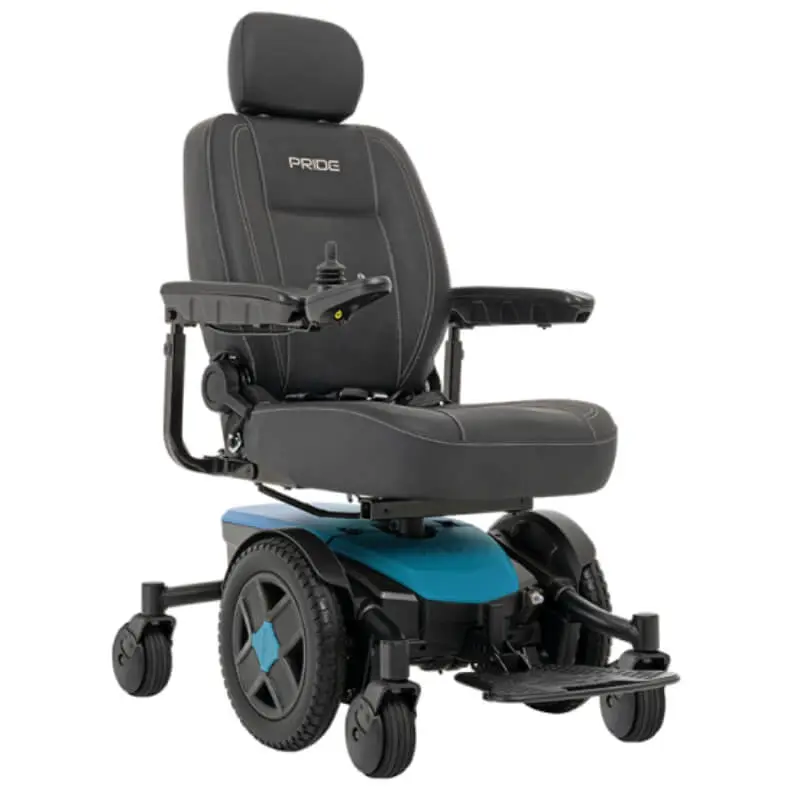
The Jazzy Elite ES is a front-wheel drive chair; the St. Petersburg, Florida page describes "in-line, front-wheel drive technology"
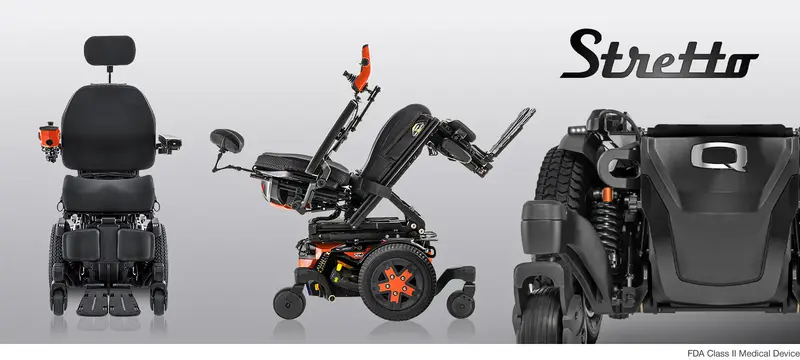
and the Columbia City and Knoxville pages give a 300 lb weight capacity. Its owner's manual is the one we quote most below, because it is one of the two model families listed most often. Three of the 6 Quantum Edge pages describe power seating: the Newnan, Georgia Q6 Edge 2.0 page describes "True Balance 3 power positioning"
and a "Q. Logic 3 advanced Drive Control System"
, the Stretto page "Tru-Balance 3 Power Positioning"
, and the other Newnan page says the chair "Raises up and down". The Edge chairs include the highest used price in our count, and they are the models named in an open recall, as the recall section below explains.
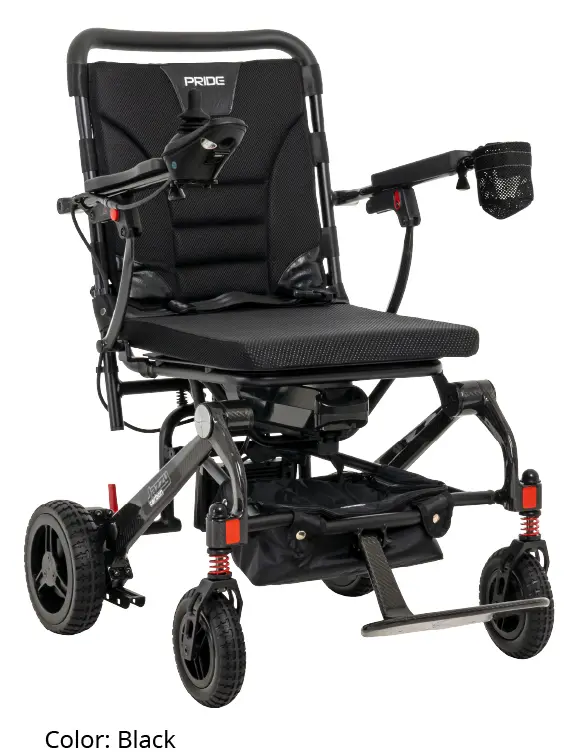
The Go Chair cards are travel chairs that come apart. The Tucson, Arizona Go Chair page prints "Product Weight: 128 lbs (w/ batteries)"
and "Heaviest Piece: 36 lbs". For folding and travel chairs bought new, our cheap electric wheelchair guide compares prices and what low prices leave out.
For Pride models, the part numbers for batteries, joysticks, motors and tires are covered in our Pride Jazzy parts guide. In our view, look up the part prices for the model before you agree a used price, since a worn part on a used chair is part of what you pay.
Certified pre-owned: a brand reselling its own chairs
Journey Health & Lifestyle, which sells its folding power chairs on its own US site, lists certified pre-owned units there. On 12 November 2026 its CPO Air Elite page printed "New: $2,995 $2,395" and "You save $600 vs. new", and its CPO Zoomer page "New: $2,545 $1,695" and "You save $850 vs. new". By our division that is 20 and 33 percent off the new figure. The comparison tables on the two pages also listed a CPO Zinger at $1,899 and a CPO Air Elite Max at $2,995; we did not open those pages. The Zoomer page showed the chair as out of stock on the day we read it.
What the pages promise is specific. The Air Elite page says each CPO chair is "expertly inspected, fitted with a brand-new battery, and tested"
, and its FAQ says the battery is "brand-new" and "installed before shipping"
. The Zoomer FAQ says the same about a new battery. In our view, a new battery is the single most useful thing a used power chair can come with, because battery age is the one fact a buyer often cannot confirm without a receipt or a load test.
What the pages rule out is just as specific. Both pages say "All Certified Pre-Owned sales are final."
The returns tab says "If a CPO item arrives damaged or defective, we will repair or replace it. To get started, give us a call within 5 days"
. The warranty text on both pages says Journey will "repair or replace it with new or refurbished parts at no charge"
and that "This warranty does not cover labor costs associated with component installation or replacement"
. The pages we read print no warranty length for CPO units; ask Journey for it in writing.
One more line matters for funding and for what you are buying. The Zoomer page says "The Zoomer Chair is a personal electric vehicle and is not a medical device nor a wheelchair."
The Air Elite page, by contrast, says "FDA registered and cleared."
In our reading, a device its maker calls not a wheelchair is not something to present to an insurer or a clinician as one. Journey's pages also say "Journey does not diagnose, prescribe, accept, or process insurance claims."
Pride has its own rule for reconditioned chairs. Its Group 2 and Group 3 warranty insert says "All reconditioned units are covered by a six-month warranty from Pride effective from the date of purchase."
In our reading, that line covers units Pride or its channel sells as reconditioned; it does not turn a private sale into a reconditioned unit. Ask the seller whether the chair is a Pride reconditioned unit and for the paperwork.
Private sellers and marketplaces
A private sale has no store behind it. There is no inspection unless you arrange one, no return unless the seller agrees, and no record of what happened to the chair unless the seller kept it. We did not save or price marketplace listings for this guide: a classified ad is one person's asking price on one day, and we could not check any of them.
Pride's article on secondhand units says "there's no guarantee that the unit is functioning as intended"
in a secondhand purchase, and tells buyers: "Make sure you're given a chance to test the product thoroughly for any faults, defective functionality, electronic failures, or mechanical issues."
For online purchases, the same article says to "ask many questions of the seller and receive assurance that once you receive the product, you'll have a chance to test it out before deciding if you'd like to keep it."
The same article says this about batteries: "Often, when products are purchased secondhand, batteries become an issue. The unit you receive may have been sitting idle for a long time or may have a battery that has been drained of most of its energy."
The battery section below explains why a chair stored flat may need new batteries before it is any use.
Pride's article also points to its manuals: "If you obtain a secondhand product, it may or may not be available with a physical owner's manual."
Pride publishes them on its site. In our view, download the manual for the exact model before you go to see the chair, and take it with you; the checks below come from manuals like these.
Shipping a chair bought from far away adds its own step. The Jazzy Elite ES manual says that to ship a power chair by freight, "repack your power chair in the original shipping container and ship the batteries in separate boxes."
In our view, agree in writing who packs the chair, who pays the freight, and what happens if it arrives damaged, before you pay anything.
Safety of buying privately: money, meeting and records
The US Federal Trade Commission's page on online shopping is written for buying online, and several of its lines fit a used power chair sold online. Its advice to "Learn the total cost of the product, including shipping, handling, delivery, taxes, or other fees"
applies twice here: a chair across the state may cost as much to move as to buy.
On payment the page is blunt: "Never buy anything from online sellers that insist you can only pay with gift cards, by wire transfers through companies like Western Union or MoneyGram, with a payment app, or with cryptocurrency."
It says "Paying by credit card best protects you and your money in case of a scam, or if something else goes wrong."
A private seller may not take a card; in our view, that is a reason to see the chair before any money changes hands, not a reason to send a deposit.
The page also warns that words such as refurbished "could mean a product is in less-than-perfect condition"
, and that brand-name items at bargain prices "could be counterfeit or stolen."
In our view, a power chair with its serial label removed or defaced is a reason to walk away. Permobil's warranty adds a practical reason: "The Warranty may be void if the original Permobil serial number tag on the product has been removed, altered or defaced."
Keep records as the FTC page lists them: "the company name and website"
, "what you ordered, the date you ordered it, and what you paid"
, "the seller’s return policy"
, "the company’s promise to ship"
and "all email, text, and other communication"
. In our view, for a power chair, add the model, the serial number, the battery date codes and photos of the chair as handed over.
In our view, three practical rules cover the rest. Meet where the chair is kept, in daylight, with someone else present, and charge the chair fully before the test drive. Never send money for a chair you have not seen working. And if the person who will use the chair cannot attend, video the test drive and the error-code check so a dealer or therapist can look at it later.
Before you look: the serial number and the paperwork
The serial number is the key to everything else: the warranty status, the recall check, the right battery and the right parts. Pride's secondhand article says the serial number "can confirm warranty status and past service history while expediting any repair process, as Pride will be able to verify the unit's history."
It adds: "Without a serial number, the warranty status can't be known, which means repairs or replacement parts could become costly."
Pride's page on finding serial numbers says it is on the main frame of Pride power chairs, and "To access it, you'll need to lift the shroud. On many models, you'll also need to move the battery to access the white sticker."
It says "Power chair serial numbers begin with the letter 'J' and are 14 digits long."
If it is not on the frame, the page says, "It could be on the seat post or on the footplate."
Other makers place and format their labels differently; look in the manual for the model.
Among the dealer pages we read, 13 of 39 print a serial number. A private seller should be able to show you the label. Photograph it, and check that the model on the label matches the chair you are being sold.
Ask for the paperwork that came with the chair: the original invoice, the manual, the charger manual, any service invoices and any recall letters. The Jazzy Elite ES manual has a box on page 2 for the "Authorized Provider", "Phone Number" and "Purchase Date"; if the previous owner filled it in, it tells you who set the chair up and when.
That box matters because of the manual's first warning: "An authorized provider or a qualified technician must perform the initial setup of this power chair and must perform all of the procedures in this manual."
In our reading of this manual, a used Jazzy Elite ES bought privately still needs a provider or technician to set it up for its new user.
Check one: the batteries and their age
In our view, on a used power chair, the batteries are the part most likely to need money first. Pride's 2010 troubleshooting sheet for the Jazzy 614 and 614HD asks first, for a chair that travels less far than it used to on a full charge, "Determine if the batteries have ever been replaced."
Our used wheelchair guide covers battery age in general; the lines below are the ones the Jazzy manuals print.
The Jazzy Elite ES owner's manual explains how batteries get damaged in storage: "Batteries that are regularly and deeply discharged, infrequently charged, or stored without a full charge may be permanently damaged, causing unreliable power chair operation and limited battery life."
It also says "Your power chair’s charger will not operate after the batteries have been discharged to nearly zero voltage. If this happens, contact your authorized Pride Provider for assistance."
In our reading, a chair whose charger will not start may have been left flat, and its batteries may be permanently damaged.
What to look at
In our view, check:
- Find the date code or purchase date on each battery, and ask for the receipt if they were replaced.
- Check that both batteries match. The Elite ES manual says
"Always use two batteries of the exact same type, chemistry, and amp-hour (Ah) capacity."
- Check the type. The same manual says
"Use only AGM or Gel-Cell batteries to reduce the risk of leakage or explosive conditions."
Pride's Jazzy EVO 613 Li specifications list "(2) 12 volt, U-1 or (1) 25V Lithium-iron phosphate" batteries and a "3.5A, off-board" charger. Ask which battery this chair has, and ask Pride which charger goes with it. - Look for swelling, cracks, leaks or corrosion on the terminals and harness. The EVO 614 manual says to check that electrical connections
"are tight and are not corroded."
- Ask how the chair was stored, for how long, and whether it was charged during storage.
In its Corrective Maintenance section, for when the battery condition meter does not light up and the harness, circuit breaker and battery connections check out, the Elite ES manual says "you can load test the batteries with a battery load tester. These testers are available at automotive parts stores. Disconnect both batteries before load testing and follow the directions that come with the load tester. If either one of the batteries fails the load test, replace both of them."
The same manual says "Wear goggles and gloves when handling batteries and wash hands after handling."
In our view, have a provider or technician do the test, and ask the seller for the result before you visit.
Battery wear is also outside the warranty, even for the original owner. Pride's standard power insert says "Gradual deterioration in performance of batteries due to being left in a discharged state, left in cold conditions for long periods of time, or worn out through heavy use are not covered."
For charging habits, battery types and the FDA reports on battery fires, see our power wheelchair batteries guide.
Check two: the charger
A used chair should come with its own charger, and the charger should be checked as carefully as the chair. The Jazzy Elite ES manual says "You must recharge your power chair’s batteries with the supplied off-board battery charger. Do not use an automotive-type battery charger."
It also says "Inspect the battery charger, wiring, and connectors for damage before each use."
In our view, check:
- Check that the charger's voltage and plug match the chair. The Elite ES manual says its charger converts outlet power
"to 24 VDC (direct current)"
, and the chair is charged through the"off-board charger/programming socket on the controller."
- Look for heat marks, cracked casing or a damaged cord. The manual says
"Do not attempt to open the battery charger case."
- Plug it in and watch the lights. The manual says
"If the LED does not indicate that charging is complete within 24 hours, unplug the charger from the outlet and contact your provider."
- Do not test it on an extension cord. The manual says
"Never use an extension cord to plug in your battery charger."
Charge the chair fully before the test drive. The Elite ES manual's daily-use advice is to charge "at least 8 to 14 hours after daily use"
, and its note adds "Pride recommends charging your batteries for at least 48 continuous hours once per month to improve battery performance and battery life."
In our view, a seller who cannot have the chair fully charged when you arrive is telling you something about the batteries.
New batteries also need time. The same manual describes a break-in: give new batteries a full charge, drive, give them "another full charge of 8 to 14 hours"
, and "After four or five charging cycles, the batteries will top off at 100% charge"
. If a seller has just fitted new batteries, in our view, ask to see the receipt and expect the range to rise over the first week.
Check three: motors, brakes and freewheel
On the Jazzy 614 and 614HD, Pride's troubleshooting sheet describes how the electric brakes sound: a single click after the joystick is pressed "is the sound of the brake releasing to allow the motors to turn."
Listen for it.
The Jazzy EVO 614 owner's manual prints a weekly brake check, which in our view also works as a test drive step. It says the test "should be carried out on a level surface with at least 3 feet (1 meter) of clearance around your power chair"
, and gives the steps:
- Step one, as the manual says:
"Turn on the controller and turn down the speed level of your power chair."
- Step two, as the manual says:
"After one second, check the battery condition meter. Make sure that it remains on."
- Step three, as the manual says:
"Slowly push the joystick forward until you hear the electric brakes click. Immediately release the joystick."
- The manual says
"You must be able to hear each electrical brake operating within a few seconds of joystick movement. Repeat this test three times, pushing the joystick backwards, then left, and then right."
The freewheel levers matter on a used chair because they are easy to leave in the wrong position. The Jazzy Elite ES manual warns: "Do not disengage the drive motors when the power chair is on an incline or decline, as the unit could roll on its own. Only engage the freewheel mode when on a level surface."
It also says "when your power chair is in freewheel mode, the braking system is disengaged."
On the chair's label, the manual's symbol text says to "Place unit on level ground and stand to one side when changing from drive mode to freewheel mode or freewheel mode to drive mode."
In our view, during a viewing, with the controller off, nobody seated and the chair on level ground, stand to one side, put it in freewheel and check that it pushes freely, then put both levers back in drive and check that it will not roll. Never try to drive it in freewheel: the Elite ES manual warns, with an exclamation mark we leave out, "Do not use the power chair while the drive motors are disengaged"
. If a lever is stiff, the manual says to "slightly rock the power chair back and forth."
Motor problems show up as sounds and behavior. The Elite ES manual lists, among symptoms that "could indicate a serious problem"
: "Motor noise", "Jerky motion", "Pulling to one side" and "Powers up, but does not move"
. For how motors, gearboxes and brakes fail, and what repairs cost, see our power wheelchair repair guide.
Check four: the joystick, the controller and the error codes
The controller reports its own faults, which in our view makes it the most useful part to switch on at a viewing. The EVO 614 manual's daily check is a good start: "With the controller turned off, check the joystick. Make sure it is not bent or damaged and that it returns to the neutral position when you release it."
It also says to "Check the rubber boot around the base of the joystick for damage"
and to inspect the controller harness to "Make sure that it is not frayed, cut, or has any wires exposed."
Then switch on and watch the display. On the Jazzy 614 and 614HD with the Dynamic controller, Pride's troubleshooting sheet says: "When a fault is detected by the Dynamic controller, the service indicator wrench icon will flash in a numbered sequence, followed by a 2-second pause."
Our used wheelchair guide prints that sheet's code table, and the repair guide explains codes across makers.
The same sheet lists two states that look like faults and are not: battery lights chasing "from right to left" mean the controller "is in lockout mode", and the sheet says "To unlock the controller, press the horn button twice."
Lights flashing rapidly non-stop mean an "Out of Neutral at Power Up"
condition: "Release the joystick back to the neutral position."
Other chairs use other controllers and other codes: VR2, R-net, Q-Logic and LiNX each have their own displays, and the Newnan Q6 Edge 2.0 listing names "Q. Logic 3". Our wheelchair joystick guide explains the families and how to identify which one a chair has. In our view, any code that shows at a viewing is for the seller to explain and clear, with a provider if needed, before money changes hands.
Ask for the controller's software version, especially on the Quantum models the 2026 records name. The recall section below shows why: a 2026 recall names Quantum models by software version, not by year or serial range.
Check five: tires, casters and the way it drives
Tires are cheap compared with batteries, but worn or mismatched tires change how a chair drives. The EVO 614 manual's monthly checks say to "Check for drive tire wear"
, to "Check the caster wheels for wear. Replace them as necessary"
, and to "Check the caster forks for damage or fluttering which indicates that they may need to be adjusted or have the bearings replaced."
Solid and air tires need different checks. The EVO 614 daily list says "Check for flat spots on solid tires. Flat spots could adversely affect stability."
For air tires, the manual says "Make sure pneumatic drive tires are inflated to the psi/bar/kPa air pressure rating indicated on each tire"
and warns "Do not underinflate or overinflate your tires. Low pressure may result in loss of control, and overinflated tires may burst."
A chair that has stood unused for months may have flat spots from its own weight. The EVO 614 and Elite ES manuals both suggest boards under the frame in long storage; the manuals say this "takes the weight off the tires and reduces the possibility of flat spots developing"
. Ask how the chair was stored.
On the test drive, the Jazzy 614 sheet explains pulling: "If one tire is inflated more than the other, the power chair will pull to the side that is underinflated,"
and "If either caster is not pivoting freely, the unit will veer to the side."
The Elite ES manual lists "Uneven wear on any of the tires"
and "Bent or broken wheel assemblies"
among signs to call the provider.
The Elite ES manual says "The wheels on your power chair should only be serviced or replaced by an authorized Pride Provider or a qualified technician."
In our view, a used chair that needs tires is still worth considering; price the tires for that model first, then fold the cost into your offer.
Check six: the seat, the frame, water and storage
The EVO 614 manual's daily list ends with the seat: "Inspect the seating system, armrests, and front riggings for loose hardware, stress points, or damage."
Its monthly list adds "Check the entire power chair for loose hardware and changes in the function or performance of the power chair"
and says spring shocks and gas dampers "should be visually checked for any abnormality, structure damage, or bent rods."
Water is the hidden enemy of a used chair. The EVO 614 manual warns that "Water can cause electrical components to corrode and the chair's frame to rust"
, and that power chairs "should be examined periodically for signs of corrosion caused by water exposure, bodily fluid exposure, or incontinence."
In our view, look under the shroud and around the battery tray for rust and green or white corrosion, and ask directly whether the chair has been out in heavy rain or in a flood.
Storage temperature matters too. The EVO 614 manual says long-term storage should be between -13°F (-25°C) and 122°F (50°C), and that "If you fail to store the unit properly, the frame can rust and the electronics can be damaged."
The Elite ES manual adds "never attempt to charge a frozen battery."
In our view, a chair kept in an unheated garage through a winter deserves a closer look at its batteries.
Cleaning a used chair before use is part of the job. The EVO 614 manual says to use "a damp cloth and mild, non abrasive cleanser"
on the plastic and metal parts and, if necessary, "an approved disinfectant". The Elite ES manual warns "Never hose off your power chair or place it in direct contact with water."
The seat is where a used chair is least likely to suit its next user. Seat width, depth, back height, cushion and any tilt or recline were chosen for someone else. Whether this seat fits, and what cushion the new user needs, is a decision for a physical or occupational therapist or a seating specialist; the checks above tell you whether the chair works, not whether it fits.
A test drive plan for the viewing
In our view, a viewing goes best with a plan written down in advance, the manual for the model on your phone, and a second person beside the chair. This is the order we suggest, built from the manual lines quoted above; each step taken from a manual names it.
In our view, check:
- Before you switch on: photograph the serial label, read the battery date codes, and look over the harness, the joystick boot and the battery tray for damage and corrosion (EVO 614 manual, daily and general checks).
- With the controller off, nobody seated and the chair on level ground: stand to one side, put it in freewheel, push it, return both levers to drive and check that it holds (Elite ES manual, freewheel warnings). Never try to drive in freewheel.
- Switch on with the joystick centered and watch the battery lights and any flashing codes (Jazzy 614 troubleshooting sheet, for that chair).
- Do the brake check on a level surface at low speed with at least 3 feet of clearance: forward, back, left and right, listening for each brake (EVO 614 manual, weekly checks).
- Drive slowly indoors, then on a level path, and note pulling, jerky motion, noise or a chair that powers up but does not move (Elite ES manual, signs to call the provider).
- Try every powered seat function the chair has, one at a time, and stop if anything binds or makes a grinding sound (our own step; no manual we read prints it).
- Check the tires and casters for flat spots, wear and flutter (EVO 614 manual, daily and monthly checks).
- With the controller off, the freewheel levers in drive and nobody seated, plug the charger straight into a wall outlet and confirm it starts charging (Elite ES manual, charging steps).
In our view, keep the drive short and gentle. A chair you are not used to can move faster or turn sharper than you expect, and a seat set for someone else may not support you well. In our view, the person who will use the chair should only sit in it with the seller's agreement and someone standing by, and anyone who needs help with transfers should have that help arranged in advance by the people who usually provide it.
Write down what you saw, with the date and time. If anything failed, ask the seller to fix it and show you again, or take it into the price only with a written repair quote from a provider. A failed step is not always the end of a sale, but in our view it should never be a guess.
Battery replacement cost, by seller prices
Because battery age is the most common unknown, in our view you should price new batteries for the model before you agree a used price. These are seller prices in US dollars, without shipping; Monster Scooter Parts prints "Tax Free", and the SpinLife page says nothing about tax.
| Battery, seller | Read | Price (page or option data) | Notes printed |
|---|---|---|---|
| U1 AGM 35 Ah, pair, Monster Scooter Parts | 13 Nov 2026 | $159.98 | Listed for the Jazzy Elite ES |
| U1 gel 32 Ah, pair, Monster Scooter Parts | 13 Nov 2026 | $239.99 | Listed for the Jazzy Elite ES |
| 22NF pack, Monster Scooter Parts | 12 Nov 2026 | AGM $349.98 (gel $449.98) | Listed for the Jazzy EVO 614 |
| UPG 12V 35AH pair, SpinLife | 9 Nov 2026 | $219 | Fitment not printed |
| Interstate 12V 55 AH pair, SpinLife | 9 Nov 2026 | $380 | Fitment not printed |
| MK 12V 74 AH gel pair, SpinLife | 9 Nov 2026 | $734 | Fitment not printed |
| WHILL C2/Fi/F/Ri Li-Ion, SpinLife | 9 Nov 2026 | $600 | Named for WHILL models |
The Monster Scooter Parts U1 page names its fitment: "This 12 volt U1 battery replaces the original batteries in the Jazzy Elite ES power chair and meets or exceeds Jazzy's specifications for part BATLIQ1017."
It says "Your chair uses two batteries for its 24 volt system, so buy them singly or as a pair."
Its option data priced one AGM battery at $79.99 and two at $159.98, one gel at $119.99 and two at $239.99. The page also says "This item is not returnable."
and "This item has a 1 year warranty."
The 22NF pack page says "This 24 volt 22NF battery pack replaces the batteries in the Jazzy EVO 614 and EVO 614HD power chairs."
The SpinLife lines are from the first results page of its battery category, which showed 15 of the 31 items it lists; on that page the 13 battery pairs were priced from $135 to $734, by our count. Those lines name the battery and its maker but not which chairs they fit, so check the chair's manual or label for the battery group size before you order.
By our sums, the lowest-priced used Jazzy Elite ES in our dealer count ($950) plus a pair of AGM U1 batteries from the page above comes to $1,109.98, or $1,189.99 with gel, before tax, shipping and fitting. In our view, that total, not the sticker, is the price to compare with a chair that already has new batteries.
Do not mix battery types to save money. The Elite ES manual's rule is two batteries "of the exact same type, chemistry, and amp-hour (Ah) capacity."
The Monster Scooter Parts gel option says "Use a gel-compatible charger"
, and the same page says gel batteries need "about 15 to 20 charge cycles before they reach full capacity"
, against four or five cycles in Pride's manual; in our view, plan on the longer figure for gel and check the charger label before choosing it. For a lithium chair, ask the maker for the battery part number; the batteries guide covers the differences.
Warranty transfer, as printed
Three of the four warranty texts we read are written for the first buyer. Pride's standard power warranty insert (Rev K/July 2024), linked from the Jazzy EVO 614 tab, says in its 5-year, 3-year and 13-month parts clauses that Pride will repair or replace parts "to the original purchaser"
. Its battery clause runs "from the initial date of consumer purchase or rental"
and does not name the purchaser, so ask Pride, with the serial number, whether battery cover remains. Pride's Group 2 and Group 3 insert says "Full product warranty is extended to the original purchaser for new consumer purchases only and is dependent on the HCPCS code of the base."
Permobil's one-year limited warranty, for the models it lists (among them the F3 Corpus, F5 Corpus VS, M3 Corpus and M1), says: "The Warranty is effective only if the product is purchased from an authorized Permobil dealer. The Warranty is available only to the initial purchaser of the product from an authorized Permobil dealer."
| Document | Who is covered, as printed | Line on used or reconditioned units |
|---|---|---|
| Pride standard power insert, Rev K | Says "to the original purchaser" | None printed |
| Pride Group 2/3 insert, Rev F | Says "original purchaser for new consumer purchases only" | Reconditioned units: six months |
| Permobil one-year warranty | Says "only to the initial purchaser" | None printed |
| Journey CPO pages | No length printed for CPO | Final sale; 5 days to report damage |
| Mobility Plus, Buford LiteRider Envy page | Page says "Life Time Warranty on the frame" | Page says "6 months of in-store warranty" |
In our reading, a person who buys secondhand a chair covered by these three documents is not the original or initial purchaser, so their parts clauses do not follow the chair; the battery and reconditioned-unit lines are the exceptions to ask about. Pride's secondhand article still says the serial number "can confirm warranty status"
and can help "determine whether the battery may be under warranty"
. In our view, give the maker the serial number and ask, in writing, what cover is left for you; do not rely on a seller's statement that the chair is still under warranty.
The Buford page is the only one of the dealer pages we counted that mentions a warranty, and its "Life Time Warranty on the frame"
is the store's description; it does not say whether the maker agrees that the cover passes to a second buyer. Ask the store whose warranty it is and for the terms on paper.
Labor is a separate question even when parts are covered. Pride's inserts exclude "Labor, service calls, shipping, and other charges incurred for repair of the product, unless specifically authorized, IN ADVANCE, by Pride Mobility Products"
, and Journey's says its warranty "does not cover labor costs"
. Pride's standard insert also says "Warranty service must be performed by an authorized Pride Provider."
with a footnote that reads "To the extent consistent with applicable state law."
Recall lookup by model
Can a used power chair still be under an open recall? Mobility Atlas searched the FDA's recall data through openFDA on 13 November 2026 for the models that the Mobility Plus stores listed, and the answer for one family was yes. The data, last updated 2026-11-12, held 71 recall records under ITI, the FDA product code for powered wheelchairs. A word search for Edge with recalling firm Pride returned 6 records, all posted on 2026-07-31 and stored as "Open, Classified": they name six Q6 Edge models with "Software Version: 2.0.11, new version: 2.0.13"
. The records say that if the 'Remind Me Later' option is selected for user reminders, pop-ups may appear while the chair is in use, and if this occurs while driving "the wheelchair may perform an unexpected park brake stop, which may result in fall or injury."
Six of the dealer listings we counted are Quantum Edge chairs, so ask the dealer which software version a chair runs.
The six models named are the Q6 Edge 2.0, Q6 Edge 2.0 (ilevel), Q6 Edge 3, Q6 Edge 3 Stretto, Q6 Edge 4 and Q6 Edge HD. If it occurs while not driving, the records say "the control system may crash and remain in pre-operational mode."
The same recall event also names the Quantum 4Front 2, Quantum Outback and R-TRAK. The records name software versions, not serial numbers. We did not compute the date range of the 71 ITI records; the newest by initiation date was initiated on 2026-06-25.
We do not know whether any of those six chairs runs the affected software. That is the question to ask, not a finding about any chair. The record's action text says dealers were "instructed to locate affected units and inform consumers of the required software update"
, that "Systems should be updated to Q-Logic software version 2.0.13 or later"
, and that "Consumers were instructed to disable the 'Remind Me Later' feature immediately."
In our view, ask the dealer which version this chair runs, and get the answer in writing before you pay.
What the other searches returned
- Jazzy with product code ITI: two records from 2010, for the
"Jazzy Select with XLR Port Harness"
and"Jazzy Select 6 with XLR Port Harness"
, stored as Terminated. The reason was that wires could be"pulled or pinched which can lead to a short or open circuit."
One Clearwater listing is a 2015 Jazzy Select Elite; in our reading, the records do not say whether the Select Elite was covered. - Elite ES, LiteRider, Go Chair (three spellings), 613 with recalling firm Pride, and Vision or Velocity with recalling firm Merits: openFDA returned its no-matches error for each query.
- Envy and Select Elite: one record each, an eye lens and a CT scanner, which shows how a word search can pick up unrelated devices. Read every hit before you draw a conclusion.
- 614: eleven records, none of them wheelchairs.
- Q500 or Pulse (359 records) and Zoomer or Journey (60 records): we saved and read the first 20 of each. None of those 40 was a powered wheelchair (product code ITI); one was a Nova rolling walker named Journey. We did not read the rest, so these searches say nothing either way about the Quickie Q500, the Quickie Pulse 6 or the Zoomer.
In our reading, "No matches found" means no recall record holds those words; it does not mean a model never had a problem, and it does not cover safety notices a maker sent without an FDA recall record. Recall records are not reports of incidents and say nothing about how often a fault occurs.
How to run the lookup yourself
- Write down the maker, the model and the serial number from the label.
- Search the FDA recall database or openFDA by the model name and by the maker as recalling firm, and also by product code ITI for powered wheelchairs.
- Read each hit: the product description, the reason, any software versions, part numbers or serial ranges, and the status.
- Call the maker or a provider with the serial number and ask two questions: is this unit affected, and has the correction been done?
- Keep the answer with the date, and pass it on if you sell the chair later.
Our electric wheelchair guide reads the wider FDA record on power chairs, and the repair guide goes through controller and software recalls in more detail.
Medicare and used power chairs
In our reading, Medicare does not pay for a chair bought from a private seller, because Medicare.gov says "Medicare will only pay for DME items if you get them from suppliers who are enrolled in Medicare,"
and that "You must have a face-to-face examination and a written prescription from a treating provider before Medicare covers a power wheelchair or scooter."
Our used wheelchair guide explains when Medicare pays a used-purchase fee through an enrolled supplier.
A treating provider prescribes the chair, and Medicare.gov says Medicare reviews a prior authorization request and may deny it if "Medicare finds you don’t medically require a power wheelchair"
. It also says you may need prior authorization "for certain types of power wheelchairs"
, and that the DME supplier "will usually submit a prior authorization request and all documentation to Medicare on your behalf."
Medicare Advantage plans, Medicaid and the VA have their own rules, which we did not read for this guide; ask the plan before you buy if you hope it will pay or repair.
One rule matters after a purchase. The Medicare booklet on durable medical equipment says that if you own Medicare-covered equipment, "Medicare may also cover repairs and replacement parts."
In our reading, that line is about equipment Medicare covered; ask the plan or supplier before assuming it applies to a chair bought privately. The booklet also says: "If you own your equipment, the supplier who sold it to you isn't required to repair it."
Three traps
Trap one: paying for range the batteries no longer have. Dealer pages copy the new-chair range ("up to 21.5 miles per charge"
on one Clearwater page), and 34 of the 39 dealer pages we counted say nothing about battery age. The Elite ES manual says batteries "stored without a full charge may be permanently damaged"
. Ask the battery date, ask for a load test, and price a new pair before you agree a figure.
Trap two: assuming the warranty comes with the chair. The parts clauses of the Pride and Permobil documents we read cover the original or initial purchaser. A seller saying the chair is still under warranty is not the maker's word. Give the maker the serial number and ask in writing.
Trap three: buying a Quantum Edge without checking the software. The six Quantum Edge listings in our count belong to a model family named in a 2026 recall that is stored as open and is tied to software version 2.0.11; the record's action text tells dealers to update systems "to Q-Logic software version 2.0.13 or later"
. Ask which version the chair runs before you pay, and who will update it.
Three composite scenarios
These are composite scenarios, not individual customers. Each uses only the documents of the chair it names.
Scenario one: a $950 Jazzy Elite ES. A person who uses a power chair for errands looks at the $950 Jazzy Elite ES card in Columbia City, Indiana. The item page gives a 300 lbs weight capacity and "up to 13.5 miles per charge"
(Pride's specifications say "Up to 15 miles"; in our view, plan on 13.5 or less with old batteries), prints a serial number, and says nothing about battery age or warranty. In our view, they ask the store for the battery date, a load test and the charger, and set the price against $1,109.98: this chair plus a new pair of AGM U1 batteries at the Monster Scooter Parts price. They ask Pride, with the serial number, what warranty cover is left. Before buying, they ask the therapist whether the seat width and back suit them.
Scenario two: a Quantum Edge 2.0 with power seating. A person who uses tilt and recline daily is offered a used Quantum Edge 2.0 by a dealer. The Newnan listing for a Q6 Edge 2.0 mentions "True Balance 3 power positioning"
and "new batteries". The 2026 recall records name the Q6 Edge 2.0 with software version 2.0.11. In our view, they ask the dealer to read the software version, update it if it is the affected one, and put that in writing. The seating, the tilt range and whether the chair suits them are decisions for their seating specialist.
Scenario three: a pre-owned travel chair from the brand. A person who wants a folding chair for car trips compares the Journey CPO Air Elite at $2,395 with a used chair from a private seller. Journey prints a new battery, "All Certified Pre-Owned sales are final"
and 5 days to report damage, and a warranty that "does not cover labor costs"
. The Air Elite page prints a 240-lb weight capacity. In our view, they confirm their weight is under that limit, ask Journey for the CPO warranty length in writing, and accept that a final sale means testing in person is not possible before delivery.
What to ask the seller, and the therapist
In our view, ask these in writing and keep the answers with the receipt:
- What is the exact model, and can I photograph the serial label?
- How old is the chair, and how old are the batteries? Is there a receipt for the batteries?
- Has the chair been load tested, and can I see the result?
- Does the original charger come with it, and does charging complete within the time the manual gives?
- Has the chair been in water, a flood, a crash or a fall, or stored unheated?
- Which controller and software version does it run, and has any recall fix been done for this serial number?
- Which error codes, if any, has it shown? Can I switch it on and drive it, with the brakes and freewheel checked?
- Is there any warranty, whose is it, for how long, and what does it exclude?
- Can I return it if it fails in the first days, and who pays to move it?
- Who near me will service this model and supply parts?
For the physical or occupational therapist, or the seating specialist: does a power chair suit me, which seat width and depth, which cushion, do I need tilt, recline or other power seating, and can this used chair be adjusted to fit me, or should I look for another? Those answers come before the purchase, not after it.
If you want help, Mobility Atlas can look for a used or new chair to set against the price you have been quoted. Send an enquiry with the model, your town, and the user's height, weight and seat size as the therapist gave them, and ask us to find it.
Sources and documents
Method. Dealer prices were read on 12 November 2026 on the used pages of the 49 Mobility Plus stores named on its Locations page, fetched with a script in the browser, and on the 45 item pages filed under power chairs; counts, ranges and the median are computed by script over every printed price, with the 6 items we left out named in the text. Only the first used page each store served was read. Journey CPO pages were read on 12 November 2026. openFDA recall queries were run on 13 November 2026: 15 in all, of which two count all ITI records (we read the five newest of the 71), one status query returned no matches (the stored status reads "Open, Classified", so a search for Open alone finds nothing; it does not mean no open records), and 12 are word searches; for ten of those we read every hit, and for the two with 359 and 60 records we read the first 20 of each. Manual and warranty lines are copied from the documents named, with their sections. We read the documents ourselves and did not test any chair.
Prices checked November 2026: Mobility Plus and Journey read on 12 November 2026; Monster Scooter Parts on 13 November 2026 (U1 page) and 12 November 2026 (22NF page); SpinLife battery page on 9 November 2026. Prices change daily, and differ by store, condition, delivery and funding. The pages we read do not say whether tax is included, except Monster Scooter Parts, whose pages print "Tax Free"; shipping and fitting are extra.
Documents checked November 2026: the Jazzy Elite ES owner's manual, openFDA and the FTC page read on 13 November 2026; the Jazzy EVO 614 care pages and Pride's secondhand and serial number articles on 12 November 2026; the Pride warranty inserts, the Jazzy 614 troubleshooting sheet, the Jazzy Elite ES product tabs, the Jazzy EVO 613 Li specifications, Pride's travel scooter models list, the Permobil warranty, Medicare.gov and the Medicare booklet on 9 November 2026.
Every page we used is listed below with its read date. A source list is not an endorsement of any seller or product.
This article is general information. Rules and prices differ by country and change, so confirm them before you buy or travel.
Common questions
How much does a used electric wheelchair cost?
On 12 November 2026, the 39 used power chairs on Mobility Plus dealer pages were priced from $700 to $6,900, median $1,525; Journey listed a certified pre-owned Air Elite at $2,395 and a Zoomer, which Journey says is not a wheelchair, at $1,695 (shown as out of stock on 12 November 2026). Prices differ by store, model, condition, battery age, delivery and funding. The pages we read do not say whether tax is included. Add the cost of new batteries if the batteries are old.
Where can I find a used power wheelchair for sale?
Three places: a mobility dealer's used, demo or trade-in stock; a brand's certified pre-owned program, such as Journey's; and private sellers or marketplaces. Dealer and brand routes print a price and some terms; a private sale has none unless you agree them. Call two or three dealers near you before you look at private ads.
Does the warranty transfer when I buy a used power chair?
Usually not, on the documents we read. Pride's inserts cover "the original purchaser", and Permobil's warranty is "available only to the initial purchaser"
. Pride's Group 2/3 insert (INFINFB2781) prints six months for reconditioned units; its standard insert prints no such line. Pride says the serial number can confirm warranty status. Ask the maker in writing, with the serial number.
What should I check before buying a used power wheelchair?
The serial label, the battery age and a load test, the charger, the brakes and freewheel on level ground, the joystick and any error codes, the tires and casters, and signs of water or rust. Then look up the model in the FDA recall data and ask who will service it. Whether the seat fits is for a therapist or seating specialist.
Will Medicare pay for a used power wheelchair?
In our reading, not for one bought privately: Medicare.gov says Medicare pays only for equipment from suppliers enrolled in Medicare, after a face-to-face examination and a written prescription. Our used wheelchair guide explains when Medicare pays for used equipment through an enrolled supplier. Medicare Advantage, Medicaid and VA rules differ, so ask the plan.
How much do new batteries for a used power chair cost?
At Monster Scooter Parts on 13 November 2026, a pair of U1 batteries listed for the Jazzy Elite ES was $159.98 (AGM) or $239.99 (gel), and a 22NF pack listed for the Jazzy EVO 614 was $349.98 (AGM) or $449.98 (gel) on 12 November 2026. On SpinLife's first results page (15 of the 31 items it lists, read 9 November 2026), the 13 battery pairs were priced from $135 to $734. Check the battery size in the chair's manual first. Monster Scooter Parts prints "Tax Free"; shipping and fitting are extra.
Sources
- Mobility Plus (US): Locations page and the used-equipment page of each of 49 stores (read 12 November 2026)
- Mobility Plus (US): example store used page, Troy, Michigan (read 12 November 2026)
- Mobility Plus (US): example store used page, Northeast Columbia, South Carolina (read 12 November 2026)
- Mobility Plus (US): example used power chair item page, Q6 Edge 2.0, Newnan, Georgia (read 12 November 2026)
- Journey Health & Lifestyle (US): Certified Pre-Owned Air Elite (read 12 November 2026)
- Journey Health & Lifestyle (US): CPO Zoomer Folding Power Chair (read 12 November 2026)
- Pride Mobility: What to Know if You Acquire a Pride Product Secondhand (read 12 November 2026)
- Pride Mobility: How to Find the Serial Number on Your Pride Lift Chair and Other Devices (read 12 November 2026)
- Pride Mobility: Jazzy Series owner's manual, linked as the Jazzy Elite ES Owner's Manual, INFMANU4355 Rev D (read 13 November 2026)
- Pride Mobility: Jazzy EVO 614 Series owner's manual, care and maintenance pages (read 12 November 2026)
- Pride Mobility: Jazzy 614/614HD basic troubleshooting, Dynamic controller flash codes, INFINFB2468 Rev A (read 9 November 2026)
- Pride Mobility: Jazzy Elite ES specifications and Testing Standards & Warranty tab (read 9 November 2026)
- Pride Mobility: Jazzy EVO 613 Li specifications tab (read 9 November 2026)
- Pride Mobility: Travel / Foldable Mobility models list (read 9 November 2026)
- Pride Mobility: standard power warranty insert INFINFB2782, Rev K July 2024 (read 9 November 2026)
- Pride Mobility: Group 2 / Group 3 warranty insert INFINFB2781, Rev F October 2022 (read 9 November 2026)
- Permobil: One year limited product warranty (read 9 November 2026)
- Monster Scooter Parts (US): BATLIQ1017 12 Volt U1 Battery for the Jazzy Elite ES (read 13 November 2026)
- Monster Scooter Parts (US): 24 Volt 22NF Battery Pack for the Jazzy EVO 614 and EVO 614HD (read 12 November 2026)
- SpinLife (US): Batteries category, first results page (read 9 November 2026)
- openFDA: device recall records, product code ITI and word searches for used-chair models (data last updated 12 November 2026, read 13 November 2026)
- openFDA: recall record Z-2843-2026 with its action text, recall event 99286 (data last updated 12 November 2026, read 13 November 2026)
- FTC Consumer Advice (US): Online Shopping, May 2023 (read 13 November 2026)
- Medicare.gov: Wheelchairs and scooters (read 9 November 2026)
- Medicare: Medicare Coverage of Durable Medical Equipment and Other Devices, CMS Product No. 11045 (read 9 November 2026)
Read on . The wording of the article is our own.