Wheelchair armrest replacement in 2026: wheelchair armrests compared, desk length arms, full length, flip-back, T-arms, side guards, power chair arms, prices and warranty
Replacing a wheelchair armrest: styles, desk vs full length arms, receivers, side guards, power chair joystick arms, lifting warnings, US prices and warranty.
Contents
- The short answer
- How we compared, and our interest
- Wheelchair armrests by style: the names makers print
- Desk length arms or full length arms
- Height-adjustable arms and T-arms
- Swing-away tubular arms on rigid chairs
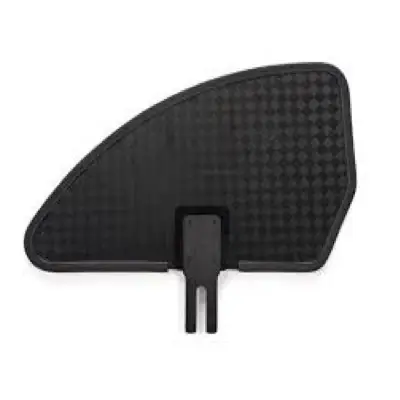
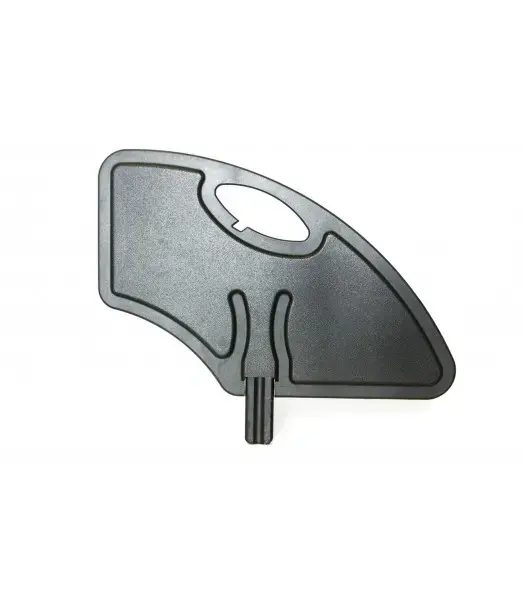
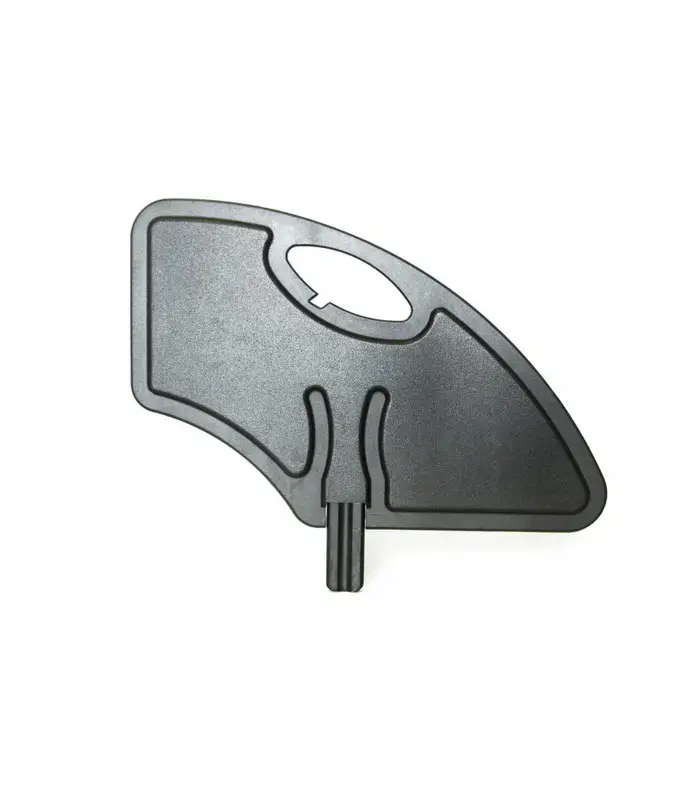
- Side guards and clothing guards
- Arm receivers, sockets and spacing: how to identify yours
- Power chair armrests and joystick mounts
- Do not lift the chair by its arms: what the manuals say
- What FDA reports and recalls say about armrests
- Part numbers by chair: where to look
- Universal, aftermarket and used arms: what the fit lines say
- Arm pads, briefly
- What wheelchair armrests cost at US sellers
- Fitting a new arm: what the manuals say about who does it
- Warranty: which document covers an armrest
- Medicare and armrest codes, briefly
- Three traps
- Three composite scenarios
- What to send when you ask for an armrest
- Sources and documents
- Common questions
- Sources
The short answer
A wheelchair armrest replacement is usually one of three jobs: a new arm pad on a sound arm, a new arm assembly in the same style, or a different style of arm altogether, such as desk length arms in place of full length arms so the chair can pull up to a table. This guide compares the wheelchair armrests that makers and US sellers list in November 2026: fixed, removable (detachable), flip-back or swing-back, swing-away tubular arms on rigid chairs, T-arms and other height-adjustable arms, desk and full length arms, side guards and clothing guards, and the armrests on power chairs that carry the joystick. It covers how each one fits into its receiver as the manuals print it, where the part numbers are, what the arms cost, what the warranties say and what the manuals say about lifting a chair by its arms.
What should you check before you order a wheelchair armrest replacement? Start with the style, the side and the receiver, because an arm has to drop into the sockets or tube already on your frame. Mobility Atlas read nine owner's manuals, two order forms, two maker parts catalogs and one parts diagram, five seller pages for side guards, two SpinLife listings and the first results page of a large parts seller on the dates given below. On those pages arms are sold by chair model and side (left, right or a pair), by length (desk or full), by height (fixed or a printed adjustment range) and by mount (front and rear sockets, a single receiver tube, or a clamp on the frame). The Invacare, Medline, Drive and Ki Mobility documents give different part numbers for arms that look alike. In our view, note the maker, model, serial number, seat width, arm length, side and how the arm releases, and photograph the receiver, before you order.
The style itself can be a seating decision. Arm height, a T-arm instead of a desk arm, a flip-back arm for side transfers or a different joystick side change how you sit, reach and move in and out of the chair. Those choices belong to you and your occupational therapist, physical therapist or seating clinician, ideally after a trial. This guide explains the options and what each document says, and then stops.
How we compared, and our interest
Mobility Atlas earns a fee or margin when you order through us; the comparison below uses the makers' published documents, sellers' listings and public FDA and Medicare records, and nothing else. We did not buy, fit or test any armrest, and we did not ask any maker or seller a question.
Our method: we opened each page named below in a browser and saved its text, with the address and the read date, before writing. For PDF manuals and order forms we extracted the text in the browser and saved the pages that deal with arms, side guards and warranty. The new reads on 13 November 2026 were the Ki Mobility Rogue 2 and Rogue XP user manual (DCN0935.4) and Rogue2 order form (DCN1017.14, effective 8/17/2026); Permobil's TiLite ZR and ZRA order form dated March 2026; SpinLife's armrest listing and the first page of its armrest search; Sportaid's Sideguards category and four side guard product pages; Monster Scooter Parts' first results page for "armrest assembly" and two of its product pages; and openFDA, National Library of Medicine and CMS records.
Several documents were saved a few days earlier by our team and are reused with their own read dates. Read on 9 November 2026: the Invacare Tracer SX5 user manual (part no. 1110550), the Medline Guardian user guide, the Drive Silver Sport 2 and Cruiser III pages and the Viper Plus GT manual, the Karman MVP 502 manual, the Pride Jazzy Elite HD manual, the Permobil M3 Corpus manual, LCD L33792, Medicare's wheelchair page and DME booklet, and the FDA page on its report database. Read on 12 November 2026: Invacare's Tracer parts catalog (Form No. 02-016), Medline's parts guide, Drive's Silver Sport 2 parts diagram, the Pride Go-Chair manual and Monster Scooter Parts' warranty policy. Where we did arithmetic, such as a pair price or a conversion to millimeters, a script computed it from the saved text.
All sellers named here are US sellers and prices are in US dollars, as printed on the read date. Prices differ by seller, by date, by funding route and by country, and taxes and shipping are extra where the page says so. Where two documents give different figures for the same thing, we give both. Prices checked November 2026. Documents checked November 2026.
Wheelchair armrests by style: the names makers print
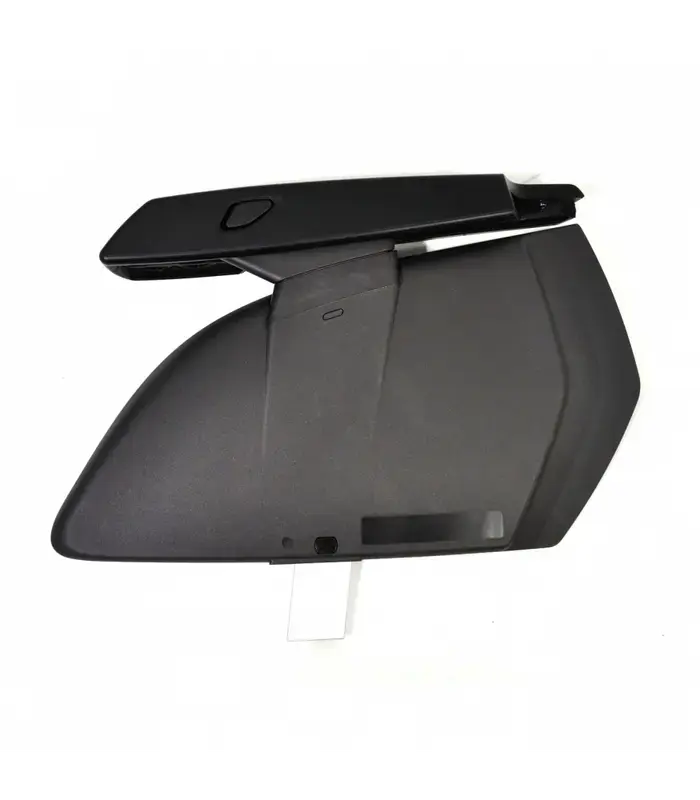
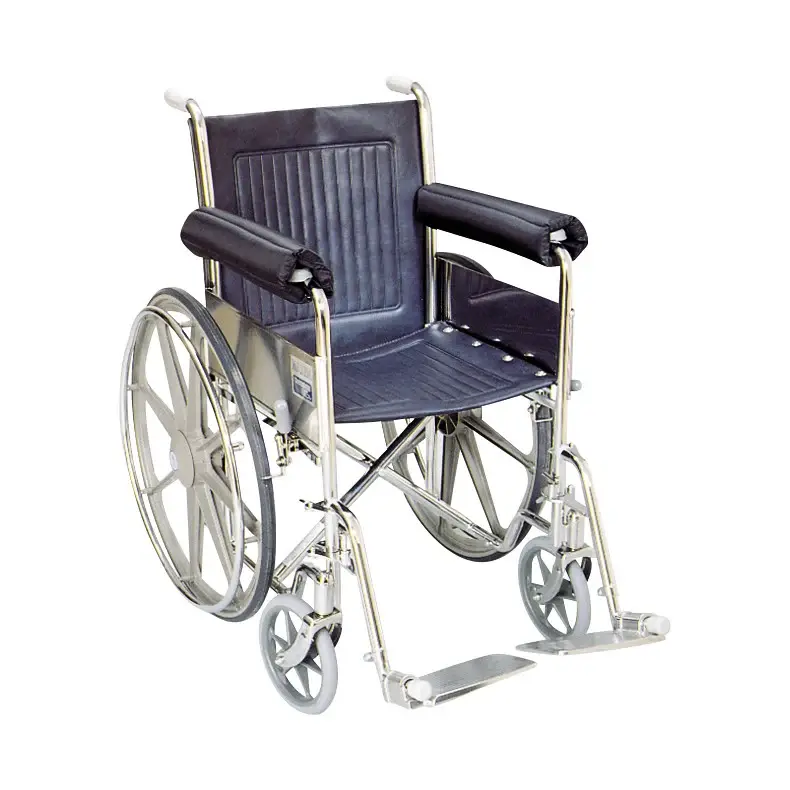
Makers do not all use the same words. Drive's Silver Sport 2 page lists "Detachable Desk Arm", "Detachable Full Arm" and "Fixed Arm". Drive's Cruiser III page adds "Flip-back, Detachable, Adj. Height, Desk Arm"
and the full length version. Medline's parts guide for the Guardian K1 lists "Arm Assembly, Desk Length, Removable"
, "Arm Assembly, Full, Removable"
and "Arm Assembly, Desk Length, Swing-Back"
. Ki Mobility's Rogue2 order form lists height adjustable T-arms in three ranges and swing away arms with or without a side guard. The TiLite ZR and ZRA order form lists swing away tubular armrests, flip back tubular armrests and removable height adjustable desk arms. The table sorts these names into styles, using only the documents named.
| Style | What it does | Where we found it |
|---|---|---|
| Fixed (permanent) arm | Not removable, in our reading | Drive Silver Sport 2 (18 in build) |
| Removable (detachable) | Lifts out of front and rear sockets | Drive, Medline, Invacare |
| Flip-back or swing-back | Pivots back out of the way | Karman MVP 502, Medline, Drive |
| Swing-away tubular arm | Rotates out of a receiver tube | Ki Rogue 2, TiLite ZR/ZRA |
| Height-adjustable T-arm | Post in a receiver, set height | Ki Rogue 2 and Rogue XP |
| Height-adjustable desk arm | Removable arm, height range | TiLite, Invacare, Drive |
| Power chair arm | Can carry the joystick | Pride, Permobil; Invacare via sellers |
Two sets of words get mixed up. On the pages we read, desk and full describe the length of the arm and its pad, while removable, detachable, flip-back and swing-away describe how the arm leaves the transfer path. A desk arm can be detachable or flip-back (Drive's Cruiser III page), and Drive's Silver Sport 2 is also listed with a "Fixed Arm", so in our view an order needs both words, plus "fixed height" or "adjustable height".
The Tracer SX5 manual, in its Recliner Operation chapter (section 6.4, for the Tracer SX5 Recliner's fixed height arm), gives removal steps that show how a removable arm is held: "Unlock the rear armrest by rotating the armrest release lever"
, then "Press IN the armrest release buttons at the front of the armrest"
, then remove the arm "from the arm sockets by pulling straight up."
Drive's Viper Plus GT manual describes its removable arms in one line: "Remove arms by depressing spring button and lifting arms out of front and rear sockets."
Karman's MVP 502 manual, in its section on the flip-back armrest, says: "You may flip back the armrest by pressing the release lever located at the front base of the armrest."
Each of these is a different release, so a replacement arm has to match the release your frame expects, in our reading.
Desk length arms or full length arms
Desk length arms are shorter at the front. In our view the point of the shorter arm is to let the front of the chair roll closer under a table or desk; a full length arm runs further forward and gives a longer surface to rest on and to push from when standing, if your therapist agrees that you should push from it. The documents print the lengths in different ways. The TiLite ZR and ZRA order form offers its removable height adjustable desk arm with a pad marked desk length (10 inches) or full length (14 inches), which is about 254.0 mm and 355.6 mm by our arithmetic. The Ki Rogue 2 specification sheet prints a front armrest to backrest distance of 356 mm (14.0 in) for the chair it describes.
Which should you choose, desk length arms or full length arms, when you replace a wheelchair armrest? In our reading of the three parts documents Mobility Atlas read for this point, a change of length means a change of the whole arm: they list desk and full arm assemblies separately (and the pads separately too). Drive's Silver Sport 2 page lists the same chair as a "Detachable Desk Arm" or "Detachable Full Arm" build in 16, 18 and 20 inch seat widths, with item numbers such as SSP218DDA-ELR and SSP218DFA-ELR; Invacare's Tracer parts catalog lists desk length and full length kits separately by side; Medline's parts guide lists desk and full arm assemblies by the pair. In our view, choose the length that fits your table height, transfers and pushing habits, and confirm it with your therapist if you push up from the arm. Then order by chair model, length and side, with the maker's part number.
The Drive Silver Sport 2 item numbers show how a build is coded: on that page DDA marks the detachable desk arm, DFA the detachable full arm and FA the fixed arm, and the fixed arm is listed for the 18 inch chair alone. The page lists weight capacities of 250, 300 and 350 lb; the owner's manual ties them to seat width: 250 lbs for 16 inch chairs, 300 lbs for 18 inch and 350 lbs for 20 inch. If the box or invoice is gone, where to find Drive's item number on the chair is covered in our Drive Medical wheelchair parts guide.
Length is not the whole story. Medline's Guardian guide says: "DO NOT lean forward out of the wheelchair any farther than the length of the armrests."
That line ties a safety limit to arm length, so in our reading a change from full to desk arms also changes how far that manual says you may lean.
Height-adjustable arms and T-arms
A height-adjustable arm lets the pad sit higher or lower above the seat. The documents print the range of each arm. On the Ki Rogue2 order form (effective 8/17/2026) the height adjustable T-arm comes in three ranges, each at $332 with the code E0973 printed beside it: tall, 11.5 to 15 inches; standard, 8.5 to 13.5 inches; and low, 6.5 to 10.5 inches. A footnote says the standard T-arm "Includes direct mount receiver"
, and another says "If requested configuration is unavailable, standard height T-Arm will be used"
. The swing away arm on the same form lists a range of 8.5 to 12.5 inches. The TiLite form prints 9 to 12 inch and 12 to 15 inch ranges for its removable height adjustable desk arm and 6.5 to 9.5 inch and 9.5 to 12.5 inch ranges for its swing away tubular arm.
The Ki manual explains how the T-arm sets. In its section on the height adjustable T-arm it says: "Rotate the release lever", "Slide the armrest pad up or down to the desired height"
, "Return the lever to the locked position against the arm post"
and "Push the arm pad until the upper arm locks firmly into place."
The same section says to "Slide the outer armpost into the receiver mounted to the wheelchair frame"
and that "The armrest will automatically lock into place."
Karman's MVP 502 manual, for its flip-back arm, says: "Simply unscrew the knob bolt, adjust the armrest height to the [...] desired position, and then re-tighten the knob bolt."
The arm height range on an order form is measured by that maker's method, and the Ki and TiLite forms do not print the method next to the range. In our view, measure your current arm from the top of the seat cushion to the top of the pad, write down whether the cushion was in place, and ask the maker or seller which reference the printed range uses before ordering. For comparison, the Ki Rogue 2 specification sheet prints an armrest to seat distance of 254 mm (10.0 in), which in our reading is the arm's height above the seat on the chair it describes. The height that suits your shoulders and posture is a seating question for your therapist, not a parts question.
Height-adjustable arms also change Medicare billing; see the Medicare section below. The Invacare catalog page shows how an adjustable arm is built: under the heading "Arm Assembly - Conventional Adjustable Height - Black Finishes"
for the EXI, EX2, SX5 and SX5 Recliner, the catalog lists two pairs of desk length kits marked Style 29: 8881127463 (right) and 8881127462 (left), with notes A, J and M; and 8881135513 (right) and 8881135514 (left), with notes B and J, whose parts list adds a quad release handle. The notes that tell them apart are on a page we did not save, so quote the style number, the notes and your serial number. The first kit's parts list includes a "Spring, Arm Lock", a "Guard, Clothing" and an "Armrest, Adjustable Height, Black"
. Our Invacare wheelchair parts guide walks through the other Invacare arm tables.
Swing-away tubular arms on rigid chairs
Rigid ultralight chairs such as the Ki Rogue 2 and TiLite ZRA can use a light tubular arm that drops into a receiver on the frame and swings out of the way. The Ki Rogue 2 manual, in its section on swing away armrests, says: "Slide the armrest into the tube of the receiver that is mounted on the rear side of the frame."
To move it: "Lift the armrest slightly so it is free of the receiver bolt. Rotate away from the chair."
To remove it: "Lift the armrest straight out of the receiver."
In each maker's order form document these arms are options for a new chair, with prices. Ki's Rogue2 form lists the swing away arm (8.5 to 12.5 inches) at $249 and the "Swing Away with Side Guard"
at $298, so the side guard version costs $49 more on that form by our arithmetic; the T-arm costs $83 more than the plain swing away arm. The TiLite ZR and ZRA form lists ZARM1 "Swing Away Tubular Armrests"
at $244.00, with the note "Not available with non-folding fixed height titanium back or height adjustable [...] push handles."
It also lists ZARM4 "Swing Away Flip Back Tubular Armrests"
(8.5 to 11.5 inches) and ZARM6 "Swing Away Fixed Height Flip Back Tubular Armrests"
. In the text we extracted, the words "No charge" sit on the ZARM6 line and "$ 342.00" on the ZARM4 line, but the layout of that block may pair them differently, so in our view ask for the printed form before you rely on either price.
Tubular arms interact with wheel spacing and camber. The Ki Rogue2 form says, under rear wheel spacing, 1.5 inches "minimum with T-Arms" (1.75 inches with one arm drive and T-arms), and under camber, in a line that begins "The following apply if One Arm Drive is selected"
, that 4 degrees is "not available with T-Arms."
In our reading, the spacing line alone means that swapping a swing away arm for a T-arm on an existing Ki chair can depend on how far the wheels sit from the frame, which is a question for the dealer who set up the chair. The TiLite form says, in its general note, that its chairs "must be fitted by a qualified healthcare professional."
Ki's manual prints the same warning for each of these arm types, its height adjustable T-arm and its swing away armrests: "These arms offer only a lock against rotation and are designed to bear a downward force only. They will remove completely if pulled up on and cannot be used to lift or otherwise handle the chair."
The safety section below collects the other makers' lines.
Side guards and clothing guards
A side guard, or clothing guard, is the panel between your hip and the rear wheel. In the Invacare Tracer catalog we read, the clothing guard comes inside the arm kits and is also listed on its own (1110285 to 1110288, and kits 1117365 and 1117366); on the rigid chairs in the order forms and Sportaid pages we read, it is its own part, clamped or direct-mounted. The Invacare Tracer catalog lists "Guard, Clothing" inside its arm kits, and SpinLife listed Invacare's 1117366 "Full-Length Clothing Guard Kit for Invacare Manual Wheelchairs"
at $80 on 13 November 2026; its listing says the kit is for chairs "with full-length armrests"
and "Sold as a pair".
For rigid chairs, Sportaid's Sideguards category showed all 4 of its products on 13 November 2026, at printed prices from $90.00 to $225.00. The product pages show how fit is decided:
- TiLite Wheelchair Side Guards (Sportaid): "Sold in Pairs"; adult or kids sizes, with or without quad holes or mounting hardware; a required choice of 13 TiLite models from X/SX to Aero T. The adult pair without hardware (8720A) was $120 and with hardware (8720AH) $225 in the page's option data, so hardware added $105 by our arithmetic.
- Quickie Wheelchair Side Guards (Sportaid): adult 9804A, 12-3/4 by 8-5/8 inches, $180 a pair, or $210 with mounting hardware; the page says
"These DO NOT fit into new style clamps"
and asks for the make, model and serial number. - New Quickie Plastic Side Guards (Sportaid, stock 9804QCA-M): the page says
"These side guards DO NOT fit into the old-style clamps"
and"Serial number is used to verify compatibility and ensure correct parts are ordered for you."
It prints "Retail: $162.00" and "Cost: $125.00" for a pair, and mounting brackets as add-ons of $105 (5R/QRI/GTI/GT), $69.5 (7R/7RS/Q7 and Q2/2HP/LITE) or $30 (QX/QXI). - Top End Wheelchair Side Guards (Sportaid): adult 8206, 12.4 by 7.8 inches, $90, or $149 with mounting hardware; the page says they suit
"Invacare or Top End chairs"
and carries the line"ON MFGR BACKORDER. NO ESTIMATED SHIP DATE AVAILABLE."
The two Quickie pages together show why a photo of the clamp matters: one page says its guards do not fit the new style clamps, and the other says its guards do not fit the old-style clamps. With brackets, the new style pair came to $230.00, $194.50 or $155.00 depending on the chair, by our arithmetic from the page's prices. In metric, the Quickie adult guard is about 323.9 by 219.1 mm and the Top End adult guard about 315.0 by 198.1 mm.
Children's chairs have their own sizes. Sportaid's pages list kids side guards beside the adult ones: TiLite 8720K at $120 a pair, Quickie 9804K at 11-1/2 by 6-1/2 inches for $180 a pair, and Top End 8208 at 11.2 by 6.3 inches for $90. Ki's manual has a separate section for the Rogue XP's pediatric T-arm, whose height is reset with the post stop and an M4 screw after two 6mm side guard screws are removed, and its flip up arm for the Rogue XP. In our view, a child's arm and guard are ordered by the chair's serial number, because frame sizes and model years can change which receiver is fitted, and the arm height is set with the child's therapist.
On new chairs the order forms list side guards by mount. Ki's Rogue2 form offers "Direct Mount" and "Clamp-On Mount" side guards, in composite, aluminum or carbon fiber, at 12 printed prices from $152 to $539, all with the code K0108 printed beside them, and says they are "Not available with T-Arms or Swing Away with Side Guard Armrests"
. It also asks you to choose "Removable" (no charge) or "Non-Removable" ($15). The TiLite form lists 12 priced side guard lines in aluminum and carbon, from $217 to $499, including fold down and fendered versions, with E0956 and E1034 printed beside them. Those codes are the makers' coding; the Medicare section below explains what that does and does not mean.
Arm receivers, sockets and spacing: how to identify yours
An armrest is only as good as the part it sits in. The documents we read describe four kinds of mount. The Invacare Tracer SX5 manual (in its Recliner chapter) and Drive's Silver Sport 2, Cruiser III and Viper Plus GT manuals describe a front and a rear socket: the Tracer SX5 manual tells you to "Position the armrest just above the front and rear arm sockets"
and to "Push arm down evenly at the front and rear until the front armrest release button snaps into the front arm socket."
Ki's T-arm uses a single receiver on the frame ("Slide the outer armpost into the receiver mounted to the wheelchair frame"
). Ki's swing away arm uses a receiver tube "mounted on the rear side of the frame"
. Ki's side guards and the Quickie guards sold by Sportaid use a clamp or a direct mount, as their pages and the order form print it.
The Invacare manual adds two warnings in that Recliner section: "Make sure the armrest is securely locked before using the wheelchair"
and "Rear armrest release lever MUST be in the unlocked position when installing the armrest."
Its install steps end: "Ensure armrest is locked securely in the arm sockets by gently lifting up. If not locked, repeat STEPS 1-3."
Those steps are printed in the Tracer SX5 Recliner section. In our view, do that check on any replacement arm, with nobody seated, before the chair is used.
Receivers wear and loosen. The Ki Rogue 2 maintenance table lists: "Check armrest receivers for loose or missing fasteners and check they are secure, adjusted properly and maintain position."
Medline's Guardian guide, under "Armrests" in its maintenance section, says: "Check for cracks, looseness, or sharp edges."
The FDA reports section below shows how many of the first 40 reports filed in 2026 mention receivers and latches. If the socket, receiver or weld is cracked, the fix is the frame or receiver, not a new arm, in our reading; that is a job for the dealer or the maker's service route.
Spacing is the other number. In our view, on folding chairs the distance between the front and rear sockets fixes which arms fit; none of the documents we read prints that distance, so in our view measure it center to center on your chair, and photograph both sockets. Some power chair and scooter seats use square cross tubes: Monster Scooter Parts' page for its 31005012 set says its arms use 3/4 inch "(external dimension) square tubes" and fit precisely "If your seat base uses the industry-standard square cross tube"
(about 19.1 mm), and Pride's Go-Chair manual explains that each arm slides in or out on the seat frame: "Loosen the knobs and remove detent pin"
, then "Slide the armrests in or out to the desired width."
Before any of its comfort adjustments, the manual says: "Remove the occupant from the Go-Chair before making any adjustments."
The same manual notes: "Changing the armrest width may increase the overall width of your Go-Chair."
| Mount | How the arm is held | Document |
|---|---|---|
| Front and rear sockets | Release buttons and rear lever | Invacare Tracer SX5 manual |
| Front and rear sockets | Spring button | Drive Viper Plus GT manual |
| Single receiver post | Self-locking, release lever | Ki Rogue 2 manual (T-arm) |
| Rear receiver tube | Lift free of the receiver bolt | Ki Rogue 2 manual (swing away) |
| Seat frame (knobs on each side) | Knobs and detent pin | Pride Go-Chair manual |
| Clamp on frame tube | Old or new style clamp | Sportaid Quickie pages |
Power chair armrests and joystick mounts
On a power chair the armrest is also where the controls live. Permobil's M3 Corpus manual says the control panel "is usually attached to the armrest"
. In our reading, that makes a power chair arm a left or right part with a bracket, a cable route and sometimes a swing-away mount, so a replacement is matched to the chair model and the joystick side. Our wheelchair joystick guide covers the joystick itself.
The manuals tie the arm to the controller harness. Pride's Jazzy Elite HD manual says: "Avoid routing the controller harness on the outside of the armrest pad. Route the harness under the armrest or toward the inside of the armrest pad"
, and "Secure the controller harness to the armrest receiver with wire ties."
Pride's Go-Chair manual explains how to move the controller to the other arm: "Cut the wire tie(s) securing the controller harness to the armrest"
, "Flip up the armrest and loosen the setscrew"
, "Slide the controller out of the armrest"
, then fit it in the other arm. Its Comfort Adjustments page also says: "Remove the occupant from the Go-Chair before making any adjustments."
Its warning: "Do not place the controller harness so that it can be pinched in the seat frame or the power base frame."
Permobil's manual adds a power line: "Turn off the power before you get in or out of the wheelchair or lift the armrest."
Seller pages show how joystick arms are sold. Monster Scooter Parts listed a used "Full Length Adjustable Urethane Armrest with Joystick Tube Bracket for Invacare Pronto Power Chairs"
at $28.99, marked "Discontinued", with a "15 day warranty" and a compatibility list of 7 Pronto models with SureStep; the page says it "was removed from an Invacare Pronto M71"
. Its search page listed a used "Right Armrest Assembly with Joystick Bracket for the Quickie Pulse 6"
at $87.99. Its new 31005012 universal flip-up set (left and right, 12 by 3-1/2 inch pads) was $90.40, and that page says: "To mount your joystick on this armrest, you may need to drill mounting holes in the metal support below the arm pad."
The same page says the brackets "fit most mobility scooter and power chair seat bases"
, while its compatibility list names two Vive models.
Power chair pads are model-specific too. SpinLife's armrest search listed Invacare's 1139924 "Full Length Powerchair Armpad"
at $32 with a "Made to Fit" list of Pronto and TDX models, and Pride's DWR1010E805 full length armpad for the Jazzy Select GT with the prices $37 and $35 on the tile (we did not check which one the page shows as struck). On the Monster first results page, the Jazzy arm assemblies included FRMASMB8614 / FRMASMB8615, a full-length armrest assembly with armpad for Jazzy power chairs, at $160.99 (the tile names two part numbers but no unit, so ask whether the price is for one side or both), and KIT2403725, a complete left and right set for Jazzy chairs with EVO style seating, at $191.36. In our reading, those titles tie each arm to a seat family, not just to a brand.
In our view, drilling a mount, moving a joystick or fitting a universal arm on a power chair seat is a job for the provider who services the chair, because the harness, the seat functions and the drive lockouts run through the same area, and a pinched harness is the hazard the Pride manuals name. Pride parts by model are in our Pride Jazzy parts guide.
A power seat changes the billing picture too. CMS policy article A52504 (version 61) says a power tilt seating system (E1002) includes "detachable or flip-up fixed height or adjustable height armrests"
, and uses the same wording for the tilt and recline systems. In our reading, arms that came with such a seat are part of that code, not a separate line, on a Medicare claim.
Do not lift the chair by its arms: what the manuals say
This is the safety line to know before anything else. Of the 9 owner's manuals and user guides we read for this guide, a word search by script finds 6 that print a line against lifting the chair, or the seat, by the arms or by removable parts. The pages we saved from the Drive Silver Sport 2 and Viper Plus GT manuals and from the Permobil M3 Corpus manual do not print such a line, and we saved only part of the Permobil manual. The Drive Cruiser III manual saved with its page is not counted. Here is the wording, document by document.
- Ki Mobility Rogue 2 and Rogue XP manual, for its T-arms and swing away arms:
"They will remove completely if pulled up on and cannot be used to lift or otherwise handle the chair."
Its general warnings add:"Do not lift wheelchair by it's removable parts while occupied."
- Ki's manual, for the Rogue XP's flip up armrest:
"They will flip up if pulled up on and cannot be used to lift or otherwise handle the chair."
- Medline Guardian user guide, which says:
"DO NOT attempt to lift the wheelchair by armrests or any detachable components."
- Invacare Tracer SX5 manual, under Lifting:
"DO NOT attempt to lift the wheelchair by any removable (detachable) parts."
- Karman MVP 502 manual:
"DO NOT attempt to lift the wheelchair by any removable (detachable) parts."
- Pride Jazzy Elite HD and Go-Chair manuals, which say when installing the seat:
"Do not pick up the seat frame by the armrests. They are free to pivot, and you may lose control of the seat if they do so."
Ki's manual gives the consequence in the same warning: "Failure to comply with the instructions above may result in the armrest accidentally disconnecting from the wheelchair and result in a fall or loss of control and may cause serious injury or death."
In our view, the safe habit follows from the words: lift by fixed, non-removable parts of the frame (Karman's stair instructions speak of "holding firmly a fixed part of the front frame"
), with the arms removed or locked, and never by a pad or a swing-away arm.
Arms are not transfer handles either, unless the maker says so. Karman's MVP 502 manual, in its section on transferring in, says: "The user may get into the seat using the armrests as support."
; Ki's and Sunrise's documents say the opposite for their swing away arms. How you use any arm in a transfer is a question for your therapist. In 2012 Sunrise Medical recalled the padded swing away armrest with receiver used on Quickie Q7, GT and GTi chairs and the Zippie Zone; the FDA recall record (Z-2113-2012) gives the reason as "Reports of injury when the Padded Swing Away Armrest is used for full body weight. Owner's manual states that armrest is only designed for resting of forearm."
The action was a Safety Notice letter, with the root cause recorded as "Labeling design". A 2026 report to the FDA about a Quickie 2 quotes that chair's owner's manual: "PADDED SWING AWAY ARMRESTS ARE NOT TRANSFER DEVICES AND MUST BE ROTATED OUT OF THE WAY PRIOR TO TRANSFERRING."
TiLite's ZARM3 option, by contrast, is a desk arm sold "with Rigid Side Guard and Transfer Loop"
; how to use any transfer aid is a question for your therapist, and our transfer board guide covers boards.
Medline's guide also says, for transfers: "Remove the armrest and the footrests that are in the transfer path."
Whether you transfer over a removed arm, a flipped-back arm or a swung-away arm is part of your transfer technique, which belongs to your therapist.
What FDA reports and recalls say about armrests
We ran an openFDA word search of device reports for "armrest", "armrests", "arm rest" or "arm rests" in the report text, under the product codes IOR and ITI. For IOR (mechanical wheelchairs) it returned 539 reports received from December 1996 to October 2026; for ITI (powered wheelchairs), 439 reports from August 1996 to September 2026 (openFDA data last updated 4 November 2026, read 13 November 2026). These are counts of reports that mention the word, not counts of armrest problems, and not rates; the FDA page also says report data is not intended to "evaluate a change in event rates over time"
. The FDA calls its report database "this passive surveillance system"
and lists "under-reporting of events"
and "lack of verification that the device caused the reported event"
among its limits.
The IOR count jumps in 2026: 191 reports received so far that year, against 36 in the ten years from 2016 to 2025 together, by our sum. Counted by maker name as filed, 189 of the 191 name Medline, under 8 spellings; Ki Mobility and Sunrise Medical have one each. In our reading the jump tells you more about how one maker filed reports in 2026 than about armrests across the market. The ITI search shows no such jump: 6 reports received in 2026. Its busiest years were 2001, with 70 reports, and 2012 to 2015, with 172 together, by our sum; the IOR search also had 282 reports in 2012 to 2015. We did not read those older reports, so we do not describe them.
We read the armrest sentences in the first 40 of the 2026 IOR reports the search returned. By a script over those sentences (by the script's word list), after removing phrases about wheel locks, brakes, wheels, bearings, the chair as a whole, the pad padding and injuries to the user, 21 mention a lock, latch, clip, receiver, button or an arm that will not stay in place or comes off; 18 mention a crack, break, fracture or weld; 6 mention a loose or wobbly arm (one report can mention more than one). 2 of the 40 were filed as injury reports. Examples, as filed: a Ki Mobility report says a dealer "CLAIMS THAT THE END USER WAS TRANSFERRING OUT OF THE CHAIR AND THE ARMREST RECEIVER FELL OUT AND THE END USER FELL AND BROKE 2 RIBS"
, and that the dealer "HAD BEEN OUT 5 TIMES FOR MAINTENANCE AND TIGHTENED THE HARDWARE FOR THE ARMREST RECEIVERS."
A Medline report says "WHEEL CHAIR REAR ARMREST BRACKET HAS SHEERED OFF AT THE WELD."
Another reports that the "left side armrest does not lock into place in the rear and will fall to the floor during swing-back."
These are reported claims, not findings.
Recalls are rarer. An openFDA recall search for armrest, armrests or "arm rest" in the product description or reason returned 14 records (data last updated 12 November 2026); one was a wheelchair record, the 2012 Sunrise Medical recall described above, posted 31 July 2012 and now terminated, which covered a product quantity printed as "14, 035". The others were for dental chairs, chairs with casters, patient lifts, a surgical system and a hygiene adaptor. In our view, check the FDA recall database with your chair's maker and model before buying a used arm.
Part numbers by chair: where to look
Arm part numbers are printed in the maker's parts catalog or diagram, by chair model, side, length and finish. A few examples from the documents we read, each tied to the heading it is printed under:
- Invacare's Tracer parts catalog (Form No. 02-016, read 12 November 2026), on the page headed
"Arm Assembly - Conventional Adjustable Height - Black Finishes"
for EXI, EX2, SX5 and SX5 Recliner: two pairs of desk length kits marked Style 29, 8881127463 and 8881127462 and 8881135513 and 8881135514 (right and left), told apart by catalog notes we did not save; the fixed height kits are in our Invacare guide. - Medline parts guide (read 12 November 2026), Guardian K1 page: WCAA0001
"Arm Assembly, Desk Length, Removable"
, WCAA0002"Arm Assembly, Full, Removable"
and WCAA0006"Arm Assembly, Desk Length, Swing-Back"
, each listed with the package "1 pr". - Monster Scooter Parts search page (13 November 2026), titles for Drive: STDSSSDDAL and STDSSSDDAR, left and right desk length assemblies
"for Drive Medical Silver Sport Wheelchairs"
, priced in the section on costs below. - Ki Mobility and TiLite print arm options on the order form for a new chair; for a replacement on an existing chair, the order form shows the option name to quote, and in our view the dealer should order by serial number.
Our Drive Medical wheelchair parts guide compares Drive's diagrams with seller titles, including the "-SV" ending that Drive prints on its Silver Sport 2 arm numbers and the seller titles leave off. Our Invacare wheelchair parts guide has the other Invacare arm tables and the parts marked NLA (no longer available). We do not repeat them here.
Two cautions from those documents. First, the Invacare tables list several arm kits that look alike but differ by style number, finish and model, so in our view quote the style number and the model when you ask for a price. Second, a seller's title that names a chair is the seller's fit line, not the maker's; where the two differ, ask the seller to confirm against the maker's number in writing.
Universal, aftermarket and used arms: what the fit lines say
Some seller pages use the word universal, and the fit lines on the same page do not always agree with it. Monster Scooter Parts' 31005012 armrest set is titled "Universal Armrest Assembly for Power Chairs & Mobility Scooters"
and its description names Pride, Go-Go, ActiveCare, Jazzy, Golden Technologies, Hoveround and Shoprider, yet the compatibility list on the page names two models, the Vive 3-Wheel and Vive 4-Wheel. ProActive Medical's PP-RAP arm pad on SpinLife is "Designed to fit most standard wheelchairs"
. TAG's universal desk-length pad (TAGAC015358) on SpinLife is listed as "Compatible with Invacare Manual Wheelchairs"
. In our reading, a universal title is a seller's or brand's claim about a family of mounts, not a fit check for your chair.
The maker manuals take a stricter line. The Invacare Tracer SX5 manual says: "Replacement parts MUST match original Invacare parts."
Medline's Guardian guide says: "Do not use accessories, parts, or adapters other than those authorized by Medline"
, and lists among things not to do: "DO NOT modify the wheelchair. Examples: drilling holes, grinding, welding parts, using non-authorized / non-approved parts."
Karman's MVP 502 manual says: "Please only use parts authorized by Karma. Use of parts that are not authorized by Karma will negate your warranty."
Set those lines next to the universal power chair arm page that says you "may need to drill mounting holes"
for a joystick, and the trade-off is plain: an aftermarket arm may fit, but in our reading, on these makers' terms it can affect the warranty, and drilling is a change that Medline's guide forbids on its chairs.
Used and blemished arms are a third route. On Monster Scooter Parts' first results page for "armrest assembly", 9 of the 60 tiles were marked "(Used)" and one "(Blemished)". The used Invacare Pronto arm page printed a 15 day warranty, against the 30 days its seller policy gives items it does not name elsewhere. In our view, a used arm is worth considering for an older chair whose arms are no longer made, as long as the seller states the part number, the side and the chair it came from, as the Pronto page does ("was removed from an Invacare Pronto M71"
). In our view check the release button, latch and receiver post before fitting; Medline's guide lists "cracks, looseness, or sharp edges"
for armrests. Monster's warranty policy adds: "This warranty does not provide for the return of used items due to incompatibility with your application."
In our view, confirm the part number and fit before ordering a used arm.
Discontinued arms turn up on older chairs. The Invacare Tracer catalog page for the SX5 fixed height arm marks some arm parts NLA, for example "NLA - Guard, Clothing, Desk Length - Right"
under the fixed height arm for the SX5, and Monster marked its used Pronto joystick arm "Discontinued". When a part is gone, the options are a later kit that the maker's catalog lists in its place, a used part from the same model, or a different arm style with matching receivers, which in our view is a question for the dealer and, if it changes your seating, your therapist.
Arm pads, briefly
If the arm is sound and the pad is torn or cracked, the pad alone is the cheaper fix. Pads are sold by length and by screw spacing. SpinLife's armrest listing showed 8 items on 13 November 2026, at printed prices from $8 to $80: 5 pads, a TiLite arm screw, a TiLite "Armrest Saddle" (CP104904, $20) and the Invacare clothing guard kit. Among them, Invacare's 8881127510, a 10 inch "Desk Length Arm Pad Kit", was $36 (the listing says "This arm pad kit is made to fit all Invacare wheelchairs"
) and the full length pad 8881127509 was $44. SpinLife's search for "armrest" (15 of 16 items on the first page) added Invacare's 1117327 desk pad, with screw holes printed as 5.5 inches apart, at $39, and Invacare's 1139924 full length power chair arm pad at $32, listed as made to fit Pronto and TDX models.
Our wheelchair seat upholstery guide covers arm pads in depth: lengths, screw spacing, materials, Medline and Karman pad numbers and the arm pad code. In our view, measure the screw spacing center to center before ordering any pad.
What wheelchair armrests cost at US sellers
How much does a wheelchair armrest replacement cost in the US? It depends on the part and the chair. Mobility Atlas read three US sellers on 13 November 2026. On Monster Scooter Parts' first results page for "armrest assembly" (60 tiles loaded; the page title said 1000 results), the 50 tiles for new arm assemblies ran from $29.99 to $191.36 across scooter, power chair and manual chair arms (lowest a Shoprider Sprinter 4x4 arm, highest a Jazzy EVO set); Drive Silver Sport desk arms were $30.17 each. SpinLife's armrest listing ran from $8 to $80, and 5 of its 8 items were arm pads. Sportaid's four side guard products ran from $90.00 to $225.00 (three of the four pages say the price is for a pair). On a new chair, Ki's order form lists arm options from $249 to $332. Shipping and fitting are extra where the pages say so. In our view, compare the same chair model, side, length and mount, with or without hardware.
| Seller and item as printed | Fit as titled | Price |
|---|---|---|
| Monster: STDSSSDDAL, left desk | Drive Silver Sport | $30.17 |
| Monster: Cruiser III desk length | Drive Cruiser III | $102.83 to $102.99 |
| Monster: FRMASMB8614 / 8615, full | Jazzy power chairs | $160.99 |
| Monster: KIT2403725, left and right | Jazzy EVO seating | $191.36 |
| Monster: MEC2201303, right flip-up | Quantum Q6 Edge 3 Stretto | $93.84 |
| Monster: 31005012 universal, set of 2 | Universal, see text | $90.40 |
| SpinLife: 8881127510 desk pad kit | Invacare | $36 |
| Sportaid: Top End 8206 side guards | Invacare or Top End | $90 |
| Sportaid: TiLite 8720AH side guards | TiLite, with hardware | $225 |
The Monster range above counts every new tile on that first page, using the lowest and highest price printed on each line; it leaves out 9 tiles marked "(Used)", from $29.95 up, and one marked "(Blemished)" at $105.84, for which the page markup also shows a was price of $117.60. 21 of the 60 tiles were for Shoprider models. Tiles name a fit; they are not maker documents. The Sportaid prices are labeled "Cost" on its pages, and the New Quickie page also prints a "Retail" price.
Mobility Atlas can find and quote these parts, including arms, receivers, side guards and pads that are not listed on our site: you send an enquiry or a part request from the wheelchair parts and accessories page with the details listed at the end of this guide; we reply with a written quote that includes delivery to your country; nothing is charged before you accept the quote.
Fitting a new arm: what the manuals say about who does it
A drop-in arm on a folding chair is the simplest replacement on the list: the Invacare Tracer SX5 manual (Recliner chapter) prints removal and installation steps, and the Drive manuals print a one-line removal step; neither says who must do it, so in our reading a drop-in arm is the simplest job on the list. Anything that needs tools is treated differently. The Invacare Tracer SX5 manual says "A qualified technician MUST perform the initial set up of this wheelchair"
and that you should take the chair to a qualified technician "Every six months or as necessary"
for inspection and servicing. Medline's Guardian guide says: "A qualified wheelchair technician must perform any repair or change to this wheelchair or serious injury may occur."
Karman's manual says: "Anything wheelchair related that requires tools should be done by your authorized Karma service provider."
Rigid chair receivers are bolted or clamped to the frame. Ki's manual describes how to reset the height of the Rogue XP's pediatric T-arm in its receiver: remove the arm, remove "two 6mm screws from the side guards"
, loosen an M4 screw on the post stop, reset it, then refit the side guard and "Tighten two 6mm screws." The same manual's maintenance table says to check that fasteners are tight and, "Unless otherwise noted", tightened "to 40 in./lbs (4.51 N*m)". In our view, when a receiver has to be moved or re-tightened, use the torque the manual prints, or have the dealer do it.
Power chairs add a hardware rule. Pride's Jazzy Elite HD manual says: "Any nylon insert lock nut removed during the disassembly or adjustment of the power chair must be replaced with a new nylon insert lock nut."
It also says: "An authorized Pride Provider or a qualified technician must perform the initial setup of this power chair and must perform all of the procedures in this manual."
Moving a joystick or replacing a joystick arm touches the harness, so in our view it belongs with the provider, as scenario three below shows.
After any arm change, the checks the manuals print are short, and each manual states its own: the arm is "locked securely in the arm sockets"
(Invacare, Recliner section), the locking lever is in the position shown (Ki), and there are no "cracks, looseness, or sharp edges"
(Medline). Invacare's manual says: "Make sure the armrest is securely locked before using the wheelchair."
If an arm will not lock, in our view do not use the chair with that arm fitted until the dealer has checked it.
Warranty: which document covers an armrest
Is a broken armrest covered by the wheelchair warranty? It depends on the document, and the documents differ. We read the warranty wording in four wheelchair manuals and one seller policy. Ki Mobility's Rogue 2 and Rogue XP manual lists "Wear items: Upholstery, tires, armrest pads, tubes, armrests and push-handle grips"
under what it does not warrant, so in that document the whole armrest is a wear item. Invacare's Tracer SX5 manual warrants "the upholstered materials (seat, back and armrests of the arm assembly) and remaining components"
for thirteen (13) months from purchase, and lists arm pads among wear and tear items. Drive's Silver Sport 2 manual gives three years to the original consumer purchaser and excludes "normal wear and tear". Medline's Guardian guide gives one year on parts and upholstery to the original purchaser. In our view, read your own chair's manual, keep the invoice, and ask the dealer before paying for an arm that cracked early.
The fine print matters as much as the period. The Ki manual says "Pay any charges for labor to repair or install parts"
and "This warranty applies in North America only."
The Invacare manual says its warranty "does not include any labor or shipping charges incurred in replacement part installation or repair"
and is not transferable to a later owner. The Drive Silver Sport 2 manual says the warranty "does not cover device failure due to owner misuse or negligence"
. Medline's guide says "All warranty claims must include the product in question unless otherwise authorized by Medline."
Seller warranties on the part itself are separate. Monster Scooter Parts' warranty policy (read 12 November 2026) gives items not named elsewhere on that page 30 days "from the date of receipt"; its universal armrest page printed "This item has a 30 day warranty"
and its used Pronto arm page "This item has a 15 day warranty."
In our reading, those are the seller's terms, not the chair maker's, and they apply to that seller's part only.
Medicare and armrest codes, briefly
The general Medicare rules for wheelchair parts, repairs and suppliers are in our wheelchair parts guide. Medicare's DME booklet says: "If you own your equipment, the supplier who sold it to you isn't required to repair it."
Medicare.gov says that after you meet the Part B deductible you pay 20% of the Medicare-approved amount, if your supplier accepts assignment. This applies in the US; for Medicare Advantage, Medicaid or the VA, ask the plan, as we did not read their rules.
For armrests the codes matter. LCD L33792 (version 43, effective for services on or after 10/01/2025 to 12/19/2026, read 9 November 2026) says: "Adjustable arm height option (E0973, K0017, K0018, K0020) is covered if the beneficiary requires an arm height that is different from that available using nonadjustable arms and the beneficiary spends at least 2 hours per day in the wheelchair."
Policy article A52504 (version 61, effective 10/01/2025 to 12/19/2026, read 13 November 2026) says: "There is no separate billing/ payment if fixed, swingaway, or detachable non-adjustable height armrests with arm pad are provided (K0015). Adjustable height armrests (E0973, K0020) may be billed separately."
Its revision notes call this the "initial package verbiage for armrest separate billing"
, so in our reading it concerns the arms supplied with the chair. The National Library of Medicine's HCPCS lookup gives K0015 as "Detachable, non-adjustable height armrest, replacement only, each"
, E0973 as "Wheelchair accessory, adjustable height, detachable armrest, complete assembly, each"
and K0019 as "Arm pad, replacement only, each"
.
A code printed on a maker's order form, such as E0973 next to the Ki and TiLite arms or K0108 next to Ki's side guards, is the maker's coding, not a promise of coverage. TiLite's form says so: "HCPCS Codes are for reference purposes only."
Whether a replacement arm is paid depends on the supplier's claim and your plan; ask before ordering.
Three traps
Trap one: ordering by style name alone. "Desk arm" or "swing-away arm" is not a part number. The Invacare catalog lists different desk length kits for fixed and adjustable height arms, by style number and side, and the two Quickie side guard pages on Sportaid fit different clamps. In our view, order with the maker, model, serial number, side, length, height type and a photo of the receiver.
Trap two: treating the arm as a handle. 6 of the 9 manuals and guides we read print a line against lifting by the arms or by removable parts, and Ki's says its T-arms and swing away arms "cannot be used to lift or otherwise handle the chair."
The 2012 Sunrise recall concerned an armrest used for full body weight. A new arm does not change those lines.
Trap three: fixing the arm when the receiver is the problem. In the first 40 of the 2026 FDA reports we read, 21 mention a lock, latch, clip, receiver or an arm that will not stay in place, and Ki's maintenance table tells you to check the receivers. A new arm in a cracked or loose socket can still come out. If the socket, bracket or weld is damaged, in our view stop using that arm and have the dealer or maker's service route check the frame.
Three composite scenarios
These are composite scenarios, not individual customers. Each uses only the documents named in it.
Scenario one: a Drive Silver Sport 2 owner wants desk length arms in place of full length arms to reach a kitchen table. Drive's page sells the chair with detachable desk or full arms, coded DDA and DFA in the item number, and Monster Scooter Parts listed STDSSSDDAL and STDSSSDDAR desk length assemblies at $30.17 each. The owner sends the seat width, the item number from the invoice or box and photos of the front and rear sockets, and asks whether the seller's numbers match the "-SV" numbers on Drive's own diagram before ordering a pair. The Silver Sport 2 manual's warranty excludes normal wear and tear.
Scenario two: a Ki Rogue 2 user with swing away arms is offered a height adjustable T-arm. Ki's order form lists the swing away arm at $249 and the T-arm at $332 on a new chair, with a T-arm footnote that the standard range "Includes direct mount receiver"
and wheel spacing of 1.5 inches "minimum with T-Arms". The user asks the dealer whether the chair's spacing and receivers allow it, and asks their therapist which height range suits them. Ki's manual lists armrests among wear items it does not warrant, so the user budgets for the arm in full.
Scenario three: a Pride Go-Chair user wants the controller moved from the right arm to the left. The Go-Chair manual sets out the steps (power off, cut the wire ties, flip up the armrest, loosen the setscrew, slide the controller out, fit it in the other arm) and warns against pinching the harness. Its seat installation warning says not to pick up the seat frame by the armrests. The user asks the provider who services the chair to make the move and check the harness route.
What to send when you ask for an armrest
A complete request saves a round of questions. In our view, send:
- The maker and model as printed on the chair, the item number from the invoice or box if you have it, and the full serial number with a photo of the label.
- Manual or power chair; folding or rigid; seat width.
- Which side (left, right or both) and which length (desk or full).
- Fixed height or adjustable height, and if adjustable, the current height from the seat to the top of the pad, saying whether the cushion was in place.
- How the arm releases (front button and rear lever, spring button, flip-back lever, swing-away receiver) and photos of the sockets or receiver.
- For a side guard: the clamp style, the frame tube size, and whether you want mounting hardware.
- For a power chair: which arm carries the joystick, and a photo of the joystick mount and harness route.
- The maker's part number from the parts catalog or diagram, if you have found it.
Questions for the dealer or seller: Is this part number the maker's own, or the seller's equivalent? Does the price include hardware, both sides or one? What warranty does the part carry, from whom, and who pays labor? Is the part new, used or blemished? Questions for your therapist or seating clinician: Which arm height and length suit my posture and transfers? Should I use a flip-back, swing-away or removable arm for side transfers? Is a T-arm or a full length arm right if I push up from the arm?
Sources and documents
Method, in one paragraph: we saved the text of every page and document listed below with its address and read date, quoted only from that saved text, and computed every range, sum, count and conversion with a script over the saved files. Seller ranges use every price line printed on the page we loaded (one SpinLife tile prints two prices, $15 and $9), with the exclusions named in the price section. FDA counts are word-search counts of reports, read through openFDA on 13 November 2026, and the 2026 report sentences we classified are the first 40 the search returned. We did not test any part. Prices checked November 2026. Documents checked November 2026.
Maker documents: Ki Mobility Rogue 2 and Rogue XP user instruction manual and warranty (DCN0935.4) and Rogue2 order form (DCN1017.14), read 13 November 2026; Permobil TiLite ZR and ZRA order form, March 2026, read 13 November 2026; Invacare Tracer SX5 user manual (part no. 1110550), read 9 November 2026; Invacare Tracer parts catalog (Form No. 02-016), read 12 November 2026; Medline Guardian user guide, read 9 November 2026, and Medline parts guide, read 12 November 2026; Drive Silver Sport 2 and Cruiser III pages and Viper Plus GT Full Reclining Wheelchair manual, read 9 November 2026; Drive Silver Sport 2 parts diagram, read 12 November 2026; Karman MVP 502 manual, read 9 November 2026; Pride Jazzy Elite HD manual, read 9 November 2026, and Go-Chair manual, read 12 November 2026; Permobil M3 Corpus manual, read 9 November 2026.
Sellers (US): SpinLife armrest listing and armrest search, Sportaid Sideguards category and four side guard pages, Monster Scooter Parts search for "armrest assembly" and two product pages, all read 13 November 2026; Monster Scooter Parts warranty policy, read 12 November 2026. Public records: openFDA device reports and recalls and the National Library of Medicine HCPCS lookup, read 13 November 2026; CMS policy article A52504 version 61, read 13 November 2026; LCD L33792 version 43, Medicare.gov's wheelchair page, Medicare's DME booklet and the FDA's page on its report database, read 9 November 2026.
This article is general information. Rules and prices differ by country and change, so confirm them before you buy or travel.
Common questions
What is the difference between desk length arms and full length arms?
Length at the front. A desk length arm stops short so the front of the chair can roll closer to a table or desk; a full length arm runs further forward. TiLite's ZR and ZRA order form prints its desk arm pad as 10 inches and its full length pad as 14 inches. In the Drive, Invacare and Medline documents we read, each length is listed as its own arm assembly, so in our reading changing length means changing the arm, not only the pad.
How do I know which replacement armrest fits my wheelchair?
Match the maker and model, the side, the length (desk or full), the height type (fixed or adjustable) and the mount: front and rear sockets, a single receiver, a receiver tube or a clamp. Then look up the part number in the maker's parts catalog or diagram, such as Invacare's Tracer catalog or Medline's parts guide. Send the serial number and photos of the sockets with any request; Sportaid's New Quickie side guard page says the serial number is used to verify compatibility.
Can I lift my wheelchair by the armrests?
Not according to the manuals that address it. Medline's Guardian guide says "DO NOT attempt to lift the wheelchair by armrests or any detachable components."
Invacare's Tracer SX5 and Karman's MVP 502 manuals say not to lift by removable parts, and Ki's manual says its T-arms and swing away arms will come out if pulled up and "cannot be used to lift or otherwise handle the chair."
Are armrests covered by the wheelchair warranty?
It depends on the document. Ki Mobility's Rogue 2 manual lists armrests and armrest pads among wear items it does not warrant. Invacare's Tracer SX5 manual warrants upholstered materials, including the armrests of the arm assembly, for thirteen (13) months. Drive's Silver Sport 2 manual gives three years and Medline's Guardian guide one year on parts, each with exclusions for normal wear and tear. Labor is excluded in the Ki and Invacare terms.
How much does a wheelchair armrest replacement cost?
On 13 November 2026, new arm assemblies on Monster Scooter Parts' first results page for "armrest assembly" ran from $29.99 to $191.36 across scooter, power chair and manual chair arms; the arm pads in SpinLife's armrest listing ran from $8 to $44; side guards at Sportaid ran from $90.00 to $225.00. Prices differ by chair, seller, country and funding route, and shipping and fitting can be extra. Mobility Atlas can send a written quote for a specific arm, with delivery, and nothing is charged before you accept it.
Does Medicare pay for a new wheelchair armrest?
Medicare's rules for armrests are in LCD L33792 and policy article A52504. The LCD covers an adjustable arm height option when the beneficiary needs an arm height that nonadjustable arms cannot give and spends at least 2 hours per day in the wheelchair. A52504 says there is no separate billing "if fixed, swingaway, or detachable non-adjustable height armrests with arm pad are provided (K0015)"
, while adjustable height armrests (E0973, K0020) may be billed separately; its revision notes call this the "initial package" wording, so in our reading it concerns arms supplied with the chair. The NLM lookup describes K0015 as "replacement only". Whether a replacement arm is paid depends on the supplier's claim and your plan; ask before ordering. This applies in the US.
Sources
- Ki Mobility: Rogue 2 / Rogue XP User Instruction Manual and Warranty, DCN0935.4 (read 13 November 2026)
- Ki Mobility: Rogue2 order form, USA, DCN1017.14, effective 8/17/2026 (read 13 November 2026)
- Permobil: TiLite ZR / ZRA order form, March 2026 (read 13 November 2026)
- Invacare: Tracer SX5 Wheelchair User Manual, part no. 1110550 (read 9 November 2026)
- Invacare: Tracer EX2, EXI, SX5, SX5 Recliner parts catalog, Form No. 02-016 (read 12 November 2026)
- Medline: Standard Manual Wheelchairs user guide, Guardian K1 to K4 (read 9 November 2026)
- Medline: Transport Chair, Wheelchair, Homecare Bed Parts Guide (read 12 November 2026)
- Drive Medical: Silver Sport 2 wheelchair page and manual (read 9 November 2026)
- Drive Medical: Cruiser III wheelchair page (read 9 November 2026)
- Drive Medical: Viper Plus GT Full Reclining Wheelchair owner's manual, 2-page PDF (read 9 November 2026)
- Drive Medical: Silver Sport 2 parts diagram (read 12 November 2026)
- Karman Healthcare: MVP 502 series (KM-5000) manual (read 9 November 2026)
- Pride Mobility: Jazzy Elite HD owner's manual (read 9 November 2026)
- Pride Mobility: Go-Chair owner's manual, as linked by 1800wheelchair.com (read 12 November 2026)
- Permobil: M3 Corpus user manual, model version 3 (read 9 November 2026)
- SpinLife: Armrests listing (read 13 November 2026)
- SpinLife: search results for armrest, first page (read 13 November 2026)
- Sportaid: Sideguards category (read 13 November 2026)
- Sportaid: TiLite Wheelchair Side Guards (read 13 November 2026)
- Sportaid: Quickie Wheelchair Side Guards (read 13 November 2026)
- Sportaid: New Quickie Plastic Side Guards (read 13 November 2026)
- Sportaid: Top End Wheelchair Side Guards (read 13 November 2026)
- Monster Scooter Parts: search results for armrest assembly, first page (read 13 November 2026)
- Monster Scooter Parts: 31005012 Universal Armrest Assembly (Set of 2) (read 13 November 2026)
- Monster Scooter Parts: used full length armrest with joystick tube bracket, Invacare Pronto (read 13 November 2026)
- Monster Scooter Parts: Warranty Policy (read 12 November 2026)
- openFDA: device reports, product code IOR, word search for armrest, counts by date received (read 13 November 2026)
- openFDA: device reports, product code ITI, same word search, counts by date received (read 13 November 2026)
- openFDA: device reports, IOR, same search, received in 2026, counts by maker (read 13 November 2026)
- openFDA: device reports, IOR, same search, received in 2026, records (read 13 November 2026)
- openFDA: device recalls, word search for armrest (read 13 November 2026)
- FDA: About the MAUDE database (read 9 November 2026)
- National Library of Medicine: HCPCS lookup, armrest codes (E0973, K0015, K0017 to K0020) (read 13 November 2026)
- CMS: LCD L33792, Wheelchair Options/Accessories, version 43 (read 9 November 2026)
- CMS: Article A52504, Wheelchair Options/Accessories policy article, version 61 (read 13 November 2026)
- Medicare: Medicare Coverage of Durable Medical Equipment and Other Devices, booklet 11045 (read 9 November 2026)
- Medicare.gov: Wheelchairs and scooters coverage page (read 9 November 2026)
Read on . The wording of the article is our own.