Wheelchair rental in 2026: where to rent, what it costs, Medicare rental, free loans and when buying is cheaper
Local shops, travel and cruise rentals, Medicare capped rental, state loan programs and buying new: printed rates, the 13-month rule and the rent-or-buy sums.
Contents
- The short answer
- How we compared
- Route one: a local medical supply rental shop
- What a local rental costs once fees are added
- Route two: travel and cruise rental companies
- Renting a wheelchair or scooter for a cruise
- Renting at the other end of a flight
- Route three: Medicare capped rental through a supplier
- The 13-month cap and the transfer of title, in the rule's words
- What the rental percentages mean, and what they do not
- Power wheelchairs and scooters under Medicare
- Repairs, replacement and changing supplier
- Route four: free and low-cost loans and reuse
- Two programs up close: Texas and Georgia
- Route five: buying new
- Rent or buy: the break-even arithmetic
- Standard, transport or heavy duty: what to ask for
- Scooter rental
- Wheelchair van rental
- Wheelchair rental near me: what to search and what to ask
- Three traps
- Three composite scenarios
- Questions for the shop, the supplier and the prescriber
- Sources and documents
- Common questions
- Sources
The short answer
Where can you rent a wheelchair, and what does it cost? Mobility Atlas read two companies' wheelchair rental pages, Medicare's rule and pages, and state loan and charity reuse pages in October 2026, and they point to five routes. A local medical supply shop rents by the week or month: Hieline Medical, in the Dallas-Fort Worth area, printed 55 dollars a week or 140 dollars for 28 days for a standard wheelchair, plus delivery. A travel company delivers to a hotel or cruise ship: Scootaround printed approximate rates such as 74 dollars for 7 days in Las Vegas or Orlando and 153 in Washington, D.C. If a doctor orders a chair for use in your home, Medicare Part B may pay through an enrolled supplier; with assignment, you pay 20 percent of the approved amount after the deductible. State assistive technology programs and charities lend or pass on used equipment free or at low cost. Buying new started at 185 dollars at the same Dallas-area shop.
| Route | Suits | Printed example | Ask first |
|---|---|---|---|
| Local medical supply rental | Weeks at home, after a hospital stay | 55 a week, 140 per 28 days (Hieline) | Delivery, renewal, damage |
| Travel and cruise rental | A trip, a cruise, a visit | 74 for 7 days, Las Vegas (Scootaround) | Delivery point, cancelling |
| Medicare capped rental | A doctor's order for home use | You pay 20% of approved amount | Enrolled, assignment every month |
| Loan and reuse programs | Trying first; tight budget | Often free; FODAC 25 one-time fee | Stock, loan length |
| Buying new | Need lasting more than weeks | From 139 transport, 185 standard | Weight, size, returns |
The rental figures are United States prices in US dollars as printed on each company's own page. Hieline's are for the Dallas-Fort Worth area; Scootaround's are its own examples for named cities, which it calls approximate. Both were read on 23 October 2026. They are two examples of how rental is priced, not a ranking and not a national price: a shop in your town may charge more or less. Prices differ by city, by company, by country and by who pays, so confirm every figure on the phone before you book.
Mobility Atlas earns a fee or margin when you order through us; the comparison below uses only the companies' published rates and terms, the federal rule, the Medicare and CMS pages, the programs' own pages and our own catalog. We do not rent equipment ourselves. If you want help finding a chair to buy, or a quote to set against a rental, send an enquiry with the dates, the place and the user's height and weight, and ask us to find it.
Which chair to rent is not a price question. If the chair is for recovery from surgery, an injury or an illness, the prescriber, the physical or occupational therapist or the supplier decides what kind of chair, what seat width and what leg rests are needed. This guide explains the routes and what each costs, and stops there.
How we compared
Between 10 and 23 October 2026 we read and saved, in the sections stated in each file, these documents: the federal rule on capped rental items, 42 CFR 414.229, in the eCFR's current text; the CMS page on payment policies for durable medical equipment, last modified 28 July 2026; Medicare.gov's pages on wheelchairs and scooters and on durable medical equipment; the Medicare Rights Center's Medicare Interactive page on equipment; the AT3 Center's pages on state assistive technology programs; the Texas Technology Access Program's loan and reuse pages; the Georgia nonprofit FODAC's equipment pages; Scootaround's wheelchair, scooter and help pages; Hieline Medical's wheelchair, transport chair, scooter and power wheelchair rental pages; Royal Caribbean's two pages on wheelchairs and scooters at sea; 1800wheelchair's standard wheelchair and transport chair category pages; the FAA's PackSafe page on mobility devices; the federal airline rule 14 CFR 382.123; and United Access's van rental page.
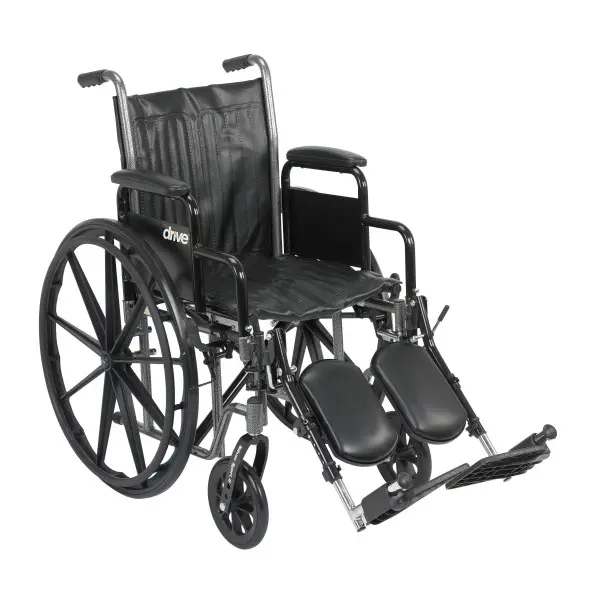
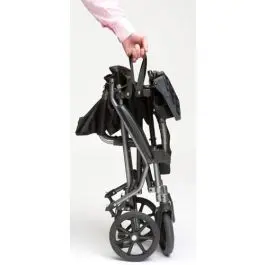
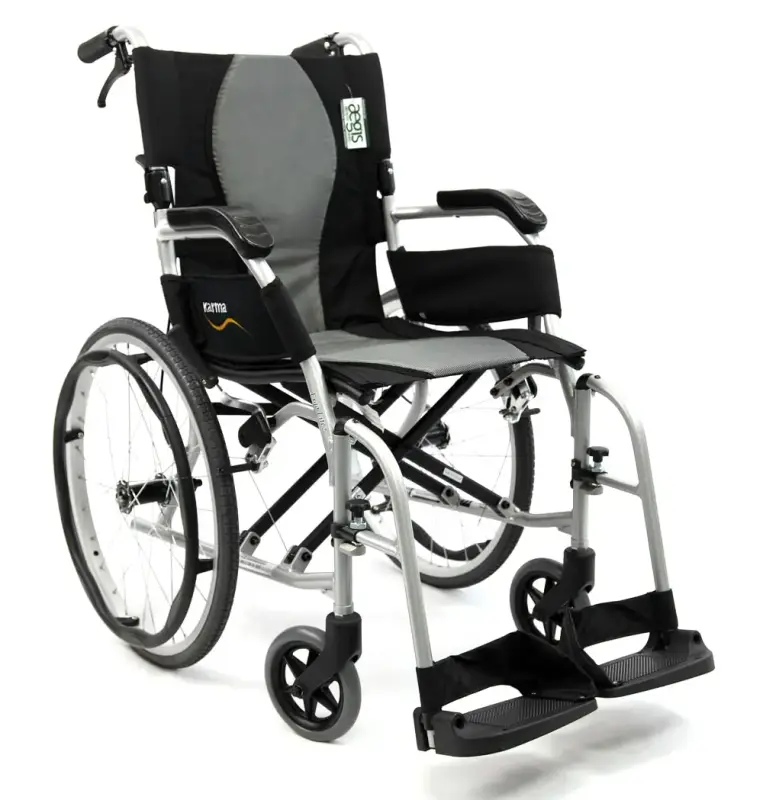
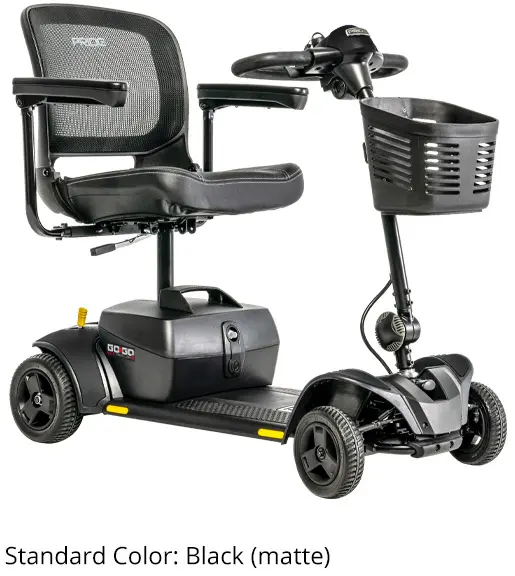
We also read six rows of our own catalog: the Drive Medical Silver Sport 2 (MW-019), the Drive Medical Fly-Lite transport chair (MW-020), the Drive Medical Travelite transport chair (MW-065), the Karman Ergo Flight (MW-013), the Pride Go Go Elite Traveller 2 scooter (PW-034) and the Drive Medical Scout scooter (PW-036). Catalog prices are guide prices, written as "around", from our catalog, checked October 2026.
Four limits matter. First, we did not ask either company for a quote and did not use Hieline's cost calculator; every rate is as printed. Scootaround's pages say its examples are approximate and that "All rates subject to change." Second, the Medicare section reads the rule and the CMS page, not the fee schedule itself, so it gives the percentages Medicare uses and no dollar amounts for any chair; the sums of those percentages are our own arithmetic. Third, we did not read the separate rules the 414.229 text points to on how a period of continuous use is counted and on servicing equipment you own. Fourth, the guide is written for the United States: rental, funding and loan programs in the UK, the EU and elsewhere work differently, so confirm with your local supplier or health service before you rely on any of this. The guide also does not cover Medicare Advantage plans, Medicaid or VA routes, which were not among the documents we read.
Route one: a local medical supply rental shop
A home medical equipment shop near you is one answer to a search for wheelchair rental near me. It rents chairs by the week or month, delivers to the door and collects at the end. We read one shop's pages as an example of what such a rental includes and costs: Hieline Medical, a medical equipment retailer in Plano, Texas, that rents across Dallas-Fort Worth. Other shops price and word things differently; the point is the shape of the deal.
| Hieline rental, as printed | Week (7 days) | Month (28 days) | Capacity, seat |
|---|---|---|---|
| Standard wheelchair | 55 | 140 | 250 lb; 16 or 18 in |
| Heavy duty wheelchair | 65 | 160 | 400 lb; 22 or 24 in |
| Pediatric wheelchair | 55 | 140 | 150 lb; 12 or 14 in |
| Standard transport chair | 55 | 140 | 250 lb; 19 in |
| Heavy duty transport chair | 65 | 160 | 400 lb; 22 in |
| Elevated leg rests, add-on | 5 | 10 | Swing-away pair |
| Portable scooter | 150 | 350 | 250 lb |
| Standard power wheelchair | 200 | 420 | 300 lb |
Prices are in US dollars, read on 23 October 2026. A month on these pages means 28 days. Every wheelchair rental, the page says, includes a folding frame with swing-away footrests and removable desk-length armrests, vinyl upholstery "wiped clean before each rental", anti-tip bars, and delivery and pickup at home, a hotel, a care facility or a hospital discharge address, for the fees set out below. Delivery is usually the next day.
What the terms say
- No prescription. The page says "No prescription required, rent directly without a doctor's order."
- No direct billing. "We do not bill Medicare or insurance directly," the FAQ says, and all rental payments are made to Hieline upfront when you reserve.
- A minimum term of one week, starting on the delivery or pickup date.
- Automatic renewal. "Rentals auto-renew at the end of each period unless you call to cancel before the renewal date," the page says. Weekly rentals renew weekly and monthly rentals monthly, billed to the card on file.
- Pickup needs notice. You call to schedule it, with at least 72 hours' notice, and the page says "We do not schedule pickups on the due date itself."
- Damage. Normal wear and tear is covered; damage beyond it, loss or theft is charged to the card on file at repair or full replacement cost. A 35-dollar cleaning fee applies if the equipment comes back dirty.
- Cancelling. A 15 percent cancellation fee applies once an order has been processed, cancellations on the day of delivery are not refundable, and "No refunds are issued for early returns or once equipment has been delivered or picked up," the page says.
The page prints no security deposit; the card on file carries the risk instead. It also offers to discuss "applying a portion of your rental payments toward a purchase" if you decide to keep a chair. Ask how much, in writing, before the first payment.
What a local rental costs once fees are added
The weekly price is not the whole bill. Hieline charges 45 dollars for delivery within 15 miles of its Plano store, plus 20 dollars for each extra 10 miles, and charges pickup at the same rate. Both fees are taken upfront. So a standard chair delivered within 15 miles costs 145 dollars for the first week (55 plus 90 for delivery and pickup), and 230 dollars for 28 days. At 25 miles the two trips cost 130 dollars together, and at 35 miles 170. Same-day rush delivery is 75 dollars when the schedule allows.
| Standard wheelchair, Hieline | Rent (USD) | With delivery and pickup within 15 miles |
|---|---|---|
| 1 week | 55 | 145 |
| 2 weeks | 110 | 200 |
| 3 weeks | 165 | 255 |
| 1 month (28 days) | 140 | 230 |
| 2 months (56 days) | 280 | 370 |
| Add elevated leg rests | 5 a week, 10 a month | Same fees |
Two things follow from the printed rates. First, the monthly rate is cheaper than three weekly rates: three weeks cost 165 dollars, a 28-day month 140. If the need may run past two weeks, ask for the monthly rate from the start. Second, the renewal rule decides the last bill. A pickup not scheduled before the renewal date starts a new period, so a chair kept one day past a monthly end can cost another 140 dollars. Put the renewal date in your phone the day the chair arrives, and call at least 72 hours before it.
The fees are small next to a lost or broken chair, which the card on file pays for at full replacement cost. The cancellation fee is 15 percent once an order has been processed: on the rent alone that is 8.25 dollars on a 55-dollar week and 21 on a 140-dollar month; the page does not say whether the delivery fees count too, so ask. Check the chair when it arrives and report any damage at once, as the page asks, so it is not charged to you later.
Route two: travel and cruise rental companies
For a trip, a family visit or a cruise, a travel rental company delivers to where you are staying and collects afterwards. We read Scootaround's pages as the example. Its footer reads "Scootaround Powered by WHILL." Scootaround says it rents wheelchairs in more than 2500 locations across North America and Europe and serves all major cruise lines at nearly 50 ports. It delivers to a hotel, a residence or a cruise port, and offers standard wheelchairs, heavy duty wheelchairs and transport chairs, with availability that varies by location.
| Scootaround standard wheelchair | 3 days | 7 days | 14 days |
|---|---|---|---|
| Las Vegas | 56 | 74 | 103 |
| Orlando | 46 | 74 | 123 |
| Washington, D.C. | 94 | 153 | 245 |
| New York, 1 week | 216 |
These are Scootaround's own printed examples in US dollars, read on 23 October 2026, and its pages call them approximate: a standard wheelchair "costs approximately $19 per day in Las Vegas," the page says, with all costs "based on a 3-day rental." The per-day price falls the longer you rent. In Las Vegas, 3 days at 56 dollars is about 18.67 a day, 7 days at 74 about 10.57, and 14 days at 103 about 7.36. In Washington, D.C., 14 days at 245 is 17.50 a day. Those are our divisions of the printed totals. The page's own per-day figures do not always match them: it gives 16 dollars a day in Orlando, where 46 dollars for 3 days works out to 15.33. That is one more reason to treat every figure as a starting point.
What the pages say about booking
- Most locations rent for a single day, but some cities have a two-day minimum; the page names Orlando, Washington D.C., Atlanta and San Francisco.
- Rates vary with "your requested pick-up and drop-off points," a help article says, as well as the equipment, the place and the length of the rental. All quotes are in US dollars.
- Weight capacities are printed as up to 250 lb for transport chairs, 350 lb for standard wheelchairs (18 to 20 inch seats) and 400 lb for heavy duty XL chairs (22 to 24 inch seats), each varying by location.
- Payment is made online, by credit card or another accepted method. Refunds after cancelling "are generally available only if you purchased our Cancellation Protection Plan (CPP)," the help page says; otherwise a credit may be offered.
- The pages we read print no deposit, no delivery fee and no damage terms. Ask for all three before you pay.
The Scootaround pages we read do not mention Medicare. Expect to pay for a holiday rental yourself: Medicare's equipment rules are written for equipment a doctor orders for use in your home; the Medicare section below explains them.
Renting a wheelchair or scooter for a cruise
Cruise lines lend chairs for boarding, not for the voyage. Royal Caribbean's page says "We provide complimentary wheelchair assistance for embarkation and disembarkation only." For the cruise itself, it says you may bring your own or rent from a company that delivers to your stateroom, and it names two: Scootaround and Special Needs at Sea. We read Scootaround's terms only; the other company's were not in our files.
Scootaround's help page describes the delivery: the chair or scooter is "delivered directly to your cruise ship and left with ship staff," usually at the stateroom or a set boarding area, so it is ready when you board, and at the end you leave it in the stateroom for collection after you disembark. You do not need to be present for either. Its cruise rates "typically start at around $30 per day for standard scooters and electric wheelchairs," the help page says, varying with the equipment, the length of the cruise and the port.
Check the door before you book
Royal Caribbean's page sets the limit that matters most: assistive devices "should fit through a standard stateroom entry doorway which is at least 23 inches wide." Accessible staterooms have doors at least 32 inches wide, and for a device wider than 32 inches the line asks you to contact its Access Department. Rental pages print seat widths, such as 18 to 20 inches for a standard chair; the pages we read do not print the overall open width, which is the figure a door has to clear. Ask the rental company for the overall width of the exact model, then compare it with your cabin door.
- Scooters and chairs "must be stored and recharged in your stateroom," the cruise line says, to keep corridors and fire doors clear; plan for a place to park it and a socket.
- Segways may not be used on board, the page says.
- Ask the rental company what happens if the chair is damaged at a port of call, and who you call on board.
Renting at the other end of a flight
Renting at your destination means not checking your own chair on the plane. That suits some trips, and it has its own limits. Scootaround's help page is plain about one: "No, we cannot deliver to airports." It delivers to a hotel, a cruise port or another nearby place, so you need a way to get from the airport to the delivery point.
If you fly with your own folding chair, the US airline rule 14 CFR 382.123 requires airlines to let a passenger who uses a wheelchair and preboards stow it in the cabin's priority stowage area, the rule says, "with priority over other items brought onto the aircraft by other passengers or crew enplaning at the same airport," where it fits. Power chairs and scooters bring battery rules: the FAA's PackSafe page sets limits for lithium ion batteries and says "Individual airlines may have more restrictive rules." Those rules, and how to fly with a power chair, are covered in the guide to electric wheelchairs; this guide does not repeat them.
A simple test helps decide. If you depend on your own chair's fit and cushion every day, renting a strange chair for a week may cost more in comfort than it saves in luggage. If the chair is only for long distances on the trip, a rental at the hotel can be the easier route. The person who prescribed or fitted your chair is the right one to ask about a cushion or a seat for a week away.
Route three: Medicare capped rental through a supplier
How does Medicare pay for a rented wheelchair? Mobility Atlas read the federal rule, 42 CFR 414.229, and the CMS and Medicare.gov pages in October 2026. Medicare Part B covers wheelchairs as durable medical equipment when they are medically necessary and a doctor or other provider orders them for use in your home. For capped rental items, Medicare pays monthly rent, and the CMS page says that, in general, it pays "for a period of continuous use not to exceed 13 months, at which point the beneficiary takes over ownership of the equipment." After the Part B deductible you pay 20 percent of the Medicare-approved amount if the supplier accepts assignment. The rule's percentages for chairs other than power chairs, 10 percent of a recognized purchase price for months 1 to 3 and 7.5 percent after that, are how Medicare sets its fee, not a price on a shop's shelf. Use a supplier that is enrolled in Medicare and will accept assignment for every rental month.
Medicare.gov's page on wheelchairs and scooters puts the options plainly. Depending on the type of equipment, you may need to rent it, you may need to buy it, or you may be able to choose, and "Some items become your property after you've made a certain number of rental payments," the page says. Its page on equipment lists what counts as durable medical equipment: equipment that can withstand repeated use, is used for a medical reason, is typically only useful to someone who is sick or injured, is used in your home, and is expected to last at least 3 years.
Who is eligible
Part B "covers medically necessary DME if your doctor or other health care provider orders it for use in your home," the equipment page says. The wheelchair page describes wheelchairs and scooters as devices that help "if you have a limited ability to walk." Whether a chair is medically necessary for you, and which kind, is for your doctor or the treating provider to decide and write down; for power wheelchairs that need prior authorization, the supplier usually sends the request to Medicare. That is also why a Medicare rental is not a fast way to get a chair for next week's trip.
The supplier must be enrolled, and should accept assignment
Medicare "will only pay for DME items if you get them from suppliers who are enrolled in Medicare," the page says. A supplier that participates in Medicare must accept assignment, which means it can charge you only the coinsurance and the Part B deductible on the approved amount. One that does not may charge more. For rentals the page adds a warning worth reading twice: "For rented DME, make sure the supplier is willing to accept assignment for all rental months, otherwise you'll have to pay the full cost of your DME upfront." Medicare would then pay you back later for its share, after the claims are processed.
The 13-month cap and the transfer of title, in the rule's words
The rule behind the capped rental is 42 CFR 414.229. For items furnished on or after 1 January 2006, the rule says "payment is made based on a monthly rental fee schedule amount during the period of medical need, but for no longer than a period of continuous use of 13 months." Then ownership passes to you: "The supplier must transfer title to the item to the beneficiary on the first day that begins after the 13th continuous month in which payments are made," the rule says.
Continuous use is the key phrase. The rule counts a period of continuous use under a separate section, 414.230, which we did not read, so ask the supplier how a break in use, a hospital stay or a move would affect the count for you. If your need ends before 13 months, Medicare's payments end with it: the rule pays only during the period of medical need, and title passes only after 13 continuous paid months. The text we read does not say what happens to the chair then, so ask the supplier at the start whether it will collect it.
What the supplier must do during the rental
- Keep furnishing the chair. The supplier that furnishes it for the first paid month must continue until medical necessity ends or the 13 months end, whichever is earlier, with exceptions such as you moving outside its service area or choosing another supplier, the rule says.
- Say upfront whether it will accept assignment. Before furnishing the item, the rule says the supplier "must disclose to the beneficiary its intentions regarding whether it will accept assignment of all monthly rental claims for the duration of the rental period," which can be a written agreement.
- Say in advance whether it can service the chair once you own it. No later than two months before title passes, the supplier must tell you "whether it can maintain and service the item after the beneficiary acquires title to it," the rule says, though CMS may make exceptions case by case.
- Not swap the chair without a reason. Before the 13 months end, the rule lets the supplier replace the chair only in set cases, listed under repairs below.
The rule also contains an older purchase option, offered in the 10th continuous rental month, with caps of 13 or 15 months depending on the choice. Those paragraphs apply to items furnished before 2006. For a chair rented today, the 13-month rule and the transfer of title are the ones that apply, and the CMS page states the same result.
What the rental percentages mean, and what they do not
The percentages in the rule are easy to misread. For 1991 and later years, the rule says the monthly fee schedule amount for capped rental equipment "equals 10 percent of the purchase price recognized ... for each of the first 3 months and 7.5 percent of the purchase price for each of the remaining months." The CMS page describes the same formula, with the purchase price based on a base year of 1986 "increased by the covered item update," and says the monthly fee from the fourth month is 75 percent of the monthly fee paid in each of the first 3 months.
Here is what that means in money, using a round figure rather than any real chair. For every 100 dollars of purchase price that Medicare recognizes, its fee is 10 dollars a month for months 1 to 3 and 7.50 a month for months 4 to 13. Over the full 13 months that adds up to 105 dollars, or 105 percent of the recognized price. That sum is our arithmetic from the rule's percentages, not a CMS figure. Your share, at 20 percent, would be 21 dollars per 100 over the full 13 months, plus any unmet deductible, if the supplier accepts assignment and its charge is not below the fee schedule.
| Month | Fee per 100 of recognized price | Your 20 percent |
|---|---|---|
| 1 to 3, each | 10 | 2 |
| 4 to 13, each | 7.50 | 1.50 |
| All 13 months | 105 | 21 |
Three cautions keep this honest. First, the fee is built from a Medicare figure, not a shop price: CMS says fee schedule amounts for equipment not adjusted by competitive bidding are set statewide and limited by national ceilings and floors. We did not read the fee schedule, so we give no dollar figure for any chair. Second, CMS says Medicare pays 80 percent "of the lower of the supplier's actual charge for the item or service or the fee schedule amount," and the beneficiary pays 20 percent of the same lower figure, plus any unmet Part B deductible; for items under Medicare's competitive bidding program, the 80 and 20 percent apply to the program's own payment amount instead. Third, other insurance you may have, or a supplier that does not accept assignment, can change what you pay, Medicare.gov's page says. Ask the supplier for the monthly amount you will owe, in writing, before the chair arrives.
The CMS page also explains that not all equipment follows the capped rental rule. Inexpensive and routinely purchased items, such as those with a purchase price of 150 dollars or less, can be bought or rented, but total payments cannot exceed the purchase fee schedule amount. Which class a given wheelchair falls in is set by Medicare's fee schedule, which we did not read. Ask the supplier one direct question: is this chair a capped rental item, and when will I own it?
Power wheelchairs and scooters under Medicare
Power chairs and scooters have their own rules. Medicare.gov says "You must have a face-to-face examination and a written prescription from a treating provider before Medicare covers a power wheelchair or scooter." Some power wheelchairs need prior authorization: the supplier usually sends the request and the documents to Medicare, and the page says the request may be denied if Medicare finds you do not medically need a power wheelchair or does not get enough information to decide.
The payment formula differs too. For power-driven wheelchairs furnished on or after 1 January 2011, the rule sets the monthly rental fee at 15 percent of the recognized purchase price for each of the first 3 months and 6 percent for each month after. Over 13 months that also comes to 105 percent, by our sum. The CMS page adds that "Complex rehabilitative power wheelchairs can be purchased in the first month of use," and the rule limits that purchase option to complex rehabilitative power chairs. Which power chair a person needs is decided with the prescriber and a seating specialist; the guide to electric wheelchairs explains the types, and the guide to mobility scooters the scooters.
Repairs, replacement and changing supplier
During a capped rental the rule binds the supplier, not you: as the list above says, the supplier that furnishes the chair for the first paid month must keep furnishing it, though you may choose a different supplier before the 13 months end. It may not replace the chair before then except in set cases: a like-for-like replacement because the chair was lost, stolen, irreparably damaged, is being repaired or no longer works; a physician ordering different equipment, with the reason written down when the change is for medical necessity; you choosing a newer or upgraded item and signing an advance beneficiary notice; or CMS deciding a change is warranted.
Once you own the chair, repairs and replacement follow other rules. The Medicare Interactive page of the Medicare Rights Center, a nonprofit, says "Medicare will pay for repairs up to the cost of replacement" for worn equipment that has not reached the end of its lifetime, which "is never less than five years from the date that you began using the equipment." It also says Medicare will pay to replace equipment you rent or own if it is lost, stolen, or damaged beyond repair in an accident or a natural disaster, with proof of the damage or theft. The page also says: "Your primary care provider must write you a new order or prescription." For day-to-day upkeep of a manual chair, the guide to manual wheelchair repair covers what you can check yourself.
Compare that with a shop rental. Hieline's page covers normal wear and tear and charges damage beyond it to your card; Scootaround's pages print no damage terms. Under a Medicare rental, the rule obliges the supplier to keep furnishing the chair and limits when it may swap it; the parts of the rule we read do not say who pays for a repair during the rental, so ask the supplier.
Route four: free and low-cost loans and reuse
Every state has an assistive technology program funded under the AT Act, and lending devices is one of the activities the Act sets out. The AT3 Center, which supports these programs, says all 50 states, four US territories, the District of Columbia and Puerto Rico receive funding under Section 4 of the Assistive Technology Act of 2004: 56 grantees in all. Each runs a set of activities, and two matter for a wheelchair. "AT Device Loan activities allow individuals to borrow AT for a limited time period to try out and determine if a device will meet their needs before a purchase is made," the AT3 Center's page says. "AT Reutilization activities support the reuse of assistive technology that is no longer needed or used by its original owner," passing it to a new owner "at substantial cost savings."
- Anyone can ask. The programs "serve all individuals of any age and with any type of disability, functional limitation, or chronic health condition," the page says, and a friend or family member may ask on someone's behalf.
- No referral is needed. The page answers the question plainly: "No, a referral is not needed."
- Call first. Whether you need an appointment differs from one program to another, so the page advises contacting the program before visiting.
- Many services are free, but some programs charge a small fee; for a short-term loan, the page says, "you may be required to pay for return shipping."
- The programs can also help find funding. The AT3 Center's page says they "might know about public programs or community grants," even if you think you have to pay out of pocket.
A device loan is a trial, not a long-term chair: the AT3 Center calls it "a way to try before you buy." Reuse programs are the route for keeping a chair at low or no cost; some are run by charities, like the two below. The AT3 Center keeps a directory of every state's program at at3center.net, listed in the sources at the end of this page. What each state lends, how long for and how fast varies, so the two examples below are a guide to the kind of thing to ask, not a promise of what your state offers.
Two programs up close: Texas and Georgia
Texas: a lending library and a list of reuse programs
The Texas Technology Access Program, based at the University of Texas at Austin, is the state's AT Act program. Its page says "Short-term device loans are available for 35 days." You search an online loan library, request the items, and join a waitlist if they are out. "TTAP pays shipping both ways," the page says, with a return label in the box; shipping can take 3 to 14 days, and you can pick up and drop off at its Austin office instead. Its page does not list what the library holds, so search it or call to ask whether a wheelchair is available to borrow. For some higher-end, more complicated devices, it requires a professional to be involved in the loan.
For longer needs, TTAP points to reuse programs. One is Project MEND, a nonprofit in San Antonio that provides refurbished equipment through long-term loans to low-income people with disabilities who can show financial need. "The loan period is set for a period as long as the individual continues to need the equipment," the page says, and the items normally available include manual and electric wheelchairs, scooters, walkers, shower chairs, transfer boards and electric hospital beds, all evaluated, sanitized, refurbished and repaired first. TTAP also lists reuse programs in Houston, El Paso and Austin that it does not sponsor.
Georgia: a reuse charity with a registration fee
FODAC, Friends of Disabled Adults and Children, is a nonprofit near Atlanta, with a second location in Savannah since 2024. Its home page says its model is "to provide free or low-cost wheelchairs and other home medical equipment (HME)," and that it provides over 15 million dollars a year in equipment and services. Its equipment page lists manual and power wheelchairs, walkers, canes, Hoyer lifts, hospital beds and more. The terms are printed plainly:
- It serves adults and children with disabilities in need in the Atlanta and Savannah areas, the page says.
- Equipment goes out on a "First-come, first-served basis," the page says; call to check what is available, and walk-in requests are not recommended.
- "A one-time $25 registration fee for each new client," the page says, and some equipment needs batteries bought too.
- The user's height and weight are needed, so the equipment can be matched.
- Bring a state ID, a driver's license or other proof of address or identity.
- Pickup is weekdays; delivery is offered for some items, for a fee, within Metro Atlanta. Outside Atlanta and Savannah, the page points to a statewide partner list.
A reused chair is not fitted the way a prescribed chair is. If the user will sit in it for hours a day, ask the physical or occupational therapist to check the seat width, the depth and the cushion before it becomes the everyday chair. The guide to wheelchair cushions explains what a cushion does and why a seating specialist chooses it.
Route five: buying new
Buying is the simplest route when the need will last. We read two category pages of 1800wheelchair, an online retailer based in New York state, on 10 October 2026, with 20 listings saved from each. Among the 20 standard wheelchairs, prices ran from 215 dollars to 799.99, with a middle price of 263; 11 of the 20 were under 300 dollars. The page itself says its prices for standard chairs "start at under $100," a figure we did not see in the 20 listings we saved. Among the 20 transport chairs, which included a few chairs that convert into rollators, prices ran from 139.98 to 889 dollars, with a middle price of 286.50. The page says orders over 59 dollars ship at no charge.
| Chair, as listed | Price (USD) | Weight, capacity | Source and date |
|---|---|---|---|
| Excel 2000 manual wheelchair | 215 | 38 to 60 lb; 300 lb | 1800wheelchair, 10 Oct |
| Drive Silver Sport 2 Dual Axle | 232 | 40 to 42 lb; 250 to 350 lb | 1800wheelchair, 10 Oct |
| Featherweight Feather Chair | 569 | 13.5 lb; 300 lb | 1800wheelchair, 10 Oct |
| Pro Heal Astra steel transport | 139.98 | 25.5 lb; 250 lb | 1800wheelchair, 10 Oct |
| Medline Ultralight transport | 182 | 15 lb; 300 lb | 1800wheelchair, 10 Oct |
| Heavy Duty Transport Wheelchair | 307 | 45 or 49 lb; 450 lb | 1800wheelchair, 10 Oct |
| Drive Fly-Lite transport, 19 in | Around 252 | 14.5 lb | Our catalog, Oct 2026 |
| Drive Travelite transport in a bag | Around 246 | 20.5 lb; 250 lb | Our catalog, Oct 2026 |
| Karman Ergo Flight S-2512 | Around 783 | 19.8 lb without footrests (16, 18 in) | Our catalog, Oct 2026 |
Hieline, the Dallas-Fort Worth rental shop, prints its own starting prices on its rental pages: "New wheelchair pricing starts from $185," and new transport chairs from 139 dollars; a new scooter to own starts at 825 dollars, the scooter page says, without naming the model. The catalog prices are guide prices from our catalog, checked October 2026, and the Fly-Lite row notes that its source page gives two different weight capacities, so confirm it with the seller. Prices differ by country, by retailer, by tax and by funding, and these are United States prices in US dollars.
A cheap new chair is not always the cheapest chair for the user. Standard chairs on the 1800wheelchair page are "Generally weighing between 35 and 44 lbs.," the page says, and a caregiver who lifts one into a car trunk every day may do better with a lighter chair. Choosing a chair to own, from frame weight to seat size, is the subject of the guide to lightweight wheelchairs, and for anything a person will use every day the prescriber or therapist should be part of the choice.
Rent or buy: the break-even arithmetic
When is buying a wheelchair cheaper than renting? Mobility Atlas set the printed rental rates of a Dallas-Fort Worth shop against the purchase prices printed on the same shop's pages in October 2026. At Hieline Medical a standard wheelchair rents for 55 dollars a week and a new one starts at 185 dollars, so four weeks of rent, at 220 dollars, cost more than buying; on the monthly rate of 140 dollars, the second month does, at 280. Add 90 dollars for delivery and pickup, and two weeks already cost 200. A transport chair, new from 139 dollars there, is overtaken in the third week of rent. A portable scooter at 150 dollars a week, against a new scooter from 825, is overtaken in the sixth week. Renting wins for a trip, a short recovery or a trial; for a need of months, price a purchase, and ask whether Medicare will pay.
| Hieline item | New from | Weekly rent passes it | Monthly rent passes it |
|---|---|---|---|
| Standard wheelchair | 185 | Week 4 (220) | Month 2 (280) |
| Transport chair | 139 | Week 3 (165) | Month 1 (140) |
| Portable scooter (new from 825, model not named) | 825 | Week 6 (900) | Month 3 (1050) |
| Heavy duty transport chair | 307 (1800wheelchair) | Week 5 (325) | Month 2 (320) |
The table is our arithmetic on printed prices, before tax and before delivery. A week of rent is 7 days and a month 28, as Hieline defines them. One month's rent on a transport chair, 140 dollars, is already 1 dollar more than the shop's starting price for a new transport chair. For the scooter, five weeks cost 750 dollars and six cost 900; on the monthly rate, two months cost 700 and three 1050. Hieline prints no purchase price for a heavy duty transport chair, so that row uses 1800wheelchair's 307-dollar listing, from a different seller on a different date. Hieline's 825-dollar starting price for a new scooter does not name the model, so it may not be the same scooter it rents.
The same sum on a travel rental
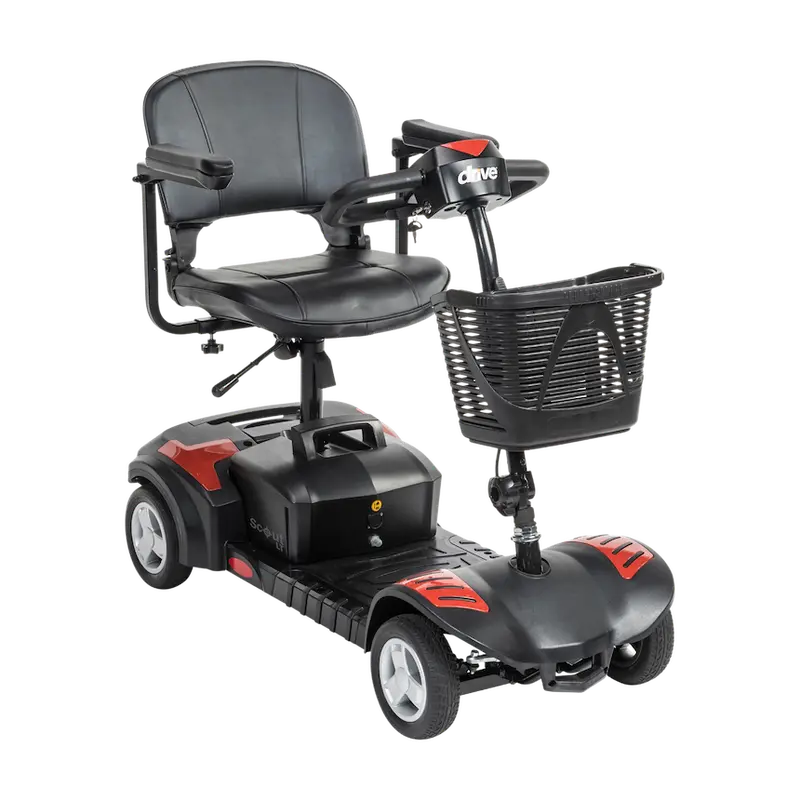
Travel rentals are priced by the trip, so the test is a single rental against a purchase. Scootaround's approximate 14-day price for a standard wheelchair in Las Vegas, 103 dollars, is about 48 percent of the cheapest of the 20 standard chairs we saw on 1800wheelchair, 215 dollars. In Washington, D.C., its 14-day price, 245 dollars, is 30 dollars more than that chair, and its one-week New York price, 216 dollars, is 1 dollar more. For a scooter, its approximate 14-day Las Vegas price of 243 dollars goes about 3.4 times into Hieline's 825-dollar starting price for a new scooter to own; our catalog lists the Drive Scout 4-wheel travel scooter from around 849 dollars.
What the sums leave out
- Delivery. A rental shop charges for delivery and pickup. 1800wheelchair's page says orders over 59 dollars ship at no charge; Hieline's pages do not say what delivery of a chair you buy from it costs. A chair you own also has to be stored when you no longer need it.
- Damage. A rental shop charges damage beyond normal wear to your card; a chair you own is your risk anyway.
- Fit. A rental is a stock chair. A chair you buy can be chosen for the user's size and set up for them, which matters more the longer it is used.
- Resale and reuse. A chair you no longer need can be passed on, sold or given to a reuse program such as the ones above.
- Medicare. If a doctor orders the chair for use in your home and Medicare pays, the sums above do not apply: you pay 20 percent of the approved amount after the deductible if the supplier accepts assignment, and a capped rental item becomes yours only if payments run the full 13 continuous months.
Standard, transport or heavy duty: what to ask for
Rental companies sort their chairs into a few types, and the words mean something. A standard wheelchair has two large rear wheels so the user can push themselves. A transport chair, 1800wheelchair's page says, has "four small wheels instead of two small and two large" and is designed to be pushed by someone else, not by the user. The transport chairs on that page weighed from 13 lb, while the page gives 35 to 44 lb as the usual weight of a standard chair. Heavy duty or bariatric chairs have wider seats and higher weight capacities.
| Type | Hieline, as printed | Scootaround, as printed |
|---|---|---|
| Standard wheelchair | 250 lb; 16 or 18 in seat | Up to 350 lb; 18 to 20 in seat |
| Heavy duty wheelchair | 400 lb; 22 or 24 in seat | Up to 400 lb; 22 to 24 in seat |
| Transport chair | 250 lb; 19 in seat | Up to 250 lb |
| Heavy duty transport chair | 400 lb; 22 in seat | Not listed |
The two companies print different capacities for a standard chair, and Scootaround says its capacities vary by location. Give the rental company the user's weight and ask for the capacity of the exact chair they will deliver, not the type. FODAC asks for height and weight before it matches equipment, for the same reason. Hieline's page suggests 16 inches for petite users and 18 inches as standard; a seat width chosen by measuring the user is better than a guess, and the user's therapist can do that. For a child, the guide to pediatric wheelchairs explains why a child's chair is fitted by a therapist.
Add-ons worth asking about
- Elevating leg rests. Hieline rents a swing-away pair for 5 dollars a week or 10 a month; Scootaround lists elevating legrests among the accessories for its transport chair. Whether the user needs the legs raised is for the surgeon, the physician or the therapist to say.
- A cushion. Scootaround lists a gel cushion for its transport chair, and Hieline's rental wheelchairs come with vinyl seat upholstery. A user who will sit for long periods should ask a clinician what to sit on.
- Anti-tip bars. Hieline says they come fitted on its rental wheelchairs.
- Removable armrests. Hieline's rental wheelchairs have removable desk-length arms. If the user moves in and out of the chair from the side, ask the therapist whether removable arms are needed, and ask the shop to confirm them on the chair it delivers.
If the need is a foot or ankle injury, ask the treating clinician whether a knee scooter is an option as well as a wheelchair; the guide to knee scooters covers them, and the clinician decides which is safe.
Scooter rental
Scooters rent the same way as chairs, at higher prices. Scootaround's approximate examples for a transportable scooter were 121 dollars for 3 days in Las Vegas, 159 for 7 days and 243 for 14 days; in Orlando 107, 167 and 272; in Washington, D.C., 109, 183 and 300. A standard scooter in D.C. was 124, 213 and 330. Its help page says daily rates "typically start anywhere from $30 to $50 per day for standard scooters and electric wheelchairs," with discounts for longer rentals. In Dallas-Fort Worth, Hieline prints 150 dollars a week or 350 for 28 days for a portable scooter, and 200 or 420 for a heavy duty scooter or a standard power wheelchair.
| Scootaround transportable scooter | 3 days | 7 days | 14 days |
|---|---|---|---|
| Las Vegas | 121 | 159 | 243 |
| Orlando | 107 | 167 | 272 |
| Washington, D.C. | 109 | 183 | 300 |
The rented models differ by company. Hieline names the Go Go Elite Traveller 3-wheel for its portable scooter, printed as 4 mph with a 7.3 to 10.5 mile range and a 250 lb capacity, and the Victory 10 3-wheel for its heavy duty one. Our catalog lists the 4-wheel Go Go Elite Traveller 2, with a range of up to 13.8 miles on its 18 Ah battery and a 300 lb capacity; check the exact model you will get, its range and its capacity. Hieline says most customers need delivery for its power wheelchairs, because they are heavy and not portable, and that you may be able to collect one yourself if you have an accessible van, a truck with a ramp or a vehicle with a lift; call to confirm.
On a cruise, a rented scooter must fit the cabin door and be stored and charged in the cabin, as the cruise section above explains. On a flight, its battery is a matter for the airline under the FAA's rules. To choose a scooter to own, read the guide to mobility scooters.
Wheelchair van rental
Sometimes the chair is not the problem; the car is. United Access, a dealer whose rental vans are BraunAbility vans with powered side-entry ramps, printed rates of 150 dollars a day for 1 to 6 days, 130 a day for 7 to 28 days and 110 a day for 29 to 30 days, read on 19 October 2026. By our sums, 3 days cost 450 dollars, 7 days 910 and 30 days 3,300, before tax and delivery. Rates include 200 miles a day, and the page says they "will vary slightly depending upon location."
The same page answers the Medicare question: "Currently, Medicare does not cover the cost of a wheelchair van rental." The driver must be at least 21 with a valid US driver's license and the required insurance, and the dealer suggests booking at least 2 weeks ahead. Buying or converting a van, and who helps pay, is covered in the guide to wheelchair vans.
Wheelchair rental near me: what to search and what to ask
We cannot list the shops in your town, and a list of names would be out of date by next month. What we can do is tell you what to search for and what to ask, so that one phone call settles the price.
What to search for
- For a few weeks at home: the words wheelchair rental or transport chair rental with your town, and medical supply store or home medical equipment with your town.
- For a trip: wheelchair rental or scooter rental with the city or cruise port you are going to. Travel companies such as Scootaround deliver to hotels and ships.
- For Medicare: ask your doctor's office which supplier it sends orders to, and check that the supplier is enrolled in Medicare and accepts assignment.
- For a loan or reused chair: your state's assistive technology program, which the AT3 Center's directory lists for every state, and the words medical equipment reuse with your town or county.
- For a cruise: the cruise line's accessibility page, which may name the rental companies that deliver on board, as Royal Caribbean's does.
What to ask on the phone
- What is the weekly and the monthly rate, and how many days is a month?
- What does delivery cost, and pickup? Are both charged upfront? Can you deliver to a hotel, a hospital or a cruise port?
- Is there a minimum term, a deposit, or a card held on file?
- Does the rental renew automatically? How much notice do you need for pickup?
- What is the weight capacity and the seat width of the exact chair you will deliver? What is its overall width when open, and its weight?
- Are leg rests, a cushion or anti-tip bars included, or extra?
- What happens if it is damaged, lost or stolen? Is there a cleaning fee?
- What does cancelling cost, and is any refund given for an early return?
- Do you bill Medicare or insurance? If yes, are you enrolled, and will you accept assignment for every rental month?
- If I decide to keep it, does any rent count toward buying it?
Write the answers down with the date and the name of the person you spoke to. If two shops quote different prices for what sounds like the same chair, the answers to questions 2, 4 and 7 usually explain the gap.
Three traps
Trap one: forgetting the renewal date. Hieline's rentals renew automatically, pickup needs at least 72 hours' notice, and it does not schedule a pickup on the due date itself. A chair still in the hall the day after a monthly period ends can cost another 140 dollars. Ask every shop how its renewal works, and set a reminder for three days before the end.
Trap two: assuming Medicare will pay for any rental. Medicare pays only enrolled suppliers, for equipment that is medically necessary and ordered by a doctor or other provider for use in your home. Hieline says "We do not bill Medicare or insurance directly," and the Scootaround pages we read do not mention Medicare. Even with a Medicare supplier, Medicare.gov warns that a supplier not accepting assignment for all rental months can leave you paying the full cost upfront.
Trap three: reading a printed rate as a quote. Scootaround calls its rates approximate, says they change, and prices by pickup and drop-off points; its own per-day examples do not always match its tables. Hieline's weekly price does not include 90 dollars or more for delivery and pickup. Ask for the full price with every fee, in writing, for your dates and your address.
Three composite scenarios
These are composite scenarios, not individual customers. Each one combines facts and ranges already given in this guide to show how the decision plays out.
Scenario one: a person is going home from hospital in the Dallas area and will need a chair for about three weeks. The therapist names a standard chair with elevating leg rests. At Hieline's printed rates, three weekly rentals with leg rests come to 180 dollars, and one 28-day month with leg rests to 150. With delivery and pickup within 15 miles, the totals are 270 and 240. At the same shop a new standard chair starts at 185 dollars, so the family also asks what a new chair with leg rests, delivered, would cost before deciding. The family books the monthly rate, notes the renewal date, and calls for pickup three days before it.
Scenario two: a couple is taking a 7-day cruise, and one of them can walk short distances but not the length of the ship. The cruise line lends a chair only for boarding. They ask a company the cruise line names for a quote for a standard chair delivered to the ship; as a rough guide, Scootaround's printed land rate for 7 days in Orlando was an approximate 74 dollars, but its cruise prices vary with the port and the length of the cruise. They ask for the chair's overall open width and, finding it wider than 23 inches, ask to move to an accessible cabin with a 32-inch door. They ask about the cancellation plan before paying.
Scenario three: an older adult with a limited ability to walk is told by their doctor that a wheelchair is medically necessary at home. The doctor's office sends the order to a supplier enrolled in Medicare, which confirms that the chair is a capped rental item and says in writing that it will accept assignment for all rental months. After the Part B deductible, they pay 20 percent of the approved amount each month, and after 13 continuous months of rental the chair is theirs. Two months before that, the supplier tells them whether it can maintain and service the chair after they own it.
Questions for the shop, the supplier and the prescriber
The rental shop or travel company
- What will I pay in total for my dates, with delivery, pickup, tax and every fee?
- What is the weight capacity, the seat width and the overall width of the chair you will bring?
- How do renewal, pickup and cancellation work, and is there a refund for an early return?
- What is charged if the chair is damaged, and do you hold a deposit or a card?
The Medicare supplier
- Are you enrolled in Medicare, and will you accept assignment for every rental month?
- Is this chair a capped rental item, and on what date will I own it?
- What will I pay each month, in writing?
- Will you maintain and service the chair after it becomes mine?
The prescriber or therapist
- What kind of chair do I need: standard, transport or heavy duty, and what seat width?
- Do I need elevating leg rests, a cushion or anything else with it?
- How long am I likely to need it, and should I rent, borrow or buy?
- If I need it at home, will you order it so Medicare can pay?
The state AT program or a reuse charity
- Do you lend or give out wheelchairs, and how long is a loan?
- Is there a fee, a waitlist or a shipping cost?
- What do you need from me: height, weight, ID, a professional's involvement?
If you would like help pricing a chair to buy against a rental quote, send an enquiry with the dates, the place and the user's measurements, and we will compare it with the published prices in this guide.
Sources and documents
Rules and government pages: 42 CFR 414.229 on capped rental items, in the eCFR's current text, read 22 October 2026; the CMS page on payment policies for equipment, read 22 October 2026; Medicare.gov's pages on wheelchairs and scooters and on durable medical equipment; the Medicare Rights Center's Medicare Interactive page on equipment; the FAA's PackSafe page on mobility devices; and 14 CFR 382.123. Programs: the AT3 Center's AT Act pages and state directory; the Texas Technology Access Program's loan and reuse pages; FODAC's equipment and home pages. Companies: Scootaround's wheelchair, scooter and help pages; Hieline Medical's rental pages; Royal Caribbean's two accessibility pages; 1800wheelchair's standard and transport chair pages; United Access's van rental page. Every source is linked in the list at the end of this page.
Related guides on Mobility Atlas: Lightweight wheelchairs; Mobility scooters; Electric wheelchairs; Wheelchair vans.
Method in brief: we read each saved page in full or in the sections named, copied every rate and price as printed, and computed only simple sums, divisions and break-even points, which are shown in the text and kept in a facts file. The rental rates are two companies' printed rates, Hieline Medical's for Dallas-Fort Worth and Scootaround's approximate examples for named cities, both read on 23 October 2026; they are examples, not a ranking and not quotes. The Medicare figures are percentages from the rule and the CMS page; we did not read the fee schedule and give no dollar amount Medicare would pay for any chair. Catalog prices are guide prices from our own catalog, checked October 2026. We did not rent, test or measure any chair.
Prices checked October 2026 on the Hieline, Scootaround, 1800wheelchair and United Access pages and in our catalog; prices change, so confirm them with the company. Documents checked October 2026: 42 CFR 414.229, the CMS and Medicare.gov pages, Medicare Interactive, the AT3 Center, TTAP and FODAC pages, Royal Caribbean's pages, the FAA's PackSafe page and 14 CFR 382.123.
Have you rented, borrowed or bought a chair for a trip or a recovery? Send us a note through the enquiry form with what you paid and how it went; we use readers' notes when we update the guide.
This article is general information. Rules and prices differ by country and change, so confirm them before you buy or travel.
Common questions
How much does it cost to rent a wheelchair?
It depends on the city, the company and the length. Hieline Medical in Dallas-Fort Worth printed 55 dollars a week or 140 dollars for 28 days for a standard wheelchair, plus 45 dollars each way for delivery and pickup within 15 miles. Scootaround printed approximate rates of 74 dollars for 7 days in Las Vegas or Orlando and 153 in Washington, D.C. Prices differ by city, company, country and funding; confirm them for your dates.
Does Medicare pay for wheelchair rental?
Medicare Part B covers a wheelchair when it is medically necessary and a doctor or other provider orders it for use in your home, through a supplier enrolled in Medicare. For capped rental items it pays monthly rent during the period of medical need, for up to 13 months of continuous use, and if payments run the full 13 months the item becomes yours; ask the supplier whether your chair is a capped rental item. You pay 20 percent of the approved amount after the deductible if the supplier accepts assignment. One rental dealer says Medicare does not cover wheelchair van rentals.
Can I rent a wheelchair without a prescription?
From a rental shop or a travel company, often yes: Hieline's page says no prescription is required, and the Scootaround pages we read do not ask for one. You pay yourself, and Hieline says it does not bill Medicare or insurance directly. For Medicare to pay, you need a doctor's or other provider's order, and for a power wheelchair or scooter a face-to-face examination and a written prescription.
Is it cheaper to rent or buy a wheelchair?
At one shop's printed prices, buying passes renting within weeks. At Hieline's prices, four weeks of rent on a standard chair, 220 dollars, pass the 185-dollar starting price of a new one, and a transport chair, new from 139 dollars, is passed in the third week. Delivery and pickup add 90 dollars or more to a rental. Sums are before tax.
Can I rent a wheelchair for a cruise?
Yes. Royal Caribbean lends wheelchairs for boarding and leaving the ship only, and names Scootaround and Special Needs at Sea for rentals delivered to your stateroom. Its standard cabin doors are at least 23 inches wide and accessible cabins at least 32, so ask the rental company for the chair's overall open width before booking.
Where can I borrow a wheelchair for free?
Start with your state's assistive technology program, listed in the AT3 Center's directory: these programs lend devices to try, often free, with no referral needed. Reuse charities pass on refurbished chairs: Project MEND in San Antonio lends refurbished equipment to low-income people with disabilities who can show financial need, for as long as they need it, and FODAC in Georgia charges a one-time 25-dollar registration fee.
Sources
- eCFR: 42 CFR 414.229, Other durable medical equipment, capped rental items
- CMS: Payment policies for DMEPOS items and services (DME payment classes, capped rental)
- Medicare.gov: Wheelchairs and scooters
- Medicare.gov: Durable medical equipment (DME) coverage
- Medicare Rights Center: Medicare Interactive, durable medical equipment
- AT3 Center: AT Act frequently asked questions
- AT3 Center: Find solutions (borrow a device, funding)
- AT3 Center: Directory of state AT Act programs
- Texas Technology Access Program: Short-term device loans
- Texas Technology Access Program: Recycle and reuse (Project MEND and others)
- FODAC: Medical equipment (how to request)
- FODAC: Home page
- Scootaround: Wheelchair rentals (approximate rates read 23 October 2026)
- Scootaround: Mobility scooter rentals (approximate rates read 23 October 2026)
- Scootaround: Help center, frequently asked questions
- Scootaround: What is the delivery and pick up process for cruise (help article)
- Scootaround: Can you deliver or pick up equipment from the airport (help article)
- Hieline Medical: Wheelchair rental in Dallas-Fort Worth (rates read 23 October 2026)
- Hieline Medical: Transport chair rental
- Hieline Medical: Scooter rental
- Hieline Medical: Power wheelchair rental
- Royal Caribbean: Does Royal Caribbean provide wheelchairs or scooters on or off the ship?
- Royal Caribbean: Accessible cruising, mobility disabilities
- 1800wheelchair: Standard wheelchairs (prices read 10 October 2026)
- 1800wheelchair: Transport chairs (prices read 10 October 2026)
- FAA: PackSafe, wheelchairs and mobility devices
- eCFR: 14 CFR 382.123, priority cabin stowage for wheelchairs and other assistive devices
- United Access: Wheelchair accessible van rentals (rates read 19 October 2026)
- Drive Medical: Silver Sport 2 wheelchair (catalog row MW-019)
- Vitality Medical: Drive Fly-Lite aluminum transport chair (catalog row MW-020)
- 1800wheelchair: Drive Travelite transport chair in a bag (catalog row MW-065)
- Karman Healthcare: Ergo Flight ultralight wheelchair (catalog row MW-013)
- Pride Mobility: Go Go Elite Traveller 2 4-wheel (catalog row PW-034)
- SpinLife: Drive Medical Scout 4-wheel travel scooter (catalog row PW-036)
Read on 23 October 2026. The wording of the article is our own.