Wheelchair tray guide 2026: wheelchair tray table, wheelchair lap tray, half trays and clear wheelchair tray compared, with sizing, mounting, warnings, prices and Medicare
Wheelchair tray tables and lap trays explained: full, half, clear and power chair trays, how they fit and mount, restraint rules, vehicle warnings, US prices.
Contents
- The short answer
- How we compared, and our interest
- Wheelchair tray types at a glance
- Full lap trays: soft-top, foam, wood and plastic
- Half trays, flip-away and swing-away trays
- Clear wheelchair trays
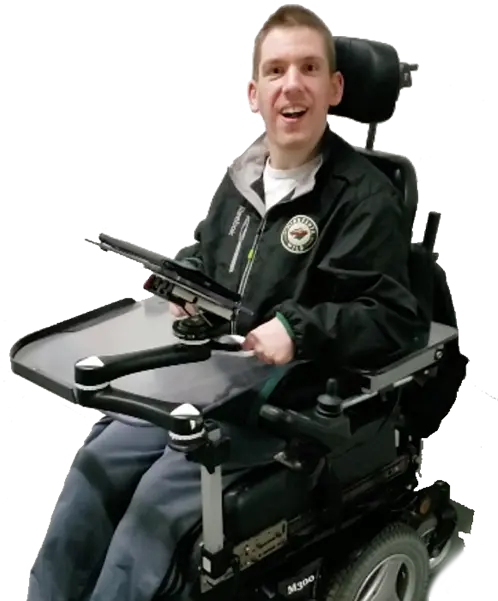
- Power chair trays and ventilator trays
- Positioning and therapy trays: where the therapist comes in
- Sizing: chair width, armrest type and armrest length
- How each tray mounts, as the instructions print it
- Maker warnings: loads, driving, transfers and leaning
- In a car, van or bus: take the tray off
- When a wheelchair tray becomes a restraint
- FDA reports and recalls about wheelchair trays
- Wheelchair tray prices in November 2026
- Medicare and the tray code E0950
- Warranty and return terms, document by document
- Three traps
- Three composite scenarios
- What to ask the therapist, dealer or seller
- Buying a wheelchair tray through Mobility Atlas
- Sources and documents
- Common questions
- Sources
The short answer
A wheelchair tray table, also called a wheelchair lap tray, is a flat board that sits across the armrests or swings in from one side, so a person can eat, write, read or use a tablet without leaving the chair. This guide compares the wheelchair tray types that makers and US sellers list in November 2026: full lap trays in soft-top, foam, wood and plastic; half trays that flip away or swing away; the clear wheelchair tray in polycarbonate or Tuffak; trays made for power chairs; and trays sold for positioning. For each one we set out what the maker's page or instruction sheet prints about size, mounting, load, warnings, warranty and price, and where the documents draw a line that a buyer should know about.
What is a wheelchair tray, and which type should you look at first? Mobility Atlas read the tray pages and instruction sheets of Skil-Care, Comfort Company, Permobil, Drive Medical and Vive Health, three US sellers' listings and federal documents. A full lap tray covers the lap from armrest to armrest and gives the largest surface; Skil-Care sells its strapped trays by chair width, in rows for 14 inch, 16 to 18 inch, 20 to 22 inch and 24 to 28 inch chairs. A half tray covers one side and flips or swings out of the way; Comfort's page says its Durasoft Half Tray is "Easily swiveled out of the way for transfers or table use."
A clear tray lets the user see their lap and lower body. A power chair tray, such as Permobil's Adjustable Tray, mounts in receivers and has a load limit of 10 kg (22 lbs). A tray used to hold posture is a positioning device, and a therapist should choose and set it.
Two lines from the documents change how a tray is used. Skil-Care's own instruction sheet for its strapped lap trays says: "Although most residents can remove Skil-Care trays, there are some who cannot. For them the trays could be considered as restraints."
And Ki Mobility's Catalyst 5 manual, in its Transit Use section, for when the wheelchair is used as a seat in a motor vehicle, says trays and other accessories "should be removed and secured separately in the motor vehicle. In the event of an accident, these items can become dangerous projectiles which may injure or kill you or other occupants of the motor vehicle."
Both points get their own sections below.
Our general wheelchair accessories guide gives trays one section next to bags, cup holders and gloves. This guide goes further on trays alone: model by model, mount by mount, with the restraint rules, the FDA records and the Medicare code text that apply to them.
How we compared, and our interest
Mobility Atlas earns a fee or margin when you order through us; the comparison below uses the makers' published pages and instruction sheets, sellers' listings and public FDA and CMS records, and nothing else. We did not buy, fit or test any tray, and we did not ask any maker or seller to check this text.
On 19 November 2026 we read and saved: Skil-Care's tray collection page, its Wheelchair Flip Tray, Wheelchair Econo Tray, Wheelchair Lap Tray with Straps and Lift-Away Wheelchair Tray pages, three Skil-Care instruction sheets and its refund policy; Permobil's US Lap Trays page, its January 2026 Comfort accessories order form, two Comfort templates for non-standard trays and the Permobil Adjustable Tray assembly instruction (Edition 2, dated 2018-07-31); the Comfort Company Lap Trays page and its order page; Drive Medical's search results for tray and its Wenzelite tray page; Vive Health's Wheelchair Lap Tray page, guarantee policy and shipping and return policy; SpinLife's search results for lap tray and for tray, its Quickie Standard Lap Tray and Durasoft Full Lap Tray pages and its return policy; Rehabmart's wheelchair tray category, two of its tray pages and its return policy; 1800wheelchair's tray category; CMS's State Operations Manual Appendix PP (pages on restraints); the current and future versions of CMS article A52504 and the current LCD L33792; and openFDA classification, adverse event and recall records.
Pages read on earlier days keep their own dates: the Permobil M3 Corpus user manual, the M3 Corpus order form, the full coverage text of LCD L33792, Medicare.gov's wheelchair page, Medicare's equipment booklet and FDA's MAUDE page on 9 November 2026; Sunrise Medical's options page on 12 November 2026; and the Ki Mobility Catalyst 5 manual, the TiLite ZR order form, the eCFR texts of 21 CFR 890.3910 and 880.6760 and the National Library of Medicine's HCPCS lookup on 13 November 2026.
Limits. Skil-Care and Comfort get more space than other tray makers because they publish item numbers, sizes, instruction sheets and prices online. We did not read Therafin's own tray pages for this guide. Sunrise Medical's options page names "TUFFAK Trays" and prints no sizes or prices for them, so the Quickie tray appears here through SpinLife's listing. Permobil's Lap Trays page lists a Flip-Up Half Lap Tray User Manual, two interlock mount manuals and a Comfort Product Safety and Care Guide; we did not read them, so their warnings are not in this guide. Vive ships a manual with its tray, which we did not read. A fact printed for one tray or one document is given for that document only. Our own advice is marked as our view, and our reading of a document as our reading.
Wheelchair tray types at a glance
The table sorts the trays on the pages we read by type. Each row names one product and the document it comes from; the mounting and size columns repeat what that document prints, and nothing more.
| Type | Example, as listed | How it mounts (as printed) | Size or fit (as printed) | Document |
|---|---|---|---|---|
| Full lap tray, strapped | Skil-Care SofTop and Econo trays | Straps around armrests; strap around the chair back | Rows for 14, 16-18, 20-22, 24-28 in chairs | Skil-Care pages and sheet |
| Full lap tray, lift-away | Skil-Care Lift-Away Tray | Sits on padded armrest covers by hook and loop | 16-18 in and 20-22 in rows | Skil-Care page and sheet |
| Full lap tray, foam | Comfort Durasoft Full Tray | Clamp, webbing or slide mount | Full length or desk length arms | Permobil page |
| Full lap tray, plastic | Vive Wheelchair Lap Tray | Mounting hardware, no tools | 16 to 20 in; 14-inch armrests best | Vive page |
| Flip tray, one side | Skil-Care Wheelchair Flip Tray | Base bolted to armrest support bar | 23 x 19.5 in; right or left | Skil-Care sheet |
| Half tray, swing or flip | Comfort Durasoft Half, Flip-up Half | Interlock or slide-on hardware | Left or right side | Comfort order page |
| Clear tray | Quickie Standard Lap Tray | Attaches to the armrests | Five sizes; 3/8 in thick | SpinLife page |
| Power chair tray | Permobil Adjustable Tray | Receivers on the chair | Load up to 10 kg (22 lbs) | Permobil instruction |
| Positioning tray | Drive Wenzelite Tray | On the armrest, height adjustable | 23 or 27 x 18 in | Drive page |
Two words in that table need care. In the size column, full length and desk length describe the armrests the tray rests on; full lap tray, in the type column, describes the tray. Comfort's Durasoft Full and Half trays and the interlock Flip-up Half Tray name full length or desk length arms; the Econasoft and slide-on Flip-up lines name no arm type. Armrest types themselves are covered in our wheelchair armrest guide.
Full lap trays: soft-top, foam, wood and plastic
A full lap tray spans both armrests. On the pages we read, full trays differ in three ways: the top (vinyl over plywood, foam over a rigid insert, plain plastic or wood), how they are held on (straps, hook and loop pads or clamps), and whether the user can lift the tray off alone.
Skil-Care strapped trays
Skil-Care's Wheelchair Lap Tray with Straps page lists ten item rows. Its SofTop trays are "Heat sealed vinyl over a plywood base"
, with a 1-inch foam surface "laminated on the top of the wooden base"
, and they come with nylon, vinyl or Low-Shear II covers. The page says "Around-the-chair strap prevents resident from sliding forward"
and that "The arm rest straps have easy release hook and loop attachment with a red loop for those who lack adequate finger strength."
The plastic Dura-Tray is described as 1/4 inch thick. Skil-Care's instruction sheet for these trays says "SofTop Trays are reversible"
and that "The unpadded side may be used when a firm surface is required."
The sheet's sizing table ties each item number to a wheelchair size: 705010 Econo-Tray and the 705018, 705019 and 705020 SofTop trays for 16 to 18 inch chairs, 705021 for 14 inch chairs, 705022 and 705027 for 20 to 22 inch chairs, 705024 for 24 to 28 inch bariatric chairs and the 705030 Dura Tray for 16 to 18 inch chairs. The product page prints the 705027 row without a size, as "SofTop Wheelchair Tray with Super Soft LSII Cover"
, so in our view confirm the width with the seller before ordering that one. The page also prints item 705020 twice, once under a nylon cover name with the option "Vinyl" and once as "SofTop Wheelchair Tray with Vinyl Cover"
; the sheet calls 705020 the vinyl cover tray.
The Econo Tray, 705010, is the plain version. Its page says "This tray attaches with non-restrictive easily released belts"
and lists, among its features, that it fits full and half arm wheelchairs and most 16 to 18 inch chairs. The same feature list says "Surface prevents forward falls from wheelchair"
. That is the maker's claim, and it is the kind of line that the restraint section below is about.
Skil-Care Lift-Away Tray
The Lift-Away tray has no strap across the chair. Its instruction sheet says the tray "stays in place without the use of straps allowing them to be lifted away by most patients. Autonomy is not compromised."
Padded covers wrap around the armrests and strap to the armrest support bar; the tray then sits on the covers, Velcro side down, and "The resident may remove the tray by lifting up on the sides."
The sheet adds a condition: "The straps must be secured as described to prevent the armrest covers and tray from sliding forward when the resident leans on the tray."
The page lists 705014 and 705015 for 16 to 18 inch chairs and 705025 for 20 to 22 inch chairs. The sheet prints 705016 twice, once as replacement armrest sleeves and once as "SofTop Lift-Away Tray w/LSII Cover"
, and the strapped tray page sells 705026 as a SofTop Lift-Away LSII tray with no size, so confirm the LSII Lift-Away number and width with Skil-Care before ordering.
Comfort Durasoft and Econasoft
Permobil's Lap Trays page describes the Comfort Durasoft Full Tray as a rigid insert "covered by high resiliency foam and easily cleaned Comfort-tek cover"
, with "Quick attachment to full length or desk length arms"
, "Stability due to clamp, webbing, or slide mount attachment"
, "Forward adjustment for larger users"
and "Easily moved for transfers."
The Comfort Company's own Lap Trays page, read the same day, prints the stability line as "Stability due to webbing or slide mount attachment"
, without the clamp. The January 2026 order form and the Comfort order page list two Durasoft full tray versions: webbing (75W) and slide mount (75K-SM). In our reading, the two current order documents offer webbing and slide mount; ask the dealer before you count on a clamp.
Permobil's page also lists an Econasoft Full Tray, whose "Webbing strap attachment allows the tray to be removed and adjusted within seconds."
The January 2026 order form and the Comfort order page we read do not list an Econasoft item number or price.
Plastic and wood trays from sellers
Vive Health's Wheelchair Lap Tray (MOB1142BLK), a plastic tray for 16 to 20 inch chairs, is described in our accessories guide. Two details that guide does not give: the specification block prints 54.5 x 31.7 x 14.3 cm, which by our conversion is about 21.5 by 12.5 inches, notes that the tray itself is 1 cm high and the pegs bring it to 14.3 cm, and the materials are given as "ABS, PP, PVC". Rehabmart's tray category adds Masonite and walnut laminate trays from Rose Healthcare, a hardwood tray from HealthSmart and an Alex Orthopedic tray whose tile names no material; their tiles print a title and a price, and we did not open their product pages.
Half trays, flip-away and swing-away trays
A half tray covers one side of the lap. It gives an arm support and a small work surface, and it moves out of the way when the user wants to transfer or pull up to a table. The pages we read describe three ways it moves: it flips up, it swings out to the side, or it slides off.
Comfort Durasoft Half and Flip-up Half
Permobil's page says the Durasoft Half Tray is "Easily swiveled out of the way for transfers or table use"
, has a "Raised outside edge" that "keeps arm positioned correctly"
and uses an "Interlock attachment system"
for full length or desk length arms. The Flip-up Half Tray comes in an interlock version and a slide-on version, which "provides quick-on, quick-off installation"
, and the page says it is "Easily flipped 270 degrees out of the way for transfers."
On the Comfort order page each half tray is sold for the left or the right side: 762L or 762R for the Durasoft half tray with hardware, 762L-TRAY or 762R-TRAY for the tray alone, 700L-HARD or 700R-HARD for the hardware alone, and 761FL or 761FR (interlock) and 761SFL or 761SFR (slide on) for the flip-up tray.
When a half tray must be made to measure, Permobil links a Non Standard Half Lap Tray Template. It asks for the side of attachment, a set of dimensions marked on a drawing, and a hardware choice among "Flip Up Interlock", "Flip Up Slide On" and "Standard Swing-Away". The full tray template asks for the "DISTANCE BETWEEN WHEELCHAIR ARMREST SUPPORTS"
and an attachment type: clamp, webbing or slide-on.
Skil-Care Wheelchair Flip Tray
Skil-Care's Flip Tray is a full-size surface, 23 by 19.5 inches on its sheet (about 58.4 by 49.5 cm by our conversion), that mounts on one armrest and flips aside. The page says it "flips out of the way for easy exiting"
and that the standard version has "two built-in cup holders" while the padded version has one. The instruction sheet says the instructions are the same for right-arm and left-arm trays. The user removes the armrest pad, places the slotted base on the armrest support bar "so that slots face up and notch fits around backrest support bar"
, passes long bolts through the slots and the holes in the bar, and secures each with a small washer and a wing nut. A hook and loop strap marked for "Full-Arm Attachment" then wraps around the vertical bar at the front of the chair. In our reading, that step assumes a full length arm with a front post; the sheet does not describe a desk arm.
North Coast half trays at Rehabmart
Rehabmart's page for North Coast's Flip Away Wheelchair Half Tray says the trays "slide onto wheelchair armrests and flip up and out to the side for easy transfer."
It prints two padded models: Standard, 22 in deep and 9.5 in wide at the top, 8 in wide at the body cut-out, and Trimline, 22 in deep and 10.5 in wide at the top, 6 in wide at the cut-out, which the page says offers "support for people with a weakness on one side."
The page also calls the Trimline "slightly narrower", so confirm the width with the seller. Each comes as a left or a right tray under its own SKU. These are the seller's descriptions; we did not read a North Coast document.
A note on paying for swing-away hardware in the US. CMS article A52504 (version 61 and the future version) says "Swingaway, retractable, or removable hardware (E1028, E1032) is non-covered if the primary indication for its use is to allow the beneficiary to move close to desks or other surfaces."
The same article says E1028 "is not to be used for hardware on a wheelchair tray (E0950)"
. In our reading, the hardware that comes with a tray is part of the tray code, and the desk line is about other swing-away hardware; the Medicare section below has the details.
Clear wheelchair trays
A clear wheelchair tray is made of a see-through plastic such as polycarbonate or Tuffak, so the user can see their lap and lower body through it. The listings we saved give two reasons for buying one: seeing the body below the tray, and, on North Coast's half tray page, a moisture resistant surface for care facilities.
SpinLife's page for the Quickie Standard Lap Tray (model numbers 902303/4/5/6/9) says it is "made of a durable clear Tuffak material and is available in a variety of sizes depending upon the width of your chair."
It is 3/8 inch thick, has a trim "that prevents items from slipping off the tray"
, weighs 4 lbs and "ships complete with both the tray and mounting hardware."
SpinLife's feature list says "Available in five sizes" and "Attaches to the armrests". The size menu on the page did not show its options in the text we could save, so we cannot list the five sizes; ask the seller which size matches your seat width. Sunrise Medical's own options page lists "TUFFAK Trays" by name only.
Rehabmart's page for North Coast's Durable See-Thru Wheelchair Work Tray (NC94102) says it is "constructed with clear poly-carbonate to provide a clear line of sight to the lap and lower body for users with perception difficulties"
, with an "All-aluminum lip" and hook and loop straps for the armrests. The North Coast Flip Away Half Tray page lists a "Heavy duty, moisture resistant Clear Polycarbonate tray option"
next to its padded models.
One clear tray appears in the FDA records described further down: a 1993 report names a Therafin "CLEAR LAP TRAY, NO EDGES" whose hook and loop strap loosened before a fall. That report is about the strap, not the clear material. We did not read Therafin's own tray pages for this guide.
In our view, a clear tray answers a sight problem, not a fit problem: the same questions about width, armrest type and mounting apply to it as to any other tray.
Power chair trays and ventilator trays
In our view, a power wheelchair tray has to clear the joystick, the armrests and any seat functions. The one maker document for a power chair tray that we could read in full is Permobil's Adjustable Tray assembly instruction, Edition 2, dated 2018-07-31, order number 334555, which we found on Permobil's order portal. It says the accessory "is intended to be used with a Permobil wheelchair"
and that the instruction is "a complement to the wheelchair's User's Manual"
.
The tray mounts in receivers. The instruction has separate steps for "Installing Corpus, PS Jr and MX receivers"
, "Installing of Corpus VS receivers"
and "Installing M1 receivers", each with a tightening torque of 9,8 Nm as printed. For the M1 it says to "Use longer M6x16 bolts if the receivers are mounted with a Fixed Joystick Mount."
Further steps cover height, angle, depth and side adjustment. The document says "The instructions on how to install the accessory are intended for the service technician only. All other parts of the Assembly Instruction are intended for both the service technician and the user of the wheelchair."
In our reading, fitting the receivers is a job for the dealer's technician, and the user's part is daily use and the checks below.
Its warnings are quoted in the section on maker warnings. The headline numbers: a load of up to 10 kg (22 lbs), a hardware check "at least once every 3 months"
, and "an expected service life of five years."
For the warranty it says "Contact your dealer or Permobil for information about the warranty period of this product."
Ventilator trays
A ventilator tray carries a portable ventilator on the chair. It is a different item with its own codes. CMS article A52504 says "Code E1029 describes a ventilator tray which is attached in a fixed position to the wheelchair base or back. Code E1030 describes a ventilator tray which is attached to the seat back and is articulated so that the tray will remain horizontal when the seat back is raised or lowered."
Permobil's M3 Corpus order form, read on 9 November 2026, lists a 10715 Compact Ventilator Tray, Corpus Seat, coded E1029 by Permobil, at $1,755.00 as an option on a new chair, with "Additional drive and seating restrictions may apply."
A ventilator setup is planned with the clinical team and the dealer, and this guide does not go further into it.
Positioning and therapy trays: where the therapist comes in
Some trays are sold to hold the upper body, not just to carry a plate. On the pages we read, the makers say so in their own words. Skil-Care's sheet says its lap trays "are designed to serve as therapeutic interventions that assist patients in achieving proper body position, balance and alignment."
Its strapped tray page says the trays assist "in upper body control for the wheelchair user."
Drive Medical's Wenzelite Tray page says it "Provides trunk stabilization"
, and our accessories guide quotes the rest of that page. The TiLite ZR order form lists a ZUEST1 "Upper Extremity Support Tray"
with the note "Requires armrests."
Drive's page prints the Wenzelite sizes (23 or 27 by 18 inches, with a 6 x 9.5 inch body cutout) and shows "SIGN IN TO VIEW PRICE", so we have no Drive price; see the accessories guide for its other lines.
A tray that holds the trunk, rests the arms at a set height or works with a cut-out around the body changes how a person sits. Which tray, which height, which cut-out and whether it is right at all are decisions for the occupational or physical therapist or the seating specialist who knows the user, together with the dealer's technician who fits it. A tray can also limit movement, and in a care home that question has legal weight, which the restraint section explains. This guide lists what the documents say and stops there.
What to bring to that appointment, in our view: the chair's make and model, its seat width, the armrest type (full or desk length, fixed, flip-back or removable), the tray you are looking at, and how the user transfers. Questions worth asking are listed near the end of this guide.
Sizing: chair width, armrest type and armrest length
Tray pages size their products in three different ways, and a buyer has to match the right one. Some go by the chair's seat width, some by the armrest, and some print the tray's own dimensions and leave the match to the buyer. The table lists what each document prints.
| Tray | What the document prints | Document |
|---|---|---|
| Skil-Care SofTop and Econo | By chair: 14 in; 16-18 in; 20-22 in; 24-28 in | Skil-Care lap trays sheet |
| Skil-Care Econo 705010 | Full and half arm chairs; most 16-18 in chairs | Skil-Care page |
| Skil-Care Lift-Away | 16-18 in (705014, 705015); 20-22 in (705025) | Skil-Care sheet and page |
| Skil-Care Flip Tray | 23 x 19.5 in; right or left arm | Skil-Care sheet |
| Comfort Durasoft Full | Full length or desk length arms | Permobil page |
| Comfort non-standard tray | Distance between armrest supports | Permobil template |
| Vive MOB1142BLK | 16 to 20 in; 14-inch armrests work best | Vive page |
| Quickie Standard Lap Tray | Five sizes by chair width (not listed) | SpinLife page |
| North Coast Flip Away Half | 22 in deep; top 9.5 or 10.5 in wide | Rehabmart page |
| Drive Wenzelite FC 2024/4024 | 23 or 27 x 18 in; cutout 6 x 9.5 in | Drive page |
| TiLite ZUEST1 | Requires armrests | TiLite ZR order form |
Chair width. Skil-Care's rows are by wheelchair size, so a 16 inch chair and an 18 inch chair take the same 16 to 18 inch tray. A 19 inch chair falls between Skil-Care's rows; the sheet prints no 19 inch row, so ask the maker or dealer before ordering. Bariatric chairs have one row: 24 to 28 inches for the SofTop 705024 with nylon cover.
Armrest type. A strapped tray needs two armrests to rest on. Vive's page says the tray works best with 14-inch armrests, and the page does not say how a longer or shorter armrest changes the fit. Comfort's Durasoft Full and Half trays and the interlock Flip-up Half Tray name full length or desk length arms; the Econasoft and slide-on Flip-up lines name no arm type. Skil-Care's Flip Tray sheet uses a strap marked "Full-Arm Attachment" around the front post. TiLite's tray line says "Requires armrests." A chair with no armrests cannot take these trays as listed; in our view, that user needs a clamp-on or custom solution chosen with the dealer.
Armrest height. The Wenzelite page says its tray is height adjustable, and Permobil's Adjustable Tray instruction has height and angle steps. In our reading, a tray that rests on the armrests sits at their height, so a change of armrest or cushion changes the tray height too. Armrest height settings are covered in the armrest guide.
Depth and cut-out. A deep tray reaches further toward the body. Comfort's Durasoft Full Tray lists "Forward adjustment for larger users."
Cut-outs are printed on the Drive page (6 x 9.5 inches) and the North Coast half tray page (8 or 6 inches wide at the cut-out). In our view, measure the user seated, from the back of the seat to the front of the belly, and compare it with the tray's depth and cut-out before ordering.
How each tray mounts, as the instructions print it
Mounting decides three things: whether the tray stays put when someone leans on it, whether the user can take it off alone, and whether it fits the chair's frame. The documents describe these mounts.
- Skil-Care strapped trays: the sheet says
"Place tray on arms of wheelchair arms. Wrap Velcro bands around chair arms and tray."
A second strap goes around the chair back and through a buckle; the sheet says this strap"is intended to prevent the tray from sliding forward when the resident leans against it."
- Skil-Care Lift-Away: the sheet says padded covers wrap around the armrests and strap
"around the armrest support bar, just behind the [...] armrest"
; the tray sits on the covers and is lifted off by its sides. - Skil-Care Flip Tray: a slotted base bolted to the armrest support bar with long bolts, washers and wing nuts, plus a hook and loop strap around the front post.
- Comfort Durasoft Full: webbing (75W) or slide mount (75K-SM) on the order form; Permobil's page adds clamp.
- Comfort half trays: interlock hardware or slide-on hardware, sold for the left or right side.
- Permobil Adjustable Tray: receivers fixed to the chair, then the tray is fitted into the receivers.
- Vive lap tray: the FAQ says it
"attaches securely using the included mounting hardware and installs or removes quickly without tools."
- Drive Wenzelite: the page says it
"attaches onto armrest and is height adjustable."
In our reading of these documents, the mounts fall into two groups. Strap and slide-on mounts go on and off by hand. Bolted bases and receivers stay on the chair, and the tray part is lifted, flipped or slid. Who is allowed to fit them differs too: Skil-Care's sheets are written for staff fitting the tray, and Permobil's says its installation steps are for the service technician.
Care lines also differ by document. Skil-Care's Flip Tray sheet says the plastic "can be cleaned with soap and water or with disinfectant"
; after a line on wiping the arm pad, the sheet adds: "If disinfected, avoid using chlorine (bleach) chemicals."
Its Lift-Away sheet says the armrest covers can be laundered and dried at up to 180 degrees F (82 C), and "Do not use bleach." Vive's page says to wipe its tray "with a paper towel and mild disinfectant."
Maker warnings: loads, driving, transfers and leaning
The Skil-Care, Comfort, Vive, Drive and North Coast product pages and the Skil-Care sheets we saved print no warnings about using the tray, apart from a "California residents: Proposition 65 WARNING"
link on each Skil-Care page and the Lift-Away sheet's "Important" note on securing its straps. The documents we read that print tray warnings are Permobil's Adjustable Tray instruction and two chair manuals. Here they are in full, with their conditions.
Permobil Adjustable Tray
The instruction says what its signal word means first: a warning is a "Signal word used to indicate a hazardous situation which, if not avoided, could result in personal injury or death."
Under "General warnings for this product"
it then lists:
- It says:
"Do not use the tray during transit. It should be removed and stowed."
- It says:
"Do not overload the tray. It can support up to 10 kg (22 lbs)."
- It says:
"Do not operate the chair with items on the tray."
- It says:
"Do not use the tray for repositioning."
- It says:
"Use of the tray, especially when loaded, can degrade the stability and maneuverability of the wheelchair."
In the installation steps it adds: "Do not raise the armrests when the tray is installed"
, and "Make sure that the user is clear from the receiver before lifting the armrest. Not doing so can cause injuries to the upper body or the face."
A crushing label says "Keep hands and legs clear from the hardware when fitting the tray into the receivers."
The safety instructions add a warning numbered 8, which the PDF prints across three lines of a column, with nothing left out: "To prevent forward tipping, do not anteriorly"
/ "tilt the seat or angle the backrest forward"
/ "when the tray is in use." A notice says "Check hardware at least once every 3 months and tighten bolts when needed."
In our reading, "repositioning" covers pushing up or shifting weight on the tray to move in the seat, and that includes using it as a hand-hold during a transfer. The document does not use the word transfer. If a user needs something to push on when moving, ask the therapist what is safe for that chair.
What the other tray documents say about transfers
The Skil-Care, Comfort, North Coast and Vive product pages we saved talk about transfers as a reason to move the tray, not as a use of it. Comfort's Durasoft Full Tray is "Easily moved for transfers"
; the Flip-up Half Tray flips 270 degrees "out of the way for transfers"
; North Coast's half trays "flip up and out to the side for easy transfer"
; and Vive's FAQ says the tray "removes easily, making it convenient for temporary use or when transfers are needed."
None of the product pages and Skil-Care sheets we saved prints a load limit for its tray, and none prints a warning against leaning on it. Skil-Care's Lift-Away sheet does expect the resident to lean on the tray: its straps must be secured "to prevent the armrest covers and tray from sliding forward when the resident leans on the tray."
In our view, where a page prints no load limit, do not treat the tray as a support for standing or transferring, and ask the maker for a figure in writing.
Transfer technique itself, which hand goes where and whether a board or a lift is used, is for the therapist to teach. Our transfer board guide covers boards.
In a car, van or bus: take the tray off
Two chair manuals and the Permobil tray instruction agree that a tray comes off before the chair travels in a vehicle. Their words:
- Permobil M3 Corpus manual, in its vehicle transportation chapter:
"Remove loose objects, trays, and other auxiliary equipment from your wheelchair and store them safely before you transport your wheelchair in a motor vehicle. If you transport a wheelchair in a motor vehicle with loose objects, trays, or other auxiliary equipment the vehicle's occupants could suffer bodily injury."
- Ki Mobility Catalyst 5 manual, in its Transit Use section, for when the wheelchair is used as a seat in a motor vehicle:
"Accessories such as trays, oxygen tank holders, oxygen tanks, IV poles, back packs, pouches and items not manufactured by Ki Mobility should be removed and secured separately in the motor vehicle. In the event of an accident, these items can become dangerous projectiles which may injure or kill you or other occupants of the motor vehicle."
- Permobil Adjustable Tray instruction, which says:
"Do not use the tray during transit. It should be removed and stowed."
The Ki manual says "removed and secured separately"
, and the M3 manual says "store them safely". In our view, that means a place where the tray cannot move in a crash, such as a strapped bag or a locked trunk; a tray left loose on the floor or a seat is not secured. The Skil-Care, Comfort, Vive and Drive product pages and the Skil-Care sheets we saved print nothing about vehicles, so the chair manual is the document to follow; the Comfort tray manuals and Vive's boxed manual were not read.
In our reading, a tray is not part of a vehicle restraint. Ki's Catalyst 5 manual says postural belts should not be relied on for occupant protection in a crash "unless the postural belt has been designed to comply with, and perform to, requirements 4.6, 5.2, 5.3 and 6.1 of RESNA WC-4."
Our wheelchair seat belt guide sets out what chair manuals say about riding in a vehicle, and our wheelchair van guide covers tie-downs.
When a wheelchair tray becomes a restraint
Can a wheelchair lap tray count as a restraint? Mobility Atlas read the restraint pages of CMS's State Operations Manual, Appendix PP, US nursing home survey guidance, and the Skil-Care tray sheets. In that guidance a "Physical restraint" is "any manual method, physical or mechanical device, equipment, or material"
that is attached or adjacent to the resident's body, "Cannot be removed easily by the resident"
, and "Restricts the resident's freedom of movement or normal access to his/her body"
. Its examples include "Using devices in conjunction with a chair, such as trays, tables, cushions, bars or belts, that the resident cannot remove and prevents the resident from rising"
. "Removes easily" means it "can be removed intentionally by the resident in the same manner as it was applied by the staff."
In our reading, the same tray can be a table for one person and a restraint for another. Skil-Care's sheet says that for residents who cannot remove its strapped trays, "the trays could be considered as restraints."
Under F604 a restraint may be used only for a medical symptom that warrants it ("If there are no medical symptoms identified that require treatment, the use of the restraint is prohibited"
), with a practitioner's order and the facility's assessment, and the resident or representative may refuse it. The guidance is F604, revised 25 April 2025 (Rev. 229), in Appendix PP Rev. 232 issued 23 July 2025. It applies to long-term care facilities that CMS surveys in the US; it is not a rule for a person using a tray at home. Its intent lines say the environment "Prohibits the use of physical restraints for discipline or convenience"
, and the regulation it quotes, §483.12(a)(2), says "When the use of restraints is indicated, the facility must use the least restrictive alternative for the least amount of time and document ongoing re-evaluation of the need for restraints."
It says "The resident's physical condition and his/her cognitive status may be contributing factors in determining whether the resident has the ability to remove it."
On ordering, it says "the practitioner's order alone (without supporting clinical documentation) is not sufficient to warrant the use of the restraint."
It also says a resident "has the right to refuse the use of a restraint and may withdraw consent to use of the restraint at any time."
The guidance lists risks too. It says "Research and standards of practice show that physical restraints have many negative side effects and risks that far outweigh any benefit from their use"
, and its list includes "Accidents such as falls, strangulation, or entrapment"
and "Injury from attempts to free him/herself from the restraint"
.
How the tray makers respond. Skil-Care's sheet points residents who cannot release a strapped tray to its Lift-Away Tray, and the Lift-Away sheet says "Autonomy is not compromised."
The same Lift-Away sheet says "CMS includes removable wheelchair lap trays among its suggested therapeutic interventions"
; that is Skil-Care's statement, and we did not find those words in the F604 pages we copied. Skil-Care's Econo Tray page says its belts are "non-restrictive" and "easily released", and the same page says the surface "prevents forward falls from wheelchair"
. In our reading, a tray that stops a fall forward also limits movement forward; whether it is a restraint for a given person turns on whether that person can remove it, as F604 defines it.
Federal device rules use the same split. The eCFR text of 21 CFR 890.3910, current to 10 November 2026, says "lapboard" is among wheelchair accessories and exempts the accessory from premarket notification "If the device is not intended for use as a protective restraint"
. openFDA's classification record for product code IMX, "Board, Lap, Wheelchair", places it under regulation 890.3910, class 1 (data updated 9 November 2026). In our reading, a lapboard sold as a work surface or for positioning is exempt from premarket notification under 890.3910, subject to the limitations in § 890.9, and one intended for use as a protective restraint (as 21 CFR 880.6760 defines it) loses that exemption.
For a person living at home, in our view the practical test is the same as F604's: can the user take the tray off, intentionally and by themselves, the way it was put on? If not, talk it through with the therapist.
FDA reports and recalls about wheelchair trays
FDA's MAUDE database collects reports of device problems. FDA's page about it says MAUDE is a "passive surveillance system"
with limits that include "under-reporting of events, inaccuracies in reports, lack of verification that the device caused the reported event"
. Most MAUDE reports are mandatory reports from makers, importers and user facilities, not voluntary ones; of the 5 tray reports here, 3 are manufacturer reports, 1 a distributor report and 1 a user facility report. A count of reports is a count of reports, not a rate, and a report states what someone said happened.
We ran two searches through openFDA on 19 November 2026 (device report data updated 11 November 2026). First, every report under product code IMX, the lapboard code: openFDA returned 3. Two concern lap trays and one does not: report MW1031812, received in 2004, is about a laboratory analyzer whose name is IMX. Second, a word search of report text under the wheelchair codes IOR and ITI and the accessory code KNO for "lap tray", "wheelchair tray", "lapboard" or "lap board": openFDA returned 3, received between December 2013 and February 2014. That makes 5 reports that concern a tray, from 1993 to 2014.
| Report | Received | Type and source | What the report states |
|---|---|---|---|
| 1218386-1993-00001 | 27 Dec 1993 | Injury; distributor report | Therafin clear lap tray; strap loosened, resident fell |
| 8293 | 4 Feb 1994 | Injury; user facility report | Lap tray strap came loose, washers missing; resident fell |
| 1525712-2013-09771 | 17 Dec 2013 | Injury; manufacturer report | Power chair joystick wedged under the tray |
| 1531186-2014-00618 | 25 Feb 2014 | Manufacturer report | Swingaway half lap tray frame scratched a representative |
| 1531186-2014-00624 | 25 Feb 2014 | Manufacturer report | Swingaway half lap tray frame cut a provider |
The two older reports describe the same kind of event: a resident in a chair with a lap tray fell. The 1993 report says the "VELCRO STRAP AT RIGHT SIDE OF LAP TRAY HAD LOOSENED AND GIVEN WAY"
and the resident fell, and that it "WAS SUSPECTED THERE WAS NOT ENOUGH SURFACE VELCRO FOR ADHERENCE"
. The 1994 report says that after the fall staff found "WASHERS MISSING FORM SCREWS SECURING THE VELCRO STRAP"
and that "ALL LAP TRAYS OF THIS TYPE WERE IMMEDIATELY REMOVED FROM USE."
Both reports state facial injuries. In the 2013 report, a screw holding the joystick came loose and the joystick "MOVED BACKWARDS AND WAS WEDGED UNDER THE WHEELCHAIR TRAY"
, and the report says the chair "SPED FORWARD AND HIT A BYSTANDER"
. The two 2014 reports, which name Bramur Plastics as the device maker, state that an "EXPOSED METAL FRAME ON THE SWINGAWAY HALF LAP TRAY"
scratched or cut a person handling it.
Recalls. An openFDA recall search on 19 November 2026 for product code IMX returned no records, and a word search of recall records under IOR, ITI, KNO, IMX and INI for tray, trays or lapboard in the product description or the reason for recall returned no records either. Trays sold under other codes, or as general consumer goods, would not appear in these searches.
In our view, the reports point at three checks a user or carer can make: straps and hook and loop that still grip, screws and washers that are all there, and a joystick that cannot slide under the tray. Where a tray part is loose, worn or missing, stop using the tray until it is repaired or replaced; none of the tray documents we read prints a check interval except Permobil's three-month hardware check.
Wheelchair tray prices in November 2026
All prices below are in US dollars, as printed on 19 November 2026 on US pages, before tax and delivery. Prices differ by country, seller, funding and tax, and a tray fitted by a dealer may carry a fitting charge. Maker list prices and seller prices are kept apart.
Maker list prices
| Maker and item | Item number | Price as printed | Size or version |
|---|---|---|---|
| Skil-Care Econo Tray | 705010 | $47.25 EA | 16-18 in chairs |
| Skil-Care SofTop, Vinyl | 705021 | $66.30 EA | 14 in chairs |
| Skil-Care SofTop, Nylon or Vinyl | 705019, 705020 | $74.75; $74.60 EA | 16-18 in chairs |
| Skil-Care SofTop, LSII cover | 705018 | $78.25 EA | 16-18 in chairs |
| Skil-Care SofTop, Vinyl | 705022 | $79.75 EA | 20-22 in chairs |
| Skil-Care SofTop, Nylon, bariatric | 705024 | $119.00 EA | 24-28 in chairs |
| Skil-Care Dura Tray, plastic | 705030 | $72.85 EA | 16-18 in (sheet) |
| Skil-Care Lift-Away, Vinyl | 705015; 705025 | $95.15; $103.85 EA | 16-18 in; 20-22 in |
| Skil-Care Flip Tray, standard | 705031 R, 705032 L | $112.90 EA | 23 x 19.5 in |
| Skil-Care Flip Tray, padded | 705033 R, 705034 L | $136.85 | 23 x 19.5 in |
| Comfort Durasoft Full, webbing | 75W | MSRP $174.00 | Full or desk arms |
| Comfort Durasoft Full, slide mount | 75K-SM | MSRP $293.00 | Full or desk arms |
| Comfort Durasoft Half, tray and hardware | 762L, 762R | MSRP $372.00 | Left or right |
| Comfort Flip-up Half, interlock | 761FL, 761FR | MSRP $158.00 | Left or right |
| Comfort Flip-up Half, slide on | 761SFL, 761SFR | MSRP $191.00 | Left or right |
| Vive Wheelchair Lap Tray | MOB1142BLK | $49.99 | 16 to 20 in |
How we counted the maker prices. Skil-Care's four tray pages print 20 item rows. We dropped the two rows that are not trays, the 705091 strap replacement kit ($17.25 ST) and the 705016 armrest sleeves ($41.40 EA), and the second printing of 705020, which leaves 17 tray rows. They run from $47.25 (705010 Econo Tray) to $136.85 (705033 and 705034 padded Flip Trays). The table shows a selection; the other rows are 705014 Lift-Away LSII at $98.75, 705026 SofTop Lift-Away LSII at $104.15 and 705027 SofTop LSII at $83.75. Comfort's order page prints seven MSRP lines; leaving out the $296.00 hardware-only line, the six tray lines run from $155.00 (Durasoft half tray only) to $372.00 (Durasoft half tray with hardware). Bought apart, the half tray and its hardware list at $451.00, which is $79.00 more than the set. Permobil's January 2026 order form prints the same seven prices with E0950 beside each, and adds: "prices displayed are only valid if ordered with the wheelchair. Any parts ordered for service or future alterations will carry different pricing and warranty."
Drive's Wenzelite page prints no price to the public.
Seller prices
| Seller (US) | What we counted | Lines | Range as printed |
|---|---|---|---|
| Rehabmart | Wheelchair tray category, all tiles on the page, trays only | 20 | $34.81 to $789.84 |
| SpinLife | Search for lap tray, all results | 4 | See accessories guide |
| 1800wheelchair | Wheelchair Trays & Desks category | 1 | See accessories guide |
How we counted the seller prices. Rehabmart's category printed "26 Products On Sale Below", and all 26 tiles were on the page; each prints a "Starting at" price. We kept the tiles whose title names a tray (20) and dropped five lap cushion tiles and the Inspired by Drive Freestanding Tray, which stands on the floor (6 dropped). The kept tiles run from $34.81 (a Rose Healthcare economy Masonite tray, 24 x 20 in) to $789.84 (Special Tomato's Mobile Activity Tray). Without that activity tray, the top is $305.03 (Performance Health's Premium Flip-Away Half Lap Tray). 7 of the 20 kept tiles are under $100 and 5 are over $200.
SpinLife's lap tray search (4 items, $37 to $360; the $37 item is a lap cushion, so the 3 trays run $155 to $360) and 1800wheelchair's single tray, which its tile lists for "most rollators and mobility devices"
, are listed in our accessories guide; here we add SpinLife's Quickie page details: $232.00 current, with $464 printed in an element styled as an old price, and the Durasoft page's "Starting at" $155.00.
Two price comparisons show how much the seller matters. Skil-Care's own page lists the Econo Tray 705010 at $47.25, and Rehabmart's tile for "Skil-Care Wheelchair Econo Lap Tray Table"
prints $83.04; Rehabmart's tile does not print an item number, so we cannot say it is the same item number. Comfort's MSRP for the Durasoft full tray with webbing is $174.00, and SpinLife prints "Starting at" $155.00 for its Durasoft Full Lap Tray without naming the base type in the text we saved. Prices checked November 2026.
Medicare and the tray code E0950
Does Medicare pay for a wheelchair tray (E0950)? Mobility Atlas read the US Medicare documents for wheelchair accessories, including the version that takes effect in December 2026. The general rule is set out in our accessories guide: LCD L33792 covers an accessory on a covered chair when the accessory is medically necessary, and article A52504 includes E1028 in the allowance for E0950 when provided at the same time. The current LCD text we copied prints no tray criteria. What we add: A52504 version 61 and the future version effective 20 December 2026 print the same tray lines, and both say swing-away hardware billed as E1028 or E1032 "is non-covered if the primary indication for its use is to allow the beneficiary to move close to desks or other surfaces."
A code printed on a maker's page is the maker's coding, not coverage. Medicare.gov says that after the Part B deductible you pay 20%, if the supplier accepts assignment. Ask the supplier what the prescriber must document.
Which versions. The LCD text is version 43 of L33792, currently in effect on the day we read it. The A52504 lines above are in version 61, in effect from 1 October 2025 to 19 December 2026, and in the future version effective 20 December 2026, which the default link showed on 19 November 2026. The future version keeps the tray lines and the E0950 to E1028 row in its table of codes included in the allowance of others.
Maker codes are the maker's view, not coverage. Comfort's page prints "HCPCS Coding: E0950", North Coast's See-Thru tray carries "HCPCS Code: E0950" on Rehabmart's page, TiLite's order form puts E0950 beside its Upper Extremity Support Tray, and Drive's Wenzelite page prints "HCPCS #: E1399-1". Permobil's Comfort order form says "The HCPCS codes provided are not intended to be billing or legal advice, rather our interpretation of the code definitions. Use of the codes does not ensure coverage or payment for the item."
Repairs follow the general Medicare rules for equipment: Medicare's booklet says that if you own your equipment, "the supplier who sold it to you isn't required to repair it"
, and that Medicare "may also cover repairs and replacement parts"
on owned equipment. Rented equipment is the supplier's to repair. Medicare Advantage plans, Medicaid and the VA have their own rules, which we did not read for trays; ask the plan. The wider Medicare picture for accessories is in our accessories guide.
Warranty and return terms, document by document
Each term below belongs to the one document that prints it.
| Document | Warranty as printed | Returns as printed |
|---|---|---|
| Skil-Care tray pages and refund policy | Wty: 1 Year on 15 tray rows; 6 Months on 705010, 705024 | 30 days, unused, original packaging |
| Vive Wheelchair Lap Tray page and policies | 6-month warranty (page FAQ) | 30-day window; direct purchases only; issue confirmed by photo or video |
| Permobil Adjustable Tray instruction | Ask dealer or Permobil; service life five years | Not printed |
| Permobil Comfort order form | Service parts carry different warranty | Changes after shipping follow returns policy |
| SpinLife return policy | Product tab not saved | Product's return tab; many items 30 days |
| Rehabmart return policy | Not printed for trays | 30 days and 30% restocking unless published |
Skil-Care. Of the 17 tray rows on its pages, 15 print "Wty: 1 Year" and 2 print "Wty: 6 Months": the Econo Tray 705010 and the bariatric SofTop 705024. Its refund policy says "Skil-Care Corporation accepts returns within 30 days of purchase for unused items in original packaging"
, that "Custom or special-order items may not be eligible for return"
, and that "Return shipping costs are the responsibility of the customer unless the item was received damaged or defective."
Vive. The tray page's FAQ says it "is backed by a 6-month warranty"
. Vive's guarantee policy says "Only products purchased through ViveHealth.com are automatically registered in our guarantee program"
and that "Customers must report any issues with any product within the first 30 days of purchase."
Its return policy says "All purchases have a 30-day return window"
, that "Shipping charges are non-refundable"
and that "A return must be authorized by our support team in order to be eligible for a return."
The policy's eligibility list says "Purchase must have been made directly with Vive Health"
and "Issue must be confirmed with a Vive Health product expert using photos or videos for a refund request to be considered."
The 20% restocking fee it prints applies to "items equal to or greater than 20lbs"
; the tray's page gives 1.75 lbs.
SpinLife and Rehabmart. SpinLife's policy sends buyers to each product's return tab and says "Most items may request a return within 30 days of receipt for a refund."
It says "You are responsible for the cost of return shipping and the product must be in the original packaging."
We could not save the Returns & Warranty tab on SpinLife's Quickie and Durasoft tray pages, so check that tab before ordering. Rehabmart says "The standard Rehabmart return window is 30 days unless otherwise published and the standard restocking fee is 30% unless otherwise published"
, and "Products cannot be returned if they have been used, soiled, or if the packaging is destroyed."
In our view, a tray is easy to order in the wrong width or for the wrong armrest, and the return terms above make a wrong order expensive. Measure first, and keep the box until the tray is fitted.
Three traps
Trap one: buying by seat width alone. A tray listed for a 16 to 18 inch chair still needs the right armrests. TiLite's order form says its tray "Requires armrests", Skil-Care's Flip Tray sheet uses a "Full-Arm Attachment" strap around the front post, and Vive's tray works best with 14-inch armrests. Check the armrest type and length as well as the width.
Trap two: a tray the user cannot take off. In a US nursing home, F604 treats a tray that the resident cannot remove and that stops them rising as a physical restraint, and Skil-Care's sheet says its strapped trays "could be considered as restraints"
for residents who cannot remove them. The fix is a care team decision; Skil-Care's sheet says residents who cannot release its standard trays "might benefit from Skil-Care's Lift-Away Tray"
.
Trap three: leaving the tray on. Permobil's tray instruction says "Do not operate the chair with items on the tray"
and "Do not use the tray during transit."
Ki's Catalyst 5 manual says to remove trays and secure them separately in a motor vehicle, and Permobil's M3 Corpus manual says to remove trays and store them safely before transport. Ki's manual says such items "can become dangerous projectiles"
in an accident.
Three composite scenarios
These are composite scenarios, not individual customers. Each uses only the documents of the tray it names.
Scenario one: a care home resident uses a 16 inch manual chair with full length armrests and has trouble opening a hook and loop strap. Their care team looks at the Skil-Care Lift-Away Tray 705015 for 16 to 18 inch chairs, listed at $95.15 on Skil-Care's page with "Wty: 1 Year". Staff wrap the padded covers around the armrests and strap them around the armrest support bar, just behind the armrest, with the small straps to the rear, as the sheet says. The tray sits on the covers, and the resident tests lifting it off by the sides with staff watching. The team records that the resident can remove it the way it was put on.
Scenario two: a Permobil M1 user wants a surface for a tablet and papers. The dealer's technician fits the Permobil Adjustable Tray receivers, which the instruction covers for the M1, at the printed torque. The user keeps the load under the 10 kg (22 lbs) printed limit, takes items off before operating the chair, as the instruction's "Do not operate the chair with items on the tray"
requires, and follows warning 8 on forward tipping. The user removes and stows the tray before a van trip. At least once every three months someone checks the hardware and tightens bolts when needed, as the notice says.
Scenario three: a manual chair user with desk length arms and weakness on one side wants a half tray that clears the way for transfers. With their therapist they choose the Comfort Flip-up Half Tray with interlock mounting, which Permobil's page says gives "quick attachment to full length or desk length arms"
and flips "270 degrees out of the way for transfers." The therapist picks the side. The order page lists 761FL for the left and 761FR for the right, each at an MSRP of $158.00. Before use, read the Flip-Up Half Lap Tray User Manual that Permobil's page lists for this tray, which we did not read.
What to ask the therapist, dealer or seller
- Therapist: is this tray a table, or part of my positioning? If positioning, what height, depth and cut-out, and for how long each day?
- Therapist: can I take the tray off by myself, the same way it goes on? If not, what is the plan?
- Therapist: is it safe for me to push on the tray when I move in the seat or transfer?
- Dealer: which trays list my chair's seat width and my armrest type (full or desk length, flip-back, removable)?
- Dealer: does this tray need a bracket, receiver or clamp, who fits it, and what does fitting cost?
- Maker or seller: what load can the tray carry, in writing?
- Seller: what is the return window, who pays return shipping, and is there a restocking fee for this item?
- Supplier, for Medicare in the US: will you bill E0950, and what must the prescriber document?
Buying a wheelchair tray through Mobility Atlas
Mobility Atlas lists trays among its everyday wheelchair accessories, including the RehaDesign Portable Wheelchair Tray and the Therafin 18W x 16D Black Tray with EZ Lock Clamps. We can also find and quote trays that the page does not list, such as the Skil-Care, Comfort and North Coast trays in this guide, and spare parts such as replacement straps or armrest sleeves.
The process: send an enquiry or a part request naming the chair (make, model, seat width), the armrest type and the tray or part you want, with the item number if you have it. We reply with a written quote that includes delivery to your country. Nothing is charged before you accept the quote. Fit questions go to the maker's documents and, for positioning trays, to the user's therapist.
Sources and documents
How we checked. Every page and PDF we quote was opened in a browser and its text saved with the date read. Quotes are copied from those saved texts. Price ranges and counts were computed by a script over every price line on the Skil-Care, Comfort, Rehabmart category and SpinLife search pages, with the rules for dropped lines written next to each range. The FDA figures are counts of reports returned by openFDA on the date given, read in full, and are not rates. Where two documents differ, both are given.
New documents were read on 19 November 2026. Documents read earlier keep their dates: 9 November 2026 for the Permobil M3 Corpus manual and order form, LCD L33792's coverage text, Medicare.gov and Medicare's equipment booklet and FDA's MAUDE page; 12 November 2026 for Sunrise Medical's options page; 13 November 2026 for the Ki Catalyst 5 manual, the TiLite ZR order form, the eCFR texts of 21 CFR 890.3910 and 880.6760 and the HCPCS lookup.
Prices checked November 2026. Documents checked November 2026.
Related guides: wheelchair accessories, wheelchair cup holders, wheelchair armrests, wheelchair seat belts and wheelchair cushions.
This article is general information. Rules and prices differ by country and change, so confirm them before you buy or travel.
Common questions
What is the difference between a wheelchair lap tray and a half tray?
A full lap tray rests on both armrests and covers the lap. A half tray covers one side and flips, swings or slides away. Permobil's page says the Comfort Durasoft Half Tray is "Easily swiveled out of the way for transfers or table use"
, and its Flip-up Half Tray flips 270 degrees. Half trays are sold for the left or the right side, so the side has to be chosen before ordering.
How do I know which wheelchair tray fits my chair?
Check three things against the tray's page: the seat width, the armrest type and length, and how the tray mounts. Skil-Care sizes its strapped trays by chair width, Vive's page says its tray works on 16 to 20 inch chairs and best with 14-inch armrests, and Comfort's Durasoft Full and Half trays and interlock Flip-up Half Tray name full length or desk length arms. A chair without armrests cannot take a tray that rests on them; ask the dealer.
Can I leave a wheelchair tray on in a car or van?
The documents we read say no. Permobil's Adjustable Tray instruction says "Do not use the tray during transit. It should be removed and stowed."
Ki's Catalyst 5 manual, in its Transit Use section, for when the wheelchair is used as a seat in a motor vehicle, says trays should be "removed and secured separately in the motor vehicle"
because they can become dangerous projectiles, and Permobil's M3 Corpus manual says to remove trays and store them safely before transport.
Is a wheelchair lap tray a restraint?
It can be. In US nursing homes, CMS guidance F604 counts as a physical restraint a device used with a chair, trays included, that the resident cannot remove and that stops them rising. Skil-Care's sheet says its strapped trays could be considered restraints for residents who cannot remove them. F604's test is whether the resident can intentionally remove it in the same manner as staff applied it. F604 allows a restraint only to treat a medical symptom, with a practitioner's order, and the resident may refuse it.
How much does a wheelchair tray cost?
On 19 November 2026, the 17 tray rows on the four Skil-Care tray pages we read ran from $47.25 to $136.85, Comfort's tray MSRPs ran from $155.00 to $372.00, Vive listed its lap tray at $49.99 and Rehabmart's tray tiles ran from $34.81 to $789.84 (a mobile activity tray; $305.03 without it). Prices differ by country, seller, funding and tax, and fitting may cost extra. Mobility Atlas can send a written quote with delivery, and nothing is charged before you accept it.
Does Medicare cover a wheelchair tray?
Medicare's code for a tray is E0950, "Wheelchair accessory, tray, each"
. LCD L33792 covers accessories when the chair meets Medicare's criteria and the accessory is medically necessary; the LCD text we read prints no tray-specific criteria. Article A52504 says E1028 is not to be used for tray hardware. A code on a maker's page is the maker's coding, not coverage, so ask the supplier what the prescriber must document.
Sources
- Skil-Care: Lap Top Cushion and Trays collection page (read 19 November 2026)
- Skil-Care: Wheelchair Flip Tray product page (read 19 November 2026)
- Skil-Care: Wheelchair Flip Tray instruction sheet, 705031 (read 19 November 2026)
- Skil-Care: Wheelchair Econo Tray product page (read 19 November 2026)
- Skil-Care: Wheelchair Lap Tray with Straps product page (read 19 November 2026)
- Skil-Care: Wheelchair Lap Trays instruction sheet, 705010 (read 19 November 2026)
- Skil-Care: Lift-Away Wheelchair Tray product page (read 19 November 2026)
- Skil-Care: Lift-Away Wheelchair Tray instruction sheet, 705014 (read 19 November 2026)
- Skil-Care: Refund policy (read 19 November 2026)
- Permobil: Lap Trays page, Comfort (read 19 November 2026)
- Permobil: Order form, Comfort accessories, January 2026 (read 19 November 2026)
- Permobil: Non Standard Lap Tray Template (read 19 November 2026)
- Permobil: Non Standard Half Lap Tray Template (read 19 November 2026)
- Permobil: Permobil Adjustable Tray assembly instruction, Edition 2, 2018-07-31, order no. 334555 (read 19 November 2026)
- Comfort Company: Lap Trays product page (read 19 November 2026)
- Comfort Company: Lap Trays order page with MSRP (read 19 November 2026)
- Drive Medical: search results for tray, first page (read 19 November 2026)
- Drive Medical: Wenzelite Tray, FC 2024 and FC 4024 (read 19 November 2026)
- Vive Health: Wheelchair Lap Tray, MOB1142BLK (read 19 November 2026)
- Vive Health: Guarantee Policy (read 19 November 2026)
- Vive Health: Shipping and Return Policy (read 19 November 2026)
- SpinLife: search results for lap tray (read 19 November 2026)
- SpinLife: search results for tray, first page (read 19 November 2026)
- SpinLife: Quickie Standard Lap Tray (read 19 November 2026)
- SpinLife: Durasoft Full Lap Tray (read 19 November 2026)
- SpinLife: Return Policy (read 19 November 2026)
- Rehabmart: Wheelchair Trays category (read 19 November 2026)
- Rehabmart: Durable See-Thru Wheelchair Work Tray, North Coast NC94102 (read 19 November 2026)
- Rehabmart: Flip Away Wheelchair Half Tray, North Coast (read 19 November 2026)
- Rehabmart: Return Policy (read 19 November 2026)
- 1800wheelchair: Wheelchair Trays and Desks category (read 19 November 2026)
- Sunrise Medical: Manual Wheelchair Options and Accessories (read 12 November 2026)
- Permobil: TiLite ZR / ZRA order form, March 2026 (read 13 November 2026)
- Permobil: M3 Corpus order form, February 2026 (read 9 November 2026)
- Permobil: M3 Corpus user manual, model version 3 (read 9 November 2026)
- Ki Mobility: Catalyst 5 User Instruction Manual and Warranty (read 13 November 2026)
- CMS: State Operations Manual Appendix PP, Rev. 232, F604 restraint guidance (read 19 November 2026)
- CMS: Article A52504, Wheelchair Options/Accessories policy article, version 61 (read 19 November 2026)
- CMS: Article A52504, future version effective 12/20/2026 (read 19 November 2026)
- CMS: LCD L33792, Wheelchair Options/Accessories, version 43 (read 9 and 19 November 2026)
- National Library of Medicine: HCPCS lookup, codes E09 (read 13 November 2026)
- Medicare.gov: Wheelchairs and scooters (read 9 November 2026)
- Medicare: Medicare Coverage of Durable Medical Equipment and Other Devices, booklet 11045 (read 9 November 2026)
- eCFR: 21 CFR 890.3910 Wheelchair accessory (read 13 November 2026)
- eCFR: 21 CFR 880.6760 Protective restraint (read 13 November 2026)
- openFDA: device classification, product code IMX (read 19 November 2026)
- openFDA: device reports, product code IMX (read 19 November 2026)
- openFDA: device reports, IOR, ITI and KNO, tray word search (read 19 November 2026)
- openFDA: device recalls, product code IMX, no records (read 19 November 2026)
- openFDA: device recalls, wheelchair and accessory codes, tray word search, no records (read 19 November 2026)
- FDA: About the MAUDE database (read 9 November 2026)
Read on . The wording of the article is our own.