How-to & Maintenance · 8 min read
How to measure yourself for a wheelchair
A few body measurements, a firm tape and a helper are enough to prepare for a wheelchair order. Here is how to take each one and what it becomes.
What you can do at home, and what you cannot
You can take the basic body measurements at home with one helper. They let you compare chairs, read spec sheets and have a useful first talk with a dealer. They are not the final order.
A chair is built from chair dimensions, not body dimensions. Turning one into the other involves your posture, your cushion and how you move. That step belongs to a trained assessor. Clinical guidance describes a basic set of measurements for most users and a further set for people who need postural supports. This article covers the basic set.
Before you start
- A retractable metal tape measure. A soft dressmaker's tape bends and gives wrong readings.
- Two clipboards or large hard books.
- A firm, flat seat such as a wooden chair or bench. A soft sofa will not work.
- A box or footstool, so your feet are supported with knees and ankles near 90 degrees.
- A helper, a pen and paper.
Sit upright with your pelvis level and as far back on the seat as you can. Empty your pockets. Wear your normal daytime clothes and the shoes you wear most days. Ask your helper to bend down so they read the tape straight on, not from above. Write every figure in millimetres and in inches, because makers use both.
Do not measure lying down. The body lengthens when you lie flat, so the numbers will not match your sitting shape.
Seat width
- Hold one clipboard upright against each side of your body, at the widest point of your hips or thighs.
- Keep the boards vertical and parallel.
- Measure the distance between the boards.
Clinical guides set seat width equal to this hip width, with no extra added. At fitting, the check is that fingers slide between your thigh and the side of the chair comfortably, without pinching.
The reason for a close fit is practical. A seat that is too narrow rubs the skin at the hips. A seat that is too wide moves the wheels away from your body, which makes pushing harder and the chair harder to get through doors. If you wear thick winter clothing or a brace, say so, and let the assessor decide the allowance.
Remember that the chair is wider than the seat. One folding chair's spec sheet gives total width as seat width plus 160 to 240 mm, and a rigid chair from the same maker as seat width plus 170 mm. Camber adds more. Measure your narrowest doorway at home and take that number with you.
Seat depth
- Place a clipboard upright behind your pelvis, touching your lower back.
- Measure in a straight line from the board to the back of your knee.
- Repeat on the other leg.
If the two legs differ, first check that you are sitting straight with a level pelvis. If they still differ, use the shorter figure.
Seat depth is this body measurement minus 30 to 60 mm. In the chair, you should be able to put two to four fingers between the front edge of the seat and the back of your knee. A seat that is too short gives your thighs too little support. A seat that is too long presses behind the knee and pushes you into a slouch.
Seat-to-floor height
This is the measurement most affected by the cushion and footrest, so take it in two parts.
Calf length
- Sit with your ankles at about 90 degrees, in your usual shoes.
- Measure from the back of the knee straight down to the base of the heel.
- Measure both legs.
Calf length equals the distance from the top of the seat surface, meaning the top of the cushion, down to the footrest.
From calf length to seat height
The footplate should clear the ground by about 1 to 2 inches. Lower than that and it catches on thresholds. So the lowest practical front seat height is roughly your calf length plus ground clearance, measured to the top of the cushion. The seat frame sits lower than that by the thickness of the cushion under load.
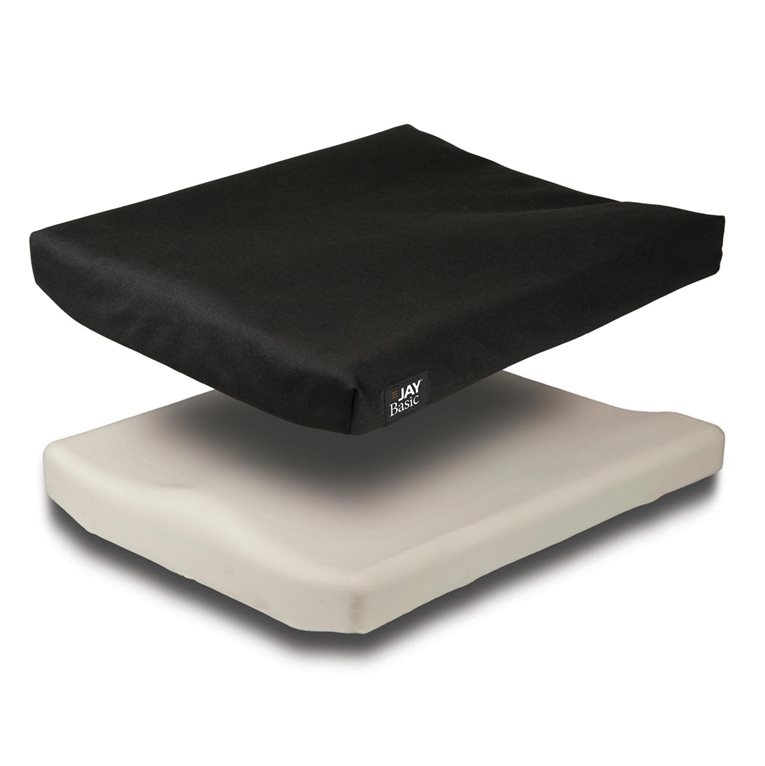
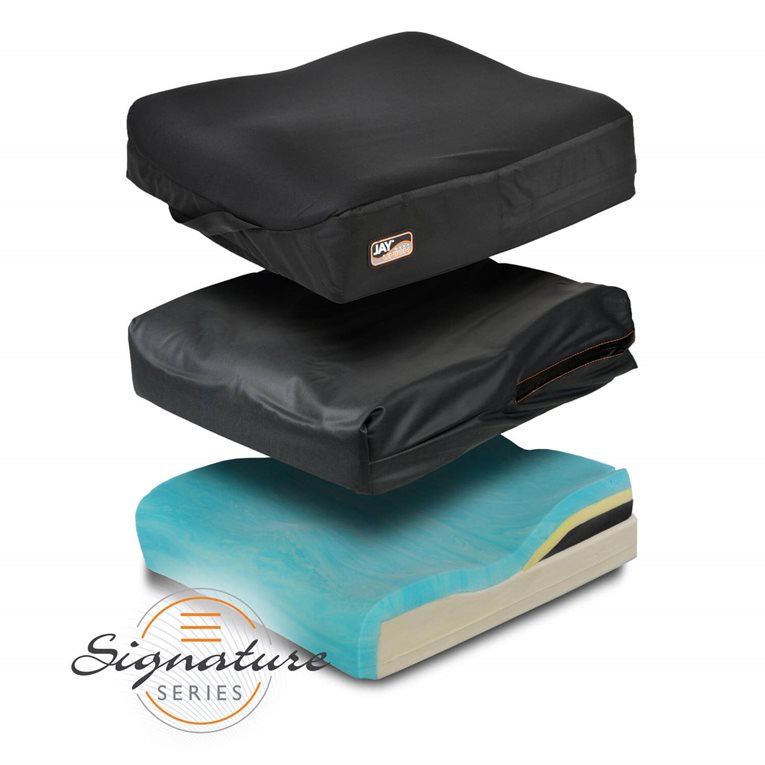
Cushion thickness varies a lot. In the catalog, the JAY Basic foam cushion is 2 in high, the JAY Union is 3.5 or 4.5 in, and the ROHO Quadtro Select comes in 2.25, 3.25 and 4.25 in profiles. Always state the cushion when you give a seat height.
Front and rear heights
Active chairs list two seat heights. One rigid chair's spec sheet gives 450 to 520 mm at the front and 390 to 490 mm at the rear, in 10 mm steps. A lower rear height slopes the seat backward. More slope helps balance for people with less trunk control, but makes transfers harder.
Two fitting checks help set rear height. With your hand on top of the handrim, your elbow should bend to about 90 degrees. If you move the chair with your feet, they must rest flat on the floor while your pelvis stays against the backrest. Record your calf length and leave the final front and rear heights to the assessor.
Back height
Take two measurements straight up from the seat surface, so the assessor has both.
- Seat to the bottom of the rib cage. Your helper places hands on both sides of your pelvis, squeezes gently and slides upward. The bottom of the rib cage is just above the waist.
- Seat to the bottom of the shoulder blade. Shrug your shoulders so the helper can find the lower tip of the blade.
Which one is used depends on you. Fitting guides suggest support to the base of the rib cage for active users, and up to the bottom of the shoulder blades for people who tire or find it hard to hold their posture. One clinical guide puts the top of the back about one finger-width below the tip of the shoulder blade, so the blade can move freely.
A lower back gives the shoulders more room, and a longer push stroke, but it needs good trunk control. A higher back gives more support. For people who push themselves, the back should not rise above the shoulder blades. A commonly quoted standard back height is 406 mm, or 16 in, but active chairs are often set lower.
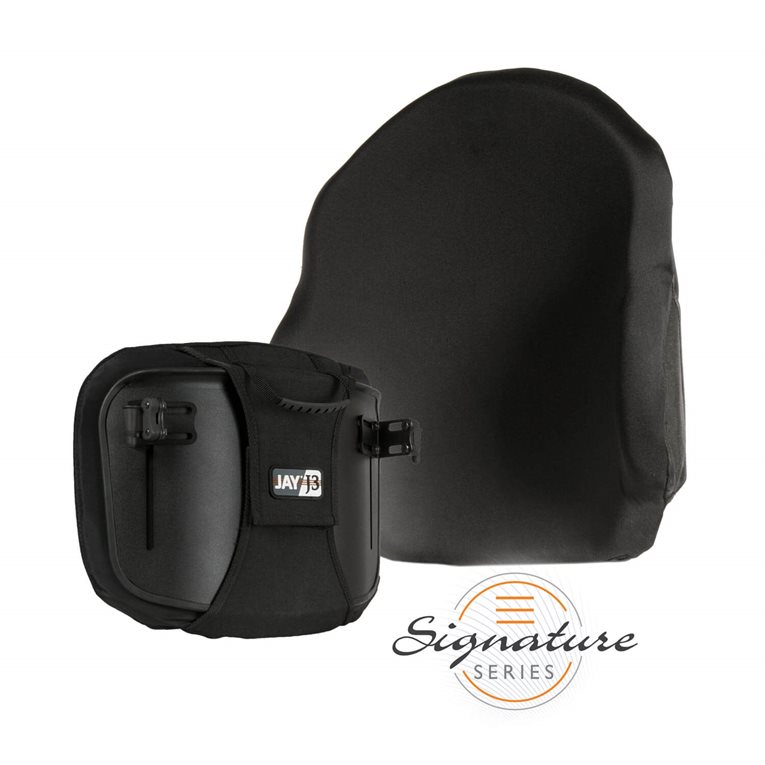
Order forms differ on whether back height starts at the seat frame or at the top of the cushion. A thicker cushion lifts you and makes the same back feel lower, so ask which reference the maker uses. Aftermarket backs come in many heights. The catalog lists the JAY J3 Back from 6.5 to 24 in high.
Footrest length
Footrest length comes from the calf length you already took. It sets how far the footplate hangs below the seat.
- Too short: your knees rise, your thighs lift off the cushion, and more pressure goes onto your sit bones.
- Too long: your feet reach for the plate, you slide forward and your back rounds.
- Right: your thighs rest evenly along the cushion and your feet are fully supported.
Makers list this as knee-to-heel or lower leg length. Check that your figure falls inside the range for the model, with your cushion and shoes accounted for.
If you want armrests, add one more measurement: from the seat surface up to the point of your elbow, with the elbow bent. Clinical guides add about 1 inch to this for armrest height.
Your measurement sheet
| Body measurement | How to take it | What it becomes |
|---|---|---|
| Hip width | Between two boards at the widest point of hips or thighs | Seat width |
| Pelvis to back of knee | Board behind pelvis, tape to back of knee, both legs | Seat depth, after taking off 30 to 60 mm |
| Calf length | Back of knee to base of heel, shoes on | Footrest length and front seat height |
| Seat to rib cage or shoulder blade | Straight up from the seat surface | Back height |
| Seat to elbow | Seat surface to point of bent elbow | Armrest height, plus about 1 in |
Add your body weight, your height, the cushion you use or plan to use, and the width of your narrowest door.
Common measuring mistakes
- Using a soft tape that curves around the body. Use a rigid tape and measure straight lines between boards.
- Measuring on a soft or sagging seat, which changes pelvis position and thigh length.
- Slumping or sitting twisted. A tilted pelvis makes one leg look longer.
- Measuring one leg only.
- Measuring without shoes, then using the chair in boots.
- Adding a comfort margin to seat width at home. Give the true figure and let the assessor decide.
- Forgetting the cushion when giving seat and back heights.
- Copying the dimensions of your current chair without asking whether it actually fits.
When the tape is not enough
Made-to-measure frames leave little room for error. One maker of fully welded titanium chairs takes over 30 individual measurements to a 5 mm tolerance and works with the rider, clinician and provider together. The catalog lists its RGK Octane Sub4 with seat widths in 5 mm steps.
Ask for a professional assessment, not a home measurement, if any of these apply: you need side supports, a headrest or a shaped back; your spine or pelvis is not symmetrical; you have had pressure injuries or have reduced sensation; you are measuring a growing child; or you are ordering a non-adjustable frame. Skin and posture decisions belong to a seating clinician.
This article is general information. Rules and prices differ by country and change, so confirm them before you buy or travel.
Common questions
Should I add extra to my hip width for seat width?
Clinical guides set seat width equal to the measured hip width and check the fit with fingers at the sides. Give the supplier your true measurement and tell them about thick clothing or braces.
How much shorter than my thigh should the seat be?
About 30 to 60 mm, which leaves room for two to four fingers between the seat edge and the back of your knee.
Can I measure lying down?
No. The body lengthens when lying flat, so measurements must be taken sitting upright.
Does my cushion change the measurements?
Yes. Cushion thickness raises you in the chair, which changes seat-to-floor height, footrest distance and how high the backrest feels. Always state which cushion you use.
Sources
- Physiopedia: Wheelchair Assessment - Body Measurements
- Physiopedia: Wheelchair Fitting
- Physiopedia: Wheelchair Assessment
- SCIRE Community: Manual Wheelchairs
- SCIRE Community: Wheelchair Seating
- Küschall: K-Series specifications
- Küschall: Champion SL specifications
- Sunrise Medical: RGK Octane Sub4
Read on 5 October 2026. The wording of the article is our own.